


Acts 10:41
- οὐounot [revealed]G3756PRT-NNegative Particle Negative
- παντὶpantito allG3956A-DSMAdjective Dative Singular Masculine
- τῷtōtheG3588T-DSMDefinite article Dative Singular Masculine
- λαῷlaōpeopleG2992N-DSMNoun Dative Singular Masculine
- ἀλλὰallabutG235CONJConjunction
- μάρτυσινmartusinto [the] witnessesG3144N-DPMNoun Dative Plural Masculine
- τοῖςtoiswhoG3588T-DPMDefinite article Dative Plural Masculine
- προκεχειροτονημένοιςprokecheirotonēmenoischosen beforehandG4401V-RPP-DPMVerb Perfect Passive Participle Dative Plural Masculine
- ὑπὸhupobyG5259PREPPreposition
- τοῦtou<the>G3588T-GSMDefinite article Genitive Singular Masculine
- θεοῦtheouGodG2316N-GSM-TNoun Genitive Singular Masculine Title
- ἡμῖνhēminto usG3165P-1DPPersonal pronoun Dative 1st Plural
- οἵτινεςoitineswhoG3748R-NPMRelative pronoun Nominative Plural Masculine
- συνεφάγομενsunephagomenwe ate withG4906V-2AAI-1PVerb 2nd Aorist Active Indicative 1st Plural
- καὶkaiandG2532CONJConjunction
- συνεπίομενsunepiomenwe drank withG4844V-2AAI-1PVerb 2nd Aorist Active Indicative 1st Plural
- αὐτῷautōHimG846P-DSMPersonal pronoun Dative Singular Masculine
- μετὰmetaafterG3326PREPPreposition
- τὸto<the>G3588T-ASNDefinite article Accusative Singular Neuter
- ἀναστῆναιanastēnairisingG450V-2AANVerb 2nd Aorist Active Infinitive
- αὐτὸνautonof HimG846P-ASMPersonal pronoun Accusative Singular Masculine
- ἐκekout fromG1537PREPPreposition
- νεκρῶν·nekrōn[the] deadG3498A-GPMAdjective Genitive Plural Masculine
English is a literal word-by-word gloss of the Greek, not the KJV's wording. Why?
This is the original text the KJV's translators worked from — each Greek word with its own literal English meaning in this verse, prepared by scholars at Tyndale House, Cambridge. The KJV translates whole sentences, not word by word, so its wording differs: one Greek word can become several English words, and the KJV may choose “charity” where the gloss reads “love”. Both are faithful — they answer different questions. For the KJV's own rendering, switch to the KJV text.
Details
See on the biblical-era map

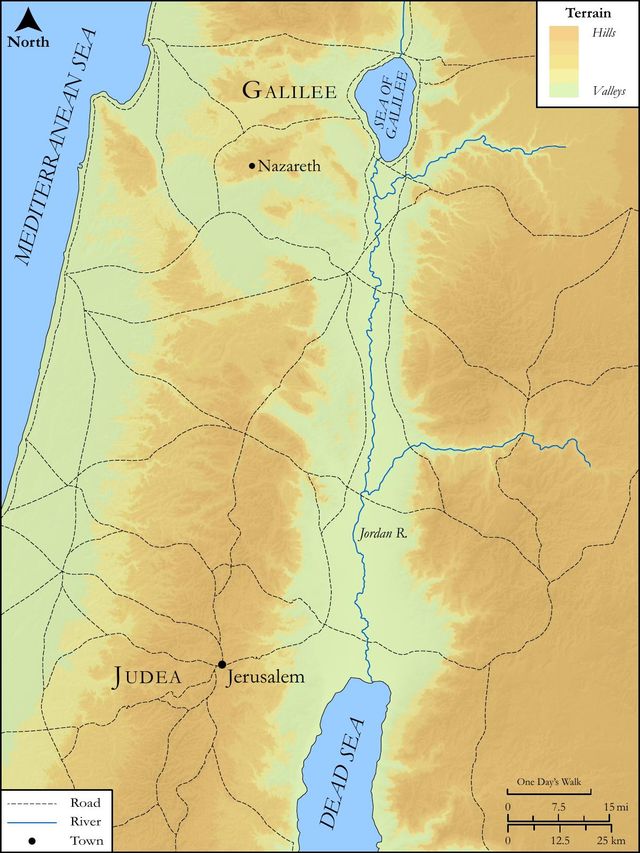
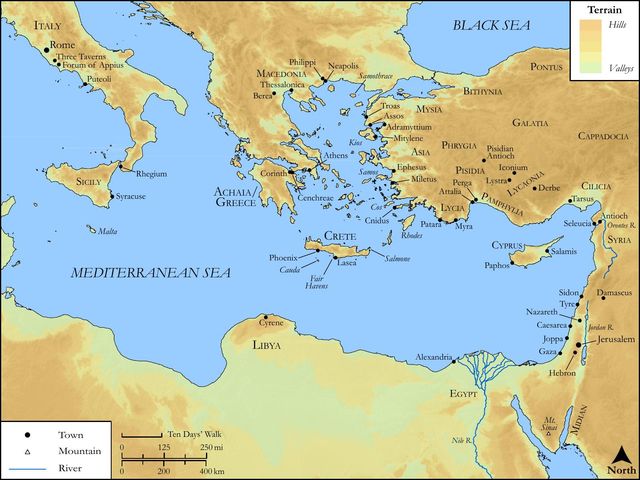
Study this verse
Public-domain commentary
Matthew Henry
From his Commentary on the Whole Bible. Henry comments on passages, not single verses — this entry covers Acts 10:34–43. His three-level outline is real structure in the source text, so it is rendered as structure.
We have here Peter's sermon preached to Cornelius and his friends: that is, an abstract or summary of it; for we have reason to think that he did with many other words testify and exhort to this purport. It is intimated that he expressed himself with a great deal of solemnity and gravity, but with freedom and copiousness, in that phrase, he opened his mouth, and spoke, Act 10:34. O ye Corinthians, our mouth is open to you, saith Paul, Co2 6:11. "You shall find us communicative, if we but find you inquisitive." Hitherto the mouths of the apostles had been shut to the uncircumcised Gentiles, they had nothing to say to them; but now God gave unto them, as he did to Ezekiel, the opening of the mouth. This excellent sermon of Peter's is admirably suited to the circumstances of those to whom he preached it; for it was a new sermon.
I.Because they were Gentiles to whom he preached.
He shows that, notwithstanding this, they were interested in the gospel of Christ, which he had to preach, and entitled to the benefit of it, upon an equal footing with the Jews. It was necessary that this should be cleared, or else with what comfort could either he preach or they hear? He therefore lays down this as an undoubted principle, that God is no respecter of persons; doth not know favour in judgment, as the Hebrew phrase is; which magistrates are forbidden to do (Deu 1:17; Deu 16:19; Pro 24:23), and are blamed for doing, Psa 82:2. And it is often said of God that he doth not respect persons, Deu 10:17; Ch2 19:7; Job 34:19; Rom 2:11; Col 3:25; Pe1 1:17. He doth not give judgment in favour of a man for the sake of any external advantage foreign to the merits of the cause. God never perverts judgment upon personal regards and considerations, nor countenances a wicked man in a wicked thing for the sake of his beauty, or stature, his country, parentage, relations, wealth, or honour in the world. God, as a benefactor, gives favours arbitrarily and by sovereignty (Deu 7:7, Deu 7:8; Deu 9:5, Deu 9:6; Mat 20:10); but he does not, as a judge, so give sentence; but in every nation, and under ever denomination, he that fears God and works righteousness is accepted of him, Act 10:35. The case is plainly thus -
1.God never did, nor ever will, justify and save a wicked Jew that lived and died impenitent, though he was of the seed of Abraham, and a Hebrew of the Hebrews, and had all the honour and advantages that attended circumcision. He does and will render indignation and wrath, tribulation and anguish, upon every soul of man that doeth evil; and of the Jew first, whose privileges and professions, instead of screening him from the judgment of God, will but aggravate his guilt and condemnation. See Rom 2:3, Rom 2:8, Rom 2:9, Rom 2:17. Though God has favoured the Jews, above other nations, with the dignities of visible church-membership, yet he will not therefore accept of any particular persons of that dignity, if they allow themselves in immoralities contradictory to their profession; and particularly in persecution, which was now, more than any other, the national sin of the Jews.
2.He never did, nor ever will, reject or refuse an honest Gentile, who, though he has not the privileges and advantages that the Jews have, yet, like Cornelius, fears God, and worships him, and works righteousness, that is, is just and charitable towards all men, who lives up to the light he has, both in a sincere devotion and in a regular conversation. Whatever nation he is of, though ever so far remote from kindred to the seed of Abraham, though ever so despicable, nay, though in ever so ill a name, that shall be no prejudice to him. God judges of men by their hearts, not by their country or parentage; and, wherever he finds an upright man, he will be found an upright God, Psa 18:25. Observe, Fearing God, and working righteousness, must go together; for, as righteousness towards men is a branch of true religion, so religion towards God is a branch of universal righteousness. Godliness and honesty must go together, and neither will excuse for the want of the other. But, where these are predominant, no doubt is to be made of acceptance with God. Not that any man, since the fall, can obtain the favour of God otherwise than through the mediation of Jesus Christ, and by the grace of God in him; but those that have not the knowledge of him, and therefore cannot have an explicit regard to him, may yet receive grace from God for his sake, to fear God and to work righteousness; and wherever God gives grace to do so, as he did to Cornelius, he will, through Christ, accept the work of his own hands. Now,
(1.)This was always a truth, before Peter perceived it, that God respecteth no man's person; it was the fixed rule of judgment from the beginning: If thou doest well, shalt thou not be accepted? And, if not well, sin, and the punishment of it, lie at the door, Gen 4:7. God will not ask in the great day what country men were of, but what they were, what they did, and how they stood affected towards him and towards their neighbours; and, if men's personal characters received neither advantage nor disadvantage from the great difference that existed between Jews and Gentiles, much less from any less difference of sentiments and practices that may happen to be among Christians themselves, as those about meats and days, Rom. 14. It is certain the kingdom of God is not meat and drink, but righteousness, and peace, and joy in the Holy Ghost; and he that in these things serveth Christ is accepted of God, and ought to be approved of men; for dare we reject those whom God doth not?
(2.)Yet now it was made more clear than it had been; this great truth had been darkened by the covenant of peculiarity made with Israel, and the badges of distinction put upon them; the ceremonial law was a wall of partition between them and other nations; it is true that in it God favoured that nation (Rom 3:1, Rom 3:2; Rom 9:4), and thence particular persons among them were ready to infer that they were sure of God's acceptance, though they lived as they listed, and that no Gentile could possibly be accepted of God. God had said a great deal by the prophets to prevent and rectify this mistake, but now at length he doth it effectually, by abolishing the covenant of peculiarity, repealing the ceremonial law, and so setting the matter at large, and placing both Jew and Gentile upon the same level before God; and Peter is here made to perceive it, by comparing the vision which he had with that which Cornelius had. Now in Christ Jesus, it is plain, neither circumcision availeth any thing, nor uncircumcision, Gal 5:6; Col 3:11.
II.Because they were Gentiles inhabiting a place within the confines of the land of Israel, he refers them to what they themselves could not but know concerning the life and doctrine, the preaching and miracles, the death and sufferings of our Lord Jesus: for these were things the report of which spread into every corner of the nation, Act 10:37, etc. It facilitates the work of ministers, when they deal with such as have some knowledge of the things of God, to which they may appeal, and on which they may build.
1.They knew in general, the word, that is, the gospel, which God sent to the children of Israel: That word, I say, you know, Act 10:37. Though the Gentiles were not admitted to hear it (Christ and his disciples were not sent but to the lost sheep of the house of Israel), yet they could not but hear of it: it was all the talk both of city and country. We are often told in the gospels how the fame of Christ went into all parts of Canaan, when he was on earth, as afterwards the fame of his gospel went into all parts of the world, Rom 10:18. That word, that divine word, that word of power and grace, you know.
(1.)What the purport of this word was. God by it published the glad tidings of peace by Jesus Christ, so it should be read - euangelizomenos eirēnēn. It is God himself that proclaims peace, who justly might have proclaimed war. He lets the world of mankind know that he is willing to be at peace with them through Jesus Christ; in him he was reconciling the world to himself.
(2.)To whom it was sent - to the children of Israel, in the first place. The prime offer is made to them; this all their neighbours heard of, and were ready to envy them those advantages of the gospel, more than they ever envied them those of their law. Then said they among the heathen, The Lord hath done great things for them, Psa 126:2.
2.They knew the several matters of fact relating to this word of the gospel sent to Israel.
(1.)They knew the baptism of repentance which John preached by way of introduction to it, and in which the gospel first began, Mar 1:1. They knew what an extraordinary man John was, and what a direct tendency his preaching had to prepare the way of the Lord. They knew what great flocking there was to his baptism, what an interest he had, and what he did.
(2.)They knew that immediately after John's baptism the gospel of Christ, that word of peace, was published throughout all Judea, and that it took its rise from Galilee. The twelve apostles, and seventy disciples, and our Master himself, published these glad tidings in all parts of the land; so that we may suppose there was not a town or village in all the land of Canaan but had had the gospel preached in it.
(3.)They knew that Jesus of Nazareth, when he was here upon earth, went about doing good. They knew what a benefactor he was to that nation, both to the souls and the bodies of men; how he made it his business to do good to all, and never did hurt to any. He was not idle, but still doing; not selfish, but doing good; did not confine himself to one place, nor wait till people came to him to seek his help, but went to them, went about from place to place, and wherever he came he was doing good. Hereby he showed that he was sent of God, who is good and does good; and does good because he is good: and who hereby left not himself without witness to the world, in that he did good, Act 14:17. And in this he hath set us an example of indefatigable industry in serving God and our generation; for we came into the world that we might do all the good we can in it; and therein, like Christ, we must always abide and abound.
(4.)They knew more particularly that he healed all that were oppressed of the devil, and helped them from under his oppressing power. By this it appeared not only that he was sent of God, as it was a kindness to men, but that he was sent to destroy the works of the devil; for thus he obtained many a victory over him.
(5.)They knew that the Jews put him to death; they slew him by hanging him on a tree. When Peter preached to the Jews, he said whom you slew; but now that he preached to the Gentiles it is whom they slew; they, to whom he had done and designed so much good. All this they knew; but lest they should think it was only a report, and was magnified, as reports usually are, more than the truth, Peter, for himself and the rest of the apostles, attested it (Act 10:39): We are witnesses, eye-witnesses, of all things which he did; and ear-witnesses of the doctrine which he preached, both in the land of the Jews and in Jerusalem, in city and country.
3.They did know, or might know, by all this, that he had a commission from heaven to preach and act as he did. This he still harps upon in his discourse, and takes all occasions to hint it to them. Let them know,
(1.)That this Jesus is Lord of all; it comes in in a parenthesis, but is the principal proposition intended to be proved, that Jesus Christ, by whom peace is made between God and man, is Lord of all; not only as God over all blessed for evermore, but as Mediator, all power both in heaven and on earth is put into his hand, and all judgment committed to him. He is Lord of angels; they are all his humble servants. He is Lord of the powers of darkness, for he hath triumphed over them. He is king of nations, has a power over all flesh. He is king of saints, all the children of God are his scholars, his subjects, his soldiers.
(2.)That God anointed him with the Holy Ghost and with power; he was both authorized and enabled to do what he did by a divine anointing, whence he was called Christ - the Messiah, the anointed One. The Holy Ghost descended upon him at his baptism, and he was full of power both in preaching and working miracles, which was the seal of a divine mission.
(3.)That God was with him, Act 10:38. His works were wrought in God. God not only sent him, but was present with him all along, owned him, stood by him, and carried him on in all his services and sufferings. Note, Those whom God anoints he will accompany; he will himself be with those to whom he has given his Spirit.
III.Because they had had no more certain information concerning this Jesus, Peter declares to them his resurrection from the dead, and the proofs of it, that they might not think that when he was slain there was an end of him. Probably, they had heard at Cesarea some talk of his having risen from the dead; but the talk of it was soon silenced by that vile suggestion of the Jews, that his disciples came by night and stole him away. And therefore Peter insists upon this as the main support of that word which preacheth peace by Jesus Christ.
1.The power by which he arose is incontestably divine (Act 10:40): Him God raised up the third day, which not only disproved all the calumnies and accusations he was laid under by men, but effectually proved God's acceptance of the satisfaction he made for the sin of man by the blood of his cross. He did not break prison, but had a legal discharge. God raised him up.
2.The proofs of his resurrection were incontestably clear; for God showed him openly. He gave him to be made manifest - edōken auton emphanē genesthaî to be visible, evidently so; so he appears, as that it appears beyond contradiction to be him, and not another. It was such a showing of him as amounted to a demonstration of the truth of his resurrection. He showed him not publicly indeed (it was not open in this sense), but evidently; not to all the people, who had been the witnesses of his death. By resisting all the evidences he had given them of his divine mission in his miracles, they had forfeited the favour of being eye-witnesses of this great proof of it. Those who immediately forged and promoted that lie of his being stolen away were justly given up to strong delusions to believe it, and not suffered to be undeceived by his being shown to all the people; and so much the greater shall be the blessedness of those who have not seen, and yet have believed - Nec ille se in vulgus edixit, ne impii errore, liberarentur; ut et fides non praemio mediocri destinato difficultate constaret - He showed not himself to the people at large, lest the impious among them should have been forthwith loosed from their error, and that faith, the reward of which is so ample, might be exercised with a degree of difficulty. - Tertul. Apol. cap. 11. But, though all the people did not see him, a sufficient number saw him to attest the truth of his resurrection. The testator's declaring his last will and testament needs not to be before all the people; it is enough that it be done before a competent number of credible witnesses; so the resurrection of Christ was proved before sufficient witnesses.
(1.)They were not so by chance, but they were chosen before of God to be witnesses of it, and, in order to this, had their education under the Lord Jesus, and intimate converse with him, that, having known him so intimately before, they might the better be assured it was he.
(2.)They had not a sudden and transient view of him, but a great deal of free conversation with him: They did eat and drink with him after he rose from the dead. This implies that they saw him eat and drink, witness their dining with him at the sea of Tiberias, and the two disciples supping with him at Emmaus; and this proved that he had a true and real body. But this was not all; they saw him without any terror or consternation, which might have rendered them incompetent witnesses, for they saw him so frequently, and he conversed with them so familiarly, that they did eat and drink with him. It is brought as a proof of the clear view which the nobles of Israel had of the glory of God (Exo 24:11), that they saw God, and did eat and drink.
IV.He concludes with an inference from all this, that therefore that which they all ought to do was to believe in this Jesus:
he was sent to tell Cornelius what he must do, and it is this; his praying and his giving alms were very well, but one thing he lacked, he must believe in Christ. Observe,
1.Why he must believe in him. Faith has reference to a testimony, and the Christian faith is built upon the foundation of the apostles and prophets, it is built upon the testimony given by them.
(1.)By the apostles. Peter as foreman speaks for the rest, that God commanded them, and gave them in charge, to preach to the people, and to testify concerning Christ; so that their testimony was not only credible, but authentic, and what we may venture upon. Their testimony is God's testimony; and they are his witnesses to the world. They do not only say it as matter of news, but testify it as matter of record, by which men must be judged.
(2.)By the prophets of the Old Testament, whose testimony beforehand, not only concerning his sufferings, but concerning the design and intention of them, very much corroborates the apostles' testimony concerning them (Act 10:43): To him give all the prophets witness. We have reason to think that Cornelius and his friends were no strangers to the writings of the prophets. Out of the mouth of these two clouds of witnesses, so exactly agreeing, this word is established.
2.What they must believe concerning him.
(1.)That we are all accountable to Christ as our Judge; this the apostles were commanded to testify to the world, that this Jesus is ordained of God to be the Judge of the quick and dead, Act 10:42. He is empowered to prescribe the terms of salvation, that rule by which we must be judged, to give laws both to quick and dead, both to Jew and Gentile; and he is appointed to determine the everlasting condition of all the children of men at the great day, of those that shall be found alive and of those that shall be raised from the dead. He hath assured us of this, in that he hath raised him from the dead (Act 17:31), so that it is the great concern of every one of us, in the belief of this, to seek his favour, and to make him our friend.
(2.)That if we believe in him we shall all be justified by him as our righteousness, Act 10:43. The prophets, when they spoke of the death of Christ, did witness this, that through his name, for his sake, and upon the account of his merit, whosoever believeth in him, Jew or Gentile, shall receive remission of sins. This is the great thing we need, without which we are undone, and which the convinced conscience is most inquisitive after, which the carnal Jews promised themselves from their ceremonial sacrifices and purifications, yea, and the heathen too from their atonements, but all in vain; it is to be had only through the name of Christ, and only by those that believe in his name; and those that do so may be assured of it; their sins shall be pardoned, and there shall be no condemnation to them. And the remission of sins lays a foundation for all other favours and blessings, by taking that out of the way which hinders them. If sin be pardoned, all is well, and shall end everlastingly well.
Historical interpretation
Three Centuries of Reception
5 surviving comments on this verse. Each one is dated, so this reads as a timeline rather than a list.
Select a marker to jump to its quote. Markers stagger vertically where authors wrote within a few decades of each other.
"Him God raised up the third day, and showed Him openly; not to all the people, but unto witnesses chosen before of God, even to us, who did eat and drink with Him after He rose from the dead." This is a proof of the Resurrection. "And gave Him," it is added, "to be made manifest not to all the people, but to witnesses before ordained of God, even unto us:" and yet it was Christ Himself that elected them; but this also he refers to God. "To the before-ordained," he says, "even to us, who did eat and drink with Him after that He was risen from the dead."
See whence he fetches his assurance of the resurrection. What is the reason that being risen he did no sign, but only ate and drank? Because the Resurrection itself was a great sign, and of this nothing was so much a sign as the eating and drinking.
For since eating is proper to them that live this present life, of necessity the Lord by means of eating and drinking proved the resurrection of the flesh to those who did not acknowledge it to be real. This same course he pursued in the case of Lazarus and of Jairus’s daughter. For when he had raised up the latter he ordered that something should be given her to eat, and he made Lazarus sit with him at the table39 and so showed the reality of the rising again.
Now, certainly, he shared a new food, one not in accord with the prior order in which he had eaten and drunk with them before the resurrection. For at that time, having been made similar to us in everything except for sin, he ate and drank just as we do. Moreover, clothing himself in the flesh, he willingly sought the benefit of nourishment, and so he willingly assimilated himself to the experience of hunger. After the resurrection he did not need to eat or drink anymore, but only as one believed in by and as one giving evidence to his intimate disciples. Another reason [he ate and drank was that] those who later on were to believe in the true nature of the body—that body that suffered voluntarily and arose in a divine way (totally driving away the idea of an accursed apparition and phantasm)—needed these actions. After the resurrection, he named food and drink for himself together with his disciples, not according to his previous practice but something new.
For us who ate and drank with Him after He rose from the dead. Here blessed Peter expounds what is not recited in the Gospel, namely, that after the resurrection, he drank with the Lord. Unless perhaps we believe it was indicated there where he says: Until I drink it new with you in the house of My Father.
For us who ate and drank with him after he rose from the dead. In Greek, it is added, "For forty days," and Saint Augustine declared that it is so in his Codex, and in explaining it, he added: "Not that they ate and drank with him every day for forty days. For it would be contrary to John, who interposed those eight days during which he was not seen by them, to manifest himself for the third time at the Sea of Tiberias." Explaining the sacrament of his eating and his fasting for as many days elsewhere, he says: "He fasted when he was tempted before his death, still needing food; but he ate and drank when he was glorified, no longer needing food. For there he showed our labor in himself, but here he showed his comfort in us, defining both by forty days. For he fasted for forty days when he was tempted in the desert, as it is written in the Gospel, before the death of his flesh; and again, he was with the disciples for forty days coming and going, eating and drinking after the resurrection of his flesh." By this number forty, the duration of this world seems signified, in those who are called by grace to him, who did not come to abolish the law but to fulfill it. For there are ten commandments of the law already spread through the world by Christ's grace, and the world is divided into four parts, and ten multiplied by four makes forty, for the Lord redeemed them from the regions; he gathered them from the East and the West, from the North and the sea (Psalm 106). Therefore, fasting for forty days before his death, he seemed to cry out: Abstain from the desires of this world (1 Peter 2): but eating and drinking for forty days after the resurrection of his flesh, he cried out: Behold, I am with you until the end of the age. For fasting is in the tribulation of struggle, since he who is in the contest abstains from all things; but food is in the hope of peace, which will not be perfect until our body, of which we await the redemption, puts on immortality, which we do not yet glory in attaining, but are already fed by hope. The Apostle shows us doing both at the same time, saying: Rejoicing in hope, patient in tribulation, as if the former were in food, the latter in fasting. For while we follow the way of the Lord, we both fast from the vanity of the present age and are refreshed by the promise of the future, here not setting our hearts, there feeding them above.
Continue studying Acts 10:41 across the web’s major study libraries — every link below opens this exact verse, chapter, or book on the destination site.
Read & Compare
 BibleGatewayThis verse in more than 200 translations and 70 languages.
 Bible.comThe YouVersion reader — hundreds of translations, reading plans, and highlights.
 ESV.orgCrossway's official English Standard Version reader.
 NET BibleThe NET translation with 60,000+ translators' notes on every rendering decision.
 STEP BibleTyndale House's free study tool — original text, vocabulary, and scholarly resources.
 BibliaLogos Bible Software's free web reader.
 USCCBThe New American Bible (Revised Edition) with the U.S. bishops' study notes.
Commentaries
 BibleHub CommentariesDozens of classic commentaries on this verse, gathered on one page.
 StudyLightMore than 100 commentary sets — the largest collection on the web.
 BibleRefPlain-English commentary on what this verse means, verse by verse.
 Enduring WordDavid Guzik's free commentary on this chapter, widely used by Bible teachers.
 Bible Study ToolsVerse commentary alongside Greek and Hebrew study aids.
Original Language & Research
- BibleHub InterlinearThe verse word by word — original language, transliteration, and English.
- BibleHub LexiconEvery word's original-language definition and Strong's entry.
 Blue Letter BibleDeep-study tools — Strong's numbers, concordance, and word studies.
 CNTR CollationThe earliest Greek manuscripts of this verse, collated letter by letter.
Sermons, Hymns & Audio


TrulyRandomVerse is not affiliated with these sites and doesn’t control their content. They’re linked because they’re genuinely useful.
Summary
Acts 10:41, spoken by Peter to Cornelius's household, asserts the foundational truth of Jesus' bodily resurrection by emphasizing the exclusivity and divine appointment of His post-resurrection witnesses. Peter declares that Jesus appeared not to the general populace, but to a select group, including himself and the other apostles, who shared meals with the resurrected Christ, thereby providing irrefutable, tangible proof of His victory over death and establishing the credibility of their Gospel message.
Context
ShowHideLiterary Context
This verse is a pivotal statement within Peter's sermon to Cornelius and his household in Caesarea, marking a dramatic turning point in the early church's mission. Following Peter's transformative vision of the sheet with unclean animals and the subsequent divine instruction to go with Cornelius's messengers, Peter arrives at the Gentile centurion's home. His sermon, beginning in Acts 10:34, systematically presents the core of the Gospel: Jesus' anointing by the Holy Spirit, His ministry of healing, His crucifixion, and crucially, His resurrection. Verse 41 specifically addresses the proof of this resurrection, immediately following the declaration that God "raised him up the third day, and shewed him openly" in Acts 10:40. This verse sets the stage for the outpouring of the Holy Spirit on these Gentiles, demonstrating God's acceptance of them into the new covenant community.
Historical & Cultural Context
The setting in Caesarea, a Roman administrative capital, highlights the cultural tension between Jewish and Gentile communities. Jewish law and custom strictly forbade association and shared meals with Gentiles, making Peter's presence in Cornelius's home revolutionary. In the ancient world, eyewitness testimony was paramount for establishing truth and credibility, especially in legal and historical matters. The act of "eating and drinking" together was a deeply significant cultural practice, signifying fellowship, acceptance, and tangible presence. For Peter to emphasize that he and others ate with the resurrected Jesus was a powerful, culturally resonant affirmation of Jesus' physical reality, directly countering any notion that His appearance was merely spiritual, a hallucination, or a phantom.
Key Themes
ShowHideActs 10:41 contributes significantly to several major themes in Acts and the broader biblical narrative. It underscores the bodily resurrection of Christ, presenting it as a physical, verifiable event rather than a spiritual apparition, a truth foundational to Christian faith as seen throughout the apostolic preaching in Acts. The verse also highlights divine sovereignty and election, as the witnesses were "chosen before of God," indicating that God meticulously orchestrated the means by which the resurrection truth would be proclaimed. Furthermore, it reinforces the authoritative nature of apostolic witness, establishing that the apostles' message was not based on hearsay or speculation, but on direct, personal encounters with the risen Lord. This divinely appointed and physically verified testimony forms the bedrock of the Gospel's expansion, particularly its dramatic extension to the Gentiles, fulfilling the mandate to be witnesses to the ends of the earth as described in Acts 1:8.
Exposition and Analysis
ShowHideKey Word Analysis
ShowHideThis term (G3144) refers to those who give factual testimony based on firsthand knowledge. In this context, it emphasizes the apostles' role as direct observers of the resurrected Christ, providing irrefutable evidence. The English word "martyr" derives from this Greek root, signifying that these witnesses were prepared to suffer, even die, for the truth of their testimony.
The Greek verb (G4401) signifies a pre-planned, deliberate selection by God. It emphasizes divine intentionality and sovereignty in appointing specific individuals to bear authoritative witness to the resurrection. This was not a random selection but a divinely ordained commission.
These compound verbs explicitly state that the witnesses shared meals and beverages with Jesus after His resurrection. This detail is crucial for demonstrating the physical, bodily nature of His resurrection. Eating and drinking are tangible, life-sustaining activities, proving that Jesus was not a ghost or a spiritual apparition, but truly alive in a physical body.
Verse Breakdown
ShowHide"Not to all the people,"
This clause clarifies that Jesus' post-resurrection appearances were not public spectacles for the entire population of Jerusalem or Judea. Instead, they were selective and purposeful, designed for a specific group.
"but unto witnesses chosen before of God,"
This directly contrasts the previous phrase, identifying the specific recipients of Jesus' appearances. These individuals were not self-appointed but divinely selected and prepared by God for the crucial task of bearing authoritative testimony to the resurrection.
"to us,"
Peter includes himself and the other apostles/disciples present, identifying them as the very individuals divinely chosen to be these witnesses. This lends personal authority and credibility to his sermon.
"who did eat and drink with him after he rose from the dead."
This is the concrete evidence Peter offers for the physical reality of Jesus' resurrection. The act of sharing meals signifies tangible presence, proving that Jesus was truly alive, with a body that could interact physically, thereby refuting any claims of a spiritual apparition or hallucination.
Literary Devices
ShowHideThe verse employs several literary devices to convey its powerful message. Contrast is immediately evident in the opening phrase, "Not to all the people, but unto witnesses," which highlights the deliberate and exclusive nature of Jesus' post-resurrection appearances. This contrast underscores the divine intentionality behind the selection of witnesses. The phrase "chosen before of God" emphasizes divine election and sovereignty, framing the apostles' testimony as a divinely ordained mission rather than a human initiative. Furthermore, the detailed description of "who did eat and drink with him after he rose from the dead" serves as a powerful form of empirical evidence and verification. This specific, tangible action functions as a synecdoche, where the part (eating and drinking) represents the whole (the physical, bodily reality of Jesus' resurrected life). It is a concrete, undeniable proof that counters any abstract or spiritualized interpretation of the resurrection, grounding the Gospel message in historical reality.
Theological and Thematic Connections
ShowHideActs 10:41 is profoundly significant because it anchors the Christian faith in a verifiable historical event: the bodily resurrection of Jesus Christ. The emphasis on divinely chosen eyewitnesses who shared intimate, tangible experiences with the risen Lord establishes the absolute reliability of the Gospel message. This verse underscores that the apostles were not peddling philosophical ideas or spiritual myths, but proclaiming a historical fact witnessed by those specifically prepared by God. The physical reality of Jesus' resurrection, evidenced by His eating and drinking with them, is the cornerstone of Christian hope, validating His claims, confirming His victory over sin and death, and guaranteeing future resurrection for believers. This truth forms the very heart of the apostolic kerygma, providing the foundation for all subsequent Christian theology and mission.
Reflection and Application
ShowHideActs 10:41 serves as a powerful reminder that our Christian faith is not founded on mere fables or wishful thinking, but on the solid, historical reality of Jesus' bodily resurrection. The meticulous detail about the chosen witnesses who ate and drank with the risen Christ provides an unshakeable foundation for our belief, assuring us that the Gospel message is true and trustworthy. For contemporary believers, this means our hope is grounded in a tangible victory over death, empowering us to live with confidence and purpose. While we are not eyewitnesses in the same way the apostles were, we are called to be witnesses of Christ's transforming power in our own lives and in the world. This verse compels us to consider the depth of the truth we proclaim and to share it with the same conviction and authority that Peter demonstrated, knowing that our message is rooted in God's verifiable acts in history.
Questions for Reflection
ShowHideFAQ
ShowHideWhy weren't Jesus' post-resurrection appearances made to "all the people"?
ShowHideJesus' post-resurrection appearances were not made to "all the people" because God's sovereign plan was to establish a specific, authoritative group of witnesses who would then proclaim the Gospel message. A public spectacle might have been misinterpreted, dismissed as mass hysteria, or failed to provide the deep, personal conviction necessary for those tasked with founding the church. Instead, intimate, repeated encounters with chosen individuals provided undeniable, verifiable proof for those who would become the primary heralds of the resurrection. This ensured the message was faithfully transmitted by those who had personal, verifiable encounters, rather than relying on fleeting public perception. This divine strategy ensured the integrity and authority of the apostolic witness, which was crucial for the early spread of Christianity, as seen in passages like Acts 1:8.
What is the significance of "eating and drinking" with the resurrected Jesus?
ShowHideThe detail that the witnesses "did eat and drink with him after he rose from the dead" is profoundly significant because it provides irrefutable proof of Jesus' physical, bodily resurrection. In the ancient world, sharing a meal was a deeply tangible act that signified presence, life, and fellowship. This detail counters any notion that Jesus' appearance was merely spiritual, ghostly, or a hallucination. It demonstrates that He was truly alive, with a physical body, albeit glorified, capable of interacting with the material world. This aligns with other New Testament accounts where Jesus invites His disciples to touch Him and eats fish and honeycomb, all of which served to confirm the physical reality of His triumph over death.
Christ-Centered Fulfillment
ShowHideActs 10:41, while focusing on the witnesses to Christ's resurrection, profoundly points to Christ Himself as the central figure of God's redemptive plan. The fact that He "rose from the dead" is the lynchpin of the Gospel, fulfilling Old Testament prophecies of a Messiah who would conquer death (e.g., Psalm 16:10). His bodily resurrection is the guarantee of our own future resurrection and the ultimate victory over sin and death, as proclaimed in 1 Corinthians 15:20-22. The chosen witnesses, having eaten and drunk with the resurrected Lord, became the living proof of the new covenant, where Christ is the firstborn from the dead and the source of eternal life for all who believe (John 11:25-26). Their testimony, rooted in the tangible reality of His post-resurrection life, establishes the absolute certainty of Jesus' triumph over the grave and His ongoing reign as Lord, through whom all humanity can find reconciliation with God (2 Corinthians 5:18-19).