


Acts 2:39
- ὑμῖνhuminTo youG4771P-2DPPersonal pronoun Dative 2nd Plural
- γάρgarforG1063CONJConjunction
- ἐστινestinisG1510V-PAI-3SVerb Present Active Indicative 3rd Singular
- ἡhētheG3588T-NSFDefinite article Nominative Singular Feminine
- ἐπαγγελίαepangeliapromiseG1860N-NSFNoun Nominative Singular Feminine
- καὶkaiandG2532CONJConjunction
- τοῖςtoisto theG3588T-DPNDefinite article Dative Plural Neuter
- τέκνοιςteknoischildrenG5043N-DPNNoun Dative Plural Neuter
- ὑμῶνhumōnof youG4771P-2GPPersonal pronoun Genitive 2nd Plural
- καὶkaiandG2532CONJConjunction
- πᾶσινpasinto allG3956A-DPMAdjective Dative Plural Masculine
- τοῖςtoisthoseG3588T-DPMDefinite article Dative Plural Masculine
- εἰςeisatG1519PREPPreposition
- μακράνmakrana distanceG3112ADVAdverb
- ὅσουςhosousas many asG3745K-APMCorrelative pronoun Accusative Plural Masculine
- ἂνanmaybeG302PRTParticle or Disjunctive
- προσκαλέσηταιproskalesētaimay call to HimselfG4341V-ADS-3SVerb Aorist Middle Deponent Subjunctive 3rd Singular
- κύριοςkurios[the] LordG2962N-NSM-TNoun Nominative Singular Masculine Title
- ὁhotheG3588T-NSMDefinite article Nominative Singular Masculine
- θεὸςtheosGodG2316N-NSM-TNoun Nominative Singular Masculine Title
- ἡμῶνhēmōnof usG3165P-1GPPersonal pronoun Genitive 1st Plural
English is a literal word-by-word gloss of the Greek, not the KJV's wording. Why?
This is the original text the KJV's translators worked from — each Greek word with its own literal English meaning in this verse, prepared by scholars at Tyndale House, Cambridge. The KJV translates whole sentences, not word by word, so its wording differs: one Greek word can become several English words, and the KJV may choose “charity” where the gloss reads “love”. Both are faithful — they answer different questions. For the KJV's own rendering, switch to the KJV text.
Details
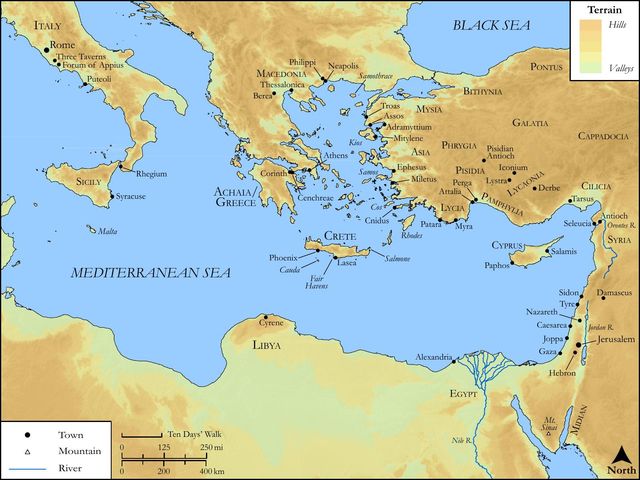
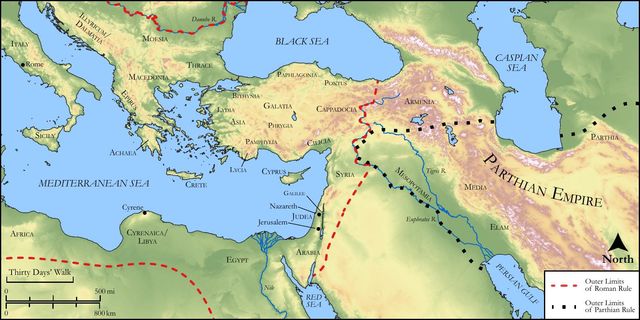
See on the biblical-era map
Study this verse
Public-domain commentary
Matthew Henry
From his Commentary on the Whole Bible. Henry comments on passages, not single verses — this entry covers Acts 2:37–41. His four-level outline is real structure in the source text, so it is rendered as structure.
We have seen the wonderful effect of the pouring out of the Spirit, in its influence upon the preachers of the gospel. Peter, in all his life, never spoke at the rate that he had done now, with such fulness, perspicuity, and power. We are now to see another blessed fruit of the pouring out of the Spirit in its influence upon the hearers of the gospel. From the first delivery of that divine message, it appeared that there was a divine power going along with it, and it was mighty, through God, to do wonders: thousands were immediately brought by it to the obedience of faith; it was the rod of God's strength sent out of Zion, Psa 110:2, Psa 110:3. We have here the first-fruits of that vast harvest of souls which by it were gathered in to Jesus Christ. Come and see, in these verses, the exalted Redeemer riding forth, in these chariots of salvation, conquering and to conquer, Rev 6:2.
In these verses we find the word of God the means of beginning and carrying on a good work of grace in the hearts of many, the Spirit of the Lord working by it. Let us see the method of it.
I.They were startled, and convinced, and put upon a serious enquiry, Act 2:37.
When they heard, or having heard, having patiently heard Peter out, and not given him the interruption they had been used to give to Christ in his discourses (this was one good point gained, that they were become attentive to the word), they were pricked to the heart, or in the heart, and, under a deep concern and perplexity, applied themselves to the preachers with this question, What shall we do? It was very strange that such impressions should be made upon such hard hearts all of a sudden. They were Jews, bred up in the opinion of the sufficiency of their religion to save them, had lately seen this Jesus crucified in weakness and disgrace, and were told by their rulers that he was a deceiver. Peter had charged them with having a hand, a wicked hand, in his death, which was likely to have exasperated them against him; yet, when they heard this plain scriptural sermon, they were much affected with it.
1.It put them in pain: They were pricked in their hearts. We read of those that were cut to the heart with indignation at the preacher (Act 7:54), but these were pricked to the heart with indignation at themselves for having been accessory to the death of Christ. Peter, charging it upon them, awakened their consciences, touched them to the quick, and the reflection they now made upon it was as a sword in their bones, it pierced them as they had pierced Christ. Note, Sinners, when their eyes are opened, cannot but be pricked to the heart for sin, cannot but experience an inward uneasiness; this is having the heart rent (Joe 2:13), a broken and contrite heart, Psa 51:17. Those that are truly sorry for their sins, and ashamed of them, and afraid of the consequences of them, are pricked to the heart. A prick in the heart is mortal, and under those commotions (says Paul) I died, Rom 7:9. "All my good opinion of myself and confidence in myself failed me."
2.It put them upon enquiry. Our of the abundance of the heart, thus pricked, the mouth spoke. Observe,
(1.)To whom they thus addressed themselves: To Peter and to the rest of the apostles, some to one and some to another; to them they opened their case; by them they had been convinced, and therefore by them they expect to be counselled and comforted. They do not appeal from them to the scribes and Pharisees, to justify them against the apostles' charge, but apply to them, as owning the charge, and referring the case to them. They call them men and brethren, as Peter had called them (Act 2:29): it is a style of friendship and love, rather than a title of honour: "You are men, look upon us with humanity; you are brethren, look upon us with brotherly love." Note, Ministers are spiritual physicians; they should be advised with by those whose consciences are wounded; and it is good for people to be free and familiar with those ministers, as men and their brethren, who deal for their souls as for their own.
(2.)What the address is: What shall we do?
[1.]They speak as men at a stand, that did not know what to do; in a perfect surprise: "Is that Jesus whom we have crucified both Lord and Christ? Then what will become of us who crucified him? We are all undone!" Note, No way of being happy but by seeing ourselves miserable. When we find ourselves in danger of being lost for ever, there is hope of our being made for ever, and not till then.
[2.]They speak as men at a point, that were resolved to do any thing they should be directed to immediately; they are not for taking time to consider, nor for adjourning the prosecution of their convictions to a more convenient season, but desire now to be told what they must do to escape the misery they were liable to. Note, Those that are convinced of sin would gladly know the way to peace and pardon, Act 9:6; Act 16:30.
II.Peter and the other apostles direct them in short what they must do, and what in so doing they might expect, Act 2:38, Act 2:39.
Sinners convinced must be encouraged; and that which is broken must be bound up (Eze 34:16); they must be told that though their case is sad it is not desperate, there is hope for them.
1.He here shows them the course they must take. (1.) Repent; this is a plank after shipwreck. "Let the sense of this horrid guilt which you have brought upon yourselves by putting Christ to death awaken you to a penitent reflection upon all your other sins (as the demand of some one great debt brings to light all the debts of a poor bankrupt) and to bitter remorse and sorrow for them" This was the same duty that John the Baptist and Christ had preached, and now that the Spirit is poured out is it still insisted on: "Repent, repent; change your mind, change your way; admit an after-thought." (2.) Be baptized every one of you in the name of Jesus Christ; that is, "firmly believe the doctrine of Christ, and submit to his grace and government; and make an open solemn profession of this, and come under an engagement to abide by it, by submitting to the ordinance of baptism; be proselyted to Christ and to his holy religion, and renounce your infidelity." They must be baptized in the name of Jesus Christ. They did believe in the Father and the Holy Ghost speaking by the prophets; but they must also believe in the name of Jesus, that he is the Christ, the Messias promised to the fathers. "Take Jesus for your king, and by baptism swear allegiance to him; take him for your prophet, and hear him; take him for your priest, to make atonement for you," which seems peculiarly intended here; for they must be baptized in his name for the remission of sins upon the score of his righteousness. (3.) This is pressed upon each particular person: Every one of you. "Even those of you that have been the greatest sinners, if they repent and believe, are welcome to be baptized; and those who think they have been the greatest saints have yet need to repent, and believe, and be baptized. There is grace enough in Christ for every one of you, be you ever so many, and grace suited to the case of every one. Israel of old were baptized unto Moses in the camp, the whole body of the Israelites together, when they passed through the cloud and the sea (Co1 10:1, Co1 10:2), for the covenant of peculiarity was national; but now every one of you distinctly must be baptized in the name of the Lord Jesus, and transact for himself in this great affair." See Col 1:28.
2.He gives them encouragement to take this course: - (1.) "It shall be for the remission of sins. Repent of your sin, and it shall not be your ruin; be baptized into the faith of Christ, and in truth you shall be justified, which you could never be by the law of Moses. Aim at this, and depend upon Christ for it, and this you shall have. As the cup in the Lord's supper is the New Testament in the blood of Christ for the remission of sins, so baptism is in the name of Christ for the remission of sins. Be washed, and you shall be washed." (2.) "You shall receive the gift of the Holy Ghost as well as we; for it is designed for a general blessing: some of you shall receive these external gifts, and each of you, if you be sincere in your faith and repentance, shall receive his internal graces and comforts, shall be sealed with the Holy Spirit of promise." Note, All that receive the remission of sins receive the gift of the Holy Ghost. All that are justified are sanctified. (3.) "Your children shall still have, as they have had, an interest in the covenant, and a title to the external seal of it. Come over to Christ, to receive those inestimable benefits; for the promise of the remission of sins, and the gift of the Holy Ghost, is to you and to your children," Act 2:39. It was very express (Isa 44:3): I will pour my Spirit upon thy seed. And (Isa 59:21), My Spirit and my word shall not depart from thy seed, and thy seed's seed. When God took Abraham into covenant, he said, I will be a God to thee, and to thy seed (Gen 17:7); and, accordingly, every Israelite had his son circumcised at eight days old. Now it is proper for an Israelite, when he is by baptism to come into a new dispensation of this covenant, to ask, "What must be done with my children? Must they be thrown out, or taken in with me?" "Taken in" (says Peter) "by all means; for the promise, that great promise of God's being to you a God, is as much to you and to your children now as ever it was." (4.) "Though the promise is still extended to your children as it has been, yet it is not, as it has been, confined to you and them, but the benefit of it is designed for all that are afar off;" we may add, and their children, for the blessing of Abraham comes upon the Gentiles, through Jesus Christ, Gal 3:14. The promise had long pertained to the Israelites (Rom 9:4); but now it is sent to those that are afar off, the remotest nations of the Gentiles, and every one of them too, all that are afar off. To this general the following limitation must refer, even as many of them, as many particular persons in each nation, as the Lord our God shall call effectually into the fellowship of Jesus Christ. Note, God can make his call to reach those that are ever so far off, and none come but those whom he calls.
III.These directions are followed with a needful caution (Act 2:40):
With many other words, to the same purport, did he testify gospel truths, and exhort to gospel duties; now that the word began to work he followed it; he had said much in a little (Act 2:38, Act 2:39), and that which, one would think, included all, and yet he had more to say. When we have heard those words which have done our souls good, we cannot but wish to hear more, to hear many more such words. Among other things he said (and it should seem inculcated it), Save yourselves from this untoward generation. Be you free from them. The unbelieving Jews were an untoward generation, perverse and obstinate; they walked contrary to God and man (Th1 2:15), wedded to sin and marked for ruin. Now as to them, 1. "Give diligence to save yourselves from their ruin, that you may not be involved in that, and may escape all those things" (as the Christians did): "Repent, and be baptized; and then you shall not be sharers in destruction with those with whom you have been sharers in sin." O gather not my soul with sinners. 2. "In order to this continue not with them in their sin, persist not with them in infidelity. Save yourselves, that is, separate yourselves, distinguish yourselves, from this untoward generation. Be not rebellious like this rebellious house; partake not with them in their sins, that you share not with them in their plagues." Note, To separate ourselves from wicked people is the only way to save ourselves from them; though we hereby expose ourselves to their rage and enmity, we really save ourselves from them; for, if we consider whither they are hastening, we shall see it is better to have the trouble of swimming against their stream than the danger of being carried down their stream. Those that repent of their sins, and give up themselves to Jesus Christ, must evidence their sincerity by breaking off all intimate society with wicked people. Depart from me, ye evil doers, is the language of one that determines to keep the commandments of his God, Psa 119:115. We must save ourselves from them, which denotes avoiding them with dread and holy fear, as we would save ourselves from an enemy that seeks to destroy us, or from a house infected with the plague.
IV.Here is the happy success and issue of this, Act 2:41.
The Spirit wrought with the word, and wrought wonders by it. These same persons that had many of them been eye-witnesses of the death of Christ, and the prodigies that attended it, and were not wrought upon by them, were yet wrought upon by the preaching of the word, for it is this that is the power of God unto salvation.
1.They received the word; and then only the word does us good, when we do receive it, embrace it, and bid it welcome. They admitted the conviction of it, and accepted the offers of it.
2.They gladly received it. Herod heard the word gladly, but these gladly received it, were not only glad that they had it to receive, but glad that by the grace of God they were enabled to receive it, though it would be a humbling changing word to them, and would expose them to the enmity of their countrymen.
3.They were baptized; believing with the heart, they made confession with the mouth, and enrolled themselves among the disciples of Christ by that sacred rite and ceremony which he had instituted. And though Peter had said, "Be baptized in the name of the Lord Jesus" (because the doctrine of Christ was the present truth), yet we have reason to think that, in baptizing them, the whole form Christ prescribed was used, in the name of the Father, the Son, and the Holy Ghost. Note, Those that receive the Christian covenant ought to receive the Christian baptism.
4.Hereby there were added to the disciples to the number of about three thousand souls that same day. All those that had received the Holy Ghost had their tongues at work to preach, and their hands at work to baptize; for it was time to be busy, when such a harvest was to be gathered in. The conversion of these three thousand with these words was a greater work than the feeding of four or five thousand with a few loaves. Now Israel began to multiply after the death of our Joseph. They are said to be three thousand souls (which word is generally used for persons when women and children are included with men, as Gen 14:21, margin, Give me the souls; Gen 46:27, seventy souls), which intimates that those that were here baptized were not so many men, but so many heads of families as, with their children and servants baptized, might make up three thousand souls. These were added to them. Note, Those who are joined to Christ are added to the disciples of Christ, and join with them. When we take God for our God, we must take his people to be our people.
Historical interpretation
Three Centuries of Reception
3 surviving comments on this verse. Each one is dated, so this reads as a timeline rather than a list.
Select a marker to jump to its quote. Markers stagger vertically where authors wrote within a few decades of each other.
He next gives a persuasive turn to his address, adding, "For the promise is unto you": for he had spoken of a promise above. "And to your children," he says: the gift is greater, when these are to be heirs of the blessings. "And to all," he continues, "that are afar off:" if to those that are afar off, much more to you that are near: "even as many as the Lord our God shall call." Observe the time he takes for saying, "To those that are afar off." It is when he finds them conciliated and self-accusing. For when the soul pronounces sentence against itself, no longer can it feel envy.
"The promise," i.e. the gift of the Holy Ghost. So far, he speaks of the easy part, and that which has with it a great gift; and then he leads them to practice: for it will be to them a ground of earnestness, to have tasted already of those so great blessings.
And you will receive the gift of the Holy Spirit. For the promise is to you and to your children, as the Lord says through the prophet: I will pour out My Spirit on all flesh, and your sons and your daughters shall prophesy (Joel II). And what he added: And to all who are afar off, as many as the Lord our God shall call, refers to that final testimony placed from the prophet, that everyone who calls upon the name of the Lord shall be saved (Ibid.). This particularly pertains to the calling of the Gentiles, who were far removed from the fellowship of the sons of Israel in both kinship and merit, and yet were to be saved by invoking the name of the Lord according to the prophet’s promise.
Continue studying Acts 2:39 across the web’s major study libraries — every link below opens this exact verse, chapter, or book on the destination site.
Read & Compare
 BibleGatewayThis verse in more than 200 translations and 70 languages.
 Bible.comThe YouVersion reader — hundreds of translations, reading plans, and highlights.
 ESV.orgCrossway's official English Standard Version reader.
 NET BibleThe NET translation with 60,000+ translators' notes on every rendering decision.
 STEP BibleTyndale House's free study tool — original text, vocabulary, and scholarly resources.
 BibliaLogos Bible Software's free web reader.
 USCCBThe New American Bible (Revised Edition) with the U.S. bishops' study notes.
Commentaries
 BibleHub CommentariesDozens of classic commentaries on this verse, gathered on one page.
 StudyLightMore than 100 commentary sets — the largest collection on the web.
 BibleRefPlain-English commentary on what this verse means, verse by verse.
 Enduring WordDavid Guzik's free commentary on this chapter, widely used by Bible teachers.
 Bible Study ToolsVerse commentary alongside Greek and Hebrew study aids.
Original Language & Research
- BibleHub InterlinearThe verse word by word — original language, transliteration, and English.
- BibleHub LexiconEvery word's original-language definition and Strong's entry.
 Blue Letter BibleDeep-study tools — Strong's numbers, concordance, and word studies.
 CNTR CollationThe earliest Greek manuscripts of this verse, collated letter by letter.
Sermons, Hymns & Audio


TrulyRandomVerse is not affiliated with these sites and doesn’t control their content. They’re linked because they’re genuinely useful.
Summary
Peter's declaration in Acts 2:39, delivered on the Day of Pentecost, profoundly articulates the expansive and inclusive nature of God's redemptive promise, extending the offer of salvation and the gift of the Holy Spirit not only to the immediate Jewish audience and their descendants but also to all distant peoples, underscoring the divine initiative in calling individuals into relationship with Him.
Context
ShowHideLiterary Context
Acts 2:39 follows Peter's powerful sermon, which began with an explanation of the Pentecost event as the fulfillment of Joel's prophecy regarding the outpouring of the Holy Spirit. After convicting his audience of their role in crucifying Jesus, whom God raised and exalted, Peter issued a direct call in Acts 2:38 for repentance and baptism for the forgiveness of sins and the reception of the Holy Spirit. Verse 39 serves as an immediate expansion and clarification of the scope of this promise, emphasizing its broad reach beyond the immediate listeners. It sets the stage for the subsequent growth of the early church and its eventual mission to the Gentiles, providing the theological foundation for the universal spread of the gospel.
Historical & Cultural Context
The sermon is delivered in Jerusalem during the Jewish feast of Pentecost, drawing a large, diverse crowd of devout Jews from various nations, as described in Acts 2:5-11. The immediate audience consists primarily of Jews, many of whom would have been present at Jesus's crucifixion just weeks prior. The concept of a "promise" was deeply rooted in Jewish thought, referring to God's covenant promises to Abraham and his descendants, which often included future generations. The phrase "afar off" would initially resonate with the Jewish Diaspora, referring to Jews scattered globally, but its later interpretation by the early church, particularly Paul, would expand to explicitly include Gentiles, reflecting the growing tension and eventual breaking down of the Jew-Gentile barrier.
Key Themes
ShowHideThis verse powerfully contributes to several key themes in Acts and the broader New Testament. Foremost is the universal scope of God's salvation, demonstrating that God's redemptive plan is not limited to a select group but is designed to encompass "all that are afar off," foreshadowing the global mission of the church. It also highlights divine initiative and calling, emphasizing that salvation is not merely a human decision but a response to God's sovereign invitation, as seen in John 6:44. Furthermore, the verse underscores the continuity of God's redemptive plan, linking the Old Testament promises to their New Covenant fulfillment in Christ, particularly regarding the gift of the Holy Spirit and inclusion into God's family, thus bridging the old and new dispensations.
Exposition and Analysis
ShowHideKey Word Analysis
ShowHideThis word signifies a divine assurance of good, an announcement or pledge. Here, it refers to the comprehensive blessings offered through the New Covenant, particularly the forgiveness of sins and the gift of the Holy Spirit, as articulated in Acts 2:38. It carries the weight of God's faithfulness to His word and His covenant, emphasizing that God's declaration is trustworthy and will be fulfilled.
Literally meaning "at a distance," this term can refer to geographical separation or, more profoundly, spiritual alienation. In this context, while initially understood by some as the Jewish Diaspora, it carries the theological implication of those spiritually distant from God's covenant people, specifically the Gentiles, who were formerly "without Christ, being aliens from the commonwealth of Israel, and strangers from the covenants of promise" (Ephesians 2:12). This phrase signals the inclusive nature of the Gospel.
This verb means "to call toward oneself," to summon, or invite. It denotes God's sovereign initiative in drawing individuals to Himself, highlighting that salvation is not solely a human endeavor but a response to a divine, authoritative invitation. This "call" is effective, bringing those who are "afar off" into relationship with God and into the community of believers.
Verse Breakdown
ShowHide"For the promise is unto you"
This clause directly addresses the immediate Jewish audience present on the Day of Pentecost, confirming that the offer of salvation and the Holy Spirit, just articulated by Peter, is specifically for them. It signifies their privileged position as the initial recipients of this New Covenant blessing, fulfilling Old Testament prophecies concerning Israel.
"and to your children"
This extends the promise to the future generations of the Jewish people. It reflects the covenantal nature of God's dealings with Israel, where promises often encompassed descendants, providing hope for the continuation of God's grace through familial lines and underscoring the intergenerational aspect of God's faithfulness.
"and to all that are afar off"
This crucial phrase dramatically expands the scope of the promise. While it could initially refer to the Jewish Diaspora, its theological trajectory in Acts and the Epistles clearly points to the inclusion of Gentiles—those who were historically and spiritually separated from God's covenant people, but who are now being brought near through Christ, as seen in Ephesians 2:13. This signals the universal reach of the Gospel.
"even as many as the Lord our God shall call"
This final clause clarifies the condition and mechanism of inclusion. The promise is not automatically applied but is for those whom God sovereignly chooses to "call" to Himself. This highlights the divine initiative in salvation, emphasizing that God's gracious invitation is foundational to one's reception of the promise, and that this call is effective for all whom God purposes to save.
Literary Devices
ShowHideThe verse employs Universal Reach as a central theme, progressively broadening the scope of the promise from the immediate audience to their descendants and then to "all that are afar off," demonstrating God's expansive redemptive plan. The phrase "all that are afar off" functions as powerful Symbolism, representing not just geographical distance but profound spiritual alienation, particularly of the Gentiles from the covenant people of God, who are now invited into relationship. The entire statement is an act of Proclamation, a definitive declaration by Peter, empowered by the Holy Spirit, revealing the universal reach of the Gospel and setting the stage for the church's global mission.
Theological and Thematic Connections
ShowHideActs 2:39 stands as a pivotal theological statement, bridging Old Testament covenant promises with their New Testament fulfillment and universal application. It underscores God's unwavering faithfulness to His redemptive plan, which, from its inception, always held a global scope, even if initially focused on Israel. The "promise" here encompasses the forgiveness of sins, the gift of the Holy Spirit, and inclusion into God's family, all made possible through Christ. This verse prefigures the Great Commission by articulating the expansive nature of God's call, laying the groundwork for the church's mission to the ends of the earth. It reveals that God's grace transcends ethnic and geographical boundaries, extending His saving invitation to all humanity whom He draws.
Reflection and Application
ShowHideActs 2:39 offers profound encouragement and clear direction for believers today. It reminds us that God's love and redemptive plan are not exclusive but are designed to embrace all humanity. For parents, the inclusion of "your children" provides a powerful reminder of God's covenant faithfulness across generations, encouraging them to raise their children in the faith and pray for their salvation, trusting that God's promises are extended to their lineage. For every believer, the phrase "all that are afar off" serves as a compelling call to mission, urging us to participate actively in sharing the Gospel with those who are spiritually distant, whether across the street or across the globe. It fosters a deep sense of gratitude, knowing that our own salvation is a result of God's sovereign call and His expansive grace, moving us to respond with humility and obedience to His ongoing invitation to bring others into His kingdom.
Questions for Reflection
ShowHideFAQ
ShowHideWhat "promise" is Acts 2:39 referring to?
ShowHideThe "promise" in Acts 2:39 primarily refers to the forgiveness of sins and the gift of the Holy Spirit, as explicitly stated in Acts 2:38. This promise is rooted in God's Old Testament covenants, particularly the new covenant prophesied by Jeremiah (Jeremiah 31:31-34) and Ezekiel (Ezekiel 36:26-27), which promised a new heart, the indwelling Spirit, and the forgiveness of sins. Peter presents this as the fulfillment now available through Jesus Christ, underscoring the continuity of God's redemptive plan.
Does "all that are afar off" specifically include Gentiles?
ShowHideWhile the immediate context in Acts 2 might initially suggest the Jewish Diaspora (Jews scattered throughout the Roman Empire), the broader theological trajectory of the book of Acts and the New Testament epistles, particularly Paul's writings, strongly indicates that "all that are afar off" includes Gentiles. Ephesians 2:13 explicitly states that Gentiles, who "were sometimes far off, are made nigh by the blood of Christ." This phrase in Acts 2:39 serves as a prophetic foreshadowing of the gospel's expansion beyond Jewish boundaries to embrace all nations, a theme that unfolds throughout the subsequent narrative of Acts, culminating in the worldwide mission of the church.
Christ-Centered Fulfillment
ShowHideActs 2:39, while spoken by Peter on the Day of Pentecost, finds its ultimate Christ-centered fulfillment in Jesus Himself, who is the embodiment and guarantor of the promise. The "promise" of the Holy Spirit and forgiveness of sins is made possible only through Christ's atoning death and victorious resurrection, which Peter has just proclaimed. Jesus is the one who sends the Holy Spirit from the Father (John 15:26) and grants repentance unto life (Acts 5:31). The expansive nature of the promise, reaching "to all that are afar off," directly aligns with Christ's Great Commission to make disciples of all nations (Matthew 28:19-20) and His declaration that He would draw all people to Himself (John 12:32). Thus, Acts 2:39 is not merely a statement about the promise's scope but a profound declaration of the universal reach of Christ's redemptive work, inviting all, regardless of background, to be reconciled to God through Him.