


Genesis 17:7
- וַהֲקִמֹתִיva·ha·ki·mo·Tiand I will establishH6965Conj-w ¦ V-Hiphil-ConsecPerf-1csVerb Hiphil Consecutive Perfect 1st Singular common genderוַandהֲקִמֹתִיI will establish
- אֶת'et<obj.>H853DirObjMParticle Object Indicator
- בְּרִיתִיbe·ri·Timy covenantH1285N-fsc ¦ 1csNoun Singular Feminine Constructבְּרִיתִcovenantיmy
- בֵּינִיbei·Nibetween meH996Adj-msc ¦ 1csAdjective Numerical Singular Masculine Constructבֵּינִbetweenיme
- וּבֵינֶךָu·vei·Ne·khaand between youH996Conj-w ¦ Adj-msc ¦ 2msAdjective Numerical Singular Masculine Constructוּandבֵינֶbetweenךָyou
- וּבֵיןu·Veinand betweenH996Conj-w ¦ Adj-mscAdjective Numerical Singular Masculine Constructוּandבֵיןbetween
- זַרְעֲךָzar·'a·Khayour offspringH2233N-msc ¦ 2msNoun Singular Masculine Constructזַרְעֲoffspringךָyour
- אַחֲרֶיךָ'a·cha·Rei·khaafter youH310Adj-mpc ¦ 2msAdjective Numerical Plural Masculine Constructאַחֲרֶיafterךָyou
- לְדֹרֹתָםle·do·ro·Tamfor their generationsH1755Prep-l ¦ N-fpc ¦ 3mpNoun Plural Feminine Constructלְforדֹרֹתָgenerationsםtheir
- לִבְרִיתliv·Ritto a covenant ofH1285Prep-l ¦ N-fscNoun Singular Feminine Constructלִtoבְרִיתa covenant of
- עוֹלָםo·LamperpetuityH5769N-msNoun Singular Masculine Absolute
- לִהְיוֹתlih·Yotto becomeH1961Prep-l ¦ V-Qal-InfVerb Qal Infinitive Constructלִtoהְיוֹתbecome
- לְךָle·Khafor <the> youPrep-l ¦ 2msSuffix Personal 2nd Singular Masculineלְfor <the>ךָyou
- לֵאלֹהִיםle·lo·Him<into> GodH430Prep-l ¦ N-mpNoun Plural Masculine Absoluteלֵ<into>אלֹהִיםGod
- וּלְזַרְעֲךָu·le·zar·'a·Khaand for your offspringH2233Conj-w ¦ Prep-l ¦ N-msc ¦ 2msNoun Singular Masculine Constructוּandלְforזַרְעֲoffspringךָyour
- אַחֲרֶיךָ'a·cha·Rei·khaafter youH310Adj-mpc ¦ 2msAdjective Numerical Plural Masculine Constructאַחֲרֶיafterךָyou
English is a literal word-by-word gloss of the Hebrew, not the KJV's wording. Why?
This is the original text the KJV's translators worked from — each Hebrew word with its own literal English meaning in this verse, prepared by scholars at Tyndale House, Cambridge. The KJV translates whole sentences, not word by word, so its wording differs: one Hebrew word can become several English words, and the KJV may choose “the LORD” where the gloss reads “Yahweh”. Both are faithful — they answer different questions. For the KJV's own rendering, switch to the KJV text.
Details
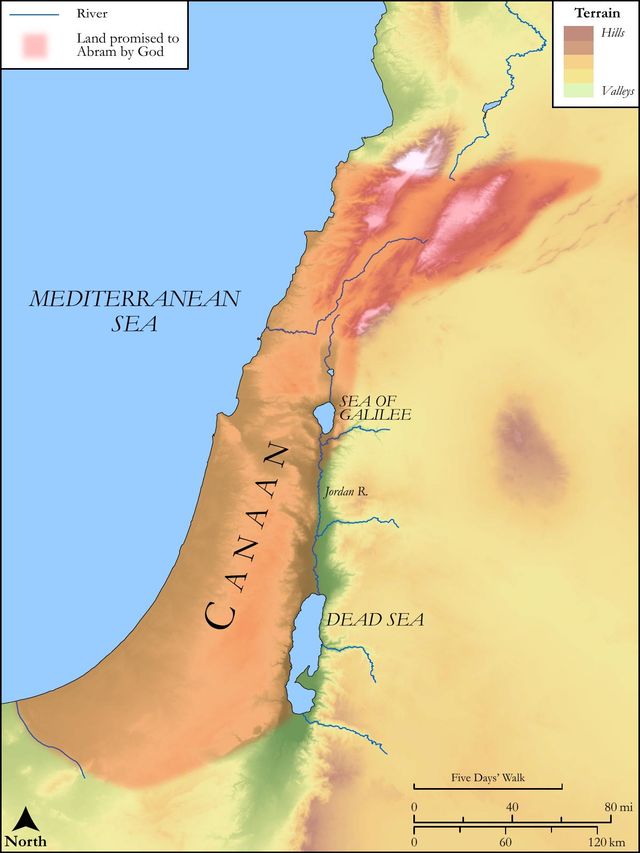
See on the biblical-era maps


Study this verse
Public-domain commentary
Matthew Henry
From his Commentary on the Whole Bible. Henry comments on passages, not single verses — this entry covers Genesis 17:7–14. His three-level outline is real structure in the source text, so it is rendered as structure.
Here is, I. The continuance of the covenant, intimated in three things: - 1. It is established; not to be altered nor revoked. It is fixed, it is ratified, it is made as firm as the divine power and truth can make it. 2. It is entailed; it is a covenant, not with Abraham only (then it would die with him), but with his seed after him, not only his seed after the flesh, but his spiritual seed. 3. It is everlasting in the evangelical sense and meaning of it. The covenant of grace is everlasting. It is from everlasting in the counsels of it, and to everlasting in the consequences of it; and the external administration of it is transmitted with the seal of it to the seed of believers, and the internal administration of it by the Spirit of Christ's seed in every age.
II.The contents of the covenant:
it is a covenant of promises, exceedingly great and precious promises. Here are two which indeed are all-sufficient: - 1. That God would be their God, Gen 17:7, Gen 17:8. All the privileges of the covenant, all its joys and all its hopes, are summed up in this. A man needs desire no more than this to make him happy. What God is himself, that he will be to his people: his wisdom theirs, to guide and counsel them; his power theirs, to protect and support them; his goodness theirs, to supply and comfort them. What faithful worshippers can expect from the God they serve believers shall find in God as theirs. This is enough, yet not all. 2. That Canaan should be their everlasting possession, Gen 17:8. God had before promised this land to Abraham and his seed, Gen 15:18. But here, where it is promised for an everlasting possession, surely it must be looked upon as a type of heaven's happiness, that everlasting rest which remains for the people of God, Heb 4:9. This is that better country to which Abraham had an eye, and the grant of which was that which answered to the vast extent and compass of that promise, that God would be to them a God; so that, if God had not prepared and designed this, he would have been ashamed to be called their God, Heb 11:16. As the land of Canaan was secured to the seed of Abraham according to the flesh, so heaven is secured to all his spiritual seed, by a covenant, and for a possession, truly everlasting. The offer of this eternal life is made in the word, and confirmed by the sacraments, to all that are under the external administration of the covenant; and the earnest of it is given to all believers, Eph 1:14. Canaan is here said to be the land wherein Abraham was a stranger; and the heavenly Canaan is a land to which we are strangers, for it does not yet appear what we shall be.
III.The token of the covenant, and that is circumcision, for the sake of which the covenant is itself called the covenant of circumcision, Act 7:8. It is here said to be the covenant which Abraham and his seed must keep, as a copy or counterpart, Gen 17:9, Gen 17:10. It is called a sign and seal (Rom 4:11), for it was,
1.A confirmation to Abraham and his seed of those promises which were God's part of the covenant, assuring them that they should be fulfilled, that in due time Canaan would be theirs: and the continuance of this ordinance, after Canaan was theirs, intimates that these promises looked further to another Canaan, which they must still be in expectation of. See Heb 4:8.
2.An obligation upon Abraham and his seed to that duty which was their port of the covenant; not only to the duty of accepting the covenant and consenting to it, and putting away the corruption of the flesh (which were more immediately and primarily signified by circumcision), but, in general, to the observance of all God's commands, as they should at any time hereafter be intimated and made known to them; for circumcision made men debtors to do the whole law, Gal 5:3. Those who will have God to be to them a God must consent and resolve to be to him a people. Now,
(1.)Circumcision was a bloody ordinance; for all things by the law were purged with blood, Heb 9:22. See Exo 24:8. But, the blood of Christ being shed, all bloody ordinances are now abolished; circumcision therefore gives way to baptism.
(2.)It was peculiar to the males, though the women were also included in the covenant, for the man is the head of the woman. In our kingdom, the oath of allegiance is required only from men. Some think that the blood of the males only was shed in circumcision because respect was had in it to Jesus Christ and his blood.
(3.)It was the flesh of the foreskin that was to be cut off, because it is by ordinary generation that sin is propagated, and with an eye to the promised seed, who was to come from the loins of Abraham. Christ having not yet offered himself to us, God would have man to enter into covenant by the offering of some part of his own body, and no part could be better spared. It is a secret part of the body; for the true circumcision is that of the heat: this honour God put upon an uncomely part, Co1 12:23, Co1 12:24.
(4.)The ordinance was to be administered to children when they were eight days old, and not sooner, that they might gather some strength, to be able to undergo the pain of it, and that at least one sabbath might pass over them.
(5.)The children of the strangers, of whom the master of the family was the true domestic owner, were to be circumcised (Gen 17:12, Gen 17:13), which looked favourable upon the Gentiles, who should in due time be brought into the family of Abraham, by faith. See Gal 3:14.
(6.)The religious observance of this institution was required under a very severe penalty, Gen 17:14. The contempt of circumcision was a contempt of the covenant; if the parents did not circumcise their children, it was at their peril, as in the case of Moses, Exo 4:24, Exo 4:25. With respect to those that were not circumcised in their infancy, if, when they grew up, they did not themselves come under this ordinance, God would surely reckon with them. If they cut not off the flesh of their foreskin, God would cut them off from their people. It is a dangerous thing to make light of divine institutions, and to live in the neglect of them.
Historical interpretation
Three Centuries of Reception
3 surviving comments on this verse. Each one is dated, so this reads as a timeline rather than a list.
Select a marker to jump to its quote. Markers stagger vertically where authors wrote within a few decades of each other.
Verse 7. "And the overseer of the eunuchs imposed names upon them, calling Daniel Belteshazzar (Balthasar), and Hananiah Shadrach, and Mishael Meshach, and Azariah Abednego." It was not only the overseer or master of the eunuchs (as others have rendered it, the "chief-eunuch") who changed the names of saints, but also Pharaoh called Joseph in Egypt Somtonphanec (Genesis 41:45), for neither of them wished them to have Jewish names in the land of captivity. Wherefore the prophet says in the Psalm: "How shall we sing the Lord's song in a strange land?" (Psalm 137:4). Furthermore the Lord Himself changes names benignly, and on the basis of events imposes names of special significance, so as to call Abram Abraham (Genesis 17:5), and Sarai Sarah (Genesis 17:15). Also in the Gospel, the former Simon received the name of Peter (Mark 3:16), and the sons of Zebedee are called "sons of thunder" (Mark 3:17) - which is not boanerges, as most people suppose, but is more correctly read benereem.
(Chapter 17—Verse 3 and following) And the Lord spoke to him, saying: Behold, my covenant is with you, and you shall be the father of a multitude of nations, and your name shall no longer be called Abram, but your name shall be Abraham, for I have made you the father of many nations. It should be noted that wherever we read Testament in Greek, in the Hebrew language it is the word covenant or pact, that is, Berith (). The Hebrews say that God, from his name, which is the Tetragrammaton among them, added the letter He to Abraham and Sarah: for he was first called Abram (), which means lofty father, and later he was called Abraham (), which means father of many: for what follows nations is not part of the name, but is understood. It is not surprising, therefore, that when it seems that the letter Α has been added among the Greeks and us: we have called it the Hebrew letter He added; for the language of that tongue is to write with He (ה), but to read with A (א): just as, on the contrary, the letter A is often pronounced as He.
And I will establish my covenant between me and you, and between your seed after you in their generations with an everlasting covenant; that I may be your God and the God of your seed after you. The old translation has: And I will establish my testament. It should be noted, however, that wherever we read "testament" in Greek, in the Hebrew language it is "covenant" or "pact," that is, "berith." It is not surprising, then, that the testament or covenant of God is with Abraham and his seed in an everlasting covenant, that He may be their God: because indeed this covenant will be preserved throughout the entire duration of this life without any interruption in the generations of the chosen following in succession, and will be celebrated without any end in the future age. What follows, however, is:
Continue studying Genesis 17:7 across the web’s major study libraries — every link below opens this exact verse, chapter, or book on the destination site.
Read & Compare
 BibleGatewayThis verse in more than 200 translations and 70 languages.
 Bible.comThe YouVersion reader — hundreds of translations, reading plans, and highlights.
 ESV.orgCrossway's official English Standard Version reader.
 NET BibleThe NET translation with 60,000+ translators' notes on every rendering decision.
 STEP BibleTyndale House's free study tool — original text, vocabulary, and scholarly resources.
 BibliaLogos Bible Software's free web reader.
 USCCBThe New American Bible (Revised Edition) with the U.S. bishops' study notes.
Commentaries
 BibleHub CommentariesDozens of classic commentaries on this verse, gathered on one page.
 StudyLightMore than 100 commentary sets — the largest collection on the web.
 BibleRefPlain-English commentary on what this verse means, verse by verse.
 Enduring WordDavid Guzik's free commentary on this chapter, widely used by Bible teachers.
 Bible Study ToolsVerse commentary alongside Greek and Hebrew study aids.
Original Language & Research
- BibleHub InterlinearThe verse word by word — original language, transliteration, and English.
- BibleHub LexiconEvery word's original-language definition and Strong's entry.
 Blue Letter BibleDeep-study tools — Strong's numbers, concordance, and word studies.
 SefariaThe Hebrew text with Rashi and centuries of Jewish commentary.
Sermons, Hymns & Audio


TrulyRandomVerse is not affiliated with these sites and doesn’t control their content. They’re linked because they’re genuinely useful.
Summary
Genesis 17:7 details God's solemn reaffirmation and expansion of His covenant with Abraham, establishing it as an "everlasting covenant" that extends not only to Abraham and his physical descendants through all generations but also promises God's intimate presence and identity as "a God unto thee, and to thy seed after thee." This pivotal declaration underscores the unwavering faithfulness of God and the perpetual nature of His divine commitment, laying the foundational promise of an enduring, relational bond between the Almighty Creator and His chosen people, through whom all nations would ultimately be blessed.
Context
ShowHideLiterary Context
Genesis 17 unfolds as a crucial turning point in the Abrahamic narrative, occurring thirteen years after Ishmael's birth and Abram's last recorded encounter with God in Genesis 15. At ninety-nine years old, Abram remains without the promised heir through Sarai, a fact that highlights the seemingly impossible nature of God's promise. This chapter marks the formal establishment of the Abrahamic covenant, building upon earlier promises in Genesis 12 and Genesis 15. God initiates this encounter by changing Abram's name to Abraham ("father of a multitude") and Sarai's to Sarah ("princess"), signifying their new covenantal roles. The introduction of circumcision as the physical sign of the covenant, detailed in Genesis 17:9-14, immediately follows the declaration of the covenant's everlasting nature in Genesis 17:7. This sequence emphasizes the solemnity and binding nature of God's commitment, requiring a tangible response of obedience from Abraham and his descendants.
Historical & Cultural Context
Covenants were common in the ancient Near East, often involving a suzerain (a powerful king) and a vassal (a lesser king or people). These treaties typically included stipulations, blessings for obedience, and curses for disobedience. However, the Abrahamic covenant, as presented in Genesis 17, largely functions as a unilateral grant, initiated and guaranteed by God Himself. While circumcision was practiced by some surrounding cultures (e.g., Egyptians), its specific meaning and universal application to all male descendants as a sign of this particular covenant with Yahweh distinguished Israel. The emphasis on "seed" (descendants) was paramount in ancient patriarchal societies, where lineage ensured continuity, inheritance, and identity. For a ninety-nine-year-old man and his barren ninety-year-old wife to be promised a vast posterity was not only biologically impossible but culturally scandalous, highlighting the miraculous and supernatural nature of God's intervention.
Key Themes
ShowHideGenesis 17:7 contributes significantly to several overarching themes in Genesis and the broader biblical narrative. Firstly, it underscores the theme of God's Unilateral Initiative and Faithfulness, demonstrating that His promises are not contingent on human merit but on His own sovereign will and unchanging character. Secondly, the concept of Covenant itself is central, defining the framework of God's relationship with humanity, moving from a general relationship to a specific, chosen people. Thirdly, the theme of Seed and Posterity is foundational, as the promise of countless descendants is the means through which God's blessing will extend to all nations, foreshadowing the ultimate "seed" in Christ. Finally, the declaration "to be a God unto thee" establishes the theme of Divine Presence and Relationship, emphasizing God's desire for intimate fellowship with His people, a theme that reverberates throughout redemptive history, culminating in the New Covenant.
Exposition and Analysis
ShowHideKey Word Analysis
ShowHideMeaning "to rise" or "to cause to stand." In this context, it signifies God's act of confirming, making firm, or bringing into existence with permanence. It highlights God's sovereign power and initiative in setting up the covenant, ensuring its stability and enduring nature.
Derived from a root suggesting "cutting." This term refers to a solemn, binding agreement, often ratified by a ritual involving the cutting of animals (as seen in Genesis 15:9-18). Here, it denotes God's unchangeable, divinely instituted compact with Abraham and his descendants, characterized by promises and obligations.
Meaning "concealed" or "the vanishing point." It denotes a duration that is perpetual, eternal, or extends far into the future beyond human reckoning, suggesting a timelessness from God's perspective. When applied to God's covenant, it emphasizes its permanence, continuity, and unending validity across all generations.
Verse Breakdown
ShowHide"And I will establish my covenant"
This opening phrase immediately highlights God's sovereign initiative. The use of "I will" underscores that this covenant is not a negotiation but a divine decree, unilaterally initiated and guaranteed by God Himself. The verb "establish" (qûwm) implies making something firm, secure, and enduring, emphasizing the stability and reliability of God's promise.
"between me and thee and thy seed after thee"
The parties involved in this covenant are clearly defined: God, Abraham, and Abraham's future descendants. The inclusion of "thy seed after thee" (zeraʻ ʼachar) signifies the generational extension of the covenant, ensuring its continuity through Abraham's physical lineage. This highlights God's long-term plan for a people set apart for Himself.
"in their generations"
This phrase further specifies the perpetual nature of the covenant's application. It means that the covenant is not a one-time event but is binding and effective for every successive generation of Abraham's descendants. It underscores the enduring relevance and obligations of the covenant across the span of history.
"for an everlasting covenant"
This crucial declaration defines the covenant's duration. The Hebrew term 'olam (everlasting) denotes a perpetual, unending quality. This is not a temporary agreement but a permanent, irrevocable commitment from God's side, assuring its enduring validity and God's unchanging faithfulness to its terms.
"to be a God unto thee, and to thy thy seed after thee"
This culminating phrase reveals the ultimate purpose and essence of the covenant: a deep, intimate, and relational bond. God promises His personal presence, protection, provision, and guidance to Abraham and his descendants. This is the core promise of fellowship, signifying God's commitment to be their supreme authority, their source of life, and their ultimate good, establishing a unique relationship that sets them apart among all peoples.
Literary Devices
ShowHideGenesis 17:7 employs several literary devices to emphasize the profound nature of God's covenant. The most prominent is Repetition, with the word "covenant" (bᵉrîyth) appearing twice and the phrase "and to thy seed after thee" also repeated, serving to underscore the central theme and the generational scope of God's promise. The use of the first-person singular pronoun "I" ("And I will establish") highlights Divine Speech and Divine Initiative, emphasizing God's sovereignty and the unilateral nature of His commitment. The declaration "everlasting covenant" functions as a powerful Emphatic Statement, ensuring the audience grasps the perpetual and unchanging quality of God's promise. Furthermore, the verse encapsulates a Covenant Formula ("to be a God unto thee, and to thy seed after thee"), a recurring biblical phrase that signifies the establishment of a deep, exclusive, and relational bond between Yahweh and His chosen people, foundational to the identity of Israel and ultimately, the church.
Theological and Thematic Connections
ShowHideGenesis 17:7 stands as a theological bedrock, articulating fundamental truths about God's character and His redemptive plan. It reveals God as a faithful, covenant-keeping Lord whose promises are not subject to human frailty or temporal limitations. The emphasis on the "everlasting" nature of the covenant underscores His immutability and the unchangeable quality of His divine word. This verse also highlights the foundational principle of God's desire for an intimate, relational bond with humanity, expressed in the profound declaration "to be a God unto thee." This promise of divine presence and intimate fellowship is the ultimate blessing of the covenant, extending through generations and finding its fullest expression in the New Covenant.
Reflection and Application
ShowHideFor believers today, Genesis 17:7 offers profound reassurance and a secure foundation for faith, serving as a powerful anchor in a world of constant change. It reminds us that God is a covenant-keeping God whose promises are eternal and trustworthy, extending beyond any single generation or human failing. Through faith in Christ, we are spiritually grafted into the lineage of Abraham, inheriting the promise that God will be "our God." This means we can confidently rely on His unchanging faithfulness, His unwavering provision, and His intimate, abiding presence in our lives. This divine commitment provides immense comfort in times of uncertainty and a sure hope for the future. It calls us to live in a manner worthy of this profound relationship, trusting in His character and living out the implications of being His people, assured that His covenantal love transcends all temporal boundaries and human limitations.
Questions for Reflection
ShowHideFAQ
ShowHideWhat does "everlasting covenant" truly mean in this context?
ShowHideThe term "everlasting covenant" (Hebrew: b'rith 'olam) signifies a covenant that is perpetual, enduring indefinitely, and has no foreseen end from God's perspective. It emphasizes God's unchanging nature and the permanent validity of His promises, ensuring that His commitment to Abraham and his spiritual descendants will never be revoked or expire. This concept is foundational to understanding God's reliability throughout salvation history, from the initial promise to Abraham in Genesis 12:1-3 to its ultimate fulfillment in the New Covenant through Christ, as described in Hebrews 13:20.
How does this covenant relate to the New Testament believer?
ShowHideNew Testament believers are considered spiritual "seed" of Abraham through faith in Christ, as explicitly stated in Galatians 3:29. This means that the promises of the Abrahamic covenant, particularly the promise of God being "our God" and the blessing to all nations, are fulfilled and extended to all who believe, regardless of their physical lineage. The apostle Paul elaborates on this in Romans 4:16, explaining that Abraham is the father of all who believe, both Jew and Gentile, by faith. Thus, the spiritual blessings and the intimate relationship promised in Genesis 17:7 are inherited by all who are "in Christ."
Christ-Centered Fulfillment
ShowHideGenesis 17:7 finds its ultimate and most profound fulfillment in Jesus Christ. While the covenant was initially established with Abraham and his physical descendants, the New Testament reveals that Christ is the singular "seed" (zera') through whom all the promises of the covenant are realized, as the apostle Paul meticulously argues in Galatians 3:16. Jesus is the one who perfectly embodies the promise of God being "a God unto" His people, establishing the New Covenant through His sacrificial blood, which is described as an even more glorious and "everlasting covenant" in Hebrews 13:20. Through Christ's atoning work, both Jew and Gentile who believe are brought into this covenant relationship, becoming spiritual heirs of Abraham and inheriting the spiritual blessings and the intimate fellowship with God promised to Abraham's "seed" (Romans 4:16 and Ephesians 2:12-13). He is the mediator of this new and better covenant, ensuring that God's promise to be "our God" is eternally secured for all who place their faith in Him.