


Acts 2:40
Bible text: King James Version (1769 Blayney text) · Public domain
Bible text: Berean Standard Bible · Public domain
Bible text: American Standard Version (1901) · Public domain
Bible text: World English Bible, Messianic edition · Public domain
Bible text: Geneva Bible (1599) · Public domain
Bible text: Young's Literal Translation · Public domain
- ἑτέροιςheteroisin otherG2087A-DPMAdjective Dative Plural Masculine
- τεteAndG5037CONJConjunction
- λόγοιςlogoiswordsG3056N-DPMNoun Dative Plural Masculine
- πλείοσινpleiosinmanyG4119A-DPM-CAdjective Dative Plural Masculine Comparative
- διεμαρτύρατοdiemarturatohe earnestly testifiedG1263V-ADI-3SVerb Aorist Middle Deponent Indicative 3rd Singular
- καὶkaiandG2532CONJConjunction
- παρεκάλειparekaleiwas exhortingG3870V-IAI-3SVerb Imperfect Active Indicative 3rd Singular
- λέγων·legōnsayingG3004V-PAP-NSMVerb Present Active Participle Nominative Singular Masculine
- σώθητεsōthētedo be savedG4982V-APM-2PVerb Aorist Passive Imperative 2nd Plural
- ἀπὸapofromG575PREPPreposition
- τῆςtēstheG3588T-GSFDefinite article Genitive Singular Feminine
- γενεᾶςgeneasgenerationG1074N-GSFNoun Genitive Singular Feminine
- τῆςtēs<the>G3588T-GSFDefinite article Genitive Singular Feminine
- σκολιᾶςskoliasperverseG4646A-GSFAdjective Genitive Singular Feminine
- ταύτηςtautēsthisG3778D-GSFDemonstrative pronoun Genitive Singular Feminine
English is a literal word-by-word gloss of the Greek, not the KJV's wording. Why?
This is the original text the KJV's translators worked from — each Greek word with its own literal English meaning in this verse, prepared by scholars at Tyndale House, Cambridge. The KJV translates whole sentences, not word by word, so its wording differs: one Greek word can become several English words, and the KJV may choose “charity” where the gloss reads “love”. Both are faithful — they answer different questions. For the KJV's own rendering, switch to the KJV text.
Details
See on the biblical-era maps
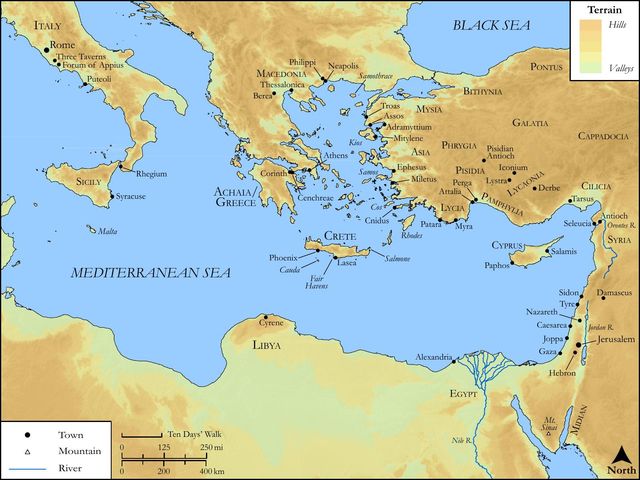
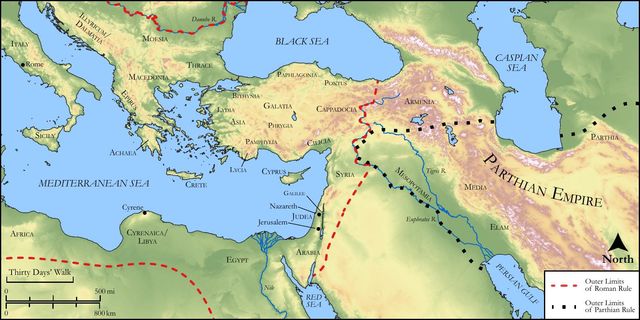
Study this verse
Public-domain commentary
Matthew Henry
From his Commentary on the Whole Bible. Henry comments on passages, not single verses — this entry covers Acts 2:37–41. His four-level outline is real structure in the source text, so it is rendered as structure.
We have seen the wonderful effect of the pouring out of the Spirit, in its influence upon the preachers of the gospel. Peter, in all his life, never spoke at the rate that he had done now, with such fulness, perspicuity, and power. We are now to see another blessed fruit of the pouring out of the Spirit in its influence upon the hearers of the gospel. From the first delivery of that divine message, it appeared that there was a divine power going along with it, and it was mighty, through God, to do wonders: thousands were immediately brought by it to the obedience of faith; it was the rod of God's strength sent out of Zion, Psa 110:2, Psa 110:3. We have here the first-fruits of that vast harvest of souls which by it were gathered in to Jesus Christ. Come and see, in these verses, the exalted Redeemer riding forth, in these chariots of salvation, conquering and to conquer, Rev 6:2.
In these verses we find the word of God the means of beginning and carrying on a good work of grace in the hearts of many, the Spirit of the Lord working by it. Let us see the method of it.
I.They were startled, and convinced, and put upon a serious enquiry, Act 2:37.
When they heard, or having heard, having patiently heard Peter out, and not given him the interruption they had been used to give to Christ in his discourses (this was one good point gained, that they were become attentive to the word), they were pricked to the heart, or in the heart, and, under a deep concern and perplexity, applied themselves to the preachers with this question, What shall we do? It was very strange that such impressions should be made upon such hard hearts all of a sudden. They were Jews, bred up in the opinion of the sufficiency of their religion to save them, had lately seen this Jesus crucified in weakness and disgrace, and were told by their rulers that he was a deceiver. Peter had charged them with having a hand, a wicked hand, in his death, which was likely to have exasperated them against him; yet, when they heard this plain scriptural sermon, they were much affected with it.
1.It put them in pain: They were pricked in their hearts. We read of those that were cut to the heart with indignation at the preacher (Act 7:54), but these were pricked to the heart with indignation at themselves for having been accessory to the death of Christ. Peter, charging it upon them, awakened their consciences, touched them to the quick, and the reflection they now made upon it was as a sword in their bones, it pierced them as they had pierced Christ. Note, Sinners, when their eyes are opened, cannot but be pricked to the heart for sin, cannot but experience an inward uneasiness; this is having the heart rent (Joe 2:13), a broken and contrite heart, Psa 51:17. Those that are truly sorry for their sins, and ashamed of them, and afraid of the consequences of them, are pricked to the heart. A prick in the heart is mortal, and under those commotions (says Paul) I died, Rom 7:9. "All my good opinion of myself and confidence in myself failed me."
2.It put them upon enquiry. Our of the abundance of the heart, thus pricked, the mouth spoke. Observe,
(1.)To whom they thus addressed themselves: To Peter and to the rest of the apostles, some to one and some to another; to them they opened their case; by them they had been convinced, and therefore by them they expect to be counselled and comforted. They do not appeal from them to the scribes and Pharisees, to justify them against the apostles' charge, but apply to them, as owning the charge, and referring the case to them. They call them men and brethren, as Peter had called them (Act 2:29): it is a style of friendship and love, rather than a title of honour: "You are men, look upon us with humanity; you are brethren, look upon us with brotherly love." Note, Ministers are spiritual physicians; they should be advised with by those whose consciences are wounded; and it is good for people to be free and familiar with those ministers, as men and their brethren, who deal for their souls as for their own.
(2.)What the address is: What shall we do?
[1.]They speak as men at a stand, that did not know what to do; in a perfect surprise: "Is that Jesus whom we have crucified both Lord and Christ? Then what will become of us who crucified him? We are all undone!" Note, No way of being happy but by seeing ourselves miserable. When we find ourselves in danger of being lost for ever, there is hope of our being made for ever, and not till then.
[2.]They speak as men at a point, that were resolved to do any thing they should be directed to immediately; they are not for taking time to consider, nor for adjourning the prosecution of their convictions to a more convenient season, but desire now to be told what they must do to escape the misery they were liable to. Note, Those that are convinced of sin would gladly know the way to peace and pardon, Act 9:6; Act 16:30.
II.Peter and the other apostles direct them in short what they must do, and what in so doing they might expect, Act 2:38, Act 2:39.
Sinners convinced must be encouraged; and that which is broken must be bound up (Eze 34:16); they must be told that though their case is sad it is not desperate, there is hope for them.
1.He here shows them the course they must take. (1.) Repent; this is a plank after shipwreck. "Let the sense of this horrid guilt which you have brought upon yourselves by putting Christ to death awaken you to a penitent reflection upon all your other sins (as the demand of some one great debt brings to light all the debts of a poor bankrupt) and to bitter remorse and sorrow for them" This was the same duty that John the Baptist and Christ had preached, and now that the Spirit is poured out is it still insisted on: "Repent, repent; change your mind, change your way; admit an after-thought." (2.) Be baptized every one of you in the name of Jesus Christ; that is, "firmly believe the doctrine of Christ, and submit to his grace and government; and make an open solemn profession of this, and come under an engagement to abide by it, by submitting to the ordinance of baptism; be proselyted to Christ and to his holy religion, and renounce your infidelity." They must be baptized in the name of Jesus Christ. They did believe in the Father and the Holy Ghost speaking by the prophets; but they must also believe in the name of Jesus, that he is the Christ, the Messias promised to the fathers. "Take Jesus for your king, and by baptism swear allegiance to him; take him for your prophet, and hear him; take him for your priest, to make atonement for you," which seems peculiarly intended here; for they must be baptized in his name for the remission of sins upon the score of his righteousness. (3.) This is pressed upon each particular person: Every one of you. "Even those of you that have been the greatest sinners, if they repent and believe, are welcome to be baptized; and those who think they have been the greatest saints have yet need to repent, and believe, and be baptized. There is grace enough in Christ for every one of you, be you ever so many, and grace suited to the case of every one. Israel of old were baptized unto Moses in the camp, the whole body of the Israelites together, when they passed through the cloud and the sea (Co1 10:1, Co1 10:2), for the covenant of peculiarity was national; but now every one of you distinctly must be baptized in the name of the Lord Jesus, and transact for himself in this great affair." See Col 1:28.
2.He gives them encouragement to take this course: - (1.) "It shall be for the remission of sins. Repent of your sin, and it shall not be your ruin; be baptized into the faith of Christ, and in truth you shall be justified, which you could never be by the law of Moses. Aim at this, and depend upon Christ for it, and this you shall have. As the cup in the Lord's supper is the New Testament in the blood of Christ for the remission of sins, so baptism is in the name of Christ for the remission of sins. Be washed, and you shall be washed." (2.) "You shall receive the gift of the Holy Ghost as well as we; for it is designed for a general blessing: some of you shall receive these external gifts, and each of you, if you be sincere in your faith and repentance, shall receive his internal graces and comforts, shall be sealed with the Holy Spirit of promise." Note, All that receive the remission of sins receive the gift of the Holy Ghost. All that are justified are sanctified. (3.) "Your children shall still have, as they have had, an interest in the covenant, and a title to the external seal of it. Come over to Christ, to receive those inestimable benefits; for the promise of the remission of sins, and the gift of the Holy Ghost, is to you and to your children," Act 2:39. It was very express (Isa 44:3): I will pour my Spirit upon thy seed. And (Isa 59:21), My Spirit and my word shall not depart from thy seed, and thy seed's seed. When God took Abraham into covenant, he said, I will be a God to thee, and to thy seed (Gen 17:7); and, accordingly, every Israelite had his son circumcised at eight days old. Now it is proper for an Israelite, when he is by baptism to come into a new dispensation of this covenant, to ask, "What must be done with my children? Must they be thrown out, or taken in with me?" "Taken in" (says Peter) "by all means; for the promise, that great promise of God's being to you a God, is as much to you and to your children now as ever it was." (4.) "Though the promise is still extended to your children as it has been, yet it is not, as it has been, confined to you and them, but the benefit of it is designed for all that are afar off;" we may add, and their children, for the blessing of Abraham comes upon the Gentiles, through Jesus Christ, Gal 3:14. The promise had long pertained to the Israelites (Rom 9:4); but now it is sent to those that are afar off, the remotest nations of the Gentiles, and every one of them too, all that are afar off. To this general the following limitation must refer, even as many of them, as many particular persons in each nation, as the Lord our God shall call effectually into the fellowship of Jesus Christ. Note, God can make his call to reach those that are ever so far off, and none come but those whom he calls.
III.These directions are followed with a needful caution (Act 2:40):
With many other words, to the same purport, did he testify gospel truths, and exhort to gospel duties; now that the word began to work he followed it; he had said much in a little (Act 2:38, Act 2:39), and that which, one would think, included all, and yet he had more to say. When we have heard those words which have done our souls good, we cannot but wish to hear more, to hear many more such words. Among other things he said (and it should seem inculcated it), Save yourselves from this untoward generation. Be you free from them. The unbelieving Jews were an untoward generation, perverse and obstinate; they walked contrary to God and man (Th1 2:15), wedded to sin and marked for ruin. Now as to them, 1. "Give diligence to save yourselves from their ruin, that you may not be involved in that, and may escape all those things" (as the Christians did): "Repent, and be baptized; and then you shall not be sharers in destruction with those with whom you have been sharers in sin." O gather not my soul with sinners. 2. "In order to this continue not with them in their sin, persist not with them in infidelity. Save yourselves, that is, separate yourselves, distinguish yourselves, from this untoward generation. Be not rebellious like this rebellious house; partake not with them in their sins, that you share not with them in their plagues." Note, To separate ourselves from wicked people is the only way to save ourselves from them; though we hereby expose ourselves to their rage and enmity, we really save ourselves from them; for, if we consider whither they are hastening, we shall see it is better to have the trouble of swimming against their stream than the danger of being carried down their stream. Those that repent of their sins, and give up themselves to Jesus Christ, must evidence their sincerity by breaking off all intimate society with wicked people. Depart from me, ye evil doers, is the language of one that determines to keep the commandments of his God, Psa 119:115. We must save ourselves from them, which denotes avoiding them with dread and holy fear, as we would save ourselves from an enemy that seeks to destroy us, or from a house infected with the plague.
IV.Here is the happy success and issue of this, Act 2:41.
The Spirit wrought with the word, and wrought wonders by it. These same persons that had many of them been eye-witnesses of the death of Christ, and the prodigies that attended it, and were not wrought upon by them, were yet wrought upon by the preaching of the word, for it is this that is the power of God unto salvation.
1.They received the word; and then only the word does us good, when we do receive it, embrace it, and bid it welcome. They admitted the conviction of it, and accepted the offers of it.
2.They gladly received it. Herod heard the word gladly, but these gladly received it, were not only glad that they had it to receive, but glad that by the grace of God they were enabled to receive it, though it would be a humbling changing word to them, and would expose them to the enmity of their countrymen.
3.They were baptized; believing with the heart, they made confession with the mouth, and enrolled themselves among the disciples of Christ by that sacred rite and ceremony which he had instituted. And though Peter had said, "Be baptized in the name of the Lord Jesus" (because the doctrine of Christ was the present truth), yet we have reason to think that, in baptizing them, the whole form Christ prescribed was used, in the name of the Father, the Son, and the Holy Ghost. Note, Those that receive the Christian covenant ought to receive the Christian baptism.
4.Hereby there were added to the disciples to the number of about three thousand souls that same day. All those that had received the Holy Ghost had their tongues at work to preach, and their hands at work to baptize; for it was time to be busy, when such a harvest was to be gathered in. The conversion of these three thousand with these words was a greater work than the feeding of four or five thousand with a few loaves. Now Israel began to multiply after the death of our Joseph. They are said to be three thousand souls (which word is generally used for persons when women and children are included with men, as Gen 14:21, margin, Give me the souls; Gen 46:27, seventy souls), which intimates that those that were here baptized were not so many men, but so many heads of families as, with their children and servants baptized, might make up three thousand souls. These were added to them. Note, Those who are joined to Christ are added to the disciples of Christ, and join with them. When we take God for our God, we must take his people to be our people.
Historical interpretation
Historical reception
2 surviving comments on this verse. Each one is dated, so this reads as a timeline rather than a list.
"And with many other words did he testify, and exhort, saying." Observe how, throughout, the writer studies brevity, and how free he is from ambition and display. "He testified and exhorted, saying." This is the perfection of teaching, comprising something of fear and something of love. "Save yourselves from this untoward generation." He says nothing of the future, all is about the present, by which indeed men are chiefly swayed; he shows that the Gospel releases from present evils as well.
Since, however, the hearer would desire to learn what was the sum and substance of these further words, he tells us this: "Save yourselves from this untoward generation." They approved of what had been said, although fraught with terror, and after their assent given, proceed at once to baptism.
Continue studying Acts 2:40 across the web’s major study libraries — every link below opens this exact verse, chapter, or book on the destination site.
Read & Compare
 BibleGatewayThis verse in more than 200 translations and 70 languages.
 Bible.comThe YouVersion reader — hundreds of translations, reading plans, and highlights.
 ESV.orgCrossway's official English Standard Version reader.
 NET BibleThe NET translation with 60,000+ translators' notes on every rendering decision.
 STEP BibleTyndale House's free study tool — original text, vocabulary, and scholarly resources.
 BibliaLogos Bible Software's free web reader.
 USCCBThe New American Bible (Revised Edition) with the U.S. bishops' study notes.
Commentaries
 BibleHub CommentariesDozens of classic commentaries on this verse, gathered on one page.
 StudyLightMore than 100 commentary sets — the largest collection on the web.
 BibleRefPlain-English commentary on what this verse means, verse by verse.
 Enduring WordDavid Guzik's free commentary on this chapter, widely used by Bible teachers.
 Bible Study ToolsVerse commentary alongside Greek and Hebrew study aids.
Original Language & Research
- BibleHub InterlinearThe verse word by word — original language, transliteration, and English.
- BibleHub LexiconEvery word's original-language definition and Strong's entry.
 Blue Letter BibleDeep-study tools — Strong's numbers, concordance, and word studies.
 CNTR CollationThe earliest Greek manuscripts of this verse, collated letter by letter.
Sermons, Hymns & Audio


TrulyRandomVerse is not affiliated with these sites and doesn’t control their content. They’re linked because they’re genuinely useful.
Summary
Acts 2:40 captures the climactic and urgent appeal of Peter's Pentecost sermon, where he passionately exhorted his Jewish audience to embrace salvation. Following the Holy Spirit's outpouring and Peter's bold proclamation of Jesus as Messiah, this verse serves as a powerful call to repentance and separation from the prevailing spiritual corruption and rejection of God's truth characteristic of their generation, emphasizing the critical need for individual response to God's gracious offer of deliverance.
Context
ShowHideLiterary Context
Acts 2:40 forms the concluding, fervent appeal of Peter's groundbreaking sermon on the Day of Pentecost. Preceded by the miraculous outpouring of the Holy Spirit and Peter's explanation of its fulfillment of Joel's prophecy, the sermon culminates in a direct accusation that the audience had crucified Jesus, whom God had made "both Lord and Christ" (Acts 2:36). This powerful indictment deeply affected the listeners, causing them to be "pricked in their heart" and ask, "What shall we do?" Peter's immediate response in Acts 2:38-39 was a call to "Repent, and be baptized every one of you in the name of Jesus Christ for the remission of sins, and ye shall receive the gift of the Holy Ghost. For the promise is unto you, and to your children, and to all that are afar off, even as many as the Lord our God shall call." Verse 40, then, is not a new command but a forceful reinforcement of this call, underscoring the urgency and the dire consequences of remaining in their current spiritual state. It acts as a final, impassioned plea before the narrative shifts to the immediate response of conversion and the formation of the early church.
Historical & Cultural Context
The setting is Jerusalem, during the Jewish Feast of Pentecost (Shavuot), a harvest festival that also commemorated the giving of the Law at Sinai. This feast drew devout Jews from across the Roman Empire, creating a diverse and large audience for Peter's sermon. The recent crucifixion of Jesus, orchestrated by the Jewish leadership and approved by the Roman authorities, was still fresh in the collective memory. Peter's accusation in Acts 2:23 and Acts 2:36 directly confronted their complicity in rejecting their Messiah. The phrase "this untoward generation" reflects a common prophetic motif in Jewish scripture, where a "generation" could refer not just to a chronological age but to a moral and spiritual disposition, often characterized by rebellion, stubbornness, and rejection of God's messengers (e.g., Deuteronomy 32:5). Peter's words therefore resonated with a deep-seated understanding of divine judgment upon a people who had repeatedly turned away from God.
Key Themes
ShowHideActs 2:40 powerfully contributes to several key themes prevalent in the book of Acts and the broader New Testament. Firstly, it highlights the urgency of salvation and the necessity of a decisive response to the Gospel, echoing the immediacy of the call to repentance throughout the apostolic preaching. Secondly, it emphasizes separation from the world's corruption, particularly from a "generation" characterized by its spiritual blindness and rejection of God's truth, a theme that resonates with the call for believers to be distinct and holy (2 Corinthians 6:17). Thirdly, it underscores personal responsibility in responding to God's grace; while salvation is a divine gift, the imperative "Save yourselves" implies an active turning away from sin and an embrace of faith. Finally, it reinforces the Messianic identity of Jesus as the one through whom salvation is offered, contrasting His divine authority with the generation that rejected Him. This verse encapsulates the foundational message of the early church: repentance, faith in Christ, and a transformed life distinct from the world.
Exposition and Analysis
ShowHideKey Word Analysis
ShowHideMeaning "to attest or protest earnestly, or (by implication) hortatively." Peter's "testifying" was not merely stating facts but bearing solemn witness with intense conviction, often with a sense of warning or earnest appeal. It implies a strong, authoritative declaration of truth, backed by the Spirit's power, urging a response.
Meaning "to call near, i.e. invite, invoke (by imploration, hortation or consolation)." This word encompasses a range of meanings from comforting to pleading to urging. Here, it denotes a passionate, encouraging, yet urgent appeal for action, demonstrating Peter's deep pastoral concern for his listeners' eternal welfare.
Meaning "to save, i.e. deliver or protect (literally or figuratively)." While salvation is ultimately God's work, the imperative "save yourselves" (a middle voice verb) indicates the active participation and responsibility of the individual in responding to God's offer. It implies a turning away from danger (the "untoward generation") and a turning towards the provided means of deliverance.
Meaning "warped, i.e. winding; figuratively, perverse." This word describes something that is crooked, bent, or twisted, standing in stark contrast to what is straight, upright, or righteous. Applied to a generation, it portrays them as morally depraved, spiritually rebellious, and resistant to God's truth, particularly in their rejection of Jesus.
Verse Breakdown
ShowHide"And with many other words did he testify and exhort,"
This phrase emphasizes the breadth and depth of Peter's continued preaching beyond the summarized points. It indicates that his sermon was not a brief address but a comprehensive and sustained effort to convince and persuade his audience. The verbs "testify" (diamartýromai) and "exhort" (parakaléō) highlight the dual nature of his communication: a solemn declaration of truth (testifying) combined with a passionate, urgent appeal for action (exhorting).
"saying,"
This simple conjunction introduces the direct quote that follows, presenting the core message of Peter's concluding remarks. It signifies the directness and clarity of his final, crucial instruction.
"Save yourselves from this untoward generation."
This is the climactic imperative of Peter's sermon. "Save yourselves" is a command for personal action, urging the listeners to actively embrace the salvation offered through Christ. The phrase "from this untoward generation" identifies the source of danger and corruption from which they need deliverance. The term "untoward" (skoliós) vividly describes the generation as morally crooked, perverse, and spiritually rebellious, particularly in their rejection and crucifixion of Jesus. This command is a call to spiritual and moral separation, to dissociate from the prevailing wickedness and align with God's redemptive plan.
Literary Devices
ShowHideActs 2:40 effectively employs several literary devices to convey its urgent message. The primary device is Exhortation, as Peter's words are a passionate, urgent appeal for his audience to take decisive action. This is reinforced by the Imperative Mood of "Save yourselves," which conveys a direct command, underscoring the critical nature of their decision and their personal responsibility. The phrase "untoward generation" functions as a powerful Metaphor and Epithet, describing the moral and spiritual condition of the people. "Untoward" (Greek skoliós, meaning "crooked" or "perverse") metaphorically paints a picture of a generation that is twisted away from God's righteousness, highlighting their moral depravity and spiritual rebellion. This vivid imagery serves to impress upon the listeners the gravity of their situation and the necessity of separating themselves from such a corrupt influence. The entire verse also serves as a Summary Statement, encapsulating the essence of Peter's extended appeal and the core of the Gospel's demand for a response.
Theological and Thematic Connections
ShowHideActs 2:40 stands as a foundational statement regarding the nature of salvation and the call to discipleship. Theologically, it asserts the necessity of a personal response to God's gracious offer of salvation, emphasizing that while salvation is divinely initiated and accomplished through Christ, it requires human decision and action—repentance and faith. The command to "save yourselves from this untoward generation" highlights the inherent conflict between the values of God's kingdom and the fallen world. It underscores the biblical theme of separation and holiness, where believers are called to be distinct from the prevailing moral and spiritual corruption of their age. This separation is not merely physical but a profound reorientation of allegiance, values, and lifestyle, moving from a trajectory of judgment to one of divine favor and eternal life. The "untoward generation" serves as a timeless archetype for any societal or cultural climate that rejects God's truth and persecutes His messengers, making Peter's exhortation perennially relevant.
Reflection and Application
ShowHideActs 2:40 presents a timeless and urgent call to every generation. Peter's passionate exhortation reminds us that the Gospel message demands a decisive and personal response. Just as the first-century audience was called to separate themselves from the prevailing spiritual blindness and moral corruption of their time, believers today are continually challenged to live distinctively in a world that often stands in opposition to God's truth. This involves a conscious decision to turn away from the "untoward" characteristics of our own age—whether it be materialism, moral relativism, spiritual apathy, or hostility towards Christ—and to embrace the values and lifestyle of God's kingdom. The urgency in Peter's voice should resonate with us, prompting both personal introspection about our own alignment with God's will and a renewed zeal to share the life-saving message of the Gospel with others who remain ensnared by the untoward influences of the world. Our salvation is not merely a past event but a continuous journey of living out our transformed identity in Christ, standing apart as lights in a crooked and perverse generation.
Questions for Reflection
ShowHideFAQ
ShowHideDoes "Save yourselves" imply that salvation is earned by human effort?
ShowHideNo, the phrase "Save yourselves" in Acts 2:40 does not imply that salvation is earned by human effort, contradicting the biblical doctrine of salvation by grace through faith. The Greek verb sṓzō (to save) is here in the middle voice, which often indicates that the subject participates in or benefits from the action. In this context, it is an urgent imperative for the audience to respond to the divine provision of salvation. Peter had just preached that God made Jesus "both Lord and Christ" (Acts 2:36) and called them to "Repent, and be baptized... for the remission of sins" (Acts 2:38). The "saving" they were to do was to turn from their sin and the "untoward generation" that rejected Christ, and to embrace the salvation freely offered by God through faith in Jesus. It is a call to appropriate the salvation God provides, not to achieve it. This is consistent with passages like Ephesians 2:8-9, which clearly state that salvation is "by grace... through faith... not of works, lest any man should boast."
Christ-Centered Fulfillment
ShowHideActs 2:40, though a direct command to the Jewish audience, finds its ultimate Christ-centered fulfillment in the person and work of Jesus Christ. Peter's entire sermon, culminating in this exhortation, is a powerful declaration of Jesus's identity as the crucified and resurrected Messiah, whom God has made "both Lord and Christ" (Acts 2:36). The "untoward generation" from which they were to be saved was precisely the generation that had rejected and murdered their own Messiah, demonstrating their profound spiritual perversity. Therefore, the call to "save yourselves" is fundamentally a call to turn to Christ as the sole means of salvation. He is the one who delivers us from the power of sin and the condemnation of a world alienated from God. Jesus himself declared, "I am the way, the truth, and the life: no man cometh unto the Father, but by me" (John 14:6). To be saved from the "untoward generation" is to be united with Christ, to be transformed by His Spirit, and to live a life distinct from the world's values, reflecting the righteousness and holiness of the one who "gave himself for our sins, that he might deliver us from this present evil world, according to the will of God and our Father" (Galatians 1:4). Thus, Peter's urgent plea is an invitation to embrace the saving work of Christ and find refuge in Him from the judgment awaiting those who remain in rebellion against God.