


Acts 2:42
Bible text: King James Version (1769 Blayney text) · Public domain
Bible text: Berean Standard Bible · Public domain
Bible text: American Standard Version (1901) · Public domain
Bible text: World English Bible, Messianic edition · Public domain
Bible text: Geneva Bible (1599) · Public domain
Bible text: Young's Literal Translation · Public domain
- ἮσανĒsanThey wereG1510V-IAI-3PVerb Imperfect Active Indicative 3rd Plural
- δὲdenowG1161CONJConjunction
- προσκαρτεροῦντεςproskarterountessteadfastly continuingG4342V-PAP-NPMVerb Present Active Participle Nominative Plural Masculine
- τῇtēain theG3588T-DSFDefinite article Dative Singular Feminine
- διδαχῇdidachēateachingG1322N-DSFNoun Dative Singular Feminine
- τῶνtōnof theG3588T-GPMDefinite article Genitive Plural Masculine
- ἀποστόλωνapostolōnapostlesG652N-GPMNoun Genitive Plural Masculine
- καὶkaiandG2532CONJConjunction
- τῇtēa<the>G3588T-DSFDefinite article Dative Singular Feminine
- κοινωνίᾳkoinōniain fellowshipG2842N-DSFNoun Dative Singular Feminine
- καὶkaiandG2532CONJConjunction
- τῇtēain theG3588T-DSFDefinite article Dative Singular Feminine
- κλάσειklaseibreakingG2800N-DSFNoun Dative Singular Feminine
- τοῦtouof theG3588T-GSMDefinite article Genitive Singular Masculine
- ἄρτουartoubreadG740N-GSMNoun Genitive Singular Masculine
- καὶkaiandG2532CONJConjunction
- ταῖςtaisin theG3588T-DPFDefinite article Dative Plural Feminine
- προσευχαῖςproseuchaisprayersG4335N-DPFNoun Dative Plural Feminine
English is a literal word-by-word gloss of the Greek, not the KJV's wording. Why?
This is the original text the KJV's translators worked from — each Greek word with its own literal English meaning in this verse, prepared by scholars at Tyndale House, Cambridge. The KJV translates whole sentences, not word by word, so its wording differs: one Greek word can become several English words, and the KJV may choose “charity” where the gloss reads “love”. Both are faithful — they answer different questions. For the KJV's own rendering, switch to the KJV text.
Details
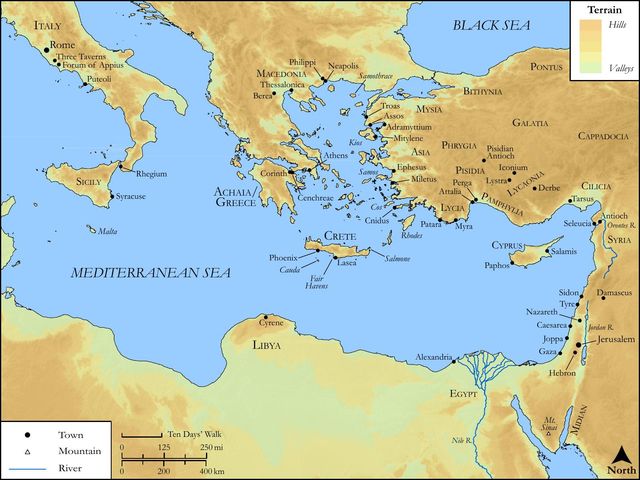
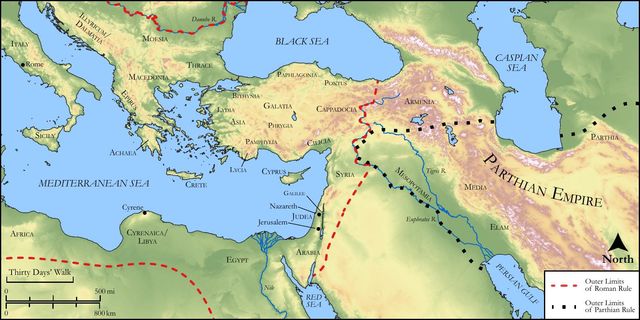
See on the biblical-era maps
Study this verse
Public-domain commentary
Matthew Henry
From his Commentary on the Whole Bible. Henry comments on passages, not single verses — this entry covers Acts 2:42–47. His three-level outline is real structure in the source text, so it is rendered as structure.
We often speak of the primitive church, and appeal to it, and to the history of it; in these verses we have the history of the truly primitive church, of the first days of it, its state of infancy indeed, but, like that, the state of its greatest innocence.
I.They kept close to holy ordinances, and abounded in all instances of piety and devotion, for Christianity, admitted in the power of it, will dispose the soul to communion with God in all those ways wherein he has appointed us to meet him and promised to meet us.
1.They were diligent and constant inn their attendance upon the preaching of the word. They continued in the apostles' doctrine, and never disowned nor deserted it; or, as it may be read, they continued constant to the apostles' teaching or instruction; by baptism they were discipled to be taught, and they were willing to be taught. Note, Those who have given up their names to Christ must make conscience of hearing his word; for thereby we give honour to him, and build up ourselves in our most holy faith.
2.They kept up the communion of saints. They continued in fellowship (Act 2:42), and continued daily with one accord in the temple, Act 2:46. They not only had a mutual affection to each other, but a great deal of mutual conversation with each other; they were much together. When they withdrew from the untoward generation, they did not turn hermits, but were very intimate with one another, and took all occasions to meet; wherever you saw one disciple, you would see more, like birds of a feather. See how these Christians love one another. They were concerned for one another, sympathized with one another, and heartily espoused one another's interests. They had fellowship with one another in religious worship. They met in the temple: there was their rendezvous; for joint-fellowship with God is the best fellowship we can have with one another, Jo1 1:3. Observe,
(1.)They were daily in the temple, not only on the days of the sabbaths and solemn feasts, but on other days, every day. Worshipping God is to be our daily work, and, where there is opportunity, the oftener it is done publicly the better. God loves the gates of Zion, and so must we.
(2.)They were with one accord; not only no discord nor strife, but a great deal of holy love among them; and they heartily joined in their public services. Though they met with the Jews in the courts of the temple, yet the Christians kept together by themselves, and were unanimous in their separate devotions.
3.They frequently joined in the ordinance of the Lord's supper. They continued in the breaking of bread, in celebrating that memorial of their Master's death, as those that were not ashamed to own their relation to, and their dependence upon, Christ and him crucified. They could not forget the death of Christ, yet they kept up this memorial of it, and made it their constant practice, because it was an institution of Christ, to be transmitted to the succeeding ages of the church. They broke bread from house to house; kat' oikon - house by house; they did not think fit to celebrate the eucharist in the temple, for that was peculiar to the Christian institutes, and therefore they administered that ordinance in private houses, choosing such houses of the converted Christians as were convenient, to which the neighbours resorted; and they went from one to another of these little synagogues or domestic chapels, houses that had churches in them, and there celebrated the eucharist with those that usually met there to worship God.
4.They continued in prayers. After the Spirit was poured out, as well as before, while they were waiting for him, they continued instant in prayer; for prayer will never be superseded till it comes to be swallowed up in everlasting praise. Breaking of bread comes in between the work and prayer, for it has reference to both, and is a help to both. The Lord's supper is a sermon to the eye, and a confirmation of God's word to us; and it is an encouragement to our prayers, and a solemn expression of the ascent of our souls to God.
5.They abounded in thanksgiving; were continually praising God, Act 2:47. This should have a part in every prayer, and not be crowded into a corner. Those that have received the gift of the Holy Ghost will be much in praise.
II.They were loving one to another, and very kind; their charity was as eminent as their piety, and their joining together in holy ordinances knit their hearts to each other, and very much endeared them to one another.
1.They had frequent meetings for Christian converse (Act 2:44): All that believed were together; not all those thousands in one place (this was impracticable); but, as Dr. Lightfoot explains it, they kept together in several companies or congregations, according as their languages, nations, or other associations, brought them and kept them together. And thus joining together, because it was apart from those that believed not, and because it was in the same profession and practice of the duties of religion, they are said to be together, epi to auto. They associated together, and so both expressed and increased their mutual love.
2.They had all things common; perhaps they had common tables (as the Spartans of old), for familiarity, temperance and freedom of conversation; they ate together, that those who had much might have the less, and so be kept from the temptations of abundance; and they who had little might have the more, and so be kept from the temptations of want and poverty. Or, There was such a concern for one another, and such a readiness to help one another as there was occasion, that it might be said, They had all things common, according to the law of friendship; one wanted not what another had; for he might have it for the asking.
3.They were very cheerful, and very generous in the use of what they had. Besides the religion that was in their sacred feasts (their breaking bread from house to house) a great deal of it appeared in their common meals; they did eat their meat with gladness and singleness of heart. They brought the comforts of God's table along with them to their own, which had two good effects upon them: - (1.) It made them very pleasant, and enlarged their hearts with holy joy; they did eat their bread with joy, and drank their wine with a merry heart, as knowing that God now accepted their works. None have such cause to be cheerful as good Christians have; it is a pity but that they should always have hearts to be so. (2.) It made them very liberal to their poor brethren, and enlarged their hearts in charity. They did eat their meat with singleness of heart, en aphelotēti kardias - with liberality of heart; so some: they did not eat their morsels alone, but bade the poor welcome to their table, not grudgingly, but with all the hearty freedom imaginable. Note, It becomes Christians to be open-hearted and open-handed, and in every good work to sow plentifully, as those on whom God hath sown plentifully, and who hope to reap so.
4.They raised a fund for charity (Act 2:45): They sold their possessions and goods; some sold their lands and houses, others their stocks and the furniture of their houses, and parted the money to their brethren, as every man had need. This was to destroy, not property (as Mr. Baxter says), but selfishness. Herein, probably, they had an eye to the command which Christ gave to the rich man, as a test of his sincerity, Sell that thou hast, and give to the poor. Not that this was intended for an example to be a constant binding rule, as if all Christians in all places and ages were bound to sell their estates, and give away the money in charity. For St. Paul's epistles, after this, often speak of the distinction of rich and poor, and Christ hath said that the poor we always have with us, and shall have, and the rich must be always doing them good out of the rents, issues, and profits, of their estates, which they disable themselves to do, if they sell them, and give all away at once. But here the case was extraordinary (1.) They were under no obligation of a divine command to do this, as appears by what Peter said to Ananias (Act 5:4): Was it not in thine own power? But it was a very commendable instance of their raisedness above the world, their contempt of it, their assurance of another world, their love to their brethren, their compassion to the poor, and their great zeal for the encouraging of Christianity, and the nursing of it in its infancy. The apostles left all to follow Christ, and were to give themselves wholly to the word and prayer, and something must be done for their maintenance; so that this extraordinary liberality was like that of Israel in the wilderness towards the building of the tabernacle, which needed to be restrained, Exo 36:5, Exo 36:6. Our rule is, to give according as God has blessed us; yet, in such an extraordinary case as this, those are to be praised who give beyond their power, Co2 8:3. (2.) They were Jews that did this, and those who believed Christ must believe that the Jewish nation would shortly be destroyed, and an end put to the possession of estates and goods in it, and, in the belief of this, they sold them for the present service of Christ and his church.
III.God owned them, and gave them signal tokens of his presence with them (Act 2:43):
Many wonders and signs were done by the apostles of divers sorts, which confirmed their doctrine, and incontestably proved that it was from God. Those that could work miracles could have maintained themselves and the poor that were among them miraculously, as Christ fed thousands with a little food; but it was as much for the glory of God that it should be done by a miracle of grace (inclining people to sell their estates, to do it) as if it had been done by a miracle in nature.
But the Lord's giving them power to work miracles was not all he did for them; he added to the church daily. The word in their mouths did wonders, and God blessed their endeavours for the increase of the number of believers. Note, It is God's work to add souls to the church; and it is a great comfort both to ministers and Christians to see it.
IV.The people were influenced by it; those that were without, the standers by, that were spectators.
1.They feared them, and had a veneration for them (Act 2:43): Fear came upon every soul, that is, upon very many who saw the wonders and signs done by the apostles, and were afraid lest their not being respected as they should be would bring desolation upon their nation. The common people stood in awe of them, as Herod feared John. Though they had nothing of external pomp to command external respect, as the scribes' long robes gained them the greetings in the market-places, yet they had abundance of spiritual gifts that were truly honourable, which possessed men with an inward reverence for them. Fear came upon every soul; the souls of people were strangely influenced by their awful preaching and living.
2.They favoured them. Though we have reason to think there were those that despised them and hated them (we are sure the Pharisees and chief priests did), yet far the greater part of the common people had a kindness for them - they had favour with all the people. Christ was so violently run upon and run down by a packed mob, which cried, Crucify him, crucify him, that one would think his doctrine and followers were never likely to have an interest in the common people any more. And yet here we find them in favour with them all, by which it appears that their prosecuting Christ was a sort of force put upon them by the artifices of the priests; now they returned to their wits, to their right mind. Note, Undissembled piety and charity will command respect; and cheerfulness in serving God will recommend religion to those that are without. Some read it, They had charity to all the people - charin echontes pros holon ton laon; they did not confine their charity to those of their own community, but it was catholic and extensive; and this recommended them very much.
3.They fell over to them. Some or other were daily coming in, though not so many as the first day; and they were such as should be saved. Note, Those that God has designed for eternal salvation shall one time or other be effectually brought to Christ: and those that are brought to Christ are added to the church in a holy covenant by baptism, and in holy communion by other ordinances.
Historical interpretation
Nineteen Centuries of Reception
6 surviving comments on this verse. Each one is dated, so this reads as a timeline rather than a list.
Select a marker to jump to its quote. Markers stagger vertically where authors wrote within a few decades of each other.
But every Lord's day do ye gather yourselves together, and break bread, and give thanksgiving after having confessed your transgressions, that your sacrifice may be pure. But let no one that is at variance with his fellow come together with you, until they be reconciled, that your sacrifice may not be profaned. For this is that which was spoken by the Lord: In every place and time offer to me a pure sacrifice; for I am a great King, saith the Lord, and my name is wonderful among the nations.
"And they continued" it is written, "steadfastly in the doctrine" (or, "teaching") "of the Apostles": for it was not for one day, no nor for two or three days that they were under teaching as being persons who had gone over to a different course of life. "And they continued with one accord in the Apostles' doctrine," etc. The expression is not "together," but "with one accord," ("and daily," he says afterwards, "they were continuing with one accord in the temple,") i.e. with one soul.
And here again in his conciseness, he does not relate the teaching given; for as young children, the Apostles nourished them with spiritual food.
"And they continued steadfastly and with one accord in the Apostles' doctrine and fellowship." Here are two virtues, perseverance and concord. "In the Apostles' doctrine," he says: for they again taught them; "and fellowship, and in breaking of bread, and in prayer." All in common, all with perseverance.
"And they were persevering in the doctrine of the apostles," etc. As those who had converted continued devoutly in the doctrine that they had embraced, and as the apostles frequently performed great miracles, the fear of the Lord and the number of the faithful people increased daily. There was great concord among the believers, such that everyone would sell their own possessions and a brother would unfailingly be provided with whatever he stood in need of. Great also was their devotion to meeting in the temple. They would, too, take their food in simplicity of heart and with thanksgiving. That is why the Lord, favorably inclined towards them, always increased their number. Once, when Peter and John went up to the temple for prayer, they took the hand of a man who had been lame from his mother's womb and made him walk with firm steps. The people, seeing this, were filled with inexpressible wonder, and their eagerness to see more grew greater and greater, with vehement devotion.
The only rite which we know to have been instituted by Our Lord Himself is the Holy Communion ('Do this in remembrance of me' - 'If you do not eat the flesh of the Son of Man and drink His blood, ye have no life in you'). This is an order and must be obeyed. The other services are, I take it, traditional and might lawfully be altered. But the New Testament does not envisage solitary religion: some kind of regular assembly for worship and instruction is everywhere taken for granted in the Epistles. So we must be regular practising members of the Church.
Of course we differ in temperament. Some (like you - and me) find it more natural to approach God in solitude: but we must go to church as well. Others find it easier to approach Him through the services: but they must practice private prayer and reading as well. For the Church is not a human society of people united by their natural affinities but the Body of Christ in which all members however different (and He rejoices in their differences and by no means wishes to iron them out) must share the common life, complementing and helping and receiving one another precisely by their differences. (Re-read 1st Corinthians cap 12 and meditate on it. The word translated members would perhaps be better translated organs).
Continue studying Acts 2:42 across the web’s major study libraries — every link below opens this exact verse, chapter, or book on the destination site.
Read & Compare
 BibleGatewayThis verse in more than 200 translations and 70 languages.
 Bible.comThe YouVersion reader — hundreds of translations, reading plans, and highlights.
 ESV.orgCrossway's official English Standard Version reader.
 NET BibleThe NET translation with 60,000+ translators' notes on every rendering decision.
 STEP BibleTyndale House's free study tool — original text, vocabulary, and scholarly resources.
 BibliaLogos Bible Software's free web reader.
 USCCBThe New American Bible (Revised Edition) with the U.S. bishops' study notes.
Commentaries
 BibleHub CommentariesDozens of classic commentaries on this verse, gathered on one page.
 StudyLightMore than 100 commentary sets — the largest collection on the web.
 BibleRefPlain-English commentary on what this verse means, verse by verse.
 Enduring WordDavid Guzik's free commentary on this chapter, widely used by Bible teachers.
 Bible Study ToolsVerse commentary alongside Greek and Hebrew study aids.
Original Language & Research
- BibleHub InterlinearThe verse word by word — original language, transliteration, and English.
- BibleHub LexiconEvery word's original-language definition and Strong's entry.
 Blue Letter BibleDeep-study tools — Strong's numbers, concordance, and word studies.
 CNTR CollationThe earliest Greek manuscripts of this verse, collated letter by letter.
Sermons, Hymns & Audio


TrulyRandomVerse is not affiliated with these sites and doesn’t control their content. They’re linked because they’re genuinely useful.
Summary
Acts 2:42 provides a foundational snapshot of the early Christian community in Jerusalem, immediately following the transformative events of Pentecost. It succinctly outlines the four core commitments that characterized these nascent believers: unwavering devotion to the apostles' teaching, profound communal fellowship, regular observance of the breaking of bread, and consistent engagement in prayer. This verse serves as a timeless paradigm for the essential practices that foster spiritual growth, unity, and dependence on God within the body of Christ.
Context
ShowHideLiterary Context
Acts 2:42 appears as a summary statement following the dramatic outpouring of the Holy Spirit on the Day of Pentecost, as described in Acts 2:1-4. Peter's powerful sermon, detailed in Acts 2:14-40, culminated in the conversion of approximately three thousand souls, as recorded in Acts 2:41. This verse, therefore, describes the immediate and spontaneous response of these new converts, illustrating how they began to live out their newfound faith collectively. It sets the stage for the subsequent descriptions of the early church's communal life, shared resources, and continued growth found in Acts 2:43-47. It functions as a concise summary of the practical outworkings of salvation and the Spirit's indwelling.
Historical & Cultural Context
The early church emerged from a predominantly Jewish background in Jerusalem, a city steeped in religious tradition and the epicenter of Jewish worship. The believers, many of whom were devout Jews who had just experienced a profound spiritual transformation, naturally adapted existing communal practices to their new Christian identity. The temple continued to be a significant gathering place (Acts 2:46), but their distinct Christian identity was forged in house-to-house fellowship. Communal meals were a common feature of ancient Jewish life, and the "breaking of bread" would have resonated with both the traditional Passover meal and Jesus' last supper with His disciples (Luke 22:19-20). The emphasis on teaching and prayer also reflects the synagogue tradition of instruction and communal worship, now reoriented around the person and work of Jesus Christ. This period was marked by intense spiritual fervor, rapid growth, and the formation of a distinct, Spirit-empowered community.
Key Themes
ShowHideActs 2:42 encapsulates several core themes vital to the early church's identity and enduring significance. The primacy of apostolic teaching underscores the necessity of sound doctrine as the foundation for faith and practice, ensuring continuity with Christ's own teachings and the Old Testament prophecies concerning Him. The theme of koinonia (fellowship) highlights the deep, shared life of the community, characterized by unity, mutual support, and shared resources, echoing the new commandment to love one another found in John 13:34. The communal worship and remembrance of Christ through the "breaking of bread" points to the centrality of the Lord's Supper as an act of corporate worship, a memorial of Christ's sacrifice, and a foretaste of the kingdom feast. Finally, the dependence on God through prayer emphasizes the vital spiritual discipline of communication with the Divine, both individually and corporately, as seen throughout the book of Acts, from the disciples' waiting for the Spirit in Acts 1:14 to the church's response to persecution in Acts 4:23-31. These four pillars collectively portray a community deeply rooted in truth, bound by love, centered on Christ, and empowered by God.
Exposition and Analysis
ShowHideKey Word Analysis
ShowHideThis verb signifies an earnest, persistent devotion and unwavering adherence. It conveys the idea of continuing with intense effort, being constantly diligent, and attending assiduously. In the context of Acts 2:42, it describes a commitment that goes beyond casual participation, indicating a deep, intentional, and resolute dedication to the four practices mentioned. It implies a sense of perseverance despite potential challenges, a hallmark of genuine discipleship.
Derived from the verb "to teach," didachḗ refers to instruction, teaching, or the content of what is taught. Here, it specifically denotes the authoritative teachings transmitted by the apostles, who were eyewitnesses to Jesus' life, ministry, death, and resurrection. This "doctrine" would have included the fulfillment of Old Testament prophecies in Christ, the meaning of His atoning work, the implications of His resurrection, and the ethical demands of the new covenant. It underscores the foundational importance of sound theological understanding for the early church.
This rich term encompasses partnership, participation, communion, and shared life. It's more than mere social interaction; it denotes a deep, spiritual bond and mutual sharing, often involving tangible support and resources (as seen in Acts 2:44-45). It speaks to the profound unity and solidarity among believers, rooted in their shared faith in Christ and their common experience of the Holy Spirit. Koinōnía is the practical outworking of Christian love and community.
Verse Breakdown
ShowHide"And they continued stedfastly"
This opening phrase immediately establishes the active and determined commitment of the new believers. The verb "continued stedfastly" (from proskarteréō) emphasizes their unwavering dedication and persistent adherence to the practices that follow. It was not a fleeting interest but a deep, enduring resolve that characterized their communal life from its inception.
"in the apostles' doctrine"
The first pillar of their commitment was to the authoritative teaching of the apostles. This highlights the foundational importance of truth and instruction for the burgeoning church. The apostles, having been personally discipled by Jesus and empowered by the Holy Spirit, were the primary custodians and conveyors of Christ's message, ensuring that the new converts were grounded in sound biblical and theological understanding.
"and fellowship"
The second pillar was koinōnía, a profound sense of shared life and communion. This went beyond mere social gathering, encompassing deep mutual support, unity, and shared participation in the life of the community, including the sharing of material possessions as described in subsequent verses. It signifies the relational bond forged by their common faith in Christ and the indwelling Spirit.
"and in breaking of bread"
This phrase refers to a significant communal practice, likely encompassing both shared meals that fostered community and the specific observance of the Lord's Supper. It served as a regular remembrance of Christ's sacrifice on the cross and a symbol of their unity in Him, looking forward to His return. It was a central act of worship and fellowship.
"and in prayers"
The final pillar was consistent engagement in prayer, encompassing both corporate and individual supplication, worship, and intercession. This demonstrates the early church's profound dependence on God, their active communication with Him, and their collective spiritual discipline. Prayer was the lifeblood of their community, sustaining their faith and empowering their witness.
Literary Devices
ShowHideActs 2:42 employs several literary devices to convey its message effectively. The most prominent is Enumeration, as the verse lists four distinct, foundational practices of the early church: doctrine, fellowship, breaking of bread, and prayers. This clear listing provides a concise and memorable summary of their communal life. The repeated use of the conjunction "and" (Greek kai) to connect these items is an example of Polysyndeton, which serves to emphasize each element individually, giving equal weight and importance to all four practices, rather than allowing them to blend together. This rhetorical choice underscores the comprehensive nature of their devotion. Furthermore, "breaking of bread" functions as a Metonymy or Synecdoche, where a part (the act of breaking bread) stands for the whole (the communal meal, which often included the Lord's Supper). This concise phrasing evokes a rich set of associations for the original audience, signifying both intimate fellowship and sacred remembrance.
Theological and Thematic Connections
ShowHideActs 2:42 serves as a foundational text for understanding the nature and practices of the Christian church across all ages. The four disciplines outlined—apostolic doctrine, fellowship, breaking of bread, and prayer—are not merely historical observations but prescriptive elements for a healthy and vibrant spiritual community. Theologically, they underscore the church's identity as a body built on divine truth, bound by loving relationships, centered on Christ's atoning work, and sustained by continuous communion with God. This verse highlights that genuine conversion leads to active participation in a community of faith, where spiritual growth is nurtured through instruction, mutual support, worship, and dependence on God. It emphasizes that the church is both a teaching institution and a relational organism, called to embody the presence of Christ in the world through its shared life and worship.
Reflection and Application
ShowHideActs 2:42 offers a timeless blueprint for both individual believers and the corporate church. For the individual, it calls for a steadfast commitment to spiritual disciplines: diligently engaging with sound biblical teaching, actively participating in authentic Christian community, faithfully remembering Christ's sacrifice, and consistently cultivating a life of prayer. This isn't about rigid legalism but about cultivating habits that foster deep spiritual vitality and growth. For the church, this verse provides a mirror to examine its own health and priorities. Is our teaching truly grounded in the apostles' doctrine? Is our fellowship characterized by genuine koinōnía—deep sharing, mutual care, and unity? Do we regularly and meaningfully observe the Lord's Supper, remembering Christ and anticipating His return? Is prayer, both corporate and personal, truly the engine of our ministry and the expression of our dependence on God? By intentionally pursuing these four pillars, churches can emulate the vibrant, Spirit-empowered community of the early believers, becoming places where disciples are made, lives are transformed, and God is glorified.
Questions for Reflection
ShowHideFAQ
ShowHideWhat does "the apostles' doctrine" refer to?
ShowHide"The apostles' doctrine" (Greek, didachḗ) refers to the authoritative teaching and instruction passed down by Jesus' chosen apostles. This would have included their eyewitness accounts of Jesus' life, ministry, death, and resurrection, as well as the theological implications of these events. It encompassed the fulfillment of Old Testament prophecies concerning the Messiah, the nature of the Kingdom of God, the meaning of salvation, and the ethical demands of following Christ. This doctrine formed the foundational truth upon which the early church was built, ensuring fidelity to Christ's original message. It's the bedrock of Christian belief, much of which is preserved for us in the New Testament writings.
What is the significance of "fellowship" (koinōnía) in the early church?
ShowHideFellowship, or koinōnía, was a profoundly significant aspect of the early church's life. It means much more than casual social interaction; it denotes a deep, shared participation, communion, and partnership. In the context of Acts 2:42, it speaks to the spiritual unity and practical solidarity among believers. This included sharing meals, praying together, and even sharing material possessions to meet each other's needs, as described in Acts 2:44-45. It was the tangible expression of their new identity in Christ, fostering mutual support, accountability, and love, demonstrating to the world the transformative power of the Gospel.
Does "breaking of bread" only refer to the Lord's Supper?
ShowHideWhile "breaking of bread" certainly includes the Lord's Supper (also known as Christian communion or the Eucharist), it likely encompasses more than just that specific ritual in the context of Acts 2:42. In ancient Jewish culture, the breaking of bread was a common way to begin any meal, signifying a shared communal experience. Therefore, it refers to both the regular communal meals that fostered deep fellowship and, within those meals, the specific remembrance of Christ's sacrifice as He instituted it at the Last Supper (Luke 22:19-20). It was a practice that blended spiritual significance with daily communal life, symbolizing their unity in Christ and their shared life together.
Christ-Centered Fulfillment
ShowHideActs 2:42, while describing the practices of the early church, finds its ultimate Christ-centered fulfillment in the person and work of Jesus Himself. The "apostles' doctrine" is fundamentally the doctrine of Christ and about Christ—His life, teachings, death, resurrection, and ascension, all of which reveal God's redemptive plan. Jesus is the very truth that the apostles taught, as He declared, "I am the way, the truth, and the life". "Fellowship" (koinōnía) is made possible only through Christ's reconciling work, which breaks down barriers and unites believers into one body (Ephesians 2:14-16). Our fellowship with one another is a direct outflow of our fellowship with God through Christ (1 John 1:3). The "breaking of bread" is a direct remembrance and re-enactment of Christ's sacrifice on the cross, where His body was broken and His blood shed for the forgiveness of sins (1 Corinthians 11:23-26). Every time believers partake, they proclaim the Lord's death until He comes. Finally, "prayers" are offered to God the Father through Christ, in His name, and by the power of the Holy Spirit, whom Christ sent (John 14:13-14). Thus, each of these foundational practices is not merely a discipline but a profound engagement with the living Christ, who is the source, substance, and goal of all Christian life and worship.