


John 13:34
- ἘντολὴνEntolēnA commandmentG1785N-ASFNoun Accusative Singular Feminine
- καινὴνkainēnnewG2537A-ASFAdjective Accusative Singular Feminine
- δίδωμιdidōmiI giveG1325V-PAI-1SVerb Present Active Indicative 1st Singular
- ὑμῖνhuminto youG4771P-2DPPersonal pronoun Dative 2nd Plural
- ἵναinathatG2443PREPPreposition
- ἀγαπᾶτεagapateyou may loveG25V-PAS-2PVerb Present Active Subjunctive 2nd Plural
- ἀλλήλουςallēlousone anotherG240C-APMReciprocal pronoun Accusative Plural Masculine
- καθὼςkathōseven asG2531CONJConjunction
- ἠγάπησαēgapēsaI have lovedG25V-AAI-1SVerb Aorist Active Indicative 1st Singular
- ὑμᾶςhumasyouG4771P-2APPersonal pronoun Accusative 2nd Plural
- ἵναinasoG2443PREPPreposition
- καὶkaialsoG2532CONJConjunction
- ὑμεῖςhumeisyou yourselvesG4771P-2NPPersonal pronoun Nominative 2nd Plural
- ἀγαπᾶτεagapatemay loveG25V-PAS-2PVerb Present Active Subjunctive 2nd Plural
- ἀλλήλουςallēlousone anotherG240C-APMReciprocal pronoun Accusative Plural Masculine
English is a literal word-by-word gloss of the Greek, not the KJV's wording. Why?
This is the original text the KJV's translators worked from — each Greek word with its own literal English meaning in this verse, prepared by scholars at Tyndale House, Cambridge. The KJV translates whole sentences, not word by word, so its wording differs: one Greek word can become several English words, and the KJV may choose “charity” where the gloss reads “love”. Both are faithful — they answer different questions. For the KJV's own rendering, switch to the KJV text.
Details
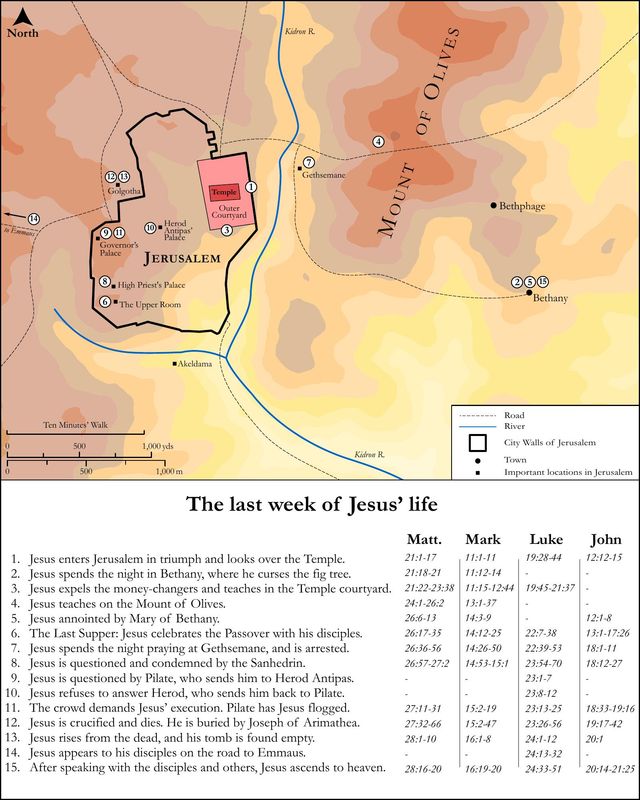
See on the biblical-era map


Study this verse
Public-domain commentary
Matthew Henry
From his Commentary on the Whole Bible. Henry comments on passages, not single verses — this entry covers John 13:31–35. His four-level outline is real structure in the source text, so it is rendered as structure.
This and what follows, to the end of ch. 14, was Christ's table-talk with his disciples. When supper was done, Judas went out; but what did the Master and his disciples do, whom he left sitting at table? They applied themselves to profitable discourse, to teach us as much as we can to make conversation with our friends at table serviceable to religion. Christ begins this discourse. The more forward we are humbly to promote that communication which is good, and to the use of edifying, the more like we are to Jesus Christ. Those especially that by their place, reputation, and gifts, command the company, to whom men give ear, ought to use the interest they have in other respects as an opportunity of doing them good. Now our Lord Jesus discourses with them (and probably discourses much more largely than is here recorded),
I.Concerning the great mystery of his own death and sufferings, about which they were as yet so much in the dark that they could not persuade themselves to expect the thing itself, much less did they understand the meaning of it; and therefore Christ gives them such instructions concerning it as made the offence of the cross to cease. Christ did not begin this discourse till Judas was gone out, for he was a false brother. The presence of wicked people is often a hindrance to good discourse. When Judas was gone out, Christ said, now is the Son of man glorified; now that Judas is discovered and discarded, who was a spot in their love-feast and a scandal to their family, now is the Son of man glorified. Note, Christ is glorified by the purifying of Christian societies: corruptions in his church are a reproach to him; the purging out of those corruptions rolls away the reproach. Or, rather, now Judas was gone to set the wheels a-going, in order to his being put to death, and the thing was likely to be effected shortly: Now is the Son of man glorified, meaning, Now he is crucified.
1.Here is something which Christ instructs them in, concerning his sufferings, that was very comforting.
(1.)That he should himself be glorified in them. Now the Son of man is to be exposed to the greatest ignominy and disgrace, to be despitefully used to the last degree, and dishonoured both by the cowardice of his friends and the insolence of his enemies; yet now he is glorified; For,
[1.]Now he is to obtain a glorious victory over Satan and all the powers of darkness, to spoil them, and triumph over them. He is now girding on the harness, to take the field against these adversaries of God and man, with as great an assurance as if he had put it off.
[2.]Now he is to work out a glorious deliverance for his people, by his death to reconcile them to God, and bring in an everlasting righteousness and happiness for them; to shed that blood which is to be an inexhaustible fountain of joys and blessings to all believers.
[3.]Now he is to give a glorious example of self-denial and patience under the cross, courage and contempt of the world, zeal for the glory of God, and love to the souls of men, such as will make him to be for ever admired and had in honour. Christ had been glorified in many miracles he had wrought, and yet he speaks of his being glorified now in his sufferings, as if that were more than all his other glories in his humble state.
(2.)That God the Father should be glorified in them. The sufferings of Christ were,
[1.]The satisfaction of God's justice, and so God was glorified in them. Reparation was thereby made with great advantage for the wrong done him in his honour by the sin of man. The ends of the law were abundantly answered, and the glory of his government effectually asserted and maintained.
[2.]They were the manifestation of his holiness and mercy. The attributes of God shine brightly in creation and providence, but much more in the work of redemption; see Co1 1:24; Co2 4:6. God is love, and herein he hath commended his love.
(3.)That he should himself be greatly glorified after them, in consideration of God's being greatly glorified by them, Joh 13:32. Observe how he enlarges upon it.
[1.]He is sure that God will glorify him; and those whom God glorifies are glorious indeed. Hell and earth set themselves to vilify Christ, but God resolved to glorify him, and he did it. He glorified him in his sufferings by the amazing signs and wonders, both in heaven and earth, which attended them, and extorted even from his crucifiers an acknowledgment that he was the Son of God. But especially after his sufferings he glorified him, when he set him at his own right hand, gave him a name above every name.
[2.]That he will glorify him in himself - en heautō. Either, First, In Christ himself. He will glorify him in his own person, and not only in his kingdom among men. This supposes his speedy resurrection. A common person may be honoured after his death, in his memory or posterity, but Christ was honoured in himself. Or, secondly, in God himself. God will glorify him with himself, as it is explained, Joh 17:5. He shall sit down with the Father upon his throne, Rev 3:21. This is true glory.
[3.]That he will glorify him straightway. He looked upon the joy and glory set before him, not only as great, but as near; and his sorrows and sufferings short and soon over. Good services done to earthly princes often remain long unrewarded; but Christ had his preferments presently. It was but forty hours (or not so much) from his death to his resurrection, and forty days thence to his ascension, so that it might well be said that he was straightway glorified, Psa 16:10.
[4.]All this in consideration of God's being glorified in and by his sufferings: Seeing God is glorified in him, and receives honour from his sufferings, God shall in like manner glorify him in himself, and give honour to him. Note, first, In the exaltation of Christ there was a regard had to his humiliation, and a reward given for it. Because he humbled himself, therefore God highly exalted him. If the Father be so great a gainer in his glory by the death of Christ, we may be sure that the Son shall be no loser in his. See the covenant between them, Isa 53:12. Secondly, Those who mind the business of glorifying God no doubt shall have the happiness of being glorified with him.
2.Here is something that Christ instructs them in, concerning his sufferings, which was awakening, for as yet they were slow of heart to understand it (Joh 13:33): Little children, yet a little while I am with you, etc. Two things Christ here suggests, to quicken his disciples to improve their present opportunities; two serious words: -
(1.)That his stay in this world, to be with them here, they would find to be very short. Little children. This compellation does not bespeak so much their weakness as his tenderness and compassion; he speaks to them with the affection of a father, now that he is about to leaven them, and to leave blessings with them. Know this, then, that yet a little while I am with you. Whether we understand this as referring to his death or his ascension it comes much to one; he had but a little time to spend with them, and therefore,
[1.]Let them improve the advantage they now had. If they had any good question to ask, if they would have any advice, instruction, or comfort, let them speak quickly; for yet a little while I am with you. We must make the best of the helps we have for our souls while we have them, because we shall not have them long; they will be taken from us, or we from them.
[2.]Let them not doat upon his bodily presence, as if their happiness and comfort were bound up in that; no, they must think of living without it; not be always little children, but go alone, without their nurses. Ways and means are appointed but for a little while, and are not to be rested in, but pressed through to our rest, to which they have a reference.
(2.)That their following him to the other world, to be with him there, they would find to be very difficult. What he had said to the Jews (Joh 7:34) he saith to his disciples; for they have need to be quickened by the same considerations that are propounded for the convincing and awakening of sinners. Christ tells them here,
[1.]That when he was gone they would feel the want of him; You shall seek me, that is "you shall wish you had me again with you." We are often taught the worth of mercies by the want of them. Though the presence of the Comforter yielded them real and effectual relief in straits and difficulties, yet it was not such a sensible satisfaction as his bodily presence would have been to those who had been used to it. But observe, Christ said to the Jews, You shall seek me and not find me; but to the disciples he only saith, You shall seek me, intimating that though they should not find his bodily presence any more than the Jews, yet they should find that which was tantamount, and should not seek in vain. When they sought his body in the sepulchre, though they did not find it, yet they sought to good purpose.
[2.]That whither he went they could not come, which suggests to them high thoughts of him, who was going to an invisible inaccessible world, to dwell in that light which none can approach unto; and also low thoughts of themselves, and serious thoughts of their future state. Christ tells them that they could not follow him (as Joshua told the people that they could not serve the Lord) only to quicken them to so much the more diligence and care. They could not follow him to his cross, for they had not courage and resolution; it appeared that they could not when they all forsook him and fled. Nor could they follow him to his crown, for they had not a sufficiency of their own, nor were their work and warfare yet finished.
II.He discourses with them concerning the great duty of brotherly love (Joh 13:34, Joh 13:35):
You shall love one another. Judas was now gone out, and had proved himself a false brother; but they must not therefore harbour such jealousies and suspicions one of another as would be the bane of love: though there was one Judas among them, yet they were not all Judases. Now that the enmity of the Jews against Christ and his followers was swelling to the height, and they must expect such treatment as their Master had, it concerned them by brotherly love to strengthen one another's hands. Three arguments for mutual love are here urged: -
1.The command of their Master (Joh 13:34): A new commandment I give unto you. He not only commends it as amiable and pleasant, not only counsels it as excellent and profitable, but commands it, and makes it one of the fundamental laws of his kingdom; it goes a-breast with the command of believing in Christ, Jo1 3:23; Pe1 1:22. It is the command of our ruler, who has a right to give law to us; it is the command of our Redeemer, who gives us this law in order to the curing of our spiritual diseases and the preparing of us for our eternal bliss. It is a new commandment; that is,
(1.)It is a renewed commandment; it was a commandment from the beginning (Jo1 2:7), as old as the law of nature, it was the second great commandment of the law of Moses; yet, because it is also one of the great commandments of the New Testament, of Christ the new Lawgiver, it is called a new commandment; it is like an old book in a new edition corrected and enlarged. This commandment has been so corrupted by the traditions of the Jewish church that when Christ revived it, and set it in a true light, it might well be called a new commandment. Laws of revenge and retaliation were so much in vogue, and self-love had so much the ascendant, that the law of brotherly love was forgotten as obsolete and out of date; so that as it came from Christ new, it was new to the people.
(2.)It is an excellent command, as a new song is an excellent song, that has an uncommon gratefulness in it.
(3.)It is an everlasting command; so strangely new as to be always so; as the new covenant, which shall never decay (Heb 8:13); it shall be new to eternity, when faith and hope are antiquated.
(4.)As Christ gives it, it is new. Before it was, Thou shalt love thy neighbour; now it is, You shall love one another; it is pressed in a more winning way when it is thus pressed as mutual duty owing to one another.
2.The example of their Saviour is another argument for brotherly love: As I have loved you. It is this that makes it a new commandment - that this rule and reason of love (as I have loved you) is perfectly new, and such as had been hidden from ages and generations. Understand this,
(1.)Of all the instances of Christ's love to his disciples, which they had already experienced during the time he went in and out among them. He spoke kindly to them, concerned himself heartily for them, and for their welfare, instructed, counselled, and comforted them, prayed with them and for them, vindicated them when they were accused, took their part when they were run down, and publicly owned them to be dearer to him that his mother, or sister, or brother. He reproved them for what was amiss, and yet compassionately bore with their failings, excused them, made the best of them, and passed by many an oversight. Thus he had loved them, and just now washed their feet; and thus they must love one another, and love to the end. Or,
(2.)It may be understood of the special instance of love to all his disciples which he was now about to give, in laying down his life for them. Greater love hath no man than this, Joh 15:13. Has he thus loved us all? Justly may he expect that we should be loving to one another. Not that we are capable of doing any thing of the same nature for each other (Psa 49:7), but we must love one another in some respects after the same manner; we must set this before us as our copy, and take directions from it. Our love to one another must be free and ready, laborious and expensive, constant and persevering; it must be love to the souls one of another. We must also love one another from this motive, and upon this consideration - because Christ has loved us. See Rom 15:1, Rom 15:3; Eph 5:2, Eph 5:25; Phi 2:1-5.
3.The reputation of their profession (Joh 13:35): By this shall all men know that you are my disciples, if you have love one to another. Observe, We must have love, not only show love, but have it in the root and habit of it, and have it when there is not any present occasion to show it; have it ready. "Hereby it will appear that you are indeed my followers by following me in this." Note, Brotherly love is the badge of Christ's disciples. By this he knows them, by this they may know themselves (Jo1 2:14), and by this others may know them. This is the livery of his family, the distinguishing character of his disciples; this he would have them noted for, as that wherein they excelled all others - their loving one another. This was what their Master was famous for; all that ever heard of him have heard of his love, his great love; and therefore, if you see any people more affectionate one to another than what is common, say, "Certainly these are the followers of Christ, they have been with Jesus." Now by this it appears,
(1.)That the heart of Christ was very much upon it, that his disciples should love one another. In this they must be singular; whereas the way of the world is to be every one for himself, they should be hearty for one another. He does not say, By this shall men know that you are my disciples - if you work miracles, for a worker of miracles is but a cypher without charity (Co1 13:1, Co1 13:2); but if you love one another from a principle of self-denial and gratitude to Christ. This Christ would have to be the proprium of his religion, the principal note of the true church.
(2.)That it is the true honour of Christ's disciples to excel in brotherly love. Nothing will be more effectual than this to recommend them to the esteem and respect of others. See what a powerful attractive it was, Act 2:46, Act 2:47. Tertullian speaks of it as the glory of the primitive church that the Christians were known by their affection to one another. Their adversaries took notice of it, and said, See how these Christians love one another, Apol. cap. 39.
(3.)That, if the followers of Christ do not love one another, they not only cast an unjust reproach upon their profession, but give just cause to suspect their own sincerity. O Jesus! are these thy Christians, these passionate, malicious, spiteful, ill-natured people? Is this thy son's coat? When our brethren stand in need of help from us, and we have an opportunity of being serviceable to them, when they differ in opinion and practice from us, or are any ways rivals with or provoking to us, and so we have an occasion to condescend and forgive, in such cases as this it will be known whether we have this badge of Christ's disciples.
Historical interpretation
Three Centuries of Reception
7 surviving comments on this verse. Each one is dated, so this reads as a timeline rather than a list.
Select a marker to jump to its quote. Markers stagger vertically where authors wrote within a few decades of each other.
Let no man's place, or dignity, or riches, puff him up; and let no man's low condition or poverty abase him. For the chief points are faith towards God, hope towards Christ, the enjoyment of those good things for which we look, and love towards God and our neighbour. For, "Thou shall love the Lord thy God with all thy heart, and thy neighbour as thyself." And the Lord says, "This is life eternal, to know the only true God, and Jesus Christ whom He has sent." And again, "A new commandment give I unto you, that ye love one another. On these two commandments hang all the law and the prophets." Do ye, therefore, notice those who preach other doctrines, how they affirm that the Father of Christ cannot be known, and how they exhibit enmity and deceit in their dealings with one another. They have no regard for love; they despise the good things we expect hereafter; they regard present things as if they were durable; they ridicule him that is in affliction; they laugh at him that is in bonds.
He who then had forbidden murder now forbids anger without cause. He who had forbidden adultery now forbids all unlawful lust. He who had forbidden stealing now pronounces him most happy who supplies those that are in want out of his own labors. He who had forbidden hatred now pronounces him blessed who loves his enemies.
(Hom. lxxii. 3) Or, as I have loved you: for My love has not been the payment of something owing to you, but had its beginning on My side. And ye ought in like manner to do one another good, though ye may not owe it.
The Lord Jesus declares that He is giving His disciples a new commandment, that they should love one another. "A new commandment," He says, "I give unto you, that ye love one another." But was not this already commanded in the ancient law of God, where it is written, "Thou shalt love thy neighbor as thyself"? Why, then, is it called a new one by the Lord, when it is proved to be so old? Is it on this account a new commandment, because He hath divested us of the old, and clothed us with the new man? For it is not indeed every kind of love that renews him that listens to it, or rather yields it obedience, but that love regarding which the Lord, in order to distinguish it from all carnal affection, added, "as I have loved you." For husbands and wives love one another, and parents and children, and all other human relationships that bind men together: to say nothing of the blame-worthy and damnable love which is mutually felt by adulterers and adulteresses, by fornicators and prostitutes, and all others who are knit together by no human relationship, but by the mischievous depravity of human life. Christ, therefore, hath given us a new commandment, that we should love one another, as He also hath loved us. This is the love that renews us, making us new men, heirs of the New Testament, singers of the new song. It was this love, brethren beloved, that renewed also those of olden time, who were then the righteous, the patriarchs and prophets, as it did afterwards the blessed apostles: it is it, too, that is now renewing the nations, and from among the universal race of man, which overspreads the whole world, is making and gathering together a new people, the body of the newly-married spouse of the only-begotten Son of God, of whom it is said in the Song of Songs, "Who is she that ascendeth, made white?" Made white indeed, because renewed; and how, but by the new commandment! Because of this, the members thereof have a mutual interest in one another; and if one member suffer, all the members suffer with it; and one member be honored, all the members rejoice with it. For this they hear and observe, "A new commandment I give unto you, that ye love one another:" not as those love one another who are corrupters, nor as men love one another in a human way; but they love one another as those who are God's, and all of them sons of the Highest, and brethren, therefore, of His only Son, with that mutual love wherewith He loved them, when about to lead them on to the goal where all sufficiency should be theirs, and where their every desire should be satisfied with good things. For then there will be nothing wanting they can desire, when God will be all in all. An end like that has no end. No one dieth there, where no one arriveth save he that dieth to this world, not that universal kind of death whereby the body is bereft of the soul; but the death of the elect, through which, even while still remaining in this mortal flesh, the heart is set on the things which are above. Of such a death it is that the apostle said, "For ye are dead, and your life is hid with Christ in God." And perhaps to this, also, do the words refer,"Love is strong as death." For by this love it is brought about, that, while still held in the present corruptible body, we die to this world, and our life is hid with Christ in God; yea, that love itself is our death to the world, and our life with God. For if that is death when the soul quits the body, how can it be other than death when our love quits the world? Such love, therefore, is strong as death. And what is stronger than that which conquers the world?
Think not then, my brethren, that when the Lord says, "A new commandment I give unto you, that ye love one another," there is any overlooking of that greater commandment, which requires us to love the Lord our God with all our heart, and with all our soul, and with all our mind; for along with this seeming oversight, the words "that ye love one another" appear also as if they had no reference to that second commandment, which says, "Thou shalt love thy neighbor as thyself." For "on these two commandments," He says, "hang all the law and the prophets." But both commandments may be found in each of these by those who have good understanding. For, on the one hand, he that loveth God cannot despise His commandment to love his neighbor; and on the other, he who in a holy and spiritual way loveth his neighbor, what doth he love in him but God? That is the love, distinguished from all mundane love, which the Lord specially characterized, when He added, "as I have loved you." For what was it but God that He loved in us? Not because we had Him, but in order that we might have Him; and that He may lead us on, as I said a little ago, where God is all in all. It is in this way, also, that the physician is properly said to love the sick; and what is it he loves in them but their health, which at all events he desires to recall; not their sickness, which he comes to remove? Let us, then, also so love one another, that, as far as possible, we may by the solicitude of our love be winning one another to have God within us. And this love is bestowed on us by Him who said, "As I have loved you, that ye also love one another." For this very end, therefore, did He love us, that we also should love one another; bestowing this on us by His own love to us, that we should be bound to one another in mutual love, and, united together as members by so pleasant a bond, should be the body of so mighty a Head.
(Tr. lxv. 1) And now He teaches them how to fit themselves to follow Him: A new commandment I give unto you, that ye love one another. (Levit. 19:18) But does not the old law say, Thou shall love thy neighbour as thyself? Why then does He call it a new commandment? Is it because it strips us of the old man, and puts on us the new? That it renews the hearer, or rather the doer of it? Love does do this; but it is that love which our Lord distinguishes from the carnal affection: As I have loved you, that ye also love one another. Not the love with which men love one another, but that of the children of the Most High God, who would be brethren of His only-begotten Son, and therefore love one another with that love with which He loved them, and would lead them to the fulfilment of their desires.
(Tr. lxiv. 2) But do not think that that greater commandment, viz. that we should love the Lord our God, is passed by. For, if we understand the two precepts aright, each is implied in the other. He who loves God cannot despise His commandment that he should love his neighbour; and he who loves his neighbour in a heavenly spiritual way, in the neighbour loves God. That is the love which our Lord distinguishes from all human love, when He adds, As I have loved you. For what did He, in loving us, love, but God in us; not who was in us, but so that He might be? Wherefore let each of us so love the other, as that by this working of love, we make each other the habitations of God.
He plainly indicates the novelty involved in his command here—and the extent to which the love he enjoins here surpasses the old idea of mutual love—by adding the words “Even as I have loved you, you also should love one another.” … The law of Moses mandated the necessity of loving our brothers as ourselves, yet our Lord Jesus the Christ loved us far more than he loved himself. Otherwise, he would have never descended to our humiliation from his original exaltation in the form of God and on an equality with God the Father, nor would he have undergone for our sakes the exceptional bitterness of his death in the flesh, nor have submitted to beatings from the Jews, to shame, to derision, and all his other sufferings too numerous to mention. Being rich, he would never have become poor if he had not loved us far more than he loved himself. It was indeed something new for love to go as far as that! Christ commands us to love as he did, putting neither reputation, wealth or anything else before love of our brothers and sisters. If need be, we even need to be prepared to face death for our neighbor’s salvation as our Savior’s blessed disciples did, as well as those who followed in their footsteps. To them the salvation of others mattered more than their own lives, and they were ready to do anything or to suffer anything to save souls that were perishing.
Well and truly writes the inspired Paul: Wherefore if any man is in Christ, he is a new creature: the old things are passed away; behold all things are become new. For Christ does renew us, and fashions us again to a newness of life which is unknown to and untravelled by the rest of mankind, who love to regulate their lives by the Law, and remain constant to the precepts given by Moses. For the Law makes nothing perfect, as it is written; but it is very evident that the standard of reverence towards God involved in the commands of our Saviour is the highest possible. For this is why He Himself somewhere says to us: Verily, verily, I say unto you, Except your righteousness shall exceed the righteousness of the scribes and Pharisees, ye shall in no wise enter into the kingdom of heaven. We do not wish to struggle against the manner of life of the Jews, and yet except we outstrip very decisively the righteousness contained in the Law, I doubt if we should ever enter into the kingdom of heaven. And we do not mean to assert that the Law as given by Moses was useless and unprofitable: for it has brought to us, albeit imperfectly, a knowledge of good, or at any rate has been found to be a tutor for our instruction as to the nature of the Gospel dispensation. And in bringing before us by hints and types a pattern of the true worship, it imprinted on our minds the dim outline of the teaching we learn from Christ. Hence, surely Christ Himself also said: For I say unto you, that every scribe who hath been made a disciple to the kingdom of heaven is like unto a rich man, which bringeth forth out of his treasure things new and old. For in very truth it is the highest form of spiritual wealth, that a man should be well versed in the words spoken by Moses, and have all the good that can be derived from them treasured up in his mind, and besides should have added to this store the beauty of the evangelic teaching, and so have twofold ground for boasting, in his knowledge as well of the ancient as of the new laws. Therefore our Lord Jesus the Christ, by way of showing that His commandment was better than the ancient one, and that His preaching of salvation was as yet foreign to those who regulated their lives by the Law, now that He is about to ascend into heaven, lays down the law of love as a foundation and corner-stone of all that is good, meaning by love not that which was in accordance with, but that which transcended, the Mosaic Law. Therefore He says: A new commandment I give unto you, that ye love one another. "But tell me now,' some one may say, "why He has called this commandment new, when He had said to former generations by the voice of Moses: Thou shalt love the Lord thy God with all thy heart and with all thy mind, and thy neighbour as thyself. For see, while setting love to God in its fitting place, in the forefront of and in preeminence to all other affections, He has there introduced in the very next place our mutual love, and has joined with our love to God love to each other, implying that in no other way would love to God rightly exist, except it were accompanied by the love which is due to our neighbour. For we all are brethren one of another. For instance, the very wise John, most excellent alike in knowledge and in teaching, says: He that loveth his brother loveth God. How then cometh a new commandment by Christ, although the very same had been declared by the ancient laws?" But notice, I pray you, the justifying clause; look at the illustration used. He does more than say: A new commandment give I unto you, that ye love one another; He plainly signifies the novelty involved in His command, and the extent by which the love that He enjoins surpasses that old idea of mutual love, by straightway adding the words: Even as I have loved you, that ye also love one another.
We must investigate therefore the question how the Christ loved us, in order to understand clearly the full force of the words used. For then we shall indeed perceive, and that very easily, the novel character and the changed nature of the commandment now given. We know that, being in the form of God, He counted it not a prize to be on an equality with God, but emptied Himself, taking the form of a servant, being made in the likeness of men; and being found in fashion as a man, He humbled Himself, becoming obedient even unto death, yea, the death of the cross. And again: though He was rich, yet He became poor, as Paul elsewhere testifies to us. Dost thou see the novelty of His love towards us? For whereas the Law enjoined the necessity of loving our brethren as ourselves, our Lord Jesus the Christ on the other hand loved us far more than He loved Himself, Else He would never have descended to our humiliation from His original exaltation in the form of God and on an equality with God the Father, nor would He have undergone for our sakes the exceeding bitterness of His death in the flesh, nor have submitted to buffetings from the Jews, to shame, to derision, and all His other sufferings: speaking briefly, so as not to protract our argument to endless length by enumerating everything in detail. Nay, He would never have become poor from being rich, if He had not loved us very exceedingly more than Himself. Marvellous then indeed was the extent of His love. So also He would have us be minded, keeping ever our love to our brethren as superior to all other motives, such as reputation or riches; not hesitating to descend if need be even to death in the flesh, so that we may secure the salvation of our neighbour. And this is exactly what the blessed disciples of our Saviour have done, as also have those that followed in their train; reckoning the salvation of others superior to their own life, enduring toil of all kinds, and suffering the extremest of evils, that so they might sa\e the souls of those that were perishing. For instance, Paul in one place saith: I die daily; and in another again: Who is weak, and I am not weak? Who is made to stumble, and I burn not? Thus the Saviour urges us to practise ever the love that transcends the Law as the root of all true and perfect devotion to God; well knowing that so, assuredly, and not otherwise, we shall be most highly approved in the sight of God, and by tracing out the Divine beauty of the love by Him implanted in us we shall attain to the enjoyment of great and perfect blessings.
Continue studying John 13:34 across the web’s major study libraries — every link below opens this exact verse, chapter, or book on the destination site.
Read & Compare
 BibleGatewayThis verse in more than 200 translations and 70 languages.
 Bible.comThe YouVersion reader — hundreds of translations, reading plans, and highlights.
 ESV.orgCrossway's official English Standard Version reader.
 NET BibleThe NET translation with 60,000+ translators' notes on every rendering decision.
 STEP BibleTyndale House's free study tool — original text, vocabulary, and scholarly resources.
 BibliaLogos Bible Software's free web reader.
 USCCBThe New American Bible (Revised Edition) with the U.S. bishops' study notes.
Commentaries
 BibleHub CommentariesDozens of classic commentaries on this verse, gathered on one page.
 StudyLightMore than 100 commentary sets — the largest collection on the web.
 BibleRefPlain-English commentary on what this verse means, verse by verse.
 Enduring WordDavid Guzik's free commentary on this chapter, widely used by Bible teachers.
 Bible Study ToolsVerse commentary alongside Greek and Hebrew study aids.
Original Language & Research
- BibleHub InterlinearThe verse word by word — original language, transliteration, and English.
- BibleHub LexiconEvery word's original-language definition and Strong's entry.
 Blue Letter BibleDeep-study tools — Strong's numbers, concordance, and word studies.
 CNTR CollationThe earliest Greek manuscripts of this verse, collated letter by letter.
Sermons, Hymns & Audio


TrulyRandomVerse is not affiliated with these sites and doesn’t control their content. They’re linked because they’re genuinely useful.
Summary
In the intimate setting of the Last Supper, Jesus delivers a foundational directive to His disciples, establishing the defining characteristic of the new covenant community: a radical love for one another. This "new commandment" transcends previous ethical standards by setting Jesus' own self-sacrificial love as the ultimate paradigm, instructing His followers to emulate His unconditional affection and service, thereby providing a compelling witness to the world of their true identity as His disciples.
Context
ShowHideLiterary Context
John 13:34 is strategically placed within Jesus' farewell discourse, immediately following the profound act of foot-washing and the prediction of Judas's betrayal and Peter's denial. The foot-washing, detailed in John 13:1-17, serves as a living parable, demonstrating the humble, self-sacrificial love that Jesus now commands. This commandment also directly precedes Jesus' comforting words about His departure and the coming of the Holy Spirit in John 14, emphasizing that this love will be the sustaining force of the community in His physical absence. It is a pivotal transition from His physical presence to the spiritual bond that will unite His followers.
Historical & Cultural Context
While the Old Testament contained commands to "love your neighbor as yourself" (Leviticus 19:18), Jesus' declaration of a "new commandment" would have resonated deeply with His Jewish disciples. In a society often marked by strict adherence to ritual law and distinctions between groups, Jesus introduces a revolutionary standard of love. This love was not merely a reciprocal affection or a legal obligation, but a divine, active, and self-giving commitment, contrasting sharply with the often-sectarian attitudes prevalent in first-century Judaism and the broader Roman world. The command prepares them for a community that would transcend ethnic and social barriers, united by a unique bond of Christ-like love.
Key Themes
ShowHideThis verse encapsulates several major theological and narrative themes within the Gospel of John and the broader New Testament. Firstly, it highlights the "newness" of the covenant, signifying a shift from external legalism to an internal, Spirit-empowered ethic of love. Secondly, it establishes Jesus' own life and sacrifice as the definitive model for all Christian conduct, as seen throughout His ministry, culminating in His death (e.g., John 15:13). Thirdly, it underscores Christian identity and witness, making mutual love the unmistakable mark of true discipleship, a theme explicitly stated in the very next verse, John 13:35. This love is not just an ideal but a practical, visible demonstration of God's presence among His people.
Exposition and Analysis
ShowHideKey Word Analysis
ShowHideThis word signifies newness in quality, freshness, or kind, rather than merely new in time or age (for which the Greek néos would be used). Jesus is not simply reiterating an old command but elevating it to an unprecedented standard. It implies a qualitative transformation, a fresh and superior way of loving, empowered by His example and the indwelling Spirit.
This term denotes an authoritative prescription or injunction. It is not a suggestion or an optional guideline but a divine imperative. Jesus, as the ultimate authority, issues this as a non-negotiable principle for His followers, underscoring its foundational importance for the life and witness of the Christian community.
This verb, from which the noun agapē is derived, describes a divine, unconditional, and self-sacrificial love. It is a volitional love, a deliberate choice to seek the highest good of another, regardless of their merit or response. This contrasts with other Greek words for love (like phileō for brotherly affection or eros for romantic desire), emphasizing a selfless, active benevolence that mirrors God's own character.
Verse Breakdown
ShowHide"A new commandment I give unto you,"
Jesus asserts His authority by issuing a "new" directive. This newness is not in the concept of love itself, but in its standard, source, and scope. It is new because it is grounded in His own divine love and empowered by His Spirit, setting a qualitatively different benchmark for human relationships than previously known.
"That ye love one another;"
This is the core injunction. The command is directed towards the disciples and, by extension, to all who would follow Christ. It calls for active, intentional, and consistent demonstration of agape love within the community of believers, fostering unity and mutual care.
"as I have loved you,"
This clause provides the crucial standard and paradigm for the love commanded. Jesus' own life, marked by humility, service, compassion, and ultimately, self-sacrifice on the cross, becomes the benchmark. The disciples are not to love according to their own capacity or cultural norms, but according to the perfect, divine love demonstrated by Christ Himself.
"that ye also love one another."
This final repetition reinforces the command and its application. The purpose clause ("that ye...") emphasizes the desired outcome: the disciples' mutual love should be a direct reflection and continuation of Jesus' love for them. It underscores the reciprocal nature of this love within the community, making it the defining characteristic of their collective identity.
Literary Devices
ShowHideThe verse employs several significant literary devices. Repetition is prominent, with the phrase "love one another" appearing twice, serving to emphasize and reinforce the central command. This repetition ensures the message's clarity and memorability, highlighting its paramount importance. The phrase "as I have loved you" functions as a powerful Paradigm or Exemplification, providing the concrete, living standard for the abstract concept of love. Jesus doesn't just command love; He defines it by His own actions, making His life the ultimate model. Furthermore, the entire statement serves as a Chiasm (A-B-B'-A' structure, though less strict here), where the command to love one another frames the exemplary "as I have loved you," drawing attention to the source and standard of this new love. The "new commandment" itself is a form of Emphasis, signaling a critical, foundational teaching that distinguishes the new covenant community.
Theological and Thematic Connections
ShowHideJohn 13:34 is a theological cornerstone, revealing the very heart of God's character and the essence of the Christian life. It elevates love from a mere ethical principle to a divine mandate, making it the defining mark of true discipleship. This "new commandment" signifies a qualitative shift from the Old Covenant's external observance of law to the New Covenant's internal transformation by the Spirit, enabling believers to genuinely manifest God's own agape. It links directly to the concept of the Trinity, as God's love for humanity is perfectly expressed in the Son, who then empowers His followers to reflect that same love to one another. This mutual love within the community is not merely for internal cohesion but serves as a powerful, undeniable witness to the world, demonstrating the reality of Christ's presence and the transformative power of the Gospel.
Reflection and Application
ShowHideJohn 13:34 calls believers to a radical, counter-cultural way of living that mirrors the very nature of God. It challenges us to move beyond superficial pleasantries or conditional affection to embrace a love that is active, sacrificial, and unconditional, just as Christ's love for us is. This means intentionally seeking the well-being of others, extending grace and forgiveness even when it's difficult, and prioritizing unity and genuine care within the Christian community. In a world often characterized by division, self-interest, and animosity, the church's demonstration of this Christ-like love becomes its most compelling apologetic, drawing others to the transforming power of the Gospel. It demands humility to serve, courage to forgive, and perseverance to remain committed to one another, reflecting the love that first embraced us.
Questions for Reflection
ShowHideFAQ
ShowHideWhat makes this commandment "new" if the Old Testament already commanded love?
ShowHideWhile the Old Testament commanded love for one's neighbor (Leviticus 19:18), Jesus' commandment is "new" in several profound ways. Firstly, its standard is new: "as I have loved you." This sets Jesus' own perfect, self-sacrificial, and unconditional agape love as the benchmark, far surpassing any previous human capacity or legal requirement. Secondly, its source is new: it flows from Jesus Himself and is empowered by the Holy Spirit, enabling believers to live out a love that is divine in origin and quality. Thirdly, its scope is new: it defines the very essence of the New Covenant community, making mutual love the identifying mark of Christ's disciples to the world (John 13:35). It's a qualitative, not just quantitative, newness.
How is "love" in this verse different from other types of love?
ShowHideThe Greek word used here is agapáō (verb) or agapē (noun), which denotes a divine, unconditional, and self-sacrificial love. This is distinct from phileō (brotherly affection or friendship love) or eros (romantic or passionate love). Agape is not primarily an emotion but a volitional choice, an active commitment to the well-being of another, regardless of their merit or how one feels about them. It is the kind of love God has for humanity (John 3:16), and the kind Jesus demonstrated through His life, service, and ultimate sacrifice on the cross. It is a love that gives, serves, and forgives.
Why is this commandment so important for Christian identity?
ShowHideJesus explicitly states in John 13:35 that "By this all people will know that you are my disciples, if you have love for one another." This means that mutual love among believers is not merely an internal virtue but the primary external sign of their allegiance to Christ. It is a powerful witness to the world, demonstrating the transformative power of the Gospel and the reality of God's presence among His people. In a fragmented world, the unity and self-giving love of the Christian community stands as a compelling counter-narrative, inviting others to experience the love of Christ.
Christ-Centered Fulfillment
ShowHideJohn 13:34 finds its profound Christ-centered fulfillment not merely as a command given by Christ, but as a command that is perfectly embodied in Christ and empowered through Christ. Jesus Himself is the living embodiment of this "new commandment," for His entire life and ministry were a demonstration of agape love. From His humble incarnation (Philippians 2:5-8) to His selfless service (as seen in the foot-washing preceding this command in John 13:1-11), and supremely in His sacrificial death on the cross for the sins of the world (Romans 5:8), Jesus perfectly fulfilled the standard He set. He did not just tell us to love; He showed us love, becoming the ultimate Lamb of God who takes away the sin of the world (John 1:29). Furthermore, this command is made possible for believers only through their union with Christ and the indwelling of the Holy Spirit, who pours God's love into our hearts (Romans 5:5). Thus, the "new commandment" is not a burdensome law but an invitation to participate in the very life and love of Christ, reflecting His glory to a world in desperate need of His transforming grace.