


John 15:13
Bible text: King James Version (1769 Blayney text) · Public domain
Bible text: Berean Standard Bible · Public domain
Bible text: American Standard Version (1901) · Public domain
Bible text: World English Bible, Messianic edition · Public domain
Bible text: Geneva Bible (1599) · Public domain
Bible text: Young's Literal Translation · Public domain
- μείζοναmeizonaGreaterG3173A-ASF-CAdjective Accusative Singular Feminine Comparative
- ταύτηςtautēsthan thisG3778D-GSFDemonstrative pronoun Genitive Singular Feminine
- ἀγάπηνagapēnloveG26N-ASFNoun Accusative Singular Feminine
- οὐδεὶςoudeisno [one]G3762A-NSMAdjective Nominative Singular Masculine
- ἔχειecheihasG2192V-PAI-3SVerb Present Active Indicative 3rd Singular
- ἵναinathatG2443CONJConjunction
- τιςtisoneG5100X-NSMIndefinite pronoun Nominative Singular Masculine
- τὴνtēntheG3588T-ASFDefinite article Accusative Singular Feminine
- ψυχὴνpsuchēnlifeG5590N-ASFNoun Accusative Singular Feminine
- αὐτοῦautouof himG846P-GSMPersonal pronoun Genitive Singular Masculine
- θῇthēamay lay downG5087V-2AAS-3SVerb 2nd Aorist Active Subjunctive 3rd Singular
- ὑπὲρhuperforG5228PREPPreposition
- τῶνtōntheG3588T-GPMDefinite article Genitive Plural Masculine
- φίλωνphilōnfriendsG5384A-GPMAdjective Genitive Plural Masculine
- αὐτοῦautouof himG846P-GSMPersonal pronoun Genitive Singular Masculine
English is a literal word-by-word gloss of the Greek, not the KJV's wording. Why?
This is the original text the KJV's translators worked from — each Greek word with its own literal English meaning in this verse, prepared by scholars at Tyndale House, Cambridge. The KJV translates whole sentences, not word by word, so its wording differs: one Greek word can become several English words, and the KJV may choose “charity” where the gloss reads “love”. Both are faithful — they answer different questions. For the KJV's own rendering, switch to the KJV text.
Details
See on the biblical-era maps
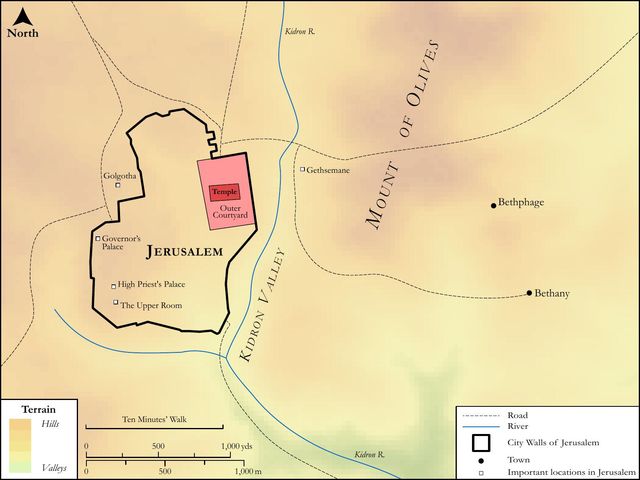

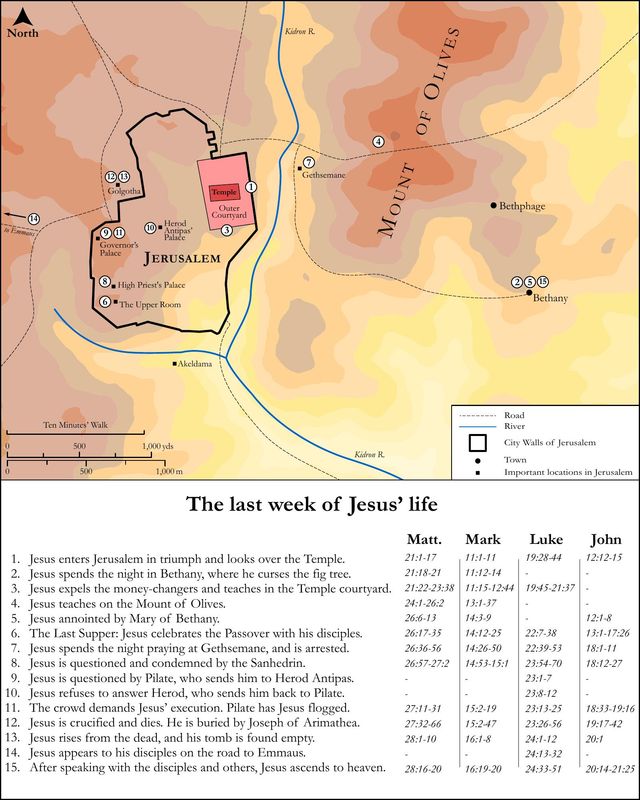
Study this verse
Public-domain commentary
Matthew Henry
From his Commentary on the Whole Bible. Henry comments on passages, not single verses — this entry covers John 15:9–17. His four-level outline is real structure in the source text, so it is rendered as structure.
Christ, who is love itself, is here discoursing concerning love, a fourfold love.
I.Concerning the Father's love to him; and concerning this he here tells us,
1.That the Father did love him (Joh 15:9): As the Father hath loved me. He loved him as Mediator: This is my beloved Son. He was the Son of his love. He loved him, and gave all things into his hand; and yet so loved the world as to deliver him up for us all. When Christ was entering upon his sufferings he comforted himself with this, that his Father loved him. Those whom God loves as a Father may despise the hatred of all the world.
2.That he abode in his Father's love, Joh 15:10. He continually loved his Father, and was beloved of him. Even when he was made sin and a curse for us, and it pleased the Lord to bruise him, yet he abode in his Father's love. See Psa 89:33. Because he continued to love his Father, he went cheerfully through his sufferings, and therefore his Father continued to love him.
3.That therefore he abode in his Father's love because he kept his Father's law: I have kept my Father's commandments, as Mediator, and so abide in his love. Hereby he showed that he continued to love his Father, that he went on, and went through, with his undertaking, and therefore the Father continued to love him. His soul delighted in him, because he did not fail, nor was discouraged, Isa 42:1-4. We having broken the law of creation, and thereby thrown ourselves out of the love of God; Christ satisfied for us by obeying the law of redemption, and so he abode in his love, and restored us to it.
II.Concerning his own love to his disciples. Though he leaves them, he loves them. And observe here,
1.The pattern of this love: As the Father has loved me, so have I loved you. A strange expression of the condescending grace of Christ! As the Father loved him, who was most worthy, he loved them, who were most unworthy. The Father loved him as his Son, and he loves them as his children. The Father gave all things into his hand; so, with himself, he freely giveth us all things. The Father loved him as Mediator, as head of the church, and the great trustee of divine grace and favour, which he had not for himself only, but for the benefit of those for whom he was entrusted; and, says he, "I have been a faithful trustee. As the Father has committed his love to me, so I transmit it to you." Therefore the Father was well pleased with him, that he might be well pleased with us in him; and loved him, that in him, as beloved, he might make us accepted, Eph 1:6.
2.The proofs and products of this love, which are four: -
(1.)Christ loved his disciples, for he laid down his life for them (Joh 15:13): Greater proof of love hath no man to show than this, to lay down his life for his friend. And this is the love wherewith Christ hath loved us, he is our antipsuchos - bail for us, body for body, life for life, though he knew our insolvency, and foresaw how much the engagement would cost him. Observe here,
[1.]The extent of the love of the children of men to one another. The highest proof of it is laying down one's life for a friend, to save his life, and perhaps there have been some such heroic achievements of love, more than plucking out one's own eyes, Gal 4:15. If all that a man has he will give for his life, he that gives this for his friend gives all, and can give no more; this may sometimes be our duty, Jo1 3:16. Paul was ambitious of the honour (Phi 2:17); and for a good man some will even dare to die, Rom 5:7. It is love in the highest degree, which is strong as death.
[2.]The excellency of the love of Christ beyond all other love. He has not only equaled, but exceeded, the most illustrious lovers. Others have laid down their lives, content that they should be taken from them; but Christ gave up his, was not merely passive, but made it his own act and deed. The life which others have laid down has been but of equal value with the life for which it was laid down, and perhaps less valuable; but Christ is infinitely more worth than ten thousand of us. Others have thus laid down their lives for their friends, but Christ laid down his for us when we were enemies, Rom 5:8, Rom 5:10. Plusquam ferrea aut lapidea corda esse oportet, quae non emolliet tam incomparabilis divini amoris suavitas - Those hearts must be harder than iron or stone which are not softened by such incomparable sweetness of divine love. - Calvin
(2.)Christ loved his disciples, for he took them into a covenant of friendship with himself, Joh 15:14, Joh 15:15. "If you approve yourselves by your obedience my disciples indeed, you are my friends, and shall be treated as friends." Note, The followers of Christ are the friends of Christ, and he is graciously pleased to call and account them so. Those that do the duty of his servants are admitted and advanced to the dignity of his friends. David had one servant in his court, and Solomon one in his, that was in a particular manner the king's friend (Sa2 15:37; Kg1 4:5); but this honour have all Christ's servants. We may in some particular instance befriend a stranger; but we espouse all the interests of a friend, and concern ourselves in all his cares: thus Christ takes believers to be his friends. He visits them and converses with them as his friends, bears with them and makes the best of them, is afflicted in their afflictions, and takes pleasure in their prosperity; he pleads for them in heaven and takes care of all their interests there. Have friends but one soul? He that is joined to the Lord is one spirit, Co1 6:17. Though they often show themselves unfriendly, he is a friend that loves at all times. Observe how endearingly this is expressed here.
[1.]He will not call them servants, though they call him Master and Lord. Those that would be like Christ in humility must not take a pride in insisting upon all occasions on their authority and superiority, but remember that their servants are their fellow-servants. But,
[2.]He will call them his friends; he will not only love them, but will let them know it; for in his tongue is the law of kindness. After his resurrection he seems to speak with more affectionate tenderness of and to his disciples than before. Go to my brethren, Joh 20:17. Children, have you any meat? Joh 21:5. But observe, though Christ called them his friends, they called themselves his servants: Peter, a servant of Christ (Pe1 1:1), and so James, Jam 1:1. The more honour Christ puts upon us, the more honour we should study to do him; the higher in his eyes, the lower in our own.
(3.)Christ loved his disciples, for he was very free in communicating his mind to them (Joh 15:15): "Henceforth you shall not be kept so much in the dark as you have been, like servants that are only told their present work; but, when the Spirit is poured out, you shall know your Master's designs as friends. All things that I have heard of my Father I have declared unto you." As to the secret will of God, there are many things which we must be content not to know; but, as to the revealed will of God, Jesus Christ has faithfully handed to us what he received of the Father, Joh 1:18; Mat 11:27. The great things relating to man's redemption Christ declared to his disciples, that they might declare them to others; they were the men of his counsel, Mat 13:11.
(4.)Christ loved his disciples, for he chose and ordained them to be the prime instruments of his glory and honour in the world (Joh 15:16): I have chosen you, and ordained you, His love to them appeared,
[1.]In their election, their election to their apostleship (Joh 6:70): I have chosen you twelve. It did not begin on their side: You have not chosen me, but I first chose you. Why were they admitted to such an intimacy with him, employed in such an embassy for him, and endued with such power from on high? It was not owing to their wisdom and goodness in choosing him for their Master, but to his favour and grace in choosing them for his disciples. It is fit that Christ should have the choosing of his own ministers; still he does it by his providence and Spirit. Though ministers make that holy calling their own choice, Christ's choice is prior to theirs and directs and determines it. Of all that are chosen to grace and glory it may be said, They have not chosen Christ, but he had chosen them, Deu 7:7, Deu 7:8.
[2.]In their ordination: I have ordained you; hethēka humas - "I have put you into the ministry (Ti1 1:12), put you into commission." By this it appeared that he took them for his friends when he crowned their heads with such an honour, and filled their hands with such a trust. It was a mighty confidence he reposed in them, when he made them his ambassadors to negotiate the affairs of his kingdom in this lower world, and the prime ministers of state in the administration of it. The treasure of the gospel was committed to them, First, That it might be propagated: that you should go, hina humeis hupagēte - "that you should go as under a yoke or burden, for the ministry is a work, and you that go about it must resolve to undergo a great deal; that you may go from place to place all the world over, and bring forth fruit." They were ordained, not to sit still, but to go about, to be diligent in their work, and to lay out themselves unweariedly in doing good. They were ordained, not to beat the air, but to be instrumental in God's hand for the bringing of nations into obedience to Christ, Rom 1:13. Note, Those whom Christ ordains should and shall be fruitful; should labour, and shall not labour in vain. Secondly, That it might be perpetuated; that the fruit may remain, that the good effect of their labours may continue in the world from generation to generation, to the end of time. The church of Christ was not to be a short-lived thing, as many of the sects of the philosophers, that were a nine days' wonder; it did not come up in a night, nor should it perish in a night, but be as the days of heaven. The sermons and writings of the apostles are transmitted to us, and we at this day are built upon that foundation, ever since the Christian church was first founded by the ministry of the apostles and seventy disciples; as one generation of ministers and Christians has passed away, still another has come. By virtue of that great charter (Mat 28:19), Christ has a church in the world, which, as our lawyers say of bodies corporate, does not die, but lives in a succession; and thus their fruit remains to this day, and shall do while the earth remains.
[3.]His love to them appeared in the interest they had at the throne of grace: Whatsoever you shall ask of my Father, in my name, he will give it you. Probably this refers in the first place to the power of working miracles which the apostles were clothed with, which was to be drawn out by prayer. "Whatever gifts are necessary to the furtherance of your labours, whatever help from heaven you have occasion for at any time, it is but ask and have." Three things are here hinted to us for our encouragement in prayer, and very encouraging they are. First, That we have a God to go to who is a Father; Christ here calls him the Father, both mine and yours; and the Spirit in the word and in the heart teaches us to cry, Abba, Father. Secondly, That we come in a good name. Whatever errand we come upon to the throne of grace according to God's will, we may with a humble boldness mention Christ's name in it, and plead that we are related to him, and he is concerned for us. Thirdly, That an answer of peace is promised us. What you come for shall be given you. This great promise made to that great duty keeps up a comfortable and gainful intercourse between heaven and earth.
III.Concerning the disciples' love to Christ, enjoined in consideration of the great love wherewith he had loved them. Three things he exhorts them to: -
1.To continue in his love, Joh 15:9. "Continue in your love to me, and in mine to you." Both may be taken in. We must place our happiness in the continuance of Christ's love to us, and make it our business to give continued proofs of our love to Christ, that nothing may tempt us to withdraw from him, or provoke him to withdraw from us. Note, All that love Christ should continue in their love to him, that is, be always loving him, and taking all occasions to show it, and love to the end. The disciples were to go out upon service for Christ, in which they would meet with many troubles; but, says Christ, "Continue in my love. Keep up your love to me, and then all the troubles you meet with will be easy; love made seven years' hard service easy to Jacob. Let not the troubles you meet with for Christ's sake quench your love to Christ, but rather quicken it.
2.To let his joy remain in them, and fill them, Joh 15:11. This he designed in those precepts and promises given them.
(1.)That his joy might remain in them. The words are so placed, in the original, that they may be read either,
[1.]That my joy in you may remain. If they bring forth much fruit, and continue in his love, he will continue to rejoice in them as he had done. Note, Fruitful and faithful disciples are the joy of the Lord Jesus; he rests in his love to them, Zep 3:17. As there is a transport of joy in heaven in the conversion of sinners, so there is a remaining joy in the perseverance of saints. Or,
[2.]That my joy, that is, your joy in me, may remain. It is the will of Christ that his disciples should constantly and continually rejoice in him, Phi 4:4. The joy of the hypocrite is but for a moment, but the joy of those who abide in Christ's love is a continual feast. The word of the Lord enduring for ever, the joys that flow from it, and are founded on it, do so too.
(2.)That your joy might be full; not only that you might be full of joy, but that your joy in me and in my love may rise higher and higher, till it come to perfection, when you enter into the joy of your Lord." Note,
[1.]Those and those only that have Christ's joy remaining in them have their joy full; worldly joys are empty, soon surfeit but never satisfy. It is only wisdom's joy that will fill the soul, Psa 36:8.
[2.]The design of Christ in his world is to fill the joy of his people; see Jo1 1:4. This and the other he hath said, that our joy might be fuller and fuller, and perfect at last.
3.To evidence their love to him by keeping his commandments: "If you keep my commandments, you shall abide in my love, Joh 15:10. This will be an evidence of the fidelity and constancy of your love to me, and then you may be sure of the continuance of my love to you." Observe here,
(1.)The promise "You shall abide in my love as in a dwelling place, at home in Christ's love; as in a resting place, at ease in Christ's love; as in a stronghold, safe in it. You shall abide in my love, you shall have grace and strength to persevere in loving me." If the same hand that first shed abroad the love of Christ in our hearts did not keep us in that love, we should not long abide in it, but, through the love of the world, should go out of love with Christ himself.
(2.)The condition of the promise: If you keep my commandments. The disciples were to keep Christ's commandments, not only by a constant conformity to them themselves, but by a faithful delivery of them to others; they were to keep them as trustees, in whose hands that great depositum was lodged, for they were to teach all things that Christ had commanded, Mat 28:20. This commandment they must keep without spot (Ti1 6:14), and thus they must show that they abide in his love.
To induce them to keep his commandments, he urges, [1.] His own example: As I have kept my Father's commandments, and abide in his love. Christ submitted to the law of mediation, and so preserved the honour and comfort of it, to teach us to submit to the laws of the Mediator, for we cannot otherwise preserve the honour and comfort of our relation to him. [2.] The necessity of it to their interest in him (Joh 15:14): "You are my friends if you do whatsoever I command you and not otherwise." Note, First, Those only will be accounted Christ's faithful friends that approve themselves his obedient servants; for those that will not have him to reign over them shall be treated as his enemies. Idem velle et idem nolle ea demum vera est amicitia - Friendship involves a fellowship of aversions and attachments. - Sallust. Secondly, It is universal obedience to Christ that is the only acceptable obedience; to obey him in every thing that he commands us, not excepting, much less excepting against, any command.
IV.Concerning the disciples' love one to another, enjoined as an evidence of their love to Christ, and a grateful return for his love to them.
We must keep his commandments, and this is his commandment, that we love one another, Joh 15:12, and again, Joh 15:17. No one duty of religion is more frequently inculcated, nor more pathetically urged upon us, by our Lord Jesus, than that of mutual love, and for good reason.
1.It is here recommended by Christ's pattern (Joh 15:12): as I have loved you. Christ's love to us should direct and engage our love to each other; in this manner, and from this motive, we should love one another, as, and because, Christ has loved us. He here specifies some of the expressions of his love to them; he called them friends, communicated his mind to them, was ready to give them what they asked. Go you and do likewise.
2.It is required by his precept. He interposes his authority, has made it one of the statute-laws of his kingdom. Observe how differently it is expressed in these two verses, and both very emphatic.
(1.)This is my commandment (Joh 15:12), as if this were the most necessary of all the commandments. As under the law the prohibition of idolatry was the commandment more insisted on than any other, foreseeing the people's addictedness to that sin, so Christ, foreseeing the addictedness of the Christian church to uncharitableness, has laid most stress upon this precept.
(2.)These things I command you, Joh 15:17. He speaks as if he were about to give them many things in charge, and yet names this only, that you love one another; not only because this includes many duties, but because it will have a good influence upon all.
Historical interpretation
Two Centuries of Reception
7 surviving comments on this verse. Each one is dated, so this reads as a timeline rather than a list.
Select a marker to jump to its quote. Markers stagger vertically where authors wrote within a few decades of each other.
For the Lord and our Saviour Jesus Christ did not scruple to "lay down His life "as Himself says, "for His friends."
But let us not be supposed to have so spoken as if on such grounds we might possibly arrive at an equality with Christ the Lord, if for His sake we have undergone witness-bearing even unto blood. He had power to lay down His life, and to take it again; but we have no power to live as long as we wish; and die we must, however unwilling: He, by dying, straightway slew death in Himself; we, by His death, are delivered from death: His flesh saw no corruption; ours, after corruption, shall in the end of the world be clothed by Him with incorruption: He had no need of us, in order to work out our salvation; we, without Him, can do nothing: He gave Himself as the vine, to us the branches; we, apart from Him, can have no life. Lastly, although brethren die for brethren, yet no martyr's blood is ever shed for the remission of the sins of brethren, as was the case in what He did for us; and in this respect He bestowed not on us aught for imitation, but something for congratulation. In as far, then, as the martyrs have shed their blood for the brethren, so far have they exhibited such tokens of love as they themselves perceived at the table of the Lord. Let us therefore love one another, even as Christ hath loved us, and given Himself for us. "For greater love hath no man than this, that a man lay down his life for his friends." And let us be imitating Him in such a spirit of reverential obedience, that we shall never have the boldness to presume on a comparison between Him and ourselves.
The Lord hath defined that fullness of love which we ought to bear to one another, when He said: "Greater love hath no man than this, that a man lay down his life for his friends." Inasmuch, then, as He had said before, "This is my commandment, that ye love one another, as I have loved you;" and appended to these words what you have just been hearing, "Greater love hath no man than this, that a man lay down his life for his friends;" there follows from this as a consequence, what this same Evangelist John says in his epistle, "That as Christ laid down His life for us, even so we also ought to lay down our lives for the brethren;" loving one another in truth, as He hath loved us, who laid down His life for us. Such also is doubtless the meaning of what we read in the Proverbs of Solomon: "If thou sittest down to supper at the table of a ruler, consider wisely what is set before thee; and so put to thy hand, knowing that thou art bound to make similar preparations." For what is the table of the ruler, but that from which we take the body and blood of Him who laid down His life for us? And what is it to sit thereat, but to approach in humility? And what is it to consider intelligently what is set before thee, but worthily to reflect on the magnitude of the favor? And what is it, so to put to thy hand, as knowing that thou art bound to make similar preparations, but as I have already said, that, as Christ laid down His life for us, so we also ought to lay down our lives for the brethren? For as the Apostle Peter also says, "Christ suffered for us, leaving us an example, that we should follow His steps." This is to make similar preparations. This it was that the blessed martyrs did in their burning love; and if we celebrate their memories in no mere empty form, and, in the banquet whereat they themselves were filled to the full, approach the table of the Lord, we must, as they did, be also ourselves making similar preparations. For on these very grounds we do not commemorate them at that table in the same way, as we do others who now rest in peace, as that we should also pray for them, but rather that they should do so for us, that we may cleave to their footsteps; because they have actually attained that fullness of love, than which, our Lord hath told us, there cannot be a greater. For such tokens of love they exhibited for their brethren, as they themselves had equally received at the table of the Lord.
But "greater love has no one than this, that he should lay down his life for his friends." No one, you think? Absolutely no one. It is true; Christ said it. Let us question the apostle, and let him answer us: "Christ," he says, "died for the ungodly." And again he says, "While we were enemies, we were reconciled with God through the death of his Son." So there you are. In Christ we do find greater love, seeing that he gave up his life not for his friends but for his enemies. How great must be God's love for humanity and what extraordinary affection, so to love even sinners that he would die for love of them! "For God emphasizes his love toward us"—they are the apostle's words—"because while we were still sinners Christ died for us."
[Poemen] also said, ‘There is no greater love than that you should lay down your life for your neighbour. When you hear a complaint against you and you struggle with yourself, and do not begin to complain in return, when you bear an injury with patience and do not look for revenge, that is when you lay down your life for your neighbour.’
(Hom. xxvii.) The highest, the only proof of love, is to love our adversary; as did the Truth Himself, who while He suffered on the cross, showed His love for His persecutors: Father, forgive them, for they know not what they do. (Luke 23:34) Of which love the consummation is given in the next words: Greater love hath no man than this, that a man lay down his life for his friends. Our Lord came to die for His enemies, but He says that He is going to lay down His life for His friends, to show us that by loving, we are able to 1 gain over our enemies, so that they who persecute us are by anticipation our friends.
(Hom. xxvii.) But whoso in time of tranquillity will not give up his time to God, how in persecution will he give up his soul? Let the virtue of love then, that it may be victorious in tribulation, be nourished in tranquillity by deeds of mercy.
In this matter, dearest brothers, we must carefully observe that the ancient enemy, when he draws our mind toward delight in temporal things, stirs up a weaker neighbor against us, one who strives to take away those very things we love. Nor does the ancient enemy, in doing this, care about removing earthly things, but about striking charity within us. For we suddenly blaze up in hatred; and while we desire to be unconquered outwardly, we are gravely wounded within; while we defend small things outwardly, we lose the greatest things within, because while we love temporal things, we lose true love. Indeed, everyone who takes what is ours is an enemy. But if we begin to hate our enemy, what we lose is within. Therefore, when we suffer something externally from a neighbor, let us be vigilant inwardly against the hidden thief, who is never better conquered than when the external robber is loved. For there is one supreme proof of charity: if even he who opposes us is loved. Hence it is that Truth itself both endures the gallows of the cross, and yet extends the affection of love to its very persecutors, saying: "Father, forgive them, for they know not what they do." What wonder is it, then, if disciples love their enemies while they live, when the Master loves his enemies even while he is being killed? He expresses the height of this love when he adds: "Greater love has no one than this, that someone lay down his life for his friends." The Lord had come to die even for his enemies, and yet he said he would lay down his life for friends, to show us plainly that since by loving we can make a gain from our enemies, even those who persecute us are friends.
But behold, no one persecutes us even unto death. How then can we prove whether we love our enemies? Yet there is something that ought to be done in the peace of holy Church, by which it may become clear whether we would be able to die for love in a time of persecution. Certainly the same John says: "He who has the substance of this world, and sees his brother in need, and closes his heart against him, how does the love of God remain in him?" Hence also John the Baptist says: "He who has two tunics, let him give to him who has none." Therefore, he who in a time of tranquility does not give his tunic for God, when will he give his life in persecution? Therefore, let the virtue of charity, that it may be unconquered in disturbance, be nourished through mercy in tranquility, so that one may first learn to spend one's possessions for almighty God, and afterward oneself.
Continue studying John 15:13 across the web’s major study libraries — every link below opens this exact verse, chapter, or book on the destination site.
Read & Compare
 BibleGatewayThis verse in more than 200 translations and 70 languages.
 Bible.comThe YouVersion reader — hundreds of translations, reading plans, and highlights.
 ESV.orgCrossway's official English Standard Version reader.
 NET BibleThe NET translation with 60,000+ translators' notes on every rendering decision.
 STEP BibleTyndale House's free study tool — original text, vocabulary, and scholarly resources.
 BibliaLogos Bible Software's free web reader.
 USCCBThe New American Bible (Revised Edition) with the U.S. bishops' study notes.
Commentaries
 BibleHub CommentariesDozens of classic commentaries on this verse, gathered on one page.
 StudyLightMore than 100 commentary sets — the largest collection on the web.
 BibleRefPlain-English commentary on what this verse means, verse by verse.
 Enduring WordDavid Guzik's free commentary on this chapter, widely used by Bible teachers.
 Bible Study ToolsVerse commentary alongside Greek and Hebrew study aids.
Original Language & Research
- BibleHub InterlinearThe verse word by word — original language, transliteration, and English.
- BibleHub LexiconEvery word's original-language definition and Strong's entry.
 Blue Letter BibleDeep-study tools — Strong's numbers, concordance, and word studies.
 CNTR CollationThe earliest Greek manuscripts of this verse, collated letter by letter.
Sermons, Hymns & Audio


TrulyRandomVerse is not affiliated with these sites and doesn’t control their content. They’re linked because they’re genuinely useful.
Summary
John 15:13 encapsulates a profound truth about the pinnacle of love, articulated by Jesus during His Farewell Discourse. It declares that the greatest expression of love is found in the voluntary act of sacrificing one's life for the sake of others, specifically for friends. This statement serves not only as a timeless principle of ultimate devotion but also as a direct foreshadowing of Jesus' own impending crucifixion, where He would supremely demonstrate this unparalleled love for His disciples and, by extension, for all humanity.
Context
ShowHideLiterary Context
John 15:13 is situated within Jesus' extensive Farewell Discourse (John 13-17), delivered to His disciples in the upper room on the night before His crucifixion. This particular chapter, John 15, opens with the powerful metaphor of Jesus as the true vine and His disciples as the branches, emphasizing the necessity of abiding in Him to bear fruit. The call to "abide in my love" (as seen in John 15:9) directly precedes this verse, establishing love as the central theme and the very essence of their relationship with Him and with one another. Jesus is preparing them for His physical departure, instructing them on how to live in His absence, and the command to love is paramount, culminating in the ultimate example He is about to set.
Historical & Cultural Context
Among the Greeks and Romans, friendship (philia) was highly esteemed, often considered a bond of profound loyalty and mutual commitment, sometimes even surpassing familial ties. Philosophers like Aristotle lauded friendship as a virtue, and stories of heroic self-sacrifice for friends, though rare, were celebrated as the highest form of devotion. While such acts were idealized, they were seldom realized in practice. Jesus, therefore, taps into a deeply resonant human ideal—the willingness to lay down one's life for a friend—to communicate a divine truth. He uses a concept understood by His audience to elevate it to an unprecedented level, demonstrating that His love would not merely be an ideal but a tangible, ultimate sacrifice.
Key Themes
ShowHideThis verse powerfully contributes to several overarching themes in John's Gospel and the broader biblical narrative. Foremost is the theme of Ultimate Love, defining its highest expression as sacrificial self-giving. This is intrinsically linked to the theme of Sacrifice, highlighting that genuine love is active, costly, and prioritizes the well-being of others above one's own. The concept of Friendship is elevated, as Jesus calls His disciples "friends" (as seen in John 15:14-15), indicating a profound intimacy and shared purpose. Crucially, the verse serves as a profound Foreshadowing of Christ's Sacrifice, directly pointing to His imminent death on the cross. This act would not only fulfill the principle He articulated but would also extend it beyond mere "friends" to include all humanity, even those who were His enemies, transforming them into friends through His atoning work (as described in Romans 5:8).
Exposition and Analysis
ShowHideKey Word Analysis
ShowHideThis is not merely affection or emotional attachment, but a profound, selfless, and volitional love. Unlike philia (brotherly affection) or eros (romantic desire), agápē is characterized by its active, benevolent, and often sacrificial nature. It is a love that chooses to give, even at great personal cost, for the benefit of the beloved. In this context, it describes the highest form of divine love being demonstrated by Jesus.
This verb implies a deliberate, intentional act of placing or setting something down. It suggests a purposeful, voluntary surrender, rather than a passive or forced removal. Jesus is not merely losing His life; He is actively, consciously, and willingly "laying it down," emphasizing His sovereign control over His own sacrifice, a theme reiterated in John 10:18.
While the Greek language has several words for "life," psychḗ here refers to the soul or the individual's sentient, physical life—their very being. It is distinct from zoē, which often denotes divine, eternal, or spiritual life. By laying down His psychḗ (His physical, earthly life), Jesus makes it possible for others to receive zoē (eternal, spiritual life). This highlights the totality of His sacrifice: He gave His very self.
Verse Breakdown
ShowHide"Greater love hath no man than this"
This opening clause establishes an absolute superlative. Jesus sets up a benchmark for love, declaring that no human act of love can surpass the one He is about to describe. It immediately draws attention to the unparalleled nature of the subsequent statement, inviting the listener to consider its profound implications.
"that a man lay down his life"
This specifies the ultimate act of love—the voluntary surrender of one's own life. The phrase "lay down" (as analyzed above) signifies a deliberate, conscious, and uncoerced choice. It is not an accidental death or a forced sacrifice, but a purposeful act of self-giving, highlighting the immense value placed on the life being given and the depth of the love motivating it.
"for his friends"
This identifies the beneficiaries of this supreme act of love. While the principle is universal, Jesus specifically applies it to "friends," emphasizing the relational aspect of His sacrifice. He is not dying for strangers or enemies in this immediate context, but for those with whom He shares an intimate bond, underscoring the depth of His personal affection and commitment to His disciples. However, the broader New Testament reveals that His sacrifice ultimately extends even to those who were His enemies, transforming them into friends.
Literary Devices
ShowHideJohn 15:13 employs several powerful literary devices. The most prominent is Hyperbole/Superlative, as seen in "Greater love hath no man than this." This extreme statement serves to emphasize the unparalleled nature of the love Jesus describes, setting it apart as the ultimate standard. The verse also functions as a profound Foreshadowing, directly pointing to Jesus' own impending crucifixion. His words are not merely a theoretical statement but a prophetic declaration of His own actions, imbuing the verse with immense dramatic irony and theological weight. Furthermore, the verse acts as a concise Aphorism or Definition, providing a memorable and authoritative statement that encapsulates the essence of ultimate love. It is a timeless truth presented in a succinct and impactful manner.
Theological and Thematic Connections
ShowHideJohn 15:13 stands as a cornerstone for understanding the very nature of God's love and the core of Christian discipleship. The "greater love" described is not merely a human ideal but a reflection of the divine agápē that defines God's character. It reveals that true love is inherently sacrificial, willing to pay the ultimate price for the beloved. This principle finds its supreme and perfect fulfillment in Jesus Christ, whose death on the cross was the ultimate act of laying down His life, not just for "friends" but for a world alienated from God, thereby reconciling humanity to Himself. This verse thus forms the theological basis for vicarious atonement, where one suffers in the place of another, and it calls believers to emulate this self-sacrificial love in their own lives, reflecting Christ's character to the world.
Reflection and Application
ShowHideWhile John 15:13 culminates in the literal laying down of one's life, its application for believers extends far beyond physical martyrdom. This profound declaration challenges us to reconsider the depth and nature of our love for others. It calls us to a daily, active, and costly form of love that prioritizes the well-being, growth, and salvation of others above our own comfort, desires, or self-interest. This might manifest as sacrificing our time to serve a neighbor, surrendering our resources to meet a pressing need, foregoing personal ambitions for the sake of the community, or enduring hardship to uphold truth and justice for the lowly. To "lay down one's life" for friends means to live a life of selfless devotion, reflecting the very heart of Christ. It invites us to ask: What am I willing to give up for the sake of those I claim to love, and for the advancement of God's kingdom?
Questions for Reflection
ShowHideFAQ
ShowHideIs Jesus saying that only friends receive this "greater love"?
ShowHideWhile John 15:13 specifically mentions "friends," the broader context of the New Testament clarifies that Jesus' sacrifice extends far beyond this immediate circle. Jesus' death on the cross was for all humanity, including those who were His enemies and sinners. Romans 5:8 powerfully states, "But God commendeth his love toward us, in that, while we were yet sinners, Christ died for us." The "friends" in John 15:13 refer to the disciples with whom Jesus had an intimate relationship, but His atoning work ultimately transforms enemies into friends, making this "greater love" available to all who believe.
How does "laying down one's life" apply to believers today if not literally dying?
ShowHideFor most believers, "laying down one's life" does not involve physical martyrdom but rather a daily, spiritual, and practical self-sacrifice. It means "dying to self"—surrendering personal desires, ambitions, comfort, time, and resources for the sake of others and for the advancement of God's kingdom. This can involve forgiving those who hurt us, serving the needy, speaking truth even when it's unpopular, giving generously, or patiently enduring hardship for the sake of the Gospel. It's a continuous act of putting others' needs and God's will before our own, reflecting the selfless love demonstrated by Christ.
Christ-Centered Fulfillment
ShowHideJohn 15:13 finds its supreme and perfect fulfillment in the person and work of Jesus Christ. He is not merely articulating a noble principle; He is declaring His own imminent act of unparalleled love. Jesus, the Son of God, truly had "greater love" than any man, for He alone possessed the power to "lay down his life" and to take it up again (as He states in John 10:18). His death on the cross was the ultimate, voluntary, and substitutionary sacrifice, where He, being without sin, became sin for us (as seen in 2 Corinthians 5:21) so that we might become the righteousness of God in Him. While He spoke of laying down His life "for his friends," His atoning work extended to those who were His enemies, reconciling them to God (as profoundly articulated in Romans 5:8-10). Thus, Jesus not only exemplified the greatest love but also perfectly embodied it, making a way for all humanity to enter into friendship with God through His sacrificial act. He is the Good Shepherd who lays down His life for the sheep (as described in John 10:11), demonstrating that His love is both personal and redemptive, transforming the lost into beloved friends.