


John 10:18
- οὐδεὶςoudeisNo [one]G3762A-NSMAdjective Nominative Singular Masculine
- αἴρειaireitakes awayG142V-PAI-3SVerb Present Active Indicative 3rd Singular
- αὐτὴνautēnitG846P-ASFPersonal pronoun Accusative Singular Feminine
- ἀπ᾽ap᾽fromG575PREPPreposition
- ἐμοῦemouMeG1473S-1SGSNPossessive pronoun Genitive 1st Person Singular Neuter
- ἀλλ᾽all᾽butG235CONJConjunction
- ἐγὼegōI myselfG1473P-1NSPersonal pronoun Nominative 1st Singular
- τίθημιtithēmilay downG5087V-PAI-1SVerb Present Active Indicative 1st Singular
- αὐτὴνautēnitG846P-ASFPersonal pronoun Accusative Singular Feminine
- ἀπ᾽ap᾽ofG575PREPPreposition
- ἐμαυτοῦemautouMyselfG1473F-1GSMReflexive pronoun Genitive 1st Singular Masculine
- ἐξουσίανexousianAuthorityG1849N-ASFNoun Accusative Singular Feminine
- ἔχωechōI haveG2192V-PAI-1SVerb Present Active Indicative 1st Singular
- θεῖναιtheinaito lay downG5087V-2AANVerb 2nd Aorist Active Infinitive
- αὐτὴνautēnitG846P-ASFPersonal pronoun Accusative Singular Feminine
- καὶkaiandG2532CONJConjunction
- ἐξουσίανexousianauthorityG1849N-ASFNoun Accusative Singular Feminine
- ἔχωechōI haveG2192V-PAI-1SVerb Present Active Indicative 1st Singular
- πάλινpalinagainG3825ADVAdverb
- λαβεῖνlabeinto takeG2983V-2AANVerb 2nd Aorist Active Infinitive
- αὐτήν·autēnitG846P-ASFPersonal pronoun Accusative Singular Feminine
- ταύτηνtautēnThisG3778D-ASFDemonstrative pronoun Accusative Singular Feminine
- τὴνtēn<the>G3588T-ASFDefinite article Accusative Singular Feminine
- ἐντολὴνentolēncommandmentG1785N-ASFNoun Accusative Singular Feminine
- ἔλαβονelabonI receivedG2983V-2AAI-1SVerb 2nd Aorist Active Indicative 1st Singular
- παρὰparafromG3844PREPPreposition
- τοῦtoutheG3588T-GSMDefinite article Genitive Singular Masculine
- πατρόςpatrosFatherG3962N-GSM-TNoun Genitive Singular Masculine Title
- μουmouof MineG3165P-1GSPersonal pronoun Genitive 1st Singular
English is a literal word-by-word gloss of the Greek, not the KJV's wording. Why?
This is the original text the KJV's translators worked from — each Greek word with its own literal English meaning in this verse, prepared by scholars at Tyndale House, Cambridge. The KJV translates whole sentences, not word by word, so its wording differs: one Greek word can become several English words, and the KJV may choose “charity” where the gloss reads “love”. Both are faithful — they answer different questions. For the KJV's own rendering, switch to the KJV text.
Details
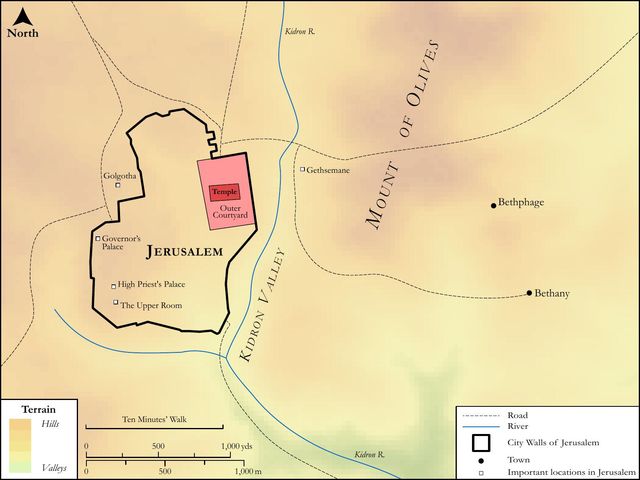
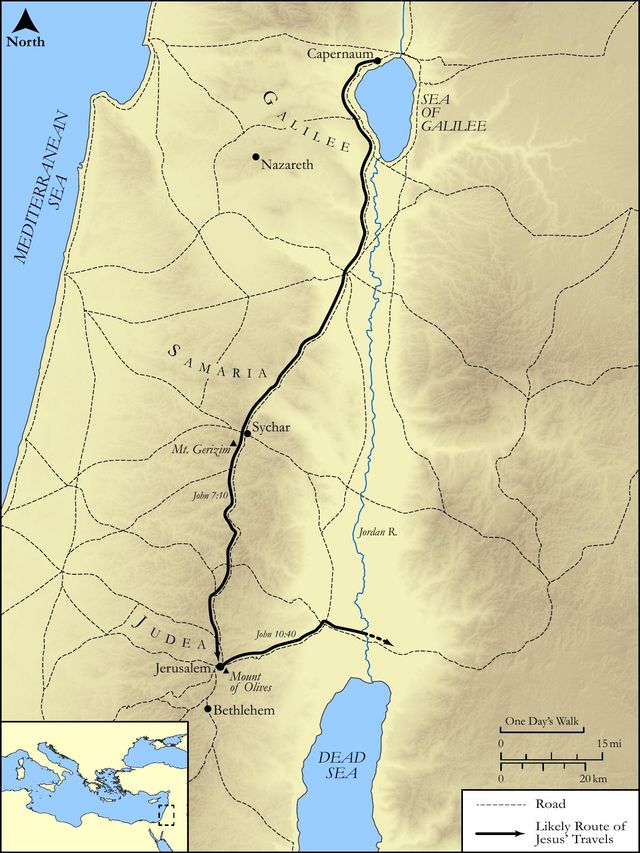
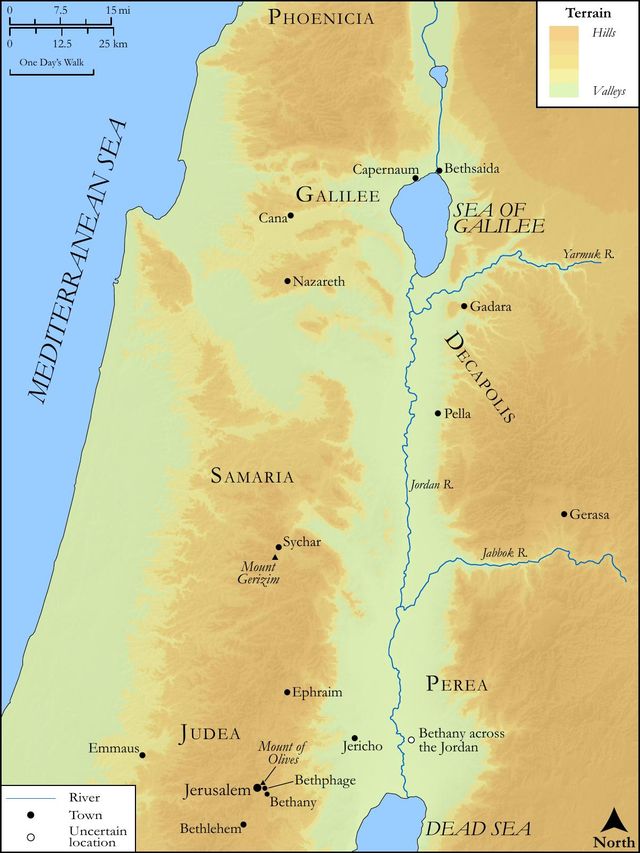
See on the biblical-era map
Study this verse
Public-domain commentary
Matthew Henry
From his Commentary on the Whole Bible. Henry comments on passages, not single verses — this entry covers John 10:1–18. His four-level outline is real structure in the source text, so it is rendered as structure.
It is not certain whether this discourse was at the feast of dedication in the winter (spoken of v. 22), which may be taken as the date, not only of what follows, but of what goes before (that which countenances this is, that Christ, in his discourse there, carries on the metaphor of the sheep, v. 26, 27, whence it seems that that discourse and this were at the same time); or whether this was a continuation of his parley with the Pharisees, in the close of the foregoing chapter. The Pharisees supported themselves in their opposition to Christ with this principle, that they were the pastors of the church, and that Jesus, having no commission from them, was an intruder and an impostor, and therefore the people were bound in duty to stick to then, against him. In opposition to this, Christ here describes who were the false shepherds, and who the true, leaving them to infer what they were.
I.Here is the parable or similitude proposed (v.
1-5); it is borrowed from the custom of that country, in the management of their sheep. Similitudes, used for the illustration of divine truths, should be taken from those things that are most familiar and common, that the things of God be not clouded by that which should clear them. The preface to this discourse is solemn: Verily, verily, I say unto you,—Amen, amen. This vehement asseveration intimates the certainty and weight of what he said; we find amen doubled in the church's praises and prayers, Ps. xli. 13; lxxii. 19; lxxxix. 52. If we would have our amens accepted in heaven, let Christ's amens be prevailing on earth; his repeated amens.
1.In the parable we have,
(1.)The evidence of a thief and robber, that comes to do mischief to the flock, and damage to the owner, v. 1. He enters not by the door, as having no lawful cause of entry, but climbs up some other way, at a window, or some breach in the wall. How industrious are wicked people to do mischief! What plots will they lay, what pains will they take, what hazards will they run, in their wicked pursuits! This should shame us out of our slothfulness and cowardice in the service of God.
(2.)The character that distinguishes the rightful owner, who has a property in the sheep, and a care for them: He enters in by the door, as one having authority (v. 2), and he comes to do them some good office or other, to bind up that which is broken, and strengthen that which is sick, Ezek. xxxiv. 16. Sheep need man's care, and, in return for it, are serviceable to man (1 Cor. ix. 7); they clothe and feed those by whom they are coted and fed.
(3.)The ready entrance that the shepherd finds: To him the porter openeth, v. 3. Anciently they had their sheepfolds within the outer gates of their houses, for the greater safety of their flocks, so that none could come to them the right way, but such as the porter opened to or the master of the house gave the keys to.
(4.)The care he takes and the provision he makes for his sheep. The sheep hear his voice, when he speaks familiarly to them, when they come into the fold, as men now do to their dogs and horses; and, which is more, he calls his own sheep by name, so exact is the notice he takes of them, the account he keeps of them; and he leads them our from the fold to the green pastures; and (v. 4, 5) when he turns them out to graze he does not drive them, but (such was the custom in those times) he goes before them, to prevent any mischief or danger that might meet them, and they, being used to it, follow him, and are safe.
(5.)The strange attendance of the sheep upon the shepherd: They know his voice, so as to discern his mind by it, and to distinguish it from that of a stranger (for the ox knows his owner, Isa. i. 3), and a stranger will they not follow, but, as suspecting some ill design, will flee from him, not knowing his voice, but that it is not the voice of their own shepherd. This is the parable; we have the key to it, Ezek. xxxiv. 31: You my flock are men, and I am your God.
2.Let us observe from this parable,
(1.)That good men are fitly compared to sheep. Men, as creatures depending on their Creator, are called the sheep of his pasture. Good men, as new creatures, have the good qualities of sheep, harmless and inoffensive as sheep; meek and quiet, without noise; patient as sheep under the hand both of the shearer and of the butcher; useful and profitable, tame and tractable, to the shepherd, and sociable one with another, and much used in sacrifices.
(2.)The church of God in the world is a sheepfold, into which the children of God that were scattered abroad are gathered together (ch. xi. 52), and in which they are united and incorporated; it is a good fold, Ezek. xxxiv. 14. See Mic. ii. 12. This fold is well fortified, for God himself is as a wall of fire about it, Zech. ii. 5.
(3.)This sheepfold lies much exposed to thieves and robbers; crafty seducers that debauch and deceive, and cruel persecutors that destroy and devour; grievous wolves (Acts xx. 29); thieves that would steal Christ's sheep from him, to sacrifice them to devils, or steal their food from them, that they might perish for lack of it; wolves in sheep's clothing, Matt. vii. 15.
(4.)The great Shepherd of the sheep takes wonderful care of the flock and of all that belong to it. God is the great Shepherd, Ps. xxiii. 1. He knows those that are his calls them by name, marks them for himself, leads them out to fat pastures, makes them both feed and rest there, speaks comfortably to them, guards them by his providence, guides them by his Spirit and word, and goes before them, to set them in the way of his steps.
(5.)The under-shepherds, who are entrusted to feed the flock of God, ought to be careful and faithful in the discharge of that trust; magistrates must defend them, and protect and advance all their secular interests; ministers must serve them in their spiritual interests, must feed their souls with the word of God faithfully opened and applied, and with gospel ordinances duly administered, taking the oversight of them. They must enter by the door of a regular ordination, and to such the porter will open; the Spirit of Christ will set before them an open door, give them authority in the church, and assurance in their own bosoms. They must know the members of their flocks by name, and watch over them; must lead them into the pastures of public ordinances, preside among them, be their mouth to God and God's to them; and in their conversation must be examples to the believers.
(6.)Those who are truly the sheep of Christ will be very observant of their Shepherd, and very cautious and shy of strangers.
[1.]They follow their Shepherd, for they know his voice, having both a discerning ear, and an obedient heart.
[2.]They flee from a stranger, and dread following him, because they know not his voice. It is dangerous following those in whom we discern not the voice of Christ, and who would draw us from faith in him to fancies concerning him. And those who have experienced the power and efficacy of divine truths upon their souls, and have the savour and relish of them, have a wonderful sagacity to discover Satan's wiles, and to discern between good and evil.
II.The Jew's ignorance of the drift and meaning of this discourse (v.
6): Jesus spoke this parable to them, this figurative, but wise, elegant, and instructive discourse, but they understood not what the things were which he spoke unto them, were not aware whom he meant by the thieves and robbers and whom by the good Shepherd. It is the sin and shame of many who hear the word of Christ that they do not understand it, and they do not because they will not, and because they will mis-understand it. They have no acquaintance with, nor taste of, the things themselves, and therefore do not understand the parables and comparisons with which they are illustrated. The Pharisees had a great conceit of their own knowledge, and could not bear that it should be questioned, and yet they had not sense enough to understand the things that Jesus spoke of; they were above their capacity. Frequently the greatest pretenders to knowledge are most ignorant in the things of God.
III.Christ's explication of this parable, opening the particulars of it fully.
Whatever difficulties there may be in the sayings of the Lord Jesus, we shall find him ready to explain himself, if we be but willing to understand him. We shall find one scripture expounding another, and the blessed Spirit interpreter to the blessed Jesus. Christ, in the parable, had distinguished the shepherd from the robber by this, that he enters in by the door. Now, in the explication of the parable, he makes himself to be both the door by which the shepherd enters and the shepherd that enters in by the door. Though it may be a solecism in rhetoric to make the same person to be both the door and the shepherd, it is no solecism in divinity to make Christ to have his authority from himself, as he has life in himself; and himself to enter by his own blood, as the door, into the holy place.
1.Christ is the door. This he saith to those who pretended to seek for righteousness, but, like the Sodomites, wearied themselves to find the door, where it was not to be found. He saith it to the Jews, who would be thought God's only sheep, and to the Pharisees, who would be thought their only shepherds: I am the door of the sheepfold; the door of the church.
(1.)In general,
[1.]He is as a door shut, to keep out thieves and robbers, and such as are not fit to be admitted. The shutting of the door is the securing of the house; and what greater security has the church of God than the interposal of the Lord Jesus, and his wisdom, power, and goodness, betwixt it and all its enemies?
[2.]He is as a door open for passage and communication. First, By Christ, as the door, we have our first admission into the flock of God, ch. xiv. 6. Secondly, We go in and out in a religious conversation, assisted by him, accepted in him; walking up and down in his name, Zech. x. 12. Thirdly, By him God comes to his church, visits it, and communicates himself to it. Fourthly, By him, as the door, the sheep are at last admitted into the heavenly kingdom, Matt. xxv. 34.
(2.)More particularly,
[1.]Christ is the door of the shepherds, so that none who come not in by him are to be accounted pastors, but (according to the rule laid down, v. 1) thieves and robbers (though they pretended to be shepherds); but the sheep did not hear them. This refers to all those that had the character of shepherds in Israel, whether magistrates or ministers, that exercised their office without any regard to the Messiah, or any other expectations of him than what were suggested by their own carnal interest. Observe, First, The character given of them: they are thieves and robbers (v. 8); all that went before him, not in time, many of them were faithful shepherds, but all that anticipated his commission, and went before he sent them (Jer. xxiii. 21), that assumed a precedency and superiority above him, as the antichrist is said to exalt himself, 2 Thess. ii. 4. "The scribes, and Pharisees, and chief priests, all, even as many as have come before me, that have endeavoured to forestal my interest, and to prevent my gaining any room in the minds of people, by prepossessing them with prejudices against me, they are thieves and robbers, and steal those hearts which they have no title to, defrauding the right owner of his property." They condemned our Saviour as a thief and a robber, because he did not come in by them as the door, nor take out a license from them; but he shows that they ought to have received their commission from him, to have been admitted by him, and to have come after him, and because they did not, but stepped before him, they were thieves and robbers. They would not come in as his disciples, and therefore were condemned as usurpers, and their pretended commissions vacated and superseded. Note, Rivals with Christ are robbers of his church, however they pretend to be shepherds, nay, shepherds of shepherds. Secondly, The care taken to preserve the sheep from them: But the sheep did not hear them. Those that had a true savour of piety, that were spiritual and heavenly, and sincerely devoted to God and godliness, could by no means approve of the traditions of the elders, nor relish their formalities. Christ's disciples, without any particular instructions from their Master, made no conscience of eating with unwashen hands, or plucking the ears of corn on the sabbath day; for nothing is more opposite to true Christianity than Pharisaism is, nor any thing more disrelishing to a soul truly devout than their hypocritical devotions.
[2.]Christ is the door of the sheep (v. 9): By me (di emou—through me as the door) if any man enter into the sheepfold, as one of the flock, he shall be saved; shall not only by safe from thieves and robbers, but he shall be happy, he shall go in and out. Here are, First, Plain directions how to come into the fold: we must come in by Jesus Christ as the door. By faith in him, as the great Mediator between God and man, we come into covenant and communion with God. There is no entering into God's church but by coming into Christ's church; nor are any looked upon as members of the kingdom of God among men but those that are willing to submit to the grace and government of the Redeemer. We must now enter by the door of faith (Acts xiv. 27), since the door of innocency is shut against us, and that pass become unpassable, Gen. iii. 24. Secondly, Precious promises to those who observe this direction. 1. They shall be saved hereafter; this is the privilege of their home. These sheep shall be saved from being distrained and impounded by divine justice for trespass done, satisfaction being made for the damage by their great Shepherd, saved from being a prey to the roaring lion; they shall be for ever happy. 2. In the mean time they shall go in and out and find pasture; this is the privilege of their way. They shall have their conversation in the world by the grace of Christ, shall be in his fold as a man at his own house, where he has free ingress, egress, and regress. True believers are at home in Christ; when they go out, they are not shut out as strangers, but have liberty to come in again; when they come in, they are not shut in as trespassers, but have liberty to go out. They go out to the field in the morning, they come into the fold at night; and in both the Shepherd leads and keeps them, and they find pasture in both: grass in the field, fodder in the fold. In public, in private, they have the word of God to converse with, by which their spiritual life is supported and nourished, and out of which their gracious desires are satisfied; they are replenished with the goodness of God's house.
2.Christ is the shepherd, v. 11, &c. He was prophesied of under the Old Testament as a shepherd, Isa. xl. 11; Ezek. xxxiv. 23; xxxvii. 24; Zech. xiii. 7. In the New Testament he is spoken of as the great Shepherd (Heb. xiii. 20), the chief Shepherd (1 Pet. v. 4), the Shepherd and bishop of our souls, 1 Pet. ii. 25. God, our great owner, the sheep of whose pasture we are by creation, has constituted his Son Jesus to be our shepherd; and here again and again he owns the relation. He has all that care of his church, and every believer, that a good shepherd has of his flock; and expects all that attendance and observance from the church, and every believer, which the shepherds in those countries had from their flocks.
(1.)Christ is a shepherd, and not as the thief, not as those that came not in by the door. Observe,
[1.]The mischievous design of the thief (v. 10): The thief cometh not with any good intent, but to steal, and to kill, and to destroy. First, Those whom they steal, whose hearts and affections they steal from Christ and his pastures, they kill and destroy spiritually; for the heresies they privily bring in are damnable. Deceivers of souls are murderers of souls. Those that steal away the scripture by keeping it in an unknown tongue, that steal away the sacraments by maiming them and altering the property of them, that steal away Christ's ordinances to put their own inventions in the room of them, they kill and destroy; ignorance and idolatry are destructive things. Secondly, Those whom they cannot steal, whom they can neither lead, drive, nor carry away, from the flock of Christ, they aim by persecutions and massacres to kill and destroy corporally. He that will not suffer himself to be robbed is in danger of being slain.
[2.]The gracious design of the shepherd; he is come,
First, To give life to the sheep. In opposition to the design of the thief, which is to kill and destroy (which was the design of the scribes and Pharisees) Christ saith, I am come among men, 1. That they might have life. He came to put life into the flock, the church in general, which had seemed rather like a valley full of dry bones than like a pasture covered over with flocks. Christ came to vindicate divine truths, to purify divine ordinances, to redress grievances, and to revive dying zeal, to seek those of his flock that were lost, to bind up that which was broken (Ezek. xxxiv. 16), and this to his church is as life from the dead. He came to give life to particular believers. Life is inclusive of all good, and stands in opposition to the death threatened (Gen. ii. 17); that we might have life, as a criminal has when he is pardoned, as a sick man when he is cured, a dead man when he is raised; that we might be justified, sanctified, and at last glorified. 2. That they might have it more abundantly, kai perisson echosin. As we read it, it is comparative, that they might have a life more abundant than that which was lost and forfeited by sin, more abundant than that which was promised by the law of Moses, length of days in Canaan, more abundant than could have been expected or than we are able to ask or think. But it may be construed without a note of comparison, that they might have abundance, or might have it abundantly. Christ came to give life and perisson ti—something more, something better, life with advantage; that in Christ we might not only live, but live comfortably, live plentifully, live and rejoice. Life in abundance is eternal life, life without death or fear of death, life and much more.
Secondly, To give his life for the sheep, and this that he might give life to them (v. 11): The good shepherd giveth his life for the sheep. 1. It is the property of every good shepherd to hazard and expose his life for the sheep. Jacob did so, when he would go through such a fatigue to attend them, Gen. xxxi. 40. So did David, when he slew the lion and the bear. Such a shepherd of souls was St. Paul, who would gladly spend, and be spent, for their service, and counted not his life dear to him, in comparison with their salvation. But, 2. It was the prerogative of the great Shepherd to give his life to purchase his flock (Acts xx. 28), to satisfy for their trespass, and to shed his blood to wash and cleanse them.
(2.)Christ is a good shepherd, and not as a hireling. There were many that were not thieves, aiming to kill and destroy the sheep, but passed for shepherds, yet were very careless in the discharge of their duty, and through their neglect the flock was greatly damaged; foolish shepherds, idle shepherds, Zech. xi. 15, 17. In opposition to these,
[1.]Christ here calls himself the good shepherd (v. 11), and again (v. 14) ho poimen ho kalos—that shepherd, that good Shepherd, whom God had promised. Note, Jesus Christ is the best of shepherds, the best in the world to take the over-sight of souls, none so skilful, so faithful, so tender, as he, no such feeder and leader, no such protector and healer of souls as he.
[2.]He proves himself so, in opposition to all hirelings, v. 12-14. Where observe,
First, The carelessness of the unfaithful shepherd described (v. 12, 13); he that is a hireling, that is employed as a servant and is paid for his pains, whose own the sheep are not, who has neither profit nor loss by them, sees the wolf coming, or some other danger threatening, and leaves the sheep to the wolf, for in truth he careth not for them. Here is plain reference to that of the idol-shepherd, Zech. xi. 17. Evil shepherds, magistrates and ministers, are here described both by their bad principles and their bad practices.
a.Their bad principles, the root of their bad practices. What makes those that have the charge of souls in trying times to betray their trust, and in quiet times not to mind it? What makes them false, and trifling, and self-seeking? It is because they are hirelings, and care not for the sheep. That is, (a.) The wealth of the world is the chief of their good; it is because they are hirelings. They undertook the shepherds' office, as a trade to live and grow rich by, not as an opportunity of serving Christ and doing good. It is the love of money, and of their own bellies, that carries them on in it. Not that those are hirelings who, while they serve at the altar, live, and live comfortably, upon the altar. The labourer is worthy of his meat; and a scandalous maintenance will soon make a scandalous ministry. But those are hirelings that love the wages more than the work, and set their hearts upon that, as the hireling is said to do, Deut. xxiv. 15. See 1 Sam. ii. 29; Isa. lvi. 11; Mic. iii. 5, 11. (b.) The work of their place is the least of their care. They value not the sheep, are unconcerned in the souls of others; their business is to be their brothers' lords, not their brothers' keepers or helpers; they seek their own things, and do not, like Timothy, naturally care for the state of souls. What can be expected but that they will flee when the wolf comes. He careth not for the sheep, for he is one whose own the sheep are not. In one respect we may say of the best of the under-shepherds that the sheep are not their own, they have not dominion over them not property in them (feed my sheep and my lambs, saith Christ); but in respect of dearness and affection they should be their own. Paul looked upon those as his own whom he called his dearly beloved and longed for. Those who do not cordially espouse the church's interests, and make them their own, will not long be faithful to them.
b.Their bad practices, the effect of these bad principles, v. 12. See here, (a.) How basely the hireling deserts his post; when he sees the wolf coming, though then there is most need of him, he leaves the sheep and flees. Note, Those who mind their safety more than their duty are an easy prey to Satan's temptations. (b.) How fatal the consequences are! the hireling fancies the sheep may look to themselves, but it does not prove so: the wolf catches them, and scatters the sheep, and woeful havoc is made of the flock, which will all be charged upon the treacherous shepherd. The blood of perishing souls is required at the hand of the careless watchmen.
Secondly, See here the grace and tenderness of the good Shepherd set over against the former, as it was in the prophecy (Ezek. xxxiv. 21, 22, &c.): I am the good Shepherd. It is matter of comfort to the church, and all her friends, that, however she may be damaged and endangered by the treachery and mismanagement of her under-officers, the Lord Jesus is, and will be, as he ever has been, the good Shepherd. Here are two great instances of the shepherd's goodness.
a.His acquainting himself with his flock, with all that belong or in any wise appertain to his flock, which are of two sorts, both known to him:—
(a.)He is acquainted with all that are now of his flock (v. 14, 15), as the good Shepherd (v. 3, 4): I know my sheep and am known of mine. Note, There is a mutual acquaintance between Christ and true believers; they know one another very well, and knowledge notes affection.
[a.]Christ knows his sheep. He knows with a distinguishing eye who are his sheep, and who are not; he knows the sheep under their many infirmities, and the goats under their most plausible disguises. He knows with a favourable eye those that in truth are his own sheep; he takes cognizance of their state, concerns himself for them, has a tender and affectionate regard to them, and is continually mindful of them in the intercession he ever lives to make within the veil; he visits them graciously by his Spirit, and has communion with them; he knows them, that is, he approves and accepts of them, as Ps. i. 6; xxxvii. 18; Exod. xxxiii. 17.
[b.]He is known of them. He observes them with an eye of favour, and they observe him with an eye of faith. Christ's knowing his sheep is put before their knowing him, for he knew and loved us first (1 John iv. 19), and it is not so much our knowing him as our being known of him that is our happiness, Gal. iv. 9. Yet it is the character of Christ's sheep that they know him; know him from all pretenders and intruders; they know his mind, know his voice, know by experience the power of his death. Christ speaks here as if he gloried in being known by his sheep, and thought their respect an honour to him. Upon this occasion Christ mentions (v. 15) the mutual acquaintance between his Father and himself: As the Father knoweth me, even so know I the Father. Now this may be considered, either, First, As the ground of that intimate acquaintance and relation which subsist between Christ and believers. The covenant of grace, which is the bond of this relation, is founded in the covenant of redemption between the Father and the Son, which, we may be sure, stands firm; for the Father and the Son understood one another perfectly well in that matter, and there could be no mistake, which might leave the matter at any uncertainty, or bring it into any hazard. The Lord Jesus knows whom he hath chosen, and is sure of them (ch. xiii. 18), and they also know whom they have trusted, and are sure of him (2 Tim. i. 12), and the ground of both is the perfect knowledge which the Father and the Son had of one another's mind, when the counsel of peace was between them both. Or, Secondly, As an apt similitude, illustrating the intimacy that is between Christ and believers. It may be connected with the foregoing words, thus: I know my sheep, and am known of mine, even as the Father knows me, and I know the Father; compare ch. xvii. 21. 1. As the Father knew the Son, and loved him, and owned him in his sufferings, when he was led as a sheep to the slaughter, so Christ knows his sheep, and has a watchful tender eye upon them, will be with them when they are left alone, as his Father was with him. 2. As the Son knew the Father, loved and obeyed him, and always did those things that pleased him, confiding in him as his God even when he seemed to forsake him, so believers know Christ with an obediential fiducial regard.
(b.)He is acquainted with those that are hereafter to be of this flock (v. 16): Other sheep I have, have a right to and an interest in, which are not of this fold, of the Jewish church; them also I must bring. Observe,
[a.]The eye that Christ had to the poor Gentiles. He had sometimes intimated his special concern for the lost sheep of the house of Israel; to them indeed his personal ministry was confined; but, saith he, I have other sheep. Those who in process of time should believe in Christ, and be brought into obedience to him from among the Gentiles, are here called sheep, and he is said to have them, though as yet they were uncalled, and many of them unborn, because they were chosen of God, and given to Christ in the counsels of divine love from eternity. Christ has a right, by virtue of the Father's donation and his own purchase, to many a soul of which he has not yet the possession; thus he had much people in Corinth, when as yet it lay in wickedness, Acts xviii. 10. "Those other sheep I have," saith Christ, "I have them on my heart, have them in my eye, am as sure to have them as if I had them already." Now Christ speaks of those other sheep, First, To take off the contempt that was put upon him, as having few followers, as having but a little flock, and therefore, if a good shepherd, yet a poor shepherd: "But," saith he, "I have more sheep than you see." Secondly, To take down the pride and vain-glory of the Jews, who thought the Messiah must gather all his sheep from among them. "No," saith Christ, "I have others whom I will set with the lambs of my flock, though you disdain to set them with the dogs of your flock."
[b.]The purposes and resolves of his grace concerning them: "Them also I must bring, bring home to God, bring into the church, and, in order to this, bring off from their vain conversation, bring them back from their wanderings, as that lost sheep," Luke xv. 5. But why must he bring them? What was the necessity? First, The necessity of their case required it: "I must bring, or they must be left to wander endlessly, for, like sheep, they will never come back of themselves, and no other can or will bring them." Secondly, The necessity of his own engagements required it; he must bring them, or he would not be faithful to his trust, and true to his undertaking. "They are my own, bought and paid for, and therefore I must not neglect them nor leave them to perish." He must in honour bring those with whom he was entrusted.
[c.]The happy effect and consequence of this, in two things:—First, "They shall hear my voice. Not only my voice shall be heard among them (whereas they have not heard, and therefore could not believe, now the sound of the gospel shall go to the ends of the earth), but it shall be heard by them; I will speak, and give to them to hear." Faith comes by hearing, and our diligent observance of the voice of Christ is both a means and an evidence of our being brought to Christ, and to God by him. Secondly, There shall be one fold and one shepherd. As there is one shepherd, so there shall be one fold. Both Jews and Gentiles, upon their turning to the faith of Christ, shall be incorporated in one church, be joint and equal sharers in the privileges of it, without distinction. Being united to Christ, they shall unite in him; two sticks shall become one in the hand of the Lord. Note, One shepherd makes one fold; one Christ makes one church. As the church is one in its constitution, subject to one head, animated by one Spirit, and guided by one rule, so the members of it ought to be one in love and affection, Eph. iv. 3-6.
b.Christ's offering up himself for his sheep is another proof of his being a good shepherd, and in this he yet more commended his love, v. 15, 17, 18.
(a.)He declares his purpose of dying for his flock (v. 15): I lay down my life for the sheep. He not only ventured his life for them (in such a case, the hope of saving it might balance the fear of losing it), but he actually deposited it, and submitted to a necessity of dying for our redemption; tithemi—I put it as a pawn or pledge; as purchase-money paid down. Sheep appointed for the slaughter, ready to be sacrificed, were ransomed with the blood of the shepherd. He laid down his life, hyper ton probaton, not only for the good of the sheep, but in their stead. Thousands of sheep had been offered in sacrifice for their shepherds, as sin-offerings, but here, by a surprising reverse, the shepherd is sacrificed for the sheep. When David, the shepherd of Israel, was himself guilty, and the destroying angel drew his sword against the flock for his sake, with good reason did he plead, These sheep, what evil have they done? Let thy hand be against me, 2 Sam. xxiv. 17. But the Son of David was sinless and spotless; and his sheep, what evil have they not done? Yet he saith, Let thine hand be against me. Christ here seems to refer to that prophecy, Zech. xiii. 7, Awake, O sword, against my shepherd; and, though the smiting of the shepherd be for the present the scattering of the flock, it is in order to the gathering of them in.
(b.)He takes off the offence of the cross, which to many is a stone of stumbling, by four considerations:—
[a.]That his laying down his life for the sheep was the condition, the performance of which entitled him to the honours and powers of his exalted state (v. 17): "Therefore doth my Father love me, because I lay down my life. Upon these terms I am, as Mediator, to expect my Father's acceptance and approbation, and the glory designed me—that I become a sacrifice for the chosen remnant." Not but that, as the Son of God, he was beloved of his Father from eternity, but as God-man, as Immanuel, he was therefore beloved of the Father because he undertook to die for the sheep; therefore God's soul delighted in him as his elect because herein he was his faithful servant (Isa. xlii. 1); therefore he said, This is my beloved Son. What an instance is this of God's love to man, that he loved his Son the more for loving us! See what a value Christ puts upon his Father's love, that, to recommend himself to that, he would lay down his life for the sheep. Did he think God's love recompence sufficient for all his services and sufferings, and shall we think it too little for ours, and court the smiles of the world to make it up? Therefore doth my Father love me, that is, me, and all that by faith become one with me; me, and the mystical body, because I lay down my life.
[b.]That his laying down his life was in order to his resuming it: I lay down my life, that I may receive it again. First, This was the effect of his Father's love, and the first step of his exaltation, the fruit of that love. Because he was God's holy one, he must not see corruption, Ps. xvi. 10. God loved him too well to leave him in the grave. Secondly, This he had in his eye, in laying down his life, that he might have an opportunity of declaring himself to be the Son of God with power by his resurrection, Rom. i. 4. By a divine stratagem (like that before Ai, Josh. viii. 15) he yielded to death, as if he were smitten before it, that he might the more gloriously conquer death, and triumph over the grave. He laid down a vilified body, that he might assume a glorified one, fit to ascend to the world of spirits; laid down a life adapted to this world, but assumed one adapted to the other, like a corn of wheat, ch. xii. 24.
[c.]That he was perfectly voluntary in his sufferings and death (v. 18): "No one doth or can force my life from me against my will, but I freely lay it down of myself, I deliver it as my own act and deed, for I have (which no man has) power to lay it down, and to take it again."
1st, See here the power of Christ, as the Lord of life, particularly of his own life, which he had in himself. 1. He had power to keep his life against all the world, so that it could not be wrested from him without his own consent. Though Christ's life seemed to be taken by storm, yet really it was surrendered, otherwise it had been impregnable, and never taken. The Lord Jesus did not fall into the hands of his persecutors because he could not avoid it, but threw himself into their hands because his hour was come. No man taketh my life from me. This was such a challenge as was never given by the most daring hero. 2. He had power to lay down his life. (1.) He had ability to do it. He could, when he pleased, slip the knot of union between soul and body, and, without any act of violence done to himself, could disengage them from each other: having voluntarily taken up a body, he could voluntarily lay it down again, which appeared when he cried with a loud voice, and gave up the ghost. (2.) He had authority to do it, exousian. Though we could find instruments of cruelty, wherewith to make an end of our own lives, yet Id possumus quod jure possumus—we can do that, and that only, which we can do lawfully. We are not at liberty to do it; but Christ had a sovereign authority to dispose of his own life as he pleased. He was no debtor (as we are) either to life or death, but perfectly sui juris. 3. He had power to take it again; we have not. Our life, once laid down, is as water spilt upon the ground; but Christ, when he laid down his life, still had it within reach, within call, and could resume it. Parting with it by a voluntary conveyance, he might limit the surrender at pleasure, and he did it with a power of revocation, which was necessary to preserve the intentions of the surrender.
2ndly, See here the grace of Christ; since none could demand his life of him by law, or extort it by force, he laid it down of himself, for our redemption. He offered himself to be the Saviour: Lo, I come; and then, the necessity of our case calling for it, he offered himself to be a sacrifice: Here am I, let these go their way; by which will we are sanctified, Heb. x. 10. He was both the offerer and the offering, so that his laying down his life was his offering up himself.
Historical interpretation
Nine Centuries of Reception
26 surviving comments on this verse. Each one is dated, so this reads as a timeline rather than a list.
Select a marker to jump to its quote. Markers stagger vertically where authors wrote within a few decades of each other.
Thus then, too, though demonstrated as God, He does not refuse the conditions proper to Him as man, since He hungers and toils and thirsts in weariness, and flees in fear, and prays in trouble. And He who as God has a sleepless nature, slumbers on a pillow. And He who for this end came into the world, begs off from the cup of suffering. And in an agony He sweats blood, and is strengthened by an angel, who Himself strengthens those who believe on Him, and taught men to despise death by His work. And He who knew what manner of man Judas was, is betrayed by Judas. And He, who formerly was honoured by him as God, is contemned by Caiaphas. And He is set at nought by Herod, who is Himself to judge the whole earth. And He is scourged by Pilate, who took upon Himself our infirmities. And by the soldiers He is mocked, at whose behest stand thousands of thousands and myriads of myriads of angels and archangels. And He who fixed the heavens like a vault is fastened to the cross by the Jews. And He who is inseparable from the Father cries to the Father, and commends to Him His spirit; and bowing His head, He gives up the ghost, who said, "I have power to lay down my life, and I have power to take it again; " and because He was not overmastered by death, as being Himself Life, He said this: "I lay it down of myself." And He who gives life bountifully to all, has His side pierced with a spear. And He who raises the dead is wrapped in linen and laid in a sepulchre, and on the third day He is raised again by the Father, though Himself the Resurrection and the Life. For all these things has He finished for us, who for our sakes was made as we are. For "Himself hath borne our infirmities, and carried our diseases; and for our sakes He was afflicted," as Isaiah the prophet has said. This is He who was hymned by the angels, and seen by the shepherds, and waited for by Simeon, and witnessed to by Anna. This is He who was inquired after by the wise men, and indicated by the star; He who was engaged in His Father's house, and pointed to by John, and witnessed to by the Father from above in the voice, "This is my beloved Son; hear ye Him." He is crowned victor against the devil. This is Jesus of Nazareth, who was invited to the marriage-feast in Cana, and turned the water into wine, and rebuked the sea when agitated by the violence of the winds, and walked on the deep as on dry land, and caused the blind man from birth to see, and raised Lazarus to life after he had been dead four days, and did many mighty works, and forgave sins, and conferred power on the disciples, and had blood and water flowing from His sacred side when pierced with the spear. For His sake the sun is darkened, the day has no light, the rocks are shattered, the veil is rent, the foundations of the earth are shaken, the graves are opened, and the dead are raised, and the rulers are ashamed when they see the Director of the universe upon the cross closing His eye and giving up the ghost. Creation saw, and was troubled; and, unable to bear the sight of His exceeding glory, shrouded itself in darkness. This (is He who) breathes upon the disciples, and gives them the Spirit, and comes in among them when the doors are shut, and is taken up by a cloud into the heavens while the disciples gaze at Him, and is set down on the right hand of the Father, and comes again as the Judge of the living and the dead. This is the God who for our sakes became man, to whom also the Father hath put all things in subjection. To Him be the glory and the power, with the Father and the Holy Spirit, in the holy Church both now and ever, and even for evermore. Amen.
That they would do this He Himself also had foretold; and the testimony of all the prophets had in like manner preceded Him, that it behoved Him to suffer, not that He might feel death, but that He might conquer death, and that, when He should have suffered, He should return again into heaven, to show the power of the divine majesty. Therefore the course of events fulfilled the promise. For when crucified, the office of the executioner being forestalled, He Himself of His own will yielded up His spirit, and on the third day freely rose again from the dead. He appeared to His disciples like as He had been. He gave Himself to the recognition of those that saw Him, associated together with Him; and being evident by the substance of His bodily existence, He delayed for forty days, that they might be instructed by Him in the precepts of life, and might learn what they were to teach. Then in a cloud spread around Him He was lifted up into heaven, that as a conqueror He might bring to the Father, Man whom He loved, whom He put on, whom He shielded from death; soon to come from heaven for the punishment of the devil and to the judgment of the human race, with the force of an avenger and with the power of a judge; whilst the disciples, scattered over the world, at the bidding of their Master and God gave forth His precepts for salvation, guided men from their wandering in darkness to the way of light, and gave eyes to the blind and ignorant for the acknowledgment of the truth.
That He was not to be overcome of death, nor should remain in Hades. In the twenty-ninth Psalm: "O Lord, Thou hast brought back my soul from hell." Also in the fifteenth Psalm: "Thou wilt not leave my soul in hell, neither wilt Thou suffer Thine Holy One to see corruption." Also in the third Psalm: "I laid me down and slept, and rose up again, because the Lord helped me." Also according to John: "No man taketh away my life from me; but I lay it down of myself. I have the power of laying it down, and I have the power of taking it again. For this commandment I have received from my Father."
And accordingly, as by the intensity of the supplication and the severe agony, so also by the dense and excessive sweat, he made the facts patent, that the Saviour was man by nature and in reality, and not in mere semblance and appearance, and that He was subject to all the innocent sensibilities natural to men. Nevertheless the words, "I have power to lay down my life, and I have power to take it again," show that His passion was a voluntary thing; and besides that, they indicate that the life which is laid down and taken again is one thing, and the divinity which lays that down and takes it again is another.
He says, "one thing and another," not as making a partition into two persons, but as showing the distinction between the two natures.
And as, by voluntarily enduring the death in the flesh, He implanted incorruptibility in it; so also, by taking to Himself of His own free-will the passion of our servitude, He set in it the seeds of constancy and courage, whereby He has nerved those who believe on Him for the mighty conflicts belonging to their witness-bearing.
To be troubled was proper to the flesh, and to have power to lay down his life and take it again when he wanted was no property of people but of the Word’s power. For human beings die not by their own power but by necessity of nature and against their will. But the Lord, being himself immortal but having mortal flesh, had power as God to become separate from the body and to take it again when he wanted to. Concerning this David speaks in the psalm: “You shall not leave my soul in hades, neither shall you suffer your holy One to see corruption.” For it was appropriate to the flesh, corruptible as it was, that it should no longer after its own nature remain mortal, but because of the Word who had put it on, it should remain incorruptible. For since he was conformed to our condition, having come in our body, so we when we receive him partake of the immortality that is from him.
He foretells that at the time of his passion he would voluntarily detach his soul from his body, saying, “No one takes my soul from me, but I lay it down of myself. I have power to lay it down, and I have power to take it again.” … For his Godhead, alike before taking flesh and in the flesh and after his passion, is immutably the same, being at all times what it was by nature and so continuing forever. But in the suffering of his human nature the Godhead fulfilled the dispensation for our benefit by severing the soul for a season from the body, yet without being itself separated from either of those elements to which it was once for all united. And it did so by joining again the elements that had been parted in this way so as to give to all human nature a beginning and an example that it should follow of the resurrection from the dead, that is, that all the corruptible may put on incorruption and all the mortal may put on immortality, our firstfruits having been transformed to the divine nature by its union with God.
"No man taketh it from Me, but I lay it down of Myself. I have power to lay it down, and I have power to take it again." Because they often took counsel to kill Him, He telleth them, "Except I will, your labor is unavailing." And by the first He proveth the second, by the Death, the Resurrection. For this is the strange and wonderful thing. Since both took place in a new way, and beyond ordinary custom. But let us give heed exactly to what He saith, "I have power to lay down My life." And who hath not "power to lay down his life"? Since it is in the power of any that will, to kill himself. But He saith it not so, but how? "I have in such a way the power to lay it down, that no one can effect this against My will." And this is a power not belonging to men; for we have no power to lay it down in any other way than by killing ourselves. And if we fall into the hands of men who plot against us, and have the power to kill us, we no longer are free to lay it down or not, but even against our will they take it from us. Now this was not the case with Christ, but even when others plotted against Him, He had power not to lay it down.
Then lest on hearing that, "I have received a command from the Father," thou shouldest deem that the achievement doth not belong to Him, He hath said preventing thee, "The good Shepherd layeth down His life for the sheep"; showing by this that the sheep were His, and that all which took place was His achievement, and that He needed no command. For had He needed a commandment, how could He have said, "I lay it down of Myself"? for He that layeth it down of Himself needeth no commandment. He also assigneth the cause for which He doeth this. And what is that? That He is the Shepherd, and the good Shepherd. Now the good Shepherd needeth no one to arouse him to his duty; and if this be the case with man, much more is it so with God. Wherefore Paul said, that "He emptied Himself." So the "commandment" put here means nothing else, but to show His unanimity with the Father; and if He speaketh in so humble and human a way, the cause is the infirmity of His hearers.
A Great matter, beloved, a great matter it is to preside over a Church: a matter needing wisdom and courage as great as that of which Christ speaketh, that a man should lay down his life for the sheep, and never leave them deserted or naked; that he should stand against the wolf nobly. For in this the shepherd differs from the hireling; the one always looks to his own safety, caring not for the sheep; the other always seeks that of the sheep, neglecting his own. Having therefore mentioned the marks of a shepherd, Christ hath put two kinds of spoilers; one, the thief who kills and steals; the other, one who doth not these things, but who when they are done doth not give heed nor hinder them.
"This commandment have I received of My Father." What commandment was this? To die for the world. Did He then wait first to hear, and then choose, and had He need of learning it? Who that had sense would assert this? But before when He said, "Therefore doth My Father love Me," He showed that the first motion was voluntary, and removed all suspicion of opposition to the Father; so here when He saith that He received a commandment from the Father, He declared nothing save that, "this which I do seemeth good to Him," in order that when they should slay Him, they might not think that they had slain Him as one deserted and given up by the Father, nor reproach Him with such reproaches as they did, "He saved others, himself he cannot save"; and, "If thou be the Son of God, come down from the cross"; yet the very reason of His not coming down was, that He was the Son of God.
Observe again, the word "must," here used, doth not express necessity, but is declaratory of something which will certainly come to pass. As though He had said, "Why marvel ye if these shall follow Me, and if My sheep shall hear My voice? When ye shall see others also following Me and hearing My voice, then shall ye be astonished more." And be not confounded when you hear Him say, "which are not of this fold", for the difference relateth to the Law only, as also Paul saith, "Neither circumcision availeth anything, nor uncircumcision." "Them also must I bring." He showeth that both these and those were scattered and mixed, and without shepherds, because the good Shepherd had not yet come. Then He proclaimeth beforehand their future union, that, "They shall be one fold."
"Therefore doth My Father love Me, because I lay down My life, that I might take it again." What could be more full of humanity than this saying, if so be that on our account our Lord shall be beloved, because He dieth for us? What then? tell me, was He not beloved during the time before this; did the Father now begin to love Him, and were we the causes of His love? Seest thou how He used condescension? But what doth He here desire to prove? Because they said that He was alien from the Father, and a deceiver, and had come to ruin and destroy He telleth them, "This if nothing else would persuade Me to love you, namely, your being so beloved by the Father, that I also am beloved by Him, because I die for you." Besides this He desireth also to prove that other point, that He came not to the action unwillingly, (for it unwillingly, how could what was done cause love?) and that this was especially known to the Father. And if He speaketh as a man, marvel not, for we have often mentioned the cause of this, and to say again the same things is superfluous and unpleasant.
"And Jesus, when He had cried with a loud voice, yielded up the Ghost." This is what He said, "I have power to lay down my life, and I have power to take it again," and, "I lay it down of myself." So for this cause He cried with the voice, that it might be shown that the act is done by power. Mark at any rate saith, that "Pilate marvelled if He were already dead:" and that the centurion for this cause above all believed, because He died with power.
"I lay down My life." This He saith continually, to show that He is no deceiver. So also the Apostle, when he desired to show that he was a genuine teacher, and was arguing against the false apostles, established his authority by his dangers and deaths, saying, "In stripes above measure, in deaths oft." For to say, "I am light," and "I am life," seemed to the foolish to be a matter of pride; but to say, "I am willing to die," admitted not any malice or envy. Wherefore they do not say to Him, "Thou bearest witness of thyself, thy witness is not true," for the speech manifested very tender care for them, if indeed He was willing to give Himself for those who would have stoned Him.
Having therefore said that, "No man taketh it from Me," He addeth, "I have power to lay down My life," that is, "I alone can decide as to laying it down," a thing which doth not rest with us, for many others also are able to take it from us. Now this He said not at first, (since the assertion would not have seemed credible,) but when He had received the testimony of facts, and when, having often plotted against Him, they had been unable to lay hold on Him, (for He escaped from their hands ten thousand times,) He then saith, "No man taketh it from me." But if this be true, that other point follows, that He came to death voluntarily. And if this be true, the next point is also certain, that He can "take it again" when He will. For if the dying was a greater thing than man could do, doubt no more about the other. Since the fact that He alone was able to let go His life, showeth that He was able by the same power to take it again. Seest thou how from the first He proved the second, and from His death showed that His Resurrection was indisputable?
(Hom. lx. 1) Two evil persons have been mentioned, one that kills, and robs the sheep, another that doth not hinder: the one standing for those movers of seditions; the other for the rulers of the Jews, who did not take care of the sheep committed to them. Christ distinguishes Himself from both; from the one who came to do hurt by saying, I am come that they might have life; from those who overlook the rapine of the wolves, by saying that He giveth His life for the sheep. Wherefore He saith again, as He said before, I am the good Shepherd. And as He had said above that the sheep heard the voice of the Shepherd and followed Him, that no one might have occasion to ask, What sayest Thou then of those that believe not? He adds, And I know My sheep, and am known of Mine. (Rom. 11:12) As Paul too saith, God hath not cast away His people, whom He foreknew.
(Hom. lx. 1) Then that thou mayest not attribute to the Shepherd and the sheep the same measure of knowledge, He adds, As the Father knoweth Me, even so know I the Father: i. e. I know Him as certainly as He knoweth Me. This then is a case of like knowledge, the other is not; as He saith, No man knoweth who the Son is, but the Father. (Luke 10:23)
(Hom. lx. 1) He gives it too as a proof of His authority. In the same way the Apostle maintains his own commission in opposition to the false Apostles, by enumerating his dangers and sufferings.
(Hom. lx. 2) What wonder that these should hear My voice, and follow Me, when others are waiting to do the same. Both these flocks are dispersed, and without shepherds; for it follows, And they shall hear My voice. And then He foretells their future union: And there shall be one fold and one Shepherd.
(Hom. lx) The word must here (I must bring) does not signify necessity, but only that the thing would take place. Therefore doth My Father love Me, because I lay down My life, that I might take it again. They had called Him an alien from His Father.
(Hom. lx. 2) Or He says, in condescension to our weakness, Though there were nothing else which made Me love you, this would, that ye are so loved by My Father, that, by dying for you, I shall win His love. Not that He was not loved by the Father before, or that we are the cause of such love. For the same purpose He shows that He does not come to His Passion unwillingly: No man taketh it from Me, but I lay it down of Myself.
(Hom. lx. 2) As they had often plotted to kill Him, He tells them their efforts will be useless, unless He is willing. I have such power over My own life, that no one can take it from Me, against My will. This is not true of men. We have not the power of laying down our own lives, except we put ourselves to death. Our Lord alone has this power. And this being true, it is true also that He can take it again when He pleases: And I have power to take it again: which words declare beyond a doubt a resurrection. That they might not think His death a sign that God had forsaken Him, He adds, This commandment have I received from My Father; i. e. to lay down My life, and take it again. By which we must not understand that He first waited to hear this commandment, and had to learn His work; He only shows that that work which He voluntarily undertook, was not against the Father's will.
From both Christ distinguisheth Himself; from those who came to spoil, by saying, "I am come that they might have life, and that they might have more abundantly"; and from those who cared not for the sheep being carried away by wolves, by never deserting them, but even laying down His life for them, that the sheep might not perish. For when they desired to kill Him, He neither altered His teaching, nor betrayed those who believed on Him, but stood firm, and chose to die. Wherefore He continually said, "I am the good Shepherd." Then because His words appeared to be unsupported by testimony, (for though the, "I lay down My life," was not long after proved, yet the, "that they might have life, and that they might have more abundantly," was to come to pass after their departure hence in the life to come,) what doth He? He proveth one from the other; by giving His mortal life He proveth that He giveth life immortal.
Then because He said above "And the sheep hear his voice, and follow him," lest any should say, "What then is this to those who believe not?" hear what He addeth "And I know My sheep, and am known of Mine." As Paul declared when he said, "God hath not rejected His people whom He foreknew"; and Moses, "The Lord knew those that were His"; "those," He saith, "I mean, whom He foreknew." Then that thou mayest not deem the measure of knowledge to be equal, hear how He setteth the matter right by adding, "I know My sheep, and am known of Mine." But the knowledge is not equal. "Where is it equal?" In the case of the Father and Me, for there, "As the Father knoweth Me, even so know I the Father." Had He not wished to prove this, why should He have added that expression? Because He often ranked Himself among the many, therefore, lest any one should deem that He knew as a man knoweth, He added, "As the Father knoweth Me, even so know I the Father." "I know Him as exactly as He knoweth Me." Wherefore He said, "No man knoweth the Son save the Father, nor the Father save the Son", speaking of a distinct kind of knowledge, and such as no other can possess.
To say that the body of the divine Logos also had a soul does not suggest the divinity of the soul.… In this context, when something like this is stated, we understand the statement to refer to the flesh, which had a soul and was united with the divine Logos.… After all, even when Peter says, “Now I will lay down my soul for you,” just like the Lord did, there is no difference. You see, just as Peter, who was a man, composed of body and soul, said this, so too Christ, being one and not two, composed of divinity and humanity, says that he lays down his soul, which belongs to him and is part of him (although he was God in nature, assuming flesh—which had soul—and uniting it to himself).
Here he shows that his natural death was not the consequence of sin in him but of his own simple will, which was the why, the when and the how [of his death]. For because the Word of God is so commingled [with the flesh] as to be one with it, he says, “I have power to lay it down.”
(Tr. xlvii. 7) i. e. Because I die, to rise again. There is great force in, I lay down. Let not the Jews, He says, boast; rage they may, but if I should not choose to lay down My life, what will they do by raging?
(iv. de Trin. c. xiii.) Wherein He showed that His natural death was not the consequence of sin in Him, but of His own simple will, which was the why, the when, and the how: I have power to lay it down.
(Tr. xlvii) How doth our Lord lay down His own life? Christ is the Word, and man, i. e. in soul and body. Doth the Word lay down His life, and take it again; or doth the human soul, or doth the flesh? If it was the Word of God that laid down His soul and took it again, that soul was at one time separated from the Word. But, though death separated the soul and body, death could not separate the Word and the soul. It is still more absurd to say that the soul laid down itself; if it could not be separated from the Word, how could it be from itself? The flesh therefore layeth down its life and taketh it again, not by its own power, but by the power of the Word which dwelleth in it. This refutes the Apollinarians, who say that Christ had not a human, rational soul.
So take a look at Christ: “I have authority to lay down my life, and I have authority to take it up again; nobody takes it away from me.” “I myself went to sleep”; that, you see, is what he says in the psalm: “I myself went to sleep.” As though to say, “Why are they so excited, why so exultant? Why are the Jews waving their arms with joy, as though they themselves had done anything?” “I myself went to sleep. I,” he says, “who have authority to lay down my life, by laying it down ‘I myself went to sleep, and took my rest.’ ” And since he had the authority to take it up again, he added, “I rose again,” but to give the glory to the Father, “since the Lord took me up.” Do not let these words, where he says, “Since the Lord took me up …” strike your minds as meaning that Christ himself did not raise up his own body. The Father raised him up, and he also raised himself up. How shall we prove to you that he raised himself up? Call to mind what he said to the Jews: “Pull down this temple, and in three days I will raise it up.”
No man taketh it from Me, but I lay it down of Myself. I have power to lay it down, and I have power to take it again.
In this place He teaches that He is not only a Good Shepherd enduring peril for the sake of His flock, but also in His Nature God. Therefore He would not have suffered death, had He not been willing, through His possessing the very God-befitting power of undertaking this work, so very advantageous to us. And the structure of the discourse taught the Jews this also, that they were never going to prevail against Him unless He was willing. And not only as regards laying down life did He say: I have power; but this expression: I have power, He used with regard to both His Death and His Resurrection, in order that the action of might and energy might not appear to be that of another, as though it were a concession granted to Him as to a minister and servant in office; but in order that He might display as a fruit of His own Nature the power to exercise authority over the very bonds of death, and easily to modify the natures of things in whatever way He wished, which is really a characteristic of Him Who is by Nature God. This then He wishes to show by saying: I have power to lay down My life, and I have power to take it again: because, neither commanded as a servant or a minister, nor even as it were from necessity, nor being violently compelled by any, but willingly, He came to do this.
This commandment received I from My Father.
For lest any one should say that against the will of the Son the Father is not able to take away His life, and hence introduce discord and variance into the One Godhead of the Father and the Son; by these words which He says: I received commandment, He shows that the Father also agrees and consents to this, and professes that They come forward to it as with one accord, although He is the Will of the Father. And this will be found consistent also with His Incarnation. By saying that He received in the way of a commandment that which seemed right in the eyes of His Father, He being by Nature God does not make Himself inferior to the Father, but observes what befits His participation of man's nature. Again, He puts us in mind that He is Himself the Prophet concerning Whom the Father said: He shall speak according as I shall command Him; speaking of the common Will of both Father and Son as received like a commandment. This He spake to the Jews lest they should think that He said things contrary to the ordinances of the Father. And if the Father named His own Consubstantial Son a Prophet, be not troubled; for when He became Man, then also the name of Prophet was suitable to Him, then also we may say that commandments were given to Him by the Father agreeably to His human nature. But one who receives commandments is not for that reason inferior or unlike in essence or nature to one who gives commandments, inasmuch as men give commandments to men, and angels to angels, and we do not for that reason say that those who are commanded are of different nature or inferior. Therefore the Son is not inferior to the Father, although He became Man, in order that He might become a Pattern of all virtue for us. By this means He also teaches us that we ought to obey our parents in all things, although we are equal to them as regards our nature. And in some places when it is said by the Father: "I will command," the meaning is: "I will deal fitly with," as when He said: And I will command the whole world for their evil deeds, and the ungodly for their sins. Moreover there are times when the Son speaks with helpful condescension, so that we may as far as is possible get an understanding of the ineffable oracles: yet His having said: I received a commandment, does not make One Who is in His Nature God cease to be God. Either therefore say He is God and ascribe to Him all that properly befits the Godhead, or say plainly He is a creature. For the fact of having received a commandment does not strip any one of the qualities which naturally belong to him. But since the Son speaks whatever the Father commands Him, and He says: I and the Father are One, thou art obliged to say, either that the Father commanded the Son to tell the truth, or to tell a lie. For what the Son hath received commandment to speak, He speaketh; for He saith: The Father which sent Me, He hath given Me a commandment, what I should say, and what I should speak. And although He also said: My Father is greater than I, that is nothing to the contrary. For in so far as He is in His Nature God, He is equal to the Father; but in so far as He became Man and humbled Himself, He in accordance with this speaks words which befit His Humanity. Nevertheless, as the name of commandment is something external to the essence of a person, it could not be made an objection to His Essence. For it is not in the Father's giving Him commandment that the Son has His Being, nor could this ever be made the limit of His Essence. The Son, therefore, as being the Counsel and Wisdom of the Father, knows what is fittingly determined by Him; and if He receives it as a commandment, do not marvel. For by human modes of expression He signifies things beyond expression, and things unspeakable by our voices are brought down to the mode of expression usual amongst us, so that we may be enabled to understand them. Accordingly let us blame, not the inconsistency of the matter, but the weakness of the words, which cannot reach to the full expression and accurate interpretation of the matters, as they ought.
For the Word doth not receive a command by word, but containeth in Himself all the Father's commandments. When the Son is said to receive what He possesseth of Himself, His power is not lessened, but only His generation declared. The Father gave the Son every thing in begetting Him. He begat Him perfect.
After declaring Himself the Master of His own life and death, which was a lofty assumption, He makes a more humble confession; thus wonderfully uniting both characters; showing that He was neither inferior to or a slave of the Father on the one hand, nor an antagonist on the other; but of the same power and will.
Continue studying John 10:18 across the web’s major study libraries — every link below opens this exact verse, chapter, or book on the destination site.
Read & Compare
 BibleGatewayThis verse in more than 200 translations and 70 languages.
 Bible.comThe YouVersion reader — hundreds of translations, reading plans, and highlights.
 ESV.orgCrossway's official English Standard Version reader.
 NET BibleThe NET translation with 60,000+ translators' notes on every rendering decision.
 STEP BibleTyndale House's free study tool — original text, vocabulary, and scholarly resources.
 BibliaLogos Bible Software's free web reader.
 USCCBThe New American Bible (Revised Edition) with the U.S. bishops' study notes.
Commentaries
 BibleHub CommentariesDozens of classic commentaries on this verse, gathered on one page.
 StudyLightMore than 100 commentary sets — the largest collection on the web.
 BibleRefPlain-English commentary on what this verse means, verse by verse.
 Enduring WordDavid Guzik's free commentary on this chapter, widely used by Bible teachers.
 Bible Study ToolsVerse commentary alongside Greek and Hebrew study aids.
Original Language & Research
- BibleHub InterlinearThe verse word by word — original language, transliteration, and English.
- BibleHub LexiconEvery word's original-language definition and Strong's entry.
 Blue Letter BibleDeep-study tools — Strong's numbers, concordance, and word studies.
 CNTR CollationThe earliest Greek manuscripts of this verse, collated letter by letter.
Sermons, Hymns & Audio


TrulyRandomVerse is not affiliated with these sites and doesn’t control their content. They’re linked because they’re genuinely useful.
Summary
John 10:18 is a profound declaration by Jesus, asserting His absolute sovereignty over His own life and death. He emphatically states that His impending sacrifice is not coerced by any human force but is a deliberate, voluntary act of self-surrender. Furthermore, He reveals His unique divine authority to both lay down His life and take it up again through resurrection, all in perfect obedience to a specific command received from God the Father. This verse encapsulates the core of Christ's redemptive work, highlighting His divine power, purposeful sacrifice, and filial submission.
Context
ShowHideLiterary Context
This verse serves as the powerful culmination of Jesus' discourse on the Good Shepherd in John 10. Preceding this statement, Jesus has already identified Himself as the "Good Shepherd" who "lays down his life for the sheep" (John 10:11). He contrasts His self-sacrificial love with the mercenary nature of hired hands who abandon the flock when danger arises (John 10:12-13). The declaration in John 10:18 not only reiterates His willingness to die but crucially clarifies the nature of that death: it is not a passive victimhood but an active, authoritative, and divinely sanctioned act. This statement directly addresses the growing tension and opposition from the Jewish leaders, who consistently questioned His authority and identity, framing His death as a consequence of their actions rather than His sovereign will.
Historical & Cultural Context
In the Greco-Roman world, the concept of a god or hero voluntarily sacrificing himself for others was not entirely alien, but Jesus' claim goes far beyond typical human heroism. His assertion of power over His own life and death, particularly the ability to "take it again," would have been astounding and blasphemous to many Jewish listeners, as only God possessed such ultimate authority. The backdrop of this discourse is the Feast of Dedication (Hanukkah), mentioned in John 10:22, a celebration of God's deliverance of Israel from oppression. Against this backdrop of nationalistic hopes for a conquering Messiah, Jesus presents a different kind of Messiah – one whose victory comes through voluntary sacrifice and resurrection, fulfilling a divine "commandment" rather than a political agenda. This challenged prevailing messianic expectations and underscored the unique nature of His divine mission.
Key Themes
ShowHideJohn 10:18 powerfully contributes to several overarching themes in John's Gospel. Firstly, it highlights Jesus' divine sovereignty and authority, particularly over life and death, reinforcing His claims to deity that permeate the Gospel (e.g., "I AM" statements like John 8:58). Secondly, it emphasizes the voluntary and purposeful nature of His sacrifice, refuting any notion that His death was a tragic accident or a forced outcome. This aligns with the Gospel's portrayal of Jesus as fully in control of His destiny, even as He moves towards the cross (e.g., John 19:11). Thirdly, the verse underscores Jesus' perfect obedience to the Father's will, a consistent theme throughout John (e.g., John 4:34, John 5:30). This obedience is not passive submission but an active, willing alignment with the divine plan for redemption, demonstrating the unity of purpose between the Father and the Son.
Exposition and Analysis
ShowHideKey Word Analysis
ShowHideThis verb, G142, means "to lift up," "to take up or away," or "to remove." In this context, it conveys the idea of seizing or forcibly taking something from someone. Jesus' use of "No man taketh it from me" emphatically denies any external power or coercion over His life, asserting that His death will not be the result of human capture or execution against His will, but rather His own deliberate act.
G5087 signifies "to place," "to put," or "to set." Unlike aírō, which implies forceful removal, títhēmi denotes a voluntary, intentional act of placing something. Jesus' statement "but I lay it down of myself" directly contrasts with the idea of His life being taken. It highlights His active agency and self-determination in surrendering His life, emphasizing that His death is a purposeful, willed offering rather than a passive event.
G1849 is a crucial term, denoting "privilege," "authority," "capacity," "competency," "freedom," or "mastery." It refers to a legitimate right or inherent authority, distinct from mere physical strength (dynamis). When Jesus declares, "I have power to lay it down, and I have power to take it again," He asserts an intrinsic, divine right and authority over His own life and death. This is not a delegated power but an inherent attribute of His divine nature, demonstrating His unique control over the most fundamental aspects of existence.
Verse Breakdown
ShowHide"No man taketh it from me,"
This opening clause establishes Jesus' absolute sovereignty. The use of "no man" (G3762, oudeís) is an emphatic negation, asserting that no human being, no authority, and no circumstance has the power to forcibly remove His life from Him. His death will not be a defeat at the hands of His enemies but a deliberate act of His own will.
"but I lay it down of myself."
This clause presents a stark contrast ("but," G235, allá) to the preceding one, immediately clarifying the nature of His death. The phrase "of myself" (G1683, emautoû) underscores the voluntary and self-initiated nature of His sacrifice. Jesus is not a victim; He is the active agent in His own death, choosing to surrender His life according to His divine purpose.
"I have power to lay it down,"
Here, Jesus introduces the concept of "power" (G1849, exousía), emphasizing His inherent authority and right to perform this act. This is not merely a willingness but a divine capacity. He possesses the legitimate authority to determine the moment and manner of His death, reinforcing the purposeful nature of His sacrifice.
"and I have power to take it again."
This is a staggering claim, pointing directly to Jesus' deity and His unique ability to resurrect Himself. The phrase "take it again" (G2983, lambánō for "take" and G3825, pálin for "again") signifies a reversal and restoration of life by His own authority. This declaration foreshadows His resurrection, demonstrating His ultimate victory over death and His inherent divine control over life itself.
"This commandment have I received of my Father."
The verse concludes by anchoring Jesus' sovereign act within the context of His perfect obedience to God the Father. His voluntary sacrifice and resurrection are not independent actions but are in complete alignment with the divine will. The "commandment" (G1785, entolḗ) implies a specific, authoritative directive, highlighting the unity of purpose and action within the Trinity in the plan of redemption.
Literary Devices
ShowHideJohn 10:18 is rich with literary devices that amplify its profound theological message. The most prominent is Contrast, immediately evident in the juxtaposition of "No man taketh it from me" and "but I lay it down of myself." This antithesis powerfully highlights Jesus' active agency versus passive victimhood, emphasizing the voluntary nature of His sacrifice. Parallelism is also employed, particularly in "I have power to lay it down, and I have power to take it again," which uses a similar grammatical structure to underscore the equal and inherent authority Jesus possesses over both aspects of His destiny. The repetition of "power" creates Emphasis, drawing the listener's attention to the extraordinary claim of divine authority. Furthermore, the entire statement functions as a profound Foreshadowing of Jesus' crucifixion and resurrection, revealing His pre-knowledge and control over these pivotal events. The declaration also contains an element of Hyperbole in "No man taketh it from me," an absolute statement that underlines the ultimate futility of human attempts to thwart God's sovereign plan, even as they participate in its unfolding.
Theological and Thematic Connections
ShowHideJohn 10:18 stands as a cornerstone for understanding the nature of Christ's atoning work and His divine person. It unequivocally establishes that Jesus' death was not a tragic accident or a forced martyrdom, but a deliberate, sovereign act of self-giving love, undertaken with full authority and in perfect obedience to the Father's will. This voluntary surrender of life, coupled with the power to reclaim it, underscores His unique status as both fully human and fully divine. It affirms the efficacy of His sacrifice, as it was a willed offering, and provides the ultimate assurance of His victory over death, foundational to Christian hope. This verse speaks to the intentionality of redemption, revealing a God who orchestrates salvation through the willing sacrifice of His Son.
Reflection and Application
ShowHideJohn 10:18 offers profound comfort, security, and a model for discipleship. For believers, this verse provides immense assurance regarding the security of their salvation. Jesus' death was not a defeat but a purposeful, sovereign act of atonement, ensuring its efficacy and sufficiency for our redemption. We can trust in a Savior who willingly laid down His life for us, not because He was compelled, but because of His infinite love and divine purpose. This also affirms His deity and ultimate authority, providing a solid foundation for our trust in His ability to save, sustain, and protect His followers through all of life's challenges. For those facing trials, suffering, or the inevitability of death, this verse reminds us that Christ's power extends even over death itself, offering a living hope in resurrection and eternal life. Furthermore, Jesus' voluntary submission to the Father's will serves as a powerful example of radical obedience for believers to emulate in their own lives, encouraging us to align our wills with God's perfect plan, even when it calls for sacrifice.
Questions for Reflection
ShowHideFAQ
ShowHideWhat does "No man taketh it from me" mean in the context of Jesus' crucifixion?
ShowHideThis phrase means that Jesus' death was not the result of human power or coercion, despite the fact that He was arrested, tried, and crucified by human hands. It emphasizes that no one could have taken His life from Him against His will. His death was not a defeat imposed by His enemies but a deliberate, voluntary act of self-sacrifice, undertaken according to His own divine authority and purpose. Even as He allowed Himself to be arrested and crucified, He remained sovereign over the process, choosing to lay down His life.
How does Jesus having "power to lay it down, and... power to take it again" demonstrate His deity?
ShowHideThis statement is a profound assertion of Jesus' divine nature. No mere human being possesses the inherent "power" (Greek: exousía, meaning authority or right) to voluntarily surrender their life and, even more remarkably, to resurrect themselves. This unique capability belongs solely to God. By claiming this power, Jesus reveals His intrinsic control over life and death, demonstrating that He is not only the Son of God but God Himself, possessing ultimate authority over all creation, including His own existence. It foreshadows His glorious resurrection, which validates His claims and proves His divine identity.
What is the "commandment" Jesus received from His Father?
ShowHideThe "commandment" (Greek: entolḗ) refers to the divine directive or instruction Jesus received from God the Father regarding His mission. This commandment was for Him to lay down His life for the redemption of humanity and to take it up again through resurrection. It signifies the perfect unity of will and purpose between the Father and the Son in the plan of salvation. Jesus' entire earthly ministry, culminating in His death and resurrection, was an act of perfect obedience to this divine mandate, demonstrating His complete alignment with the Father's redemptive plan.
Christ-Centered Fulfillment
ShowHideJohn 10:18 stands as a pivotal declaration of Christ's unique identity and the very nature of His redemptive work. It reveals that the cross was not a tragic accident but the culmination of a divine, sovereign plan, executed by the Son in perfect obedience to the Father. Jesus' assertion of having "power to lay it down, and I have power to take it again" is the bedrock of the Christian faith, demonstrating His inherent deity and His ultimate victory over sin and death. This voluntary sacrifice, made possible by His divine authority, is the very act by which atonement is achieved, as He, the Lamb of God, takes away the sin of the world. His subsequent resurrection, also by His own power, is the triumphant validation of His claims and the guarantee of new life for all who believe, as seen in the apostolic preaching that God raised Him from the dead. Because He willingly surrendered His life and victoriously reclaimed it, He is now the Lord of both the living and the dead, holding the keys of death and Hades (Revelation 1:18). Thus, John 10:18 is not merely a statement about Jesus' death, but a profound revelation of His divine person, His purposeful mission, and the ultimate source of our salvation in His sovereign, self-willed, and victorious sacrifice.