


John 10:10
- ὁhoTheG3588T-NSMDefinite article Nominative Singular Masculine
- κλέπτηςkleptēsthiefG2812N-NSMNoun Nominative Singular Masculine
- οὐκouknotG3756PRT-NNegative Particle Negative
- ἔρχεταιerchetaicomesG2064V-PNI-3SVerb Present Middle Or Passive Deponent Indicative 3rd Singular
- εἰeionlyG1487CONDConjunction
- μὴmēexceptG3361PRT-NNegative Particle Negative
- ἵναinathatG2443CONJConjunction
- κλέψῃklepsēhe shall stealG2813V-AAS-3SVerb Aorist Active Subjunctive 3rd Singular
- καὶkaiandG2532CONJConjunction
- θύσῃthusēshall killG2380V-AAS-3SVerb Aorist Active Subjunctive 3rd Singular
- καὶkaiandG2532CONJConjunction
- ἀπολέσῃ·apolesēshall destroyG622V-AAS-3SVerb Aorist Active Subjunctive 3rd Singular
- ἐγὼegōI myselfG1473P-1NSPersonal pronoun Nominative 1st Singular
- ἦλθονēlthoncameG2064V-2AAI-1SVerb 2nd Aorist Active Indicative 1st Singular
- ἵναinathatG2443CONJConjunction
- ζωὴνzōēnlifeG2222N-ASFNoun Accusative Singular Feminine
- ἔχωσινechōsinthey may haveG2192V-PAS-3PVerb Present Active Subjunctive 3rd Plural
- καὶkaiandG2532CONJConjunction
- περισσὸνperissonexcessiveG4053ADVAdverb
- ἔχωσινechōsinmay haveG2192V-PAS-3PVerb Present Active Subjunctive 3rd Plural
English is a literal word-by-word gloss of the Greek, not the KJV's wording. Why?
This is the original text the KJV's translators worked from — each Greek word with its own literal English meaning in this verse, prepared by scholars at Tyndale House, Cambridge. The KJV translates whole sentences, not word by word, so its wording differs: one Greek word can become several English words, and the KJV may choose “charity” where the gloss reads “love”. Both are faithful — they answer different questions. For the KJV's own rendering, switch to the KJV text.
Details
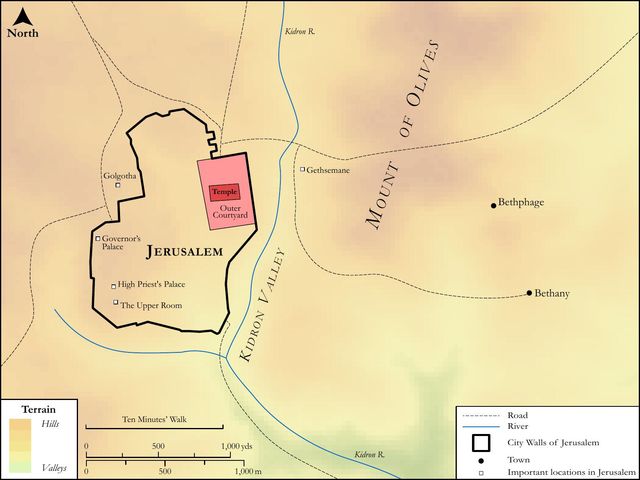
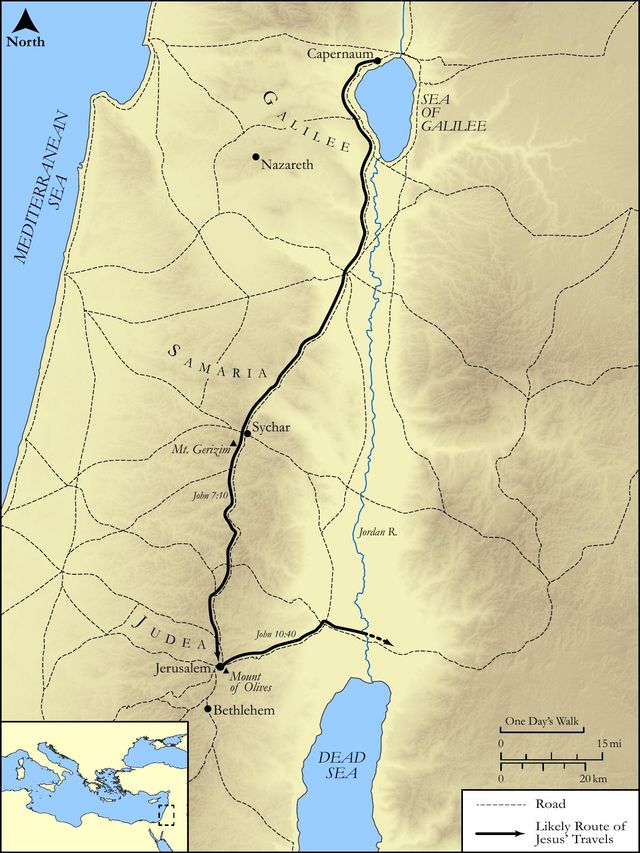
See on the biblical-era maps

Study this verse
Public-domain commentary
Matthew Henry
From his Commentary on the Whole Bible. Henry comments on passages, not single verses — this entry covers John 10:1–18. His four-level outline is real structure in the source text, so it is rendered as structure.
It is not certain whether this discourse was at the feast of dedication in the winter (spoken of v. 22), which may be taken as the date, not only of what follows, but of what goes before (that which countenances this is, that Christ, in his discourse there, carries on the metaphor of the sheep, v. 26, 27, whence it seems that that discourse and this were at the same time); or whether this was a continuation of his parley with the Pharisees, in the close of the foregoing chapter. The Pharisees supported themselves in their opposition to Christ with this principle, that they were the pastors of the church, and that Jesus, having no commission from them, was an intruder and an impostor, and therefore the people were bound in duty to stick to then, against him. In opposition to this, Christ here describes who were the false shepherds, and who the true, leaving them to infer what they were.
I.Here is the parable or similitude proposed (v.
1-5); it is borrowed from the custom of that country, in the management of their sheep. Similitudes, used for the illustration of divine truths, should be taken from those things that are most familiar and common, that the things of God be not clouded by that which should clear them. The preface to this discourse is solemn: Verily, verily, I say unto you,—Amen, amen. This vehement asseveration intimates the certainty and weight of what he said; we find amen doubled in the church's praises and prayers, Ps. xli. 13; lxxii. 19; lxxxix. 52. If we would have our amens accepted in heaven, let Christ's amens be prevailing on earth; his repeated amens.
1.In the parable we have,
(1.)The evidence of a thief and robber, that comes to do mischief to the flock, and damage to the owner, v. 1. He enters not by the door, as having no lawful cause of entry, but climbs up some other way, at a window, or some breach in the wall. How industrious are wicked people to do mischief! What plots will they lay, what pains will they take, what hazards will they run, in their wicked pursuits! This should shame us out of our slothfulness and cowardice in the service of God.
(2.)The character that distinguishes the rightful owner, who has a property in the sheep, and a care for them: He enters in by the door, as one having authority (v. 2), and he comes to do them some good office or other, to bind up that which is broken, and strengthen that which is sick, Ezek. xxxiv. 16. Sheep need man's care, and, in return for it, are serviceable to man (1 Cor. ix. 7); they clothe and feed those by whom they are coted and fed.
(3.)The ready entrance that the shepherd finds: To him the porter openeth, v. 3. Anciently they had their sheepfolds within the outer gates of their houses, for the greater safety of their flocks, so that none could come to them the right way, but such as the porter opened to or the master of the house gave the keys to.
(4.)The care he takes and the provision he makes for his sheep. The sheep hear his voice, when he speaks familiarly to them, when they come into the fold, as men now do to their dogs and horses; and, which is more, he calls his own sheep by name, so exact is the notice he takes of them, the account he keeps of them; and he leads them our from the fold to the green pastures; and (v. 4, 5) when he turns them out to graze he does not drive them, but (such was the custom in those times) he goes before them, to prevent any mischief or danger that might meet them, and they, being used to it, follow him, and are safe.
(5.)The strange attendance of the sheep upon the shepherd: They know his voice, so as to discern his mind by it, and to distinguish it from that of a stranger (for the ox knows his owner, Isa. i. 3), and a stranger will they not follow, but, as suspecting some ill design, will flee from him, not knowing his voice, but that it is not the voice of their own shepherd. This is the parable; we have the key to it, Ezek. xxxiv. 31: You my flock are men, and I am your God.
2.Let us observe from this parable,
(1.)That good men are fitly compared to sheep. Men, as creatures depending on their Creator, are called the sheep of his pasture. Good men, as new creatures, have the good qualities of sheep, harmless and inoffensive as sheep; meek and quiet, without noise; patient as sheep under the hand both of the shearer and of the butcher; useful and profitable, tame and tractable, to the shepherd, and sociable one with another, and much used in sacrifices.
(2.)The church of God in the world is a sheepfold, into which the children of God that were scattered abroad are gathered together (ch. xi. 52), and in which they are united and incorporated; it is a good fold, Ezek. xxxiv. 14. See Mic. ii. 12. This fold is well fortified, for God himself is as a wall of fire about it, Zech. ii. 5.
(3.)This sheepfold lies much exposed to thieves and robbers; crafty seducers that debauch and deceive, and cruel persecutors that destroy and devour; grievous wolves (Acts xx. 29); thieves that would steal Christ's sheep from him, to sacrifice them to devils, or steal their food from them, that they might perish for lack of it; wolves in sheep's clothing, Matt. vii. 15.
(4.)The great Shepherd of the sheep takes wonderful care of the flock and of all that belong to it. God is the great Shepherd, Ps. xxiii. 1. He knows those that are his calls them by name, marks them for himself, leads them out to fat pastures, makes them both feed and rest there, speaks comfortably to them, guards them by his providence, guides them by his Spirit and word, and goes before them, to set them in the way of his steps.
(5.)The under-shepherds, who are entrusted to feed the flock of God, ought to be careful and faithful in the discharge of that trust; magistrates must defend them, and protect and advance all their secular interests; ministers must serve them in their spiritual interests, must feed their souls with the word of God faithfully opened and applied, and with gospel ordinances duly administered, taking the oversight of them. They must enter by the door of a regular ordination, and to such the porter will open; the Spirit of Christ will set before them an open door, give them authority in the church, and assurance in their own bosoms. They must know the members of their flocks by name, and watch over them; must lead them into the pastures of public ordinances, preside among them, be their mouth to God and God's to them; and in their conversation must be examples to the believers.
(6.)Those who are truly the sheep of Christ will be very observant of their Shepherd, and very cautious and shy of strangers.
[1.]They follow their Shepherd, for they know his voice, having both a discerning ear, and an obedient heart.
[2.]They flee from a stranger, and dread following him, because they know not his voice. It is dangerous following those in whom we discern not the voice of Christ, and who would draw us from faith in him to fancies concerning him. And those who have experienced the power and efficacy of divine truths upon their souls, and have the savour and relish of them, have a wonderful sagacity to discover Satan's wiles, and to discern between good and evil.
II.The Jew's ignorance of the drift and meaning of this discourse (v.
6): Jesus spoke this parable to them, this figurative, but wise, elegant, and instructive discourse, but they understood not what the things were which he spoke unto them, were not aware whom he meant by the thieves and robbers and whom by the good Shepherd. It is the sin and shame of many who hear the word of Christ that they do not understand it, and they do not because they will not, and because they will mis-understand it. They have no acquaintance with, nor taste of, the things themselves, and therefore do not understand the parables and comparisons with which they are illustrated. The Pharisees had a great conceit of their own knowledge, and could not bear that it should be questioned, and yet they had not sense enough to understand the things that Jesus spoke of; they were above their capacity. Frequently the greatest pretenders to knowledge are most ignorant in the things of God.
III.Christ's explication of this parable, opening the particulars of it fully.
Whatever difficulties there may be in the sayings of the Lord Jesus, we shall find him ready to explain himself, if we be but willing to understand him. We shall find one scripture expounding another, and the blessed Spirit interpreter to the blessed Jesus. Christ, in the parable, had distinguished the shepherd from the robber by this, that he enters in by the door. Now, in the explication of the parable, he makes himself to be both the door by which the shepherd enters and the shepherd that enters in by the door. Though it may be a solecism in rhetoric to make the same person to be both the door and the shepherd, it is no solecism in divinity to make Christ to have his authority from himself, as he has life in himself; and himself to enter by his own blood, as the door, into the holy place.
1.Christ is the door. This he saith to those who pretended to seek for righteousness, but, like the Sodomites, wearied themselves to find the door, where it was not to be found. He saith it to the Jews, who would be thought God's only sheep, and to the Pharisees, who would be thought their only shepherds: I am the door of the sheepfold; the door of the church.
(1.)In general,
[1.]He is as a door shut, to keep out thieves and robbers, and such as are not fit to be admitted. The shutting of the door is the securing of the house; and what greater security has the church of God than the interposal of the Lord Jesus, and his wisdom, power, and goodness, betwixt it and all its enemies?
[2.]He is as a door open for passage and communication. First, By Christ, as the door, we have our first admission into the flock of God, ch. xiv. 6. Secondly, We go in and out in a religious conversation, assisted by him, accepted in him; walking up and down in his name, Zech. x. 12. Thirdly, By him God comes to his church, visits it, and communicates himself to it. Fourthly, By him, as the door, the sheep are at last admitted into the heavenly kingdom, Matt. xxv. 34.
(2.)More particularly,
[1.]Christ is the door of the shepherds, so that none who come not in by him are to be accounted pastors, but (according to the rule laid down, v. 1) thieves and robbers (though they pretended to be shepherds); but the sheep did not hear them. This refers to all those that had the character of shepherds in Israel, whether magistrates or ministers, that exercised their office without any regard to the Messiah, or any other expectations of him than what were suggested by their own carnal interest. Observe, First, The character given of them: they are thieves and robbers (v. 8); all that went before him, not in time, many of them were faithful shepherds, but all that anticipated his commission, and went before he sent them (Jer. xxiii. 21), that assumed a precedency and superiority above him, as the antichrist is said to exalt himself, 2 Thess. ii. 4. "The scribes, and Pharisees, and chief priests, all, even as many as have come before me, that have endeavoured to forestal my interest, and to prevent my gaining any room in the minds of people, by prepossessing them with prejudices against me, they are thieves and robbers, and steal those hearts which they have no title to, defrauding the right owner of his property." They condemned our Saviour as a thief and a robber, because he did not come in by them as the door, nor take out a license from them; but he shows that they ought to have received their commission from him, to have been admitted by him, and to have come after him, and because they did not, but stepped before him, they were thieves and robbers. They would not come in as his disciples, and therefore were condemned as usurpers, and their pretended commissions vacated and superseded. Note, Rivals with Christ are robbers of his church, however they pretend to be shepherds, nay, shepherds of shepherds. Secondly, The care taken to preserve the sheep from them: But the sheep did not hear them. Those that had a true savour of piety, that were spiritual and heavenly, and sincerely devoted to God and godliness, could by no means approve of the traditions of the elders, nor relish their formalities. Christ's disciples, without any particular instructions from their Master, made no conscience of eating with unwashen hands, or plucking the ears of corn on the sabbath day; for nothing is more opposite to true Christianity than Pharisaism is, nor any thing more disrelishing to a soul truly devout than their hypocritical devotions.
[2.]Christ is the door of the sheep (v. 9): By me (di emou—through me as the door) if any man enter into the sheepfold, as one of the flock, he shall be saved; shall not only by safe from thieves and robbers, but he shall be happy, he shall go in and out. Here are, First, Plain directions how to come into the fold: we must come in by Jesus Christ as the door. By faith in him, as the great Mediator between God and man, we come into covenant and communion with God. There is no entering into God's church but by coming into Christ's church; nor are any looked upon as members of the kingdom of God among men but those that are willing to submit to the grace and government of the Redeemer. We must now enter by the door of faith (Acts xiv. 27), since the door of innocency is shut against us, and that pass become unpassable, Gen. iii. 24. Secondly, Precious promises to those who observe this direction. 1. They shall be saved hereafter; this is the privilege of their home. These sheep shall be saved from being distrained and impounded by divine justice for trespass done, satisfaction being made for the damage by their great Shepherd, saved from being a prey to the roaring lion; they shall be for ever happy. 2. In the mean time they shall go in and out and find pasture; this is the privilege of their way. They shall have their conversation in the world by the grace of Christ, shall be in his fold as a man at his own house, where he has free ingress, egress, and regress. True believers are at home in Christ; when they go out, they are not shut out as strangers, but have liberty to come in again; when they come in, they are not shut in as trespassers, but have liberty to go out. They go out to the field in the morning, they come into the fold at night; and in both the Shepherd leads and keeps them, and they find pasture in both: grass in the field, fodder in the fold. In public, in private, they have the word of God to converse with, by which their spiritual life is supported and nourished, and out of which their gracious desires are satisfied; they are replenished with the goodness of God's house.
2.Christ is the shepherd, v. 11, &c. He was prophesied of under the Old Testament as a shepherd, Isa. xl. 11; Ezek. xxxiv. 23; xxxvii. 24; Zech. xiii. 7. In the New Testament he is spoken of as the great Shepherd (Heb. xiii. 20), the chief Shepherd (1 Pet. v. 4), the Shepherd and bishop of our souls, 1 Pet. ii. 25. God, our great owner, the sheep of whose pasture we are by creation, has constituted his Son Jesus to be our shepherd; and here again and again he owns the relation. He has all that care of his church, and every believer, that a good shepherd has of his flock; and expects all that attendance and observance from the church, and every believer, which the shepherds in those countries had from their flocks.
(1.)Christ is a shepherd, and not as the thief, not as those that came not in by the door. Observe,
[1.]The mischievous design of the thief (v. 10): The thief cometh not with any good intent, but to steal, and to kill, and to destroy. First, Those whom they steal, whose hearts and affections they steal from Christ and his pastures, they kill and destroy spiritually; for the heresies they privily bring in are damnable. Deceivers of souls are murderers of souls. Those that steal away the scripture by keeping it in an unknown tongue, that steal away the sacraments by maiming them and altering the property of them, that steal away Christ's ordinances to put their own inventions in the room of them, they kill and destroy; ignorance and idolatry are destructive things. Secondly, Those whom they cannot steal, whom they can neither lead, drive, nor carry away, from the flock of Christ, they aim by persecutions and massacres to kill and destroy corporally. He that will not suffer himself to be robbed is in danger of being slain.
[2.]The gracious design of the shepherd; he is come,
First, To give life to the sheep. In opposition to the design of the thief, which is to kill and destroy (which was the design of the scribes and Pharisees) Christ saith, I am come among men, 1. That they might have life. He came to put life into the flock, the church in general, which had seemed rather like a valley full of dry bones than like a pasture covered over with flocks. Christ came to vindicate divine truths, to purify divine ordinances, to redress grievances, and to revive dying zeal, to seek those of his flock that were lost, to bind up that which was broken (Ezek. xxxiv. 16), and this to his church is as life from the dead. He came to give life to particular believers. Life is inclusive of all good, and stands in opposition to the death threatened (Gen. ii. 17); that we might have life, as a criminal has when he is pardoned, as a sick man when he is cured, a dead man when he is raised; that we might be justified, sanctified, and at last glorified. 2. That they might have it more abundantly, kai perisson echosin. As we read it, it is comparative, that they might have a life more abundant than that which was lost and forfeited by sin, more abundant than that which was promised by the law of Moses, length of days in Canaan, more abundant than could have been expected or than we are able to ask or think. But it may be construed without a note of comparison, that they might have abundance, or might have it abundantly. Christ came to give life and perisson ti—something more, something better, life with advantage; that in Christ we might not only live, but live comfortably, live plentifully, live and rejoice. Life in abundance is eternal life, life without death or fear of death, life and much more.
Secondly, To give his life for the sheep, and this that he might give life to them (v. 11): The good shepherd giveth his life for the sheep. 1. It is the property of every good shepherd to hazard and expose his life for the sheep. Jacob did so, when he would go through such a fatigue to attend them, Gen. xxxi. 40. So did David, when he slew the lion and the bear. Such a shepherd of souls was St. Paul, who would gladly spend, and be spent, for their service, and counted not his life dear to him, in comparison with their salvation. But, 2. It was the prerogative of the great Shepherd to give his life to purchase his flock (Acts xx. 28), to satisfy for their trespass, and to shed his blood to wash and cleanse them.
(2.)Christ is a good shepherd, and not as a hireling. There were many that were not thieves, aiming to kill and destroy the sheep, but passed for shepherds, yet were very careless in the discharge of their duty, and through their neglect the flock was greatly damaged; foolish shepherds, idle shepherds, Zech. xi. 15, 17. In opposition to these,
[1.]Christ here calls himself the good shepherd (v. 11), and again (v. 14) ho poimen ho kalos—that shepherd, that good Shepherd, whom God had promised. Note, Jesus Christ is the best of shepherds, the best in the world to take the over-sight of souls, none so skilful, so faithful, so tender, as he, no such feeder and leader, no such protector and healer of souls as he.
[2.]He proves himself so, in opposition to all hirelings, v. 12-14. Where observe,
First, The carelessness of the unfaithful shepherd described (v. 12, 13); he that is a hireling, that is employed as a servant and is paid for his pains, whose own the sheep are not, who has neither profit nor loss by them, sees the wolf coming, or some other danger threatening, and leaves the sheep to the wolf, for in truth he careth not for them. Here is plain reference to that of the idol-shepherd, Zech. xi. 17. Evil shepherds, magistrates and ministers, are here described both by their bad principles and their bad practices.
a.Their bad principles, the root of their bad practices. What makes those that have the charge of souls in trying times to betray their trust, and in quiet times not to mind it? What makes them false, and trifling, and self-seeking? It is because they are hirelings, and care not for the sheep. That is, (a.) The wealth of the world is the chief of their good; it is because they are hirelings. They undertook the shepherds' office, as a trade to live and grow rich by, not as an opportunity of serving Christ and doing good. It is the love of money, and of their own bellies, that carries them on in it. Not that those are hirelings who, while they serve at the altar, live, and live comfortably, upon the altar. The labourer is worthy of his meat; and a scandalous maintenance will soon make a scandalous ministry. But those are hirelings that love the wages more than the work, and set their hearts upon that, as the hireling is said to do, Deut. xxiv. 15. See 1 Sam. ii. 29; Isa. lvi. 11; Mic. iii. 5, 11. (b.) The work of their place is the least of their care. They value not the sheep, are unconcerned in the souls of others; their business is to be their brothers' lords, not their brothers' keepers or helpers; they seek their own things, and do not, like Timothy, naturally care for the state of souls. What can be expected but that they will flee when the wolf comes. He careth not for the sheep, for he is one whose own the sheep are not. In one respect we may say of the best of the under-shepherds that the sheep are not their own, they have not dominion over them not property in them (feed my sheep and my lambs, saith Christ); but in respect of dearness and affection they should be their own. Paul looked upon those as his own whom he called his dearly beloved and longed for. Those who do not cordially espouse the church's interests, and make them their own, will not long be faithful to them.
b.Their bad practices, the effect of these bad principles, v. 12. See here, (a.) How basely the hireling deserts his post; when he sees the wolf coming, though then there is most need of him, he leaves the sheep and flees. Note, Those who mind their safety more than their duty are an easy prey to Satan's temptations. (b.) How fatal the consequences are! the hireling fancies the sheep may look to themselves, but it does not prove so: the wolf catches them, and scatters the sheep, and woeful havoc is made of the flock, which will all be charged upon the treacherous shepherd. The blood of perishing souls is required at the hand of the careless watchmen.
Secondly, See here the grace and tenderness of the good Shepherd set over against the former, as it was in the prophecy (Ezek. xxxiv. 21, 22, &c.): I am the good Shepherd. It is matter of comfort to the church, and all her friends, that, however she may be damaged and endangered by the treachery and mismanagement of her under-officers, the Lord Jesus is, and will be, as he ever has been, the good Shepherd. Here are two great instances of the shepherd's goodness.
a.His acquainting himself with his flock, with all that belong or in any wise appertain to his flock, which are of two sorts, both known to him:—
(a.)He is acquainted with all that are now of his flock (v. 14, 15), as the good Shepherd (v. 3, 4): I know my sheep and am known of mine. Note, There is a mutual acquaintance between Christ and true believers; they know one another very well, and knowledge notes affection.
[a.]Christ knows his sheep. He knows with a distinguishing eye who are his sheep, and who are not; he knows the sheep under their many infirmities, and the goats under their most plausible disguises. He knows with a favourable eye those that in truth are his own sheep; he takes cognizance of their state, concerns himself for them, has a tender and affectionate regard to them, and is continually mindful of them in the intercession he ever lives to make within the veil; he visits them graciously by his Spirit, and has communion with them; he knows them, that is, he approves and accepts of them, as Ps. i. 6; xxxvii. 18; Exod. xxxiii. 17.
[b.]He is known of them. He observes them with an eye of favour, and they observe him with an eye of faith. Christ's knowing his sheep is put before their knowing him, for he knew and loved us first (1 John iv. 19), and it is not so much our knowing him as our being known of him that is our happiness, Gal. iv. 9. Yet it is the character of Christ's sheep that they know him; know him from all pretenders and intruders; they know his mind, know his voice, know by experience the power of his death. Christ speaks here as if he gloried in being known by his sheep, and thought their respect an honour to him. Upon this occasion Christ mentions (v. 15) the mutual acquaintance between his Father and himself: As the Father knoweth me, even so know I the Father. Now this may be considered, either, First, As the ground of that intimate acquaintance and relation which subsist between Christ and believers. The covenant of grace, which is the bond of this relation, is founded in the covenant of redemption between the Father and the Son, which, we may be sure, stands firm; for the Father and the Son understood one another perfectly well in that matter, and there could be no mistake, which might leave the matter at any uncertainty, or bring it into any hazard. The Lord Jesus knows whom he hath chosen, and is sure of them (ch. xiii. 18), and they also know whom they have trusted, and are sure of him (2 Tim. i. 12), and the ground of both is the perfect knowledge which the Father and the Son had of one another's mind, when the counsel of peace was between them both. Or, Secondly, As an apt similitude, illustrating the intimacy that is between Christ and believers. It may be connected with the foregoing words, thus: I know my sheep, and am known of mine, even as the Father knows me, and I know the Father; compare ch. xvii. 21. 1. As the Father knew the Son, and loved him, and owned him in his sufferings, when he was led as a sheep to the slaughter, so Christ knows his sheep, and has a watchful tender eye upon them, will be with them when they are left alone, as his Father was with him. 2. As the Son knew the Father, loved and obeyed him, and always did those things that pleased him, confiding in him as his God even when he seemed to forsake him, so believers know Christ with an obediential fiducial regard.
(b.)He is acquainted with those that are hereafter to be of this flock (v. 16): Other sheep I have, have a right to and an interest in, which are not of this fold, of the Jewish church; them also I must bring. Observe,
[a.]The eye that Christ had to the poor Gentiles. He had sometimes intimated his special concern for the lost sheep of the house of Israel; to them indeed his personal ministry was confined; but, saith he, I have other sheep. Those who in process of time should believe in Christ, and be brought into obedience to him from among the Gentiles, are here called sheep, and he is said to have them, though as yet they were uncalled, and many of them unborn, because they were chosen of God, and given to Christ in the counsels of divine love from eternity. Christ has a right, by virtue of the Father's donation and his own purchase, to many a soul of which he has not yet the possession; thus he had much people in Corinth, when as yet it lay in wickedness, Acts xviii. 10. "Those other sheep I have," saith Christ, "I have them on my heart, have them in my eye, am as sure to have them as if I had them already." Now Christ speaks of those other sheep, First, To take off the contempt that was put upon him, as having few followers, as having but a little flock, and therefore, if a good shepherd, yet a poor shepherd: "But," saith he, "I have more sheep than you see." Secondly, To take down the pride and vain-glory of the Jews, who thought the Messiah must gather all his sheep from among them. "No," saith Christ, "I have others whom I will set with the lambs of my flock, though you disdain to set them with the dogs of your flock."
[b.]The purposes and resolves of his grace concerning them: "Them also I must bring, bring home to God, bring into the church, and, in order to this, bring off from their vain conversation, bring them back from their wanderings, as that lost sheep," Luke xv. 5. But why must he bring them? What was the necessity? First, The necessity of their case required it: "I must bring, or they must be left to wander endlessly, for, like sheep, they will never come back of themselves, and no other can or will bring them." Secondly, The necessity of his own engagements required it; he must bring them, or he would not be faithful to his trust, and true to his undertaking. "They are my own, bought and paid for, and therefore I must not neglect them nor leave them to perish." He must in honour bring those with whom he was entrusted.
[c.]The happy effect and consequence of this, in two things:—First, "They shall hear my voice. Not only my voice shall be heard among them (whereas they have not heard, and therefore could not believe, now the sound of the gospel shall go to the ends of the earth), but it shall be heard by them; I will speak, and give to them to hear." Faith comes by hearing, and our diligent observance of the voice of Christ is both a means and an evidence of our being brought to Christ, and to God by him. Secondly, There shall be one fold and one shepherd. As there is one shepherd, so there shall be one fold. Both Jews and Gentiles, upon their turning to the faith of Christ, shall be incorporated in one church, be joint and equal sharers in the privileges of it, without distinction. Being united to Christ, they shall unite in him; two sticks shall become one in the hand of the Lord. Note, One shepherd makes one fold; one Christ makes one church. As the church is one in its constitution, subject to one head, animated by one Spirit, and guided by one rule, so the members of it ought to be one in love and affection, Eph. iv. 3-6.
b.Christ's offering up himself for his sheep is another proof of his being a good shepherd, and in this he yet more commended his love, v. 15, 17, 18.
(a.)He declares his purpose of dying for his flock (v. 15): I lay down my life for the sheep. He not only ventured his life for them (in such a case, the hope of saving it might balance the fear of losing it), but he actually deposited it, and submitted to a necessity of dying for our redemption; tithemi—I put it as a pawn or pledge; as purchase-money paid down. Sheep appointed for the slaughter, ready to be sacrificed, were ransomed with the blood of the shepherd. He laid down his life, hyper ton probaton, not only for the good of the sheep, but in their stead. Thousands of sheep had been offered in sacrifice for their shepherds, as sin-offerings, but here, by a surprising reverse, the shepherd is sacrificed for the sheep. When David, the shepherd of Israel, was himself guilty, and the destroying angel drew his sword against the flock for his sake, with good reason did he plead, These sheep, what evil have they done? Let thy hand be against me, 2 Sam. xxiv. 17. But the Son of David was sinless and spotless; and his sheep, what evil have they not done? Yet he saith, Let thine hand be against me. Christ here seems to refer to that prophecy, Zech. xiii. 7, Awake, O sword, against my shepherd; and, though the smiting of the shepherd be for the present the scattering of the flock, it is in order to the gathering of them in.
(b.)He takes off the offence of the cross, which to many is a stone of stumbling, by four considerations:—
[a.]That his laying down his life for the sheep was the condition, the performance of which entitled him to the honours and powers of his exalted state (v. 17): "Therefore doth my Father love me, because I lay down my life. Upon these terms I am, as Mediator, to expect my Father's acceptance and approbation, and the glory designed me—that I become a sacrifice for the chosen remnant." Not but that, as the Son of God, he was beloved of his Father from eternity, but as God-man, as Immanuel, he was therefore beloved of the Father because he undertook to die for the sheep; therefore God's soul delighted in him as his elect because herein he was his faithful servant (Isa. xlii. 1); therefore he said, This is my beloved Son. What an instance is this of God's love to man, that he loved his Son the more for loving us! See what a value Christ puts upon his Father's love, that, to recommend himself to that, he would lay down his life for the sheep. Did he think God's love recompence sufficient for all his services and sufferings, and shall we think it too little for ours, and court the smiles of the world to make it up? Therefore doth my Father love me, that is, me, and all that by faith become one with me; me, and the mystical body, because I lay down my life.
[b.]That his laying down his life was in order to his resuming it: I lay down my life, that I may receive it again. First, This was the effect of his Father's love, and the first step of his exaltation, the fruit of that love. Because he was God's holy one, he must not see corruption, Ps. xvi. 10. God loved him too well to leave him in the grave. Secondly, This he had in his eye, in laying down his life, that he might have an opportunity of declaring himself to be the Son of God with power by his resurrection, Rom. i. 4. By a divine stratagem (like that before Ai, Josh. viii. 15) he yielded to death, as if he were smitten before it, that he might the more gloriously conquer death, and triumph over the grave. He laid down a vilified body, that he might assume a glorified one, fit to ascend to the world of spirits; laid down a life adapted to this world, but assumed one adapted to the other, like a corn of wheat, ch. xii. 24.
[c.]That he was perfectly voluntary in his sufferings and death (v. 18): "No one doth or can force my life from me against my will, but I freely lay it down of myself, I deliver it as my own act and deed, for I have (which no man has) power to lay it down, and to take it again."
1st, See here the power of Christ, as the Lord of life, particularly of his own life, which he had in himself. 1. He had power to keep his life against all the world, so that it could not be wrested from him without his own consent. Though Christ's life seemed to be taken by storm, yet really it was surrendered, otherwise it had been impregnable, and never taken. The Lord Jesus did not fall into the hands of his persecutors because he could not avoid it, but threw himself into their hands because his hour was come. No man taketh my life from me. This was such a challenge as was never given by the most daring hero. 2. He had power to lay down his life. (1.) He had ability to do it. He could, when he pleased, slip the knot of union between soul and body, and, without any act of violence done to himself, could disengage them from each other: having voluntarily taken up a body, he could voluntarily lay it down again, which appeared when he cried with a loud voice, and gave up the ghost. (2.) He had authority to do it, exousian. Though we could find instruments of cruelty, wherewith to make an end of our own lives, yet Id possumus quod jure possumus—we can do that, and that only, which we can do lawfully. We are not at liberty to do it; but Christ had a sovereign authority to dispose of his own life as he pleased. He was no debtor (as we are) either to life or death, but perfectly sui juris. 3. He had power to take it again; we have not. Our life, once laid down, is as water spilt upon the ground; but Christ, when he laid down his life, still had it within reach, within call, and could resume it. Parting with it by a voluntary conveyance, he might limit the surrender at pleasure, and he did it with a power of revocation, which was necessary to preserve the intentions of the surrender.
2ndly, See here the grace of Christ; since none could demand his life of him by law, or extort it by force, he laid it down of himself, for our redemption. He offered himself to be the Saviour: Lo, I come; and then, the necessity of our case calling for it, he offered himself to be a sacrifice: Here am I, let these go their way; by which will we are sanctified, Heb. x. 10. He was both the offerer and the offering, so that his laying down his life was his offering up himself.
Historical interpretation
Seven Centuries of Reception
5 surviving comments on this verse. Each one is dated, so this reads as a timeline rather than a list.
Select a marker to jump to its quote. Markers stagger vertically where authors wrote within a few decades of each other.
(Hom. lix. 1) The thief cometh not but for to steal, and to kill, and to destroy; this was literally fulfilled in the case of those movers of seditiona, whose followers were nearly all destroyed; deprived by the thief even of this present life. But came, He saith, for the salvation of the sheep; That they might have life, and that they might have it more abundantly, in the kingdom of heaven. This is the third mark of difference between Himself, and the false prophets.
(Tr. xlv. 15) But He Himself explains it more satisfactorily to me in what follows: The thief cometh not, but for to steal, and for to kill: I am come that they might have life, and that they might have it more abundantly. By going in they have life; i. e. by faith, which worketh by love; by which faith they go into the fold. The just liveth by faith. And by going out they will have it more abundantly: (Heb. 10:38) i. e. when true believers die, they have life more abundantly, even a life which never ends. Though in this fold there is not wanting pasture, then they will find pasture, such as will satisfy them. To-day shalt thou be with Me in paradise. (Luke 23:43)
While Our Saviour Christ was saying He Himself was the Door, and teaching that it was His both to admit those whom He would and to keep outside him who is unfit and quite useless for shepherd's work; and moreover, in addition to this, had denounced as thieves and robbers those who were self-appointed to an honour not given them from above; the wretched Pharisees again were taking counsel, deliberating Who this Man was that showed so much boldness, and considering whether He ought not Himself perhaps to be numbered among those whose coming He reproved: for they thought that He too was a false shepherd and a false teacher, as merely self-consecrated by His own determination; not that being God He had been made Man, according to the ancient declaration of the inspired Scripture. And it is indeed probable that even when they had gathered a true knowledge of Him, they rejected it as something which was intolerable to their unbelief, and refused to consider anything which was not in harmony with their own pleasure and their own dear delight; and this was to be leaders of the people and to be spoken of accordingly. When therefore He knew that such were their thoughts and that they so whispered one to another, He did not wait for them to express these ideas more openly, but answered them as was fitting, and declares that the question ought to be decided by testing their actions, as to who was the shepherd, and who was the thief; saying that it would be by no means difficult to thus discriminate, if any one would consider the object and behaviour of each. For the thief cometh, He says, for the destruction of the sheep, since the desire of taking plunder undoubtedly leads to this issue; but the really good shepherd will come without bringing any harm into the sheepfold, but rather will work for their advantage, and whatever he may understand to be for their greatest good, that he will zealously labour for.
Therefore let us now pass as from another image to the truer matter to which the force of the words applies, and let us again consider the Pharisees, how they at that time were acting like false shepherds and false teachers towards such as were, cheated by them; and then let us consider what Christ came to give, and what happiness He came to bring us. They certainly never scrupled to speak falsely, and feigning themselves to be sent from God, they prophesied (according to that which is written) out of their own hearts, and not out of the mouth of the Lord; and besides these, that Theudas also, and Judas of Galilee, drawing away people after them, were destroyed together with those who had been led to join them: but Our Lord Jesus Christ came to bestow upon us eternal life, out of the love which He had towards us. And their aims being so opposite, and the manner of their coming so different, how can it be explained except that their dispositions and offices were of opposite character? Therefore by the test of their behaviour in office we ought to discern. He says, on the one hand what they were, and on the other what He was. For thus it was possible perhaps to persuade the rulers not to think unreasonably of Him any longer by supposing Him to be one of the false shepherds, or one of those who climb up some other way into the sheepfold: but that rather Christ, the Door and the Porter and the Shepherd, had come, not only that the sheep may have life, saith He, but also something more; for besides the restoration to life of those who believe in Him, there is also the certain hope of being blessed with all good things. And probably the word more refers also to this life, meaning what is more abundant or more honourable, and implying the most perfect participation of the Spirit, although very secretly. For the restoration to life is common to both saints and sinners, to both Greeks and Jews, as well as ourselves, for: The dead shall arise, and they that are in the tombs shall awake, and they that are in the earth shall rejoice, according to the sure promise of the Saviour. But the participation of the Holy Spirit is not thus common to all, being the more than life, as it were something beyond that which is common to all; and will be bestowed only upon those who are justified by faith in Christ: and the Divine Paul also will prove this to us, saying: Behold, I tell you a mystery: We shall all sleep, hut we-shall not all be changed, in a moment, in the twinkling of an eye, at the last trump: for the trumpet shall sound, and the dead shall be raised incorruptible, and we shall be changed. For indeed all shall rise from the dead, because this is granted to all nature, through the grace of the Resurrection; and in One, that is, Christ, Who was the first and foremost to break down the dominion of death and attain eternal life, the common lot of humanity was changed and made incorruptible, even as also in one, that is, the first Adam, it was condemned to death and corruption. But there will be at that time an important difference among those who are raised, and very widely distinct will be their destiny. For those who have gone to their rest with faith in Christ, and who have received the earnest of the Spirit in the appointed time of their bodily life, will obtain the most perfect grace, and will be changed to the glory which shall be given from God. But those who have not believed the Son, and have deemed such an excellent reward of no account, shall be once more condemned by His voice, and, sharing with the rest in nothing save in the restoration to life, shall pay the penalty of such prolonged unbelief. For they shall depart down into Hades to be punished, and shall feel unavailing remorse. For, saith He, there shall be the weeping and gnashing of teeth.
The thief cometh not but for to steal, and to kill. As if He said, And well may the sheep not hear the voice of the thief; for he cometh not but for to steal: he usurpeth another's office, forming his followers not on Christ's precepts, but on his own. And therefore it follows, and to kill, i. e. by drawing them from the faith; and to destroy, i. e. by their eternal damnation.
Mystically, the thief is the devil, steals by wicked thoughts, kills by the assent of the mind to them, and destroys by acts.
Continue studying John 10:10 across the web’s major study libraries — every link below opens this exact verse, chapter, or book on the destination site.
Read & Compare
 BibleGatewayThis verse in more than 200 translations and 70 languages.
 Bible.comThe YouVersion reader — hundreds of translations, reading plans, and highlights.
 ESV.orgCrossway's official English Standard Version reader.
 NET BibleThe NET translation with 60,000+ translators' notes on every rendering decision.
 STEP BibleTyndale House's free study tool — original text, vocabulary, and scholarly resources.
 BibliaLogos Bible Software's free web reader.
 USCCBThe New American Bible (Revised Edition) with the U.S. bishops' study notes.
Commentaries
 BibleHub CommentariesDozens of classic commentaries on this verse, gathered on one page.
 StudyLightMore than 100 commentary sets — the largest collection on the web.
 BibleRefPlain-English commentary on what this verse means, verse by verse.
 Enduring WordDavid Guzik's free commentary on this chapter, widely used by Bible teachers.
 Bible Study ToolsVerse commentary alongside Greek and Hebrew study aids.
Original Language & Research
- BibleHub InterlinearThe verse word by word — original language, transliteration, and English.
- BibleHub LexiconEvery word's original-language definition and Strong's entry.
 Blue Letter BibleDeep-study tools — Strong's numbers, concordance, and word studies.
 CNTR CollationThe earliest Greek manuscripts of this verse, collated letter by letter.
Sermons, Hymns & Audio


TrulyRandomVerse is not affiliated with these sites and doesn’t control their content. They’re linked because they’re genuinely useful.
Summary
John 10:10 powerfully contrasts the destructive agenda of the spiritual adversary with the life-giving mission of Jesus Christ. The verse reveals that the "thief" seeks only to steal, kill, and destroy, aiming to deprive humanity of true well-being and eternal hope. In stark opposition, Jesus declares His divine purpose: to provide not merely existence, but an abundant, overflowing quality of life—a spiritual vitality and fullness that transcends earthly limitations and offers profound peace, purpose, and joy in Him.
Context
ShowHideLiterary Context
John 10:10 is a pivotal statement within Jesus' extended discourse on the Good Shepherd, which begins in John 10:1. Preceding this verse, Jesus introduces Himself as the "door of the sheep" (John 10:7) and distinguishes Himself from "thieves and robbers" who do not enter by the door but climb in another way, indicating their illegitimate and harmful intentions towards the flock. The immediate verses (John 10:1-9) establish the metaphor of the shepherd and the sheepfold, setting the stage for Jesus to explicitly declare His unique role and purpose in contrast to these destructive figures. The discourse continues with Jesus further elaborating on His identity as the Good Shepherd who lays down His life for His sheep (John 10:11-18), reinforcing the profound love and sacrificial commitment inherent in His mission.
Historical & Cultural Context
The imagery of shepherding was deeply resonant in ancient Israel, a predominantly agrarian society where sheep and shepherds were ubiquitous. Shepherds were responsible for guiding, feeding, and protecting their flocks from various dangers, including wild animals and human thieves. This made the metaphor of the shepherd a powerful and easily understood symbol for leadership and care, especially spiritual leadership. False shepherds, who exploited or neglected the flock, were a recognized problem, condemned in Old Testament prophetic texts (e.g., Ezekiel 34). Jesus' audience would immediately grasp the contrast between a true, protective shepherd and those who sought to harm the sheep for personal gain. The "thief" could represent not only literal robbers but also the corrupt religious leaders of the day who misled the people, or even the broader forces of spiritual evil.
Key Themes
ShowHideJohn 10:10 contributes significantly to several overarching themes within the Gospel of John and broader biblical theology. It underscores the theme of Jesus' Divine Identity and Authority, as He contrasts His own purpose ("I am come") with that of the thief, asserting a unique, life-giving mission that only God can fulfill. This verse also highlights the Nature of Spiritual Conflict, presenting a stark dichotomy between the destructive forces of evil, personified by the "thief," and the redemptive, life-affirming power of Christ. Furthermore, it introduces and profoundly defines the concept of Abundant Life (Zoe Perissos), a central Johannine theme that describes the qualitative richness, spiritual vitality, and eternal dimension of the life offered through faith in Jesus, far surpassing mere physical existence. This "life" is not simply a future hope but a present reality for those who follow the Good Shepherd, emphasizing the transformative power of Christ's presence.
Exposition and Analysis
ShowHideKey Word Analysis
ShowHideThis term refers to a stealer, someone who takes what does not belong to them, often by stealth or deception. In this context, it signifies an illegitimate intruder who seeks to deprive others of their possessions or well-being. Figuratively, it points to spiritual adversaries, including Satan, who aim to rob humanity of spiritual truth, peace, and eternal life.
This verb means to destroy fully, to perish, or to lose, both literally and figuratively. It conveys a sense of utter ruin, annihilation, and complete loss. The thief's ultimate goal is not merely to harm but to bring about total desolation and spiritual death, contrasting sharply with Jesus' mission to bring life.
Derived from zaō (to live), this word denotes life in its fullest sense, often referring to spiritual, eternal life, rather than mere biological existence (bios). It is the divine life that God possesses and imparts, characterized by vitality, fellowship with God, and an unending quality. It is the antithesis of the destruction brought by the thief.
Verse Breakdown
ShowHide"The thief cometh not, but for to steal, and to kill, and to destroy:"
This opening clause vividly portrays the malevolent intent and actions of the adversary. The "thief" (often understood as Satan, or those who act on his behalf, such as false teachers) has a singular, destructive agenda. To "steal" implies taking what rightfully belongs to God's flock—their peace, joy, purpose, and ultimately, their eternal souls. To "kill" suggests spiritual death, severing the life-giving relationship with God. To "destroy" signifies complete ruin, leaving nothing but desolation and despair in its wake. This tripartite description emphasizes the comprehensive and utterly ruinous nature of evil's work.
"I am come that they might have life,"
In stark, powerful contrast to the thief's destructive purpose, Jesus declares His own mission. The emphatic "I" (Greek egō) underscores His unique divine authority and purpose. He has "come" (a common Johannine theme, signifying His incarnation and divine commission) specifically to provide "life." This is not just physical existence, but zōḗ—spiritual, eternal life, a vibrant relationship with God that begins now and extends into eternity. It is the very life of God imparted to humanity.
"and that they might have [it] more abundantly."
This final phrase amplifies Jesus' promise, revealing the qualitative richness of the life He offers. The Greek word perissós (more abundantly) means "superabundant," "exceeding," or "beyond measure." It implies a life that is not merely sufficient but overflowing, characterized by spiritual fullness, deep satisfaction, profound peace, and enduring joy, regardless of external circumstances. It is a life lived in the overflow of God's presence and provision, far surpassing any earthly expectation or experience.
Literary Devices
ShowHideJohn 10:10 is rich in literary devices that amplify its profound message. The most prominent is Antithesis, which creates a stark and powerful contrast between the "thief" and "I" (Jesus). This opposition is highlighted by the parallel structure of their respective missions: the thief comes "to steal, and to kill, and to destroy," while Jesus comes "that they might have life, and that they might have it more abundantly." This direct contrast emphasizes the fundamental difference between evil's destructive nature and Christ's life-giving purpose. Metaphor is also central, as the entire discourse employs the imagery of the shepherd and the sheep, allowing Jesus to communicate complex spiritual truths through a relatable, everyday scenario. The "thief" is a metaphor for any entity or influence that seeks to harm God's people, while "life" and "abundant life" are metaphors for spiritual vitality and eternal well-being. The use of Triadic Structure in "steal, kill, and destroy" creates a sense of escalating malevolence, making the thief's agenda seem comprehensive and utterly ruinous, further enhancing the contrast with Jesus' equally comprehensive and overflowing gift of life.
Theological and Thematic Connections
ShowHideJohn 10:10 stands as a foundational declaration of Christ's redemptive purpose, revealing the core of His mission to counteract the forces of spiritual death and bring humanity into a vibrant, eternal relationship with God. The "thief" represents the ultimate adversary, Satan, whose agenda throughout history has been to deceive, destroy, and separate humanity from their Creator. Jesus, as the incarnate Son of God, directly confronts this destructive power, offering Himself as the sole source of true life. This abundant life is not merely an extension of physical existence but a qualitative transformation of being, marked by divine fellowship, spiritual vitality, and a joy that transcends earthly circumstances, foreshadowing the fullness of God's kingdom.
Reflection and Application
ShowHideJohn 10:10 offers a profound lens through which to examine our spiritual lives and the world around us. It compels us to discern the subtle and overt ways the "thief" attempts to steal our peace, joy, hope, and even our faith. This can manifest as distractions, anxieties, false narratives, or temptations that diminish our spiritual vitality. Conversely, the verse calls us to actively embrace the abundant life Jesus offers, understanding that it is not defined by material possessions or worldly success, but by an inner richness, a deep connection with God, and a purpose rooted in His will. To truly experience this overflowing life, we must continually draw near to Jesus, the Good Shepherd, trusting in His protection and provision, and allowing His Spirit to cultivate peace, joy, and righteousness within us, even amidst trials. It is a call to live intentionally, recognizing the spiritual battle and choosing daily to walk in the fullness of Christ's life.
Questions for Reflection
ShowHideFAQ
ShowHideWhat does "the thief" refer to in John 10:10?
ShowHideIn John 10:10, "the thief" primarily refers to anyone or anything that seeks to harm God's people and deprive them of spiritual life. While it can encompass false spiritual leaders or those who exploit the flock (as implied in John 10:1-8), the most profound theological interpretation points to Satan, the ultimate adversary. Satan's nature and agenda are consistently portrayed in scripture as seeking to "steal, kill, and destroy" (e.g., John 8:44, 1 Peter 5:8). He aims to rob humanity of their relationship with God, spiritual vitality, and eternal hope.
Is "abundant life" in John 10:10 about material wealth or prosperity?
ShowHideNo, the "abundant life" (Greek zōḗ perissós) Jesus promises in John 10:10 is not primarily about material wealth, physical comfort, or worldly prosperity. The Greek word zōḗ refers to spiritual, eternal life, the very life of God, distinct from mere biological existence. Perissós means "superabundant" or "beyond measure," indicating a qualitative richness and fullness. This abundant life is characterized by deep spiritual vitality, peace with God, purpose, joy, and an intimate relationship with Christ that transcends earthly circumstances, even in the midst of trials. It is a life of spiritual flourishing that begins now and extends into eternity, found only through faith in Jesus.
Christ-Centered Fulfillment
ShowHideJohn 10:10 finds its ultimate Christ-centered fulfillment in Jesus Himself being the embodiment and source of this promised "abundant life." He is not merely a messenger of life but "the way, the truth, and the life" (John 14:6), and "in him was life; and the life was the light of men" (John 1:4). His incarnation, sacrificial death on the cross, and victorious resurrection are the means by which humanity can escape the thief's destructive agenda and receive this divine zōḗ. The cross, where Christ laid down His life, directly counters the thief's intent to kill, offering atonement for sin and opening the path to reconciliation with God. His resurrection demonstrates His power over death and destruction, guaranteeing eternal life for all who believe (Romans 6:23). Through the indwelling of the Holy Spirit, believers experience this abundant life as a present reality, marked by spiritual fruit (Galatians 5:22-23) and a confident hope of future glory (Colossians 3:4). Jesus, as the Good Shepherd, not only protects His sheep from the thief but actively leads them into pastures of overflowing life, fulfilling God's ultimate desire for humanity's flourishing.