


Titus 2:14
Bible text: King James Version (1769 Blayney text) · Public domain
Bible text: King James Version with Strong's numbers · Public domain
Bible text: Berean Standard Bible · Public domain
Bible text: American Standard Version (1901) · Public domain
Bible text: World English Bible, Messianic edition · Public domain
Bible text: Geneva Bible (1599) · Public domain
Bible text: Young's Literal Translation · Public domain
- ὃςhoswhoG3739R-NSMRelative pronoun Nominative Singular Masculine
- ἔδωκενedōkengaveG1325V-AAI-3SVerb Aorist Active Indicative 3rd Singular
- ἑαυτὸνhe'autonHimselfG1438F-3ASMReflexive pronoun Accusative 3rd Singular Masculine
- ὑπὲρhuperforG5228PREPPreposition
- ἡμῶνhēmōnusG3165P-1GPPersonal pronoun Genitive 1st Plural
- ἵναinathatG2443CONJConjunction
- λυτρώσηταιlutrōsētaiHe may redeemG3084V-AMS-3SVerb Aorist Middle Subjunctive 3rd Singular
- ἡμᾶςhēmasusG3165P-1APPersonal pronoun Accusative 1st Plural
- ἀπὸapofromG575PREPPreposition
- πάσηςpasēsallG3956A-GSFAdjective Genitive Singular Feminine
- ἀνομίαςanomiaslawlessnessG458N-GSFNoun Genitive Singular Feminine
- καὶkaiandG2532CONJConjunction
- καθαρίσῃkatharisēmay purifyG2511V-AAS-3SVerb Aorist Active Subjunctive 3rd Singular
- ἑαυτῷhe'autōto HimselfG1438F-3DSMReflexive pronoun Dative 3rd Singular Masculine
- λαὸνlaona peopleG2992N-ASMNoun Accusative Singular Masculine
- περιούσιονperiousionspecially chosenG4041A-ASMAdjective Accusative Singular Masculine
- ζηλωτὴνzēlōtēnzealousG2207N-ASM-TNoun Accusative Singular Masculine Title
- καλῶνkalōnof goodG2570A-GPNAdjective Genitive Plural Neuter
- ἔργωνergōnworksG2041N-GPNNoun Genitive Plural Neuter
English is a literal word-by-word gloss of the Greek, not the KJV's wording. Why?
This is the original text the KJV's translators worked from — each Greek word with its own literal English meaning in this verse, prepared by scholars at Tyndale House, Cambridge. The KJV translates whole sentences, not word by word, so its wording differs: one Greek word can become several English words, and the KJV may choose “charity” where the gloss reads “love”. Both are faithful — they answer different questions. For the KJV's own rendering, switch to the KJV text.
Details
See on the biblical-era maps

Study this verse
Public-domain commentary
Matthew Henry
From his Commentary on the Whole Bible. Henry comments on passages, not single verses — this entry covers Titus 2:11–14. His four-level outline is real structure in the source text, so it is rendered as structure.
Here we have the grounds or considerations upon which all the foregoing directions are urged, taken from the nature and design of the gospel, and the end of Christ's death.
I.From the nature and design of the gospel.
Let young and old, men and women, masters and servants, and Titus himself, let all sorts do their respective duties, for this is the very aim and business of Christianity, to instruct, and help, and form persons, under all distinctions and relations, to a right frame and conduct. For this,
1.They are put under the dispensation of the grace of God, so the gospel is called, Eph 3:2. It is grace in respect of the spring of it - the free favour and good-will of God, not any merit or desert in the creature; as manifesting and declaring this good-will in an eminent and signal manner; and as it is the means of conveying and working grace in the hearts of believers. Now grace is obliging and constraining to goodness: Let not sin reign, but yield yourselves unto God; for you are not under the law, but under grace, Rom 6:12-14. The love of Christ constrains us not to live to self, but to him (Co2 5:14, Co2 5:15); without this effect, grace is received in vain.
2.This gospel grace brings salvation (reveals and offers it to sinners and ensures it to believers) - salvation from sin and wrath, from death and hell. Hence it is called the word of life; it brings to faith, and so to life, the life of holiness now and of happiness hereafter. The law is the ministration of death, but the gospel the ministration of life and peace. This therefore must be received as salvation (its rules minded, its commands obeyed), that the end of it may be obtained, the salvation of the soul. And more inexcusable will the neglecters of this grace of God bringing salvation now be, since,
3.It hath appeared, or shone out more clearly and illustriously than ever before. The old dispensation was comparatively dark and shadowy; this is a clear and shining light; and, as it is now more bright, so more diffused and extensive also. For,
4.It hath appeared to all men; not to the Jews only, as the glory of God appeared at mount Sinai to that particular people, and out of the view of all others; but gospel grace is open to all, and all are invited to come and partake of the benefit of it, Gentiles as well as Jews. The publication of it is free and general: Disciple all nations: Preach the gospel to every creature. The pale is broken down; there is no such enclosure now as formerly. The preaching of Jesus Christ, which was kept secret since the world began, now is made manifest, and by the scriptures of the prophets, according to the commandment of the everlasting God, made known to all nations for the obedience of faith, Rom 16:25, Rom 16:26. The doctrine of grace and salvation by the gospel is for all ranks and conditions of men (slaves and servants, as well as masters), therefore engaging and encouraging all to receive and believe it, and walk suitably to it, adorning it in all things.
5.This gospel revelation is to teach, and not by way of information and instruction only, as a schoolmaster does his scholars, but by way of precept and command, as a sovereign who gives laws to his subjects. It directs what to shun and what to follow, what to avoid and what to do. The gospel is not for speculation only or chiefly, but for practice and right ordering of life; for it teaches us,
(1.)To abandon sin: Denying ungodliness and worldly lusts; to renounce and have no more to do with these, as we have had: Put off, concerning the former conversation, the old man which is corrupt; that is, the whole body of sins, here distributed into ungodliness and worldly lusts. "Put away ungodliness and irreligion, all unbelief, neglect or disesteem of the divine Being, not loving, nor fearing, nor trusting in him, nor obeying him as we should, neglecting his ordinances, slighting his worship, profaning his name or day. Thus deny ungodliness (hate and put it away); and worldly lusts, all corrupt and vicious desires and affections that prevail in worldly men, and carry out to worldly things the lust of the flesh also, and of the eye, and the pride of life, all sensuality and filthiness, covetous desires and ambition, seeking and valuing more the praise of men than of God; put away all these." An earthly sensual conversation suits not a heavenly calling. Those that are Christ's have crucified the flesh with the affections and lusts. They have done it by covenant-engagement and promise, and have initially and prevailingly done it in act; they are going on in the work, cleansing themselves more and more from all filthiness of flesh and spirit. Thus the gospel first unteaches that which is evil, to abandon sin; and then,
(2.)To make conscience of that which is good: To live soberly, righteously, and godly, etc. Religion is not made up of negatives only; there must be doing good as well as eschewing evil; in these conjunctly is sincerity proved and the gospel adorned. We should live soberly with respect to ourselves, in the due government of our appetites and passions, keeping the limits of moderation and temperance, avoiding all inordinate excesses; and righteously towards all men, rendering to all their due, and injuring none, but rather doing good to others, according to our ability and their need: this seems a part of justice and righteousness, for we are not born for ourselves alone, and therefore may not live to ourselves only. We are members one of another, and must seek every man another's wealth, Co1 10:24; Co1 12:25. The public, especially, which includes the interests of all, must have the regards of all. Selfishness is a sort of unrighteousness; it robs others of that share in us which is their due. How amiable then will a just and righteous conduct be! It secures and promotes all interests, not particular only, but general and public, and so contributes to the peace and happiness of the world. Live righteously therefore as well as soberly. And godly towards God, in the duties of his worship and service. Regards to him indeed should run through all. Whether you eat, or drink, or whatsoever you do, do all to the glory of God, Co1 10:31. Personal and relative duties must be done in obedience to his commands, with due aim at pleasing and honouring him, from principles of holy love and fear of him. But there is an express and direct duty also that we owe to God, namely, belief and acknowledgment of his being and perfections, paying him internal and external worship and homage, - loving, fearing, and trusting in him, - depending on him, and devoting ourselves to him, - observing all those religious duties and ordinances that he has appointed, - praying to him, praising him, and meditating on his word and works. This is godliness, looking and coming to God, as our state now is, not immediately, but as he has manifested himself in Christ; so does the gospel direct and require. To go to God in any other way, namely, by saints or angels, is unsuitable, yea, contrary to the gospel rule and warrant. All communications from God to us are through his Son, and our returns must also be by him. God in Christ we must look at as the object of our hope and worship. Thus must we exercise ourselves to godliness, without which there can be no adorning of that gospel which is according to it, which teaches and requires such a deportment. A gospel conversation must needs be a godly conversation, expressing our love and fear and reverence of God, our hope and trust and confidence in him, as manifested in his Son. We are the circumcision (who have in truth what was signified by that sacrament) who worship God in the Spirit, and rejoice in Christ Jesus, and have no confidence in the flesh. See in how small a compass our duty is comprised; it is put into few words, denying ungodliness and worldly lusts, and living soberly, righteously, and godly, in this present world. The gospel teaches us not only how to believe and hope well, but also to live well, as becomes that faith and hope in this present world, and as expectants of another and better. There is the world that now is, and that which is to come; the present is the time and place of our trial, and the gospel teaches us to live well here, not, however, as our final state, but with an eye chiefly to a future: for it teaches us in all,
(3.)To look for the glories of another world, to which a sober, righteous, and godly life in this is preparative: Looking for that blessed hope, and the glorious appearing of the great God and our Saviour Jesus Christ. Hope, by a metonymy, is put for the thing hoped for, namely, heaven and the felicities thereof, called emphatically that hope, because it is the great thing we look and long and wait for; and a blessed hope, because, when attained, we shall be completely happy for ever. And the glorious appearing of the great God and our Saviour Jesus Christ. This denotes both the time of the accomplishing of our hope and the sureness and greatness of it: it will be at the second appearing of Christ, when he shall come in his own glory, and in his Father's, and of the holy angels, Luk 9:26. His own glory which he had before the world was; and his Father's, being the express image of his person, and as God - man, his delegated ruler and Judge; and of the holy angels, as his ministers and glorious attendants. His first coming was in meanness, to satisfy justice and purchase happiness; his second will be in majesty, to bestow and instate his people in it. Christ was once offered to bear the sins of many; and unto those that look for him will he appear the second time, without sin, unto salvation, Heb 9:28. The great God and our Saviour (or even our Saviour) Jesus Christ; for they are not two subjects, but one only, as appears by the single article, tou megalou Theou kai Sōtēros, not kai tou Sōtēros, and so is kai rendered Co1 15:24, When he shall have delivered up the kingdom to God, even the Father; tō Theō kai Patri. Christ then is the great God, not figuratively, as magistrates and others are sometimes called gods, or as appearing and acting in the name of God, but properly and absolutely, the true God (Jo1 5:20), the mighty God (Isa 9:6), who, being in the form of God, thought it not robbery to be equal with God, Phi 2:6. In his second coming he will reward his servants, and bring them to glory with him. Observe,
[1.]There is a common and blessed hope for all true Christians in the other world. If in this life only they had hope in Christ, they were of all men the most miserable, Co1 15:19. By hope is meant the thing hoped for, namely, Christ himself, who is called our hope (Ti1 1:1), and blessedness in and through him, even riches of glory (Eph 1:18), hence fitly termed here that blessed hope.
[2.]The design of the gospel is to stir up all to a good life by this blessed hope. Gird up the loins of your mind, be sober, and hope to the end for the grace that is to be brought unto you at the revelation of Jesus Christ, Pe1 1:13. To the same purport here, Denying ungodliness and worldly lusts, live soberly, righteously, and godly, in this present world, looking for the blessed hope; not as mercenaries, but as dutiful and thankful Christian. What manner of persons ought you to be in all holy conversation and godliness, looking for and hastening to the coming of the day of God! Pe2 3:11, Pe2 3:12. Looking and hastening, that is, expecting and diligently preparing for it.
[3.]At, and in, the glorious appearing of Christ will the blessed hope of Christians be attained; for their felicity will be this, To be where he is, and to behold his glory, Joh 17:24. The glory of the great God and our Saviour will then break out as the sun. Though in the exercise of his judiciary power he will appear as the Son of man, yet will he be mightily declared to be the Son of God too. The divinity, which on earth was much veiled, will shine out then as the sun in its strength. Hence the work and design of the gospel are to raise the heart to wait for this second appearing of Christ. We are begotten again to a lively hope of it (Pe1 1:3), turned to serve the living God, and wait for his Son from heaven, Th1 1:9, Th1 1:10. Christians are marked by this, expecting their Master's coming (Luk 12:36), loving his appearance, Ti2 4:8. Let us then look to this hope; let our loins be girt, and our lights burning, and ourselves like those who wait for their Lord; the day or hour we know not, but he that shall come will come, and will not tarry, Heb 10:37.
[4.]The comfort and joy of Christians are that their Saviour is the great God, and will gloriously manifest himself at his second coming. Power and love, majesty and mercy, will then appear together in the highest lustre, to the terror and confusion of the wicked, but to the everlasting triumph and rejoicing of the godly. Were he not thus the great God, and not a mere creature, he could not be their Saviour, nor their hope. Thus of the considerations to enforce the directions of all sorts to their respective duties from the nature and design of the gospel. And herewith is connected another ground, namely,
II.From the end of Christ's death:
Who gave himself for us, that he might redeem us from all iniquity, and purify unto himself a peculiar people, zealous of good works, Tit 2:14. To bring us to holiness and happiness was the end of Christ's death, as well as the scope of his doctrine. Here we have,
1.The purchaser of salvation - Jesus Christ, that great God and our Saviour, who saves not simply as God, much less as man alone; but as God - man, two natures in one person: man, that he might obey, and suffer, and die, for man, and be meet to deal with him and for him; and God, that he might support the manhood, and give worth and efficacy to his undertakings, and have due regard to the rights and honour of the deity, as well as the good of his creature, and bring about the latter to the glory of the former. Such a one became us; and this was,
2.The price of our redemption: He gave himself. The Father gave him, but he gave himself too; and, in the freeness and voluntariness, as well as the greatness of the offering, lay the acceptableness and merit of it. Therefore doth my Father love me, because I lay down my life, that I might take it again. No man taketh it from me, but I lay it down of myself, Joh 10:17, Joh 10:18. So Joh 17:19, "For their sakes I sanctify myself, or separate and devote myself to this work, to be both a priest and a sacrifice to God for the sins of men." The human nature was the offering, and the divine the altar, sanctifying the gift, and the whole the act of the person. He gave himself a ransom for all, Ti1 2:6. Once in the end of the world hath he appeared, to put away sin by the sacrifice of himself. He was the priest and sacrifice too. We are redeemed, not with silver and gold, but the precious blood of Christ (Pe1 1:18, Pe1 1:19), called the blood of God (Act 20:28), that is, of him who is God.
3.The persons for whom: For us, us poor perishing sinners, gone off from God, and turned rebels against him. He gave himself for us, not only for our good, but in our stead. Messiah was cut off, not for himself, but for us. He suffered, the just for the unjust, that he might bring us to God, Pe1 3:18. He was made sin for us (an offering and sacrifice for sin), that we might be made the righteousness of God in him, Co2 5:21. Wonderful condescension and grace! He loved us, and gave himself for us; what can we do less than love and give up ourselves to him? Especially considering,
4.The ends of his giving himself for us,
(1.)That he might redeem us from all iniquity. This is fitted to the first lesson, denying ungodliness and worldly lusts. Christ gave himself to redeem us from these, therefore put them away. To love and live in sin is to trample under foot redeeming blood, to despise and reject one of the greatest benefits of it, and to act counter to its design. But how could the short sufferings of Christ redeem us from all iniquity? Answer, Through the infinite dignity of his person. He who was God suffered, though not as God. The acts and properties of either nature are attributed to the person. God purchased his church with his own blood, Act 20:28. Could payment be made at once, no need of suffering for ever. A mere creature could not do this, from the finiteness of his nature; but God - man could. The great God and our Saviour gave himself for us: this accounts for it. By one offering he hath for ever perfected those that are sanctified, Heb 9:25, Heb 9:26; Heb 10:14. He needed not to offer himself often, nor could he be holden of death, when he had once undergone it. Happy end and fruit of Christ's death, redemption from all iniquity! Christ died for this: and,
(2.)To purify to himself a peculiar people. This enforces the second lesson: To live soberly, righteously, and godly, in this present world. Christ died to purify as well as to pardon - to obtain grace, to heal the nature, as well as to free from guilt and condemnation. He gave himself for his church, to cleanse it. Thus does he make to himself a peculiar people, by purifying them. Thus are they distinguished from the world that lies in wickedness; they are born of God, and assimilated to him, bear his image, are holy as their heavenly Father is holy. Observe, Redemption from sin and sanctification of the nature go together, and both make a peculiar people unto God: freedom from guilt and condemnation, freedom from the power of lusts, and purification of soul by the Spirit. These are a chosen generation, a royal priesthood, a holy nation, and so a peculiar people. And,
(3.)Zealous of good works. This peculiar people, as they are made so by grace purifying them, so must they be seen to be so by doing good, and a zeal therein. Observe, The gospel is not a doctrine of licentiousness, but of holiness and good life. We are redeemed from our vain conversation, to serve God in holiness and righteousness all the days of our life. Let us see then that we do good, and have zeal in it; only looking that zeal be guided by knowledge and spirited with love, directed to the glory of God, and always in some good thing. And thus of the motive to the duties directed, from the end of Christ's death.
Historical interpretation
Nine Centuries of Reception
9 surviving comments on this verse. Each one is dated, so this reads as a timeline rather than a list.
Select a marker to jump to its quote. Markers stagger vertically where authors wrote within a few decades of each other.
May God, who sees all things, and who is the Ruler of all spirits and the Lord of all flesh — who chose our Lord Jesus Christ and us through Him to be a peculiar [Titus 2:14] people — grant to every soul that calls upon His glorious and holy name, faith, fear, peace, patience, long-suffering, self-control, purity, and sobriety, to the well-pleasing of His name, through our High Priest and Protector, Jesus Christ, by whom be to Him glory, and majesty, and power, and honour, both now and for evermore.
And one Church which the holy apostles established from one end of the earth to the other by the blood of Christ, and by their own sweat and toil; it behoves you also, therefore, as "a peculiar people, and a holy nation," to perform all things with harmony in Christ.
For it follows that there is one unchangeable gift of salvation given by one God, through one Lord, benefiting in many ways. For which cause the middle wall which separated the Greek from the Jew is taken away, in order that there might be a peculiar people. And so both meet in the one unity of faith; and the selection out of both is one.
How could he have given himself if he had not worn flesh? He offered his flesh and gave himself for us, in order that undergoing death in it, “He might bring to nothing the one who held the power of death, that is, the devil.” For this reason we continually give thanks in the name of Jesus Christ. We do not bring to nothing the grace which came to us through him. For the coming of the Savior in the flesh has been the ransom and salvation of all creation.
Ver. 14. "Who gave Himself for us, that He might redeem us from all iniquity, and purify unto Himself a peculiar people."
"Peculiar": that is, selected from the rest, and having nothing in common with them.
"Zealous of good works."
Dost thou see that our part is necessary, not merely works, but "zealous"; we should with all alacrity, with a becoming earnestness, go forward in virtue. For when we were weighed down with evils, and incurably diseased, it was of His lovingkindness that we were delivered. But what follows after this is our part as well as His.
“That he might purify unto himself a people of his own.” Considering the desperate condition of human nature and the ineffably tender solicitude of Christ, in what he delivered us from and what he freely gave us, and kindled by the yearning of affection towards him, this is a remarkably tender expression. Thus the prophets often appropriate to themselves him who is God of all, as in the words, “O God, you are my God, early will I seek you.” Moreover, this language teaches that each individual justly owes a great debt of gratitude to Christ, as if he had come for that person’s sake alone. For he would not have grudged this his condescension even if it were only for one person. The measure of his love to each is as great as to the whole world.
For the grace of God our Savior hath appeared to all men, instructing us, that denying ungodliness and worldly desires, we should live soberly, and justly, and godly in this world, looking for the blessed hope and coming of the glory of the great God and our Savior Jesus Christ, who gave himself for us, that he might redeem us from all iniquity, and might cleanse to himself a people acceptable, a pursuer of good works. After enumerating what he should teach to Titus - the old men, and old women, and young women and young men, and, lastly, servants, he now accurately declares. For the grace of God our Savior hath appeared to all men. For there is no difference between free and slave, Greek and barbarian, circumcised and uncircumcised, woman and man: but we are all one in Christ, we are all called to the kingdom of God, we are all reconciled to our Father after the offense; not by our merits, but by the grace of the Savior: whether it be that the living and subsisting grace of God the Father himself is Christ or that this is the grace of Christ the God and Savior, and that we are saved not by our own merit, according to what is said in another place: You will save them for nothing (Ps. 55: 8). This grace has shone upon all men in order to instruct us to renounce impiety and worldly desires and to live chastely, justly, and piously in this world. However, to deny impiety and worldly desires, as we have explained above, they confess to knowing God, but deny it by their deeds. I believe that this can be understood through opposing arguments. Therefore, worldly desires are those that are suggested by the prince of this world, and since they belong to this world, they pass through it like a cloud. But we, living in Christ in a chaste and just manner, not only avoid sin with our body and mind, but also live piously in this world. This piety expects a blessed hope and the advent of the glory of the great God, and of our Savior Jesus Christ. Just as impiety fears the advent of the great God, so does piety confidently await it, secure in its works and faith. Where is the snake Arius? Where is the serpent Eunomius? The great God Jesus Christ, is called Savior, not the firstborn of every creature, not the Word of God and wisdom; but Jesus Christ: which words are of a human assumed. Nor indeed do we speak of one Jesus Christ and another Word, as a new heresy calumniates: but the same both before ages, and after ages, and before the world, and after Mary: nay, from Mary, we call Him Jesus Christ, our great God and Savior, who gave Himself for us, that He might redeem us from all iniquity, and might cleanse for Himself a people pleasing (for so it is held in Greek), and might make us zealous of good works. Often considering with myself what the word "pleasing" might mean, and asking of the wise of this world if they had perchance read it anywhere, I have never been able to find anyone who could tell me what it signified. Therefore, compelled, I have returned to the old testament, from which I thought that even the Apostle had taken what he had said; for, as a Hebrew among Hebrews, and as a Pharisee according to the law, he certainly placed in his letter what he knew he had read in the old testament. So in Deuteronomy I found this: "For you are a holy people to the Lord your God, and the Lord your God chose you to be his own possession out of all the nations on the face of the earth." (Deut. 7:6) And in the 134th Psalm, where we have, "Praise his name, for it is pleasant, for the Lord has chosen Jacob for himself; he has chosen Israel as his own possession" (Ps. 134:3-4): the words "his own possession" are in the Greek text εἰς περιουσιασμὸν, which Aquila and the fifth edition translate as "his own possession," while the Septuagint and Theodotion translate ἐξουσίασμα as "possession," changing only the syllable, not the sense. Symmachus therefore, for what is in Greek περιούσιον, in Hebrew, Sgolla, expressed ἐξαίρετον, that is, excellent or outstanding: for which word in another Latin book, he interpreted it as 'peculiar'. Therefore Jesus Christ, our great God and Savior, rightfully redeemed us with His Blood, so that He would make us a peculiar Christian people to Himself, which could then be peculiar if they were to exist as emulators of good works. Hence that which is written in the Latin Gospel, Give us this day our daily bread (Matt. 6:11), is better expressed in Greek asἐπιούσιον bread, that is, excellent, outstanding, and peculiar, which indeed descending from heaven, says, I am the bread which came down from heaven (John 6:41). For it is inappropriate that we who are forbidden to think about tomorrow, should be commanded to pray to the Lord about that bread which is to be slightly prepared and thrown away. There is little difference between "ἐπιούσιον" and "περιούσιον"; for only the preposition is changed, not the word. Indeed, some think that in the Lord's Prayer, "ἐπιούσιον" means bread that is above all substances, that is, above all material things. And if this meaning is adopted, it does not differ greatly from the sense we have explained. For whatever is outstanding and exceptional, is outside everything and above everything.
The faithful who are holy and good may be few in comparison with the larger number of the wicked, but … “many shall come from the east and the west and shall sit down with Abraham and Isaac and Jacob in the kingdom of heaven.” God shows to himself “a numerous people, zealous for good works.” … Even when sometimes darkened and, as it were, clouded over by a great number of scandals … still this people shines forth in her strongest members.
who gave himself for us to redeem us from all lawlessness and to purify for himself a peculiar people for his own possession, eager to do good works.
a peculiar people. This is, different from others, abundantly beloved, having nothing in common with the remaining peoples.
eager to do good works. Do you see that even in our needs? Eager, Paul says, that is, going towards virtue with much excitement. For it was solely out of his own kindness that he freed us from the sins of old. And he accomplished virtue both for himself and for us.
Continue studying Titus 2:14 across the web’s major study libraries — every link below opens this exact verse, chapter, or book on the destination site.
Read & Compare
 BibleGatewayThis verse in more than 200 translations and 70 languages.
 Bible.comThe YouVersion reader — hundreds of translations, reading plans, and highlights.
 ESV.orgCrossway's official English Standard Version reader.
 NET BibleThe NET translation with 60,000+ translators' notes on every rendering decision.
 STEP BibleTyndale House's free study tool — original text, vocabulary, and scholarly resources.
 BibliaLogos Bible Software's free web reader.
 USCCBThe New American Bible (Revised Edition) with the U.S. bishops' study notes.
Commentaries
 BibleHub CommentariesDozens of classic commentaries on this verse, gathered on one page.
 StudyLightMore than 100 commentary sets — the largest collection on the web.
 BibleRefPlain-English commentary on what this verse means, verse by verse.
 Enduring WordDavid Guzik's free commentary on this chapter, widely used by Bible teachers.
 Bible Study ToolsVerse commentary alongside Greek and Hebrew study aids.
Original Language & Research
- BibleHub InterlinearThe verse word by word — original language, transliteration, and English.
- BibleHub LexiconEvery word's original-language definition and Strong's entry.
 Blue Letter BibleDeep-study tools — Strong's numbers, concordance, and word studies.
 CNTR CollationThe earliest Greek manuscripts of this verse, collated letter by letter.
Sermons, Hymns & Audio


TrulyRandomVerse is not affiliated with these sites and doesn’t control their content. They’re linked because they’re genuinely useful.
Summary
Titus 2:14 powerfully encapsulates the profound purpose of Christ's sacrificial death: He voluntarily offered Himself for humanity to deliver believers from the dominion of all sin, to cleanse them, and to set them apart as His cherished possession—a people distinct from the world, passionately committed to living out their faith through righteous actions. This verse highlights the transformative power of the Gospel, moving believers from bondage to iniquity to a life of purity and zealous service, all for God's glory.
Context
ShowHideLiterary Context
Titus 2:14 serves as the theological bedrock for the practical instructions that precede and follow it in Paul's letter to Titus. Immediately prior, Titus 2:11-13 describes the appearing of God's grace, which brings salvation and teaches believers to live "soberly, righteously, and godly in this present world, looking for that blessed hope." Verse 14 then explains the basis and ultimate goal of this grace: Christ's self-sacrifice. It transitions from the general call to godly living to the specific redemptive act that enables such a life. This verse provides the "why" behind the "how" of Christian conduct, framing all ethical exhortations within the magnificent truth of Christ's atoning work. Following this, Titus 2:15 instructs Titus to "speak these things, exhort, and rebuke with all authority," underscoring the importance of teaching these truths.
Historical & Cultural Context
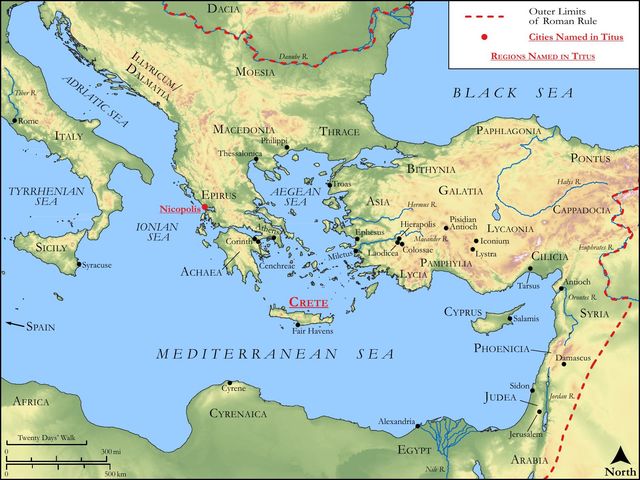
Paul wrote this epistle to Titus, his trusted co-worker, whom he had left on the island of Crete to organize and establish sound doctrine within the burgeoning churches there. Crete was notorious among the Greeks for its moral laxity and problematic culture, as highlighted by the Cretan prophet Epimenides, whom Paul quotes in Titus 1:12: "The Cretians are alway liars, evil beasts, slow bellies." In such an environment, the integrity and distinctiveness of the Christian community were paramount. The call for believers to be "zealous of good works" was not merely an ethical ideal but a critical counter-cultural witness. This verse, therefore, provided the theological imperative for Christians in Crete to live lives that starkly contrasted with the prevailing pagan norms, demonstrating the transformative power of the Gospel in a society riddled with idleness, deceit, and sensuality.
Key Themes
ShowHideTitus 2:14 contributes significantly to several overarching themes within the book of Titus and Pauline theology. It powerfully articulates the theme of Atonement and Redemption, emphasizing Christ's voluntary and substitutionary sacrifice as the means of salvation. The phrase "redeem us from all iniquity" speaks directly to the liberation from sin's power and guilt, a central aspect of the Gospel. Furthermore, the verse underscores the theme of Sanctification and Purification, as Christ's work not only frees from sin but also cleanses believers, making them holy. The concept of a "peculiar people" highlights the theme of Covenant and Identity, echoing Old Testament language for Israel as God's treasured possession (e.g., Deuteronomy 7:6). This new identity in Christ establishes believers as distinct, belonging solely to Him. Finally, the concluding phrase "zealous of good works" strongly emphasizes the theme of Transformed Living and Practical Piety, asserting that genuine faith inevitably leads to an active pursuit of righteousness, not as a means to salvation, but as its fruit and evidence. This aligns with Paul's consistent teaching that believers are "created in Christ Jesus unto good works" (Ephesians 2:10).
Exposition and Analysis
ShowHideKey Word Analysis
ShowHideFrom the provided Strong's data, this word means "to ransom (literally or figuratively)." In the context of Titus 2:14, it signifies that Christ's act of "giving himself" was a payment, a ransom price, that secured the release of believers from the bondage and penalty of "all iniquity." This highlights the costliness and efficacy of Christ's sacrifice in freeing humanity from sin's dominion.
According to the Strong's data, this term means "to cleanse (literally or figuratively)." Beyond merely redeeming or setting free, Christ's work also involves an active cleansing. This purification speaks to the moral and spiritual transformation that occurs in believers, making them holy and fit for God's presence and service. It implies a change in nature and conduct, moving from defilement to holiness.
The Strong's data defines this as "being beyond usual, i.e. special (one's own)." This word emphasizes the unique and exclusive relationship believers have with God. It signifies that those redeemed and purified by Christ are not merely saved individuals, but a specially chosen, treasured possession belonging uniquely to God, set apart from the common mass of humanity for His divine purposes.
From the Strong's data, this means "a 'zealot'," indicating someone who is "eager, ardent, or passionately devoted to something." In this verse, it describes the attitude of the purified people towards good works. It's not a reluctant or passive obedience, but an enthusiastic, fervent commitment to living out their faith through righteous deeds, flowing from their transformed nature and gratitude for Christ's sacrifice.
Verse Breakdown
ShowHide"Who gave himself for us,"
This opening clause establishes the voluntary and substitutionary nature of Christ's sacrifice. "Himself" (G1438, heautoû) emphasizes the totality of His offering—His very being, not merely a part or an external gift. The preposition "for" (G5228, hypér) denotes "on behalf of" or "instead of," clearly indicating that Christ's death was a vicarious act, taking the place of humanity and bearing the penalty for our sins. This is the foundational act of divine love and grace.
"that he might redeem us from all iniquity,"
This is the first explicit purpose clause of Christ's self-giving. "Redeem" (G3084, lytróō) signifies liberation through the payment of a ransom. The object of this redemption is "us," believers, and the state from which we are redeemed is "all iniquity" (G458, anomía). "Iniquity" refers to lawlessness, wickedness, and the violation of God's moral standard. This clause highlights that Christ's sacrifice breaks the power and guilt of sin, setting believers free from its dominion and condemnation.
"and purify unto himself a peculiar people,"
This is the second purpose, connected by "and" (G2532, kaí), indicating a complementary outcome to redemption. Not only are believers freed from sin, but they are also "purified" (G2511, katharízō), made clean and holy. The phrase "unto himself" (G1438, heautoû) emphasizes that this purification is for God's own possession and glory. The result is "a peculiar people" (G4041, perioúsios G2992, laós), a special, treasured people belonging uniquely to God, distinct from the world, echoing Old Testament covenant language for Israel.
"zealous of good works."
This final phrase describes the defining characteristic and practical outcome of being redeemed and purified as God's peculiar people. "Zealous" (G2207, zēlōtḗs) implies an eager, passionate, and ardent commitment. "Good works" (G2570, kalós G2041, érgon) refers to actions that are morally excellent, virtuous, and beneficial. This demonstrates that salvation is not merely a passive state but leads to an active, Spirit-empowered life of obedience and service, where good deeds are the natural overflow of a transformed heart.
Literary Devices
ShowHideTitus 2:14 is rich in literary and theological devices. The verse employs a Purpose Clause structure ("that he might redeem... and purify... zealous of good works"), clearly articulating the divine intention behind Christ's self-sacrifice. This teleological framing emphasizes that salvation is not an end in itself, but a means to a transformed life and a distinct identity. There is also evident Parallelism between "redeem us from all iniquity" and "purify unto himself a peculiar people," highlighting two complementary aspects of Christ's saving work: liberation from sin's penalty and power, and sanctification for God's possession. The phrase "peculiar people" serves as a powerful Allusion to Old Testament covenant language, particularly from Exodus 19:5 and Deuteronomy 7:6, where Israel is described as God's "special treasure" or "peculiar people." This draws a direct line from God's covenant relationship with Israel to His new covenant people in Christ, emphasizing continuity in God's redemptive plan and the unique status of believers. Finally, the entire verse functions as a concise Summary Statement of the Gospel's transformative power, moving from Christ's initiative to the resulting character and conduct of His followers.
Theological and Thematic Connections
ShowHideTitus 2:14 stands as a theological cornerstone, connecting fundamental doctrines of Christian faith. It beautifully articulates the doctrine of Atonement, specifically Substitutionary Atonement, where Christ's "giving himself for us" signifies His bearing the penalty of sin in our stead. This act of redemption is inextricably linked to Sanctification, as Christ not only frees us from sin's guilt but also purifies us for a life of holiness. The concept of a "peculiar people" resonates deeply with the biblical theme of Covenant, portraying believers as God's chosen and treasured possession, echoing His relationship with ancient Israel. This identity as God's own people is not passive but leads to an active demonstration of faith through "good works," emphasizing that genuine salvation always produces fruit, aligning with the broader New Testament emphasis on the inseparable connection between faith and works as evidence of true transformation.
Reflection and Application
ShowHideTitus 2:14 serves as a profound reminder of the immense cost of our salvation and the glorious purpose behind it. It calls believers to a deep reflection on their identity and mission. If Christ "gave himself for us," then our lives are no longer our own; they are bought with a price, compelling us to live in grateful response. Being redeemed "from all iniquity" means we are liberated from sin's power, not just its penalty, empowering us to resist temptation and pursue righteousness. As a "peculiar people," we are called to live distinctly, showcasing God's character to a watching world. This distinctiveness is not isolation but active engagement, expressed through being "zealous of good works." Our good deeds are not a means to earn salvation, but the tangible evidence of a transformed heart, bringing glory to God and blessing to others. This verse challenges us to examine whether our lives truly reflect the radical transformation Christ has wrought, motivating us to actively pursue holiness and compassionate service in every sphere of life.
Questions for Reflection
ShowHideFAQ
ShowHideWhat does it mean that Jesus "gave himself for us"?
ShowHideThis phrase emphasizes the voluntary and substitutionary nature of Christ's sacrifice. Jesus willingly offered His life, not coerced or compelled, but out of divine love. The phrase "for us" (Greek: hypér hēmōn) signifies that He acted "on our behalf" or "in our place." This means He bore the penalty for our sins, taking upon Himself the judgment that was due to humanity, thereby providing atonement and reconciliation with God. It underscores the immense cost of salvation and the depth of God's love, as seen in John 15:13.
What is the significance of being "a peculiar people"?
ShowHideThe term "peculiar people" (Greek: perioúsios laós) means a special, treasured possession belonging uniquely to God. It echoes Old Testament language used for Israel, God's chosen people (e.g., Exodus 19:5 and Deuteronomy 14:2). For New Testament believers, it signifies that through Christ's redemption and purification, we are set apart from the world and consecrated to God. Our identity is now defined by our relationship with Him; we are His own, called to reflect His character and purposes in the world, as further expounded in 1 Peter 2:9.
How do "good works" relate to salvation according to this verse?
ShowHideTitus 2:14 clearly states that Christ purified us to be "zealous of good works." This indicates that good works are the result and evidence of salvation, not its cause. We are saved unto good works, not by good works. Christ's sacrifice redeems us from sin and purifies us, transforming our hearts and empowering us to live righteously. This zeal for good works flows naturally from a renewed nature and gratitude for God's grace. It's the practical outworking of our faith, demonstrating the reality of our transformation to the world, as Paul also teaches in Ephesians 2:8-10.
Christ-Centered Fulfillment
ShowHideTitus 2:14 finds its ultimate and glorious fulfillment in the person and work of Jesus Christ. He is the "who" who "gave himself for us," embodying the perfect, voluntary, and substitutionary sacrifice that no other could offer. His unique divine nature and sinless humanity made Him the only one capable of being the spotless "Lamb of God, who takes away the sin of the world!" (John 1:29). Through His death on the cross, He fully accomplished the redemption from "all iniquity," securing liberation from sin's condemnation and power, a truth powerfully proclaimed throughout the New Testament, such as in Colossians 1:13-14. Furthermore, Christ is the source of our purification, for it is through His shed blood that we are cleansed and made holy (Hebrews 9:14). He, as the Great Shepherd, gathers and constitutes His "peculiar people," the Church, making them His treasured possession, a spiritual house built upon Him as the cornerstone (1 Peter 2:4-5). Finally, it is by His indwelling Holy Spirit that believers are empowered to be "zealous of good works," living out the righteousness that is theirs in Christ, fulfilling the very purpose for which He died, thereby bringing glory to the Father (Philippians 2:13). Thus, Titus 2:14 is not merely a statement about salvation but a profound declaration of Christ's all-sufficient work as Redeemer, Purifier, and Head of His Church.