


Matthew 5:17
Bible text: King James Version (1769 Blayney text) · Public domain
Bible text: Berean Standard Bible · Public domain
Bible text: American Standard Version (1901) · Public domain
Bible text: World English Bible, Messianic edition · Public domain
Bible text: Geneva Bible (1599) · Public domain
Bible text: Young's Literal Translation · Public domain
- ΜὴMēNotG3361PRT-NNegative Particle Negative
- νομίσητεnomisētemay thinkG3543V-AAS-2PVerb Aorist Active Subjunctive 2nd Plural
- ὅτιhotithatG3754CONJConjunction
- ἦλθονēlthonI have comeG2064V-2AAI-1SVerb 2nd Aorist Active Indicative 1st Singular
- καταλῦσαιkatalusaito abolishG2647V-AANVerb Aorist Active Infinitive
- τὸνtontheG3588T-ASMDefinite article Accusative Singular Masculine
- νόμονnomonlawG3551N-ASMNoun Accusative Singular Masculine
- ἢēorG2228CONJConjunction
- τοὺςtoustheG3588T-APMDefinite article Accusative Plural Masculine
- προφήτας·prophētasProphetsG4396N-APMNoun Accusative Plural Masculine
- οὐκouknotG3756PRT-NNegative Particle Negative
- ἦλθονēlthonI have comeG2064V-2AAI-1SVerb 2nd Aorist Active Indicative 1st Singular
- καταλῦσαιkatalusaito abolishG2647V-AANVerb Aorist Active Infinitive
- ἀλλὰallabutG235CONJConjunction
- πληρῶσαιplērōsaito fulfillG4137V-AANVerb Aorist Active Infinitive
English is a literal word-by-word gloss of the Greek, not the KJV's wording. Why?
This is the original text the KJV's translators worked from — each Greek word with its own literal English meaning in this verse, prepared by scholars at Tyndale House, Cambridge. The KJV translates whole sentences, not word by word, so its wording differs: one Greek word can become several English words, and the KJV may choose “charity” where the gloss reads “love”. Both are faithful — they answer different questions. For the KJV's own rendering, switch to the KJV text.
Details
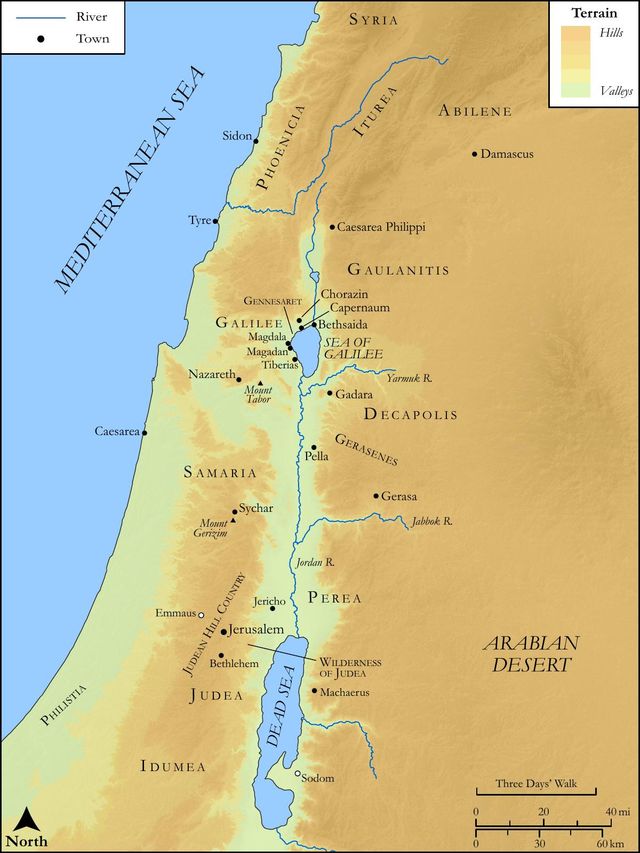
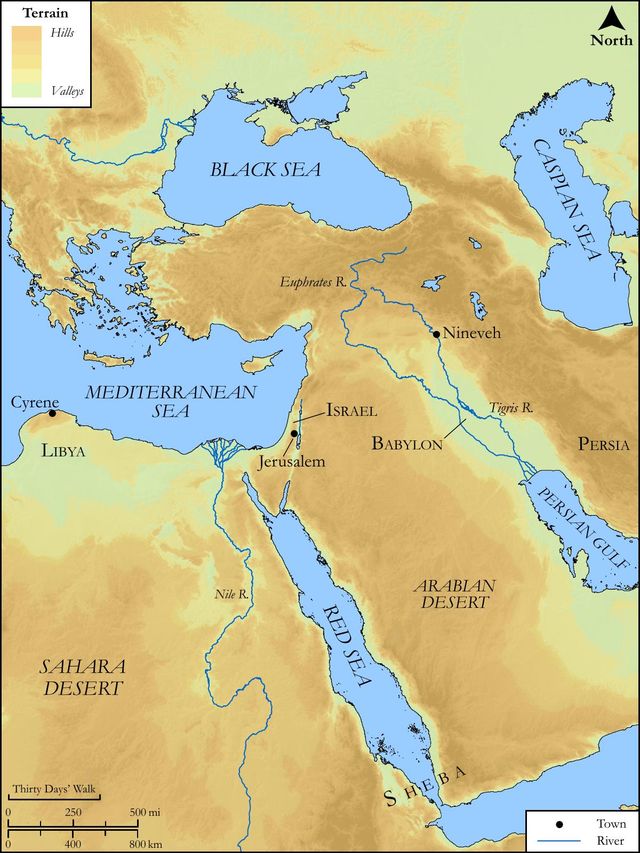
See on the biblical-era maps

Study this verse
Public-domain commentary
Matthew Henry
From his Commentary on the Whole Bible. Henry comments on passages, not single verses — this entry covers Matthew 5:17–20. His three-level outline is real structure in the source text, so it is rendered as structure.
Those to whom Christ preached, and for whose use he gave these instructions to his disciples, were such as in their religion had an eye, 1. To the scriptures of the Old Testament as their rule, and therein Christ here shows them they were in the right: 2. To the scribes and the Pharisees as their example, and therein Christ here shows them they were in the wrong; for,
I.The rule which Christ came to establish exactly agreed with the scriptures of the Old Testament, here called the law and the prophets.
The prophets were commentators upon the law, and both together made up that rule of faith and practice which Christ found upon the throne in the Jewish church, and here he keeps it on the throne.
1.He protests against the thought of cancelling and weakening the Old Testament; Think not that I am come to destroy the law and the prophets. (1.) "Let not the pious Jews, who have an affection for the law and the prophets, fear that I come to destroy them." Let them be not prejudiced against Christ and his doctrine, from a jealousy that this kingdom he came to set up, would derogate from the honour of the scriptures, which they had embraced as coming from God, and of which they had experienced the power and purity; no, let them be satisfied that Christ has no ill design upon the law and the prophets. "Let not the profane Jews, who have a disaffection to the law and the prophets, and are weary of that yoke, hope that I am come to destroy them." Let not carnal libertines imagine that the Messiah is come to discharge them from the obligation of divine precepts and yet to secure to them divine promises, to make the happy and yet to give them leave to live as they list. Christ commands nothing now which was forbidden either by the law of nature or the moral law, nor forbids any thing which those laws had enjoined; it is a great mistake to think he does, and he here takes care to rectify the mistake; I am not come to destroy. The Saviour of souls is the destroyer of nothing but the works of the devil, of nothing that comes from God, much less of those excellent dictates which we have from Moses and the prophets. No, he came to fulfil them. That is, [1.] To obey the commands of the law, for he was made under the law, Gal 4:4. He in all respects yielded obedience to the law, honoured his parents, sanctified the sabbath, prayed, gave alms, and did that which never any one else did, obeyed perfectly, and never broke the law in any thing. [2.] To make good the promises of the law, and the predictions of the prophets, which did all bear witness to him. The covenant of grace is, for substance, the same now that it was then, and Christ the Mediator of it. [3.] To answer the types of the law; thus (as bishop Tillotson expresses it), he did not make void, but make good, the ceremonial law, and manifested himself to be the Substance of all those shadows. [4.] To fill up the defects of it, and so to complete and perfect it. Thus the word plērōsai properly signifies. If we consider the law as a vessel that had some water in it before, he did not come to pour out the water, but to fill the vessel up to the brim; or, as a picture that is first rough-drawn, displays some outlines only of the piece intended, which are afterwards filled up; so Christ made an improvement of the law and the prophets by his additions and explications. [5.] To carry on the same design; the Christian institutes are so far from thwarting and contradicting that which was the main design of the Jewish religion, that they promote it to the highest degree. The gospel is the time of reformation (Heb 9:10), not the repeal of the law, but the amendment of it, and, consequently, its establishment.
2.He asserts the perpetuity of it; that not only he designed not the abrogation of it, but that it never should be abrogated (Mat 5:18); "Verily I say unto you, I, the Amen, the faithful Witness, solemnly declare it, that till heaven and earth pass, when time shall be no more, and the unchangeable state of recompences shall supersede all laws, one jot, or one tittle, the least and most minute circumstance, shall in no wise pass from the law till all be fulfilled;" for what is it that God is doing in all the operations both of providence and grace, but fulfilling the scripture? Heaven and earth shall come together, and all the fulness thereof be wrapped up in ruin and confusion, rather than any word of God shall fall to the ground, or be in vain. The word of the Lord endures for ever, both that of the law, and that of the gospel. Observe, The care of God concerning his law extends itself even to those things that seem to be of least account in it, the iotas and the tittles; for whatever belongs to God, and bears his stamp, be it ever so little, shall be preserved. The laws of men are conscious to themselves of so much imperfection, that they allow it for a maxim, Apices juris non sunt jura - The extreme points of the law are not the law, but God will stand by and maintain every iota and every tittle of his law.
3.He gives it in charge to his disciples, carefully to preserve the law, and shows them the danger of the neglect and contempt of it (Mat 5:19); Whosoever therefore shall break one of the least commandments of the law of Moses, much more any of the greater, as the Pharisees did, who neglected the weightier matters of the law, and shall teach men so as they did, who made void the commandment of God with their traditions (Mat 15:3), he shall be called the least in the kingdom of heaven. Though the Pharisees be cried up for such teachers as should be, they shall not be employed as teachers in Christ's kingdom; but whosoever shall do and teach them, as Christ's disciples would, and thereby prove themselves better friends to the Old Testament than the Pharisees were, they, though despised by men, shall be called great in the kingdom of heaven. Note,
(1.)Among the commands of God there are some less than others; none absolutely little, but comparatively so. The Jews reckon the least of the commandments of the law to be that of the bird's nest (Deu 22:6, Deu 22:7); yet even that had a significance and an intention very great and considerable.
(2.)It is a dangerous thing, in doctrine or practice, to disannul the least of God's commands; to break them, that is, to go about either to contract the extent, or weaken the obligation of them; whoever does so, will find it is at his peril. Thus to vacate any of the ten commandments, is too bold a stroke for the jealous God to pass by. it is something more than transgressing the law, it is making void the law, Psa 119:126.
(3.)That the further such corruptions as they spread, the worse they are. It is impudence enough to break the command, but is a greater degree of it to teach men so. This plainly refers to those who at this time sat in Moses' seat, and by their comments corrupted and perverted the text. Opinions that tend to the destruction of serious godliness and the vitals of religion, by corrupt glosses on the scripture, are bad when they are held, but worse when they are propagated and taught, as the word of God. He that does so, shall be called least in the kingdom of heaven, in the kingdom of glory; he shall never come thither, but be eternally excluded; or, rather, in the kingdom of the gospel-church. He is so far from deserving the dignity of a teacher in it, that he shall not so much as be accounted a member of it. The prophet that teaches these lies shall be the tail in that kingdom (Isa 9:15); when truth shall appear in its own evidence, such corrupt teachers, though cried up as the Pharisees, shall be of no account with the wise and good. Nothing makes ministers more contemptible and base than corrupting the law, Mal 2:8, Mal 2:11. Those who extenuate and encourage sin, and discountenance and put contempt upon strictness in religion and serious devotion, are the dregs of the church. But, on the other hand, Those are truly honourable, and of great account in the church of Christ, who lay out themselves by their life and doctrine to promote the purity and strictness of practical religion; who both do and teach that which is good; for those who do not as they teach, pull down with one hand what they build up with the other, and give themselves the lie, and tempt men to think that all religion is a delusion; but those who speak from experience, who live up to what they preach, are truly great; they honour God, and God will honour them (Sa1 2:30), and hereafter they shall shine as the stars in the kingdom of our Father.
II.The righteousness which Christ came to establish by this rule, must exceed that of the scribes and Pharisees, Mat 5:20.
This was strange doctrine to those who looked upon the scribes and Pharisees as having arrived at the highest pitch of religion. The scribes were the most noted teachers of the law, and the Pharisees the most celebrated professors of it, and they both sat in Moses' chair (Mat 23:2), and had such a reputation among the people, that they were looked upon as super-conformable to the law, and people did not think themselves obliged to be as good as they; it was therefore a great surprise to them, to hear that they must be better than they, or they should not go to heaven; and therefore Christ here avers it with solemnity; I say unto you, It is so. The scribes and Pharisees were enemies to Christ and his doctrine, and were great oppressors; and yet it must be owned, that there was something commendable in them. They were much in fasting and prayer, and giving of alms; they were punctual in observing the ceremonial appointments, and made it their business to teach others; they had such an interest in the people that they ought, if but two men went to heaven, one would be a Pharisee; and yet our Lord Jesus here tells his disciples, that the religion he came to establish, did not only exclude the badness, but excel the goodness, of the scribes and Pharisees. We must do more than they, and better than they, or we shall come short of heaven. They were partial in the law, and laid most stress upon the ritual part of it; but we must be universal, and not think it enough to give the priest his tithe, but must give God our hearts. They minded only the outside, but we must make conscience of inside godliness. They aimed at the praise and applause of men, but we must aim at acceptance with God: they were proud of what they did in religion, and trusted to it as a righteousness; but we, when we have done all, must deny ourselves, and say, We are unprofitable servants, and trust only to the righteousness of Christ; and thus we may go beyond the scribes and Pharisees.
Historical interpretation
Seventeen Centuries of Reception
28 surviving comments on this verse. Each one is dated, so this reads as a timeline rather than a list.
Select a marker to jump to its quote. Markers stagger vertically where authors wrote within a few decades of each other.
This verity of the gospel then stands unimpaired: "I am not come to destroy the law and the prophets, but rather to fulfil them." He also dissipated other doubts, when He declared that the name of God and of the Good belonged to one and the same being, at whose disposal were also the everlasting life and the treasure in heaven and Himself too-whose commandments He both maintained and augmented with His own supplementary precepts.
In whatever way he commanded it, in the same way might he also have first uttered that sentiment: "I came not to destroy the law, but to fulfil it." What business, therefore, had you to erase out of the Gospel that which was quite consistent in it? For you have confessed that, in his goodness, he did in act what you deny that he did in word.
But since both the place and the work of illumination according to the prophecy are compatible with Christ, we begin to discern that He is the subject of the prophecy, which shows that at the very outset of His ministry, He came not to destroy the law and the prophets, but rather to fulfil them; for Marcion has erased the passage as an interpolation.
Unity, moreover, is everything which is once for all. But for Christ was reserved, as in all other points so in this also, the "fulfilling of the law." Thence, therefore, among us the prescript is more fully and more carefully laid down, that they who are chosen into the sacerdotal order must be men of one marriage; which rule is so rigidly observed, that I remember some removed from their office for digamy.
For His own servants, may the Lord by His mercy take care that to them it may be lawful even to presume on His goodness! But why are we a (source of) danger to our neighbour? why do we import concupiscence into our neighbour? which concupiscence, if God, in "amplifying the law," do not dissociate in (the way of) penalty from the actual commission of fornication, I know not whether He allows impunity to him who has been the cause of perdition to some other.
For even if we are just now beginning with the Law in demonstrating (the nature of) adultery, it is justly with that phase of the law which Christ has "not dissolved, but fulfilled." For it is the "burdens" of the law which were "until John," not the remedial virtues.
He warned us, to be sure, at that time (for elsewhere our Discipline is called "the Way" ), that when, set in "the way" of prayer, we go not unto "the Father" with anger. After that, the Lord, "amplifying the Law," openly adds the prohibition of anger against a brother to that of murder.
For the same John is called not merely an "angel" of Christ, but withal a "lamp" shining before Christ: for David predicts, "I have prepared the lamp for my Christ; " and him Christ Himself, coming "to fulfil the prophets," called so to the Jews.
And since there are some who sometimes assert that they have nothing to do with the law (which Christ has not dissolved, but fulfilled), sometimes catch at such parts of the law as they choose; plainly do we too assert that the law has deceased in this sense, that its burdens-according to the sentence of the apostles-which not even the fathers were able to sustain, have wholly ceased: such (parts), however.
Thus Christ did not at all rescind the Sabbath: He kept the law thereof, and both in the former case did a work which was beneficial to the life of His disciples, for He indulged them with the relief of food when they were hungry, and in the present instance cured the withered hand; in each case intimating by facts, "I came not to destroy, the law, but to fulfil it," although Marcion has gagged His mouth by this word.
If also the gospel of Christ is fulfilled in this same precept, but not the Creator's Christ, what is the use of our contending any longer whether Christ did or did not say, "I am not come to destroy the law, but to fulfil it? " In vain has (our man of) Pontus laboured to deny this statement.
He means not that we should seek glory of men, but that though we conceal it, our work may shine forth in honour of God to those among whom we live.
From the expression here used pass, we may suppose that the constituting elements of heaven and earth shall not be annihilatedb.
Or, He calls the passion, and the cross, the least, which if one shall not confess openly, but be ashamed of them, he shall be least, that is, last, and as it were no man; but to him that confesses it He promises the great glory of a heavenly calling.
While it is sinful to abolish the least of the commandments, all the more so the great and most important ones. Hence the Holy Spirit affirms through Solomon: “Whoever despises the little things shall gradually die.”Consequently nothing in the divine commandments must be abolished, nothing altered. Everything must be preserved and taught faithfully and devotedly that the glory of the heavenly kingdom may not be lost. Indeed, those things considered least important and small by the unfaithful or by worldly people are not small before God but necessary. For the Lord taught the commandments and did them.
Even small things point to the great future of the kingdom of heaven. For this reason, not only words but also deeds are important; and you should not only teach, but what you teach, you should do.
The Son of God, who is the author of the law and the prophets, did not come to abolish the law or the prophets. He gave the people the law that was to be handed down through Moses, and he imbued the prophets with the Holy Spirit for the preaching of the things to come. Therefore he said, “I have come not to abolish the law and the prophets but to fulfill them.” He fulfilled the law and the prophets in this way: He brought to pass those things that had been written about him in the law and the prophets. Hence, when he drank the vinegar offered him on the cross, he said, “It is finished,” evidently to show that everything written about him in the law and the prophets had been completed, even including the drinking of vinegar. He fulfilled the law at any rate when he completed by the sacrament of his passion the once prefigured mystery of the paschal meal. Consequently the apostle says, “For Christ our paschal lamb has been sacrificed.” .
Why, who suspected this? or who accused Him, that He should make a defense against this charge? Since surely from what had gone before no such suspicion was generated. For to command men to be meek, and gentle, and merciful, and pure in heart, and to strive for righteousness, indicated no such design, but rather altogether the contrary.
Wherefore then can He have said this? Not at random, nor vainly: but inasmuch as He was proceeding to ordain commandments greater than those of old, saying, "It was said to them of old time, Thou shalt not kill; but I say unto you, Be not even angry;" and to mark out a way for a kind of divine and heavenly conversation; in order that the strangeness thereof might not disturb the souls of the hearers, nor dispose them quite to mutiny against what He said He used this means of setting them right beforehand.
For although they fulfilled not the law, yet nevertheless they were possessed with much conscientious regard to it; and whilst they were annulling it every day by their deeds, the letters thereof they would have remain unmoved, and that no one should add anything more to them. Or rather, they bore with their rulers adding thereto, not however for the better, but for the worse.
Therefore, since Christ in the first place was not of the sacerdotal tribe, and next, the things which He was about to introduce were a sort of addition, not however lessening, but enhancing virtue; He knowing beforehand that both these circumstances would trouble them, before He wrote in their mind those wondrous laws, casts out that which was sure to be harboring there.
Wherefore many things are uttered by Him, far below His proper dignity, and here when He is about to proceed upon His addition to the law, He hath used abundance for correction beforehand. For neither was it once only that He said, "I do not abrogate the law," but He both repeated it again, and added another and a greater thing; in that, to the words, "Think not that I am come to destroy," He subjoined, "I am not come to destroy, but to fulfill."
Now this not only obstructs the obstinacy of the Jews, but stops also the mouths of those heretics, who say that the old covenant is of the devil. For if Christ came to destroy his tyranny, how is this covenant not only not destroyed, but even fulfilled by Him? For He said not only, "I do not destroy it;" though this had been enough; but "I even fulfill it:" which are the words of one so far from opposing himself, as to be even establishing it.
And how, one may ask, did He not destroy it? in what way did He rather fulfill either the law or the prophets? The prophets He fulfilled, inasmuch as He confirmed by His actions all that had been said concerning Him; wherefore also the evangelist used to say in each case, "That it might be fulfilled which was spoken by the prophet." Both when He was born, and when the children sung that wondrous hymn to Him, and when He sat on the ass, and in very many more instances He worked this same fulfillment: all which things must have been unfulfilled, if He had not come.
But the law He fulfilled, not in one way only, but in a second and third also. In one way, by transgressing none of the precepts of the law. For that He did fulfill it all, hear what He saith to John, "For thus it becometh us to fulfill all righteousness." And to the Jews also He said, "Which of you convinceth me of sin." And to His disciples again, "The prince of this world cometh, and findeth nothing in me." And the prophet too from the first had said that "He did no sin."
This then was one sense in which He fulfilled it. Another, that He did the same through us also; for this is the marvel, that He not only Himself fulfilled it, but He granted this to us likewise. Which thing Paul also declaring said, "Christ is the end of the law for righteousness to every one that believeth." And he said also, that "He judged sin in the flesh, that the righteousness of the law might be fulfilled in us who walk not after the flesh." And again, "Do we then make void the law through faith? God forbid! yea, we establish the law." For since the law was laboring at this, to make man righteous, but had not power, He came and brought in the way of righteousness by faith, and so established that which the law desired: and what the law could not by letters, this He accomplished by faith. On this account He saith, "I am not come to destroy the law."
But if any one will inquire accurately, he will find also another, a third sense, in which this hath been done. Of what sort is it then? In the sense of that future code of laws, which He was about to deliver to them. For His sayings were no repeal of the former, but a drawing out, and filling up of them. Thus, "not to kill," is not annulled by the saying, Be not angry, but rather is filled up and put in greater security: and so of all the others.
(Hom. xvi.) Christ then fulfilled the Prophets by accomplishing what was therein foretold concerning Himself—and the Law, first, by transgressing none of its precepts; secondly, by justifying by faith, which the Law could not do by the letter.
He speaks not this of the old laws, but of those which He was now going to enact, of which he says, the least, though they were all great. For as He so oft spoke humbly of Himself, so does He now speak humbly of His precepts.
Or, when you hear the words, least in the kingdom of heaven, imagine nothing less than the punishment of hell. For He oft uses the word 'kingdom,' not only of the joys of heaven, but of the time of the resurrection, and of the terrible coming of Christ.
(Verse 17.) Do not think that I have come to abolish the law or the prophets. I have not come to abolish, but to fulfill. Whether it is that he has fulfilled the prophecies about himself through others, or because by his preaching he has fulfilled those things which before were crude and imperfect on account of the weakness of those who heard them, taking away wrath and excluding retaliation, and suppressing hidden desire in the mind.
This head is closely connected with the preceding. It is directed against the Pharisees, who, despising the commandments of God, set up traditions of their own, and means that their teaching the people would not avail themselves, if they destroyed the very least commandment in the Law. We may take it in another sense. The learning of the master if joined with sin however small, loses him the highest place, nor does it avail any to teach righteousness, if he destroys it in his life. Perfect bliss is for him who fulfils in deed what he teaches in word.
And therefore, after He has exhorted His hearers that they should prepare themselves to bear all things for truth and righteousness, and that they should not hide the good which they were about to receive, but should learn with such benevolence as to teach others, aiming in their good works not at their own praise, but at the glory of God, He begins now to inform and to teach them what they are to teach; as if they were asking Him, saying: Lo, we are willing both to bear all things for Your name, and not to hide Your doctrine; but what precisely is this which Thou forbiddest us to hide, and for which You command us to bear all things? Are You about to mention other things contrary to those which are written in the law? No, says He; for think not that I have come to destroy the law, or the prophets: I am not come to destroy, but to fulfil.
(Serm. in Mont. i. 8.) In this last sentence again there is a double sense; to fulfil the Law, either by adding something which it had not, or by doing what it commands.
(cont. Faust. xix. 7. et seq.) And lastly, because even for them who were under grace, it was hard in this mortal life to fulfil that of the Law, Thou shalt not lust, He being made a Priest by the sacrifice of His flesh, obtained for us this indulgence, even in this fulfilling the Law, that where through our infirmity we could not, we should be strengthened through His perfection, of whom as our head we all are members. For so I think must be taken these words, to fulfil the Law, by adding to it, that is, such things as either contribute to the explanation of the old glosses, or to enable to keep them. For the Lord has showed us that even a wicked motion of the thoughts to the wrong of a brother is to be accounted a kind of murder. The Lord also teaches us, that it is better to keep near to the truth without swearing, than with a true oath to come near to blasphemy.
But how, ye Manichæans, do you not receive the Law and the Prophets, seeing Christ here says, that He is come not to subvert but to fulfil them? To this the heretic Faustusa replies, Whose testimony is there that Christ spoke this? That of Matthew. How was it then that John does not give this saying, who was with Him in the mount, but only Matthew, who did not follow Jesus till after He had come down from the mount? To this Augustine replies, If none can speak truth concerning Christ, but who saw and heard Him, there is no one at this day who speaks truth concerning Him. Why then could not Matthew hear from John's mouth the truth as Christ had spoken, as well as we who are born so long after can speak the truth out of John's book? In the same manner also it is, that not Matthew's Gospel, but also these of Luke and Mark are received by us, and on no inferior authority. Add, that the Lord Himself might have told Matthew the things He had done before He called him. But speak out and say that you do not believe the Gospel, for they who believe nothing in the Gospel but what they wish to believe, believe themselves rather than the Gospel. To this Faustus rejoins, We will prove that this was not written by Matthew, but by some other hand, unknown, in his name. For below he says, Jesus saw a man sitting at the toll-office, Matthew by name. (Mat. 9:9.) Who writing of himself says, 'saw a man,' and not rather 'saw me?' Augustine; Matthew does no more than John does, when he says, Peter turning round saw that other disciple whom Jesus loved; and it is well known that this is the common manner of Scripture writers, when writing their own actions. Faustus again, But what say you to this, that the very assurance that He was not come to destroy the Law and the Prophets, was the direct way to rouse their suspicions that He was? For He had yet done nothing that could lead the Jews to think that this was His object. Augustine; This is a very weak objection, for we do not deny that to the Jews who had no understanding, Christ might have appeared as threatening the destruction of the Law and the Prophets. Faustus; But what if the Law and the Prophets do not accept this fulfilment, according to that in Deuteronomy, These commandments that I give unto thee, thou shalt keep, thou shalt not add any thing to them, nor take away. Augustine; Here Faustus does not understand what it is to fulfil the Law, when he supposes that it must be taken of adding words to it. The fulfilment of the Law is love, which the Lord hath given in sending His Holy Spirit. The Law is fulfilled either when the things there commanded are done, or when the things there prophesied come to pass. Faustus; But in that we confess that Jesus was author of a New Testament, what else is it than to confess that He has done away with the Old? Augustine; In the Old Testament were figures of things to come, which, when the things themselves were brought in by Christ, ought to have been taken away, that in that very taking away the Law and the Prophets might be fulfilled wherein it was written that God gave a New Testament. Faustus; Therefore if Christ did say this thing, He either said it with some other meaning, or He spoke falsely, (which God forbid,) or we must take the other alternative, He did not speak it at all. But that Jesus spoke falsely none will aver, therefore He either spoke it with another meaning, or He spake it not at all. For myself I am rescued from the necessity of this alternative by the Manichæan belief, which from the first taught me not to believe all those things which are read in Jesus' name as having been spoken by Him; for that there be many tares which to corrupt the good seed some nightly sower has scattered up and down through nearly the whole of Scripture. Augustine; Manichæus taught an impious error, that you should receive only so much of the Gospel as does not conflict with your heresy, and not receive whatever does conflict with it. We have learned of the Apostle that religious caution, Whoever preaches unto you another Gospel than that we have preached, let him be accursed. (Gal. 1:8.) The Lord also has explained what the tares signify, not things false mixed with the true Scriptures, as you interpret, but men who are children of the wicked one. Faustus; Should a Jew then enquire of you why you do not keep the precepts of the Law and the Prophets which Christ here declares He came not to destroy but to fulfil, you will be driven either to accept an empty superstition, or to repudiate this chapter as false, or to deny that you are Christ's disciple. Augustine; The Catholics are not in any difficulty on account of this chapter as though they did not observe the Law and the Prophets; for they do cherish love to God and their neighbour, on which hang all the Law and the Prophets. And whatever in the Law and the Prophets was foreshown, whether in things done, in the celebration of sacramental rites, or in forms of speech, all these they know to be fulfilled in Christ and the Church. Wherefore we neither submit to a false superstition, nor reject the chapter, nor deny ourselves to be Christ's disciples. He then who says, that unless Christ had destroyed the Law and the Prophets, the Mosaic rites would have continued along with the Christian ordinances, may further affirm, that unless Christ had destroyed the Law and the Prophets, He would yet be only promised as to be born, to suffer, to rise again. But inasmuch as He did not destroy, but rather fulfil them, His birth, passion, and resurrection, are now no more promised as things future, which were signified by the Sacraments of the Law; but He is preached as already born, crucified, and risen, which are signified by the Sacraments now celebrated by Christians. It is clear then how great is the error of those who suppose, that when the signs or sacraments are changed, the things themselves are different, whereas the same things which the Prophetic ordinance had held forth as promises, the Evangelic ordinance points to as completed. Faustus; Supposing these to be Christ's genuine words, we should enquire what was His motive for speaking thus, whether to soften the blind hostility of the Jews, who when they saw their holy things trodden under foot by Him, would not have so much as given Him a hearing; or whether He really said them to instruct us, who of the Gentiles should believe, to submit to the yoke of the Law. If this last were not His design, then the first must have been; nor was there any deceit or fraud in such purpose. For of laws there be three sorts. The first that of the Hebrews, called the law of sin and death, (Rom. 8:2.) by Paul; the second that of the Gentiles, which he calls the law of nature, saying, By nature the Gentiles do the deeds of the law; (Rom. 2:14.) the third, the law of truth, which he names, The law of the Spirit of life. Also there are Prophets some of the Jews, such as are well known; others of the Gentiles as Paul speaks, A prophet of their own hath said; (Tit. 1:12.) and others of the truth, of whom Jesus speaks, I send unto you wise men and prophets. (Mat. 23:34.) Now had Jesus in the following part of this Sermon brought forward any of the Hebrew observances to show how he had fulfilled them, no one would have doubted that it was of the Jewish Law and Prophets that He was now speaking; but when He brings forward in this way only those more ancient precepts, Thou shalt not kill, Thou shalt not commit adultery, which were promulged of old to Enoch, Seth, and the other righteous men, who does not see that He is here speaking of the Law and Prophets of truth? Wherever He has occasion to speak of any thing merely Jewish, He plucks it up by the very roots, giving precepts directly the contrary; for example, in the case of that precept, An eye for an eye, a tooth for a tooth. Augustine; Which was the Law and which the Prophets, that Christ came not to subvert but to fulfil, is manifest, to wit, the Law given by Moses. And the distinction which Faustus draws between the precepts of the righteous men before Moses, and the Mosaic Law, affirming that Christ fulfilled the one but annulled the other, is not so. We affirm that the Law of Moses was both well suited to its temporary purpose, and was now not subverted, but fulfilled by Christ, as will be seen in each particular. This was not understood by those who continued in such obstinate error, that they compelled the Gentiles to Judaize—those heretics, I mean, who were called Nazarenes.
In this sentence the meaning is twofold. We must deal with it in both ways. For He who says, I am not come to destroy the law, but to fulfil, means it either in the way of adding what is wanting, or of doing what is in it. Let us then consider that first which I have put first: for he who adds what is wanting does not surely destroy what he finds, but rather confirms it by perfecting it.
And that for two reasons. First, that by these words He might admonish His disciples, that as He fulfilled the Law, so they should strive to fulfil it. Secondly, because the Jews would falsely accuse them as subverting the Law, therefore he answers the calumny beforehand, but in such a manner as that He should not be thought to come simply to preach the Law as the Prophets had done.
But since all things which should befal from the very beginning of the world to the end of it, were in type and figure foreshewn in the Law, that God may not be thought to be ignorant of any of those things that take place, He therefore here declares, that heaven and earth should not pass till all things thus foreshewn in the Law should have their actual accomplishment.
If even an honourable man blushes to be found in a falsehood, and a wise man lets not fall empty any word he has once spoken, how could it be that the words of heaven should fall to the ground empty? Hence He concludes, Whoso shall break the least of these commandments, &c. And, I suppose, the Lord goes on to reply Himself to the question, Which are the least commandments? Namely, these which I am now about to speak.
Otherwise; the precepts of Moses are easy to obey; Thou shall not kill. Thou shall not commit adultery. The very greatness of the crime is a check upon the desire of committing it; therefore the reward of observance is small, the sin of transgression great. But Christ's precepts, Thou shalt not be angry, Thou shalt not lust, are hard to obey, and therefore in their reward they are great, in their transgression, 'least.' It is thus He speaks of these precepts of Christ, such as Thou shall not be angry, Thou shalt not lust, as 'the least;' and they who commit these lesser sins, are the least in the kingdom of God; that is, he who has been angry and not sinned grievously is secure from the punishment of eternal damnation; yet he does not attain that glory which they attain who fulfil even these least.
He here asserts two things; He denies that He was come to subvert the Law, and affirms that He was come to fulfil it.
Amen is a Hebrew word, and may be rendered in Latin, 'vere,' 'fidenter,' or 'fiat;' that is, 'truly,' 'faithfully,' or 'so be it.' The Lord uses it either because of the hardness of heart of those who were slow to believe, or to attract more particularly the attention of those that did believe.
But shall abide in their essence, but pass through renewal.
(Hom. in Ev. xii. 1.) Or, by the kingdom of heaven is to be understood the Church, in which that teacher who breaks a commandment is called least, because he whose life is despised, it remains that his preaching be also despised.
He fitly mentions the Greek iota, and not the Hebrew jod, because the iota stands in Greek for the number ten, and so there is an allusion to the Decalogue of which the Gospel is the point and perfection.
He was about to introduce new laws, yet He did not want them to think that He was opposed to God. Therefore He says, anticipating the suspicion that many would have, "I have not come to abolish the law, but rather to fulfill it." How did He fulfill it? First, He did everything which the prophets had foretold concerning Him, which is why the evangelist often says, "So that what was spoken by the prophet might be fulfilled." He also fulfilled every commandment of the law. "For He did no sin, neither was any guile found in His mouth" (1 Peter 2:22). And He fulfilled and completed the law in yet another way: whatever the law had sketched in outline, Christ fully painted in. The law said, "Do not murder’’; but Christ said, "Neither be angry without a cause." So too the painter does not destroy the sketch, but rather completes it.
(ord.) Having now exhorted His hearers to undergo all things for righteousness' sake, and also not to hide what they should receive, but to learn more for others' sake, that they may teach others, He now goes on to tell them what they should teach, as though He had been asked, 'What is this which you would not have hid, and for which you would have all things endured? Are you about to speak any thing beyond what is written in the Law and the Prophets;' hence it is He says, Think not that I am come to subvert the Law or the Prophets.
(ord.) By 'break,' is meant, the not doing what one understands rightly, or the not understanding what one has corrupted, or the destroying the perfectness of Christ's additions.
I can't say for certain which bits came into Christianity from earlier religions. An enormous amount did. I should find it hard to believe Christianity if that were not so. I couldn't believe that nine hundred and ninety-nine religions were completely false and the remaining one true. In reality, Christianity is primarily the fulfillment of the Jewish religion, but also the fulfillment of what was vaguely hinted in all the religions at their best. What was vaguely seen in them all comes into focus in Christianity—just as God Himself comes into focus by becoming a man.
Continue studying Matthew 5:17 across the web’s major study libraries — every link below opens this exact verse, chapter, or book on the destination site.
Read & Compare
 BibleGatewayThis verse in more than 200 translations and 70 languages.
 Bible.comThe YouVersion reader — hundreds of translations, reading plans, and highlights.
 ESV.orgCrossway's official English Standard Version reader.
 NET BibleThe NET translation with 60,000+ translators' notes on every rendering decision.
 STEP BibleTyndale House's free study tool — original text, vocabulary, and scholarly resources.
 BibliaLogos Bible Software's free web reader.
 USCCBThe New American Bible (Revised Edition) with the U.S. bishops' study notes.
Commentaries
 BibleHub CommentariesDozens of classic commentaries on this verse, gathered on one page.
 StudyLightMore than 100 commentary sets — the largest collection on the web.
 BibleRefPlain-English commentary on what this verse means, verse by verse.
 Enduring WordDavid Guzik's free commentary on this chapter, widely used by Bible teachers.
 Bible Study ToolsVerse commentary alongside Greek and Hebrew study aids.
Original Language & Research
- BibleHub InterlinearThe verse word by word — original language, transliteration, and English.
- BibleHub LexiconEvery word's original-language definition and Strong's entry.
 Blue Letter BibleDeep-study tools — Strong's numbers, concordance, and word studies.
 CNTR CollationThe earliest Greek manuscripts of this verse, collated letter by letter.
Sermons, Hymns & Audio


TrulyRandomVerse is not affiliated with these sites and doesn’t control their content. They’re linked because they’re genuinely useful.
Summary
In Matthew 5:17, Jesus profoundly clarifies His mission, declaring that He has not come to abolish or dismantle the divinely revealed Law and the Prophets—the entirety of the Old Testament Scriptures—but rather to bring them to their ultimate, intended completion and full meaning. This statement serves as a crucial hermeneutical key, asserting the continuity of God's redemptive plan while simultaneously highlighting the transformative nature of Christ's work in fulfilling all that the Old Covenant anticipated.
Context
ShowHideLiterary Context
Matthew 5:17 stands at a pivotal juncture within Jesus' Sermon on the Mount, specifically following the Beatitudes (Matthew 5:3-12) and the metaphors of salt and light (Matthew 5:13-16). Having established the character of His disciples and their role in the world, Jesus now addresses a potential misunderstanding about His relationship to the established Jewish religious framework. This verse serves as a thesis statement for the subsequent exposition of the Law (Matthew 5:21-48), where He reinterprets several Mosaic commands, emphasizing their spiritual depth and internal application over mere external observance. It reassures His Jewish audience that His radical teachings are not a negation but a deeper realization of God's prior revelation.
Historical & Cultural Context
Jesus' audience was deeply steeped in the Mosaic Law and the prophetic traditions, which formed the bedrock of their national and religious identity. The Law (Torah) was understood as God's definitive revelation, providing guidance for every aspect of life, while the Prophets (Nevi'im) spoke of God's ongoing covenant relationship, judgment, and future hope, particularly concerning the Messiah. Various Jewish groups, such as the Pharisees, were meticulous in their adherence to the Law, often emphasizing external observance and oral traditions. Therefore, any perceived challenge to the Law would have been met with suspicion or outright hostility. Jesus' declaration was essential to frame His ministry not as a revolutionary overthrow of divine truth but as its divinely appointed culmination, addressing the anxieties of those who might view His teachings as undermining their sacred heritage.
Key Themes
ShowHideThis verse introduces and reinforces several critical themes present throughout Matthew's Gospel and the broader biblical narrative. It underscores the authority of Jesus as the authoritative interpreter and embodiment of God's will, capable of bringing the Law to its ultimate purpose. It highlights the continuity of God's redemptive plan, demonstrating that the Old Testament is not discarded but finds its ultimate meaning and fulfillment in Christ. This theme of fulfillment is central to Matthew, who frequently cites Old Testament prophecies to show how Jesus is the promised Messiah (e.g., Matthew 1:22-23). Furthermore, it emphasizes the spiritual depth of the Law, moving beyond a superficial, external understanding to reveal its true intent, which concerns the heart and inner righteousness, a concept Jesus elaborates upon in the subsequent antitheses (e.g., Matthew 5:27-28).
Exposition and Analysis
ShowHideKey Word Analysis
ShowHideThis verb means "to do by law (usage), to accustom, to deem or regard, to suppose." Here, it carries the sense of "suppose" or "imagine." Jesus is preempting a potential misconception among His listeners, addressing a thought or assumption they might entertain about His intentions regarding the Law and the Prophets. He directly challenges any notion that His ministry is aimed at nullifying or setting aside the established divine revelation.
From katá ("down") and lýō ("to loosen"), this word literally means "to loosen down" or "disintegrate." Its implications include "to demolish, overthrow, annul, or abolish." In this context, Jesus explicitly denies any intention of dismantling, abrogating, or rendering void the Law and the Prophets. He is not coming to undo or negate the divine authority of the Old Testament Scriptures, nor to release people from their moral obligations.
This verb means "to make replete, to cram, to level up, to furnish, satisfy, execute, finish, or verify." It conveys the idea of bringing something to its intended completion, perfection, or full meaning. Jesus' use of plēróō indicates that He came to bring the Law and the Prophets to their ultimate purpose, to perfectly embody their demands, to reveal their full spiritual intent, and to accomplish all that they foretold and foreshadowed concerning God's redemptive plan. He is the culmination and the living embodiment of all that the Old Covenant anticipated.
Verse Breakdown
ShowHide"Think not that I am come to destroy the law, or the prophets:"
Jesus directly addresses a potential misconception. The phrase "the law, or the prophets" is a common Jewish merism referring to the entire Old Testament Scriptures. By stating "Think not that I am come to destroy," Jesus emphatically denies any intention of abolishing, nullifying, or rendering obsolete the divine revelation contained within these sacred texts. He is correcting a false assumption that His new teachings or ministry would undermine the very foundation of their faith and God's prior covenant with Israel.
"I am not come to destroy, but to fulfil."
This is an emphatic antithetical statement, contrasting His actual purpose with the mistaken one. The repetition of "I am not come to destroy" serves to underscore His rejection of that idea. The crucial declaration, "but to fulfil," reveals His true mission. He came not to tear down but to build up, not to negate but to complete, not to abolish but to bring to ultimate realization. This fulfillment encompasses His perfect obedience to the Law, His revelation of its deeper spiritual meaning, His embodiment of its types and shadows, and His accomplishment of its messianic prophecies.
Literary Devices
ShowHideMatthew 5:17 employs several significant literary devices. The most prominent is Antithesis, where Jesus contrasts two opposing ideas: "to destroy" versus "to fulfil." This sharp contrast serves to clarify His mission unequivocally, dispelling any ambiguity about His relationship to the Old Testament. The phrase "Think not that..." functions as a Proleptic Statement, anticipating and immediately refuting a potential misunderstanding or objection from His audience. This direct address engages the listener and sets the record straight from the outset. Furthermore, the use of "the law, or the prophets" is a Merism, a figure of speech in which two contrasting parts represent the whole, effectively encompassing the entire Old Testament. This concise phrasing communicates the comprehensive scope of Jesus' relationship to all of God's prior revelation.
Theological and Thematic Connections
ShowHideMatthew 5:17 is a cornerstone for understanding the relationship between the Old and New Covenants. It affirms the divine origin and enduring relevance of the Old Testament while simultaneously establishing Christ as its ultimate goal and interpretative key. Jesus does not merely add to the Law; He brings it to its intended perfection, revealing its true spiritual demands and embodying its sacrificial and prophetic types. This means that while the ceremonial and civil aspects of the Mosaic Law find their culmination and obsolescence in Christ's finished work, the moral principles underlying the Law remain eternally valid, now understood and lived out through the lens of Christ's perfect righteousness and the indwelling Spirit. This verse ensures that Christianity is not a radical break from God's historical revelation but rather the organic, climactic unfolding of His singular redemptive plan.
Reflection and Application
ShowHideMatthew 5:17 profoundly impacts how believers approach the entire Bible. It calls us to see the Old Testament not as an outdated relic, but as a divinely inspired foundation that points forward to Christ. For us, this means understanding that true righteousness is not merely external adherence to rules, but an internal transformation of the heart, motivated by love for God and neighbor, as perfectly exemplified by Jesus. We are called to live out the spirit of the Law, which is summarized in love, empowered by the Holy Spirit, rather than striving for legalistic perfection in our own strength. This verse encourages us to delve into the Old Testament with new eyes, seeking Christ in its narratives, prophecies, and types, and to recognize that His life and teachings provide the ultimate framework for understanding God's unchanging will for humanity.
Questions for Reflection
ShowHideFAQ
ShowHideDoes Matthew 5:17 mean Christians are still under the Mosaic Law?
ShowHideNo, Matthew 5:17 does not mean Christians are still under the Mosaic Law in the same way ancient Israel was. Jesus' statement "I am not come to destroy, but to fulfil" means He brought the Law to its intended purpose and completion. This fulfillment has several dimensions: He perfectly obeyed the Law, lived a sinless life, and revealed its deeper spiritual intent (e.g., Matthew 5:21-48). He also fulfilled the Law's ceremonial and sacrificial requirements through His death on the cross, rendering those aspects of the Law obsolete for believers (see Hebrews 10:1-18). While the ceremonial and civil laws of Moses are no longer binding, the moral principles embedded within the Law remain eternally valid and are upheld and deepened by Christ (e.g., the Ten Commandments, which are reiterated in the New Testament). Christians are called to live by the "law of Christ," which is fundamentally a law of love, empowered by the Holy Spirit (see Galatians 6:2 and Romans 13:8-10).
Christ-Centered Fulfillment
ShowHideMatthew 5:17 is a profound declaration of Christ's unique role as the culmination of all God's redemptive history. Jesus is not merely a prophet or a reformer; He is the living embodiment and ultimate goal of the Law and the Prophets. He perfectly fulfills the Law by His sinless life, demonstrating the righteousness that God truly desires, a righteousness that extends beyond external actions to the very intentions of the heart (as seen in His subsequent teachings in Matthew 5:21-48). He fulfills the prophetic word by being the promised Messiah, the one to whom all the Old Testament pointed, from the seed of Abraham to the Son of David (e.g., Luke 24:27). Furthermore, He fulfills the sacrificial system of the Law by offering Himself as the perfect, once-for-all sacrifice for sin, making obsolete the need for animal sacrifices (as detailed in Hebrews 9:11-14). In Christ, the shadows of the Old Covenant give way to the substance, and the promises find their definitive "Yes" and "Amen" (2 Corinthians 1:20), revealing Him as the true and complete revelation of God's saving will.