


Matthew 5:20
- λέγωlegōI sayG3004V-PAI-1SVerb Present Active Indicative 1st Singular
- γὰρgarforG1063CONJConjunction
- ὑμῖνhuminto youG4771P-2DPPersonal pronoun Dative 2nd Plural
- ὅτιhotithatG3754CONJConjunction
- ἐὰνeanonlyG1437CONDConjunction
- μὴmēunlessG3361PRT-NNegative Particle Negative
- περισσεύσῃperisseusēshall aboundG4052V-AAS-3SVerb Aorist Active Subjunctive 3rd Singular
- ὑμῶνhumōnyourG4771P-2GPPersonal pronoun Genitive 2nd Plural
- ἡhē<the>G3588T-NSFDefinite article Nominative Singular Feminine
- δικαιοσύνηdikaiosunērighteousnessG1343N-NSFNoun Nominative Singular Feminine
- πλεῖονpleionabove [that]G4119A-ASN-CAdjective Accusative Singular Neuter Comparative
- τῶνtōnof theG3588T-GPMDefinite article Genitive Plural Masculine
- γραμματέωνgrammateōnscribesG1122N-GPMNoun Genitive Plural Masculine
- καὶkaiandG2532CONJConjunction
- ΦαρισαίωνPharisaiōnPhariseesG5330N-GPM-TNoun Genitive Plural Masculine Title
- οὐoucertainlyG3756PRT-NNegative Particle Negative
- μὴmēnotG3361PRT-NNegative Particle Negative
- εἰσέλθητεeiselthēteshall you enterG1525V-2AAS-2PVerb 2nd Aorist Active Subjunctive 2nd Plural
- εἰςeisintoG1519PREPPreposition
- τὴνtēntheG3588T-ASFDefinite article Accusative Singular Feminine
- βασιλείανbasileiankingdomG932N-ASFNoun Accusative Singular Feminine
- τῶνtōnof theG3588T-GPMDefinite article Genitive Plural Masculine
- οὐρανῶνouranōnheavensG3772N-GPMNoun Genitive Plural Masculine
English is a literal word-by-word gloss of the Greek, not the KJV's wording. Why?
This is the original text the KJV's translators worked from — each Greek word with its own literal English meaning in this verse, prepared by scholars at Tyndale House, Cambridge. The KJV translates whole sentences, not word by word, so its wording differs: one Greek word can become several English words, and the KJV may choose “charity” where the gloss reads “love”. Both are faithful — they answer different questions. For the KJV's own rendering, switch to the KJV text.
Details
See on the biblical-era map
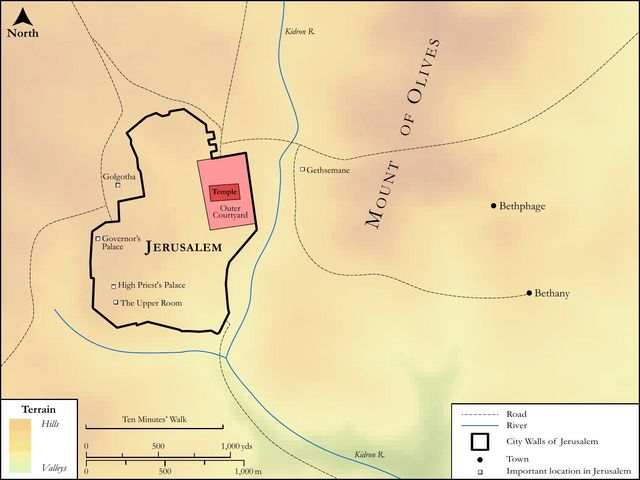
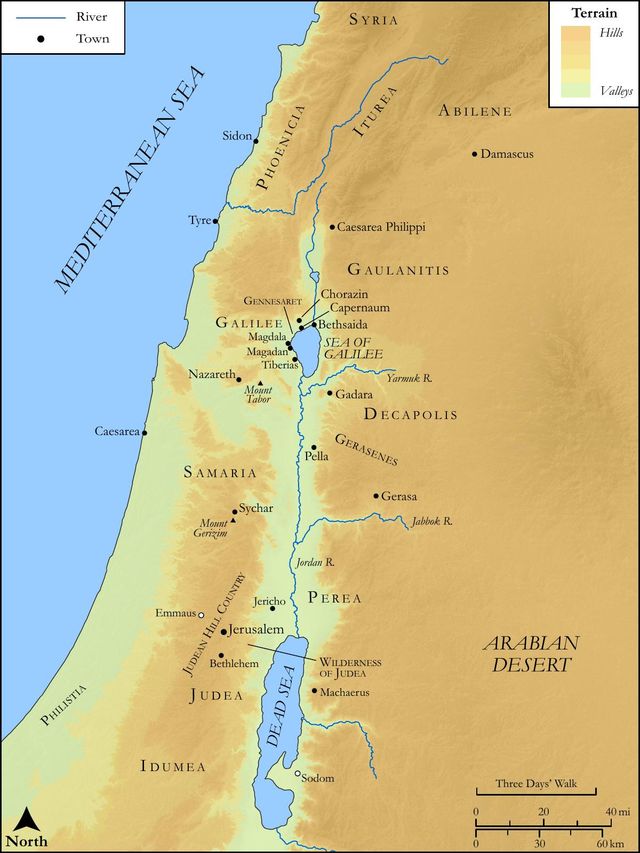
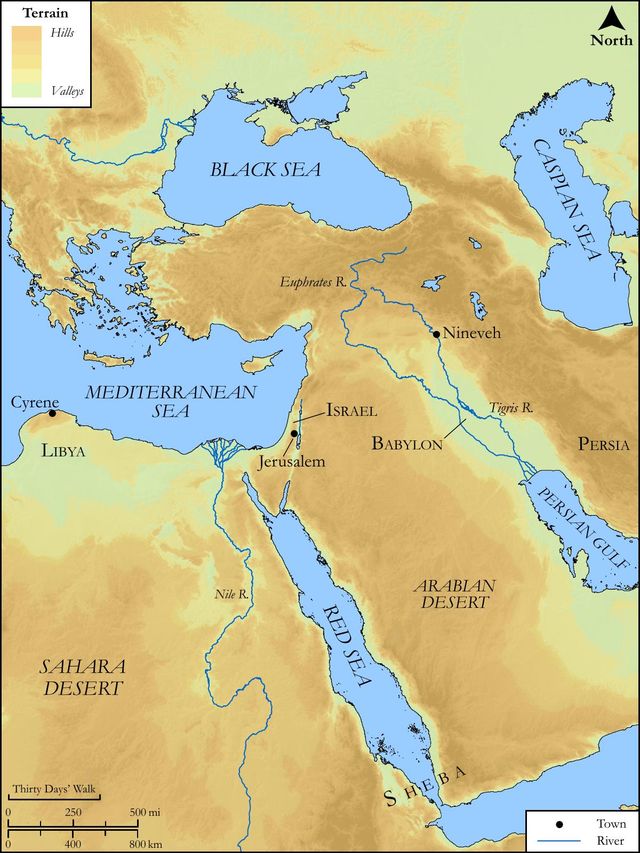
Study this verse
Public-domain commentary
Matthew Henry
From his Commentary on the Whole Bible. Henry comments on passages, not single verses — this entry covers Matthew 5:17–20. His three-level outline is real structure in the source text, so it is rendered as structure.
Those to whom Christ preached, and for whose use he gave these instructions to his disciples, were such as in their religion had an eye, 1. To the scriptures of the Old Testament as their rule, and therein Christ here shows them they were in the right: 2. To the scribes and the Pharisees as their example, and therein Christ here shows them they were in the wrong; for,
I.The rule which Christ came to establish exactly agreed with the scriptures of the Old Testament, here called the law and the prophets.
The prophets were commentators upon the law, and both together made up that rule of faith and practice which Christ found upon the throne in the Jewish church, and here he keeps it on the throne.
1.He protests against the thought of cancelling and weakening the Old Testament; Think not that I am come to destroy the law and the prophets. (1.) "Let not the pious Jews, who have an affection for the law and the prophets, fear that I come to destroy them." Let them be not prejudiced against Christ and his doctrine, from a jealousy that this kingdom he came to set up, would derogate from the honour of the scriptures, which they had embraced as coming from God, and of which they had experienced the power and purity; no, let them be satisfied that Christ has no ill design upon the law and the prophets. "Let not the profane Jews, who have a disaffection to the law and the prophets, and are weary of that yoke, hope that I am come to destroy them." Let not carnal libertines imagine that the Messiah is come to discharge them from the obligation of divine precepts and yet to secure to them divine promises, to make the happy and yet to give them leave to live as they list. Christ commands nothing now which was forbidden either by the law of nature or the moral law, nor forbids any thing which those laws had enjoined; it is a great mistake to think he does, and he here takes care to rectify the mistake; I am not come to destroy. The Saviour of souls is the destroyer of nothing but the works of the devil, of nothing that comes from God, much less of those excellent dictates which we have from Moses and the prophets. No, he came to fulfil them. That is, [1.] To obey the commands of the law, for he was made under the law, Gal 4:4. He in all respects yielded obedience to the law, honoured his parents, sanctified the sabbath, prayed, gave alms, and did that which never any one else did, obeyed perfectly, and never broke the law in any thing. [2.] To make good the promises of the law, and the predictions of the prophets, which did all bear witness to him. The covenant of grace is, for substance, the same now that it was then, and Christ the Mediator of it. [3.] To answer the types of the law; thus (as bishop Tillotson expresses it), he did not make void, but make good, the ceremonial law, and manifested himself to be the Substance of all those shadows. [4.] To fill up the defects of it, and so to complete and perfect it. Thus the word plērōsai properly signifies. If we consider the law as a vessel that had some water in it before, he did not come to pour out the water, but to fill the vessel up to the brim; or, as a picture that is first rough-drawn, displays some outlines only of the piece intended, which are afterwards filled up; so Christ made an improvement of the law and the prophets by his additions and explications. [5.] To carry on the same design; the Christian institutes are so far from thwarting and contradicting that which was the main design of the Jewish religion, that they promote it to the highest degree. The gospel is the time of reformation (Heb 9:10), not the repeal of the law, but the amendment of it, and, consequently, its establishment.
2.He asserts the perpetuity of it; that not only he designed not the abrogation of it, but that it never should be abrogated (Mat 5:18); "Verily I say unto you, I, the Amen, the faithful Witness, solemnly declare it, that till heaven and earth pass, when time shall be no more, and the unchangeable state of recompences shall supersede all laws, one jot, or one tittle, the least and most minute circumstance, shall in no wise pass from the law till all be fulfilled;" for what is it that God is doing in all the operations both of providence and grace, but fulfilling the scripture? Heaven and earth shall come together, and all the fulness thereof be wrapped up in ruin and confusion, rather than any word of God shall fall to the ground, or be in vain. The word of the Lord endures for ever, both that of the law, and that of the gospel. Observe, The care of God concerning his law extends itself even to those things that seem to be of least account in it, the iotas and the tittles; for whatever belongs to God, and bears his stamp, be it ever so little, shall be preserved. The laws of men are conscious to themselves of so much imperfection, that they allow it for a maxim, Apices juris non sunt jura - The extreme points of the law are not the law, but God will stand by and maintain every iota and every tittle of his law.
3.He gives it in charge to his disciples, carefully to preserve the law, and shows them the danger of the neglect and contempt of it (Mat 5:19); Whosoever therefore shall break one of the least commandments of the law of Moses, much more any of the greater, as the Pharisees did, who neglected the weightier matters of the law, and shall teach men so as they did, who made void the commandment of God with their traditions (Mat 15:3), he shall be called the least in the kingdom of heaven. Though the Pharisees be cried up for such teachers as should be, they shall not be employed as teachers in Christ's kingdom; but whosoever shall do and teach them, as Christ's disciples would, and thereby prove themselves better friends to the Old Testament than the Pharisees were, they, though despised by men, shall be called great in the kingdom of heaven. Note,
(1.)Among the commands of God there are some less than others; none absolutely little, but comparatively so. The Jews reckon the least of the commandments of the law to be that of the bird's nest (Deu 22:6, Deu 22:7); yet even that had a significance and an intention very great and considerable.
(2.)It is a dangerous thing, in doctrine or practice, to disannul the least of God's commands; to break them, that is, to go about either to contract the extent, or weaken the obligation of them; whoever does so, will find it is at his peril. Thus to vacate any of the ten commandments, is too bold a stroke for the jealous God to pass by. it is something more than transgressing the law, it is making void the law, Psa 119:126.
(3.)That the further such corruptions as they spread, the worse they are. It is impudence enough to break the command, but is a greater degree of it to teach men so. This plainly refers to those who at this time sat in Moses' seat, and by their comments corrupted and perverted the text. Opinions that tend to the destruction of serious godliness and the vitals of religion, by corrupt glosses on the scripture, are bad when they are held, but worse when they are propagated and taught, as the word of God. He that does so, shall be called least in the kingdom of heaven, in the kingdom of glory; he shall never come thither, but be eternally excluded; or, rather, in the kingdom of the gospel-church. He is so far from deserving the dignity of a teacher in it, that he shall not so much as be accounted a member of it. The prophet that teaches these lies shall be the tail in that kingdom (Isa 9:15); when truth shall appear in its own evidence, such corrupt teachers, though cried up as the Pharisees, shall be of no account with the wise and good. Nothing makes ministers more contemptible and base than corrupting the law, Mal 2:8, Mal 2:11. Those who extenuate and encourage sin, and discountenance and put contempt upon strictness in religion and serious devotion, are the dregs of the church. But, on the other hand, Those are truly honourable, and of great account in the church of Christ, who lay out themselves by their life and doctrine to promote the purity and strictness of practical religion; who both do and teach that which is good; for those who do not as they teach, pull down with one hand what they build up with the other, and give themselves the lie, and tempt men to think that all religion is a delusion; but those who speak from experience, who live up to what they preach, are truly great; they honour God, and God will honour them (Sa1 2:30), and hereafter they shall shine as the stars in the kingdom of our Father.
II.The righteousness which Christ came to establish by this rule, must exceed that of the scribes and Pharisees, Mat 5:20.
This was strange doctrine to those who looked upon the scribes and Pharisees as having arrived at the highest pitch of religion. The scribes were the most noted teachers of the law, and the Pharisees the most celebrated professors of it, and they both sat in Moses' chair (Mat 23:2), and had such a reputation among the people, that they were looked upon as super-conformable to the law, and people did not think themselves obliged to be as good as they; it was therefore a great surprise to them, to hear that they must be better than they, or they should not go to heaven; and therefore Christ here avers it with solemnity; I say unto you, It is so. The scribes and Pharisees were enemies to Christ and his doctrine, and were great oppressors; and yet it must be owned, that there was something commendable in them. They were much in fasting and prayer, and giving of alms; they were punctual in observing the ceremonial appointments, and made it their business to teach others; they had such an interest in the people that they ought, if but two men went to heaven, one would be a Pharisee; and yet our Lord Jesus here tells his disciples, that the religion he came to establish, did not only exclude the badness, but excel the goodness, of the scribes and Pharisees. We must do more than they, and better than they, or we shall come short of heaven. They were partial in the law, and laid most stress upon the ritual part of it; but we must be universal, and not think it enough to give the priest his tithe, but must give God our hearts. They minded only the outside, but we must make conscience of inside godliness. They aimed at the praise and applause of men, but we must aim at acceptance with God: they were proud of what they did in religion, and trusted to it as a righteousness; but we, when we have done all, must deny ourselves, and say, We are unprofitable servants, and trust only to the righteousness of Christ; and thus we may go beyond the scribes and Pharisees.
Historical interpretation
Eleven Centuries of Reception
16 surviving comments on this verse. Each one is dated, so this reads as a timeline rather than a list.
Select a marker to jump to its quote. Markers stagger vertically where authors wrote within a few decades of each other.
After the ancient examples of the patriarchs, let us equally pass on to the ancient documents of the legal Scriptures, that we may treat in order of all our canon. And since there are some who sometimes assert that they have nothing to do with the law (which Christ has not dissolved, but fulfilled),41 sometimes catch at such parts of the law as they choose; plainly do we too assert that the law has deceased in this sense, that its burdens-according to the sentence of the apostles-which not even the fathers were able to sustain,42 have wholly ceased: such (parts), however. as relate to righteousness not only permanently remain reserved, but even amplified; in order, to be sure, that our righteousness may be able to redound above the righteousness of the scribes and of the Pharisees. If "righteousness" must, of course chastity must too.
How will our "righteousness abound above that of the Scribes and Pharisees," as the Lord has prescribed, unless we shall have seen through the abundance of that adversary quality, that is, of unrighteousness? But if the head of unrighteousness is idolatry, the first point is, that we be fore-fortified against the abundance of idolatry, while we recognise it not only in its palpable manifestations.
Beautiful entrance He here makes to a teaching beyond the works of the Law, declaring to the Apostles that they should have no admission to the kingdom of heaven without a righteousness beyond that of Pharisees.
Or, he who reproaches with emptiness one full of the Holy Spirit, will he arraigned in the assembly of the Saints, and by their sentence will be punished for an affront against that Holy Spirit Himself.
He finds fault with the righteousness of the scribes and Pharisees, for they were not concerned with faith in the divine promise but with human praise and worldly glory. We have an example of this in the puffed-up and proud Pharisee who seemed to prefer the merits of his own righteousness and shamelessly made himself conspicuous in God’s sight with his smugness and complacent words.The scribes and Pharisees therefore stressed the appearance of righteousness, not that they might please God but that they might seek the fame of human glory and acquire earthly gain and material comforts. Hence the Lord urges us to give priority to the works of heavenly righteousness and the merits of faith over that detestable righteousness of human praise.
By righteousness is here meant universal virtue. But observe the superior power of grace, in that He requires of His disciples who were yet uninstructed to be better than those who were masters under the Old Testament. Thus He does not call the Scribes and Pharisees unrighteous, but speaks of their righteousness. And see how even herein He confirms the Old Testament that He compares it with the New, for the greater and the less are always of the same kind.
This, it was said by them of old time, shows that it was long ago that they had received this precept. He says this that He might rouse His sluggish hearers to proceed to more sublime precepts, as a teacher might say to an indolent boy, Know you not how long time you have spent already in merely learning to spell? In that, I say unto you, mark the authority of the legislator, none of the old Prophets spoke thus; but rather, Thus saith the Lord. They as servants repeated the commands of their Lord; He as a Son declared the will of His Father, which was also His own. They preached to their fellow servants; Ha as master ordained a law for his slaves.
Or, Racha is a word signifying contempt, and worthlessness. For where we in speaking to servants or children say, Go thou, or, Tell thou him; in Syriac they would say Racha for 'thou.' For the Lord descends to the smallest trifles even of our behaviour, and bids us treat one another with mutual respect.
This is the first mention of hell, though the kingdom of Heaven had been mentioned some time before, which shows that the gifts of the one comes of His love, the condemnation of the other of our sloth. Many thinking this a punishment too severe for a mere word, say that this was said figuratively. But I fear that if we thus cheat ourselves with words here, we shall suffer punishment in deed there. Think not then this too heavy a punishment, when so many sufferings and sins have their beginning in a word; a little word has often begotten a murder, and overturned whole cities. And yet it is not to be thought a little word that denies a brother reason and understanding by which we are men, and differ from the brutes.
Or, the judgment and the council denote punishment in this word; hell-fire future punishment. He denounces punishment against anger, yet does not mention any special punishment, showing therein that it is not possible that a man should be altogether free from the passion. The Council here means the Jewish senate, for He would not seem to be always superseding all their established institutions, and introducing foreignf.
"For I say unto you, Except your righteousness shall exceed the righteousness of the Scribes and Pharisees, ye shall in no case enter into the kingdom of Heaven."
Here by righteousness He means the whole of virtue; even as also discoursing of Job, He said, "He was a blameless man, righteous." According to the same signification of the word, Paul also called that man "righteous" for whom, as he said, no law is even set. "For," saith he, "a law is not made for a righteous man." And in many other places too one might find this name standing for virtue in general.
But observe, I pray thee, the increase of grace; in that He will have His newly-come disciples better than the teachers in the old covenant. For by "Scribes and Pharisees" here, He meant not merely the lawless, but the well-doers. For, were they not doing well, He would not have said they have a righteousness; neither would He have compared the unreal to the real.
And observe also here, how He commends the old law, by making a comparison between it and the other; which kind of thing implies it to be of the same tribe and kindred. For more and less, is in the same kind. He doth not, you see, find fault with the old law, but will have it made stricter. Whereas, had it been evil, He would not have required more of it; He would not have made it more perfect, but would have cast it out.
And how one may say, if it be such, doth it not bring us into the Kingdom? It doth not now bring in them who live after the coming of Christ, favored as they are with more strength, and bound to strive for greater things: since as to its own foster-children, them it doth bring in one and all. Yea, for "many shall come," saith He, "from east and west, and shall lie down in the bosoms of Abraham, Isaac, and Jacob." And Lazarus also receiving the great prize, is shown dwelling in Abraham's bosom. And all, as many as have shone forth with excellency in the old dispensation, shone by it, every one of them. And Christ Himself, had it been in anything evil or alien from Him, would not have fulfilled it all when He came.
So that from all considerations it is clear, that not from any badness in itself doth it fail to bring us in, but because it is now the season of higher precepts.
And if it be more imperfect than the new, neither doth this imply it to be evil: since upon this principle the new law itself will be in the very same case. Because in truth our knowledge of this, when compared with that which is to come, is a sort of partial and imperfect thing, and is done away on the coming of that other. "For when," saith He, "that which is perfect is come, then that which is in part shall be done away:" even as it befell the old law through the new. Yet we are not to blame the new law for this, though that also gives place on our attaining unto the Kingdom: for "then," saith He, "that which is in part shall be done away:" but for all this we call it great.
Since then both the rewards thereof are greater, and the power given by the Spirit more abundant, in reason it requires our graces to be greater also. For it is no longer "a land that floweth with milk and honey," nor a comfortable old age, nor many children, nor corn and wine, and flocks and herds: but Heaven, and the good things in the Heavens, and adoption and brotherhood with the Only-Begotten, and to partake of the inheritance and to be glorified and to reign with Him, and those unnumbered rewards.
And let us be diligent, if we would attain unto the kingdom, to show forth something more than the old commandments; since we cannot otherwise lay hold of the things of Heaven. For if we arrive but at the same measure, that of the ancients, we shall stand without that threshold; for "except your righteousness shall exceed the righteousness of the Scribes and Pharisees, ye cannot enter into the kingdom of Heaven."
Yet, although so heavy a threat is set down, there are some who so far from over-passing this righteousness, even come short of it; so far from shunning oaths, they even swear falsely; so far from avoiding an unchaste gaze, they even fall into the very act of wickedness. And all the rest of the things which are forbidden, they dare to do, as though past feeling: waiting for one thing only, the day of punishment, and the time when they are to pay the most extreme penalty for their misdoings.
(Verse 19 and following) Therefore, whoever shall break one of the least of these commandments, and shall teach men so, he shall be called the least in the kingdom of heaven: but he who shall do and teach them, the same shall be called great in the kingdom of heaven. For I say to you, that unless your justice exceeds that of the scribes and Pharisees, you shall not enter into the kingdom of heaven. You have heard that it was said to those of old: You shall not kill; and whoever kills shall be liable to judgment. But I tell you. This chapter, sticking with the previous testimony, in which he said: Not one iota, or one apex, will pass from the Law, until all things are fulfilled. Therefore, he seals the Pharisees, who, despising the commandments of God, establish their own traditions, which do not benefit them in teaching the people if they destroy even a small thing that is commanded in the Law. However, we can also understand that the education of teachers, even if subject to a small sin, leads them down from the highest rank, and it does not benefit them to teach righteousness, which the smallest fault destroys. And let perfect happiness be to fulfill with action what you have taught in words.
Some copies add here the words, without cause; but by the true readingc the precept is made unconditional, and anger altogether forbidden. For when we are told to pray for them that persecute us, all occasion of anger is taken away. The words without cause then must be erased, for the wrath of man worketh not the righteousness of God.
Or, Racha is a Hebrew word signifying, 'empty,' 'vain;' as we might say in the common phrase of reproach, 'empty-pate.' Observe that He says brother; for who is our brother, but he who has the same Father as ourselves?
He therefore rebukes the Pharisees, who showed contempt for God’s commandments and set up their own traditions, for their teaching among the people is of no value if they destroy even a small part of what is in the law. We can understand this in another sense, namely, that a teacher’s learning, even if tainted by a small sin, demotes him from the highest place. It does not profit him to teach a righteousness that he undermines by the slightest fault. The Beatitude is perfected if what you teach with your words you practice with your works.
i.e., unless you shall fulfil not only those least precepts of the law which begin the man, but also those which are added by me, who am not come to destroy the law, but to fulfil it, you shall not enter into the kingdom of heaven. But you say to me: If, when He was speaking above of those least commandments, He said that whosoever shall break one of them, and shall teach in accordance with his transgression, is called the least in the kingdom of heaven; but that whosoever shall do them, and shall teach [men] so, is called great, and hence will be already in the kingdom of heaven, because he is great: what need is there for additions to the least precepts of the law, if he can be already in the kingdom of heaven, because whosoever shall do them, and shall so teach, is great? For this reason that sentence is to be understood thus: But whosoever shall do and teach men so, the same shall be called great in the kingdom of heaven,— i.e. not in accordance with those least commandments, but in accordance with those which I am about to mention. Now what are they? That your righteousness, says He, may exceed that of the scribes and Pharisees; for unless it shall exceed theirs, you shall not enter into the kingdom of heaven. Whosoever, therefore, shall break those least commandments, and shall teach men so, shall be called the least; but whosoever shall do those least commandments, and shall teach men so, is not necessarily to be reckoned great and meet for the kingdom of heaven; but yet he is not so much the least as the man who breaks them. But in order that he may be great and fit for that kingdom, he ought to do and teach as Christ now teaches, i.e. in order that his righteousness may exceed that of the scribes and Pharisees. The righteousness of the Pharisees is, that they shall not kill; the righteousness of those who are destined to enter into the kingdom of God, that they be not angry without a cause. The least commandment, therefore, is not to kill; and whosoever shall break that, shall be called least in the kingdom of heaven; but whosoever shall fulfil that commandment not to kill, will not, as a necessary consequence, be great and meet for the kingdom of heaven, but yet he ascends a certain step. He will be perfected, however, if he be not angry without a cause; and if he shall do this, he will be much further removed from murder. For this reason he who teaches that we should not be angry, does not break the law not to kill, but rather fulfils it; so that we preserve our innocence both outwardly when we do not kill, and in heart when we are not angry.
(ubi sup.) Otherwise; he who breaks the least of these commandments, that is, of Moses' Law, and teaches men so, shall be called the least; but he who shall do (these least), and so teach, shall not indeed be esteemed great, yet not so little as he who breaks them. That he should be great, he ought to do and to teach the things which Christ now teaches.
(De Civ. Dei, xx. 9.) Otherwise, unless your righteousness exceed the righteousness of the Scribes and Pharisees, that is, exceed that of those who break what themselves teach, as it is elsewhere said of them, They say, and do not; (Mat. 23:3.) just as if He had said, Unless your righteousness exceed in this way that ye do what ye teach, you shall not enter the kingdom of heaven. We must therefore understand something other than usual by the kingdom of heaven here, in which are to be both he who breaks what he teaches, and he who does it, but the one least, the other great; this kingdom of heaven is the present Church. In another sense is the kingdom of heaven spoken of that place where none enters but he who does what he teaches, and this is the Church as it shall be hereafter.
(Id. cont. Faust. xix. 31.) This expression, the kingdom of heaven, so often used by our Lord, I know not whether any one would find in the books of the Old Testament. It belongs properly to the New Testament revelation, kept for His mouth whom the Old Testament figured as a King that should come to reign over His servants. This end, to which its precepts were to be referred, was hidden in the Old Testament, though even that had its saints who looked forward to the revelation that should be made.
The righteousness of the Scribes and Pharisees are the commandments of Moses; but the commandments of Christ are the fulfilment of that Law. This then is His meaning; Whosoever in addition to the commandments of the Law shall not fulfil My commandments, shall not enter into the kingdom of heaven. For those indeed save from the punishment due to transgressors of the Law, but do not bring into the kingdom; but My commandments both deliver from punishment, and bring into the kingdom. But seeing that to break the least commandments and not to keep them are one and the same, why does He say above of him that breaks the commandments, that he shall be the least in the kingdom of heaven, and here of him who keeps them not, that he shall not enter into the kingdom of heaven? See how to be the least in the kingdom is the same with not entering into the kingdom. For a man to be in the kingdom is not to reign with Christ, but only to be numbered among Christ's people; what He says then of him that breaks the commandments is, that he shall indeed be reckoned among Christians, yet the least of them. But he who enters into the kingdom, becomes partaker of His kingdom with Christ. Therefore he who does not enter into the kingdom of heaven, shall not indeed have a part of Christ's glory, yet shall he be in the kingdom of heaven, that is, in the number of those over whom Christ reigns as King of heaven.
Christ willing to show that He is the same God who spoke of old in the Law, and who now gives commandments in grace, now puts first of all his commandments (vid. Mat. 19:18.), that one which was the first in the Law, first, at least, of all those that forbade injury to our neighbour.
He who is angry without cause shall be judged; but he who is angry with cause shall not be judged. For if there were no anger, neither teaching would profit, nor judgments hold, nor crimes be controlled. So that he who on just cause is not angry, is in sin; for an unreasonable patience sows vices, breeds carelessness, and invites the good as well as the bad to do evil.
Yet that anger which arises from just cause is indeed not anger, but a sentence of judgment. For anger properly means a feeling of passion; but he whose anger arises from just cause does not suffer any passion, and is rightly said to sentence, not to be angry with.
But I think that Christ does not speak of anger of the flesh, but anger of the heart; for the flesh cannot be so disciplined as not to feel the passion. When then a man is angry but refrains from doing what his anger prompts him, his flesh is angry, but his heart is free from anger.
And it were an unworthy reproach to him who has in him the Holy Spirit to call him 'empty.'
But as none is empty who has the Holy Spirit, so none is a fool who has the knowledge of Christ; and if Racha signifies 'empty,' it is one and the same thing, as far as the meaning of the word goes, to say Racha, or 'thou fool.' But there is a difference in the meaning of the speaker; for Racha was a word in common use among the Jews, not expressing wrath or hate, but rather in a light careless way expressing confident familiarity, not anger. But you will perhaps say, if Racha is not an expression of wrath, how is it then a sin? Because it is said for contention, not for edification; and if we ought not to speak even good words but for the sake of edification, how much more not such as are in themselves bad?
In danger of the council; that is, (according to the interpretation given by the Apostles in their Constitutions,) in danger of being one of that Council which condemned Christe.
The Saviour here names the torments of hell, Gehenna, a name thought to be derived from a valley consecrate to idols near Jerusalem, and filled of old with dead bodies, and defiled by Josiah, as we read in the Book of Kings.
. "Righteousness" means all the virtues, as in "Job was a righteous man, holy and blameless" (Job 1:1) Tremble then, O man, when you have understood how much is required of us. Then He teaches us how we can exceed the righteousness of the Scribes and Pharisees, and He enumerates the virtues.
(non occ.) Or, we may explain by referring to the way in which the Scribes and Pharisees understood the Law, not to the actual contents of the Law.
Continue studying Matthew 5:20 across the web’s major study libraries — every link below opens this exact verse, chapter, or book on the destination site.
Read & Compare
 BibleGatewayThis verse in more than 200 translations and 70 languages.
 Bible.comThe YouVersion reader — hundreds of translations, reading plans, and highlights.
 ESV.orgCrossway's official English Standard Version reader.
 NET BibleThe NET translation with 60,000+ translators' notes on every rendering decision.
 STEP BibleTyndale House's free study tool — original text, vocabulary, and scholarly resources.
 BibliaLogos Bible Software's free web reader.
 USCCBThe New American Bible (Revised Edition) with the U.S. bishops' study notes.
Commentaries
 BibleHub CommentariesDozens of classic commentaries on this verse, gathered on one page.
 StudyLightMore than 100 commentary sets — the largest collection on the web.
 BibleRefPlain-English commentary on what this verse means, verse by verse.
 Enduring WordDavid Guzik's free commentary on this chapter, widely used by Bible teachers.
 Bible Study ToolsVerse commentary alongside Greek and Hebrew study aids.
Original Language & Research
- BibleHub InterlinearThe verse word by word — original language, transliteration, and English.
- BibleHub LexiconEvery word's original-language definition and Strong's entry.
 Blue Letter BibleDeep-study tools — Strong's numbers, concordance, and word studies.
 CNTR CollationThe earliest Greek manuscripts of this verse, collated letter by letter.
Sermons, Hymns & Audio


TrulyRandomVerse is not affiliated with these sites and doesn’t control their content. They’re linked because they’re genuinely useful.
Summary
In Matthew 5:20, Jesus issues a profound and challenging declaration during His Sermon on the Mount, asserting that entry into the Kingdom of Heaven is contingent upon a righteousness that transcends the outward, legalistic adherence practiced by the scribes and Pharisees. This statement serves as a critical interpretive key for understanding the true nature of God's demands, shifting the focus from external performance to an internal transformation of the heart and motives, which alone can produce genuine obedience pleasing to God.
Context
ShowHideLiterary Context
This pivotal verse is situated within the opening discourse of Jesus's Sermon on the Mount, immediately following His declaration that He has not come to abolish the Law or the Prophets but to fulfill them (Matthew 5:17). Jesus first affirms the enduring authority and perpetual relevance of God's Word, stating that not even the smallest letter or stroke of the law will pass away until all is accomplished (Matthew 5:18). He then warns against diminishing the commandments, emphasizing that those who teach and practice them will be called great in the Kingdom of Heaven (Matthew 5:19). Matthew 5:20 thus acts as a crucial bridge, transitioning from the affirmation of the Law's authority to a redefinition of the kind of obedience God truly desires, setting the stage for the subsequent antitheses (e.g., "You have heard that it was said... but I say to you...") that unpack this "exceeding righteousness" throughout the rest of Matthew 5.
Historical & Cultural Context
Jesus's audience, primarily Jewish, lived under the pervasive influence of the scribes (experts in the Mosaic Law and its interpretation) and the Pharisees (a prominent religious sect known for their meticulous adherence to both written and oral traditions). These groups were widely regarded as the epitome of piety and righteousness, serving as models for religious observance. Their righteousness was characterized by strict adherence to ritual purity laws, tithing, Sabbath regulations, and other external observances. However, their practice often became legalistic, focusing on outward conformity while neglecting the spirit of the law, as Jesus frequently critiqued (e.g., Matthew 23:23-28). Jesus's statement in Matthew 5:20 would have been shocking and counter-cultural, directly challenging the prevailing religious paradigm and the authority of its most esteemed leaders.
Key Themes
ShowHideThis verse is foundational to several key themes in the Sermon on the Mount and the broader Gospel of Matthew. It introduces the theme of True Righteousness, contrasting superficial external adherence with a deeper, internal transformation that impacts motives and desires. This "exceeding righteousness" is not about doing more religious acts than the Pharisees, but about possessing a different quality of righteousness—one that flows from a heart aligned with God's character, rather than human approval or legalistic obligation. It also underscores the nature of the Kingdom of Heaven, clarifying that entry into God's sovereign reign is not based on human merit or ritualistic performance, but on a spiritual state that reflects genuine repentance and faith. Implicitly, the verse also serves as a Warning Against Hypocrisy, exposing the inadequacy of a faith that prioritizes outward show over sincere devotion, a theme Jesus elaborates on in later teachings (e.g., Matthew 6:1-6).
Exposition and Analysis
ShowHideKey Word Analysis
ShowHideThis term signifies equity of character or act, and specifically, Christian justification. In the context of Matthew 5:20, it refers to the moral and ethical uprightness that God requires. It encompasses both a right standing before God and a right conduct that flows from that relationship. Jesus's challenge is not merely about external conformity to rules, but about an internal disposition that produces actions aligned with God's perfect standard, contrasting sharply with the often superficial "righteousness" of the scribes and Pharisees.
Meaning to superabound, be in excess, excel, or overflow. This word, paired with G4119 (pleíōn, meaning 'more' or 'greater'), is crucial. It does not imply that disciples must perform more religious rituals or legalistic acts than the Pharisees. Instead, it denotes a superior quality or a deeper kind of righteousness. It's a call for a righteousness that is qualitatively different and profoundly more comprehensive, extending to the heart's intentions and motivations, not just external behaviors.
Referring to a writer, professionally a scribe or secretary. In the New Testament, scribes were experts in the Jewish Law, responsible for copying, interpreting, and teaching it. They were highly respected but often criticized by Jesus for their legalism and hypocrisy.
Meaning a separatist, an exclusively religious person. The Pharisees were a prominent Jewish religious sect known for their strict adherence to the Mosaic Law and oral traditions. While zealous, their righteousness often became self-righteous, focusing on outward appearance and human traditions over the true spirit of God's Law. Jesus frequently condemned their hypocrisy and spiritual blindness.
Verse Breakdown
ShowHide"For I say unto you"
This emphatic declaration marks a significant pronouncement from Jesus, signaling that what follows is a foundational truth. The "For" (G1063, gár) introduces a reason or explanation, connecting this statement to His preceding affirmation of the Law's enduring authority and His role in fulfilling it. It underscores Jesus's unique authority as the divine interpreter and revealer of God's will, setting His teaching apart from that of the scribes and Pharisees.
"That except your righteousness shall exceed the righteousness of the scribes and Pharisees"
This is the core challenge. Jesus sets a new, higher standard for righteousness, contrasting it directly with the perceived pinnacle of piety in His day. The term "exceed" (G4052, perisseúō) indicates a qualitative difference, not merely a quantitative one. The righteousness required is not just more meticulous external observance, but a deeper, more profound, and internally motivated obedience that surpasses the superficiality and self-righteousness often characteristic of the religious leaders. It's a righteousness that flows from a transformed heart, encompassing thoughts, motives, and attitudes, not just actions.
"ye shall in no case enter into the kingdom of heaven"
This is the solemn consequence of failing to meet the required standard. The double negative "in no case" (G3364, ou mḗ) strongly emphasizes the absolute impossibility of entry. The "kingdom of heaven" (G932, basileía and G3772, ouranós) refers to God's sovereign rule and reign, both present (as a spiritual reality experienced by believers) and future (as the consummated eschatological reality). This statement underscores that genuine participation in God's kingdom requires a radical reorientation of life, marked by a righteousness that aligns with God's own character and not merely human standards or traditions.
Literary Devices
ShowHideMatthew 5:20 employs several powerful literary devices. Hyperbole is evident in Jesus's statement that one's righteousness must "exceed" that of the scribes and Pharisees. Given their reputation as the most scrupulous observers of the Law, this would have sounded like an impossible standard, designed to shock the audience and highlight the inadequacy of human effort alone. This hyperbole serves to underscore the profound qualitative difference Jesus is advocating. There is also a strong element of Contrast, as Jesus directly juxtaposes the "righteousness" of His disciples with that of the religious elite, implicitly criticizing the latter's superficiality and self-serving motives. This contrast sets the stage for the subsequent antitheses in the Sermon on the Mount, where Jesus consistently contrasts external obedience with internal purity. Finally, the verse contains a Conditional Statement ("except... ye shall in no case enter"), which clearly delineates the requirement for kingdom entry, emphasizing the seriousness and non-negotiable nature of the standard Jesus is establishing.
Theological and Thematic Connections
ShowHideMatthew 5:20 is a foundational text for understanding the nature of true righteousness in God's eyes, revealing that His standard far transcends mere external conformity to religious rules. It challenges the common misconception that piety is measured by outward performance, ritualistic adherence, or human approval. Instead, Jesus demands a righteousness that flows from an inwardly transformed heart, characterized by genuine love for God and neighbor, pure motives, and a desire to honor God in every aspect of life. This passage sets the stage for the entire Sermon on the Mount, where Jesus unpacks what this "exceeding righteousness" looks like in practical terms, addressing issues like anger, lust, divorce, oaths, retaliation, and love for enemies, all from the perspective of the heart's intent rather than just outward action. It underscores that true spiritual life is not about earning merit, but about a radical reorientation of one's entire being towards God's perfect will.
Reflection and Application
ShowHideMatthew 5:20 serves as a timeless mirror for self-examination, challenging believers across generations to look beyond superficial religiosity and delve into the true condition of their hearts. It compels us to ask whether our faith is merely an outward display of adherence to rules and traditions, or if it genuinely flows from an internal transformation wrought by God's grace. True Christian living is not about accumulating good deeds to earn favor, but about cultivating a heart that loves God supremely and expresses that love through obedience that is motivated by purity, humility, and genuine devotion. This verse reminds us that God is concerned with our motives as much as our actions, calling us to a righteousness that permeates every thought, word, and deed, reflecting the character of Christ rather than seeking human applause. It is a call to authenticity, integrity, and a profound, grace-empowered pursuit of holiness that far surpasses any humanly devised standard.
Questions for Reflection
ShowHideFAQ
ShowHideWhat does Jesus mean by "exceed the righteousness of the scribes and Pharisees"?
ShowHideJesus does not mean that His followers must perform more religious acts or be more legalistic than the scribes and Pharisees. Instead, He is calling for a qualitatively superior and deeper kind of righteousness. The scribes and Pharisees were known for their meticulous external observance of the Law, but Jesus often critiqued them for their hypocrisy, pride, and neglect of the heart's true condition (e.g., Matthew 23:23-28). Jesus's "exceeding righteousness" refers to an internal righteousness that stems from a transformed heart, pure motives, and genuine love for God and neighbor, which then naturally produces outward actions consistent with God's character. It's a righteousness that goes beyond the letter of the law to embrace its spirit and intent, affecting one's thoughts and desires, not just external behaviors.
Christ-Centered Fulfillment
ShowHideMatthew 5:20, with its seemingly impossible demand for an "exceeding righteousness," points ultimately to Christ as its sole fulfillment and the source of such righteousness for believers. No human effort or legalistic striving could ever achieve the standard Jesus sets; indeed, the Law itself was given to expose humanity's inability to attain righteousness by works (Romans 3:20). Jesus perfectly embodied this exceeding righteousness, living a life of absolute obedience to God's will, not just externally but in every thought and intention (Hebrews 4:15). He is the only one whose righteousness truly "exceeded" that of any human, including the scribes and Pharisees. Furthermore, through His atoning death and resurrection, Christ provides this very righteousness to all who believe in Him. Believers are declared righteous in God's sight, not by their own merit, but by faith in Christ, whose perfect righteousness is imputed to them (2 Corinthians 5:21). Thus, the "exceeding righteousness" required for entry into the Kingdom of Heaven is not something we achieve, but something we receive as a gift through union with Christ, empowering us by His Spirit to live lives that increasingly reflect His character and the true spirit of God's Law (Romans 8:3-4).