


Matthew 28:20
- διδάσκοντεςdidaskontesteachingG1321V-PAP-NPMVerb Present Active Participle Nominative Plural Masculine
- αὐτοὺςautousthemG846P-APMPersonal pronoun Accusative Plural Masculine
- τηρεῖνtēreinto observeG5083V-PANVerb Present Active Infinitive
- πάνταpantaall thingsG3956A-APNAdjective Accusative Plural Neuter
- ὅσαhosaas much asG3745K-APNCorrelative pronoun Accusative Plural Neuter
- ἐνετειλάμηνeneteilamēnI commandedG1781V-ADI-1SVerb Aorist Middle Deponent Indicative 1st Singular
- ὑμῖν·huminyouG4771P-2DPPersonal pronoun Dative 2nd Plural
- καὶkaiAndG2532CONJConjunction
- ἰδοὺidoubeholdG2400INJInterjection
- ἐγὼegōI myselfG1473P-1NSPersonal pronoun Nominative 1st Singular
- μεθ᾽meth᾽withG3326PREPPreposition
- ὑμῶνhumōnyouG4771P-2GPPersonal pronoun Genitive 2nd Plural
- εἰμιeimiamG1510V-PAI-1SVerb Present Active Indicative 1st Singular
- πάσαςpasasallG3956A-APFAdjective Accusative Plural Feminine
- τὰςtastheG3588T-APFDefinite article Accusative Plural Feminine
- ἡμέραςhēmerasdaysG2250N-APFNoun Accusative Plural Feminine
- ἕωςhe'ōsuntilG2193PREPPreposition
- τῆςtēstheG3588T-GSFDefinite article Genitive Singular Feminine
- συντελείαςsunteleiascompletionG4930N-GSFNoun Genitive Singular Feminine
- τοῦtouof theG3588T-GSMDefinite article Genitive Singular Masculine
- αἰῶνοςaiōnosageG165N-GSMNoun Genitive Singular Masculine
- ἀμήνamēnAmenG281INJ-HEBInterjection
English is a literal word-by-word gloss of the Greek, not the KJV's wording. Why?
This is the original text the KJV's translators worked from — each Greek word with its own literal English meaning in this verse, prepared by scholars at Tyndale House, Cambridge. The KJV translates whole sentences, not word by word, so its wording differs: one Greek word can become several English words, and the KJV may choose “charity” where the gloss reads “love”. Both are faithful — they answer different questions. For the KJV's own rendering, switch to the KJV text.
Details
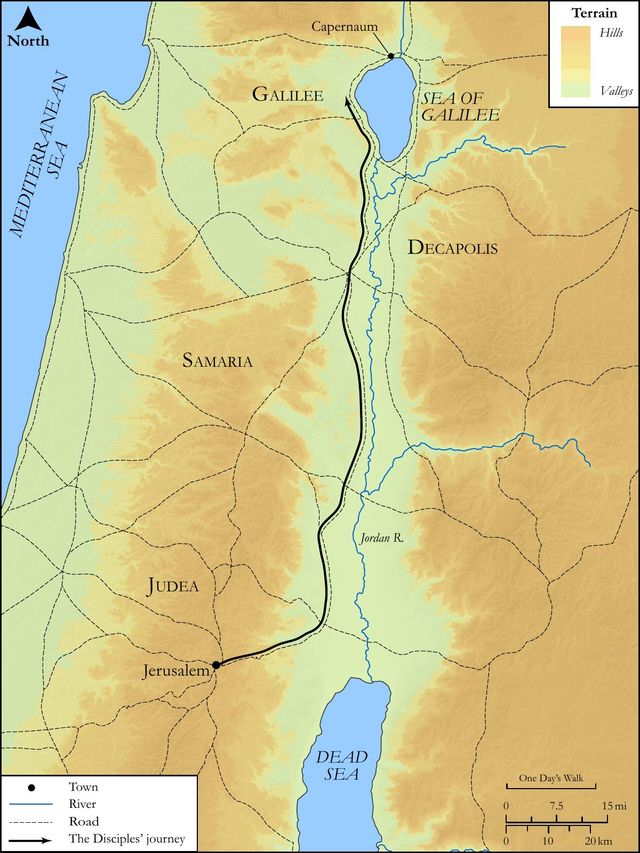
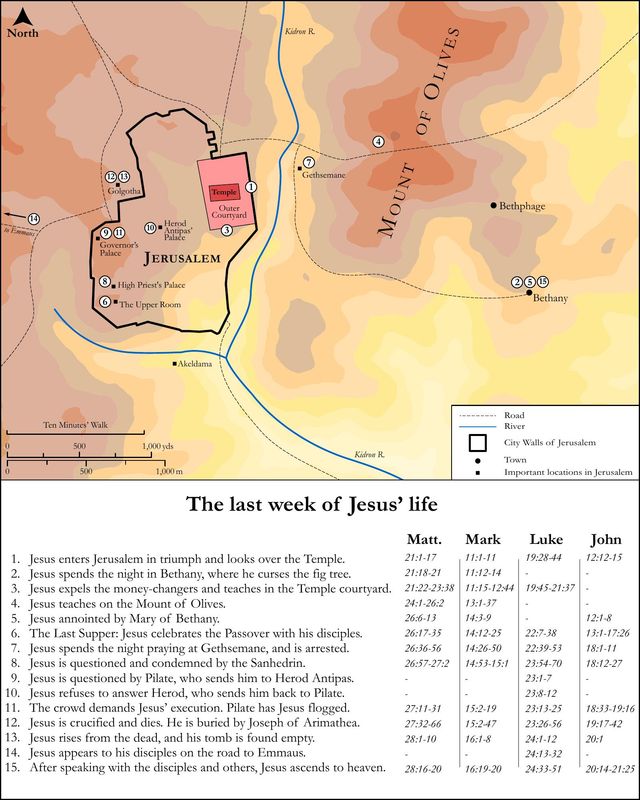
See on the biblical-era maps

Study this verse
Historical interpretation
Seven Centuries of Reception
16 surviving comments on this verse. Each one is dated, so this reads as a timeline rather than a list.
Select a marker to jump to its quote. Markers stagger vertically where authors wrote within a few decades of each other.
(de Trin. ii. 1 &c.) For what part of the salvation of men is there that is not contained in this Sacrament? All things are full and perfect, as proceeding from Him who is full and perfect. The nature of His relation is expressed in the title Father; but He is nothing but Father; for not after the manner of men does He derive from somewhat else that He is Father, being Himself Unbegotten, Eternal, and having the source of His being in Himself, known to none, save the Son. The Son is the Offspring of the Unbegotten, One of the One, True of the True, Living of the Living, Perfect of the Perfect, Strength of Strength, Wisdom of Wisdom, Glory of Glory; the Image of the Unseen God, the Form of the Unbegotten Father. Neither can the Holy Spirit be separated from the confession of the Father and the Son. And this consolation of our longing desires is absent from no place. He is the pledge of our hope in the effects of His gifts, He is the light of our minds, He shines in our souls. These things as the heretics cannot change, they introduce into them their human explanations. As Sabellius who identifies the Father with the Son, thinking the distinction to be made rather in name than in person, and setting forth one and the same Person as both Father and Son. As Ebion, who deriving the beginning of His existence from Mary, makes Him not Man of God, but God of man. As the Arians, who derive the form, the power, and the wisdom of God out of nothing, and in time. What wonder then that men should have diverse opinions about the Holy Spirit, who thus rashly after their own pleasure create and change the Son, by whom that Spirit is bestowed?
And because what He had laid upon them was great, therefore to exalt their spirits He adds, And, lo, I am with you alway, even unto the end of the world. As much as to say, Tell Me not of the difficulty of these things, seeing I am with you, Who can make all things easy. A like promise He often made to the Prophets in the Old Testament, to Jeremiah who pleaded his youth, to Moses, and to Ezekiel, when they would have shunned the office imposed upon them. And not with them only does He say that He will be, but with all who shall believe after them. For the Apostles were not to continue till the end of the world, but He says this to the faithful as to one body.
He brings before them the end of the world, that He may the more draw them on, and that they may not look merely to present inconveniences, but to the infinite goods to come. As much as to say, The grievous things which you shall undergo, terminate with this present life, seeing that even this world shall come to an end, but the good things which ye shall enjoy endure for ever.
And with regard to our having Him really always with us, He saith, "Lo, I am with you alway, even unto the end of the world." From all which it is evident, that for no other object was this said, but that the rebuke of the disciples might not wither the faith of the woman, just then budding.
"Then the eleven disciples went away into Galilee, and some worshipped, and some when they saw Him doubted."
This seems to me to be the last appearance in Galilee, when He sent them forth to baptize. And if "some doubted," herein again admire their truthfulness, how they conceal not even their shortcomings up to the last day. Nevertheless, even these are assured by their sight.
What then saith He unto them, when He seeth them? "All power is given unto me in heaven and on earth." Again He speaketh to them more after the manner of man, for they had not yet received the spirit, which was able to raise them on high. "Go ye, make disciples of all nations, baptizing them in the name of the Father, and of the Son, and of the Holy Ghost: teaching them to observe all things whatsoever I have commanded you;" giving the one charge with a view to doctrine, the other concerning commandments. And of the Jews He makes no mention, neither brings forward what had been done, nor upbraids Peter with his denial, nor any one of the others with their flight, but having put into their hands a summary of the doctrine, that expressed by the form of baptism, commands them to pour forth over the whole world.
After that, because he had enjoined on them great things, to raise their courage, He says, "Lo! I am with you alway, even unto the end of the world." Seest thou His own proper power again? Seest thou how those other things also were spoken for condescension? And not with those men only did He promise to be, but also with all that believe after them. For plainly the apostles were not to remain here unto "the end of the world;" but he speaks to the believers as to one body. For tell me not, saith He, of the difficulty of the things: for "I am with you," who make all things easy. This He said to the prophets also in the Old Testament continually, as well to Jeremiah objecting his youth, as to Moses and Ezekiel shrinking from the office, "I am with you," this here also to these men. And mark, I pray thee, the excellence of these, for the others, when sent to one nation, often excused themselves, but these said nothing of the sort, though sent to the world. And He reminds them also of the consummation, that He may draw them on more, and that they may look not at the present dangers only, but also at the good things to come that are without end.
"For the irksome things, saith He, that ye will undergo are finished together with the present life, since at least even this world itself shall come to an end, but the good things which ye shall enjoy remain immortal, as I have often told you before." Thus having invigorated and roused their minds, by the remembrance of that day, He sent them forth. For that day to them that live in good works is to be desired, even as on the other hand to those in sin, it is terrible as to the condemned.
“Jesus approached them and said, ‘All authority in heaven and earth has been given to me.’ ” This authority was given to one who had just been crucified, buried in a tomb, laid dead and afterwards had arisen. Authority was given to him in both heaven and earth so that he who once reigned in heaven might also reign on earth through the faith of his believers.“ ‘Go therefore and teach all nations, baptizing them in the name of the Father and of the Son and of the Holy Spirit.’ ” First they teach all nations; then they baptize those they have taught with water, for the body is not able to receive the sacrament of baptism before the soul has received the truth of the faith. They were baptized in the name of the Father and of the Son and of the Holy Spirit so that the three who are one in divinity might also be one in giving themselves. The name of the Trinity is the name of the one God.
“ ‘Teach them to observe all that I have commanded you.’ ” What a marvelous sequence this is. He commanded the apostles first to teach all nations and then to baptize them in the sacrament of faith and then, after faith and baptism, to teach them to observe all that he had commanded. Lest we think these commandments of little consequence or few in number, he added “all that I have commanded you,” so that those who were to believe and be baptized in the Trinity would observe everything they had been taught.
(Verse 20) Teaching them to observe all things whatsoever I have commanded you. The main order: He commanded the apostles to first teach all nations, then to immerse them in the sacrament of faith, and after faith and baptism, to command what should be observed. And lest we think that what has been commanded is light and few, he added: All things whatsoever I have commanded you. So that whoever believes, who has been baptized in the Trinity, may do all the things that are commanded.
And behold, I am with you always, until the end of the age. He who promises to be with his disciples until the end of the age, and shows them that they will always be victorious, and that he will never leave those who believe in him. But he who promises his presence until the end of the world, does not ignore the day when he knows he will be with the apostles.
All who abuse to other purposes the money of the Temple, and the contributions for the use of the Church, purchasing with them their own pleasure, are like the Scribes and Priests who bought this lie, and the blood of the Saviour.
After His Resurrection, Jesus is seen and worshipped in the mountain in Galilee; though some doubt, their doubting confirms our faith.
Power is given to Him, Who but a little before was crucified, Who was buried, but Who afterwards rose again.
Power is given in heaven and in earth, that He who before reigned in heaven, should now reign on earth by the faith of the believers.
They first then teach all nations, and when taught dip them in water. For it may not be that the body receive the sacrament of Baptism, unless the soul first receive the truth of the Faith. In the name of the Father, the Son, and the Holy Ghost, that they whose Godhead is one should be conferred at once, to name this Trinity, being to name One God.
(Didymi Lib. ii. de Spir. Sanct.) And though some one there may be of so averse a spirit as to undertake to baptize in such sort as to omit one of these names, therein contradicting Christ Who ordained this for a law, his baptism will effect nothing; those who are baptized by him will not be at all delivered from their sins. From these words we gather how undivided is the substance of the Trinity, that the Father is verily the Father of the Son, and the Son verily the Son of the Father, and the Holy Spirit the Spirit of both the Father and the Son, and also the Spirit of wisdom and of truth, that is, of the Son of God. This then is the salvation of them that believe, and in this Trinity is wrought the perfect communication of ecclesiastical discipline.
Observe the order of these injunctions. He bids the Apostles first to teach all nations, then to wash them with the sacrament of faith, and after faith and baptism then to teach them what things they ought to observe; Teaching them to observe all things whatsoever I have commanded you.
He then who promises that He will be with His disciples to the end of the world, shows both that they shall live for ever, and that He will never depart from those that believe.
(de Cons. Ev. iii. 25.) But it is to be considered, how the Lord could be seen bodily in Galilee. For that it was not the day of the Resurrection is manifest; for He was seen that day in Jerusalem in the beginning of the night, as Luke and John evidently agree. Nor was it in the eight following days, after which John says that the Lord appeared to His disciples, and when Thomas first saw Him, who had not seen Him on the day of the Resurrection. For if within these eight days the eleven had seen Him on a mountain in Galilee, Thomas, who was one of the eleven, could not have seen Him first after the eight days. Unless it be said, that the eleven there spoken of were eleven out of the general body of the disciples, and not the eleven Apostles. But there is another difficulty. John having related that the Lord was seen not in the mountain, but at the sea of Tiberias, by seven who were fishing, adds, This is now the third time that Jesus showed himself to his disciples after he was risen from the (John 21:14.) dead. (Mark 16:14.) So that if we understand the Lord to have been seen within those eight days by eleven of the disciples, this manifestation at the sea of Tiberias will be the fourth, and not the third, appearance. Indeed, to understand John's account at all it must be observed, that he computes not each appearance, but each day on which Jesus appeared, though He may have appeared more than once on the same day; as He did three times on the day of His Resurrection. We are then obliged to understand that this appearance to the eleven disciples on the mountain in Galilee took place last of all. In the four Evangelists we find in all ten distinct appearances of Our Lord after His Resurrection. 1. At the sepulchre to the women. 2. To the same women on their way back from the sepulchre. 3. To Peter. 4. To two disciples as they went into the country. 5. To many together in Jerusalem; 6. when Thomas was not with them. 7. At the sea of Tiberias. 8. At the mountain in Galilee, according to Matthew. 9. To the eleven as they sat at meat, because they should not again eat with Him upon earth, related by Mark. 10. On the day of His Ascension, no longer on the earth, but raised aloft in a cloud, as related by both Mark and Luke. But all is not written, as John confesses, for He had much conversation with them during forty days before His ascension, being seen of them, and speaking unto them of the things pertaining to the kingdom of God. (Acts 1:3.)
(Serm. 80.) The Son of God conveyed to the Son of the Virgin, the God to the Man, the Deity to the Flesh, that which He had ever together with the Father.
(Serm. 80.) Thus all nations are created a second time to salvation by that one and the same Power, which created them to being.
(Serm. 72. 3.) For by ascending into heaven He does not desert His adopted; but from above strengthens to endurance, those whom He invites upwards to glory.
Of which glory may Christ make us partakers,
Who is the King of glory,
God blessed for ever,
AMEN.
Palladius said, ‘The soul which is being trained according to the will of Christ should either be earnest in learning what it does not know, or should publicly teach what it does know. If it wants to do neither, though it could, it is mad. The first step on the road away from God is contempt for teaching, that is, not to want to give food to the soul that truly wants it.’
This is more fully told by Luke; how when the Lord after the Resurrection appeared to the disciples, in their terror they thought they saw a spirit.
The disciples then, when they saw Him, knew the Lord; and worshipped Him, bowing their faces to the ground. And He their affectionate and merciful Master, that He might take away all doubtfulness from their hearts, coming to them, strengthened them in their belief; as it follows, And Jesus came and spake to them, saying, All power is given unto me in heaven and in earth.
What the Psalmist says of the Lord at His rising again, Thou madest him to have dominion over the works of thy hands (Ps. 8:6.), this the Lord now says of Himself, All power is given unto me in heaven and in earth. And here it is to be noted, that even before His resurrection the Angels knew that they were subjected to the man Christ. Christ then desiring that it should be also known to men that all power was committed to Him in heaven and in earth, sent preachers to make known the word of life to all nations; whence it follows, Go ye therefore, and teach all nations.
"These things I have spoken to you while abiding with you." When would He not abide with them, who, about to ascend to heaven, promises, saying: "Behold, I am with you all days even to the consummation of the world"? But the incarnate Word both abides and departs: He departs in body, He abides in divinity. He declares therefore that He then abided with them, because He who was always present by invisible power was already departing from corporeal sight.
('Beda in Hom.' non occ.) It is made a question how He says here, I am with you, John 16:5. when we read elsewhere that He said, I go unto him that sent me. What is said of His human nature is distinct from what is said of His divine nature. He is going to His Father in His human nature, He abides with His disciples in that form in which He is equal with the Father. When He says, to the end of the world, He expresses the infinite by the finite; for He who remains in this present world with His elect, protecting them, the same will continue with them after the end, rewarding them.
For as the body without the spirit is dead, so faith without works is dead also. (James 2:26.)
Hence we understand that to the end of the world shall not be wanting those who shall be worthy of the Divine indwelling.
According to John, Jesus was first seen by His disciples on the same day of the Resurrection, when the doors were closed; then eight days later when Thomas also believed. Then, since He intended to meet them in Galilee, they no longer assembled all together, but He next appeared only to those seven who were fishing on the sea of Tiberias. So the events Matthew described here occurred later, while the events in John’s account occurred earlier. For forty days Jesus appeared to the disciples many times, coming to them and then withdrawing, but not remaining continually with them. Therefore the eleven foremost disciples, together with all the others who followed Christ, worshipped Him; "but some doubted." In all likelihood this should be understood in the following sense: the eleven disciples went to Galilee and the eleven worshipped Him. "But some" of the seventy, perhaps, had doubts concerning Christ; but later they also were assured. Some understand it in this manner: Matthew omitted to say who it was that doubted; but John mentioned what Matthew omitted, saying that it was Thomas who doubted (Jn. 20:24-25). Yet perhaps they all doubted, as Luke says (Lk. 24:41). You ought therefore to understand it in this manner, that when they came to Galilee they worshipped Him. But they who worshipped in Galilee had previously doubted in Jerusalem, as Luke says. Jesus said to them, "All authority has been given unto Me in heaven and on earth." This means, "As God and Creator I have always had authority over all things." "For all things are Thy servants," as David says to God (Ps. 118:91). "But I did not yet have man’s voluntary submission. Now I shall have this as well. For all things shall be subjected unto Me, since by means of the cross I have conquered him who had the power of death." Submission is of two kinds: the one is involuntary, inasmuch as we are all the servants of God even unwillingly, as are the demons themselves. The other is voluntary, as seen in Paul who voluntarily became a servant of Christ. Formerly it was as if the Saviour had authority over all things in half measure only, that is, He received only the involuntary submission of all. But after the cross, when the knowledge of God has been divulged to all, and all who submitted to Him did so freely of their own will, Christ rightly says, "Now have I received all authority. Previously My authority was in part, as they served Me only involuntarily in that I was their Creator. But now that men serve Me with knowledge as well, total and complete authority has been given unto Me." By whom was it given to Him? By Himself alone and by His own humility. For if He had not humbled Himself and engaged the adversary by means of the cross, He would not have saved us. So the words "Authority has been given unto Me" you must understand as follows: "By My own struggles and fierce contests I have saved mankind who have become My lot and a special people." The Lord, therefore, has authority on earth because all the earth has acknowledged Him; and He has authority in heaven because the reward of those who believe in Him, as well as the place where they shall live, is in the heavens. In yet another sense does He have authority in heaven: since human nature which formerly had been condemned is now fundamentally joined to God the Word, human nature itself sits in heaven and is worshipped by the angels. He rightly says that "All authority has been given unto Me in heaven," for human nature which had formerly been servile, now in Christ rules over all things. Considering both interpretations, then, you may understand Christ’s words "All authority has been given unto Me" as follows: taking the words to have been spoken by God the Word, "All authority has been given unto Me in that those who formerly served Me with involuntary submission now also voluntarily acknowledge Me as God." But taking the words to have been spoken by human nature, understand them thus: "I, the human nature that was formerly condemned, am now God because of the unconfused union with the Son of God, and therefore I have received authority over all things, so that I am worshipped by the angels in heaven, and glorified in all the ends of the earth." He no longer sends His disciples to the Jews alone, but since He has received authority over all, and has sanctified all human nature in Himself, it is right that He sends them to all the nations, commanding the disciples to baptize them in the name of the Father, and of the Son, and of the Holy Spirit. Let Arius then be put to shame because Christ did not say to baptize "in the names," but "in the name," for the name of the Three is one, the Godhead, and the Three are one God. And let Sabellius be put to shame because the Lord spoke of Three Persons, and not, as that man prattles, of one person having three names, at times called the Father, at times, the Son, and at times, the Holy Spirit. But the Three Persons have one Name, which is God. Because it is not sufficient only to be baptized, but one must also labor to do good after his baptism, Christ then says, "Teaching them to observe all things whatsoever I have commanded you; not just two or three, but all My commandments." Let us tremble then, brethren, when we realize that if even one thing is lacking in us, we are not perfect servants of Christ, for we are required to keep all the commandments. See that the Lord’s words contain those two essentials of Christianity: theology and active virtue. For by saying that it is necessary to baptize in the name of the Trinity, He handed down to us theology. And by saying that it is also necessary to teach the keeping of the commandments, He guides us in the way of active virtue. Since He is sending them out among the Gentiles to face death and danger, He gives them courage by saying, "Fear not, for I will be with you until the end of the age." See also how He mentioned the end so as to arouse in them disdain for these calamities. Do not be downcast, He says, for all things will have an end, both worldly sorrows and worldly joys. Do not be oppressed by sorrows for they will pass, and do not be deceived by good things, for they, too, will come to an end. His promise to be with them was not made only to the apostles, but to all His disciples. For of course the apostles would not live unto the end. He makes this promise even to us, and to those after us, not that He would be with us until the end, and then after the end He would depart from us — far from it! For it is rather from that moment on that He will be with us ever more clearly and distinctly. For the word "until," wherever it occurs in Scripture, does not exclude the things that come after. Giving thanks, therefore, to the Lord Who is with us here, and provides us with every good thing, and again will be with us more perfectly after the end, here let us end the explanation. For to Him is due all thanksgiving, glory, and honor unto the ages of ages. Amen.
Continue studying Matthew 28:20 across the web’s major study libraries — every link below opens this exact verse, chapter, or book on the destination site.
Read & Compare
 BibleGatewayThis verse in more than 200 translations and 70 languages.
 Bible.comThe YouVersion reader — hundreds of translations, reading plans, and highlights.
 ESV.orgCrossway's official English Standard Version reader.
 NET BibleThe NET translation with 60,000+ translators' notes on every rendering decision.
 STEP BibleTyndale House's free study tool — original text, vocabulary, and scholarly resources.
 BibliaLogos Bible Software's free web reader.
 USCCBThe New American Bible (Revised Edition) with the U.S. bishops' study notes.
Commentaries
 BibleHub CommentariesDozens of classic commentaries on this verse, gathered on one page.
 StudyLightMore than 100 commentary sets — the largest collection on the web.
 BibleRefPlain-English commentary on what this verse means, verse by verse.
 Enduring WordDavid Guzik's free commentary on this chapter, widely used by Bible teachers.
 Bible Study ToolsVerse commentary alongside Greek and Hebrew study aids.
Original Language & Research
- BibleHub InterlinearThe verse word by word — original language, transliteration, and English.
- BibleHub LexiconEvery word's original-language definition and Strong's entry.
 Blue Letter BibleDeep-study tools — Strong's numbers, concordance, and word studies.
 CNTR CollationThe earliest Greek manuscripts of this verse, collated letter by letter.
Sermons, Hymns & Audio


TrulyRandomVerse is not affiliated with these sites and doesn’t control their content. They’re linked because they’re genuinely useful.
Summary
Matthew 28:20 serves as the powerful conclusion to the Great Commission, encapsulating Jesus' final instructions and profound promise to His disciples. It mandates the ongoing task of teaching new believers to faithfully obey all of Christ's commands, thereby extending His kingdom through comprehensive discipleship. Crucially, this demanding mission is undergirded by the comforting and empowering assurance of Jesus' perpetual, unwavering presence with His followers, sustaining them through every challenge until the consummation of the age.
Context
ShowHideLiterary Context
Matthew 28:20 stands as the climactic utterance of Jesus in Matthew's Gospel, immediately following His declaration of "all authority in heaven and on earth" in Matthew 28:18. This authority forms the foundation for the audacious command to "go therefore and make disciples of all nations, baptizing them in the name of the Father and of the Son and of the Holy Spirit" found in Matthew 28:19. Verse 20 elaborates on the how of making disciples—through teaching obedience—and provides the why it is possible—because of Christ's enduring presence. It is the final word from Jesus before His ascension, leaving His followers with a clear mission and an ultimate promise, echoing the "God with us" theme introduced at the very beginning of Matthew's narrative in Matthew 1:23.
Historical & Cultural Context
The setting is a mountain in Galilee, where Jesus had appointed His disciples to meet Him after His resurrection (Matthew 28:16). This was not a private instruction but a public mandate to a larger group, though specifically addressed to the eleven disciples. In the Jewish context, a rabbi's final words to his students carried immense weight, serving as a definitive legacy. The concept of "making disciples" (μαθητεύω, mathēteuō) was well-understood in the Greco-Roman world and Judaism, implying a comprehensive process of instruction, imitation, and adherence to a teacher's way of life. The idea of a divine presence accompanying a leader or people was also a significant theme in the Old Testament, seen in God's presence with Moses (Exodus 3:12) or Joshua (Joshua 1:5). Jesus' promise here elevates this to an unprecedented, personal, and universal level.
Key Themes
ShowHideThis verse powerfully reinforces several central themes of Matthew's Gospel. The theme of discipleship is paramount, emphasizing that conversion is just the beginning of a lifelong journey of learning and obedience to Christ's teachings, not merely intellectual assent but practical adherence. This aligns with Jesus' earlier teachings on the importance of hearing and doing His words, as seen in the parable of the wise and foolish builders in Matthew 7:24-27. The theme of Christ's authority and sovereignty is also foundational, as His promise to be "with you alway" stems directly from the "all authority" He possesses (Matthew 28:18). Finally, the pervasive theme of God's presence with His people (Emmanuel) reaches its zenith here, assuring believers that despite the physical absence of Jesus, His spiritual and empowering presence will remain constant until the "consummation of the age," a concept also explored in Jesus' eschatological discourse in Matthew 24:3.
Exposition and Analysis
ShowHideKey Word Analysis
ShowHideThis verb, meaning "to teach," implies a comprehensive and ongoing process of instruction. It's not merely imparting information but guiding individuals into a way of life that aligns with the commands of Christ. The continuous aspect of the Greek participle ("teaching them") suggests an enduring commitment to spiritual formation, not just initial evangelism.
G1473 and G1510. The emphatic "I" (G1473) combined with the verb "am" (G1510) is a significant declaration. While not explicitly the divine "I AM" of the Old Testament (Exodus 3:14), the emphatic nature of "I am with you" underscores Jesus' divine identity and authority. It is a personal, powerful assurance from the resurrected Lord, highlighting His sovereign ability to fulfill this promise of perpetual presence.
G4930 and G165. This phrase is more accurately translated as "the consummation of the age" or "the completion of the age." Syntéleia (G4930) denotes a full completion or consummation, while aiṓn (G165) refers to an "age" or "era," rather than the physical planet. This signifies the conclusion of the present order of things, leading to the full establishment of God's kingdom, often associated with Christ's second coming. It emphasizes the enduring nature of Christ's promise, spanning the entire period between His ascension and His return.
Verse Breakdown
ShowHide"Teaching them to observe all things whatsoever I have commanded you:"
This clause defines the content and goal of discipleship. "Teaching" (G1321, didáskō) implies systematic instruction, while "to observe" (G5083, tēréō) means to guard, keep, or obey. The emphasis is on practical obedience to "all things" (G3956, pâs) that Jesus has commanded. This includes His ethical teachings (e.g., the Sermon on the Mount), His call to love God and neighbor, and His mission to make disciples. Discipleship is not just about knowing but about doing and living out Christ's will.
"and, lo, I am with you alway,"
The conjunction "and" (G2532, kaí) connects the demanding task of discipleship with the empowering promise. "Lo" (G2400, idoú) is an exclamation drawing immediate attention to the profound statement that follows. "I am with you" is the core of the promise, a personal assurance from Jesus (G1473, egṓ; G1510, eimí; G3326, metá; G5216, hymōn). "Alway" (G3956, pâs; G2250, hēméra) literally means "all the days," emphasizing the continuous, unbroken nature of His presence—every single day, without exception. This divine companionship is the source of strength and courage for the disciples.
"[even] unto the end of the world. Amen."
This phrase defines the duration and scope of Christ's promised presence. "Unto" (G2193, héōs) denotes continuance up to a point. "The end of the world" (G4930, syntéleia; G165, aiṓn) specifies the "consummation of the age," indicating that His presence will endure throughout the entire period of the church's mission on earth until the final establishment of His kingdom. The concluding "Amen" (G281, amḗn) is a solemn affirmation of truth and certainty, sealing the promise with divine authority and trustworthiness.
Literary Devices
ShowHideMatthew 28:20 employs several significant literary devices. The most prominent is Inclusion (or inclusio), where the Gospel begins with the promise of "Emmanuel, God with us" in Matthew 1:23 and concludes with Jesus' promise, "I am with you alway, even unto the end of the world." This literary bookend powerfully frames Matthew's narrative, emphasizing God's continuous presence through Christ from His birth to the consummation of the age. Command and Promise is another key device; the verse juxtaposes the demanding command to teach and observe with the comforting and empowering promise of Christ's perpetual presence, highlighting that the divine enablement is commensurate with the divine mandate. The use of Hyperbole or Totality in phrases like "all things whatsoever I have commanded you" and "alway, even unto the end of the world" underscores the comprehensive nature of both the disciples' obedience and Christ's enduring presence, leaving no room for exceptions or limitations. Finally, the concluding Amen acts as a solemn, authoritative seal, affirming the absolute truth and certainty of Jesus' final word.
Theological and Thematic Connections
ShowHideMatthew 28:20 is a cornerstone of Christian theology, linking the church's mission directly to Christ's authority and presence. It establishes that the Great Commission is not merely an evangelistic outreach but a holistic process of making disciples who embody Christ's teachings through obedience. The promise of Christ's perpetual presence underscores the Trinitarian nature of the mission, as the Father sends the Son, who sends the disciples, empowered by the Spirit, to continue His work. This divine companionship ensures the church's ultimate success and resilience in the face of all challenges, guaranteeing that the gates of hell will not prevail against it (Matthew 16:18). It grounds the church's hope in the certainty of Christ's return and the full establishment of His kingdom.
Reflection and Application
ShowHideMatthew 28:20 offers both a profound challenge and an unparalleled comfort for every believer. It calls us beyond mere intellectual assent to a vibrant, active discipleship that is rooted in comprehensive obedience to Christ's commands. This means diligently studying His Word, internalizing His values, and intentionally living them out in every sphere of life—our homes, workplaces, communities, and digital spaces. The task of "teaching them to observe" is not reserved for professional clergy but is a shared privilege and responsibility of every follower of Christ, whether through formal teaching, mentoring, or simply living a life that exemplifies Christ's character. In a world often marked by fear, uncertainty, and spiritual opposition, the promise "I am with you alway" serves as an anchor for the soul. It reminds us that we are never alone in our struggles, our service, or our suffering. Christ's presence empowers us to persevere, to speak truth boldly, to love sacrificially, and to live with enduring hope, knowing that He is actively working through us and will bring His purposes to their glorious consummation.
Questions for Reflection
ShowHideFAQ
ShowHideWhat does "Teaching them to observe all things whatsoever I have commanded you" mean for modern believers?
ShowHideThis phrase means that Christian discipleship is a holistic and lifelong process of learning and living out Jesus' teachings. For modern believers, it implies a commitment to deep engagement with Scripture to understand Christ's commands (which include His ethical teachings, calls to love, and principles for living). It also means actively applying these commands to all areas of life—personal conduct, relationships, work, finances, and social engagement. It's about cultivating a lifestyle of obedience, not just acquiring knowledge. This teaching happens through various means: formal instruction, mentoring, community living, and personal example.
How does Jesus' promise "I am with you alway" relate to the Holy Spirit?
ShowHideJesus' promise "I am with you alway" finds its fulfillment primarily through the indwelling presence and empowering work of the Holy Spirit. While Jesus ascended physically to the Father, He promised to send "another Helper" (John 14:16), the Spirit of Truth, who would "abide with you forever" (John 14:16) and be "in you" (John 14:17). The Holy Spirit is the personal presence of Christ in and with His church, enabling believers to fulfill the Great Commission by giving them power to be His witnesses (Acts 1:8) and guiding them into all truth (John 16:13). Thus, Christ's promise of presence is realized through the Spirit's ongoing ministry.
Christ-Centered Fulfillment
ShowHideMatthew 28:20, while a command to the disciples, is profoundly Christ-centered in its fulfillment. The Great Commission is not merely a human endeavor but an extension of Christ's own redemptive work, empowered by His declared "all authority in heaven and on earth" (Matthew 28:18). The commands to be observed are not arbitrary rules but the very teachings and lifestyle exemplified by Christ Himself, who perfectly fulfilled the Law and the Prophets (Matthew 5:17). The ultimate assurance, "I am with you alway, even unto the end of the world," reveals Jesus as the faithful High Priest who intercedes for His people (Hebrews 7:25) and the Head of the Church, continually sustaining His body (Ephesians 1:22-23). His presence guarantees the mission's success and the church's perseverance, echoing His promise to build His church against which the gates of hell will not prevail (Matthew 16:18). This promise looks forward to the ultimate consummation when Christ will return in glory, bringing the age to its perfect close and establishing His eternal kingdom where God will dwell with His people forever (Revelation 21:3-4). Thus, the entire mission, its enablement, and its ultimate goal are rooted in the person and work of Jesus Christ.