


John 14:23
Bible text: King James Version (1769 Blayney text) · Public domain
Bible text: King James Version with Strong's numbers · Public domain
Bible text: Berean Standard Bible · Public domain
Bible text: American Standard Version (1901) · Public domain
Bible text: World English Bible, Messianic edition · Public domain
Bible text: Geneva Bible (1599) · Public domain
Bible text: Young's Literal Translation · Public domain
- ἈπεκρίθηApekrithēAnsweredG611V-ADI-3SVerb Aorist Middle Deponent Indicative 3rd Singular
- ὁho<the>G3588T-NSMDefinite article Nominative Singular Masculine
- ἸησοῦςIēsousJesusG2424N-NSM-PNoun Nominative Singular Masculine Individual
- καὶkaiandG2532CONJConjunction
- εἶπενeipensaidG2036V-2AAI-3SVerb 2nd Aorist Active Indicative 3rd Singular
- αὐτῷ·autōto himG846P-DSMPersonal pronoun Dative Singular Masculine
- ἐάνeanIfG1437CONDConjunction
- τιςtisanyoneG5100X-NSMIndefinite pronoun Nominative Singular Masculine
- ἀγαπᾷagapashall loveG25V-PAS-3SVerb Present Active Subjunctive 3rd Singular
- μεmeMeG3165P-1ASPersonal pronoun Accusative 1st Singular
- τὸνtontheG3588T-ASMDefinite article Accusative Singular Masculine
- λόγονlogonwordG3056N-ASMNoun Accusative Singular Masculine
- μουmouof MineG3165P-1GSPersonal pronoun Genitive 1st Singular
- τηρήσειtērēseihe will keepG5083V-FAI-3SVerb Future Active Indicative 3rd Singular
- καὶkaiandG2532CONJConjunction
- ὁhotheG3588T-NSMDefinite article Nominative Singular Masculine
- πατήρpatērFatherG3962N-NSM-TNoun Nominative Singular Masculine Title
- μουmouof MineG3165P-1GSPersonal pronoun Genitive 1st Singular
- ἀγαπήσειagapēseiwill loveG25V-FAI-3SVerb Future Active Indicative 3rd Singular
- αὐτόνautonhimG846P-ASMPersonal pronoun Accusative Singular Masculine
- καὶkaiandG2532CONJConjunction
- πρὸςprostoG4314PREPPreposition
- αὐτὸνautonhimG846P-ASMPersonal pronoun Accusative Singular Masculine
- ἐλευσόμεθαeleusomethawe will comeG2064V-FDI-1PVerb Future Middle Deponent Indicative 1st Plural
- καὶkaiandG2532CONJConjunction
- μονὴνmonēna homeG3438N-ASFNoun Accusative Singular Feminine
- παρ᾽par᾽withG3844PREPPreposition
- αὐτῷautōhimG846P-DSMPersonal pronoun Dative Singular Masculine
- ποιησόμεθαpoiēsomethawe will makeG4160V-FDI-1PVerb Future Middle Deponent Indicative 1st Plural
English is a literal word-by-word gloss of the Greek, not the KJV's wording. Why?
This is the original text the KJV's translators worked from — each Greek word with its own literal English meaning in this verse, prepared by scholars at Tyndale House, Cambridge. The KJV translates whole sentences, not word by word, so its wording differs: one Greek word can become several English words, and the KJV may choose “charity” where the gloss reads “love”. Both are faithful — they answer different questions. For the KJV's own rendering, switch to the KJV text.
Details
See on the biblical-era maps
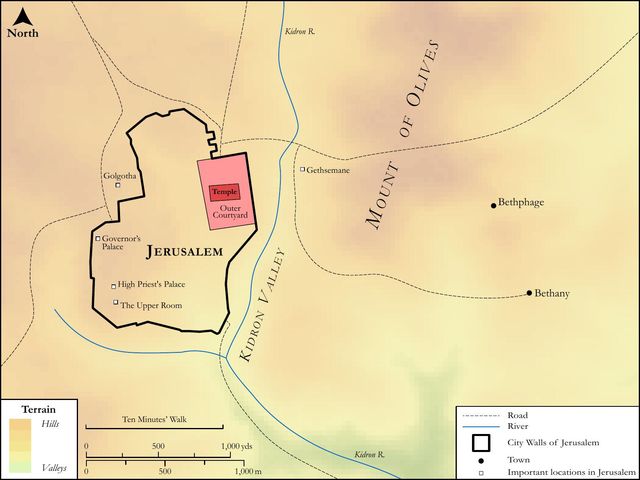
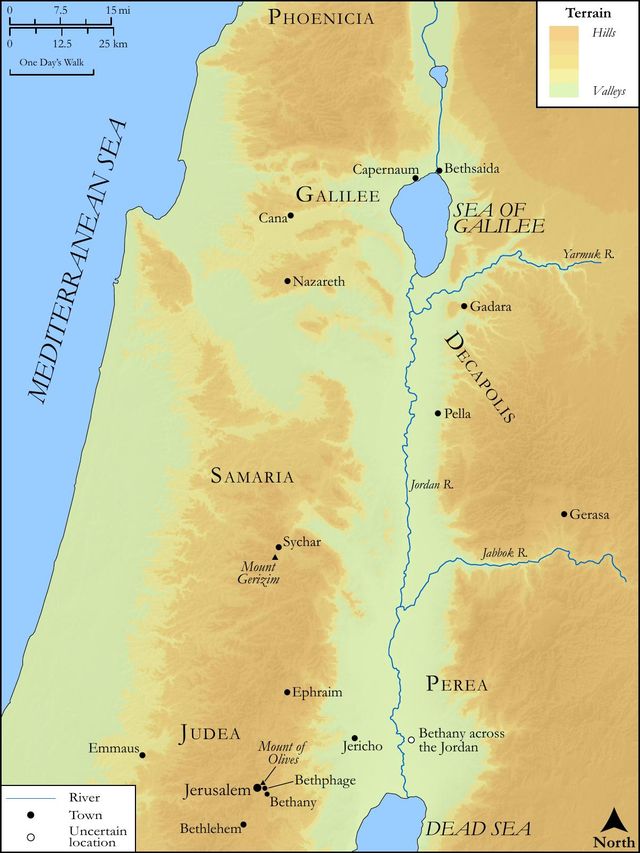
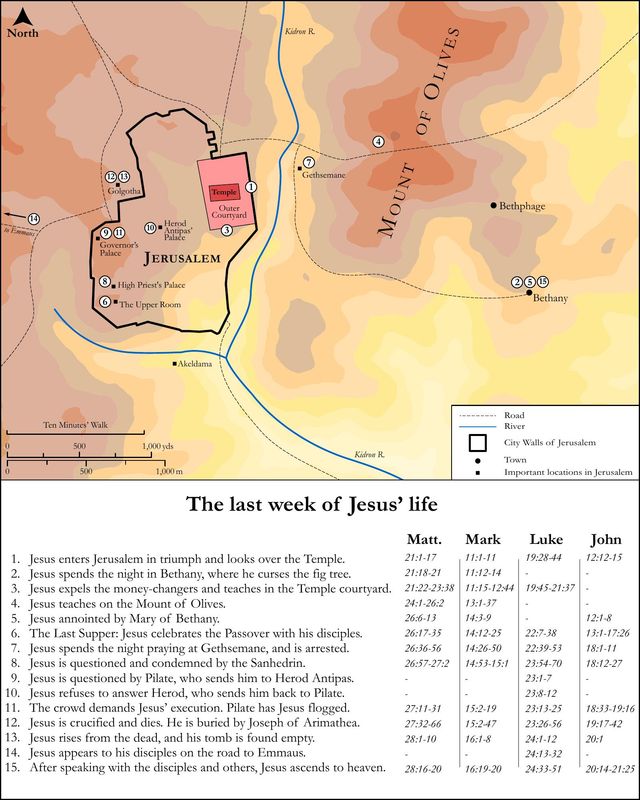
Study this verse
Public-domain commentary
Matthew Henry
From his Commentary on the Whole Bible. Henry comments on passages, not single verses — this entry covers John 14:18–24. His four-level outline is real structure in the source text, so it is rendered as structure.
When friends are parting, it is a common request they make to each other, "Pray let us hear from you as often as you can:" this Christ engaged to his disciples, that out of sight they should not be out of mind.
I.He promises that he would continue his care of them (Joh 14:18):
"I will not leave you orphans, or fatherless; for, though I leave you, yet I leave you this comfort, I will come to you." His departure from them was that which grieved them; but it was not so bad as they apprehended, for it was neither total nor final.
1.Not total. "Though I leave you without my bodily presence, yet I do not leave you without comfort." Though children, and left little, yet they had received the adoption of sons, and his Father would be their Father, with whom those who otherwise would be fatherless find mercy. Note, The case of true believers, though sometimes it may be sorrowful, is never comfortless, because they are never orphans: for God is their Father, who is an everlasting Father.
2.Not final: I will come to you, erchomai - I do come; that is, (1.) "I will come speedily to you at my resurrection, I will not be long away, but will be with you again in a little time." He had often said, The third day I will rise again. (2.) "I will be coming daily to you in my Spirit;" in the tokens of his love, and visits of his grace, he is still coming. (3.) "I will come certainly at the end of time; surely I will come quickly to introduce you into the joy of your Lord." Note, The consideration of Christ's coming to us saves us from being comfortless in his removals from us; for, if he depart for a season, it is that we may receive him for ever. Let this moderate our grief, The Lord is at hand.
II.He promises that they should continue their acquaintance with him and interest in him (Joh 14:19, Joh 14:20):
Yet a little while, and the world sees me no more, that is, Now I am no more in the world. After his death, the world saw him no more, for, though he rose to life, he never showed himself to all the people, Act 10:41. The malignant world thought they had seen enough of him, and cried, Away with him; crucify him; and so shall their doom be; they shall see him no more. Those only that see Christ with an eye of faith shall see him for ever. The world sees him no more till his second coming; but his disciples have communion with him in his absence.
1.You see me, and shall continue to see me, when the world sees me no more. They saw him with their bodily eyes after his resurrection, for he showed himself to them by many infallible proofs, Act 1:8. And then were the disciples glad when they saw the Lord. They saw him with an eye of faith after his ascension, sitting at God's right hand, as Lord of all; saw that in him which the world saw not.
2.Because I live, you shall live also. That which grieved them was, that their Master was dying, and they counted upon nothing else but to die with him. No, saith Christ,
(1.)I live; this the great God glories in, I live, saith the Lord, and Christ saith the same; not only, I shall live, as he saith of them, but, I do live; for he has life in himself, and lives for evermore. We are not comfortless, while we know that our Redeemer lives.
(2.)Therefore you shall live also. Note, The life of Christians is bound up in the life of Christ; as sure and as long as he lives, those that by faith are united to him shall live also; they shall live spiritually, a divine life in communion with God. This life is hid with Christ; if the head and root live, the members and branches live also. They shall live eternally; their bodies shall rise in the virtue of Christ's resurrection; it will be well with them in the world to come. It cannot but be well with all that are his, Isa 26:19.
3.You shall have the assurance of this (Joh 14:20): At that day, when I am glorified, when the Spirit is poured out, you shall know more clearly and certainly than you do now that I am in my Father, and you in me, and I in you.
(1.)These glorious mysteries will be fully known in heaven; At that day, when I shall receive you to myself, you shall know perfectly that which now you see through a glass darkly. Now it appears not what we shall be, but then it will appear what we were.
(2.)They were more fully known after the pouring out of the Spirit upon the apostles; at that day divine light should shine, and their eyes should see more clearly, their knowledge should greatly advance and increase then, would become more extensive and more distinct, and like the blind man's at the second touch of Christ's hand, who at first only saw men as trees walking.
(3.)They are known by all that receive the Spirit of truth, to their abundant satisfaction, for in the knowledge of this is founded their fellowship with the Father and his Son Jesus Christ. They know,
[1.]That Christ is in the Father, is one with the Father, by their experience of what he has wrought for them and in them; they find what an admirable consent and harmony there is between Christianity and natural religion, that that is grafted into this, and so they know that Christ is in the Father.
[2.]That Christ is in them; experienced Christians know by the Spirit that Christ abides in them, Jo1 3:24.
[3.]That they are in Christ, for the relation is mutual, and equally near on both sides, Christ in them and they in Christ, which speaks an intimate and inseparable union; in the virtue of which it is that because he lives they shall live also. Note, First, Union with Christ is the life of believers; and their relation to him, and to God through him, is their felicity. Secondly, The knowledge of this union is their unspeakable joy and satisfaction; they were now in Christ, and he in them, but he speaks of it as a further act of grace that they should know it, and have the comfort of it. An interest in Christ and the knowledge of it are sometimes separated.
III.He promises that he would love them, and manifest himself to them, Joh 14:21-24. Here observe,
1.Who they are whom Christ will look upon, and accept, as lovers of him; those that have his commandments, and keep them. By this Christ shows that the kind things he here said to his disciples were intended not for those only that were now his followers, but for all that should believe in him through their word. Here is,
(1.)The duty of those who claim the dignity of being disciples. Having Christ's commandments, we must keep them; as Christians in name and profession we have Christ's commandments, we have them sounding in our ears, written before our eyes, we have the knowledge of them; but this is not enough; would we approve ourselves Christians indeed, we must keep them. Having them in our heads, we must keep them in our hearts and lives.
(2.)The dignity of those that do the duty of disciples. They are looked upon by Christ to be such as love him. Not those that have the greatest wit and know how to talk for him, but those that keep his commandments. Note, The surest evidence of our love to Christ is obedience to the laws of Christ. Such is the love of a subject to his sovereign, a dutiful, respectful, obediential love, a conformity to his will, and satisfaction in his wisdom.
2.What returns he will make to them for their love; rich returns; there is no love lost upon Christ.
(1.)They shall have the Father's love: He that loveth me shall be loved of my Father. We could not love God if he did not first, out of his good-will to us, give us his grace to love him; but there is a love of complacency promised to those that do love God, Pro 8:17. He loves them, and lets them know that he loves them, smiles upon them, and embraces them. God so loves the Son as to love all those that love him.
(2.)They shall have Christ's love: And I will love him, as God-man, as Mediator. God will love him as a Father, and I will love him as a brother, an elder brother. The Creator will love him, and be the felicity of his being; the Redeemer will love him, and be the protector of his well-being. In the nature of God, nothing shines more brightly than this, that God is love. And in the undertaking of Christ nothing appears more glorious than this, that he loved us. Now both these loves are the crown and comfort, the grace and glory, which shall be to all those that love the Lord Jesus Christ in sincerity. Christ was now leaving his disciples, but promises to continue his love to them; for he not only retains a kindness for believers, though absent, but is doing them kindness while absent, for he bears them on his heart, and ever lives interceding for them.
(3.)They shall have the comfort of that love: I will manifest myself to him. Some understand it of Christ's showing himself alive to his disciples after his resurrection; but, being promised to all that love him and keep his commandments, it must be construed so as to extend to them. There is a spiritual manifestation of Christ and his love made to all believers. When he enlightens their minds to know his love, and the dimensions of it (Eph 3:18, Eph 3:19), enlivens their graces, and draws them into exercise, and thus enlarges their comforts in himself - when he clears up the evidences of their interest in him, and gives them tokens of his love, experience of his tenderness, and earnests of his kingdom and glory, - then he manifests himself to them; and Christ is manifested to none but those to whom he is pleased to manifest himself.
3.What occurred upon Christ's making this promise.
(1.)One of the disciples expresses his wonder and surprise at it, Joh 14:22. Observe,
[1.]Who it was that said this - Judas, not Iscariot. Judah, or Judas, was a famous name; the most famous tribe in Israel was that of Judah; two of Christ's disciples were of that name: one of them was the traitor, the other was the brother of James (Luk 6:16), one of those that were akin to Christ, Mat 13:55. He is called Lebbeus and Thaddeus, was the penman of the last of the epistles, which in our translation, for distinction's sake, we call the epistle of Jude. This was he that spoke here. Observe, First, There was a very good man, and a very bad man, called by the same name; for names commend us not to God, nor do they make men worse. Judas the apostle was never the worse, nor Judas the apostate ever the better, for being namesakes. But, Secondly, The evangelist carefully distinguishes between them; when he speaks of this pious Judas, he adds, not Iscariot. Take heed of mistaking; let us not confound the precious and the vile.
[2.]What he said - Lord how is it? which intimates either, First, the weakness of his understanding. So some take it. He expected the temporal kingdom of the Messiah, that it should appear in external pomp and power, such as all the world would wonder after. "How, then," thinks he, "should it be confined to us only?" ti gegonen - "what is the matter now, that thou wilt not show thyself openly as is expected, that the Gentiles may come to thy light, and kings to the brightness of thy rising?" Note, We create difficulties to ourselves by mistaking the nature of Christ's kingdom, as if it were of this world. Or, Secondly, as expressing the strength of his affections, and the humble and thankful sense he had of Christ's distinguishing favours to them: Lord, how is it? He is amazed at the condescensions of divine grace, as David, Sa2 7:18. What is there in us to deserve so great a favour? Note, 1. Christ's manifesting himself to his disciples is done in a distinguishing way - to them, and not to the world that sits in darkness; to the base, and not to the mighty and noble; to babes, and not to the wise and prudent. Distinguishing favours are very obliging; considering who are passed by, and who are pitched upon. 2. It is justly marvellous in our eyes; for it is unaccountable, and must be resolved into free and sovereign grace. Even so, Father, because it seemed good unto thee.
(2.)Christ, in answer hereto, explains and confirms what he had said, Joh 14:23, Joh 14:24. He overlooks what infirmity there was in what Judas spoke, and goes on with his comforts.
[1.]He further explains the condition of the promise, which was loving him, and keeping his commandments. And, as to this, he shows what an inseparable connection there is between love and obedience; love is the root, obedience is the fruit. First, Where a sincere love to Christ is in the heart, there will be obedience: "If a man love me indeed, that love will be such a commanding constraining principle in him, that, no question, he will keep my words." Where there is true love to Christ there is a value for his favour, a veneration for his authority, and an entire surrender of the whole man to his direction and government. Where love is, duty follows of course, is easy and natural, and flows from a principle of gratitude. Secondly, On the other hand, where there is no true love to Christ there will be no care to obey him: He that loveth me not keepeth not my sayings, Joh 14:24. This comes in here as a discovery of those that do not love Christ; whatever they pretend, certainly those do not love him that believe not his truths, and obey not his laws, to whom Christ's sayings are but as idle tales, which he heeds not, or hard sayings, which he likes not. It is also a reason why Christ will not manifest himself to the world that doth not love him, because they put this affront upon him, not to keep his sayings; why should Christ be familiar with those that will be strange to him?
[2.]He further explains the promise (Joh 14:23): If a man thus love me, I will manifest myself to him. First, My Father will love him; this he had said before (Joh 14:21), and here repeats it for the confirming of our faith; because it is hard to imagine that the great god should make those the objects of his love that had made themselves vessels of his wrath. Jude wondered that Christ should manifest himself to them; but this answers it, "If my Father love you, why should not I be free with you?" Secondly, We will come unto him, and make our abode with him. This explains the meaning of Christ's manifesting himself to him, and magnifies the favour. 1. Not only,I will, but, We will, I and the Father, who, in this, are one. See Joh 14:9. The light and love of God are communicated to man in the light and love of the Redeemer, so that wherever Christ is formed the image of God is stamped. 2. Not only, "I will show myself to him at a distance," but, "We will come to him, to be near him, to be with him," such are the powerful influences of divine graces and comforts upon the souls of those that love Christ in sincerity. 3. Not only, "I will give him a transient view of me, or make him a short and running visit," but, We will take up our abode with him which denotes complacency in him and constancy to him. God will not only love obedient believers, but he will take a pleasure in loving them, will rest in love to them, Zep 3:17. He will be with them as at his home.
[3.]He gives a good reason both to bind us to observe the condition and encourage us to depend upon the promise. The word which you hear is not mine, but his that sent me, Joh 14:24. To this purport he had often spoken (Joh 7:16; Joh 8:28; Joh 12:44), and here it comes in very pertinently. First, the stress of duty is laid upon the precept of Christ as our rule, and justly, for that word of Christ which we are to keep is the Father's word, and his will the Father's will. Secondly, The stress of our comfort is laid upon the promise of Christ. But forasmuch as, in dependence upon that promise, we must deny ourselves, and take up our cross, and quit all, it concerns us to enquire whether the security be sufficient for us to venture our all upon; and this satisfies us that it is, that the promise is not Christ's bare word, but the Father's which sent him, which therefore we may rely upon.
Historical interpretation
Four Centuries of Reception
13 surviving comments on this verse. Each one is dated, so this reads as a timeline rather than a list.
Select a marker to jump to its quote. Markers stagger vertically where authors wrote within a few decades of each other.
God does indeed consume and utterly destroy: he consumes evil thoughts, wicked actions and sinful desires when they find their way into the minds of believers. God, with his Son, inhabits those souls that have been rendered capable of receiving his word and wisdom, in line with his saying, "I and the Father shall come and make our abode with him." After their vices and passions have been consumed, he makes them a holy temple, worthy of himself.
For by this he testified that while the Spirit of Christ abides in us the Spirit of God abides in us. The Spirit of him who was raised from the dead is no different from the Spirit of him who raised him from the dead. For they come and dwell in us. I ask whether they will come as strangers associated together and make their abode or in unity of nature? No, the teacher of the Gentiles contends that it is not two spirits—the spirits of God and of Christ—that are present in those who believe but the Spirit of Christ, which is also the Spirit of God. This is no joint indwelling; it is one indwelling, yet an indwelling under the mysterious semblance of a joint indwelling. For it is not the case that two spirits indwell, nor is one that indwells different from the other. For there is in us the Spirit of God and there is also in us the Spirit of Christ, and when the Spirit of Christ is in us there is also in us the Spirit of God. And so, since what is of God is also of Christ, and what is of Christ is also of God, Christ cannot be anything different from what God is. Christ, therefore, is God, one Spirit with God.
Christ is the true Son, and so when we receive the Spirit, we are made sons. For it says; ‘you did not receive the spirit of slavery leading you back into fear, but you have received the Spirit of adopted sonship’ [Romans 8:15]. But when we are made sons in the Spirit, it is clear that we are called children of God in Christ... And when the Spirit is given to us-the Saviour said: ‘Receive the Holy Spirit’ [John 20:22]- God [The Father] is in us... But when God is in us, the Son is also in us. For the Lord Himself said: ‘I and the Father will come and make our home with him’ (John 14:23). Next, the Son is life-for He said: ‘I am the life’ [John 14:6]- and so we are said to be given life in the Spirit... But when we are given life in the Spirit, Christ Himself is said to live in us. For it says: ‘I am crucified with Christ. It is no longer I who live, but Christ who lives in me.’ [Galatians 2:19-20]. - "Letters to Separion On the Spirit, Letter 1, Chapter 19"
Rightly therefore in the creation of the world the heaven is both first and last, wherein is that which is beyond heaven, even the God of heaven. And of man is rather to be understood the text, Heaven is my throne, for God does not sit above the element, but in the heart of man. Wherefore the Lord also says, We will come unto Him, and make our abode with Him. Heaven therefore is the first work in the creation of the world, and man the last.
(Hom. lxxv. 1, 2) Or thus: Judas thought that he should see Him, as we see the dead in sleep: How is it, that Thou wilt manifest Thyself unto us, and not unto the world? meaning, Alas, as Thou art to die, Thou wilt appear to us but as one dead. To correct this mistake, He says, I and My Father will come to him, i. e. I shall manifest Myself, even as My Father manifests Himself. And will make our abode with Him; which is not like a dream. It follows, And the word which ye hear is not Mine, but the Father's which sent Me; i. e. He that heareth not My words, inasmuch as he loveth not Me, so loveth he not My Father. This He says to show that He spoke nothing which was not the Father's, nothing beside what seemed good to the Father.
"Jesus answered and said unto him, If a man love me, he will keep my word: and my Father will love him, and we will come unto him, and make our abode with him. He that loveth me not, keepeth not my sayings." Here we have set forth the reason why He is to manifest Himself to His own, and not to that other class whom He distinguishes by the name of the world; and such is the reason also why the one loveth Him, and the other loveth Him not. It is the very reason, whereof it is declared in the sacred psalm, "Judge me, O God, and plead my cause against an unholy nation." For such as love are chosen, because they love: but those who have not love, though they speak with the tongues of men and angels, are become a sounding brass and a tinkling cymbal; and though they had the gift of prophecy, and knew all mysteries and all knowledge, and had all faith so that they could remove mountains, they are nothing; and though they distributed all their substance, and gave their body to be burnt, it profiteth them nothing. The saints are distinguished from the world by that love which maketh the one-minded to dwell together in a house. In this house Father and Son make their abode, and impart that very love to those whom They shall also honor at last with this promised self manifestation; of which the disciple questioned his Master, that not only those who then listened might learn it from His own lips, but we also from his Gospel. For he had made inquiry about the manifestation of Christ, and heard in reply about His loving and abiding. There is therefore a kind of inward manifestation of God, which is entirely unknown to the ungodly, who receive no manifestation of God the Father and the Holy Spirit: of the Son, indeed, there might have been such, but only in the flesh; and that, too, neither of the same kind as the other, nor able under any form to remain with them, save only for a little while; and even that, for judgment, not for rejoicing; for punishment, not for reward.
(Tract. lxxvi. 1) Our Lord in reply explains why He manifests Himself to His own, and not to aliens, viz. because the one love Him, the other do not. Jesus answered and said unto him, If a man love Me, he will keep My words.
(Tract. lxxvi. 2) Love distinguishes the saints from the world: it maketh men to be of one mind in an house; in which house the Father and the Son take their abode; who give that love to those, to whom in the end they will manifest themselves. For there is a certain inner manifestation of God, unknown to the ungodly, to whom there is no manifestation made of the Father and the Holy Spirit, and only could be of the Son in the flesh; which latter manifestation is not as the former, being only for a little while, not for ever, for judgment, not for joy, for punishment, not for reward. And We will come unto him: They come to us, in that we go to Them; They come by succouring, we go by obeying; They come by enlightening, we go by contemplating; They come by filling, we go by holding: so Their manifestation to us is not external, but inward; Their abode in us not transitory, but eternal. It follows, And will make Our abode with him.
(Tract. lxxvi. 4) But while the Father and the Son make Their abode with the loving soul, is the Holy Spirit excluded? What meaneth that which is said of the Holy Spirit above: He dwelleth with you, and shall be in you, but that the Spirit makes His abode with us? Unless indeed a man be so absurd as to think that when the Father and the Son come, the Holy Spirit departs, as if to give place to His superiors. Yet even this carnal thought is met by Scripture, in that it says, Abide with you for ever. (v.16) He will therefore be in the same abode with Them for ever. As He did not come without Them, so neither They without Him. As a consequence of the Trinity, acts are sometimes attributed to single persons in it: but the substance of the same Trinity demands, that in such acts the presence of the other Persons also be implied.
God is not too grand to come, he is not too fussy or shy, he is not too proud—on the contrary he is pleased to come if you do not displease him. Listen to the promise he makes. Listen to him indeed promising with pleasure, not threatening in displeasure, "We shall come to him," he says, "I and the Father." To the one he had earlier called his friend, the one who obeys his precepts, the keeper of his commandment, the lover of God, the lover of his neighbor, he says, "We shall come to him and make our abode with him."
Just as we ourselves cannot bear to live among filth and stench and are eager to rid our houses of such if there should be any, will not the pure and all-holy God even more disdain the polluted soul and abhor a heart sunk in the swamp of sxin? Of this there can be no question.
When He saw that the disciple did not quite understand, He goes back again to what He said at first, and teaches clearly that He will not manifest Himself to His own, according to the conception he had formed in his mind, but that the manner of His manifestation will be special to His disciples, and not that common to the rest of mankind. For the vulgar, and those, for instance, who have just escaped from the deceitfulness of idols and have been called to the knowledge of the Living God, rest their faith on bare and unquestioned axioms, merely having learnt to know that there is no idol in the world, and that the Living God is One only; while they who have their minds illumined by every virtue and are already in a state to fitly apprehend Divine and hidden mysteries, will receive the torch of the Spirit, and will behold with the eyes of the soul the Lord Himself, Who has taken up His abode in them. The knowledge therefore that the Saints possess is not common to the rest, but is in a manner special and distinct and widely diverse. Christ then benefits us by every kind of word and way. For, first of all, anyone that loves Him is very broadly distinguished from the rest, showing as it seems to me, and as I justly apprehend, that it has not been given to all men to receive the power of His grace, but only to those in whom the glory of intimate connection with Him may be seen indwelling through their keeping His commandments.
Then in what way He will declare Himself and how He will take up His abode in them He goes on to declare. For My Father will love him, He says. For any man who has honoured by his obedience to the Son the Father from Whom He springs, will reap His love as the fruit of his conduct. Then He clearly shows what will be the issue thereof and what profit such a man will gain when He says, I and the Father will come unto him and make Our abode with him. For when our Saviour Christ dwells in us by the Holy Spirit, surely there too will be also His Father; for the Spirit of Christ is the Spirit of the Father Himself also, and the inspired Paul at one time speaks of the Spirit as belonging to the Father, and at another as belonging to the Son: not by way of logical contradiction, but rather saying what is true of either, for it is so in fact. He says then to some: He that raised up Christ Jesus from the dead shall quicken also your mortal bodies through His Spirit that dwelleth in you. Then again, And because ye are sons, God sent forth the Spirit of His Son into your hearts, crying, Abba, Father. Do you see that the same Spirit is of the Father and the Son? When then the Only-begotten dwells in your hearts, the Father is not far from you: for the Son hath in Himself the Father, being of one substance with Him, and is Himself by nature in the Father.
This then we may give as the definition and incontrovertible doctrine of the faith; and I should be glad to question thereupon those who have chosen heretical opinions from excess of ignorance and who arm their tongues with conceits about the Spirit. For what have they to answer when we say to them, "If the Spirit is created and alien to the substance of God, as you say, how can God abide in us through Him? And how can he that receiveth the Spirit partake of God?" For if it is within the bounds of possibility by the agency of any created being whatever for us to partake of the ineffable Divine Nature, what can be found to hinder God the Father thrusting aside the Spirit and by means of any other created being that He chooses to select dwelling in us and sanctifying us? But this is impossible: for no one can partake of the living God by any other means than by the Spirit. The Spirit therefore is God and of God, and is not numbered among creatures, as some think.
This consideration also must be taken into account. That which partakes of anything as being superior in nature and distinct from what it is itself must of necessity be different in nature from that which is partaken of. If then the Spirit is created or made, what remains for the sum of creation to partake of? Surely not itself! For in that case both that which partakes and that which is partaken of would alike owe their origin to a creator. But as it is, we being by nature both created and begotten partake of the Spirit as being different in nature from ourselves. The Spirit therefore is not created. And if this is true, and it is true, the Spirit is God and of God, as we have said. For nothing that exists can escape being included in the category of created things except the living God alone, from Whom the Holy Spirit, ineffably proceeding, dwelleth in us as He from Whom He springs. For He is an attribute of His Substance, and as it were a quality of His holiness.
So much for my controversy with these heretics. But as against the Anomoeans and those who have resolved on war with the Son, who are diseased with a like and kindred madness to these which we have just spoken of, I will refute them as briefly as possible. If a man love Me, he will keep My word; and My Father will love Him, and We will come unto him, and make Our abode with him. What, then, my good Sirs, have you to say if any one chooses to inquire and desires to know of you whether we shall have two Gods indwelling in us, the Father and the Son, or whether you conceive of one God as really existing in us. For if the Son is wholly distinct in nature and is conceived of as having a separate nature, how can we avoid believing that there is a duality of Gods in us when we keep His commandment? And if we are temples of one, that is, and not of two Gods, when the Father and the Son take up Their abode in us, how can you prove that the two coalesce unto unity in us, as, according to your crazy notion, identity of nature is out of the question? For either you must say that Christ has told us falsehoods, and that the Father only dwells in us by the Spirit, or He Himself dwells in us and the Father is absent. But this is absurd, and there is one God in us when we receive both. The Only-begotten then will appear to be not different in substance from His Father, but of Him and in Him, as the light includes the effulgence which proceeds from it. Such, and no other, is the true meaning of the mystery. And certainly the inspired Paul did not call us temples of two Gods, but clearly of one and the same. Know ye not, he says, that ye are a temple of God, and that the Spirit of God dwelleth in you? You see that making the Father and Son coalesce in identity of Substance he says that we have been made temples not of Gods but of one God. Why then do you bring your rash arguments into conflict with the power of the truth, and sow the seed of your poisonous impiety in those who are wont heedlessly to handle the holy and inspired writings?
For today the Holy Spirit came upon the disciples with a sudden sound, and changed the minds of carnal men into love of Him, and while tongues of fire appeared outwardly, their hearts were made flaming within, because as they received God in the vision of fire, they burned sweetly through love. For the Holy Spirit Himself is love. Hence John also says: "God is love." Therefore whoever desires God with a whole heart already has Him whom he loves. For no one could love God if he did not have Him whom he loves. But behold, if any one of you were asked whether he loves God, he would respond with full confidence and a secure mind: "I love." Yet in the very beginning of the reading you heard what the Truth says: "If anyone loves me, he will keep my word." The proof of love, therefore, is the showing forth of works. Hence the same John says in his epistle: "He who says, 'I love God,' and does not keep His commandments, is a liar." For we truly love God if we restrain ourselves from our own pleasures for the sake of His commandments. For he who still flows away through illicit desires certainly does not love God, because he contradicts Him by his own will.
"And my Father will love him, and we will come to him and make our abode with him." Consider, dearly beloved brothers, how great a solemnity this is: to have the coming of God as a guest in the lodging of the heart. Certainly if some wealthy and very powerful friend were to enter your house, the whole house would be cleaned with all haste, lest perhaps there be anything that might offend the eyes of the entering friend. Let him therefore wipe away the filth of wicked deeds who prepares the house of his mind for God. But see what the Truth says: "We will come, and we will make our abode with him." For He comes into the hearts of some and does not make His abode, because through compunction they indeed receive God's regard, but in the time of temptation they forget that very thing for which they had been moved to compunction; and so they return to committing sins as if they had never lamented them at all. Therefore he who truly loves God, who keeps His commandments, in his heart the Lord both comes and makes His abode, because the love of divinity so penetrates him that he does not depart from this love in the time of temptation. He therefore truly loves whose mind wicked delight does not overcome through consent. For each person is separated from heavenly love to the extent that he delights in lower things.
(Hom. xxx. in Evang.) If thou wouldest prove thy love, show thy works. The love of God is never idle; whenever it is, it doeth great things: if it do not work, it is not.
(Hom. xxx.) Into some hearts He cometh, but not to make His abode with them. For some feel compunction for a season and turn to God, but in time of temptation forget that which gave them compunction, and return to their former sins, just as if they had never lamented them. But whoso loveth God truly, into his heart the Lord both comes, and also makes His abode therein: for the love of the Godhead so penetrates him, that no temptation withdraws him from it. He truly loves, whose mind no evil pleasure overcomes, through his consent thereto.
The way of the Lord is made straight to the heart when the word of truth is humbly heard. The way of the Lord is made straight to the heart when one's life is prepared according to his commandment. Hence it is written: "If anyone loves me, he will keep my word, and my Father will love him, and we will come to him and make our dwelling with him." Therefore whoever raises his mind in pride, whoever pants with the fevers of avarice, whoever defiles himself with the pollutions of lust, closes the door of his heart against the truth; and lest the Lord come to him, he condemns the gates of his soul with the bars of vices.
Continue studying John 14:23 across the web’s major study libraries — every link below opens this exact verse, chapter, or book on the destination site.
Read & Compare
 BibleGatewayThis verse in more than 200 translations and 70 languages.
 Bible.comThe YouVersion reader — hundreds of translations, reading plans, and highlights.
 ESV.orgCrossway's official English Standard Version reader.
 NET BibleThe NET translation with 60,000+ translators' notes on every rendering decision.
 STEP BibleTyndale House's free study tool — original text, vocabulary, and scholarly resources.
 BibliaLogos Bible Software's free web reader.
 USCCBThe New American Bible (Revised Edition) with the U.S. bishops' study notes.
Commentaries
 BibleHub CommentariesDozens of classic commentaries on this verse, gathered on one page.
 StudyLightMore than 100 commentary sets — the largest collection on the web.
 BibleRefPlain-English commentary on what this verse means, verse by verse.
 Enduring WordDavid Guzik's free commentary on this chapter, widely used by Bible teachers.
 Bible Study ToolsVerse commentary alongside Greek and Hebrew study aids.
Original Language & Research
- BibleHub InterlinearThe verse word by word — original language, transliteration, and English.
- BibleHub LexiconEvery word's original-language definition and Strong's entry.
 Blue Letter BibleDeep-study tools — Strong's numbers, concordance, and word studies.
 CNTR CollationThe earliest Greek manuscripts of this verse, collated letter by letter.
Sermons, Hymns & Audio


TrulyRandomVerse is not affiliated with these sites and doesn’t control their content. They’re linked because they’re genuinely useful.
Summary
John 14:23 presents a profound declaration from Jesus, establishing an unbreakable link between genuine love for Him, active obedience to His teachings, and the astonishing promise of intimate, abiding divine presence. As part of His Farewell Discourse, this verse offers deep comfort and clarification to His disciples, revealing that the manifestation of God's presence is not for the world to see, but a spiritual reality experienced by those who embrace His words and live them out, culminating in a unique Trinitarian indwelling within the believer.
Context
ShowHideLiterary Context
This verse is embedded within Jesus' extensive Farewell Discourse (John 13-17), delivered to His disciples in the upper room on the night before His crucifixion. The immediate preceding verses (John 14:21-22) set the stage for Judas (not Iscariot) to ask, "Lord, how is it that thou wilt manifest thyself unto us, and not unto the world?" Jesus' response in John 14:23 directly addresses this confusion, clarifying that His manifestation is not a public, physical display, but a personal, spiritual indwelling. This passage follows Jesus' promise of the Holy Spirit, the Comforter, who will abide with them forever (John 14:16-17). The entire discourse is designed to prepare the disciples for Jesus' physical departure, offering assurance of continued divine presence and guidance through the Spirit and through their obedient relationship with the Father and the Son.
Historical & Cultural Context
In ancient Jewish thought, the concept of God's dwelling among His people was central, often associated with the Tabernacle and later the Temple, representing God's localized presence (the Shekinah glory). However, this presence was often external, mediated, and sometimes withdrawn due to disobedience. Jesus' promise in John 14:23 radically redefines this concept. Instead of a physical structure or a distant deity, God promises an intimate, personal indwelling within the individual believer. This was a revolutionary idea, moving beyond the external ritualism of the Temple system to an internal, spiritual reality. It foreshadows the New Covenant promise where God's law would be written on hearts and He would be their God (Jeremiah 31:33).
Key Themes
ShowHideJohn 14 is rich with interconnected themes that converge in this verse. Firstly, the demonstration of love through obedience is paramount; Jesus consistently emphasizes that true love for Him is not mere sentiment but active adherence to His commands, echoing John 14:15. Secondly, the reciprocal nature of divine love is highlighted, as the Father's love is extended to those who love and obey Jesus, underscoring the unity and shared purpose within the Godhead. Finally, and most profoundly, the theme of divine indwelling and intimate fellowship is revealed. The promise that the Father and Son will "come unto him, and make our abode with him" signifies a deep, continuous, and personal presence of God within the believer, transforming the individual into a dwelling place for the Trinity. This is a foretaste of the ultimate eschatological reality where God will dwell with humanity in the new creation (Revelation 21:3).
Exposition and Analysis
ShowHideKey Word Analysis
ShowHideThis word (G25) signifies a profound, unconditional, and self-sacrificial love, distinct from mere affection or friendship (philéō). In the context of Jesus' words, it describes a volitional, active commitment that prioritizes the beloved's welfare and desires. Here, it is not just an emotion but a principle of action that motivates obedience.
The term (G3056) refers to something said, including the thought, discourse, or communication. In John's Gospel, lógos carries immense theological weight, often referring to Jesus Himself as the Divine Expression and embodiment of God's revelation (John 1:1). Therefore, "keeping my words" means not only obeying specific commands but embracing Jesus' entire teaching, His character, His truth, and His very person as the revelation of God.
This noun (G3438) derives from the verb "to remain" or "to abide" (menō). It denotes a permanent dwelling place or residence. Significantly, it is the same word used in John 14:2 for the "mansions" or "dwelling places" in the Father's house. Here, its use implies not a temporary visit but a settled, continuous, and intimate presence of the Father and the Son within the believer, signifying a profound spiritual union.
Verse Breakdown
ShowHide"Jesus answered and said unto him,"
This clause grounds the statement in a specific dialogue, directly responding to Judas (not Iscariot)'s question in John 14:22. It highlights that this profound truth is a direct revelation from Christ Himself, given in a moment of intimate instruction to His disciples.
"If a man love me, he will keep my words:"
This establishes the foundational condition and the primary demonstration of authentic love. "Love" here is not a passive sentiment but an active, obedient commitment. To "keep my words" means to guard, observe, and obey Jesus' teachings and commands, reflecting a life submitted to His authority and truth. This obedience is the tangible evidence of true agapáō love.
"and my Father will love him,"
This reveals the reciprocal nature of divine love. As a direct consequence of loving Jesus and obeying His words, the Father's love is uniquely directed towards that individual. This is not a love earned, but a specific, intimate, and affirming love that flows from the Trinitarian relationship, mediated through the Son.
"and we will come unto him,"
This is a breathtaking promise of divine visitation and presence. The "we" refers to both the Father and the Son, indicating a unified Trinitarian action. This "coming" is not a physical arrival but a spiritual, experiential reality, signifying a deepening of relationship and an active engagement in the believer's life.
"and make our abode with him."
This culminates the promise, signifying a permanent and intimate dwelling. The Father and the Son will establish their residence within the believer, fostering a continuous, personal, and profound fellowship. This is the ultimate expression of divine intimacy, transforming the believer into a sacred space where the very presence of God resides, a spiritual temple.
Literary Devices
ShowHideJohn 14:23 employs several powerful literary devices. The primary device is a Conditional Statement, introduced by "If a man love me," which sets up a clear cause-and-effect relationship: love for Jesus leads to obedience, which in turn leads to divine love and indwelling. This structure emphasizes the volitional aspect of faith. There is also strong Reciprocity at play; human love and obedience evoke divine love and presence, highlighting the relational dynamic between God and humanity. The phrase "make our abode with him" functions as a profound Metaphor and Symbolism. It is not to be understood literally as a physical dwelling, but as a spiritual, intimate, and permanent indwelling of the divine within the believer's heart and life. This concept is further enhanced by Personification, as the Father and Son are depicted as actively "coming" and "making abode," emphasizing their personal and intentional engagement with the individual.
Theological and Thematic Connections
ShowHideJohn 14:23 stands as a cornerstone for understanding the nature of the New Covenant relationship, revealing a profound Trinitarian dynamic at its heart. It transcends the Old Testament concept of God's presence being localized in a temple or tabernacle, promising an intimate, personal indwelling within the believer. This divine indwelling is a direct consequence of a love for Jesus that expresses itself in obedience, demonstrating that true spirituality is not merely intellectual assent or emotional fervor, but a life transformed by adherence to Christ's teachings. This verse also implicitly connects to the work of the Holy Spirit, who facilitates this indwelling and empowers believers to obey, making the Father and Son's presence a living reality. It points to the eschatological hope of God dwelling with His people, a reality initiated now in the believer's life.
Reflection and Application
ShowHideJohn 14:23 offers both a profound challenge and an unparalleled comfort to every believer. It challenges us to examine the authenticity of our love for Christ: is it merely a verbal profession, or is it tangibly demonstrated through our willingness to "keep His words"? This isn't about legalistic adherence but a joyful, responsive obedience that flows from a heart devoted to Him. The comfort lies in the astonishing promise that such love and obedience unlock an intimate, continuous, and personal indwelling of God the Father and God the Son within our lives. This is not a fleeting visit but a permanent residence, transforming our very being into a dwelling place for the divine. Knowing this should motivate us deeply, transforming obedience from a burden into a privileged pathway to deeper communion, richer spiritual life, and a constant awareness of God's abiding presence. It reminds us that our faith is meant to be a living, dynamic relationship, characterized by both active love and the incredible gift of divine fellowship.
Questions for Reflection
ShowHideFAQ
ShowHideWhat does "keep my words" truly entail beyond mere intellectual agreement?
ShowHide"Keeping Jesus' words" (Greek: tēreō mou ton lógon) goes far beyond simply knowing or agreeing with His teachings. It implies a comprehensive commitment to His entire revelation—His commands, His character, His truth, and His very person. It involves actively guarding, observing, and obeying His words as a way of life, allowing them to shape one's thoughts, attitudes, and actions. It's a continuous process of discipleship, where one's life is brought into alignment with the will and nature of Christ, reflecting genuine love for Him (John 15:10).
How can the Father and the Son "make their abode" with a person if the Holy Spirit is also said to indwell believers?
ShowHideThis verse highlights the profound unity and cooperative work within the Godhead. While the Holy Spirit is the primary agent of God's indwelling presence in the believer's life (as promised in John 14:16-17), the Father and the Son are also present through the Spirit. The Spirit mediates the presence of the Father and the Son, making their intimate fellowship a reality for the believer. This is a Trinitarian indwelling, where the entire Godhead is present and active in the life of the obedient believer, signifying a complete and personal union, as Jesus prayed in John 17:21-23).
Christ-Centered Fulfillment
ShowHideJohn 14:23 finds its ultimate fulfillment and enablement in the person and work of Jesus Christ. He is the very "Word" (Lógos) of God made flesh (John 1:1, 14), meaning that "keeping His words" is intrinsically linked to embracing and living out His divine revelation—His life, teachings, death, and resurrection. It is through His atoning sacrifice on the cross that the new covenant was inaugurated, making possible this radical intimacy where God can truly "make His abode" with humanity. Jesus' ascension and the subsequent sending of the Holy Spirit (John 16:7) are crucial for this promise to become a reality, as the Spirit mediates the presence of the Father and the Son within the believer. Thus, the divine indwelling promised in John 14:23 is a direct result of Christ's finished work, establishing a new and living way for humanity to experience unparalleled fellowship with the Triune God, a foretaste of the eternal dwelling of God with His people in the new heavens and new earth (Revelation 21:3).