


John 14:24
- ὁhoThe [one]G3588T-NSMDefinite article Nominative Singular Masculine
- μὴmēnotG3361PRT-NNegative Particle Negative
- ἀγαπῶνagapōnlovingG25V-PAP-NSMVerb Present Active Participle Nominative Singular Masculine
- μεmeMeG3165P-1ASPersonal pronoun Accusative 1st Singular
- τοὺςtoustheG3588T-APMDefinite article Accusative Plural Masculine
- λόγουςlogouswordsG3056N-APMNoun Accusative Plural Masculine
- μουmouof MineG3165P-1GSPersonal pronoun Genitive 1st Singular
- οὐounotG3756PRT-NNegative Particle Negative
- τηρεῖ·tēreidoes keepG5083V-PAI-3SVerb Present Active Indicative 3rd Singular
- καὶkaiandG2532CONJConjunction
- ὁhotheG3588T-NSMDefinite article Nominative Singular Masculine
- λόγοςlogoswordG3056N-NSMNoun Nominative Singular Masculine
- ὃνhonthatG3739R-ASMRelative pronoun Accusative Singular Masculine
- ἀκούετεakoueteyou hearG191V-PAI-2PVerb Present Active Indicative 2nd Plural
- οὐκouknotG3756PRT-NNegative Particle Negative
- ἔστινestinit isG1510V-PAI-3SVerb Present Active Indicative 3rd Singular
- ἐμὸςemosMineG1473S-1SNSMPossessive pronoun Nominative 1st Person Singular Masculine
- ἀλλὰallabutG235CONJConjunction
- τοῦtouof the [One who]G3588T-GSMDefinite article Genitive Singular Masculine
- πέμψαντόςpempsantoshaving sentG3992V-AAP-GSMVerb Aorist Active Participle Genitive Singular Masculine
- μεmeMeG3165P-1ASPersonal pronoun Accusative 1st Singular
- πατρόςpatros[the] FatherG3962N-GSM-TNoun Genitive Singular Masculine Title
English is a literal word-by-word gloss of the Greek, not the KJV's wording. Why?
This is the original text the KJV's translators worked from — each Greek word with its own literal English meaning in this verse, prepared by scholars at Tyndale House, Cambridge. The KJV translates whole sentences, not word by word, so its wording differs: one Greek word can become several English words, and the KJV may choose “charity” where the gloss reads “love”. Both are faithful — they answer different questions. For the KJV's own rendering, switch to the KJV text.
Details
See on the biblical-era map
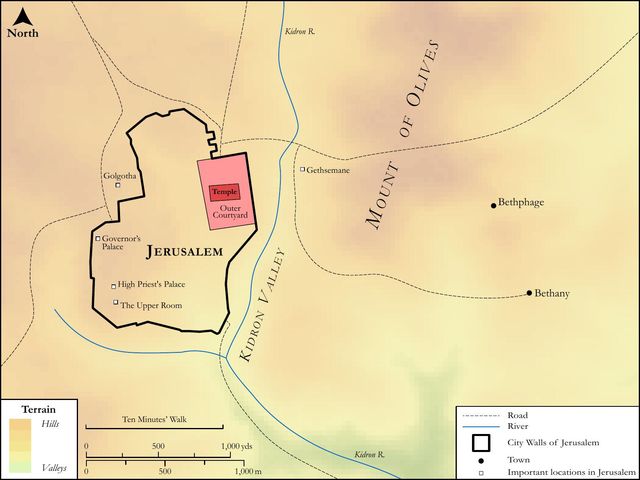
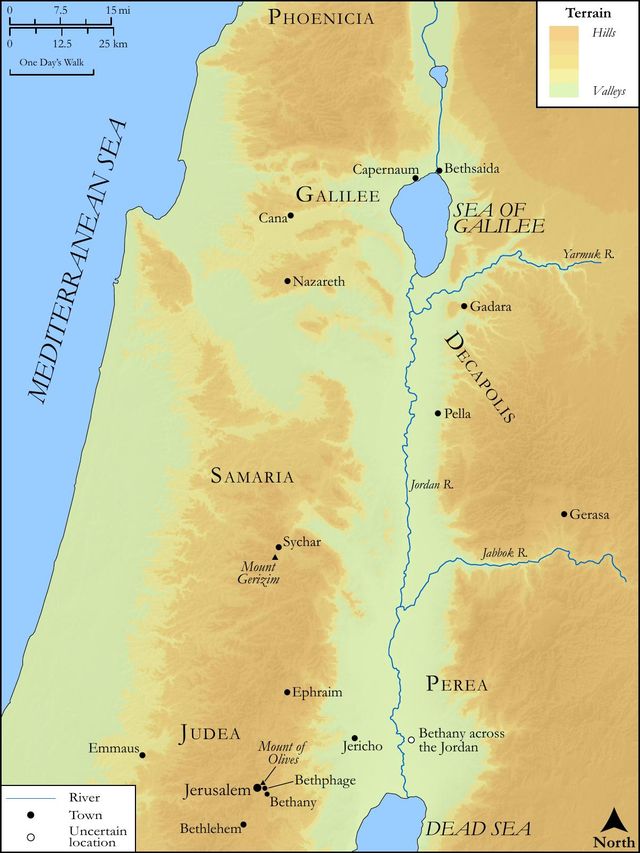
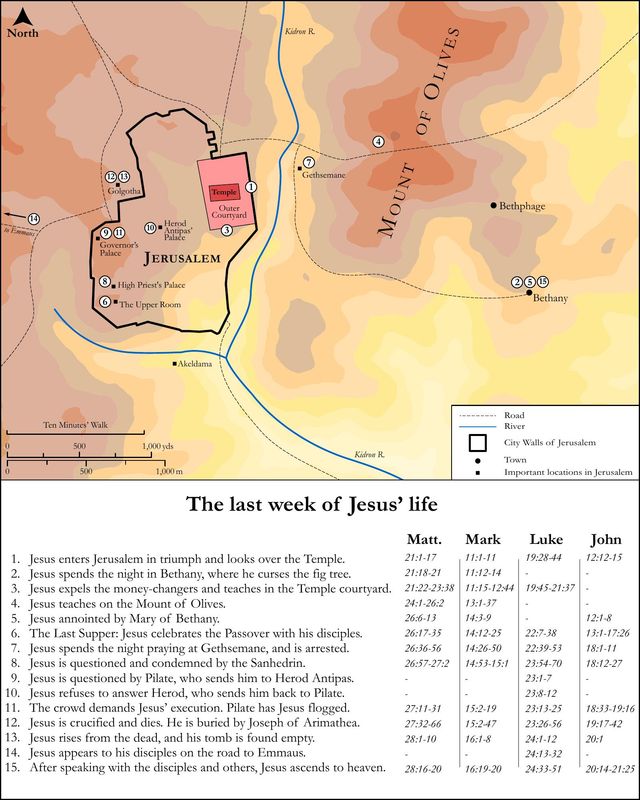
Study this verse
Public-domain commentary
Matthew Henry
From his Commentary on the Whole Bible. Henry comments on passages, not single verses — this entry covers John 14:18–24. His four-level outline is real structure in the source text, so it is rendered as structure.
When friends are parting, it is a common request they make to each other, "Pray let us hear from you as often as you can:" this Christ engaged to his disciples, that out of sight they should not be out of mind.
I.He promises that he would continue his care of them (Joh 14:18):
"I will not leave you orphans, or fatherless; for, though I leave you, yet I leave you this comfort, I will come to you." His departure from them was that which grieved them; but it was not so bad as they apprehended, for it was neither total nor final.
1.Not total. "Though I leave you without my bodily presence, yet I do not leave you without comfort." Though children, and left little, yet they had received the adoption of sons, and his Father would be their Father, with whom those who otherwise would be fatherless find mercy. Note, The case of true believers, though sometimes it may be sorrowful, is never comfortless, because they are never orphans: for God is their Father, who is an everlasting Father.
2.Not final: I will come to you, erchomai - I do come; that is, (1.) "I will come speedily to you at my resurrection, I will not be long away, but will be with you again in a little time." He had often said, The third day I will rise again. (2.) "I will be coming daily to you in my Spirit;" in the tokens of his love, and visits of his grace, he is still coming. (3.) "I will come certainly at the end of time; surely I will come quickly to introduce you into the joy of your Lord." Note, The consideration of Christ's coming to us saves us from being comfortless in his removals from us; for, if he depart for a season, it is that we may receive him for ever. Let this moderate our grief, The Lord is at hand.
II.He promises that they should continue their acquaintance with him and interest in him (Joh 14:19, Joh 14:20):
Yet a little while, and the world sees me no more, that is, Now I am no more in the world. After his death, the world saw him no more, for, though he rose to life, he never showed himself to all the people, Act 10:41. The malignant world thought they had seen enough of him, and cried, Away with him; crucify him; and so shall their doom be; they shall see him no more. Those only that see Christ with an eye of faith shall see him for ever. The world sees him no more till his second coming; but his disciples have communion with him in his absence.
1.You see me, and shall continue to see me, when the world sees me no more. They saw him with their bodily eyes after his resurrection, for he showed himself to them by many infallible proofs, Act 1:8. And then were the disciples glad when they saw the Lord. They saw him with an eye of faith after his ascension, sitting at God's right hand, as Lord of all; saw that in him which the world saw not.
2.Because I live, you shall live also. That which grieved them was, that their Master was dying, and they counted upon nothing else but to die with him. No, saith Christ,
(1.)I live; this the great God glories in, I live, saith the Lord, and Christ saith the same; not only, I shall live, as he saith of them, but, I do live; for he has life in himself, and lives for evermore. We are not comfortless, while we know that our Redeemer lives.
(2.)Therefore you shall live also. Note, The life of Christians is bound up in the life of Christ; as sure and as long as he lives, those that by faith are united to him shall live also; they shall live spiritually, a divine life in communion with God. This life is hid with Christ; if the head and root live, the members and branches live also. They shall live eternally; their bodies shall rise in the virtue of Christ's resurrection; it will be well with them in the world to come. It cannot but be well with all that are his, Isa 26:19.
3.You shall have the assurance of this (Joh 14:20): At that day, when I am glorified, when the Spirit is poured out, you shall know more clearly and certainly than you do now that I am in my Father, and you in me, and I in you.
(1.)These glorious mysteries will be fully known in heaven; At that day, when I shall receive you to myself, you shall know perfectly that which now you see through a glass darkly. Now it appears not what we shall be, but then it will appear what we were.
(2.)They were more fully known after the pouring out of the Spirit upon the apostles; at that day divine light should shine, and their eyes should see more clearly, their knowledge should greatly advance and increase then, would become more extensive and more distinct, and like the blind man's at the second touch of Christ's hand, who at first only saw men as trees walking.
(3.)They are known by all that receive the Spirit of truth, to their abundant satisfaction, for in the knowledge of this is founded their fellowship with the Father and his Son Jesus Christ. They know,
[1.]That Christ is in the Father, is one with the Father, by their experience of what he has wrought for them and in them; they find what an admirable consent and harmony there is between Christianity and natural religion, that that is grafted into this, and so they know that Christ is in the Father.
[2.]That Christ is in them; experienced Christians know by the Spirit that Christ abides in them, Jo1 3:24.
[3.]That they are in Christ, for the relation is mutual, and equally near on both sides, Christ in them and they in Christ, which speaks an intimate and inseparable union; in the virtue of which it is that because he lives they shall live also. Note, First, Union with Christ is the life of believers; and their relation to him, and to God through him, is their felicity. Secondly, The knowledge of this union is their unspeakable joy and satisfaction; they were now in Christ, and he in them, but he speaks of it as a further act of grace that they should know it, and have the comfort of it. An interest in Christ and the knowledge of it are sometimes separated.
III.He promises that he would love them, and manifest himself to them, Joh 14:21-24. Here observe,
1.Who they are whom Christ will look upon, and accept, as lovers of him; those that have his commandments, and keep them. By this Christ shows that the kind things he here said to his disciples were intended not for those only that were now his followers, but for all that should believe in him through their word. Here is,
(1.)The duty of those who claim the dignity of being disciples. Having Christ's commandments, we must keep them; as Christians in name and profession we have Christ's commandments, we have them sounding in our ears, written before our eyes, we have the knowledge of them; but this is not enough; would we approve ourselves Christians indeed, we must keep them. Having them in our heads, we must keep them in our hearts and lives.
(2.)The dignity of those that do the duty of disciples. They are looked upon by Christ to be such as love him. Not those that have the greatest wit and know how to talk for him, but those that keep his commandments. Note, The surest evidence of our love to Christ is obedience to the laws of Christ. Such is the love of a subject to his sovereign, a dutiful, respectful, obediential love, a conformity to his will, and satisfaction in his wisdom.
2.What returns he will make to them for their love; rich returns; there is no love lost upon Christ.
(1.)They shall have the Father's love: He that loveth me shall be loved of my Father. We could not love God if he did not first, out of his good-will to us, give us his grace to love him; but there is a love of complacency promised to those that do love God, Pro 8:17. He loves them, and lets them know that he loves them, smiles upon them, and embraces them. God so loves the Son as to love all those that love him.
(2.)They shall have Christ's love: And I will love him, as God-man, as Mediator. God will love him as a Father, and I will love him as a brother, an elder brother. The Creator will love him, and be the felicity of his being; the Redeemer will love him, and be the protector of his well-being. In the nature of God, nothing shines more brightly than this, that God is love. And in the undertaking of Christ nothing appears more glorious than this, that he loved us. Now both these loves are the crown and comfort, the grace and glory, which shall be to all those that love the Lord Jesus Christ in sincerity. Christ was now leaving his disciples, but promises to continue his love to them; for he not only retains a kindness for believers, though absent, but is doing them kindness while absent, for he bears them on his heart, and ever lives interceding for them.
(3.)They shall have the comfort of that love: I will manifest myself to him. Some understand it of Christ's showing himself alive to his disciples after his resurrection; but, being promised to all that love him and keep his commandments, it must be construed so as to extend to them. There is a spiritual manifestation of Christ and his love made to all believers. When he enlightens their minds to know his love, and the dimensions of it (Eph 3:18, Eph 3:19), enlivens their graces, and draws them into exercise, and thus enlarges their comforts in himself - when he clears up the evidences of their interest in him, and gives them tokens of his love, experience of his tenderness, and earnests of his kingdom and glory, - then he manifests himself to them; and Christ is manifested to none but those to whom he is pleased to manifest himself.
3.What occurred upon Christ's making this promise.
(1.)One of the disciples expresses his wonder and surprise at it, Joh 14:22. Observe,
[1.]Who it was that said this - Judas, not Iscariot. Judah, or Judas, was a famous name; the most famous tribe in Israel was that of Judah; two of Christ's disciples were of that name: one of them was the traitor, the other was the brother of James (Luk 6:16), one of those that were akin to Christ, Mat 13:55. He is called Lebbeus and Thaddeus, was the penman of the last of the epistles, which in our translation, for distinction's sake, we call the epistle of Jude. This was he that spoke here. Observe, First, There was a very good man, and a very bad man, called by the same name; for names commend us not to God, nor do they make men worse. Judas the apostle was never the worse, nor Judas the apostate ever the better, for being namesakes. But, Secondly, The evangelist carefully distinguishes between them; when he speaks of this pious Judas, he adds, not Iscariot. Take heed of mistaking; let us not confound the precious and the vile.
[2.]What he said - Lord how is it? which intimates either, First, the weakness of his understanding. So some take it. He expected the temporal kingdom of the Messiah, that it should appear in external pomp and power, such as all the world would wonder after. "How, then," thinks he, "should it be confined to us only?" ti gegonen - "what is the matter now, that thou wilt not show thyself openly as is expected, that the Gentiles may come to thy light, and kings to the brightness of thy rising?" Note, We create difficulties to ourselves by mistaking the nature of Christ's kingdom, as if it were of this world. Or, Secondly, as expressing the strength of his affections, and the humble and thankful sense he had of Christ's distinguishing favours to them: Lord, how is it? He is amazed at the condescensions of divine grace, as David, Sa2 7:18. What is there in us to deserve so great a favour? Note, 1. Christ's manifesting himself to his disciples is done in a distinguishing way - to them, and not to the world that sits in darkness; to the base, and not to the mighty and noble; to babes, and not to the wise and prudent. Distinguishing favours are very obliging; considering who are passed by, and who are pitched upon. 2. It is justly marvellous in our eyes; for it is unaccountable, and must be resolved into free and sovereign grace. Even so, Father, because it seemed good unto thee.
(2.)Christ, in answer hereto, explains and confirms what he had said, Joh 14:23, Joh 14:24. He overlooks what infirmity there was in what Judas spoke, and goes on with his comforts.
[1.]He further explains the condition of the promise, which was loving him, and keeping his commandments. And, as to this, he shows what an inseparable connection there is between love and obedience; love is the root, obedience is the fruit. First, Where a sincere love to Christ is in the heart, there will be obedience: "If a man love me indeed, that love will be such a commanding constraining principle in him, that, no question, he will keep my words." Where there is true love to Christ there is a value for his favour, a veneration for his authority, and an entire surrender of the whole man to his direction and government. Where love is, duty follows of course, is easy and natural, and flows from a principle of gratitude. Secondly, On the other hand, where there is no true love to Christ there will be no care to obey him: He that loveth me not keepeth not my sayings, Joh 14:24. This comes in here as a discovery of those that do not love Christ; whatever they pretend, certainly those do not love him that believe not his truths, and obey not his laws, to whom Christ's sayings are but as idle tales, which he heeds not, or hard sayings, which he likes not. It is also a reason why Christ will not manifest himself to the world that doth not love him, because they put this affront upon him, not to keep his sayings; why should Christ be familiar with those that will be strange to him?
[2.]He further explains the promise (Joh 14:23): If a man thus love me, I will manifest myself to him. First, My Father will love him; this he had said before (Joh 14:21), and here repeats it for the confirming of our faith; because it is hard to imagine that the great god should make those the objects of his love that had made themselves vessels of his wrath. Jude wondered that Christ should manifest himself to them; but this answers it, "If my Father love you, why should not I be free with you?" Secondly, We will come unto him, and make our abode with him. This explains the meaning of Christ's manifesting himself to him, and magnifies the favour. 1. Not only,I will, but, We will, I and the Father, who, in this, are one. See Joh 14:9. The light and love of God are communicated to man in the light and love of the Redeemer, so that wherever Christ is formed the image of God is stamped. 2. Not only, "I will show myself to him at a distance," but, "We will come to him, to be near him, to be with him," such are the powerful influences of divine graces and comforts upon the souls of those that love Christ in sincerity. 3. Not only, "I will give him a transient view of me, or make him a short and running visit," but, We will take up our abode with him which denotes complacency in him and constancy to him. God will not only love obedient believers, but he will take a pleasure in loving them, will rest in love to them, Zep 3:17. He will be with them as at his home.
[3.]He gives a good reason both to bind us to observe the condition and encourage us to depend upon the promise. The word which you hear is not mine, but his that sent me, Joh 14:24. To this purport he had often spoken (Joh 7:16; Joh 8:28; Joh 12:44), and here it comes in very pertinently. First, the stress of duty is laid upon the precept of Christ as our rule, and justly, for that word of Christ which we are to keep is the Father's word, and his will the Father's will. Secondly, The stress of our comfort is laid upon the promise of Christ. But forasmuch as, in dependence upon that promise, we must deny ourselves, and take up our cross, and quit all, it concerns us to enquire whether the security be sufficient for us to venture our all upon; and this satisfies us that it is, that the promise is not Christ's bare word, but the Father's which sent him, which therefore we may rely upon.
Historical interpretation
Five Centuries of Reception
9 surviving comments on this verse. Each one is dated, so this reads as a timeline rather than a list.
Select a marker to jump to its quote. Markers stagger vertically where authors wrote within a few decades of each other.
But the Holy Spirit does not speak His own things, but those of Christ, and that not from himself, but from the Lord; even as the Lord also announced to us the things that He received from the Father. For, says He, "the word which ye hear is not Mine, but the Father's, who sent Me."
(Hom. lxxv. 1, 2) Or thus: Judas thought that he should see Him, as we see the dead in sleep: How is it, that Thou wilt manifest Thyself unto us, and not unto the world? meaning, Alas, as Thou art to die, Thou wilt appear to us but as one dead. To correct this mistake, He says, I and My Father will come to him, i. e. I shall manifest Myself, even as My Father manifests Himself. And will make our abode with Him; which is not like a dream. It follows, And the word which ye hear is not Mine, but the Father's which sent Me; i. e. He that heareth not My words, inasmuch as he loveth not Me, so loveth he not My Father. This He says to show that He spoke nothing which was not the Father's, nothing beside what seemed good to the Father.
He made known to them many things concerning the oneness of his own divinity with that of the Father. He made clear that there was no separation between them so that even the words he spoke to them were not his, he declared, but the Father’s. “And the word that you have heard is not mine but the Father’s who sent me.” In this sentence he makes it abundantly clear that all who reject the teaching of his only-begotten Son reject the teaching of the Father also, since the Son says that the words he spoke are not his but the Father’s. And from this it follows that if they are the words of the Father, they are also the words of the Son, for he declares, “All things whatever the Father has are mine.” … And this is clearly because of the oneness of the divine substance that recognizes nothing as part of it that does not belong to the divine nature.
But when He added, "And the saying which ye have heard is not mine, but the Father's who sent me," let us not be filled with wonder or fear: He is not inferior to the Father, and yet He is not, save of the Father: He is not unequal in Himself, but He is not of Himself. For it was no false word He uttered when He said, "He that loveth me not, keepeth not my sayings." He called them, you see, His own sayings; does He, then, contradict Himself when He said again, "And the saying which ye have heard is not mine"? And, perhaps, it was on account of some intended distinction that, when He said His own, He used "sayings" in the plural; but when He said that "the saying," that is, the Word, was not His own, but the Father's, He wished it to be understood of Himself. For in the beginning was the Word, and the Word was with God, and the Word was God. For as the Word, He is certainly not His own, but the Father's: just as He is not His own image, but the Father's; and is not Himself His own Son, but the Father's. Rightly, therefore, does He attribute whatever He does, as equal, to the Author of all, of whom He has this very prerogative, that He is in all respects His equal.
(Tract. lxxvi. 5) And perhaps there is a distinction at bottom, since He speaks of His sayings, when they are His own, in the plural number; as when He says, He that loveth Me not, keepeth not My sayings: when they are not His own, but the Father's, in the singular, i. e. as the Word, which is Himself. For He is not His own Word, but the Father's, as He is not His own image, but the Father's, or His own Son, but the Father's.
And the word which ye hear is not Mine but the Father's Who sent Me.
He once more deals with a difficult subject which required of Him accurate explanation, and again brings forward illustrations by which they might have their understanding better fitted to fully comprehend the depth of the mystery. And He confirms the minds of His hearers in order that they might not be allured by the ignorant prejudices of the Jews, and in their desire to bring their own ideas into conformity with the Jewish do despite unto the holy teaching of the Gospel. What I wish to say is this in plain words: For the law having a shadow and an impressed type until a time of reformation, according to the saying of Paul, hath been our tutor to bring us unto Christ, and provided, as it were, a preliminary training for virtue according to godliness. If any one then were to call the Mosaic dispensation preparatory to true worship in Spirit, he would not miss the mark. For, for this reason, the Law brought nothing to perfection; but our Lord Jesus Christ showed us no longer the shadows of things, but the reality itself openly, no longer sketching the outline of virtue in types and figures, as Moses did, but setting it up naked in the public sight, accomplishing the perfect man in righteousness. The instruction of the words of Christ was then a shifting and moulding of the types into truth. And since, as the truth was already shining forth, it was superfluous for the shadow any longer to prevail, Christ ordained that those who came to Him by faith should no longer frame their conduct by the types of the Law. This was very grievous to the Jews, for they thought that Christ came to destroy the old Law, although they heard Him saying openly, I come not to destroy the Law, but to fulfil. For I say unto you, one jot or one tittle shall in no wise pass away from the Law till all things be accomplished. The realisation of excellence which was introduced by the laws of Christ brings with it the fulfilment of the shadow of the Law, as we have just said. For inasmuch as in their headstrong passion they became backsliders into disobedience, and assuming a zeal for the Law not according to knowledge, they thought themselves to be advocating the Law by rejecting the commandments of Christ, it was for this very reason in order that He might not seem to any to be laying down some new and peculiar laws adverse to the will of God the Father He conveyed this useful and necessary rebuke----The word which ye hear is not Mine, but the Father s Who sent Me. Let not any one of those who come to Me by faith, He says, think that I have made any discourse not in accord with the will of God the Father. The tidings of the Gospel are His and not another's, but He gave them not as ashamed of the older enactments, nor again as though the better commandment had been unveiled at the moment; but rather because the type had been moulded into reality at the fitting time. For He That said those things by Me to the men of old time says this also now to you: for I am the living Word That interprets the ineffable Will of God the Father, wherefore am I called the Angel of great counsel.
For either after this manner we shall receive the saying, I mean the following ---- The word which ye hear is not Mine, but the Father s Who sent Me, or we shall understand it in another way. For He says that His own word is the word of God the Father, that they who keep it may know that they honour God when they are persuaded by the words which come from Him: while others, falling into the contrary extreme and not disdaining by disobedience to insult the commandment given to them, sin against the nature of the Most Highest. Now it was possible in two ways to confirm the minds of His hearers: for either the wish to honour God would incline them at all events to obedience, or the fear of coming into conflict with Him would also have this effect. For the calculation of what is useful and expedient runs through both methods. And when He says, "It is not My word," He does not at all put out of our sight the peculiar character which He bears as the Word and God. And, while He still wears His homely shape, and appears and truly is in the guise of manhood, and is really like as we are when He is saying this, He is not willing that His word should be thought merely human, but really Divine and regal; of necessity merging His character in that of the Father, in order that He might not by sundering Himself admit the conception of two Sons, as the Son is one and the same both before and after His Incarnation. For Christ is one, and not two, as some say: for the Word proceeding from the Father, being God, became flesh according to the saying of John not by conversion into flesh, but by enshrining His divinity in flesh from the womb of the holy virgin. In order then that we may not think His word is merely human, or divest the Gospel teaching of its Divine character, but may be convinced that it comes from the God Who is over all, appropriately and with great reason, inasmuch as He was then appearing to them in the form of man, He attributes His words to His Divine Nature, as in the character of God the Father, from Whom and in Whom He is by nature as His effulgence and His word and the Express Image of His Person.
He that loveth Me not keepeth not My words.
When He has premised and rightly defined who those that love Him are, and of what blessings they will partake, He at once proceeds to treat of others who have not yet chosen to love Him. "For they will not keep My words," He says; for this is the meaning of the saying, "he will not keep My word," spoken as if of and concerning one man, even though it has a broad and generic signification. And this that He says has a very apt connection with what precedes. For, if the keeping of His commandments or His Word is a clear proof of love towards Him, surely the converse of this will be true. For treating His bidding as of no account and thrusting His commandment aside will be a sign that we refuse to love Him, as these are the acts of men inured to evil-doing. But just as He promised that together with God the Father He would Himself abide with those who keep His laws, for the same reason, I think, He will pass away from and wholly abandon those who do the reverse. For thus the truth of Solomon's saying will be seen: Into the soul of him that maketh iniquity wisdom will not enter, nor dwell in the body given over to sin. For in common life you can observe that a similar result follows: for does not a man gain repute by conversing with those who are likeminded and who choose the same path of life, rather than with others? And Every creature loves his like, according to the saying, and Man will seek union with his like. And if it seems most desirable even among ourselves to live with those of similar habits to ourselves, how can we escape the reflection that this is still more the case with God? For as He is good by nature and the beginning and source of all virtue, He takes up His abode not in the lovers of wickedness but in the workers of virtue, and disdains the impure, and with good reason. As then we ourselves are naturally eager to rid our houses of filth and stench if any such there be, disdaining to live in them, will not the pure and all-holy God still more disdain the polluted soul, and abominate a heart sunk in the slough of sin? Of this there can be no question. For that he that doth not keep His commandment will be found among these and not elsewhere, being as he is impure and of filthy lusts, our speculation will perforce teach you. For in not keeping the Divine commands the origin of sin is found.
For just as the deprivation of light introduces its opposite, I mean darkness, just so refusing to do virtuous acts causes wickedness to spring up. For inasmuch as the subject-matter that underlies them is one and the same, things diverse from each other in quality may admit of comparison (I am far from saying they are identical) according to the law of contraries.
And so vice and virtue are separate and widely opposed to each other in quality, or how could one speak without falling into error? But both characters cannot belong to any one among us in the same relation and be fulfilled in action. For either a man is good or bad, though he may not have reached the height of iniquity or virtue. Then when the one principle is powerful within us, the other, that is the opposite, will be weak. And so if the formal principle of virtue consist in keeping His commandments, is it not most plain that in not keeping them wickedness originates? Just as to have in himself the Father and the Son, which is the origin and basis of all satisfaction of soul and glory, is in store for him that keeps His commandments, so he that keepeth them not is wholly cut off from participation in the ineffable Divine nature; which is, in effect, incapacity to enjoy any blessing. If any man then think it a good and desirable thing to partake of the Divine nature and to have God Who is the Father of the universe indwelling and abiding in the shrine of the heart by His Son, in the Spirit, let him thoroughly purge his soul, and wash away the stain of wickedness, by whatever means he can; and most of all, by all kinds of well-doing. For then will he become truly the temple of God; and He will rest and abide in him, according to the Scripture. For then it will not be with him as it was with the lawyer mentioned in the Gospels, who did not wait for grace from the Saviour, but said that he went self-called to follow Him; and, eager to seize so desirable a blessing, exclaimed, Master, I will follow Thee whithersoever Thou goest: but what said Christ to him as in a parable and in riddles, The foxes have holes and the birds of the heaven have nests, but the Son of Man hath not where to lay His Head. By foxes and birds of the heaven He meant wicked and unclean devils, and the spirits of the world and of the air, which love to dwell and take up their abode in the hearts of pleasure-seekers, fulfilling their own lusts, and so cramping the miserable souls of those who receive them that God can find no place at all for rest in them. This is what He means by laying His Head.
Let us then cleanse our hearts from every defilement, for so will God dwell in us and will render us proof against all the malice of the devil, and will make us happy and blessed, and will render us partakers of His ineffable Divine nature.
(Hom. xxx.) In proportion as a man's love rests upon lower things, in that proportion is he removed from heavenly love: He that loveth Me not, keepeth not My sayings. To the love then of our Maker, let the tongue, mind, life bear witness.
Hence it is still added: "He who does not love me does not keep my words." Return therefore inwardly to yourselves, dearly beloved brothers; examine whether you truly love God; yet let no one believe himself, whatever his mind has answered him without the testimony of works. Concerning love of the Creator, let tongue, mind, and life be examined. The love of God is never idle. For it works great things, if it exists; but if it refuses to work, it is not love. "And the word which you have heard is not mine, but the Father's who sent me." You know, dearly beloved brothers, that He who speaks, the only-begotten Son, is the Word of the Father, and therefore the word which the Son speaks is not the Son's but the Father's, because the Son Himself is the Word of the Father.
Continue studying John 14:24 across the web’s major study libraries — every link below opens this exact verse, chapter, or book on the destination site.
Read & Compare
 BibleGatewayThis verse in more than 200 translations and 70 languages.
 Bible.comThe YouVersion reader — hundreds of translations, reading plans, and highlights.
 ESV.orgCrossway's official English Standard Version reader.
 NET BibleThe NET translation with 60,000+ translators' notes on every rendering decision.
 STEP BibleTyndale House's free study tool — original text, vocabulary, and scholarly resources.
 BibliaLogos Bible Software's free web reader.
 USCCBThe New American Bible (Revised Edition) with the U.S. bishops' study notes.
Commentaries
 BibleHub CommentariesDozens of classic commentaries on this verse, gathered on one page.
 StudyLightMore than 100 commentary sets — the largest collection on the web.
 BibleRefPlain-English commentary on what this verse means, verse by verse.
 Enduring WordDavid Guzik's free commentary on this chapter, widely used by Bible teachers.
 Bible Study ToolsVerse commentary alongside Greek and Hebrew study aids.
Original Language & Research
- BibleHub InterlinearThe verse word by word — original language, transliteration, and English.
- BibleHub LexiconEvery word's original-language definition and Strong's entry.
 Blue Letter BibleDeep-study tools — Strong's numbers, concordance, and word studies.
 CNTR CollationThe earliest Greek manuscripts of this verse, collated letter by letter.
Sermons, Hymns & Audio


TrulyRandomVerse is not affiliated with these sites and doesn’t control their content. They’re linked because they’re genuinely useful.
Summary
John 14:24 serves as a profound counterpoint within Jesus' Farewell Discourse, asserting that a genuine lack of love for Him is unequivocally demonstrated by a failure to obey His teachings. It further clarifies that the authority of His words is not merely human but directly divine, originating from God the Father who sent Him, thereby imbuing His message with ultimate, non-negotiable authority.
Context
ShowHideLiterary Context
This verse is deeply embedded within Jesus' Farewell Discourse (John 13-17), a pivotal section where Jesus prepares His disciples for His imminent departure, the coming of the Holy Spirit, and the nature of their ongoing relationship with Him and the Father. Immediately preceding John 14:24 is John 14:23, where Jesus promises that if anyone loves Him, they will keep His word, and the Father will love them, and "we will come unto him, and make our abode with him." Verse 24 functions as the inverse of this promise, highlighting the consequence of not loving Him, thereby emphasizing the inseparable link between love and obedience. It reinforces the covenantal nature of their relationship, where faithfulness is expressed through adherence to divine instruction.
Historical & Cultural Context
In ancient Jewish thought, obedience to God's commands (Torah) was the primary expression of love and covenant faithfulness. The concept of "keeping" God's words was central to their identity and relationship with Yahweh, as seen throughout the Old Testament (e.g., Deuteronomy 6:4-6). Jesus, as the Messiah, was not abrogating this principle but fulfilling and reinterpreting it through His own person and teachings. His claim that His words were not His own but the Father's would have resonated with Jewish prophetic tradition, where true prophets spoke only what God commanded (e.g., Deuteronomy 18:18 and Jeremiah 1:9). This established His divine authority and continuity with God's redemptive plan.
Key Themes
ShowHideJohn 14:24 powerfully contributes to several overarching themes in John's Gospel. Firstly, it underscores the intimate connection between love and obedience, a recurring motif throughout Jesus' Farewell Discourse, notably stated earlier in John 14:15. This theme establishes that true discipleship is not merely intellectual assent but active submission to Christ's will. Secondly, it highlights the divine authority of Jesus' words, emphasizing that His teachings are not His own human wisdom but are the very words of God the Father. This concept is foundational to John's Christology, presenting Jesus as the ultimate revealer of the Father, as seen in passages like John 12:49-50 and John 1:18. Finally, the verse speaks to the unity of the Father and the Son, demonstrating their shared purpose and message, where Jesus perfectly represents and communicates the Father's will to humanity.
Exposition and Analysis
ShowHideKey Word Analysis
ShowHideThis verb signifies a deep, self-sacrificial, and volitional love, often characterized by action rather than mere emotion. In this context, it describes the highest form of love, which is demonstrated by a commitment to the beloved's will. The absence of this love, therefore, implies a rejection of the relationship and its corresponding obligations.
While the KJV translates the first instance as "sayings" (plural) and the second as "word" (singular), the underlying Greek word is logos (G3056) in both instances, though it appears in its plural form (logoi) for "sayings" and singular (logos) for "word." This term, logos, encompasses not just individual utterances but the entire message, doctrine, or revelation from God. In the singular, especially with the article "the word," it can refer to the comprehensive divine expression or even Christ Himself as the Incarnate Word. Here, it denotes the sum total of Jesus' teachings, commands, and the revelation He embodies.
This verb means "to dispatch," emphasizing the Father's active role in sending Jesus on a specific mission. It highlights Jesus' divine commission and His role as the Father's authoritative messenger. The one who sends imbues the messenger with their authority, making the messenger's words effectively the sender's words.
Verse Breakdown
ShowHide"He that loveth me not keepeth not my sayings"
This clause establishes a direct and inverse correlation between love for Jesus and obedience to His teachings. It asserts that a professed lack of love for Jesus is not merely an emotional state but manifests as a practical disregard for His commands. Conversely, true love for Christ is inherently demonstrated through active obedience to His "sayings" or teachings. This is not about earning love, but about expressing it; genuine affection for Jesus naturally leads to a desire to honor and follow His instructions.
"and the word which ye hear is not mine, but the Father's which sent me"
This second clause provides the theological foundation for the first. Jesus clarifies that the message He delivers is not His own independent wisdom or philosophy, but it originates directly from God the Father. The "word" (singular, encompassing His entire message and revelation) that the disciples hear from Jesus is the very word of the Father. This statement underscores Jesus' complete alignment with and submission to the Father's will, and it imbues His teachings with ultimate divine authority. Disobeying Jesus' words is, therefore, tantamount to disobeying God the Father Himself.
Literary Devices
ShowHideThe verse primarily employs Antithesis and Assertion of Authority. The first part of the verse uses Antithesis to contrast love with disobedience: "He that loveth me not keepeth not my sayings." This stark opposition highlights the inseparable link between genuine affection for Christ and practical obedience to His commands. It functions as a negative restatement of the positive truth presented in the preceding verse (John 14:23). The second part of the verse, "and the word which ye hear is not mine, but the Father's which sent me," is an Assertion of Authority. Jesus explicitly states the divine origin of His teachings, lending supreme weight and infallibility to His words. This assertion elevates His "sayings" from mere human instruction to divine revelation, making adherence to them a matter of faithfulness to God Himself.
Theological and Thematic Connections
ShowHideJohn 14:24 is a cornerstone for understanding the nature of Christian discipleship, revealing that authentic love for Christ is not a passive sentiment but an active, obedient response to His divine authority. It underscores the profound unity of purpose and message between the Father and the Son, establishing Jesus as the perfect embodiment and communicator of God's will. This verse challenges believers to recognize that their relationship with Jesus is inherently tied to their willingness to live by His teachings, which are ultimately the very words of God Himself. To disregard Christ's commands is to reject the Father's authority, while embracing them is to walk in divine fellowship.
Reflection and Application
ShowHideJohn 14:24 calls us to a profound self-examination regarding the authenticity of our love for Jesus. It challenges the notion that we can claim to love Christ while habitually disregarding His commands or the principles He taught. True love, as defined by Jesus Himself, is demonstrated by a willingness to listen to, internalize, and actively obey His "sayings." This isn't a burdensome legalism, but a joyful response to the One who loved us first. Recognizing that His words are not merely human wisdom but the very words of God the Father should imbue them with immense weight and authority in our lives. Our obedience, therefore, becomes an act of worship, trust, and intimate communion with the Triune God. It shapes our character, guides our decisions, and aligns our lives with divine purpose, leading to a deeper, more transformative relationship with Christ.
Questions for Reflection
ShowHideFAQ
ShowHideDoes "keepeth not my sayings" imply that perfect obedience is required for salvation or to demonstrate love?
ShowHideNo, the verse does not imply perfect obedience for salvation, which is by grace through faith (Ephesians 2:8-9). Instead, it speaks to the orientation of the heart. A genuine love for Jesus will naturally produce a desire to obey and a pattern of obedience, even if imperfectly. The emphasis is on the desire and effort to keep His sayings, recognizing that true love seeks to please the beloved. When we fail, repentance and reliance on God's grace are key, but the overall trajectory of a loving heart is towards conformity to Christ's will. It's about the direction of our lives, not flawless execution.
Christ-Centered Fulfillment
ShowHideJohn 14:24, though spoken by Jesus Himself, finds its ultimate Christ-centered fulfillment in His perfect obedience to the Father, which serves as the paradigm for all who would follow Him. Jesus consistently declared that He did nothing of His own accord but only what He saw the Father doing and heard the Father speaking (John 5:19; John 8:28). His entire earthly life was an embodiment of love for the Father expressed through unwavering obedience, even to the point of death on a cross (Philippians 2:8). He is the ultimate "Word" of God made flesh (John 1:14), and His "sayings" are therefore the very essence of divine truth and life. Our love for Christ, demonstrated by keeping His sayings, is not merely an imitation of His obedience but a participation in His very life, empowered by the Holy Spirit whom He promised would teach us all things and bring His words to our remembrance (John 14:26). Thus, our obedience to Jesus' words is a reflection of His perfect obedience, drawing us into the very fellowship of the Father and the Son.