


John 14:19
- ἜτιEtiYetG2089ADVAdverb
- μικρὸνmikrona little whileG3398A-ASNAdjective Accusative Singular Neuter
- καὶkaiandG2532CONJConjunction
- ὁhotheG3588T-NSMDefinite article Nominative Singular Masculine
- κόσμοςkosmosworldG2889N-NSMNoun Nominative Singular Masculine
- μεmeMeG3165P-1ASPersonal pronoun Accusative 1st Singular
- οὐκέτιouketino longerG2089PRT-N + G2089=ADV
- θεωρεῖtheōreiseesG2334V-PAI-3SVerb Present Active Indicative 3rd Singular
- ὑμεῖςhumeisyou yourselvesG4771P-2NPPersonal pronoun Nominative 2nd Plural
- δὲdehoweverG1161CONJConjunction
- θεωρεῖτέtheōreiteseeG2334V-PAI-2PVerb Present Active Indicative 2nd Plural
- με·meMeG3165P-1ASPersonal pronoun Accusative 1st Singular
- ὅτιhotibecauseG3754CONJConjunction
- ἐγὼegōI myselfG1473P-1NSPersonal pronoun Nominative 1st Singular
- ζῶzōliveG2198V-PAI-1SVerb Present Active Indicative 1st Singular
- καὶkaialsoG2532CONJConjunction
- ὑμεῖςhumeisyou yourselvesG4771P-2NPPersonal pronoun Nominative 2nd Plural
- ζήσετεzēsetewill liveG2198V-FAI-2PVerb Future Active Indicative 2nd Plural
English is a literal word-by-word gloss of the Greek, not the KJV's wording. Why?
This is the original text the KJV's translators worked from — each Greek word with its own literal English meaning in this verse, prepared by scholars at Tyndale House, Cambridge. The KJV translates whole sentences, not word by word, so its wording differs: one Greek word can become several English words, and the KJV may choose “charity” where the gloss reads “love”. Both are faithful — they answer different questions. For the KJV's own rendering, switch to the KJV text.
Details
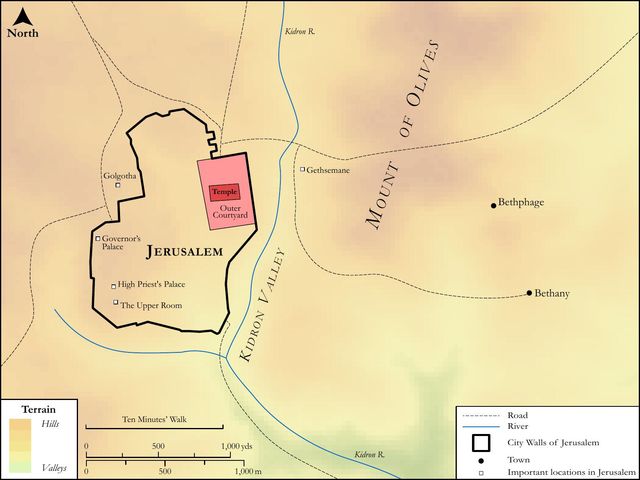
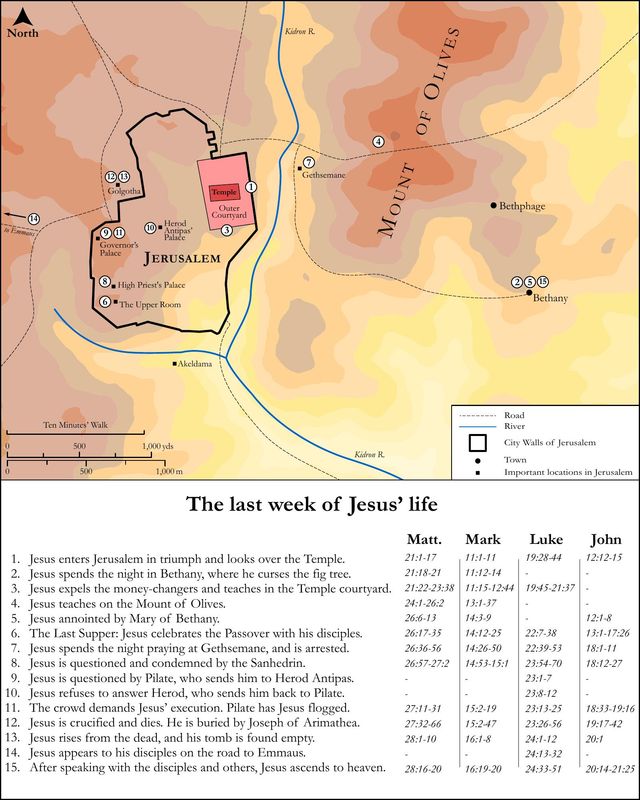
See on the biblical-era map

Study this verse
Public-domain commentary
Matthew Henry
From his Commentary on the Whole Bible. Henry comments on passages, not single verses — this entry covers John 14:18–24. His four-level outline is real structure in the source text, so it is rendered as structure.
When friends are parting, it is a common request they make to each other, "Pray let us hear from you as often as you can:" this Christ engaged to his disciples, that out of sight they should not be out of mind.
I.He promises that he would continue his care of them (Joh 14:18):
"I will not leave you orphans, or fatherless; for, though I leave you, yet I leave you this comfort, I will come to you." His departure from them was that which grieved them; but it was not so bad as they apprehended, for it was neither total nor final.
1.Not total. "Though I leave you without my bodily presence, yet I do not leave you without comfort." Though children, and left little, yet they had received the adoption of sons, and his Father would be their Father, with whom those who otherwise would be fatherless find mercy. Note, The case of true believers, though sometimes it may be sorrowful, is never comfortless, because they are never orphans: for God is their Father, who is an everlasting Father.
2.Not final: I will come to you, erchomai - I do come; that is, (1.) "I will come speedily to you at my resurrection, I will not be long away, but will be with you again in a little time." He had often said, The third day I will rise again. (2.) "I will be coming daily to you in my Spirit;" in the tokens of his love, and visits of his grace, he is still coming. (3.) "I will come certainly at the end of time; surely I will come quickly to introduce you into the joy of your Lord." Note, The consideration of Christ's coming to us saves us from being comfortless in his removals from us; for, if he depart for a season, it is that we may receive him for ever. Let this moderate our grief, The Lord is at hand.
II.He promises that they should continue their acquaintance with him and interest in him (Joh 14:19, Joh 14:20):
Yet a little while, and the world sees me no more, that is, Now I am no more in the world. After his death, the world saw him no more, for, though he rose to life, he never showed himself to all the people, Act 10:41. The malignant world thought they had seen enough of him, and cried, Away with him; crucify him; and so shall their doom be; they shall see him no more. Those only that see Christ with an eye of faith shall see him for ever. The world sees him no more till his second coming; but his disciples have communion with him in his absence.
1.You see me, and shall continue to see me, when the world sees me no more. They saw him with their bodily eyes after his resurrection, for he showed himself to them by many infallible proofs, Act 1:8. And then were the disciples glad when they saw the Lord. They saw him with an eye of faith after his ascension, sitting at God's right hand, as Lord of all; saw that in him which the world saw not.
2.Because I live, you shall live also. That which grieved them was, that their Master was dying, and they counted upon nothing else but to die with him. No, saith Christ,
(1.)I live; this the great God glories in, I live, saith the Lord, and Christ saith the same; not only, I shall live, as he saith of them, but, I do live; for he has life in himself, and lives for evermore. We are not comfortless, while we know that our Redeemer lives.
(2.)Therefore you shall live also. Note, The life of Christians is bound up in the life of Christ; as sure and as long as he lives, those that by faith are united to him shall live also; they shall live spiritually, a divine life in communion with God. This life is hid with Christ; if the head and root live, the members and branches live also. They shall live eternally; their bodies shall rise in the virtue of Christ's resurrection; it will be well with them in the world to come. It cannot but be well with all that are his, Isa 26:19.
3.You shall have the assurance of this (Joh 14:20): At that day, when I am glorified, when the Spirit is poured out, you shall know more clearly and certainly than you do now that I am in my Father, and you in me, and I in you.
(1.)These glorious mysteries will be fully known in heaven; At that day, when I shall receive you to myself, you shall know perfectly that which now you see through a glass darkly. Now it appears not what we shall be, but then it will appear what we were.
(2.)They were more fully known after the pouring out of the Spirit upon the apostles; at that day divine light should shine, and their eyes should see more clearly, their knowledge should greatly advance and increase then, would become more extensive and more distinct, and like the blind man's at the second touch of Christ's hand, who at first only saw men as trees walking.
(3.)They are known by all that receive the Spirit of truth, to their abundant satisfaction, for in the knowledge of this is founded their fellowship with the Father and his Son Jesus Christ. They know,
[1.]That Christ is in the Father, is one with the Father, by their experience of what he has wrought for them and in them; they find what an admirable consent and harmony there is between Christianity and natural religion, that that is grafted into this, and so they know that Christ is in the Father.
[2.]That Christ is in them; experienced Christians know by the Spirit that Christ abides in them, Jo1 3:24.
[3.]That they are in Christ, for the relation is mutual, and equally near on both sides, Christ in them and they in Christ, which speaks an intimate and inseparable union; in the virtue of which it is that because he lives they shall live also. Note, First, Union with Christ is the life of believers; and their relation to him, and to God through him, is their felicity. Secondly, The knowledge of this union is their unspeakable joy and satisfaction; they were now in Christ, and he in them, but he speaks of it as a further act of grace that they should know it, and have the comfort of it. An interest in Christ and the knowledge of it are sometimes separated.
III.He promises that he would love them, and manifest himself to them, Joh 14:21-24. Here observe,
1.Who they are whom Christ will look upon, and accept, as lovers of him; those that have his commandments, and keep them. By this Christ shows that the kind things he here said to his disciples were intended not for those only that were now his followers, but for all that should believe in him through their word. Here is,
(1.)The duty of those who claim the dignity of being disciples. Having Christ's commandments, we must keep them; as Christians in name and profession we have Christ's commandments, we have them sounding in our ears, written before our eyes, we have the knowledge of them; but this is not enough; would we approve ourselves Christians indeed, we must keep them. Having them in our heads, we must keep them in our hearts and lives.
(2.)The dignity of those that do the duty of disciples. They are looked upon by Christ to be such as love him. Not those that have the greatest wit and know how to talk for him, but those that keep his commandments. Note, The surest evidence of our love to Christ is obedience to the laws of Christ. Such is the love of a subject to his sovereign, a dutiful, respectful, obediential love, a conformity to his will, and satisfaction in his wisdom.
2.What returns he will make to them for their love; rich returns; there is no love lost upon Christ.
(1.)They shall have the Father's love: He that loveth me shall be loved of my Father. We could not love God if he did not first, out of his good-will to us, give us his grace to love him; but there is a love of complacency promised to those that do love God, Pro 8:17. He loves them, and lets them know that he loves them, smiles upon them, and embraces them. God so loves the Son as to love all those that love him.
(2.)They shall have Christ's love: And I will love him, as God-man, as Mediator. God will love him as a Father, and I will love him as a brother, an elder brother. The Creator will love him, and be the felicity of his being; the Redeemer will love him, and be the protector of his well-being. In the nature of God, nothing shines more brightly than this, that God is love. And in the undertaking of Christ nothing appears more glorious than this, that he loved us. Now both these loves are the crown and comfort, the grace and glory, which shall be to all those that love the Lord Jesus Christ in sincerity. Christ was now leaving his disciples, but promises to continue his love to them; for he not only retains a kindness for believers, though absent, but is doing them kindness while absent, for he bears them on his heart, and ever lives interceding for them.
(3.)They shall have the comfort of that love: I will manifest myself to him. Some understand it of Christ's showing himself alive to his disciples after his resurrection; but, being promised to all that love him and keep his commandments, it must be construed so as to extend to them. There is a spiritual manifestation of Christ and his love made to all believers. When he enlightens their minds to know his love, and the dimensions of it (Eph 3:18, Eph 3:19), enlivens their graces, and draws them into exercise, and thus enlarges their comforts in himself - when he clears up the evidences of their interest in him, and gives them tokens of his love, experience of his tenderness, and earnests of his kingdom and glory, - then he manifests himself to them; and Christ is manifested to none but those to whom he is pleased to manifest himself.
3.What occurred upon Christ's making this promise.
(1.)One of the disciples expresses his wonder and surprise at it, Joh 14:22. Observe,
[1.]Who it was that said this - Judas, not Iscariot. Judah, or Judas, was a famous name; the most famous tribe in Israel was that of Judah; two of Christ's disciples were of that name: one of them was the traitor, the other was the brother of James (Luk 6:16), one of those that were akin to Christ, Mat 13:55. He is called Lebbeus and Thaddeus, was the penman of the last of the epistles, which in our translation, for distinction's sake, we call the epistle of Jude. This was he that spoke here. Observe, First, There was a very good man, and a very bad man, called by the same name; for names commend us not to God, nor do they make men worse. Judas the apostle was never the worse, nor Judas the apostate ever the better, for being namesakes. But, Secondly, The evangelist carefully distinguishes between them; when he speaks of this pious Judas, he adds, not Iscariot. Take heed of mistaking; let us not confound the precious and the vile.
[2.]What he said - Lord how is it? which intimates either, First, the weakness of his understanding. So some take it. He expected the temporal kingdom of the Messiah, that it should appear in external pomp and power, such as all the world would wonder after. "How, then," thinks he, "should it be confined to us only?" ti gegonen - "what is the matter now, that thou wilt not show thyself openly as is expected, that the Gentiles may come to thy light, and kings to the brightness of thy rising?" Note, We create difficulties to ourselves by mistaking the nature of Christ's kingdom, as if it were of this world. Or, Secondly, as expressing the strength of his affections, and the humble and thankful sense he had of Christ's distinguishing favours to them: Lord, how is it? He is amazed at the condescensions of divine grace, as David, Sa2 7:18. What is there in us to deserve so great a favour? Note, 1. Christ's manifesting himself to his disciples is done in a distinguishing way - to them, and not to the world that sits in darkness; to the base, and not to the mighty and noble; to babes, and not to the wise and prudent. Distinguishing favours are very obliging; considering who are passed by, and who are pitched upon. 2. It is justly marvellous in our eyes; for it is unaccountable, and must be resolved into free and sovereign grace. Even so, Father, because it seemed good unto thee.
(2.)Christ, in answer hereto, explains and confirms what he had said, Joh 14:23, Joh 14:24. He overlooks what infirmity there was in what Judas spoke, and goes on with his comforts.
[1.]He further explains the condition of the promise, which was loving him, and keeping his commandments. And, as to this, he shows what an inseparable connection there is between love and obedience; love is the root, obedience is the fruit. First, Where a sincere love to Christ is in the heart, there will be obedience: "If a man love me indeed, that love will be such a commanding constraining principle in him, that, no question, he will keep my words." Where there is true love to Christ there is a value for his favour, a veneration for his authority, and an entire surrender of the whole man to his direction and government. Where love is, duty follows of course, is easy and natural, and flows from a principle of gratitude. Secondly, On the other hand, where there is no true love to Christ there will be no care to obey him: He that loveth me not keepeth not my sayings, Joh 14:24. This comes in here as a discovery of those that do not love Christ; whatever they pretend, certainly those do not love him that believe not his truths, and obey not his laws, to whom Christ's sayings are but as idle tales, which he heeds not, or hard sayings, which he likes not. It is also a reason why Christ will not manifest himself to the world that doth not love him, because they put this affront upon him, not to keep his sayings; why should Christ be familiar with those that will be strange to him?
[2.]He further explains the promise (Joh 14:23): If a man thus love me, I will manifest myself to him. First, My Father will love him; this he had said before (Joh 14:21), and here repeats it for the confirming of our faith; because it is hard to imagine that the great god should make those the objects of his love that had made themselves vessels of his wrath. Jude wondered that Christ should manifest himself to them; but this answers it, "If my Father love you, why should not I be free with you?" Secondly, We will come unto him, and make our abode with him. This explains the meaning of Christ's manifesting himself to him, and magnifies the favour. 1. Not only,I will, but, We will, I and the Father, who, in this, are one. See Joh 14:9. The light and love of God are communicated to man in the light and love of the Redeemer, so that wherever Christ is formed the image of God is stamped. 2. Not only, "I will show myself to him at a distance," but, "We will come to him, to be near him, to be with him," such are the powerful influences of divine graces and comforts upon the souls of those that love Christ in sincerity. 3. Not only, "I will give him a transient view of me, or make him a short and running visit," but, We will take up our abode with him which denotes complacency in him and constancy to him. God will not only love obedient believers, but he will take a pleasure in loving them, will rest in love to them, Zep 3:17. He will be with them as at his home.
[3.]He gives a good reason both to bind us to observe the condition and encourage us to depend upon the promise. The word which you hear is not mine, but his that sent me, Joh 14:24. To this purport he had often spoken (Joh 7:16; Joh 8:28; Joh 12:44), and here it comes in very pertinently. First, the stress of duty is laid upon the precept of Christ as our rule, and justly, for that word of Christ which we are to keep is the Father's word, and his will the Father's will. Secondly, The stress of our comfort is laid upon the promise of Christ. But forasmuch as, in dependence upon that promise, we must deny ourselves, and take up our cross, and quit all, it concerns us to enquire whether the security be sufficient for us to venture our all upon; and this satisfies us that it is, that the promise is not Christ's bare word, but the Father's which sent him, which therefore we may rely upon.
Historical interpretation
Seven Centuries of Reception
12 surviving comments on this verse. Each one is dated, so this reads as a timeline rather than a list.
Select a marker to jump to its quote. Markers stagger vertically where authors wrote within a few decades of each other.
[Jesus] applied the word world to those who, being bound by this material and carnal life and beholding the truth by material sight alone, were ordained through their unbelief in the resurrection to see our Lord no more with the eyes of the heart.… For the carnal person who has never trained his mind for contemplation but rather keeps it buried deep in the lust of the flesh, as in mud, is powerless to look up to the spiritual light of the truth.
(Hom. lxxv. 2) To me however he seems to refer not only to the present life, but to the future; as if He said, The death of the cross shall not separate you from Me for ever, but only hide Me from you for a moment.
(Hom. lxxv. 1) At the first He said, Whither I go ye shall come; but as this was a long time off, He promises them the Spirit in the interval. And as they knew not what that was, He promises them that they most desired, His own presence, I will come to you: but intimates at the same time that they are not to look for the same kind of presence over again: Yet a little while, and the world seeth Me no more: as if He said, I will come to you, but not to live with you every day as I did before. And, I will come to you alone, He says, thus preventing any inconsistency with what He had said to the Jews: Henceforth ye shall not see Me.
The world, that is, all the other people, sees me for a short time only, but you will see me again after my resurrection so that this vision of yours may testify that I am living again. And you will not only see me living, but the same thing will happen to you. When you also resurrect at the right time after your death, you will live and will participate in a second life. He does not say, “because I live” casually, that is, you will see me because I live. But he means You will witness the fact that I am alive, and by seeing it you will know that I resurrected from the dead and live and that I did not remain subject to death, as many believe.
We have now, therefore, to understand, so far as He is pleased to unfold it, the meaning of the words, "Yet a little while, and the world seeth me no more; but ye shall see me." It is true, indeed, that after a little while He was to withdraw even His body, in which the ungodly also were able to see Him, from their sight; for none of them saw Him after His resurrection. But since it was declared on the testimony of angels, "He shall so come in like manner as ye have seen Him go into heaven;" and our faith stands to this, that He will come in the same body to judge the living and the dead; there can be no doubt that He will then be seen by the world, meaning by the name, those who are aliens from His kingdom. And, on this account, it is far better to understand Him as having intended to refer at once to that epoch, when He said, "Yet a little while, and the world seeth me no more," when in the end of the world He shall be taken away from the sight of the damned, that for the future He may be seen only of those with whom, as those that love Him, the Father and Himself are making their abode. But He said, "a little while," because that which appears tedious to men is very brief in the sight of God: for of this same "little while" our evangelist, John, himself says, "Little children, it is the last time."
(Tr. lxxv. 2) For the world saw Him then with the carnal eye, manifest in the flesh, though it did not see the Word hidden under the flesh. But after the resurrection He was unwilling to show even His flesh, except to His own followers, whom He allowed to see and to handle it: Yet a little while, and the world seeth Me no more; but ye shall see Me. But, inasmuch as the world, by which are meant all who are aliens from His kingdom, will see Him at the last judgment, it is better perhaps to understand Him here as pointing to that time, when He will be taken for ever from the eyes of the wicked, to be seen thenceforth by those who love Him. A little while, He says, for that which seems a long time to men, is but a moment in the eyes of God.
Because I live, ye shall live also.
(Tr. lxxv. 3) But why does He speak of life as present to Him, future to them? Because His resurrection preceded, theirs was to follow. His resurrection was about so soon to take place, that He speaks of it as present; theirs being deferred till the end of the world, He does not say ye live, but ye shall live. Because He lives, therefore we shall live: As by man came death, by man came also the resurrection of the dead. (1 Cor. 15:21)
He then goes on to say, "Yet a little while, and the world seeth me no more." How so the world saw Him then; for under the name of the world are to be understood those of whom He spake above, when saying of the Holy Spirit, "Whom the world cannot receive, because it seeth Him not, neither knoweth Him." He was plainly visible to the carnal eyes of the world, while manifest in the flesh; but it saw not the Word that lay hid in the flesh: it saw the man, but it saw not God: it saw the covering, but not the Being within. But as, after the resurrection, even His very flesh, which He exhibited both to the sight and to the handling of His own, He refused to exhibit to others, we may in this way perhaps understand the meaning of the words, "Yet a little while, and the world seeth me no more; but ye shall see me: because I live, ye shall live also."
What is meant by the words, "Because I live, ye shall live also"? Why did He speak in the present tense of His own living, and in the future of theirs, but just by way of promise that the life also of the resurrection-body, as it preceded in His own case, would certainly follow in theirs? And as His own resurrection was in the immediate future, He put the word in the present tense to signify its speedy approach: but of theirs, as delayed till the end of the world, He said not, ye live; but, "ye shall live." With elegance and brevity, therefore, by means of two words, one of them in the present tense and the other in the future, He gave the promise of two resurrections, to wit, His own in the immediate future, and ours as yet to come in the end of the world. "Because I live," He says, "ye shall live also:" because He liveth, therefore shall we live also. For as by man is death, by man also is the resurrection of the dead. For as in Adam all die, even so in Christ shall all be made alive. As it is only through the former that every one is liable to death, it is only through Christ that any one can attain unto life. Because we did not live, we are dead; because He lived, we shall live also. We were dead to Him, when we lived to ourselves; but, because He died in our behalf, He liveth both for Himself and for us. For, because He liveth, we shall live also. For while we were able of ourselves to attain unto death, it is not of ourselves also that life can come into our possession.
Those who love evil in the world will go down to Hades and be banished from the presence of Christ. However, the lovers of virtue who have kept inviolate the earnest of the Spirit will be with him and dwell with him. And being with him surely they shall also behold his divine beauty without any hindrance. For he says, “the Lord shall be your eternal light and God shall be your glory.”
Now that the Passion is close at hand, and brings along with it the moment of His Assumption, He says that He will be invisible to the world, that is, to them that value the enjoyment of things temporal before the Divine blessings, and set more store by earthly things than by heavenly. And by way of making our belief to the end thereof kindred and consistent with what has been already said above, we shall be right in saying, that God the Father has given the Paraclete, i.e. the Holy Spirit, of course through the Son; for all things are through Him from the Father. Notwithstanding He has come, not on all indiscriminately, both evil and good, but on them on whom it was fitting He should go forth. For so far forth as touches the most rich and unstinted grace of the Giver, no man of all in the earth remained a non-partaker: For I will pour out, He says in the prophets, of my Spirit on all flesh. Yet each man is unto himself an accessory cause of his possessing or else wholly failing to get the God-given blessing. For some men, because that in no wise do they strive to cleanse their own mind by all goodness, but love exceedingly to dwell in the evils in the world, shall abide non-partakers of the Divine grace, and shall not see Christ in themselves, forasmuch as they have a heart void of the Spirit. For this cause albeit they are ranged on the side of the Protector of the orphans they are torn in pieces by simply everything that is strong enough to overreach, be it a passion or a devil, or yet any other worldly lust, and by everything that can drag them down as it were and overpower them unto sin. Howbeit, unto the holy and them that were purposed to receive Him, He said, as was likely He would, forasmuch as they were going to endure none of those ills, I will not leave you orphans, I am coming unto you. And so He says He shall be invisible and wholly unbeheld by them that mind the hings in the world, after His Departure hence, I mean His Ascension into heaven. But He says He will be found visible unto the holy, forasmuch as the Holy Spirit is putting a certain Divine and spiritual flash in the eyes of their heart, and sowing therein all good knowledge.
For we shall either suppose that this is what He means by Yet a little while and the world beholdeth Me no more; but ye behold Me; or else turning aside to a different point of view----especially when there is intertwined with His words the saying Because I live, ye shall live also----we reason somewhat on this wise. For after His Revival from the dead, when He had effected for our nature the return unto that whereunto it existed from the beginning, and had made man incorruptible, He ascended, as it were by way of first-fruits and in the Temple of His own Body first, unto God the Father in heaven. But after in the meanwhile accomplishing a short time, He will descend again, as we believe, and will return again unto us, in the glory of His Father with the Holy Angels, and will set up the appalling tribunal before all men, both evil and good. For all created things shall come to judgment. And rendering becoming awards, corresponding to the life each one has led, He will say to them on the left, i.e. to those that have minded the things in the world: Depart from Me ye cursed, into the eternal fire prepared for the devil and his angels; howbeit to them on the right, i.e. to the holy and good: Come ye blessed of My Father, inherit the kingdom prepared for you from the foundation of the world. For they shall be with Christ and shall reign with Him, and shall revel in the heavenly blessings, having been made conformable to His Resurrection, and escaped the meshes of the ancient corruption, being endued with the long and ineffable life, and living endlessly with the ever-living Lord. For that they who have practised a life dear to God and exalted, shall be with Christ without ceasing, to wit contemplating His divine and unspeakable beauty, Paul will make clear where he says: For the Lord Himself shall descend from Heaven, with a shout, with the voice of the archangel, and with the trump of God: and the dead in Christ shall rise first: then we that are alive, that are left, shall together with them be caught up in the clouds, to meet the Lord in the air: and so shall we ever be with the Lord; and again, to them that have chosen to mortify worldly passions: For ye died, and your life is hid with Christ in God. When Christ, Who is our life, shall be manifested, then shall ye also with Him be manifested in glory. So----for I will sum up the meaning of the Lord's saying----the lovers of the evil things in the world shall go down to Hades and be banished from the presence of Christ; howbeit there shall be with Him and dwell with Him for ever the lovers of virtue, they who have kept inviolate the earnest of the Spirit, and being with Him of a surety they shall also behold His Divine Beauty without all hindrance. For, he says, the Lord shall be thine eternal Light, and God thy glory. And it is also likely that this is what the Lord means to make manifest, when we hear Him saying: Yet a little while and the world beholdeth Me no more; but ye behold Me; because I live ye shall live also. Howbeit in no wise will He speak falsely in saying that the time intervening, before His Revelation as it were, is a little while. For to God Who always is, even what is a long time with us counts utterly for nothing; and the Psalmist will testify this when he says: For a thousand years in Thy sight, O Lord, are but as yesterday that is past, and a watch in the night.
This other Consoler of humanity, who himself is invisible, inflames each person that he has filled so that he too longs after invisible things. And because worldly hearts are only focused on what is seen, they do not receive him because their minds are not elevated to what is unseen. As secular minds broaden their horizons by focusing on the outward things [of this world], they constrict the ability of the arteries of the heart to admit the Spirit.
As if He said, Though I shall die, I shall rise again. And ye shall live also, i. e. when ye see Me risen again, ye will rejoice, and be as dead men brought to life again.
Continue studying John 14:19 across the web’s major study libraries — every link below opens this exact verse, chapter, or book on the destination site.
Read & Compare
 BibleGatewayThis verse in more than 200 translations and 70 languages.
 Bible.comThe YouVersion reader — hundreds of translations, reading plans, and highlights.
 ESV.orgCrossway's official English Standard Version reader.
 NET BibleThe NET translation with 60,000+ translators' notes on every rendering decision.
 STEP BibleTyndale House's free study tool — original text, vocabulary, and scholarly resources.
 BibliaLogos Bible Software's free web reader.
 USCCBThe New American Bible (Revised Edition) with the U.S. bishops' study notes.
Commentaries
 BibleHub CommentariesDozens of classic commentaries on this verse, gathered on one page.
 StudyLightMore than 100 commentary sets — the largest collection on the web.
 BibleRefPlain-English commentary on what this verse means, verse by verse.
 Enduring WordDavid Guzik's free commentary on this chapter, widely used by Bible teachers.
 Bible Study ToolsVerse commentary alongside Greek and Hebrew study aids.
Original Language & Research
- BibleHub InterlinearThe verse word by word — original language, transliteration, and English.
- BibleHub LexiconEvery word's original-language definition and Strong's entry.
 Blue Letter BibleDeep-study tools — Strong's numbers, concordance, and word studies.
 CNTR CollationThe earliest Greek manuscripts of this verse, collated letter by letter.
Sermons, Hymns & Audio


TrulyRandomVerse is not affiliated with these sites and doesn’t control their content. They’re linked because they’re genuinely useful.
Summary
John 14:19 offers profound reassurance to Jesus' disciples during His Farewell Discourse, distinguishing between the world's temporary perception of His physical presence and the believers' enduring, spiritual apprehension of Him. It promises that while the world will soon no longer see Him after His crucifixion and ascension, His followers will continue to "see" Him in a deeper, spiritual sense, and crucially, their future life—both spiritual and eternal—is inextricably linked to His own resurrected life. This verse underscores the unique, living relationship between Christ and His church, founded on His victory over death.
Context
ShowHideLiterary Context
This verse is embedded within Jesus' extensive Farewell Discourse, spanning John 13:31 through John 16:33. Delivered in the Upper Room just hours before His betrayal and crucifixion, these chapters are Jesus' final, intimate teachings to His disciples. The immediate preceding verses (John 14:1-18) focus on comforting the disciples about His impending departure, promising a "place" for them in His Father's house, and introducing the concept of the Holy Spirit as the "Comforter" or "Advocate." John 14:18 explicitly states, "I will not leave you comfortless: I will come to you," which sets the stage for the distinction drawn in verse 19 regarding His presence. The discourse aims to prepare them for His physical absence while assuring them of His continued spiritual presence and empowering them for their future mission.
Historical & Cultural Context
The disciples, steeped in Jewish messianic expectations, anticipated a visible, earthly kingdom established by their Messiah. Jesus' repeated talk of departure, death, and "going away" would have been deeply unsettling and confusing. They were accustomed to His physical presence, teaching, and miracles. The concept of a spiritual presence, or a life derived from His resurrection, would have been foreign to their immediate understanding. Furthermore, the "world" (Greek: kosmos) in John's Gospel often refers to humanity alienated from God, or the fallen system of human society that is hostile to divine truth. This distinction between "the world" and "you" (the disciples) reflects the growing theological chasm between those who accept Jesus as Messiah and those who reject Him, a theme prevalent throughout the Gospel of John, particularly in passages such as John 1:10-11.
Key Themes
ShowHideJohn 14:19 contributes significantly to several major themes within John's Gospel and the broader Farewell Discourse. Firstly, it highlights the theme of Jesus' Departure and Return, emphasizing that His departure is not an abandonment but a transition to a new form of presence. Secondly, it underscores the Distinction Between Believers and the World, a recurring Johannine theme where the world, characterized by darkness and unbelief, cannot perceive spiritual realities, while believers, indwelt by the Spirit, possess spiritual discernment (John 17:14-16). Thirdly, and most profoundly, it introduces the theme of Life in Christ, asserting that the believer's spiritual and eternal life is directly dependent on Jesus' own resurrected life. This concept is foundational to Christian theology, echoing Jesus' earlier declarations like "I am the resurrection, and the life" in John 11:25. The life promised is not merely existence but vibrant, eternal vitality derived from union with the living Christ.
Exposition and Analysis
ShowHideKey Word Analysis
ShowHideThis verb, used for the world's perception of Jesus ("the world seeth me no more"), implies a physical, objective observation, or to be a spectator of. It suggests a superficial, external viewing. The world will no longer have the opportunity to physically observe Jesus in His earthly, incarnate form after His ascension.
In this context, "world" refers to humanity in general, particularly those who are spiritually blind or hostile to God's truth, alienated from Him. It is not the physical creation but the system of human society and values that stands in opposition to God's kingdom. This "world" will lose its physical sight of Jesus.
Used for both Jesus ("I live") and the disciples ("ye shall live also"), this verb signifies not merely biological existence but active, vibrant, and enduring life. For Jesus, it points to His inherent divine life and, in this context, His impending resurrection life. For the disciples, it promises a shared spiritual vitality and eternal existence that flows from their union with the resurrected Christ.
Verse Breakdown
ShowHide"Yet a little while, and the world seeth me no more"
This clause speaks of Jesus' imminent departure from the physical sight of the general public. "A little while" refers to the brief period leading up to His crucifixion, resurrection, and ascension. The "world," representing unbelieving humanity, will no longer be able to physically observe Him, marking the end of His public ministry and visible presence on earth.
"but ye see me"
In stark contrast to the world, Jesus promises His disciples a continued "seeing." This "seeing" transcends mere physical observation. While it certainly includes His post-resurrection appearances, it primarily refers to a deeper, spiritual apprehension and intimate fellowship with Him. This spiritual vision is enabled by the indwelling Holy Spirit, allowing believers to perceive His abiding presence, truth, and power even in His physical absence.
"because I live, ye shall live also"
This is the foundational promise of the verse, establishing a profound causal link between Jesus' life and the believers' life. Jesus' resurrection is the guarantee and source of the disciples' spiritual vitality and eternal existence. His victory over death ensures their victory over death. This "life" encompasses not only eternal life in the future but also a vibrant, spiritual life in the present, a shared life with the resurrected Christ that empowers and sustains them.
Literary Devices
ShowHideThe verse primarily employs Contrast and Parallelism. The contrast is sharply drawn between "the world" and "ye" (the disciples), highlighting their differing perceptions of Jesus. The world's inability to "see" Jesus physically is set against the disciples' spiritual capacity to "see" Him. This contrast underscores the spiritual divide between belief and unbelief. Parallelism is evident in the structure "the world seeth me no more; but ye see me," creating a clear antithesis. Furthermore, the phrase "because I live, ye shall live also" demonstrates a causal Cause and Effect relationship, where Jesus' life is the direct and necessary prerequisite for the disciples' life. This also functions as a form of Foreshadowing, pointing to Jesus' resurrection and the subsequent spiritual life of believers.
Theological and Thematic Connections
ShowHideJohn 14:19 is a cornerstone for understanding the ongoing relationship between Christ and His church after His ascension. It reveals that Jesus' departure was not an abandonment but a transition to a new, more profound form of presence through the Holy Spirit. This spiritual "seeing" and shared life underscore the mystical union between Christ and believers, where His resurrection life becomes the source of their own spiritual vitality and eternal hope. The verse affirms that the believer's life is not contingent on physical sight but on a living faith that apprehends the resurrected Christ, ensuring their security and purpose. This truth has profound implications for Christian assurance, spiritual growth, and the nature of the church's existence in the world.
Reflection and Application
ShowHideJohn 14:19 offers immense comfort and profound implications for believers navigating a world that often seems oblivious to spiritual realities. In moments of doubt, loss, or spiritual dryness, this verse reminds us that our life is not dependent on what we can physically see or on the world's fleeting perceptions, but on the enduring, resurrected life of Christ. His life is the guarantee of ours, providing an unshakable foundation for our faith, hope, and future. This truth calls us to live by faith, recognizing His unseen presence through the Holy Spirit, and drawing daily vitality from our union with Him. It encourages us to cultivate a spiritual discernment that transcends worldly understanding, enabling us to perceive His work, His truth, and His love even when circumstances are challenging. Our spiritual vitality, eternal security, and purpose are all rooted in the fact that because He lives, we shall live also—a powerful assurance that transforms our perspective and empowers our walk.
Questions for Reflection
ShowHideFAQ
ShowHideWhat does Jesus mean by "the world seeth me no more"?
ShowHideBy "the world seeth me no more," Jesus refers to His impending physical departure from the earth through His death, resurrection, and ascension. The general populace, particularly those who do not believe in Him, will no longer have the opportunity to physically observe Him as they did during His earthly ministry. This signifies the end of His visible, public presence among humanity in general. It highlights that the world, in its spiritual blindness, will lose the tangible evidence of His presence.
How do believers "see" Jesus if He is no longer physically present?
ShowHideThe "seeing" promised to believers ("but ye see me") is a spiritual apprehension rather than a physical one. While it includes His post-resurrection appearances to His disciples, its primary meaning extends to a deeper, ongoing spiritual perception and intimate fellowship with Him. This spiritual sight is enabled by the indwelling Holy Spirit, whom Jesus promised to send (John 14:16-17). Through faith, the Holy Spirit illuminates Christ's truth, presence, and power in the hearts and minds of believers, allowing them to truly know Him and experience His abiding presence, even in His physical absence. This is a relationship of intimate knowledge and communion, not mere observation.
Christ-Centered Fulfillment
ShowHideJohn 14:19 finds its ultimate Christ-centered fulfillment in the reality of Jesus' resurrection and the subsequent outpouring of the Holy Spirit, establishing a new covenant relationship where believers are vitally united with Him. Jesus' declaration, "because I live, ye shall live also," is not merely a comforting word but a profound theological truth rooted in His victory over death. His resurrection from the dead, as described in Romans 1:4, is the very source and guarantee of the believer's spiritual and eternal life. Through His atoning work on the cross and His glorious resurrection, Christ conquered sin and death, thereby opening the way for humanity to experience true, vibrant life in Him. This life is not simply a future hope but a present reality, as believers are spiritually "raised with Christ" (Colossians 2:12-13). The Holy Spirit, the "Spirit of Christ" (Romans 8:9), indwells believers, enabling them to "see" Jesus not with physical eyes, but with the eyes of faith, experiencing His abiding presence and drawing from His inexhaustible life. Thus, the promise of John 14:19 points directly to the transformative power of the resurrected Christ, who continues to live and impart His life to all who believe, ensuring their eternal security and empowering their present existence.