


John 14:18
- οὐκoukNotG3756PRT-NNegative Particle Negative
- ἀφήσωaphēsōI will leaveG863V-FAI-1SVerb Future Active Indicative 1st Singular
- ὑμᾶςhumasyouG4771P-2APPersonal pronoun Accusative 2nd Plural
- ὀρφανούςorphanousas orphansG3737A-APMAdjective Accusative Plural Masculine
- ἔρχομαιerchomaiI am comingG2064V-PNI-1SVerb Present Middle Or Passive Deponent Indicative 1st Singular
- πρὸςprostoG4314PREPPreposition
- ὑμᾶςhumasyouG4771P-2APPersonal pronoun Accusative 2nd Plural
English is a literal word-by-word gloss of the Greek, not the KJV's wording. Why?
This is the original text the KJV's translators worked from — each Greek word with its own literal English meaning in this verse, prepared by scholars at Tyndale House, Cambridge. The KJV translates whole sentences, not word by word, so its wording differs: one Greek word can become several English words, and the KJV may choose “charity” where the gloss reads “love”. Both are faithful — they answer different questions. For the KJV's own rendering, switch to the KJV text.
Details
See on the biblical-era map
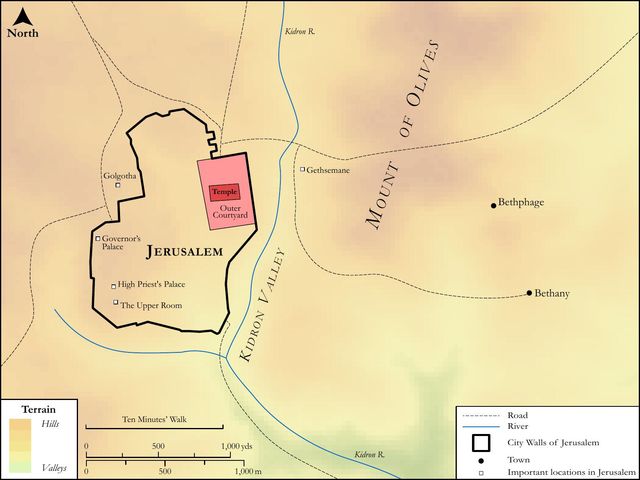

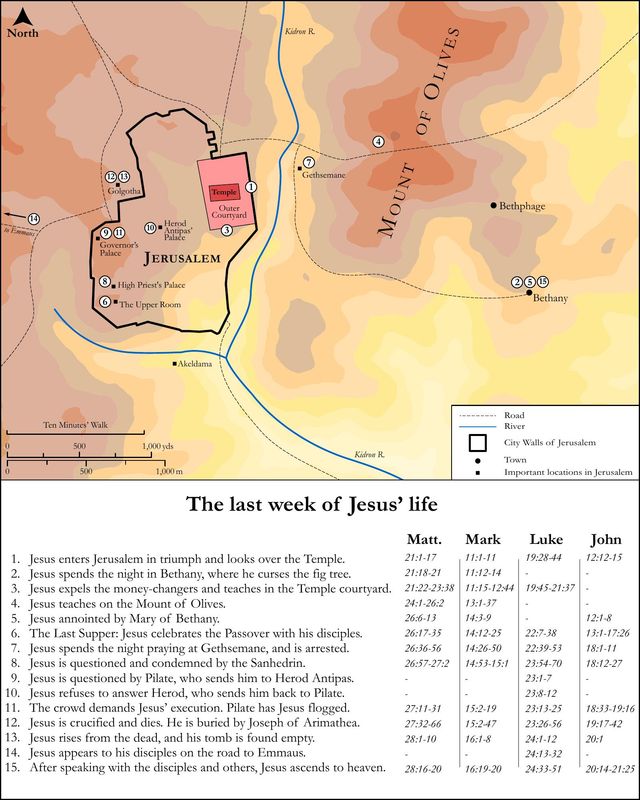
Study this verse
Public-domain commentary
Matthew Henry
From his Commentary on the Whole Bible. Henry comments on passages, not single verses — this entry covers John 14:18–24. His four-level outline is real structure in the source text, so it is rendered as structure.
When friends are parting, it is a common request they make to each other, "Pray let us hear from you as often as you can:" this Christ engaged to his disciples, that out of sight they should not be out of mind.
I.He promises that he would continue his care of them (Joh 14:18):
"I will not leave you orphans, or fatherless; for, though I leave you, yet I leave you this comfort, I will come to you." His departure from them was that which grieved them; but it was not so bad as they apprehended, for it was neither total nor final.
1.Not total. "Though I leave you without my bodily presence, yet I do not leave you without comfort." Though children, and left little, yet they had received the adoption of sons, and his Father would be their Father, with whom those who otherwise would be fatherless find mercy. Note, The case of true believers, though sometimes it may be sorrowful, is never comfortless, because they are never orphans: for God is their Father, who is an everlasting Father.
2.Not final: I will come to you, erchomai - I do come; that is, (1.) "I will come speedily to you at my resurrection, I will not be long away, but will be with you again in a little time." He had often said, The third day I will rise again. (2.) "I will be coming daily to you in my Spirit;" in the tokens of his love, and visits of his grace, he is still coming. (3.) "I will come certainly at the end of time; surely I will come quickly to introduce you into the joy of your Lord." Note, The consideration of Christ's coming to us saves us from being comfortless in his removals from us; for, if he depart for a season, it is that we may receive him for ever. Let this moderate our grief, The Lord is at hand.
II.He promises that they should continue their acquaintance with him and interest in him (Joh 14:19, Joh 14:20):
Yet a little while, and the world sees me no more, that is, Now I am no more in the world. After his death, the world saw him no more, for, though he rose to life, he never showed himself to all the people, Act 10:41. The malignant world thought they had seen enough of him, and cried, Away with him; crucify him; and so shall their doom be; they shall see him no more. Those only that see Christ with an eye of faith shall see him for ever. The world sees him no more till his second coming; but his disciples have communion with him in his absence.
1.You see me, and shall continue to see me, when the world sees me no more. They saw him with their bodily eyes after his resurrection, for he showed himself to them by many infallible proofs, Act 1:8. And then were the disciples glad when they saw the Lord. They saw him with an eye of faith after his ascension, sitting at God's right hand, as Lord of all; saw that in him which the world saw not.
2.Because I live, you shall live also. That which grieved them was, that their Master was dying, and they counted upon nothing else but to die with him. No, saith Christ,
(1.)I live; this the great God glories in, I live, saith the Lord, and Christ saith the same; not only, I shall live, as he saith of them, but, I do live; for he has life in himself, and lives for evermore. We are not comfortless, while we know that our Redeemer lives.
(2.)Therefore you shall live also. Note, The life of Christians is bound up in the life of Christ; as sure and as long as he lives, those that by faith are united to him shall live also; they shall live spiritually, a divine life in communion with God. This life is hid with Christ; if the head and root live, the members and branches live also. They shall live eternally; their bodies shall rise in the virtue of Christ's resurrection; it will be well with them in the world to come. It cannot but be well with all that are his, Isa 26:19.
3.You shall have the assurance of this (Joh 14:20): At that day, when I am glorified, when the Spirit is poured out, you shall know more clearly and certainly than you do now that I am in my Father, and you in me, and I in you.
(1.)These glorious mysteries will be fully known in heaven; At that day, when I shall receive you to myself, you shall know perfectly that which now you see through a glass darkly. Now it appears not what we shall be, but then it will appear what we were.
(2.)They were more fully known after the pouring out of the Spirit upon the apostles; at that day divine light should shine, and their eyes should see more clearly, their knowledge should greatly advance and increase then, would become more extensive and more distinct, and like the blind man's at the second touch of Christ's hand, who at first only saw men as trees walking.
(3.)They are known by all that receive the Spirit of truth, to their abundant satisfaction, for in the knowledge of this is founded their fellowship with the Father and his Son Jesus Christ. They know,
[1.]That Christ is in the Father, is one with the Father, by their experience of what he has wrought for them and in them; they find what an admirable consent and harmony there is between Christianity and natural religion, that that is grafted into this, and so they know that Christ is in the Father.
[2.]That Christ is in them; experienced Christians know by the Spirit that Christ abides in them, Jo1 3:24.
[3.]That they are in Christ, for the relation is mutual, and equally near on both sides, Christ in them and they in Christ, which speaks an intimate and inseparable union; in the virtue of which it is that because he lives they shall live also. Note, First, Union with Christ is the life of believers; and their relation to him, and to God through him, is their felicity. Secondly, The knowledge of this union is their unspeakable joy and satisfaction; they were now in Christ, and he in them, but he speaks of it as a further act of grace that they should know it, and have the comfort of it. An interest in Christ and the knowledge of it are sometimes separated.
III.He promises that he would love them, and manifest himself to them, Joh 14:21-24. Here observe,
1.Who they are whom Christ will look upon, and accept, as lovers of him; those that have his commandments, and keep them. By this Christ shows that the kind things he here said to his disciples were intended not for those only that were now his followers, but for all that should believe in him through their word. Here is,
(1.)The duty of those who claim the dignity of being disciples. Having Christ's commandments, we must keep them; as Christians in name and profession we have Christ's commandments, we have them sounding in our ears, written before our eyes, we have the knowledge of them; but this is not enough; would we approve ourselves Christians indeed, we must keep them. Having them in our heads, we must keep them in our hearts and lives.
(2.)The dignity of those that do the duty of disciples. They are looked upon by Christ to be such as love him. Not those that have the greatest wit and know how to talk for him, but those that keep his commandments. Note, The surest evidence of our love to Christ is obedience to the laws of Christ. Such is the love of a subject to his sovereign, a dutiful, respectful, obediential love, a conformity to his will, and satisfaction in his wisdom.
2.What returns he will make to them for their love; rich returns; there is no love lost upon Christ.
(1.)They shall have the Father's love: He that loveth me shall be loved of my Father. We could not love God if he did not first, out of his good-will to us, give us his grace to love him; but there is a love of complacency promised to those that do love God, Pro 8:17. He loves them, and lets them know that he loves them, smiles upon them, and embraces them. God so loves the Son as to love all those that love him.
(2.)They shall have Christ's love: And I will love him, as God-man, as Mediator. God will love him as a Father, and I will love him as a brother, an elder brother. The Creator will love him, and be the felicity of his being; the Redeemer will love him, and be the protector of his well-being. In the nature of God, nothing shines more brightly than this, that God is love. And in the undertaking of Christ nothing appears more glorious than this, that he loved us. Now both these loves are the crown and comfort, the grace and glory, which shall be to all those that love the Lord Jesus Christ in sincerity. Christ was now leaving his disciples, but promises to continue his love to them; for he not only retains a kindness for believers, though absent, but is doing them kindness while absent, for he bears them on his heart, and ever lives interceding for them.
(3.)They shall have the comfort of that love: I will manifest myself to him. Some understand it of Christ's showing himself alive to his disciples after his resurrection; but, being promised to all that love him and keep his commandments, it must be construed so as to extend to them. There is a spiritual manifestation of Christ and his love made to all believers. When he enlightens their minds to know his love, and the dimensions of it (Eph 3:18, Eph 3:19), enlivens their graces, and draws them into exercise, and thus enlarges their comforts in himself - when he clears up the evidences of their interest in him, and gives them tokens of his love, experience of his tenderness, and earnests of his kingdom and glory, - then he manifests himself to them; and Christ is manifested to none but those to whom he is pleased to manifest himself.
3.What occurred upon Christ's making this promise.
(1.)One of the disciples expresses his wonder and surprise at it, Joh 14:22. Observe,
[1.]Who it was that said this - Judas, not Iscariot. Judah, or Judas, was a famous name; the most famous tribe in Israel was that of Judah; two of Christ's disciples were of that name: one of them was the traitor, the other was the brother of James (Luk 6:16), one of those that were akin to Christ, Mat 13:55. He is called Lebbeus and Thaddeus, was the penman of the last of the epistles, which in our translation, for distinction's sake, we call the epistle of Jude. This was he that spoke here. Observe, First, There was a very good man, and a very bad man, called by the same name; for names commend us not to God, nor do they make men worse. Judas the apostle was never the worse, nor Judas the apostate ever the better, for being namesakes. But, Secondly, The evangelist carefully distinguishes between them; when he speaks of this pious Judas, he adds, not Iscariot. Take heed of mistaking; let us not confound the precious and the vile.
[2.]What he said - Lord how is it? which intimates either, First, the weakness of his understanding. So some take it. He expected the temporal kingdom of the Messiah, that it should appear in external pomp and power, such as all the world would wonder after. "How, then," thinks he, "should it be confined to us only?" ti gegonen - "what is the matter now, that thou wilt not show thyself openly as is expected, that the Gentiles may come to thy light, and kings to the brightness of thy rising?" Note, We create difficulties to ourselves by mistaking the nature of Christ's kingdom, as if it were of this world. Or, Secondly, as expressing the strength of his affections, and the humble and thankful sense he had of Christ's distinguishing favours to them: Lord, how is it? He is amazed at the condescensions of divine grace, as David, Sa2 7:18. What is there in us to deserve so great a favour? Note, 1. Christ's manifesting himself to his disciples is done in a distinguishing way - to them, and not to the world that sits in darkness; to the base, and not to the mighty and noble; to babes, and not to the wise and prudent. Distinguishing favours are very obliging; considering who are passed by, and who are pitched upon. 2. It is justly marvellous in our eyes; for it is unaccountable, and must be resolved into free and sovereign grace. Even so, Father, because it seemed good unto thee.
(2.)Christ, in answer hereto, explains and confirms what he had said, Joh 14:23, Joh 14:24. He overlooks what infirmity there was in what Judas spoke, and goes on with his comforts.
[1.]He further explains the condition of the promise, which was loving him, and keeping his commandments. And, as to this, he shows what an inseparable connection there is between love and obedience; love is the root, obedience is the fruit. First, Where a sincere love to Christ is in the heart, there will be obedience: "If a man love me indeed, that love will be such a commanding constraining principle in him, that, no question, he will keep my words." Where there is true love to Christ there is a value for his favour, a veneration for his authority, and an entire surrender of the whole man to his direction and government. Where love is, duty follows of course, is easy and natural, and flows from a principle of gratitude. Secondly, On the other hand, where there is no true love to Christ there will be no care to obey him: He that loveth me not keepeth not my sayings, Joh 14:24. This comes in here as a discovery of those that do not love Christ; whatever they pretend, certainly those do not love him that believe not his truths, and obey not his laws, to whom Christ's sayings are but as idle tales, which he heeds not, or hard sayings, which he likes not. It is also a reason why Christ will not manifest himself to the world that doth not love him, because they put this affront upon him, not to keep his sayings; why should Christ be familiar with those that will be strange to him?
[2.]He further explains the promise (Joh 14:23): If a man thus love me, I will manifest myself to him. First, My Father will love him; this he had said before (Joh 14:21), and here repeats it for the confirming of our faith; because it is hard to imagine that the great god should make those the objects of his love that had made themselves vessels of his wrath. Jude wondered that Christ should manifest himself to them; but this answers it, "If my Father love you, why should not I be free with you?" Secondly, We will come unto him, and make our abode with him. This explains the meaning of Christ's manifesting himself to him, and magnifies the favour. 1. Not only,I will, but, We will, I and the Father, who, in this, are one. See Joh 14:9. The light and love of God are communicated to man in the light and love of the Redeemer, so that wherever Christ is formed the image of God is stamped. 2. Not only, "I will show myself to him at a distance," but, "We will come to him, to be near him, to be with him," such are the powerful influences of divine graces and comforts upon the souls of those that love Christ in sincerity. 3. Not only, "I will give him a transient view of me, or make him a short and running visit," but, We will take up our abode with him which denotes complacency in him and constancy to him. God will not only love obedient believers, but he will take a pleasure in loving them, will rest in love to them, Zep 3:17. He will be with them as at his home.
[3.]He gives a good reason both to bind us to observe the condition and encourage us to depend upon the promise. The word which you hear is not mine, but his that sent me, Joh 14:24. To this purport he had often spoken (Joh 7:16; Joh 8:28; Joh 12:44), and here it comes in very pertinently. First, the stress of duty is laid upon the precept of Christ as our rule, and justly, for that word of Christ which we are to keep is the Father's word, and his will the Father's will. Secondly, The stress of our comfort is laid upon the promise of Christ. But forasmuch as, in dependence upon that promise, we must deny ourselves, and take up our cross, and quit all, it concerns us to enquire whether the security be sufficient for us to venture our all upon; and this satisfies us that it is, that the promise is not Christ's bare word, but the Father's which sent him, which therefore we may rely upon.
Historical interpretation
Historical reception
6 surviving comments on this verse. Each one is dated, so this reads as a timeline rather than a list.
Select a marker to jump to its quote. Markers stagger vertically where authors wrote within a few decades of each other.
Now how it is that we are in Him through the sacrament of the flesh and blood bestowed upon us, He Himself testifies, saying, "And the world will no longer see Me, but ye shall see Me; because I live ye shall live also; because I am in My Father, and ye in Me, and I in you." If He wished to indicate a mere unity of will, why did He set forth a kind of gradation and sequence in the completion of the unity, unless it were that, since He was in the Father through the nature of Deity, and we on the contrary in Him through His birth in the body, He would have us believe that He is in us through the mystery of the sacraments? and thus there might be taught a perfect unity through a Mediator, whilst, we abiding in Him, He abode in the Father, and as abiding in the Father abode also in us; and so we might arrive at unity with the Father, since in Him Who dwells naturally in the Father by birth, we also dwell naturally, while He Himself abides naturally in us also.
(Hom. lxxv. 1) At the first He said, Whither I go ye shall come; but as this was a long time off, He promises them the Spirit in the interval. And as they knew not what that was, He promises them that they most desired, His own presence, I will come to you: but intimates at the same time that they are not to look for the same kind of presence over again: Yet a little while, and the world seeth Me no more: as if He said, I will come to you, but not to live with you every day as I did before. And, I will come to you alone, He says, thus preventing any inconsistency with what He had said to the Jews: Henceforth ye shall not see Me.
After the promise of the Holy Spirit, lest any should suppose that the Lord was to give Him, as it were, in place of Himself, in any such way as that He Himself would not likewise be with them, He added the words: "I will not leave you orphans; I will come to you." Orphani [Greek] are pupilli [parentless children] in Latin. The one is the Greek, the other the Latin name of the same thing: for in the psalm where we read, "Thou art the helper of the fatherless" [in the Latin version, pupillo], the Greek has orphano. Accordingly, although it was not the Son of God that adopted sons to His Father, or willed that we should have by grace that same Father, who is His Father by nature, yet in a sense it is paternal feelings toward us that He Himself displays, when He declares, "I will not leave you orphans; I will come to you." In the same way He calls us also the children of the bridegroom, when He says, "The time will come, when the bridegroom shall be taken away from them, and then shall the children of the bridegroom fast." And who is the bridegroom, but Christ the Lord?
(Tr. lxxv. 1) That no one might think, because our Lord was about to give the Holy Spirit, that He would therefore not be present Himself in Him, He adds, I will not leave you comfortless. The Greek word ὀρφανοὶ signifies "wards." Although then the Son of God has made us the adopted sons of the Father, yet here He Himself shows the affection of a Father towards us.
It is impossible for one’s soul to accomplish anything good, or to have power over its own passions or to escape the great subtlety of the devil’s snare if the soul is not fortified by the grace of the Holy Spirit and has Christ himself within it.… Christ promises nothing less than that he will be present and will help those who believe on him through the Spirit, even though he ascends into the heavens after his resurrection from the dead.
Of necessity our Lord Jesus the Christ at this point finishes the discourse touching the Holy and Consubstantial Trinity. For He has already shown before, setting forth both words and facts for assurance unto them that love Him, both that He is in His nature God and is begotten of God the Father, and is of equal might and like mind with Him. For to this end He also at one time said: What I speak, I speak not from Myself; and at another time again: If I do not the works of My Father, believe Me not. But if I do them, though ye believe not Me, believe My works. But besides these things it was in no small measure needful also that men should receive the right and irreproachable doctrine with reference to the Holy Spirit Himself; for so might the minds of His hearers be directed wholly unto Tightness of faith. Therefore I will set forth in few words what Christ teaches us by the passage before us. By saying that "Another" shall be sent unto us from God the Father, He once more, in accordance with His careful and wise plan, renders the expression of the faith secure. For it was only likely that some, not rightly understanding what was said, would think that He meant that the Holy Spirit was not of the essence of God (as in fact some of the witless did suppose), but that He was in His nature something different; for to say "Another," among the more ignorant sort at least, might carry the appearance of some such ground for its use. So with intent to exhibit clearly that He does not wish the kind of distinctness which the Spirit possesses to be understood in any other way, save solely in virtue of His being in a peculiar and proper sense that which His Name implies, for the Spirit is a Spirit and not a Son, even as the Son is a Son and not a Father; after saying that the Paraclete shall be sent forth, He promises that He will come Himself; showing that the Spirit is not something other than what He is Himself, forasmuch as He is a proper Spirit proceeding from the Father, and is conceived of as the Son's, and for this cause is also called His Mind. For example, Paul says, signifying withal this very thing: But we have the Mind of Christ. So then, understanding the matter rightly and without all error, and rejecting as ungainly all perversion in any direction contrary to what is reasonable, and following the words of the inspired Scripture, we say that He is not something different from the Son so far as regards natural identity, but the same; yet with characteristics both distinct and personal. For, so understanding it, I imagine, the inspired Paul also oftentimes mingles Them and introduces Either as identical with the Other; the Paraclete, I mean, and the Son. For thou wilt find him saying: But if any man hath not the Spirit of Christ, he is none of His, and again directly after: And if Christ is in you, the body is dead because of the sin; but the Spirit is life because of righteousness. Hearest thou how he expressly confesses that they have Christ who have received His Spirit? And he says also in another place: For I think that I also have the Spirit of God. And he who spake this unto us, also says: If ye seek a proof of Christ That speaketh in Me; and oftentimes prays that in us also, who have believed, Christ may dwell by faith, howbeit himself receiving the Holy Spirit. And let no one suppose that we say that he annuls the fixity of name or person in respect of each, or that he says that the Son is not a Son but a Spirit, or at least that he does not know the Spirit as Spirit, but says He is a Son; this was not the aim in his mind, and indeed neither do we so believe. For he knows how to count the Persons of the Holy and Coessential Trinity, and teaches that each of the Persons signified subsists in His proper distinctness: notwithstanding he proclaims clearly that the Holy Trinity is fixed in absolute identity. Else how ean it be that the Spirit is and is called God? For do ye not know, he says, that ye are a temple of God, and the Spirit of God dwelleth in you? But if, forasmuch as the Spirit dwelleth in us, we are made temples of God, how can the Spirit not be of God, i.e. of His Essence, whereas He makes God to dwell in us through Himself? So then by way of showing that the Spirit is not alien from His own Nature, the Only-begotten, having said that the Paraclete is being sent forth from the Father for the Saints, promises that He will come Himself and fill the place of a father, to the end that they be not found like some orphans destitute of the assistance of one to stand forth for them, and for this cause be found henceforth easy to be taken in the snares of the devil, and exceedingly easily assailed by the offences in the world, for all they be many and come as of necessity, by reason of the ungovernable madness of them that bring them to pass. So then for a shield and an irrefragable security unto our souls, the Father has given the Spirit of Christ, to fulfil in us His grace and presence and power. For it were impossible for a man's soul to effect ought that is good, or to have power over its own passions, or to escape the great subtilty of the snare of the devil, if it were not fortified by the grace of the Holy Spirit, and had not Christ Himself by reason thereof within itself. And indeed the inspired Psalmist? composing for us through the wisdom that was in him his thanksgivings on this behalf, cried aloud unto God: Lord, Thou didst crown us as with a shield of favour----meaning by a shield of favour nothing else than the Holy Spirit Who shields us, and constrains us, by gifts of unexpected strength, to [the fulfilling of] the good pleasure of God. And so He promises that none the less He will be present and will help through the Spirit them that believe on Him, albeit He ascend into the very heavens, after His Revival from the dead, now to appear in the presence of God for us, according to the words of Paul.
Continue studying John 14:18 across the web’s major study libraries — every link below opens this exact verse, chapter, or book on the destination site.
Read & Compare
 BibleGatewayThis verse in more than 200 translations and 70 languages.
 Bible.comThe YouVersion reader — hundreds of translations, reading plans, and highlights.
 ESV.orgCrossway's official English Standard Version reader.
 NET BibleThe NET translation with 60,000+ translators' notes on every rendering decision.
 STEP BibleTyndale House's free study tool — original text, vocabulary, and scholarly resources.
 BibliaLogos Bible Software's free web reader.
 USCCBThe New American Bible (Revised Edition) with the U.S. bishops' study notes.
Commentaries
 BibleHub CommentariesDozens of classic commentaries on this verse, gathered on one page.
 StudyLightMore than 100 commentary sets — the largest collection on the web.
 BibleRefPlain-English commentary on what this verse means, verse by verse.
 Enduring WordDavid Guzik's free commentary on this chapter, widely used by Bible teachers.
 Bible Study ToolsVerse commentary alongside Greek and Hebrew study aids.
Original Language & Research
- BibleHub InterlinearThe verse word by word — original language, transliteration, and English.
- BibleHub LexiconEvery word's original-language definition and Strong's entry.
 Blue Letter BibleDeep-study tools — Strong's numbers, concordance, and word studies.
 CNTR CollationThe earliest Greek manuscripts of this verse, collated letter by letter.
Sermons, Hymns & Audio


TrulyRandomVerse is not affiliated with these sites and doesn’t control their content. They’re linked because they’re genuinely useful.
Summary
In John 14:18, Jesus delivers a profound and tender promise to His disciples, assuring them that despite His impending physical departure, He will not abandon them to a state of desolation or spiritual orphanhood. This declaration, "I will not leave you comfortless: I will come to you," serves as a cornerstone of Christian hope, revealing the enduring nature of Christ's presence and care for His followers, primarily through the indwelling Holy Spirit, and anticipating His post-resurrection appearances and ultimate return.
Context
ShowHideLiterary Context
This verse is situated within Jesus' Farewell Discourse, spanning John 13 through John 17. Delivered during the intimate setting of the Last Supper, Jesus is preparing His disciples for His imminent crucifixion, resurrection, and ascension. The disciples are deeply troubled, fearful, and confused by Jesus' talk of leaving them (John 13:33 and John 14:1). Jesus' words in John 14:18 directly address their anxiety about abandonment, providing a powerful reassurance that their relationship with Him will not be severed but transformed, leading to a deeper, more pervasive presence.
Historical & Cultural Context
In ancient Jewish culture, a teacher's departure would typically leave his disciples without guidance, much like orphans. The concept of being "comfortless" or "fatherless" (Gk. orphanós) evoked a state of vulnerability, lack of protection, and profound sorrow. Disciples relied on their rabbi for instruction, interpretation of the Law, and spiritual direction. Jesus' disciples, having left everything to follow Him, faced an existential crisis at the thought of His absence. Furthermore, the Roman occupation and the prevailing political tensions meant that a leaderless group could easily become targets or disperse. Jesus' promise, therefore, was not merely spiritual but also addressed their immediate, tangible fears of being left exposed and without a guardian in a hostile world.
Key Themes
ShowHideJohn 14:18 contributes significantly to several key themes in John's Gospel. Foremost is the theme of Divine Presence and Assurance, underscoring that God's faithful presence is not contingent on physical proximity but is an enduring reality (John 14:23). It also introduces the crucial theme of The Promise of the Holy Spirit, whom Jesus later identifies as "the Comforter" or "Helper" (Gk. Paraclete, John 14:26). This promise clarifies that Jesus' "coming" is multifaceted, including His post-resurrection appearances and, more enduringly, the Spirit's indwelling presence, which enables believers to continue His work (John 16:7). Finally, it speaks to Hope Beyond Separation, offering solace in the face of loss and pointing towards the ultimate reunion with Christ, both spiritually in the present and physically in the future (John 14:3).
Exposition and Analysis
ShowHideKey Word Analysis
ShowHideFrom apo (from) and hiemi (to send), meaning to send forth, let go, permit, forsake, or abandon. In this context, it signifies not abandoning or deserting. Jesus assures them He will not "let them go" in a way that leaves them desolate. This word's usage here directly counters the disciples' fear of being forsaken.
Of uncertain affinity, meaning "bereaved" or "orphan." It carries the broader sense of being desolate, helpless, or without a guardian or protector, like a child without parents. Jesus' promise directly addresses this potential state of spiritual desolation, assuring His disciples that they would not be left like fatherless children or abandoned students.
A primary verb meaning to come or go, used in a variety of applications, literally and figuratively. Here, it denotes a definite, intentional arrival or return. This "coming" is multifaceted, referring to Jesus' post-resurrection appearances, the sending of the Holy Spirit, and ultimately, His second advent.
Verse Breakdown
ShowHide"I will not leave you comfortless"
This first clause is a powerful negation of the disciples' deepest fear. Jesus directly addresses their anxiety about His impending departure, promising that He will not abandon them. The word "comfortless" (Gk. orphanós) evokes the image of a child left without parents or a guardian, highlighting the vulnerability and despair the disciples might feel. Jesus assures them they will not be left in such a desolate, unprotected state.
"I will come to you"
This second clause provides the positive assurance and the solution to their potential "comfortless" state. Jesus promises a return, a "coming" that will alleviate their sorrow and re-establish His presence among them. This "coming" has multiple layers of fulfillment: His post-resurrection appearances (e.g., John 20:19-29), the indwelling of the Holy Spirit (e.g., John 14:26), and His ultimate return at the end of the age.
Literary Devices
ShowHideThe verse employs several significant literary devices. Antithesis is prominent, contrasting the negative "not leave you comfortless" with the positive "I will come to you," thereby emphasizing the certainty of His presence over the fear of abandonment. The word "comfortless" functions as a powerful Metaphor, likening the disciples' potential state to that of an orphan, highlighting their vulnerability and dependence on Jesus as their spiritual Father and Guardian. This also sets up the subsequent promise of the Paraclete, the Holy Spirit, who will provide the comfort and guidance of a divine guardian. The entire statement is a direct Promise, a solemn and binding assurance from Jesus, designed to instill hope and alleviate anxiety, underscoring His unwavering faithfulness and love for His followers.
Theological and Thematic Connections
ShowHideJohn 14:18 is a profound theological statement that undergirds the Christian understanding of divine presence and the nature of the New Covenant. It reveals Jesus' deep empathy for His disciples' distress and His commitment to an enduring relationship with them. The promise of "coming" is not merely about physical return but points to the Trinitarian work of God, where the Father, Son, and Holy Spirit maintain an intimate, indwelling presence with believers. This verse establishes a foundational truth: believers are never truly alone or abandoned, for the Godhead makes its dwelling with those who love and obey Christ. It foreshadows the empowering presence of the Holy Spirit, who enables believers to live out their faith and continue Christ's mission in the world, transforming the nature of divine presence from external proximity to internal indwelling.
Reflection and Application
ShowHideJohn 14:18 offers immense comfort and strength for believers navigating life's inevitable seasons of loss, uncertainty, and loneliness. In a world where relationships can be fragile and circumstances often feel overwhelming, Jesus' unwavering promise reminds us that we are never truly abandoned. The "comfortless" state, whether born of grief, fear, or isolation, is directly addressed by the abiding presence of Christ through His Holy Spirit. This verse calls us to lean into the reality of the Spirit's indwelling, recognizing that His constant companionship provides guidance, strength, and solace in every trial. It encourages us to cultivate a conscious awareness of His presence, allowing it to transform our anxieties into peace and our desolation into hope. Living in light of this promise empowers us to face challenges with courage, knowing that the Lord who conquered death is intimately with us, empowering us to live faithfully until His glorious return.
Questions for Reflection
ShowHideFAQ
ShowHideDoes "I will come to you" only refer to Jesus' post-resurrection appearances?
ShowHideWhile Jesus' post-resurrection appearances are certainly a fulfillment of this promise (e.g., John 20:19), the promise of "I will come to you" has a deeper, ongoing, and multifaceted fulfillment. Primarily, it refers to the coming of the Holy Spirit, whom Jesus explicitly calls "the Comforter" or "Helper" in John 14:26. Through the Spirit, Jesus indwells believers, providing a continuous, intimate presence. It also points to His ultimate return at the end of the age, as promised in John 14:3. Thus, the "coming" encompasses His immediate post-resurrection presence, His abiding presence through the Spirit, and His future eschatological return.
Christ-Centered Fulfillment
ShowHideThe promise in John 14:18 finds its profound Christ-centered fulfillment in the person and work of Jesus, particularly through the sending of the Holy Spirit. Jesus, as the Son, perfectly embodies the Father's unwavering love and commitment, ensuring that His disciples would not be left as spiritual orphans. His departure, far from being an abandonment, was a necessary step for the greater, more intimate indwelling of the divine presence through the Spirit. As Jesus states in John 16:7, "it is expedient for you that I go away: for if I go not away, the Comforter will not come unto you; but if I depart, I will send him unto you." This sending of the Spirit, the very Spirit of Christ (Romans 8:9), means that Jesus' presence is not merely remembered but actively experienced by believers in every generation. He is the resurrected Lord who promised, "Lo, I am with you alway, even unto the end of the world" (Matthew 28:20), a promise realized through the indwelling Spirit. Thus, Christ's fulfillment of this verse is His continued, dynamic, and life-giving presence with His church, ensuring that no believer is ever truly "comfortless" but is eternally united with their living Lord.