


Matthew 18:20
- οὗhouWhereG3757ADVAdverb
- γάρgarforG1063CONJConjunction
- εἰσινeisinareG1510V-PAI-3PVerb Present Active Indicative 3rd Plural
- δύοduotwoG1417A-NUIAdjective
- ἢēorG2228CONJConjunction
- τρεῖςtreisthreeG5140A-NPMAdjective Nominative Plural Masculine
- συνηγμένοιsunēgmenoiassembledG4863V-RPP-NPMVerb Perfect Passive Participle Nominative Plural Masculine
- εἰςeisuntoG1519PREPPreposition
- τὸto<the>G3588T-ASNDefinite article Accusative Singular Neuter
- ἐμὸνemonMyG1473S-1SASNPossessive pronoun Accusative 1st Person Singular Neuter
- ὄνομαonomanameG3686N-ASNNoun Accusative Singular Neuter
- ἐκεῖekeithereG1563ADVAdverb
- εἰμιeimiam IG1510V-PAI-1SVerb Present Active Indicative 1st Singular
- ἐνeninG1722PREPPreposition
- μέσῳmesō[the] midstG3319A-DSNAdjective Dative Singular Neuter
- αὐτῶνautōnof themG846P-GPMPersonal pronoun Genitive Plural Masculine
English is a literal word-by-word gloss of the Greek, not the KJV's wording. Why?
This is the original text the KJV's translators worked from — each Greek word with its own literal English meaning in this verse, prepared by scholars at Tyndale House, Cambridge. The KJV translates whole sentences, not word by word, so its wording differs: one Greek word can become several English words, and the KJV may choose “charity” where the gloss reads “love”. Both are faithful — they answer different questions. For the KJV's own rendering, switch to the KJV text.
Details
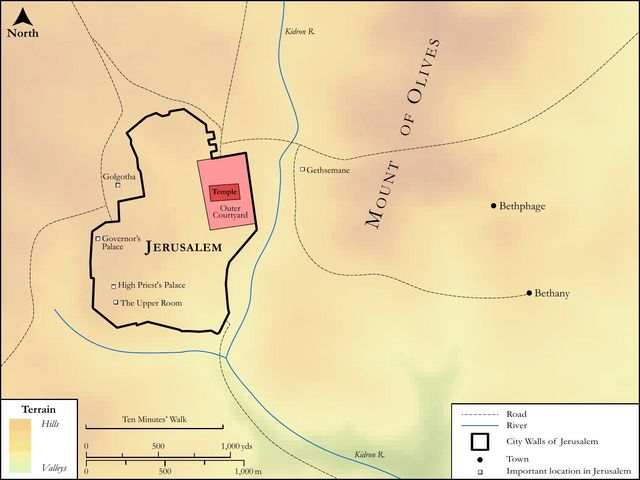
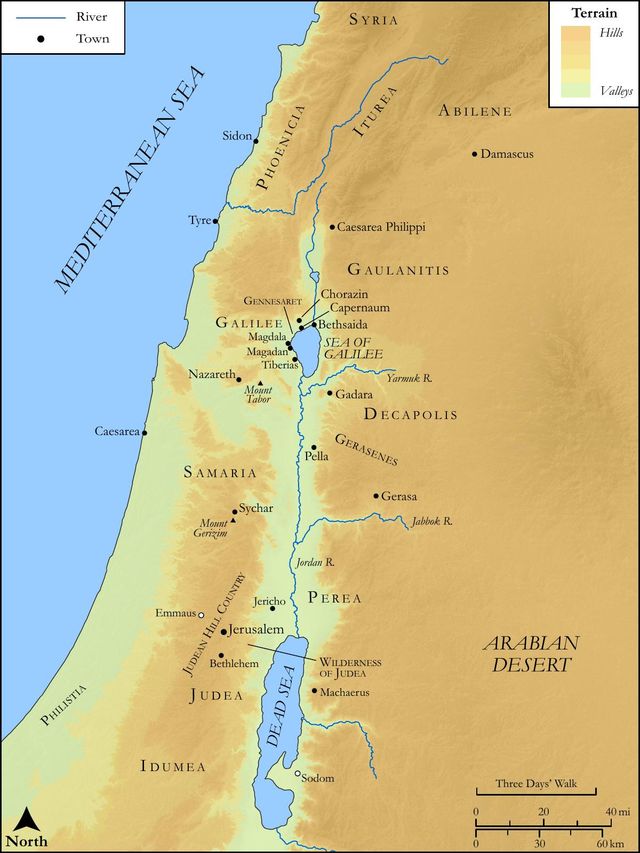
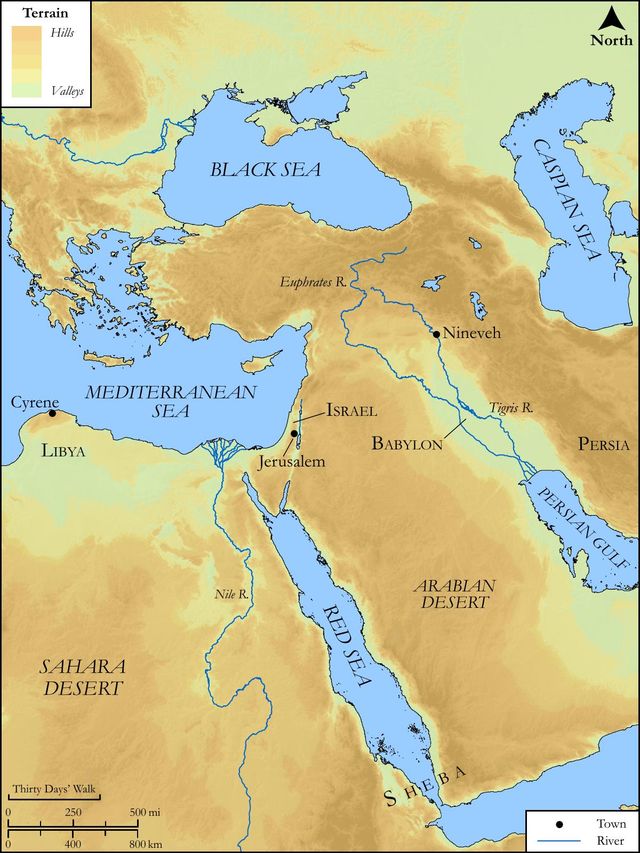
See on the biblical-era map
Study this verse
Public-domain commentary
Matthew Henry
From his Commentary on the Whole Bible. Henry comments on passages, not single verses — this entry covers Matthew 18:1–35. His four-level outline is real structure in the source text, so it is rendered as structure.
As there never was a greater pattern of humility, so there never was a greater preacher of it, than Christ; he took all occasions to command it, to commend it, to his disciples and followers.
I.The occasion of this discourse concerning humility was an unbecoming contest among the disciples for precedency; they came to him, saying, among themselves (for they were ashamed to ask him, Mar 9:34), Who is the greatest in the kingdom of heaven? They mean not, who by character (then the question had been good, that they might know what graces and duties to excel in), but who by name. They had heard much, and preached much, of the kingdom of heaven, the kingdom of the Messiah, his church in this world; but ass yet they were so far from having any clear notion of it, that they dreamt of a temporal kingdom, and the external pomp and power of it. Christ had lately foretold his sufferings, and the glory that should follow, that he should rise again, from whence they expected his kingdom would commence; and now they thought it was time to put in for their places in it; it is good, in such cases, to speak early. Upon other discourses of Christ to that purport, debates of this kind arose (Mat 20:19, Mat 20:20; Luk 22:22, Luk 22:24); he spoke many words of his sufferings, but only one of his glory; yet they fasten upon that, and overlook the other; and, instead of asking how they might have strength and grace to suffer with him, they ask him, "Who shall be highest in reigning with him." Note, Many love to hear and speak of privileges and glory, who are willing to pass by the thoughts of work and trouble. They look so much at the crown, that they forget the yoke and the cross. So the disciples here did, when they asked, Who is the greatest in the kingdom of heaven?
1.They suppose that all who have a place in that kingdom are great, for it is a kingdom of priests. Note, Those are truly great who are truly good; and they will appear so at last, when Christ shall own them as his, though ever so mean and poor in the world.
2.They suppose that there are degrees in this greatness. All the saints are honourable, but not all alike so; one star differs from another star in glory. All David's officers were not worthies, nor all his worthies of the first three.
3.They suppose it must be some of them, that must be prime ministers of state. To whom should King Jesus delight to do honour, but to them who had left all for him, and were now his companions in patience and tribulation?
4.They strive who it should be, each having some pretence or other to it. Peter was always the chief speaker, and already had the keys given him; he expects to be lord-chancellor, or lord-chamberlain of the household, and so to be the greatest. Judas had the bag, and therefore he expects to be lord-treasurer, which, though now he come last, he hopes, will then denominate him the greatest. Simon and Jude are nearly related to Christ, and they hope to take place of all the great officers of state, as princes of the blood. John is the beloved disciple, the favourite of the Prince, and therefore hopes to be the greatest. Andrew was first called, and why should not he be first preferred? Note, We are very apt to amuse and humour ourselves with foolish fancies of things that will never be.
II.The discourse itself, which is a just rebuke to the question, Who shall be greatest? We have abundant reason to think, that if Christ ever intended that Peter and his successors at Rome should be heads of the church, and his chief vicars on earth, having so fair an occasion given him, he would now have let his disciples know it; but so far is he from this, that his answer disallows and condemns the thing itself. Christ will not lodge such an authority or supremacy any where in his church; whoever pretend to it are usurpers; instead of settling any of the disciples in this dignity, he warns them all not to put in for it.
Christ here teacheth them to be humble,
1.By a sign (Mat 18:2); He called a little child to him, and set him in the midst of them. Christ often taught by signs or sensible representations (comparisons to the eye), as the prophets of old. Note, Humility is a lesson so hardly learned, that we have need by all ways and means to be taught it. When we look upon a little child, we should be put in mind of the use Christ made of this child. Sensible things must be improved to spiritual purposes. He set him in the midst of them; not that they might play with him, but that they might learn by him. Grown men, and great men, should not disdain the company of little children, or think it below them to take notice of them. They may either speak to them, and give instruction to them; or look upon them, and receive instruction from them. Christ himself, when a child, was in the midst of the doctors, Luk 2:46.
2.By as sermon upon this sign; in which he shows them and us,
(1.)The necessity of humility, Mat 18:3. His preface is solemn, and commands both attention and assent; Verily I say unto you, I, the Amen, the faithful Witness, say it, Except ye be converted, and become as little children, ye shall not enter into the kingdom of heaven. Here observe,
[1.]What it is that he requires and insists upon.
First, "You must be converted, you must be of another mind, and in another frame and temper, must have other thoughts, both of yourselves and of the kingdom of heaven, before you be fit for a place in it. The pride, ambition, and affectation of honour and dominion, which appear in you, must be repented of, mortified, and reformed, and you must come to yourselves." Note, Besides the first conversion of a soul from a state of nature to a state of grace, there are after-conversions from particular paths of backsliding, which are equally necessary to salvation. Every step out of the way by sin, must be a step into it again by repentance. When Peter repented of his denying his Master, he was converted. Secondly, You must become as little children. Note, Converting grace makes us like little children, not foolish as children (Co1 14:20), nor fickle (Eph 4:14), nor playful (Mat 11:16); but, as children, we must desire the sincere milk of the word (Pe1 2:2); as children, we must be careful for nothing, but leave it to our heavenly Father to care for us (Mat 6:31); we must, as children, be harmless and inoffensive, and void of malice (Co1 14:20), governable, and under command (Gal 4:2); and (which is here chiefly intended) we must be humble as little children, who do not take state upon them, nor stand upon the punctilios of honour; the child of a gentleman will play with the child of a beggar (Rom 12:16), the child in rags, if it have the breast, is well enough pleased, and envies not the gaiety of the child in silk; little children have no great aims at great places, or projects to raise themselves in the world; they exercise not themselves in things too high for them; and we should in like manner behave, and quiet ourselves, Psa 131:1, Psa 131:2. As children are little in body and low in stature, so we must be little and low in spirit, and in our thoughts of ourselves. This is a temper which leads to other good dispositions; the age of childhood is the learning age.
[2.]What stress he lays upon this; Without this, you shall not enter into the kingdom of heaven. Note, Disciples of Christ have need to be kept in awe by threatenings, that they may fear lest they seem to come short, Heb 4:1. The disciples, when they put that question (Mat 18:1), thought themselves sure of the kingdom of heaven; but Christ awakens them to be jealous of themselves. They were ambitious of being greatest in the kingdom of heaven; Christ tells them, that, except they came to a better temper, they should never come thither. Note, many that set up for great ones in the church, prove not only little, but nothing, and are found to have no part or lot in the matter. Our Lord designs here to show the great danger of pride and ambition; whatever profession men make, if they allow themselves in this sin, they will be rejected both from God's tabernacle and from his holy hill. Pride threw the angels that sinned out of heaven, and will keep us out, if we be not converted from it. They that are lifted up with pride, fall into the condemnation of the devil; to prevent this, we must become as little children, and, in order to do that, must be born again, must put on the new man, must be like the holy child Jesus; so he is called, even after his ascension, Act 4:27.
(2.)He shows the honour and advancement that attend humility (Mat 18:4), thus furnishing a direct but surprising answer to their question. He that humbles himself as a little child, though he may fear that hereby he will render himself contemptible, as men of timid minds, who thereby throw themselves out of the way of preferment, yet the same is greatest in the kingdom of heaven. Note, The humblest Christians are the best Christians, and most like to Christ, and highest in his favour; are best disposed for the communications of divine grace, and fittest to serve God in this world, and enjoy him in another. They are great, for God overlooks heaven and earth, to look on such; and certainly those are to be most respected and honoured in the church that are most humble and self-denying; for, though they least seek it, they best deserve it.
(3.)The special care Christ takes for those that are humble; he espouses their cause, protects them, interests himself in their concerns, and will see that they are not wronged, without being righted.
Those that thus humble themselves will be afraid,
[1.]That nobody will receive them; but (Mat 18:5), Whoso shall receive one such little child in my name, receiveth me. Whatever kindnesses are done to such, Christ takes as done to himself. Whoso entertains a meek and humble Christian, keeps him in countenance, will not let him lose by his modesty, takes him into his love and friendship, and society and care, and studies to do him a kindness; and doth this in Christ's name, for his sake, because he bears the image of Christ, serves Christ, and because Christ has received him; this shall be accepted and recompensed as an acceptable piece of respect to Christ. Observe, Though it be but one such little child that is received in Christ's name, it shall be accepted. Note, The tender regard Christ has to his church extends itself to every particular member, even the meanest; not only to the whole family, but to every child of the family; the less they are in themselves, to whom we show kindness, the more there is of good will in it to Christ; the less it is for their sakes, the more it is for his; and he takes it accordingly. If Christ were personally among us, we think we should never do enough to welcome him; the poor, the poor in spirit, we have always with us, and they are his receivers. See Mat 25:35-40.
[2.]They will be afraid that every body will abuse them; the basest men delight to trample upon the humble; Vexat censura columbas - Censure pounces on doves. This objection he obviates (Mat 18:6), where he warns all people, as they will answer it at their utmost peril, not to offer any injury to one of Christ's little ones. This word makes a wall of fire about them; he that touches them, touches the apple of God's eye.
Observe, First, The crime supposed; offending one of these little ones that believe in Christ. Their believing in Christ, though they be little ones, unites them to him, and interests him in their cause, so that, as they partake of the benefit of his sufferings, he also partakes in the wrong of theirs. Even the little ones that believe have the same privileges with the great ones, for they have all obtained like precious faith. There are those that offend these little ones, by drawing them to sin (Co1 8:10, Co1 8:11), grieving and vexing their righteous souls, discouraging them, taking occasion from their mildness to make a prey of them in their persons, families, goods, or good name. Thus the best men have often met with the worst treatment in this world.
Secondly, The punishment of this crime; intimated in that word, Better for him that he were drowned in the depth of the sea. The sin is so heinous, and the ruin proportionably so great, that he had better undergo the sorest punishments inflicted on the worst of malefactors, which can only kill the body. Note, 1. Hell is worse than the depth of the sea; for it is a bottomless pit, and it is a burning lake. The depth of the sea is only killing, but hell is tormenting. We meet with one that had comfort in the depth of the sea, it was Jonah (Jon 2:2, Jon 2:4, Jon 2:9); but never any had the least grain or glimpse of comfort in hell, nor will have to eternity. 2. The irresistible irrevocable doom of the great Judge will sink sooner and surer, and bind faster, than a mill-stone hanged about the neck. It fixes a great gulf, which can never be broken through, Luk 16:26. Offending Christ's little ones, though by omission, is assigned as the reason of that dreadful sentence, Go ye cursed, which will at last be the doom of proud persecutors.
Historical interpretation
Eleven Centuries of Reception
16 surviving comments on this verse. Each one is dated, so this reads as a timeline rather than a list.
Select a marker to jump to its quote. Markers stagger vertically where authors wrote within a few decades of each other.
"If your brother sin against you in word, and make amends to you, receive him seven times in a day." Simon, His disciple, said to Him, "Seven times in a day?" The Lord answered and said to him, "I say unto you until seventy times seven."
But who are the two or three gathered in the name of Christ in whose midst the Lord is? Does he not by the "three" mean husband, wife, and child? For a wife is bound to her husband by God. If, however, a man wishes to be undistracted, and prefers to avoid begetting children because of the business it involves, "let him remain unmarried," says the apostle, "even as I am." They explain that what the Lord meant was this. By the plurality he means the Creator, the God who is the cause of the world's existence; and by the one, the elect, he meant the Saviour who is Son of another God, the good God. But this is not correct. Through his Son, God is with those who are soberly married and have children. By the same mediation the same God is also with the man who exercises continence on rational grounds.
In a company of two is the church; but the church is Christ.
Where two (are), there withal (is) He Himself. Where He (is), there the Evil One is not.
For if "in the mouth of three witnesses every word shall stand: " -while, through the benediction, we have the same (three) as witnesses of our faith whom we have as sureties of our salvation too-how much more does the number of the divine names suffice for the assurance of our hope likewise! Moreover, after the pledging both of the attestation of faith and the promise of salvation under "three witnesses," there is added, of necessity, mention of the Church; inasmuch as, wherever there are three, (that is, the Father, the Son, and the Holy Spirit, ) there is the Church, which is a body of three.
(The Spirit) combines that Church which the Lord has made to consist in "three." And thus, from that time forward, every number (of persons) who may have combined together into this faith is accounted "a Church," from the Author and Consecrator (of the Church).
And He said not, I will be, but I am in the midst of them; because straightway, as soon as they have agreed together, Christ is found among them.
To hold out a great and terrible fear, by which all men should be reached in this present life, He pronounces that the judgment of the Apostles should be ratified, so that whosoever they bound on earth, i. e. left entangled in the noose of sin, and whosoever they loosed, i. e. accorded the pardon of God's mercy to their salvation, that these should be bound and loosed in heaven.
For He who is peace and charity, will set His place and habitation in good and peaceable dispositions.
And be it noted, that He said not to the Primate of the Church, Bind such a man; but, If ye shall bind him, the bonds shall be indissoluble; leaving the other to his discretion. And see how He has set the incorrigible person under the yoke of a twofold necessity; to wit, the punishment that is here, namely, the casting forth out of the Church, when He said, Let him be to thee as a heathen; and the future punishment, saying, that he shall be bound in heaven; thus by the weight of his penalties lessening his brother's wrath against him.
Or, because He had said, It shall be done unto them by My Father; therefore, to show that He is the Giver together with His Father, He adds this, where two or three, &c.
Yet He said not barely, Where they are gathered together, but added, in my name, as much as to say, If any man look upon Me as the chief motive of his love to his neighbour, I will be with him, though he is virtue be shown towards other men. How is it then that those who thus agree together do not obtain what they ask for? First, because they ask things not expedient, and because they do not bring on their parts that which they ought to contribute; wherefore He says, If two of you, that is, who show an evangelic conversation. Thirdly, because they pray seeking vengeance against those who have grieved them. And fourthly, because they seek mercy for sinners who have not repented.
But why did He set him with these? To soothe the person wronged, and to alarm him. Is this only then the punishment? Nay, but hear also what follows. "Whatsoever ye shall bind on earth shall be bound in Heaven." And He did not say to the ruler of the church, "Bind such a man," but, "If thou bind," committing the whole matter to the person himself, who is aggrieved, and the bonds abide indissoluble. Therefore he will suffer the utmost ills; but not he who hath brought him to account is to blame, but he who hath not been willing to be persuaded.
Seest thou how He hath bound him down with twofold constraint, both by the vengeance here, and by the punishment hereafter? But these things hath He threatened, that these circumstances may not arise, but that fearing, at once the being cast out of the church, and the danger from the bond, and the being bound in Heaven, he may become more gentle. And knowing these things, if not at the beginning, at any rate in the multitude of the tribunals he will put off his anger. Wherefore, I tell you, He hath set over him a first, and a second, and a third court, so that though he should neglect to hear the first, he may yield to the second; and even if he should reject that, he may fear the third; and though he should make no account of this, he may be dismayed at the vengeance to come, and at the sentence and judgment to proceed from God.
"And again I say unto you, that if two of you shall agree on earth as touching anything that they shall ask, it shall be done for them of my Father which is in Heaven. For where two or three are gathered together in my name, there am I in the midst of them."
Seest thou how by another motive also He puts down our enmities, and takes away our petty dissensions, and draws us one to another, and this not from the punishment only which hath been mentioned, but also from the good things which spring from charity? For having denounced those threats against contentiousness, He putteth here the great rewards of concord, if at least they who are of one accord do even prevail with the Father, as touching the things they ask, and have Christ in the midst of them.
"Are there then indeed nowhere two of one accord?" Nay, in many places, perchance even everywhere. "How then do they not obtain all things?" Because many are causes of their failing. For either they often ask things inexpedient. And why marvellest thou, if this is the case with some others, whereas it was so even with Paul, when he heard, "My grace is sufficient for thee; for my strength is perfected in weakness." Or they are unworthy to be reckoned with them that heard these words, and contribute not their own part, but He seeks for such as are like them; therefore He saith "of you," of the virtuous, of them that show forth an angelic rule of life. Or they pray against them that have aggrieved them, seeking for redress and vengeance; and this kind of thing is forbidden, for, "Pray," saith He, "for your enemies." Or having sins unrepented they ask mercy, which thing it is impossible to receive, not only if themselves ask it, but although others having much confidence towards God entreat for them, like as even Jeremiah praying for the Jews did hear, "Pray not thou for this people, because I will not hear thee."
But if all things are there, and thou ask things expedient, and contribute all thine own part, and exhibit an apostolical life, and have concord and love towards thy neighbor, thou wilt obtain on thy entreaty; for the Lord is loving towards man.
Then because He had said, "Of my Father," in order that He might show that it is Himself that giveth, and not He who begat Him only, He added, "For wheresoever two or three are gathered together in my name, there am I in the midst of them."
What then? are there not two or three gathered together in His name? There are indeed, but rarely. For not merely of the assembling doth He speak, neither this doth He require only; but most surely, as I said before also, the rest of virtue too together with this, and besides, even this itself He requires with great strictness. For what He saith is like this, "If any holds me the principal ground of his love to his neighbors, I will be with Him, if he be a virtuous man in other respects."
But now we see the more part having other motives of friendship. For one loves, because he is loved, another because he hath been honored, a third because such a one has been useful to him in some other worldly matter, a fourth for some other like cause; but for Christ's sake it is a difficult thing to find any one loving his neighbor sincerely, and as he ought to love him. For the more part are bound one to another by their worldly affairs. But Paul did not love thus, but for Christ's sake; wherefore even when not loved in such wise as he loved, he did not cease his love, because he had planted a strong root of his affection; but not so our present state, but on inquiry we shall find with most men anything likely to produce friendship rather than this. And if any one bestowed on me power in so great a multitude to make this inquiry, I would show the more part bound one to another by worldly motives.
(Verse 19, 20.) Again I say to you: if two of you agree on earth about anything they ask, it will be done for them by my Father in heaven. For where two or three are gathered in my name, there am I among them. The above discourse has encouraged us towards harmony. Therefore, it promises a reward so that we may hasten eagerly towards peace, as it says that it will be present among two or three. Similar to the example of a tyrant, who wanted to prove that he had captured two friends (when one returned to see his mother and gave his friend as a surety for himself), so he wanted to test one, and release the other. And when he returned on the appointed day, marveling at the faith of both, he asked that they have a third. We can also understand this spiritually, that where the spirit and soul and body agree and do not have war between themselves of different desires (or pleasures); with the flesh desiring against the spirit, and the spirit against the flesh, they obtain from the Father whatever they seek about any thing. And there is no doubt that the request of good things is certain, where the body wants to have those things which the spirit wants.
Because He had said, If he will not hear the Church, let him be to thee as a heathen, and a publican, whereupon the brother so contemned might answer, or think within himself, If you despise me, I also will despise you; if you condemn me, you shall be condemned by my sentence. He therefore confers powers upon the Apostles, that they may be assured that when any are condemned after this manner, the sentence of man is ratified by the sentence of God. Verily I say unto you, Whatsoever ye shall bind on earth shall be bound in heaven; and whatsoever ye shall loose upon the earth shall be loosed in heaven.
Or otherwise; All His foregoing discourse had invited us to union; now to make us embrace peace more anxiously, He holds out a reward, promising to be in the midst of two or three.
(vid. Origen. in loc.) We may also understand this spiritually; where our spirit, soul, and body are in agreement, and have not within them conflicting wills, they shall obtain from My Father every thing they shall ask; for none can doubt that that demand is good, where the body wills the same thing as the spirit.
Christ gives to those who are allotted the duty of teaching the power to loose and to bind. So when those who have once fallen do not convert to the pursuit of virtue, they must fear the voices of the saints, even if they are not many who make the petition to bind or loose. For Christ has assured us of this, saying that there will be strength in the prayers of many, but that even if only two in number harmoniously and deliberately define their requests, they will come to their goal. “For I will be with you,” he says, “and will support you if only two are gathered, because of me.” For it is not the number of those gathered but the strength of their piety and their love of God that is effective.
There are those who presume that the congregation of the church can be disregarded. They assert that private prayers should be preferred to those of an honorable assembly. But if Jesus denies nothing to so small a group as two or three, will he refuse those who ask for it in the assemblies and congregation of the church? This is what the prophet believed and what he exults over having obtained when he states, “I will confess to you, O Lord, with my whole heart, in the council and congregation of the righteous.” A man “confesses with his whole heart” when in the council of the saints he hears that everything which he has asked will be granted him.Some, however, endeavor to excuse under an appearance of faith the idleness that prompts their contempt for assemblies. They omit participation in the fervor of the assembled congregation and pretend that they have devoted to prayer the time they have expended upon their household cares. While they give themselves up to their own desires, they scorn and despise the divine service. These are the people who destroy the body of Christ. They scatter its members. They do not permit the full form of its Christ-like appearance to develop to its abundant beauty—that form which the prophet saw and then sang about: “You are beautiful in form above the sons of men.”
Individual members do indeed have their own duty of personal prayer, but they will not be able to fulfill it if they come to the beauty of that perfect body wrapped up in themselves. There is this difference between the glorious fullness of the congregation and the vanity of separation that springs out of ignorance or negligence: in salvation and honor the beauty of the whole body is found in the unity of the members. But from the separation of the viscera there is a foul, fatal and fearful aroma.
. By these words He draws us together in love. After forbidding us to give offence to each other, either to harm and to be harmed, now He speaks of mutual agreement and harmony. Those who agree are those who collaborate, not in evil, but in good. Mark what He said: "if two of you," that is, of believers who are virtuous. For Annas and Caiaphas also agreed, but in a manner deserving blame. This is why we often pray but do not receive, because we do not agree among each other. He did not say, "I will be there," for He does not merely intend to be there at some future time, nor does He delay, but rather He said, "there am I," that is, I am present at once. You may also understand that when the flesh and the spirit agree, and the flesh does not desire something in opposition to the spirit, then is the Lord there in the midst. And so also do the three faculties of the soul — the abilities to reason, to be stirred to action, and to desire — all agree. But the Old and the New agree as well and Christ is in their midst, proclaimed by both.
(ap. Anselm.) But He holds out a ratification not only of sentences of excommunication, but of every petition which is offered by men holding together in the unity of the Church; for He adds, Again I say unto you, that if two of you shall agree upon earth, whether in admitting a penitent, or casting out a forward person, touching any thing which they shall ask, any thing, that is, that is not against the unity of the Church, it shall be done for them by my Father which is in heaven. By saying, which is in heaven, He points Him out as above all, and therefore able to fulfil all that shall be asked of Him. Or, He is in the heavens, that is, with saints, proof enough that whatever worthy thing they shall ask shall be done unto them, because they have with them Him of whom they ask. For this cause is the sentence of those that agree together ratified, because God dwells in them, For where two or three are gathered together in my name, there am I in the midst of them.
Continue studying Matthew 18:20 across the web’s major study libraries — every link below opens this exact verse, chapter, or book on the destination site.
Read & Compare
 BibleGatewayThis verse in more than 200 translations and 70 languages.
 Bible.comThe YouVersion reader — hundreds of translations, reading plans, and highlights.
 ESV.orgCrossway's official English Standard Version reader.
 NET BibleThe NET translation with 60,000+ translators' notes on every rendering decision.
 STEP BibleTyndale House's free study tool — original text, vocabulary, and scholarly resources.
 BibliaLogos Bible Software's free web reader.
 USCCBThe New American Bible (Revised Edition) with the U.S. bishops' study notes.
Commentaries
 BibleHub CommentariesDozens of classic commentaries on this verse, gathered on one page.
 StudyLightMore than 100 commentary sets — the largest collection on the web.
 BibleRefPlain-English commentary on what this verse means, verse by verse.
 Enduring WordDavid Guzik's free commentary on this chapter, widely used by Bible teachers.
 Bible Study ToolsVerse commentary alongside Greek and Hebrew study aids.
Original Language & Research
- BibleHub InterlinearThe verse word by word — original language, transliteration, and English.
- BibleHub LexiconEvery word's original-language definition and Strong's entry.
 Blue Letter BibleDeep-study tools — Strong's numbers, concordance, and word studies.
 CNTR CollationThe earliest Greek manuscripts of this verse, collated letter by letter.
Sermons, Hymns & Audio


TrulyRandomVerse is not affiliated with these sites and doesn’t control their content. They’re linked because they’re genuinely useful.
Summary
Matthew 18:20 is a profoundly comforting and encouraging verse, often quoted in the context of Christian gatherings and prayer meetings. It reassures believers that even in small numbers, when united in His purpose and authority, Jesus Himself is actively present among them, validating their fellowship, prayers, and decisions. This verse underscores the profound significance of Christian community and the divine endorsement of collective spiritual endeavors.
Context
ShowHideLiterary Context
Matthew 18:20 concludes a significant discourse by Jesus on community life, discipleship, and the nature of the Kingdom of Heaven, often referred to as the "Discourse on the Church." The immediate preceding verses, Matthew 18:15-17, outline a process for church discipline and reconciliation, emphasizing the importance of confronting sin within the community and, if necessary, involving the broader assembly. Matthew 18:18 then speaks of "binding and loosing," granting the disciples authority in spiritual matters, particularly in relation to sin and forgiveness. Following this, Matthew 18:19 highlights the power of corporate prayer, stating that if "two of you shall agree on earth as touching any thing that they shall ask, it shall be done for them of my Father which is in heaven." Verse 20 serves as the foundational reason for this authority and efficacy: the very presence of Christ Himself among the gathered believers, validating their corporate actions and prayers.
Historical & Cultural Context
Jesus' teachings in Matthew 18 were delivered to His disciples, likely in Capernaum, as they grappled with questions of greatness, humility, and community within the nascent Christian movement. The concept of "two or three" had echoes in Jewish legal tradition, where a minimum number of witnesses or judges was required for legal proceedings or to establish a valid court (e.g., Deuteronomy 19:15). While Jesus recontextualizes this for His followers, the underlying principle of collective testimony and validated authority would have resonated with His Jewish audience. The early church, still forming its identity, would rely heavily on such promises of divine presence as they navigated internal disputes, external persecution, and the establishment of new communities, often small and isolated. The promise of Christ's presence provided both comfort and legitimate authority for their gatherings, even when they lacked the formal structures or large numbers of established religious institutions.
Key Themes
ShowHideMatthew 18, as a whole, revolves around themes critical to the life and health of the Christian community. Central among these is humility, exemplified by the child Jesus places among them (Matthew 18:1-4). The chapter also addresses the grave seriousness of causing others to stumble (Matthew 18:6-9) and God's divine care for the "little ones" or "lost sheep" (Matthew 18:10-14). The latter part of the chapter, leading into verse 20, emphasizes church discipline and reconciliation (Matthew 18:15-17), underscoring the importance of restoring erring members. Finally, the promise of Christ's presence in Matthew 18:20 serves as the capstone, affirming the authority and efficacy of the gathered church in all these matters, from prayer to discipline, because Christ Himself is in their midst, validating their actions and prayers.
Exposition and Analysis
ShowHideKey Word Analysis
ShowHideThis word, derived from syn (with) and agō (to lead), denotes an intentional act of assembling or convening. It implies more than just being in the same place; it speaks to a purposeful coming together for a shared objective. In this context, it highlights the deliberate nature of Christian fellowship and worship, emphasizing unity and a common focus on Christ.
Beyond a mere label, "name" here signifies the authority, character, and very person of Jesus. To gather "in my name" means to gather under His authority, in alignment with His character, for His purposes, and in accordance with His will. It is a gathering that truly represents Him and His Kingdom values, acting as His authorized agents.
This is the first person singular present indicative of the verb "to be," used emphatically. It is a powerful declaration of Christ's active, personal, and undeniable presence. Echoing the divine "I AM" statements of God in the Old Testament (e.g., Exodus 3:14), Jesus asserts His real, authoritative, and dynamic presence among His gathered followers, not merely a symbolic or spiritual influence, but a direct, living reality.
Verse Breakdown
ShowHide"For where two or three are gathered together"
This opening clause connects the promise to the preceding discussion on church discipline and corporate prayer. The phrase "two or three" might allude to the minimum number required for a valid witness or judicial assembly in Jewish tradition, but Jesus applies it to any gathering of His followers. The emphasis is on the gathering—a deliberate assembly, regardless of its small size, united in purpose.
"in my name"
This is the crucial condition for Christ's presence. It means more than simply invoking Jesus' name. It signifies gathering under His authority, according to His character, for His purposes, and in alignment with His will. It implies a shared devotion and intention centered on Christ, representing His values and mission.
"there am I in the midst of them"
This is the profound promise. "There am I" is an emphatic declaration of Christ's personal, active, and real presence. He is not merely observing from afar but is intimately and powerfully "in the midst"—at the very heart and center—of the assembled believers. This presence validates their fellowship, empowers their prayers, and guides their decisions, ensuring divine endorsement for their collective spiritual endeavors.
Literary Devices
ShowHideThe verse employs several significant literary devices. Emphasis is achieved through the emphatic use of "am I" (Greek: eimí), underscoring the certainty and reality of Christ's personal presence. This is further highlighted by the direct declaration "there am I," which acts as a powerful affirmation. The phrase "two or three" functions as a synecdoche, where a part (a small number) represents the whole (any size of Christian gathering, even the smallest). It also carries allusion to Jewish legal principles requiring a minimum number of witnesses, recontextualizing that concept for the authority of the Christian community. The entire verse serves as a profound promise, offering comfort and assurance to believers about the divine endorsement of their collective spiritual life.
Theological and Thematic Connections
ShowHideMatthew 18:20 stands as a foundational theological statement regarding the nature of the church and the ongoing presence of Christ with His people. It underscores that the church is not merely a human organization but a divinely indwelt community, where Christ Himself is the active head and participant. This promise of presence extends beyond formal worship services to any gathering, however small, that is genuinely centered on Him. It affirms the spiritual authority given to the church, particularly in matters of prayer, discipline, and discernment, because the Head of the Church is actively engaged. The verse challenges the notion that large numbers are prerequisite for spiritual power, emphasizing instead the quality of the gathering—its focus on Christ and His purposes. It speaks to the immanence of God, demonstrating that He is not distant but intimately involved in the lives and fellowship of His followers.
Reflection and Application
ShowHideMatthew 18:20 offers profound encouragement and practical guidance for believers in every age. It reminds us that the power and significance of a Christian gathering are not determined by its size, but by the presence of Christ. This truth should transform our approach to small groups, prayer meetings, and even informal fellowships, imbuing them with immense spiritual weight. It calls us to examine the purpose of our gatherings: are we truly coming together "in His name," seeking His will and glorifying Him, or are we merely engaging in social activity? This verse also provides immense comfort in times of difficulty or decision-making within the church, assuring us that Christ Himself is present to guide, empower, and validate our collective efforts when we are united in Him. It fosters a deep sense of security and confidence in the efficacy of corporate prayer and the divine oversight of the body of Christ.
Questions for Reflection
ShowHideFAQ
ShowHideDoes "two or three" mean Christ is only present in groups of that size?
ShowHideNo, the phrase "two or three" should not be interpreted as a minimum numerical requirement for Christ's presence. Rather, it emphasizes that even the smallest gathering of believers, when united in His name, is sufficient for His full presence. It contrasts with the idea that large crowds are necessary for divine activity. Jesus' promise here underscores the profound significance of intimate fellowship and prayer, assuring that His presence is not contingent on the size of the assembly. This is consistent with His broader promise to be with His disciples always, even to the end of the age.
What does it mean to be "gathered together in my name"?
ShowHideTo be "gathered together in my name" means much more than simply uttering the name of Jesus or meeting in a building named after Him. It signifies gathering under His authority, according to His character, for His purposes, and in alignment with His will. It implies a shared devotion and intention centered on Christ, where He is the focus and the reason for the assembly. This concept is foundational to understanding Christian prayer and action, as seen in Jesus' teachings on praying in His name in John 14:13 and John 15:16. It means that the gathering is Christ-centered, seeking His glory and advancing His Kingdom.
Is this verse primarily about church discipline or general gatherings?
ShowHideWhile Matthew 18:20 is situated within a discourse that includes church discipline (Matthew 18:15-17) and corporate prayer (Matthew 18:19), its promise of Christ's presence is broadly applicable to any gathering of believers united in His name. The immediate context certainly validates the authority and efficacy of the church in matters of discipline and prayer. However, the expansive nature of the promise ("where two or three are gathered together") suggests that it applies to all forms of Christian fellowship, worship, study, and ministry where Christ is genuinely honored and sought. It highlights the divine endorsement for all collective spiritual endeavors of His followers.
Christ-Centered Fulfillment
ShowHideMatthew 18:20 finds its ultimate fulfillment and profound significance in the person and work of Jesus Christ. This verse is not merely a comforting promise but a direct declaration of Christ's ongoing, post-resurrection presence with His church, a presence made possible by His atoning work and ascension. His promise to be "in the midst of them" is a continuation of the Old Testament theme of God dwelling among His people (e.g., Exodus 25:8), now uniquely realized in Christ. It foreshadows the New Covenant reality where God's Spirit indwells believers, making them a temple (1 Corinthians 3:16) and enabling Christ's spiritual presence in their gatherings. This promise of presence is a direct outflow of His authority given to Him after His resurrection, as declared in Matthew 28:18. It assures us that the Head of the Church, who is Christ Himself (Ephesians 1:22-23), is actively engaged in its life, guiding its mission, and empowering its witness. His presence guarantees the efficacy of the church's prayers and decisions, not because of human merit, but because of His divine authority and commitment to His body, the church, for which He gave His life (Ephesians 5:25). Thus, Matthew 18:20 is a powerful testament to the living, reigning Christ who continues to build His church and is always with His people, even to the very end of the age.