


Matthew 18:21
Bible text: King James Version (1769 Blayney text) · Public domain
Bible text: King James Version with Strong's numbers · Public domain
Bible text: Berean Standard Bible · Public domain
Bible text: American Standard Version (1901) · Public domain
Bible text: World English Bible, Messianic edition · Public domain
Bible text: Geneva Bible (1599) · Public domain
Bible text: Young's Literal Translation · Public domain
- ΤότεToteThenG5119ADVAdverb
- προσελθὼνproselthōnhaving comeG4334V-2AAP-NSMVerb 2nd Aorist Active Participle Nominative Singular Masculine
- ὁho<the>G3588T-NSMDefinite article Nominative Singular Masculine
- ΠέτροςPetrosPeterG4074N-NSM-PNoun Nominative Singular Masculine Individual
- εἶπενeipensaidG2036V-2AAI-3SVerb 2nd Aorist Active Indicative 3rd Singular
- αὐτῷ·autōto HimG846P-DSMPersonal pronoun Dative Singular Masculine
- κύριεkurieLordG2962N-VSM-TNoun Vocative Singular Masculine Person Gentilic
- ποσάκιςposakishow oftenG4212ADVAdverb
- ἁμαρτήσειhamartēseiwill sinG264V-FAI-3SVerb Future Active Indicative 3rd Singular
- εἰςeisagainstG1519PREPPreposition
- ἐμὲememe myselfG1473P-1ASPersonal pronoun Accusative 1st Singular
- ὁhotheG3588T-NSMDefinite article Nominative Singular Masculine
- ἀδελφόςadelphosbrotherG80N-NSMNoun Nominative Singular Masculine
- μουmouof mineG3165P-1GSPersonal pronoun Genitive 1st Singular
- καὶkaiandG2532CONJConjunction
- ἀφήσωaphēsōI will forgiveG863V-FAI-1SVerb Future Active Indicative 1st Singular
- αὐτῷ;autōhim?G846P-DSMPersonal pronoun Dative Singular Masculine
- ἕωςhe'ōsUp toG2193PREPPreposition
- ἑπτάκις;heptakisseven times?G2034ADVAdverb
English is a literal word-by-word gloss of the Greek, not the KJV's wording. Why?
This is the original text the KJV's translators worked from — each Greek word with its own literal English meaning in this verse, prepared by scholars at Tyndale House, Cambridge. The KJV translates whole sentences, not word by word, so its wording differs: one Greek word can become several English words, and the KJV may choose “charity” where the gloss reads “love”. Both are faithful — they answer different questions. For the KJV's own rendering, switch to the KJV text.
Details
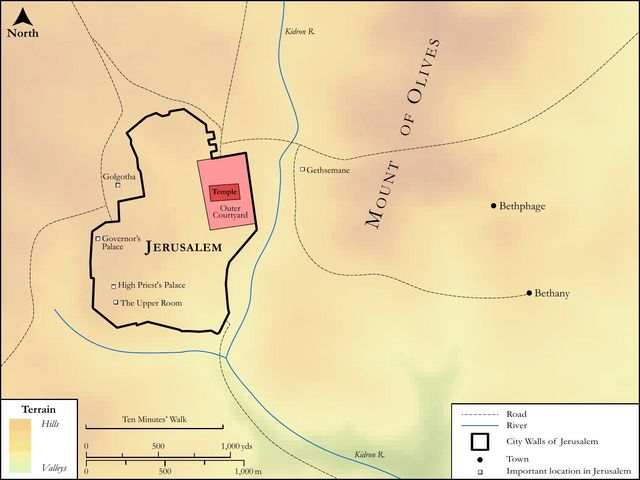
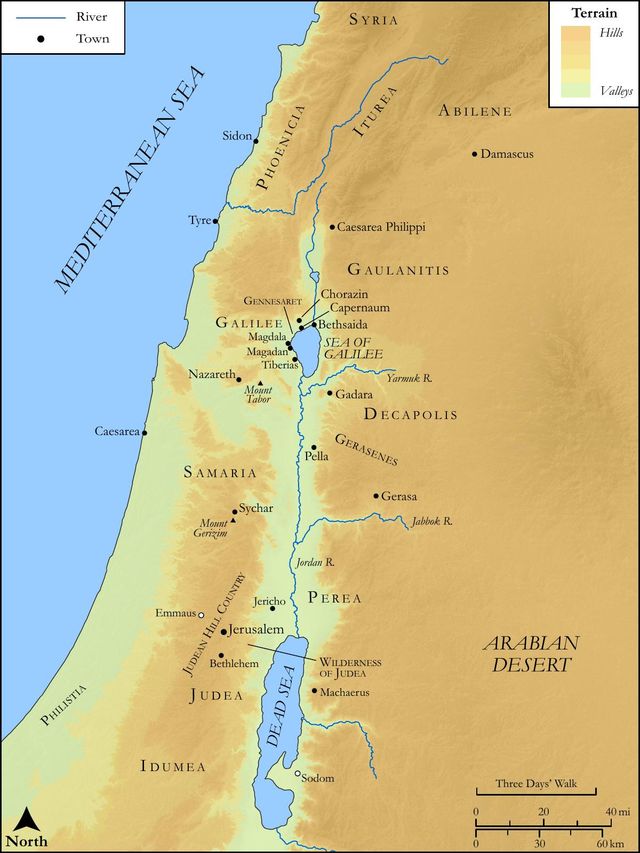
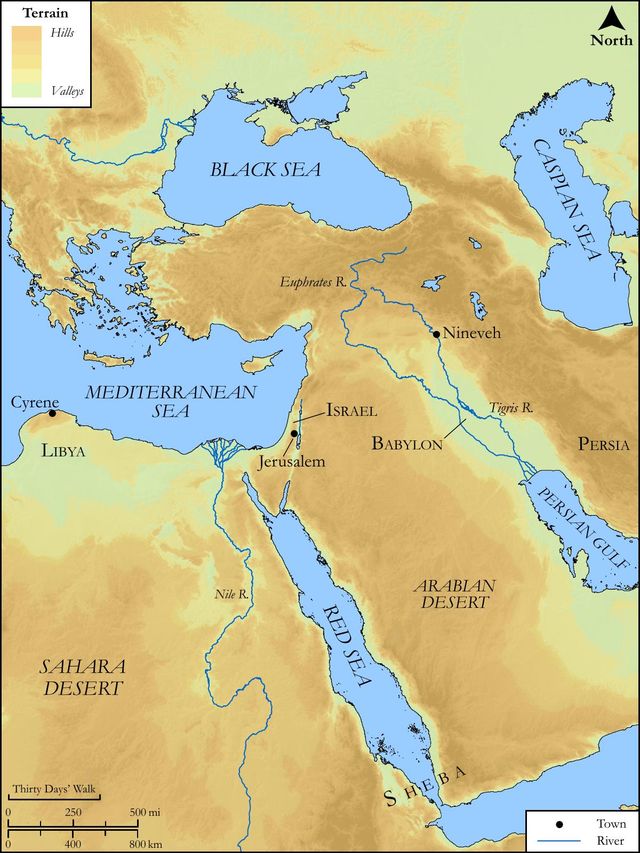
See on the biblical-era maps
Study this verse
Public-domain commentary
Matthew Henry
From his Commentary on the Whole Bible. Henry comments on passages, not single verses — this entry covers Matthew 18:1–35. His four-level outline is real structure in the source text, so it is rendered as structure.
As there never was a greater pattern of humility, so there never was a greater preacher of it, than Christ; he took all occasions to command it, to commend it, to his disciples and followers.
I.The occasion of this discourse concerning humility was an unbecoming contest among the disciples for precedency; they came to him, saying, among themselves (for they were ashamed to ask him, Mar 9:34), Who is the greatest in the kingdom of heaven? They mean not, who by character (then the question had been good, that they might know what graces and duties to excel in), but who by name. They had heard much, and preached much, of the kingdom of heaven, the kingdom of the Messiah, his church in this world; but ass yet they were so far from having any clear notion of it, that they dreamt of a temporal kingdom, and the external pomp and power of it. Christ had lately foretold his sufferings, and the glory that should follow, that he should rise again, from whence they expected his kingdom would commence; and now they thought it was time to put in for their places in it; it is good, in such cases, to speak early. Upon other discourses of Christ to that purport, debates of this kind arose (Mat 20:19, Mat 20:20; Luk 22:22, Luk 22:24); he spoke many words of his sufferings, but only one of his glory; yet they fasten upon that, and overlook the other; and, instead of asking how they might have strength and grace to suffer with him, they ask him, "Who shall be highest in reigning with him." Note, Many love to hear and speak of privileges and glory, who are willing to pass by the thoughts of work and trouble. They look so much at the crown, that they forget the yoke and the cross. So the disciples here did, when they asked, Who is the greatest in the kingdom of heaven?
1.They suppose that all who have a place in that kingdom are great, for it is a kingdom of priests. Note, Those are truly great who are truly good; and they will appear so at last, when Christ shall own them as his, though ever so mean and poor in the world.
2.They suppose that there are degrees in this greatness. All the saints are honourable, but not all alike so; one star differs from another star in glory. All David's officers were not worthies, nor all his worthies of the first three.
3.They suppose it must be some of them, that must be prime ministers of state. To whom should King Jesus delight to do honour, but to them who had left all for him, and were now his companions in patience and tribulation?
4.They strive who it should be, each having some pretence or other to it. Peter was always the chief speaker, and already had the keys given him; he expects to be lord-chancellor, or lord-chamberlain of the household, and so to be the greatest. Judas had the bag, and therefore he expects to be lord-treasurer, which, though now he come last, he hopes, will then denominate him the greatest. Simon and Jude are nearly related to Christ, and they hope to take place of all the great officers of state, as princes of the blood. John is the beloved disciple, the favourite of the Prince, and therefore hopes to be the greatest. Andrew was first called, and why should not he be first preferred? Note, We are very apt to amuse and humour ourselves with foolish fancies of things that will never be.
II.The discourse itself, which is a just rebuke to the question, Who shall be greatest? We have abundant reason to think, that if Christ ever intended that Peter and his successors at Rome should be heads of the church, and his chief vicars on earth, having so fair an occasion given him, he would now have let his disciples know it; but so far is he from this, that his answer disallows and condemns the thing itself. Christ will not lodge such an authority or supremacy any where in his church; whoever pretend to it are usurpers; instead of settling any of the disciples in this dignity, he warns them all not to put in for it.
Christ here teacheth them to be humble,
1.By a sign (Mat 18:2); He called a little child to him, and set him in the midst of them. Christ often taught by signs or sensible representations (comparisons to the eye), as the prophets of old. Note, Humility is a lesson so hardly learned, that we have need by all ways and means to be taught it. When we look upon a little child, we should be put in mind of the use Christ made of this child. Sensible things must be improved to spiritual purposes. He set him in the midst of them; not that they might play with him, but that they might learn by him. Grown men, and great men, should not disdain the company of little children, or think it below them to take notice of them. They may either speak to them, and give instruction to them; or look upon them, and receive instruction from them. Christ himself, when a child, was in the midst of the doctors, Luk 2:46.
2.By as sermon upon this sign; in which he shows them and us,
(1.)The necessity of humility, Mat 18:3. His preface is solemn, and commands both attention and assent; Verily I say unto you, I, the Amen, the faithful Witness, say it, Except ye be converted, and become as little children, ye shall not enter into the kingdom of heaven. Here observe,
[1.]What it is that he requires and insists upon.
First, "You must be converted, you must be of another mind, and in another frame and temper, must have other thoughts, both of yourselves and of the kingdom of heaven, before you be fit for a place in it. The pride, ambition, and affectation of honour and dominion, which appear in you, must be repented of, mortified, and reformed, and you must come to yourselves." Note, Besides the first conversion of a soul from a state of nature to a state of grace, there are after-conversions from particular paths of backsliding, which are equally necessary to salvation. Every step out of the way by sin, must be a step into it again by repentance. When Peter repented of his denying his Master, he was converted. Secondly, You must become as little children. Note, Converting grace makes us like little children, not foolish as children (Co1 14:20), nor fickle (Eph 4:14), nor playful (Mat 11:16); but, as children, we must desire the sincere milk of the word (Pe1 2:2); as children, we must be careful for nothing, but leave it to our heavenly Father to care for us (Mat 6:31); we must, as children, be harmless and inoffensive, and void of malice (Co1 14:20), governable, and under command (Gal 4:2); and (which is here chiefly intended) we must be humble as little children, who do not take state upon them, nor stand upon the punctilios of honour; the child of a gentleman will play with the child of a beggar (Rom 12:16), the child in rags, if it have the breast, is well enough pleased, and envies not the gaiety of the child in silk; little children have no great aims at great places, or projects to raise themselves in the world; they exercise not themselves in things too high for them; and we should in like manner behave, and quiet ourselves, Psa 131:1, Psa 131:2. As children are little in body and low in stature, so we must be little and low in spirit, and in our thoughts of ourselves. This is a temper which leads to other good dispositions; the age of childhood is the learning age.
[2.]What stress he lays upon this; Without this, you shall not enter into the kingdom of heaven. Note, Disciples of Christ have need to be kept in awe by threatenings, that they may fear lest they seem to come short, Heb 4:1. The disciples, when they put that question (Mat 18:1), thought themselves sure of the kingdom of heaven; but Christ awakens them to be jealous of themselves. They were ambitious of being greatest in the kingdom of heaven; Christ tells them, that, except they came to a better temper, they should never come thither. Note, many that set up for great ones in the church, prove not only little, but nothing, and are found to have no part or lot in the matter. Our Lord designs here to show the great danger of pride and ambition; whatever profession men make, if they allow themselves in this sin, they will be rejected both from God's tabernacle and from his holy hill. Pride threw the angels that sinned out of heaven, and will keep us out, if we be not converted from it. They that are lifted up with pride, fall into the condemnation of the devil; to prevent this, we must become as little children, and, in order to do that, must be born again, must put on the new man, must be like the holy child Jesus; so he is called, even after his ascension, Act 4:27.
(2.)He shows the honour and advancement that attend humility (Mat 18:4), thus furnishing a direct but surprising answer to their question. He that humbles himself as a little child, though he may fear that hereby he will render himself contemptible, as men of timid minds, who thereby throw themselves out of the way of preferment, yet the same is greatest in the kingdom of heaven. Note, The humblest Christians are the best Christians, and most like to Christ, and highest in his favour; are best disposed for the communications of divine grace, and fittest to serve God in this world, and enjoy him in another. They are great, for God overlooks heaven and earth, to look on such; and certainly those are to be most respected and honoured in the church that are most humble and self-denying; for, though they least seek it, they best deserve it.
(3.)The special care Christ takes for those that are humble; he espouses their cause, protects them, interests himself in their concerns, and will see that they are not wronged, without being righted.
Those that thus humble themselves will be afraid,
[1.]That nobody will receive them; but (Mat 18:5), Whoso shall receive one such little child in my name, receiveth me. Whatever kindnesses are done to such, Christ takes as done to himself. Whoso entertains a meek and humble Christian, keeps him in countenance, will not let him lose by his modesty, takes him into his love and friendship, and society and care, and studies to do him a kindness; and doth this in Christ's name, for his sake, because he bears the image of Christ, serves Christ, and because Christ has received him; this shall be accepted and recompensed as an acceptable piece of respect to Christ. Observe, Though it be but one such little child that is received in Christ's name, it shall be accepted. Note, The tender regard Christ has to his church extends itself to every particular member, even the meanest; not only to the whole family, but to every child of the family; the less they are in themselves, to whom we show kindness, the more there is of good will in it to Christ; the less it is for their sakes, the more it is for his; and he takes it accordingly. If Christ were personally among us, we think we should never do enough to welcome him; the poor, the poor in spirit, we have always with us, and they are his receivers. See Mat 25:35-40.
[2.]They will be afraid that every body will abuse them; the basest men delight to trample upon the humble; Vexat censura columbas - Censure pounces on doves. This objection he obviates (Mat 18:6), where he warns all people, as they will answer it at their utmost peril, not to offer any injury to one of Christ's little ones. This word makes a wall of fire about them; he that touches them, touches the apple of God's eye.
Observe, First, The crime supposed; offending one of these little ones that believe in Christ. Their believing in Christ, though they be little ones, unites them to him, and interests him in their cause, so that, as they partake of the benefit of his sufferings, he also partakes in the wrong of theirs. Even the little ones that believe have the same privileges with the great ones, for they have all obtained like precious faith. There are those that offend these little ones, by drawing them to sin (Co1 8:10, Co1 8:11), grieving and vexing their righteous souls, discouraging them, taking occasion from their mildness to make a prey of them in their persons, families, goods, or good name. Thus the best men have often met with the worst treatment in this world.
Secondly, The punishment of this crime; intimated in that word, Better for him that he were drowned in the depth of the sea. The sin is so heinous, and the ruin proportionably so great, that he had better undergo the sorest punishments inflicted on the worst of malefactors, which can only kill the body. Note, 1. Hell is worse than the depth of the sea; for it is a bottomless pit, and it is a burning lake. The depth of the sea is only killing, but hell is tormenting. We meet with one that had comfort in the depth of the sea, it was Jonah (Jon 2:2, Jon 2:4, Jon 2:9); but never any had the least grain or glimpse of comfort in hell, nor will have to eternity. 2. The irresistible irrevocable doom of the great Judge will sink sooner and surer, and bind faster, than a mill-stone hanged about the neck. It fixes a great gulf, which can never be broken through, Luk 16:26. Offending Christ's little ones, though by omission, is assigned as the reason of that dreadful sentence, Go ye cursed, which will at last be the doom of proud persecutors.
Historical interpretation
Seven Centuries of Reception
10 surviving comments on this verse. Each one is dated, so this reads as a timeline rather than a list.
Select a marker to jump to its quote. Markers stagger vertically where authors wrote within a few decades of each other.
"If your brother sin against you in word, and make amends to you, receive him seven times in a day." Simon, His disciple, said to Him, "Seven times in a day?" The Lord answered and said to him, "I say unto you until seventy times seven."
Moreover, debt is, in the Scriptures, a figure of guilt; because it is equally due to the sentence of judgment, and is exacted by it: nor does it evade the justice of exaction, unless the exaction be remitted, just as the lord remitted to that slave in the parable his debt; for hither does the scope of the whole parable tend.
As regards the rule of peace, which is so pleasing to God, who in the world that is prone to impatience will even once forgive his brother, I will not say "seven times," or "seventy-seven times? " Who that is contemplating a suit against his adversary will compose the matter by agreement, unless he first begin by lopping off chagrin, hardheartedness, and bitterness, which are in fact the poisonous outgrowths of impatience? How will you "remit, and remission shall be granted" you if the absence of patience makes you tenacious of a wrong? No one who is at variance with his brother in his mind, will finish offering his "duteous gift at the altar," unless he first, with intent to "re-conciliate his brother," return to patience.
And when Peter had put the question whether remission were to be granted to a brother seven times, "Nay," saith He, "seventy-seven times; " in order to remould the Law for the better; because in Genesis vengeance was assigned "seven times" in the case of Cain, but in that of Lamech "seventy-seven times.
Or, In whatever the two testaments are in agreement, for this every prayer is found acceptable to God.
Or, because the number six seems to denote toil and labour, and the number seven repose, He says that forgiveness should be given to all brethren who live in this world, and sin in the things of this world. But if any commit transgressions beyond these things, he shall then have no further forgiveness.
When Peter asked him whether he should forgive his brother sinning against him up to seven times, the Lord replied, “Not up to seven times but up to seventy times seven times.” In every way he teaches us to be like him in humility and goodness. In weakening and breaking the impulses of our rampant passions he strengthens us by the example of his leniency, by granting us in faith pardon of all our sins. For the vices of our nature did not merit pardon. Therefore all pardon comes from him. In fact, he pardons even those sins that remain in one after confession.The penalty to be paid through Cain was established at sevenfold, but that sin was against a man, against his brother Abel, to the point of murder. But in Lamech the penalty was established at seventy times seven times, and, as we believe, the penalty was established on those responsible for the Lord’s Passion. But the Lord through the confession of believers grants pardon for this crime. By the gift of baptism he grants the grace of salvation to his revilers and persecutors. How much more is it necessary, he shows, that pardon be returned by us without measure or number. And we should not think how many times we forgive, but we should cease to be angry with those who sin against us, as often as the occasion for anger exists. Pardon’s frequency shows us that in our case there is never a time for anger, since God pardons us for all sins in their entirety by his gift rather than by our merit. Nor should we be excused from the requirement of giving pardon that number of times [i.e., seventy times seven], since through the grace of the gospel God has granted us pardon without measure.
(Hom. lxi.) Peter thought that he had made a large allowance; but what answers Christ the Lover of men? it follows, Jesus saith unto him, I say not unto thee, Until seven times, but, Until seventy times seven.
When He says, Until seventy times seven, He does not limit a definite number within which forgiveness must be kept; but He signifies thereby something endless and ever enduring.
Peter supposed he was saying something great, wherefore also as aiming at greatness he added, "Until seven times?" For this thing, saith he, which Thou hast commanded to do, how often shall I do? For if he forever sins, but forever when reproved repents, how often dost thou command us to bear with this man? For with regard to that other who repents not, neither acknowledges his own faults, Thou hast set a limit, by saying, "Let him be to thee as the heathen and the publican;" but to this no longer so, but Thou hast commanded to accept him.
How often then ought I to bear with him, being told his faults, and repenting? Is it enough for seven times?
What then saith Christ, the good God, who is loving towards man? "I say not unto thee, until seven times, but, until seventy times seven," not setting a number here, but what is infinite and perpetual and forever. For even as ten thousand times signifies often, so here too. For by saying, "The barren hath borne seven," the Scripture means many. So that He hath not limited the forgiveness by a number, but hath declared that it is to be perpetual and forever.
This at least He indicated by the parable that is put after. For that He might not seem to any to enjoin great things and hard to bear, by saying, "Seventy times seven," He added this parable, at once both leading them on to what He had said, and putting down him who was priding himself upon this, and showing the act was not grievous, but rather very easy. Therefore let me add, He brought forward His own love to man, that by the comparison, as He saith, thou mightest learn, that though thou forgive seventy times seven, though thou continually pardon thy neighbor for absolutely all his sins, as a drop of water to an endless sea, so much, or rather much more, doth thy love to man come short in comparison of the boundless goodness of God, of which thou standest in need, for that thou art to be judged, and to give an account.
(Verse 21, 22.) Then Peter came to him and said, Lord, how often shall my brother sin against me, and I forgive him? Up to seven times? Jesus said to him, I do not say to you, up to seven times, but up to seventy times seven. The Lord's words weighed heavily on him, and they could not be broken like a triple cord. Earlier, he had said, See that you do not despise one of these little ones; and he had added, If your brother sins against you, go and show him his fault, just between the two of you. If he listens to you, you have won your brother over. And he had promised a reward, saying, If two of you agree on earth about anything they ask for, it will be done for them by my Father in heaven. For where two or three gather in my name, there am I with them. The apostle Peter, provoked, asks how many times he should forgive his brother who sins against him, and when he proposes the question, should it be up to seven times? Jesus responds: Not up to seven times, but up to seventy times seven, that is, four hundred and ninety times, so that he should forgive his brother who sins against him as many times in a day as that brother cannot sin.
It is one thing to give pardon to a brother when he seeks it, that he may live with us in social charity, as Joseph to his brethren; and another to a hostile foe, that we may wish him good, and if we can do him good, as David mourning for Saul.
Continue studying Matthew 18:21 across the web’s major study libraries — every link below opens this exact verse, chapter, or book on the destination site.
Read & Compare
 BibleGatewayThis verse in more than 200 translations and 70 languages.
 Bible.comThe YouVersion reader — hundreds of translations, reading plans, and highlights.
 ESV.orgCrossway's official English Standard Version reader.
 NET BibleThe NET translation with 60,000+ translators' notes on every rendering decision.
 STEP BibleTyndale House's free study tool — original text, vocabulary, and scholarly resources.
 BibliaLogos Bible Software's free web reader.
 USCCBThe New American Bible (Revised Edition) with the U.S. bishops' study notes.
Commentaries
 BibleHub CommentariesDozens of classic commentaries on this verse, gathered on one page.
 StudyLightMore than 100 commentary sets — the largest collection on the web.
 BibleRefPlain-English commentary on what this verse means, verse by verse.
 Enduring WordDavid Guzik's free commentary on this chapter, widely used by Bible teachers.
 Bible Study ToolsVerse commentary alongside Greek and Hebrew study aids.
Original Language & Research
- BibleHub InterlinearThe verse word by word — original language, transliteration, and English.
- BibleHub LexiconEvery word's original-language definition and Strong's entry.
 Blue Letter BibleDeep-study tools — Strong's numbers, concordance, and word studies.
 CNTR CollationThe earliest Greek manuscripts of this verse, collated letter by letter.
Sermons, Hymns & Audio


TrulyRandomVerse is not affiliated with these sites and doesn’t control their content. They’re linked because they’re genuinely useful.
Summary
Matthew 18:21 captures a pivotal moment when Peter, seeking clarity on the boundaries of forgiveness, approaches Jesus with a question that reflects a common human tendency to quantify grace. His inquiry, "Lord, how oft shall my brother sin against me, and I forgive him? till seven times?", sets the stage for Jesus' radical teaching on limitless mercy and reconciliation, challenging conventional wisdom and preparing the disciples for a deeper understanding of divine forgiveness.
Context
ShowHideLiterary Context
This verse is deeply embedded within Jesus' "Discourse on Community Life" in Matthew 18. Immediately preceding Peter's question, Jesus has just outlined the process for addressing a sinning brother, emphasizing private confrontation, then involving witnesses, and finally, if necessary, bringing the matter before the church (Matthew 18:15-17). The discourse also includes teachings on humility (Matthew 18:1-4), the dangers of causing others to stumble (Matthew 18:5-9), and the Parable of the Lost Sheep (Matthew 18:10-14), all of which underscore God's value for each individual and His desire for restoration. Peter's question naturally arises from the practical challenges of ongoing sin within a community striving for such ideals, directly leading into Jesus' profound Parable of the Unforgiving Servant (Matthew 18:23-35), which serves as the powerful illustration of His answer.
Historical & Cultural Context
In first-century Judaism, the concept of forgiveness was often framed within specific limits. Rabbinic tradition, drawing from texts like Amos 1:3, commonly suggested that one should forgive an offense up to three times. Beyond that, a person was not obligated to extend forgiveness. Peter, in asking "till seven times?", likely believed he was proposing an exceptionally generous and even radical extension of this traditional boundary. His "seven times" was a significant increase over the customary three, reflecting a desire to go above and beyond, yet still within a quantifiable limit. This cultural backdrop highlights the revolutionary nature of Jesus' subsequent teaching, which completely transcends such numerical limitations, moving the concept of forgiveness from a legalistic calculation to a boundless act of grace. The setting for this discourse was likely Capernaum or a nearby area in Galilee, where Jesus frequently taught His disciples on matters of kingdom ethics.
Key Themes
ShowHidePeter's question in Matthew 18:21 contributes to several overarching themes in Matthew's Gospel and the broader biblical narrative. Firstly, it highlights the Nature of Forgiveness, contrasting human attempts to quantify and limit it with God's boundless mercy. Peter's "seven times" reveals a natural human inclination to set boundaries on grace, which Jesus will dramatically challenge in the very next verse (Matthew 18:22). Secondly, the question underscores Relational Responsibility within the community of believers. The phrase "my brother sin against me" emphasizes the personal impact of sin and the necessity of reconciliation for maintaining healthy, Christ-like relationships. This aligns with the broader emphasis in Matthew 18 on the importance of unity and restoration among God's people. Finally, Peter's inquiry sets the stage for Jesus' teaching on Grace Over Law, moving beyond mere adherence to rules or numerical quotas towards a spirit of radical, unmerited favor that mirrors the character of God Himself, as demonstrated in the Parable of the Unforgiving Servant (Matthew 18:23-35).
Exposition and Analysis
ShowHideKey Word Analysis
ShowHideThis verb means "to miss the mark," "to err," or "to fail to hit the target." In a moral and spiritual sense, it signifies a deviation from God's perfect standard or will. Peter's use of this word indicates a clear transgression or offense committed by one brother against another, highlighting the real and painful impact of such actions within the community. The repeated nature implied by "how oft" underscores the persistent challenge of living in relationship with imperfect people.
This crucial verb literally means "to send forth," "to let go," "to release," or "to dismiss." In the context of offenses, it implies a complete release from debt, obligation, or penalty. When applied to sin, as it often is in the New Testament, it signifies the cancellation of a debt, the removal of a burden, or the setting free of one who is bound. Peter's question concerns the act of actively releasing the offender from the burden of their wrong, rather than merely overlooking or ignoring it.
This adverb simply means "seven times." Peter's choice of this number is significant because it doubles the traditional rabbinic teaching of forgiving three times and adds one, indicating what he likely considered to be an exceptionally generous and even exhaustive measure of forgiveness. This specific, quantifiable number serves as a stark contrast to Jesus' subsequent answer, which will dismantle the very idea of numerical limits on forgiveness.
Verse Breakdown
ShowHide"Then came Peter to him, and said"
This opening phrase establishes the immediate interaction between Peter and Jesus, indicating a direct, personal inquiry. Peter, often serving as the spokesperson for the disciples, steps forward to address a practical concern that likely resonated with all of them regarding interpersonal relationships within their nascent community. The "Then" connects this question directly to Jesus' preceding teaching on reconciliation and church discipline in Matthew 18:15-20.
"Lord, how oft shall my brother sin against me, and I forgive him?"
Peter addresses Jesus with respect ("Lord"), acknowledging His authority as a teacher. His question reveals a struggle common to human nature: how many times does one have to endure an offense and still extend grace? The phrase "my brother" emphasizes the context of community and familial relationships within the body of believers, making the issue deeply personal and relevant to daily interactions. Peter's inquiry seeks a quantifiable limit to the act of forgiveness.
"till seven times?"
This concluding phrase is Peter's proposed answer, framed as a question seeking confirmation. By suggesting "seven times," Peter likely felt he was being exceptionally generous, surpassing the common rabbinic standard of forgiving three times. This reveals his assumption that forgiveness, while important, must have a finite boundary, beyond which one is no longer obligated to extend grace. It sets up a dramatic contrast with Jesus' response, which will radically redefine the scope of forgiveness.
Literary Devices
ShowHideMatthew 18:21 effectively employs several literary devices. The primary device is Interrogative Question, as Peter directly poses a query to Jesus. This serves to engage the reader and set the stage for Jesus' subsequent teaching, inviting reflection on the very human tendency to seek limits on grace. Peter's suggestion of "seven times" can be seen as a form of Hyperbole from his perspective, as he is proposing a number far exceeding the common cultural expectation, believing it to be an extreme act of generosity. This hyperbole, however, is immediately undercut by Jesus' even greater, truly hyperbolic response in the following verse, highlighting the vast difference between human and divine standards. Furthermore, the verse functions as a powerful Anticipation, building suspense and preparing the audience for Jesus' profound and counter-cultural teaching on limitless forgiveness, which will be further elaborated through the Parable of the Unforgiving Servant in Matthew 18:23-35.
Theological and Thematic Connections
ShowHidePeter's question in Matthew 18:21, though seemingly simple, delves into the profound theological tension between human inclination to limit grace and God's boundless mercy. It highlights the human struggle to reconcile the ideal of forgiveness with the reality of repeated offense. The underlying theological principle that Jesus will unveil is that our forgiveness of others should mirror the limitless forgiveness we have received from God. This is not merely a moral imperative but a theological reflection of God's character, who does not keep a tally of our sins but extends grace "seventy times seven"—an idiom for infinite forgiveness. This teaching moves beyond a transactional understanding of forgiveness to a transformative one, rooted in the overflowing grace of the Kingdom of God.
Reflection and Application
ShowHidePeter's question in Matthew 18:21 resonates deeply with the human experience of navigating relationships. We, like Peter, often seek a quantifiable limit to our patience and grace, especially when faced with repeated offenses from those closest to us. This verse challenges us to examine our own hearts: Do we keep a ledger of wrongs? Do we believe there's a point where we are "justified" in withholding forgiveness? Jesus' response, initiated by Peter's question, calls us to a radical reorientation of our understanding of forgiveness, moving from a transactional model based on merit or quantity to a transformative one rooted in the boundless mercy we have received from God. It encourages a spirit of humility, patience, and persistent love, reminding us that our capacity to forgive others is a direct reflection of our own experience of God's limitless forgiveness, prompting us to extend grace not because the other person deserves it, but because we ourselves are recipients of unmerited favor.
Questions for Reflection
ShowHideFAQ
ShowHideWhat was the common understanding of forgiveness in Peter's time, and how did his question relate to it?
ShowHideIn Peter's time, it was common for Jewish teachers to suggest forgiving an offense up to three times, often referencing the prophet Amos, who listed three transgressions before judgment (Amos 1:3). Peter's question, "till seven times?", was likely an attempt to show exceptional generosity, going beyond the traditional rabbinic teaching. He probably thought he was proposing a very high, even radical, standard of forgiveness. His question highlights the human inclination to quantify and set boundaries on grace, which Jesus' subsequent teaching would dismantle entirely.
Christ-Centered Fulfillment
ShowHideMatthew 18:21, with Peter's question about the limits of forgiveness, finds its ultimate fulfillment and radical redefinition in the person and work of Jesus Christ. Peter's attempt to quantify forgiveness ("till seven times?") is shattered by Jesus' response in Matthew 18:22, which points to an infinite, unquantifiable forgiveness ("seventy times seven"). This boundless forgiveness is not merely a moral ideal but is profoundly rooted in Christ's atoning sacrifice. On the cross, Jesus demonstrated the ultimate act of forgiveness, crying out, "Father, forgive them, for they know not what they do" even as He suffered for the sins of humanity. His death paid the infinite debt of our sin, releasing us from its bondage and offering a forgiveness that is truly without limit. Therefore, our call to forgive others, as articulated by Paul in Colossians 3:13 to "forgive one another, as the Lord has forgiven you," is not a burdensome command but an overflow of the grace we have received through Christ. He is the embodiment of infinite forgiveness, empowering believers to extend the same boundless mercy to others, reflecting the very heart of God revealed in the New Covenant.