


Matthew 20:20
- ΤότεToteThenG5119ADVAdverb
- προσῆλθενprosēlthencameG4334V-2AAI-3SVerb 2nd Aorist Active Indicative 3rd Singular
- αὐτῷautōto HimG846P-DSMPersonal pronoun Dative Singular Masculine
- ἡhētheG3588T-NSFDefinite article Nominative Singular Feminine
- μήτηρmētērmotherG3384N-NSFNoun Nominative Singular Feminine
- τῶνtōnof theG3588T-GPMDefinite article Genitive Plural Masculine
- υἱῶνhuiōnsonsG5207N-GPMNoun Genitive Plural Masculine
- ΖεβεδαίουZebedaiouof ZebedeeG2199N-GSM-PNoun Genitive Singular Masculine Individual
- μετὰmetawithG3326PREPPreposition
- τῶνtōntheG3588T-GPMDefinite article Genitive Plural Masculine
- υἱῶνhuiōnsonsG5207N-GPMNoun Genitive Plural Masculine
- αὐτῆςautēsof herG846P-GSFPersonal pronoun Genitive Singular Feminine
- προσκυνοῦσαproskunousakneeling downG4352V-PAP-NSFVerb Present Active Participle Nominative Singular Feminine
- καὶkaiandG2532CONJConjunction
- αἰτοῦσάaitousaaskingG154V-PAP-NSFVerb Present Active Participle Nominative Singular Feminine
- τιtisomethingG5100X-ASNIndefinite pronoun Accusative Singular Neuter
- ἀπ᾽ap᾽away fromG575PREPPreposition
- αὐτοῦautouHimG846P-GSMPersonal pronoun Genitive Singular Masculine
English is a literal word-by-word gloss of the Greek, not the KJV's wording. Why?
This is the original text the KJV's translators worked from — each Greek word with its own literal English meaning in this verse, prepared by scholars at Tyndale House, Cambridge. The KJV translates whole sentences, not word by word, so its wording differs: one Greek word can become several English words, and the KJV may choose “charity” where the gloss reads “love”. Both are faithful — they answer different questions. For the KJV's own rendering, switch to the KJV text.
Details
See on the biblical-era map
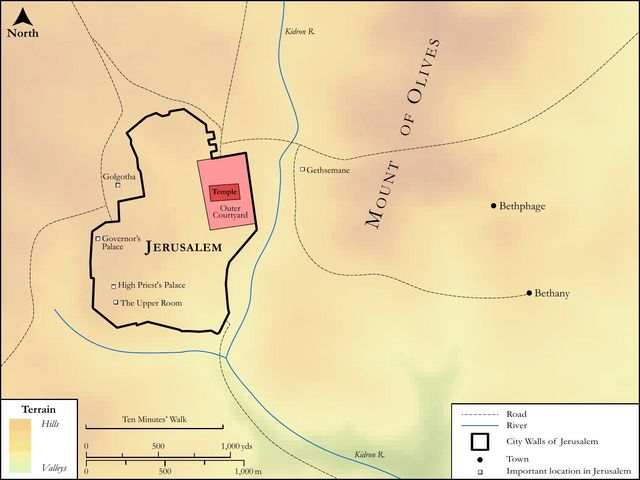
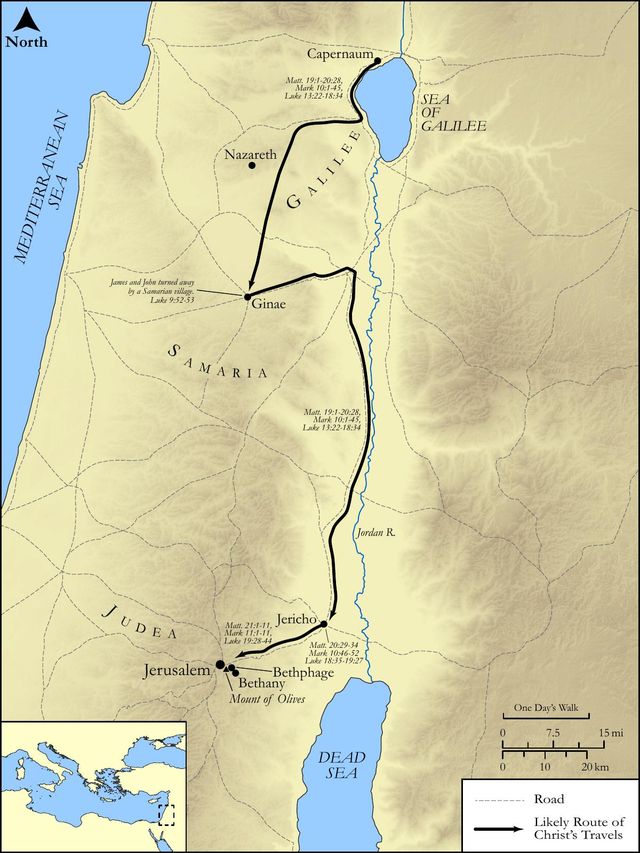
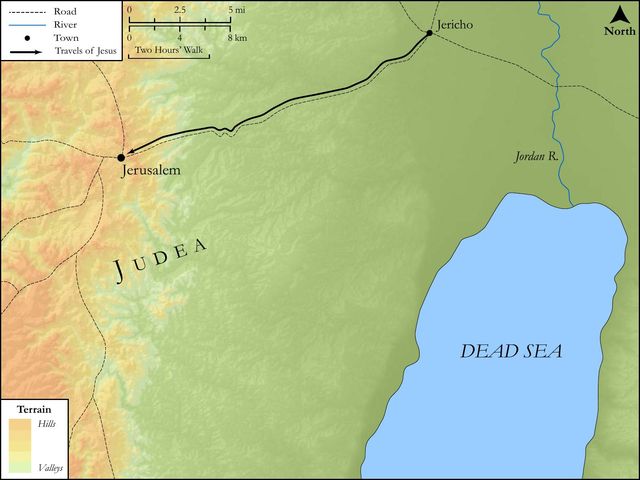
Study this verse
Historical interpretation
Six Centuries of Reception
11 surviving comments on this verse. Each one is dated, so this reads as a timeline rather than a list.
Select a marker to jump to its quote. Markers stagger vertically where authors wrote within a few decades of each other.
Then to every conqueror the Spirit promises now the tree of life, and exemption from the second death; now the hidden manna with the stone of glistening whiteness, and the name unknown ( to every man save him that receiveth it); now power to rule with a rod of iron, and the brightness of the morning star; now the being clothed in white raiment, and not having the name blotted out of the book of life, and being made in the temple of God a pillar with the inscription on it of the name of God and of the Lord, and of the heavenly Jerusalem; now a sitting with the Lord on His throne,-which once was persistently refused to the sons of Zebedee. Who, pray, are these so blessed conquerors, but martyrs in the strict sense of the word? For indeed theirs are the victories whose also are the fights; theirs, however, are the fights whose also is the blood.
They know not what they ask, because there was no doubt of the future glory of the Apostles; His former discourse had assured them that they should judge the world.
The Lord therefore commends their faith, in that He says that they are able to suffer martyrdom together with Him; but, To sit on my right hand and on my left is not mine to give, but for whom it is prepared of my Father, Though indeed, as far as we can judge, that honour is so set apart for others, as that the Apostles shall not be strangers to it, who shall sit on the throne of the Twelve Patriarchs to judge Israel; also, as may be collected out of the Gospels themselves, Moses and Elias shall sit with them in the kingdom of heaven, seeing that it was in their company that He appeared on the mount in His apparel of splendour.
They saw the disciples honoured before others, and had heard that ye shall sit upon twelve thrones, (Mat. 19:28.) whereupon they sought to have the primacy of that seat. And that others were in greater honour with Christ they knew, and they feared that Peter was preferred before them; wherefore (as is mentioned by another Evangelist) because they were now near to Jerusalem, they thought that the kingdom of God was at the door, that is, was something to be perceived by sense. Whence it is clear that they sought nothing spiritual, and had no conception of a kingdom above.
This He says to show either that they sought nothing spiritual, or that had they known for what they asked, they would not have asked that which was so far beyond their faculties.
He says therefore, Can ye drink it? as much as to say, You ask me of honours and crowns, but I speak to you of labour and travail, for this is no time for rewards. He draws their attention by the manner of His question, for He says not, Are ye able to shed your blood? but, Are ye able to drink of the cup? then He adds, which I shall drink of?
Or they offer this in the eagerness of their desire, expecting that for their thus speaking they should have what they desired. But He foretels great blessings for them, to wit, that they should be made worthy of martyrdom. He saith unto them, Ye shall indeed drink of my cup.
Or otherwise. That seat seems to be unapproachable to all, not only men, but Angels also; for so Paul assigns it peculiarly to the Only-Begotten, saying, To which of the Angels said he at any time, Sit thou on my right hand? (Heb. 1:13.) The Lord therefore makes answer, not as though in verity there were any that should sit there, but as condescending to the apprehensions of the petitioners. They asked but this one grant, to be before others near Him; but the Lord answers, Ye shall die for My sake, yet is not that sufficient to make you obtain the first rank. For if there shall come another with martyrdom, and having virtue greater than yours, I will not, because I love you, put him out, and give you precedence. But that they should not suppose that he lacked power, He said not absolutely, It is not Mine to give, but, It is not mine to give to you, but to those for whom it is prepared; that is, to those who are made illustrious by their deeds.
So far at least were they from understanding clearly what He said, that the sons of Zebedee at the same time came to Him, and spake to Him of precedence. "We desire," it is said, "that one should sit on Thy right hand, and one on Thy left." How then doth this evangelist say, that their mother came to Him? It is probable both things were done. I mean, that they took their mother with them, with the purpose of making their entreaty stronger, and in this way to prevail with Christ.
For in proof that this is true, as I say, and the request was rather theirs, and that being ashamed they put forward their mother, mark how Christ directs His words to them.
But rather let us learn, first, what do they ask, and with what disposition, and whence they were moved to this? Whence then were they moved to this? They saw themselves honored above the rest, and expected from that they should obtain this request also. But what can it be they ask? Hear another evangelist plainly declaring this. For, "Because He was nigh," it is said, "to Jerusalem, and because they thought the kingdom of God should immediately appear," they asked these things. For they supposed that this was at the doors, and visible, and that having obtained what they asked, they would undergo none of the painful things. For neither for its own sake only did they seek it, but as though they would also escape the hardships.
Wherefore also Christ in the first place leads them off from these thoughts, commanding them to await slaughter and dangers, and the utmost terrors. For, "Are ye able," saith He, "to drink of the cup that I drink of?"
But let no man be troubled at the apostles being in such an imperfect state. For not yet was the cross accomplished, not yet the grace of the Spirit given. But if thou wouldest learn their virtue, notice them after these things, and thou wilt see them superior to every passion. For with this object He reveals their deficiencies, that after these things thou mightest know what manner of men they became by grace.
That then they were asking, in fact, for nothing spiritual, neither had a thought of the kingdom above, is manifest from hence. But let us see also, how they come unto Him, and what they say. "We would," it is said, "that whatsoever we shall desire of Thee, Thou shouldest do it for us."
And Christ saith to them, "What would ye?" not being ignorant, but that He may compel them to answer, and lay open the wound, and so apply the medicine. But they out of shame and confusion of face, because under the influence of a human passion they were come to do this, took Him privately apart from the disciples, and asked Him. For they went before, it is said, so that it might not be observable to them, and so said what they wished. For it was their desire, as I suppose, because they heard, "Ye shall sit on twelve thrones," to have the first place of these seats. And that they had an advantage over the others, they knew, but they were afraid of Peter, and say, "Command, that one sit on Thy right hand, one on Thy left;" and they urge Him, saying, "Command."
What then saith He? Showing, that they asked nothing spiritual, neither, if they had known again what they were asking, would they have ventured to ask for so much, He saith, "Ye know not what ye ask," how great, how marvellous, how surpassing even the powers above. After that He adds, "Are ye able to drink of the cup that I shall drink of, and to be baptized with the baptism that I am baptized with?" Seest thou, how He straightway drew them off from their suspicion, by framing His discourse from the contrary topics? For ye, He saith, talk to me of honor and crowns, but I to you of conflicts and labors. For this is not the season for rewards, neither shall that glory of mine appear now, but the present time is one of slaughter, and wars, and dangers.
And see how by the form of His question, He both urges and attracts them. For He said not, "Are ye able to be slain?" "Are ye able to pour forth your blood?" but how? "Are ye able to drink of the cup?" Then to attract them to it, He saith, "Which I shall drink of," that by their fellowship with Him in it they might be made more ready.
And a baptism again calls He it; showing that great was the cleansing the world was to have from the things that were being done.
"They say unto Him, We are able." Out of their forwardness they straightway undertook it, not knowing even this which they were saying, but looking to hear what they had asked.
What then saith He? "Ye shall drink indeed of my cup, and be baptized with the baptism that I am baptized with." Great blessings did He foretell to them. His meaning is, ye shall be counted worthy of martyrdom, and shall suffer these things which I suffer; ye shall close your life by a violent death, and in these things ye shall be partakers with me; "But to sit on my right hand and on my left is not mine to give, but it shall be given to them for whom it is prepared of my Father."
Having first elevated their souls, and made them of a higher character, and having rendered them such as sorrow could not subdue, then He reproves their request.
But what can be this present saying? For indeed there are two points that are subjects of inquiry to many: one, if it be prepared for any to sit on His right hand; and then, if the Lord of all hath not power to bestow it on them for whom it is prepared.
What then is the saying? If we solve the former point, then the second also will be clear to the inquirers. What then is this? No one shall sit on His right hand nor on His left. For that throne is inaccessible to all, I do not say to men only, and saints, and apostles, but even to angels, and archangels, and to all the powers that are on high.
At least Paul puts it as a peculiar privilege of the Only-Begotten, saying, "To which of the angels said He at any time, Sit thou on my right hand?" And of the angels He saith, "Who maketh His angels spirits;" but unto the Son, "Thy throne, O God."
How then saith He, "To sit on my right hand and on my left is not mine to give," as though there are some that should sit there? Not as though there are; far from it; but He makes answer to the thoughts of them who ask the favor, condescending to their understanding. For neither did they know that lofty throne, and His sitting at the right hand of the Father; how should they, when even the things that were much lower than these, and were daily instilled into them, they understood not? but they sought one thing only, to enjoy the first honors, and to stand before the rest, and that no one should stand before them with Him; even as I have already said before, that, since they heard of twelve thrones, in ignorance what the saying could mean, they asked for the first place.
What therefore Christ saith is this: "Ye shall die indeed for me, and shall be slain for the sake of the gospel, and shall be partakers with me, as far as regards the passion: but this is not sufficient to secure you the enjoyment of the first seat, and to cause that ye should occupy the first place. For if any one else should come, together with the martyrdom, possessed of all the other parts of virtue far more fully than you, not because I love you now, and prefer you to the rest, therefore shall I set aside him that is distinguished by his good works, and give the first honors to you."
But thus indeed He did not say it, so as not to pain them, but darkly He intimates the self-same thing, saying, "Ye shall drink indeed of my cup, and ye shall be baptized with the baptism that I am baptized with; but to sit on my right hand and on my left, this is not mine to give, but it shall be given to those for whom it is prepared."
But for whom is it prepared? For them who could become distinguished by their works. Therefore He said not, It is not mine to give, but my Father's, lest any should say that He was too weak, or wanting in vigor for their recompense; but how? It is not mine, but of those for whom it is prepared. And in order that what I say may be more plain, let us work it on an illustration, and let us suppose there was some master of the games, then that many excellent combatants went down to the contest, and that some two of the combatants that were most nearly connected with the master of the games were to come to him and say, "Cause us to be crowned and proclaimed," confiding in their good-will and friendship with him; and that he were to say to them, "This is not mine to give, but it shall be given to them for whom it is prepared, by their labors, and their toils;" should we indeed condemn him as powerless? By no means, but we should approve him for his justice, and for having no respect of persons. Like then as we should not say that he did not give the crown from want of vigor, but as not wishing to corrupt the law of the games, nor to disturb the order of justice; in like manner now should I say Christ said this, from every motive to compel them, after the grace of God, to set their hopes of salvation and approval on the proof of their own good works.
Therefore He saith, "For whom it is prepared." For what, saith He, if others should appear better than you? What, if they should do greater things? For shall ye, because ye have become my disciples, therefore enjoy the first honors, if ye yourselves should not appear worthy of the choice?
For that He Himself hath power over the whole, is manifest from His having the entire judgment. For to Peter too He speaks thus, "I will give thee the keys of the Heavens." And Paul also makes this clear where he saith, "Henceforth is laid up for me the crown of righteousness, which the Lord, the righteous judge, will give me in that day; and not to me only, but unto all them also which have loved His appearing." But the appearing was of Christ. But that no one will stand before Paul, is surely clear to every one.
And if He hath expressed these things somewhat obscurely, marvel not. For to lead them on by hidden instruction, not to be rudely pressing Him without object or cause for the first honors (for from a human passion they felt this), and not wishing to give them pain, by the obscurity He effects both these objects.
(Verse 19 onwards) And as they were departing from Jericho, a great crowd followed him. And behold, two blind men sitting by the roadside, heard that Jesus was passing by, and they cried out, saying: Lord, have mercy on us, Son of David. But the crowd rebuked them, telling them to be silent. Yet they cried out even more, saying: Lord, have mercy on us, Son of David. There were many robbers in Jericho who used to attack and harm those who were coming in and going out of Jerusalem; therefore the Lord came to Jericho with his disciples, to heal the wounded and to bring a large crowd with him. Finally, after they want to leave from Jericho, a large crowd followed him. If he had stayed in Jerusalem and never descended to the lowly things, the crowd would still be sitting in darkness and in the shadow of death until today. But there were also two blind men by the road. He calls blind those who could not yet speak: In your light we will see light (Ps. XXXV, 10). Along the road, because they seemed to have knowledge of the Law: but they were ignorant of the way, which is Christ: whom most understand as the Pharisees and Sadducees, and others as both the people, the old Testament and the New: because one, following the written Law, was blind without Christ. Because they could not see by themselves, they heard the proclamations of the Savior, and confessed him as the son of David. But if both blind men are referred to the Jewish people, what follows, 'The crowd rebuked them,' should be understood in relation to the Gentiles: whom the Apostle warns not to boast and be arrogant against their own root (Rom. 11); but since they themselves were grafted in by the error of those before them from the wild olive tree into the good olive tree, they should by no means envy the salvation of those before them. Have mercy on us, O son of David. They are reproached by the crowds, and yet they do not remain silent: but rather they repeat the same thing more frequently, so that they may show the desire for the fullness of true light.
(Verse 20, 21.) Then the mother of the sons of Zebedee came to him with her sons, bowing down and asking something of him. He said to her, 'What do you want?' She replied to him, 'Command that these two sons of mine may sit, one at your right hand and one at your left, in your kingdom.' From this, we can infer that the mother of the sons of Zebedee has the expectation that when the Lord says, 'The Son of Man will be delivered to the chief priests and scribes, and they will condemn him to death, and deliver him to the Gentiles to be mocked and scourged and crucified,' and when he announces the shame of the passion to the disciples who fear it, she desires the glory of the triumphant one. This, as I understand it, was the reason why, after everything the Lord had said, the woman believed that he would immediately begin ruling after the resurrection. And she desired this to be fulfilled in the first coming, what is promised in the second coming, and with feminine eagerness she longs for his presence, forgetting about the future. But when the Lord asks and she requests, 'What do you want?', it is not out of ignorance but is said from her perspective, who was to be scourged and crucified, just as with the woman with the issue of blood, 'Who touched me?' (Luke 8:15). And about Lazarus: Where have you laid him (John 11:34)? In the Old Testament as well: Adam, where are you (Genesis 3:9)? And: I will go down and see if they have indeed done all according to the outcry that has come to me; if not, I will know (Genesis 18:21). However, the mother of the sons of Zebedee, driven by feminine error and a sense of piety, requested without knowing what she was asking for. And it is not surprising if this is attributed to ignorance; as it is said about Peter, when he wanted to make three tabernacles, not knowing what he was saying (Mark 9).
The Lord having concluded by saying, And shall rise again the third day; the woman thought that after His resurrection He should forthwith reign, and with womanish eagerness grasps at what is present, forgetful of the future.
And no wonder, if she is convicted of inexperience, seeing it is said of Peter, Not knowing what he said. (Luke 9:33.)
By the cup in the divine Scriptures we understand suffering, as in the Psalm, I will take the cup of salvation; (Ps. 116:13, 15.) and straightway He proceeds to show what is the cup, Precious in the sight of the Lord is the death of his saints.
It is made a question how the sons of Zebedee, James, and John, did drink the cup of martyrdom, seeing Scripture relates that James only was beheaded by Herod, (Acts 12:2.) while John ended his life by a peaceful death. But when we read in ecclesiastical history that John himself was thrown into a cauldron of boiling oil with intent to martyr him, and that he was banished to the isle of Patmos, we shall see that he lacked not the will for martyrdom, and that John had drunk the cup of confession, the which also the Three Children in the fiery furnace did drink of, albeit the persecutor did not shed their blood.
But to me this seems not so. Rather the names of them that shall sit in the kingdom of heaven are not named, lest that, if some few were named, the rest should think themselves shut out; for the kingdom of heaven is not of him that gives it, but of him that receives it. Not that there is respect of persons with God, but whosoever shall show himself such as to be worthy of the kingdom of heaven, shall receive it, for it is prepared not for condition, but for conduct. Therefore if you shall be found to be such as to be fit for that kingdom of heaven which My Father has made ready for the conquerors, ye shall receive the same. He said not, Ye shall not sit there, that He might not discourage the two brethren; while He said not, Ye shall sit there, that He might not stir the others to envy.
(Cons. Ev. ii. 64.) What Matthew has here represented as being said by the mother, Mark (Mark 10:35) relates that the two sons of Zebedee spake themselves, when she had presented their wish before the Lord; so that from Mark's brief notice it should rather seem, that they, and not she, had said that which was said.
This mother of the sons of Zebedee is Salome, as her name is given by another Evangelist (Mark 15:40; 16:1.), herself truly peaceful, and the mother of sons of peace. From this place we learn the eminent merit of this woman; not only had her sons left their father, but she had left her husband, and had followed Christ; for He could live without her, but she could not be saved without Christ. Except any will say that between the time of the Apostle's calling, and the suffering of Christ, Zebedee was dead, and that thus her sex helpless, her age advanced, she was following Christ's steps; for faith never grows old, and religion feels never weary. Her maternal affection made her bold to ask, whence it is said, She worshipped Him, and desired a certain thing of Him; i. e. she did Him reverence, requesting that what she should ask, should be granted her. It follows, He said unto her, What wouldest thou? He asks not because He knows not, but that by its very statement, the unreasonableness of her petition might be shown, She saith unto him, Grant that these my two sons may sit.
Or otherwise. We affirm not that this woman's request was a lawful one; but this we affirm, that it was not earthly things, but heavenly things that she asked for her sons. For she felt not as ordinary mothers, whose affection is to the bodies of their children, while they neglect their minds; they desire that they should prosper in this world, not caring what they shall suffer in the next, thereby showing themselves to be mothers of their bodies only, but not of their souls. And I imagine that these brethren, having heard the Lord prophesying of His passion and resurrection, began to say among themselves, seeing they believed; Behold, the King of heaven is going down to the realms of Tartarus, that He may destroy the king of death. But when the victory shall be completed, what remains but that the glory of the kingdom shall follow?
He that gave Himself to man, how shall He not give them the fellowship of His kingdom? The supineness of the petitioner is in fault, where the graciousness of the giver is undoubted. But if we ourselves ask our master, perchance we wound the hearts of the rest of our brethren, who though they can no longer be overcome by the flesh, seeing they are now spiritual, may yet be wounded as carnal. Let us therefore put forward our mother, that she may make her petition for us in her own person. For though she be to be blamed therein, yet she will readily obtain forgiveness, her sex pleading for her. For the Lord Himself, who has filled the souls of mothers with affection to their offspring, will more readily listen to their desires. Then the Lord, who knows secrets, makes answer not to the words of the mother's petition, but to the design of the sons who suggested it. Their wish was commendable, but their request inconsiderate; therefore, though it was not right that it should be granted to them, yet the simplicity of their petition did not deserve a harsh rebuke, forasmuch as it proceeded of love of the Lord. Wherefore it is their ignorance that the Lord finds fault with; Jesus answered and said unto them, Ye know not what ye ask.
For ofttimes the Lord suffers His disciples either to do or to think somewhat amiss, that from their error He may take occasion to set forth a rule of piety; knowing that their fault harms not when the Master is present, while His doctrine edifies them not for the present only, but for the future.
Or, Ye know not what ye ask; as much as to say, I have called you to My right hand away from My left, and now you wilfully desire to be on My left. Hence perhaps they did this through the mother. For the devil betook him to his well-known tool the woman, that as he made prey of Adam by his wife, so he should sever these by their mother. But now that the salvation of all had proceeded from a woman, destruction could no longer enter in among the saints by a woman. Or He says, Ye know not what ye ask, seeing we ought not only to consider the glory to which we may attain, but how we may escape the ruin of sin. For so in secular war, he who is ever thinking of the plunder, hardly wins the fight; they should have asked, Give us the aid of Thy grace, that we may overcome all evil.
The Lord knew that they were able to follow His passion, but He puts the question to them that we may all hear, that no man can reign with Christ, unless he is conformed to Christ in His passion, for that which is precious is only to be purchased at a costly price. The Lord's passion we may call not only the persecution of the Gentiles, but all the hardships we go through in struggling against our sins.
Or, they say this not so much out of reliance on their own fortitude, as out of ignorance; for to the inexperienced the trial of suffering and death appears slight.
That by such partaking they may burn with the more zeal towards Him. But they, already sharing the readiness and constancy of martyrdom, promise that they would drink of it; whence it follows, They say unto him, We are able.
Or otherwise; It is not mine to give to you, that is, to proud men such as you are, but to the lowly in heart, for whom it is prepared of my Father.
They knew not what they asked, for they were asking of the Lord a seat in glory, which they had not yet merited. The honourable eminence liked them well, but they had first to practise the laborious path thereto; Can ye drink of the cup that, I shall drink of?
Continue studying Matthew 20:20 across the web’s major study libraries — every link below opens this exact verse, chapter, or book on the destination site.
Read & Compare
 BibleGatewayThis verse in more than 200 translations and 70 languages.
 Bible.comThe YouVersion reader — hundreds of translations, reading plans, and highlights.
 ESV.orgCrossway's official English Standard Version reader.
 NET BibleThe NET translation with 60,000+ translators' notes on every rendering decision.
 STEP BibleTyndale House's free study tool — original text, vocabulary, and scholarly resources.
 BibliaLogos Bible Software's free web reader.
 USCCBThe New American Bible (Revised Edition) with the U.S. bishops' study notes.
Commentaries
 BibleHub CommentariesDozens of classic commentaries on this verse, gathered on one page.
 StudyLightMore than 100 commentary sets — the largest collection on the web.
 BibleRefPlain-English commentary on what this verse means, verse by verse.
 Enduring WordDavid Guzik's free commentary on this chapter, widely used by Bible teachers.
 Bible Study ToolsVerse commentary alongside Greek and Hebrew study aids.
Original Language & Research
- BibleHub InterlinearThe verse word by word — original language, transliteration, and English.
- BibleHub LexiconEvery word's original-language definition and Strong's entry.
 Blue Letter BibleDeep-study tools — Strong's numbers, concordance, and word studies.
 CNTR CollationThe earliest Greek manuscripts of this verse, collated letter by letter.
Sermons, Hymns & Audio


TrulyRandomVerse is not affiliated with these sites and doesn’t control their content. They’re linked because they’re genuinely useful.
Summary
Matthew 20:20 presents a pivotal moment where the mother of James and John, traditionally identified as Salome, approaches Jesus with her sons, demonstrating outward reverence while harboring a request rooted in earthly ambition. This encounter immediately follows Jesus' third explicit prophecy of His impending suffering, death, and resurrection, highlighting the profound disconnect between the disciples' understanding of the Messiah's kingdom and the sacrificial reality Jesus was preparing to embrace. The scene sets the stage for Jesus' profound teaching on true greatness, servant leadership, and the nature of His kingdom.
Context
ShowHideLiterary Context
This verse is strategically placed immediately after Jesus' third and most detailed prediction of His suffering, death, and resurrection in Jerusalem (Matthew 20:17-19). The disciples' failure to grasp the spiritual and sacrificial nature of Jesus' mission is starkly highlighted by the mother's request for positions of power and glory for her sons, James and John, in the very next verses (Matthew 20:21). This juxtaposition underscores the disciples' persistent earthly mindset despite repeated divine revelation, setting up Jesus' subsequent teaching on servant leadership (Matthew 20:25-28). The parallel account in Mark 10:35-37 attributes the request directly to James and John, suggesting a family consensus or perhaps the mother acting as their spokesperson.
Historical & Cultural Context
In first-century Jewish society, the concept of the Messiah was often intertwined with political deliverance and the establishment of an earthly kingdom that would overthrow Roman rule and restore Israel's glory. Many, including Jesus' disciples, likely envisioned a powerful, earthly king who would dispense positions of honor to His loyal followers. The act of "worshipping" or prostrating oneself before a dignitary or king was a common cultural practice to show respect, loyalty, or to make a petition. Furthermore, family units were tightly knit, and a mother advocating for her sons' advancement was culturally acceptable, especially if she believed it would secure their future and honor the family name within the anticipated new regime. This cultural expectation of an earthly, political kingdom stands in stark contrast to Jesus' consistent redefinition of His kingdom as spiritual, heavenly, and characterized by humility and suffering (John 18:36).
Key Themes
ShowHideThis incident contributes significantly to several key themes within Matthew's Gospel and the broader New Testament. It powerfully illustrates the theme of Misunderstanding of Jesus' Kingdom, as the disciples and their families repeatedly struggle to comprehend that Jesus' reign is not one of earthly power and rank, but of spiritual authority, humility, and self-sacrifice. It also highlights the theme of True Discipleship vs. Earthly Ambition, contrasting the human tendency to seek personal glory with Jesus' call to humble service. The mother's request, despite her outward reverence, exposes the deep-seated human desire for status, which Jesus directly addresses by redefining greatness in terms of service (Matthew 20:26). This passage also foreshadows Jesus' ultimate demonstration of servant leadership through His atoning work (Matthew 20:28).
Exposition and Analysis
ShowHideKey Word Analysis
ShowHideThis word refers to a female parent, highlighting the familial connection and perhaps the protective or ambitious role a mother might play for her children. In this context, it emphasizes that the request comes from a close family member of two prominent disciples, underscoring the pervasive nature of earthly ambition even within Jesus' inner circle.
Literally meaning "to prostrate oneself before" or "to do homage," this term signifies an act of profound reverence. While it can denote adoration given to God, it is also used for showing respect to a king or dignitary. Here, it suggests the mother's recognition of Jesus' authority and status, but the subsequent request reveals that her understanding of His kingship was still primarily earthly, seeking favor rather than fully comprehending His divine, sacrificial mission.
This verb means "to ask," "beg," or "crave," indicating a direct and earnest request. The use of this word underscores the active and intentional nature of the mother's petition for her sons' advancement, revealing a specific agenda that immediately follows her act of reverence.
Verse Breakdown
ShowHide"Then came to him the mother of Zebedee's children with her sons"
This clause sets the scene, identifying the petitioners as a family unit closely associated with Jesus' inner circle. The mention of "Zebedee's children" immediately identifies James and John, two of the most prominent disciples, who were part of Jesus' inner circle of three (along with Peter). Their mother's presence suggests either her initiative or a collective family ambition being presented through her.
"worshipping [him]"
This phrase describes the initial action of the mother, an act of prostration or homage. It signifies respect, acknowledgement of authority, and perhaps an attempt to gain favor before making a request. The act itself is one of reverence, but its immediate follow-up with a self-serving petition reveals a complex, and perhaps limited, understanding of Jesus' true nature and mission.
"and desiring a certain thing of him"
This final clause clarifies the purpose of their approach. The phrase "a certain thing" (Greek: tì pará) implies a specific, pre-meditated request. This sets up the dramatic reveal in the next verse, where the "thing" desired is revealed to be positions of honor and power in Jesus' kingdom, starkly contrasting with Jesus' recent teachings on suffering and sacrifice.
Literary Devices
ShowHideThe passage employs Irony by juxtaposing the mother's act of "worshipping" Jesus with her subsequent request for earthly power, immediately after Jesus has foretold His suffering and death. This highlights the disciples' (and their family's) profound misunderstanding of Jesus' kingdom, which is spiritual and sacrificial, not political and power-driven. There is also a strong element of Contrast between the disciples' worldly ambitions and Jesus' consistent teaching on humble service and suffering. Furthermore, the scene serves as Foreshadowing for Jesus' subsequent teaching on true greatness and servant leadership, which directly challenges the self-serving motives displayed by the mother and her sons, ultimately culminating in Jesus' own example of giving His life as a ransom for many.
Theological and Thematic Connections
ShowHideThis incident profoundly illustrates the persistent human struggle with ambition and the misunderstanding of God's kingdom. Even those closest to Jesus grappled with the concept of a Messiah who would suffer rather than reign in earthly glory. The mother's request, though seemingly pious in its initial "worshipping," exposes a heart still oriented towards worldly status and power, a common temptation that the Gospel repeatedly addresses. Jesus' response to this request (in the verses that follow) serves as a foundational teaching on the true nature of greatness in God's kingdom: it is found not in lording over others, but in humble service and self-sacrifice, mirroring Christ's own mission. This passage therefore calls believers to examine their own motives in seeking God and to align their desires with the values of His kingdom, which prioritize humility, service, and spiritual transformation over worldly prestige.
Reflection and Application
ShowHideMatthew 20:20 serves as a powerful mirror for contemporary believers, prompting us to critically examine the motivations behind our own spiritual pursuits and prayers. Do we approach God primarily seeking personal advancement, comfort, or positions of influence, or is our deepest desire to align with His kingdom's values of humility, service, and sacrifice? The mother of Zebedee's children, despite her reverence, reveals a common human tendency to project our earthly desires onto God's divine plan. True discipleship, as Jesus consistently teaches, calls for a radical reorientation of our ambitions, moving from self-exaltation to self-emptying, from seeking to be served to serving others. This passage challenges us to ask ourselves: What "certain thing" are we desiring from God, and how does that desire align with the cross-shaped path of Christ? It encourages us to cultivate a heart that seeks God's glory and the advancement of His spiritual kingdom above all else, trusting that true fulfillment and greatness are found in His will, not our own.
Questions for Reflection
ShowHideFAQ
ShowHideWho was the mother of Zebedee's children, and why did she make this request?
ShowHideThe mother of Zebedee's children is traditionally identified as Salome, who is also believed to be the sister of Mary, Jesus' mother, making James and John Jesus' cousins. This familial connection might have emboldened her to approach Jesus with such a direct and ambitious request. Her motivation likely stemmed from a combination of maternal ambition for her sons' success and a common misunderstanding of the Messiah's kingdom. Like many at the time, she probably envisioned Jesus establishing an earthly, political kingdom where her sons, as prominent disciples, would hold high positions of power and honor. Her act of "worshipping" Jesus before making the request was a culturally appropriate way to show respect and seek favor from a king or dignitary, hoping to secure a privileged place for her sons in what she perceived as His coming earthly reign. This reflects the pervasive human tendency to seek status and power, even among those closest to the divine.
Christ-Centered Fulfillment
ShowHideMatthew 20:20, with the ambitious request of Zebedee's sons' mother, sets the stage for Jesus' profound redefinition of greatness, which finds its ultimate fulfillment in His own life and atoning work. While the mother and her sons sought positions of earthly glory, Jesus immediately pivots to teach that true greatness in His kingdom is found not in lording over others, but in humble service (Matthew 20:26). This teaching culminates in the declaration that the "Son of Man came not to be served but to serve, and to give his life as a ransom for many" (Matthew 20:28). Jesus Himself is the ultimate embodiment of this principle, demonstrating perfect humility and self-sacrifice by laying down His life on the cross. His willingness to suffer and die, rather than to seize earthly power, fundamentally redefines leadership and authority for His followers. Thus, the misguided ambition of the disciples' family ultimately serves to highlight the radical, counter-cultural nature of Christ's kingdom, where the King Himself is the Suffering Servant, and true exaltation comes through the path of the cross, echoing the call for believers to take up their own cross and follow Him (Matthew 16:24).