


Matthew 18:2
Bible text: King James Version (1769 Blayney text) · Public domain
Bible text: Berean Standard Bible · Public domain
Bible text: American Standard Version (1901) · Public domain
Bible text: World English Bible, Messianic edition · Public domain
Bible text: Geneva Bible (1599) · Public domain
Bible text: Young's Literal Translation · Public domain
- καὶkaiAndG2532CONJConjunction
- προσκαλεσάμενοςproskalesamenoshaving called to [Him]G4341V-ADP-NSMVerb Aorist Middle Deponent Participle Nominative Singular Masculine
- ὁho<the>G3588T-NSMDefinite article Nominative Singular Masculine
- ἸησοῦςIēsousJesusG2424N-NSM-PNoun Nominative Singular Masculine Individual
- παιδίονpaidiona childG3813N-ASNNoun Accusative Singular Neuter
- ἔστησενestēsenHe setG2476V-2AAI-3SVerb 2nd Aorist Active Indicative 3rd Singular
- αὐτὸautoitG846P-ASNPersonal pronoun Accusative Singular Neuter
- ἐνeninG1722PREPPreposition
- μέσῳmesōmidstG3319A-DSNAdjective Dative Singular Neuter
- αὐτῶνautōnof themG846P-GPMPersonal pronoun Genitive Plural Masculine
English is a literal word-by-word gloss of the Greek, not the KJV's wording. Why?
This is the original text the KJV's translators worked from — each Greek word with its own literal English meaning in this verse, prepared by scholars at Tyndale House, Cambridge. The KJV translates whole sentences, not word by word, so its wording differs: one Greek word can become several English words, and the KJV may choose “charity” where the gloss reads “love”. Both are faithful — they answer different questions. For the KJV's own rendering, switch to the KJV text.
Details
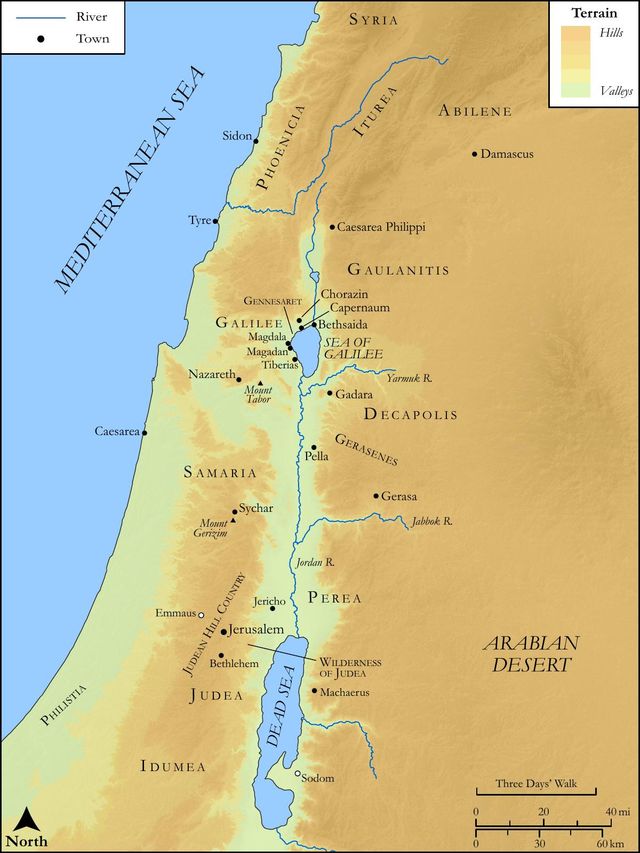
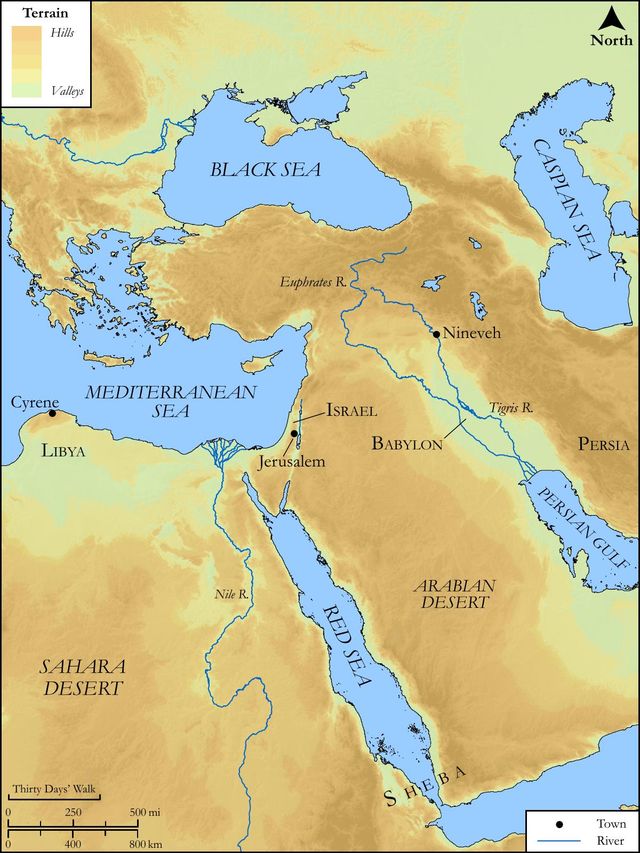
See on the biblical-era maps

Study this verse
Public-domain commentary
Matthew Henry
From his Commentary on the Whole Bible. Henry comments on passages, not single verses — this entry covers Matthew 18:1–35. His four-level outline is real structure in the source text, so it is rendered as structure.
As there never was a greater pattern of humility, so there never was a greater preacher of it, than Christ; he took all occasions to command it, to commend it, to his disciples and followers.
I.The occasion of this discourse concerning humility was an unbecoming contest among the disciples for precedency; they came to him, saying, among themselves (for they were ashamed to ask him, Mar 9:34), Who is the greatest in the kingdom of heaven? They mean not, who by character (then the question had been good, that they might know what graces and duties to excel in), but who by name. They had heard much, and preached much, of the kingdom of heaven, the kingdom of the Messiah, his church in this world; but ass yet they were so far from having any clear notion of it, that they dreamt of a temporal kingdom, and the external pomp and power of it. Christ had lately foretold his sufferings, and the glory that should follow, that he should rise again, from whence they expected his kingdom would commence; and now they thought it was time to put in for their places in it; it is good, in such cases, to speak early. Upon other discourses of Christ to that purport, debates of this kind arose (Mat 20:19, Mat 20:20; Luk 22:22, Luk 22:24); he spoke many words of his sufferings, but only one of his glory; yet they fasten upon that, and overlook the other; and, instead of asking how they might have strength and grace to suffer with him, they ask him, "Who shall be highest in reigning with him." Note, Many love to hear and speak of privileges and glory, who are willing to pass by the thoughts of work and trouble. They look so much at the crown, that they forget the yoke and the cross. So the disciples here did, when they asked, Who is the greatest in the kingdom of heaven?
1.They suppose that all who have a place in that kingdom are great, for it is a kingdom of priests. Note, Those are truly great who are truly good; and they will appear so at last, when Christ shall own them as his, though ever so mean and poor in the world.
2.They suppose that there are degrees in this greatness. All the saints are honourable, but not all alike so; one star differs from another star in glory. All David's officers were not worthies, nor all his worthies of the first three.
3.They suppose it must be some of them, that must be prime ministers of state. To whom should King Jesus delight to do honour, but to them who had left all for him, and were now his companions in patience and tribulation?
4.They strive who it should be, each having some pretence or other to it. Peter was always the chief speaker, and already had the keys given him; he expects to be lord-chancellor, or lord-chamberlain of the household, and so to be the greatest. Judas had the bag, and therefore he expects to be lord-treasurer, which, though now he come last, he hopes, will then denominate him the greatest. Simon and Jude are nearly related to Christ, and they hope to take place of all the great officers of state, as princes of the blood. John is the beloved disciple, the favourite of the Prince, and therefore hopes to be the greatest. Andrew was first called, and why should not he be first preferred? Note, We are very apt to amuse and humour ourselves with foolish fancies of things that will never be.
II.The discourse itself, which is a just rebuke to the question, Who shall be greatest? We have abundant reason to think, that if Christ ever intended that Peter and his successors at Rome should be heads of the church, and his chief vicars on earth, having so fair an occasion given him, he would now have let his disciples know it; but so far is he from this, that his answer disallows and condemns the thing itself. Christ will not lodge such an authority or supremacy any where in his church; whoever pretend to it are usurpers; instead of settling any of the disciples in this dignity, he warns them all not to put in for it.
Christ here teacheth them to be humble,
1.By a sign (Mat 18:2); He called a little child to him, and set him in the midst of them. Christ often taught by signs or sensible representations (comparisons to the eye), as the prophets of old. Note, Humility is a lesson so hardly learned, that we have need by all ways and means to be taught it. When we look upon a little child, we should be put in mind of the use Christ made of this child. Sensible things must be improved to spiritual purposes. He set him in the midst of them; not that they might play with him, but that they might learn by him. Grown men, and great men, should not disdain the company of little children, or think it below them to take notice of them. They may either speak to them, and give instruction to them; or look upon them, and receive instruction from them. Christ himself, when a child, was in the midst of the doctors, Luk 2:46.
2.By as sermon upon this sign; in which he shows them and us,
(1.)The necessity of humility, Mat 18:3. His preface is solemn, and commands both attention and assent; Verily I say unto you, I, the Amen, the faithful Witness, say it, Except ye be converted, and become as little children, ye shall not enter into the kingdom of heaven. Here observe,
[1.]What it is that he requires and insists upon.
First, "You must be converted, you must be of another mind, and in another frame and temper, must have other thoughts, both of yourselves and of the kingdom of heaven, before you be fit for a place in it. The pride, ambition, and affectation of honour and dominion, which appear in you, must be repented of, mortified, and reformed, and you must come to yourselves." Note, Besides the first conversion of a soul from a state of nature to a state of grace, there are after-conversions from particular paths of backsliding, which are equally necessary to salvation. Every step out of the way by sin, must be a step into it again by repentance. When Peter repented of his denying his Master, he was converted. Secondly, You must become as little children. Note, Converting grace makes us like little children, not foolish as children (Co1 14:20), nor fickle (Eph 4:14), nor playful (Mat 11:16); but, as children, we must desire the sincere milk of the word (Pe1 2:2); as children, we must be careful for nothing, but leave it to our heavenly Father to care for us (Mat 6:31); we must, as children, be harmless and inoffensive, and void of malice (Co1 14:20), governable, and under command (Gal 4:2); and (which is here chiefly intended) we must be humble as little children, who do not take state upon them, nor stand upon the punctilios of honour; the child of a gentleman will play with the child of a beggar (Rom 12:16), the child in rags, if it have the breast, is well enough pleased, and envies not the gaiety of the child in silk; little children have no great aims at great places, or projects to raise themselves in the world; they exercise not themselves in things too high for them; and we should in like manner behave, and quiet ourselves, Psa 131:1, Psa 131:2. As children are little in body and low in stature, so we must be little and low in spirit, and in our thoughts of ourselves. This is a temper which leads to other good dispositions; the age of childhood is the learning age.
[2.]What stress he lays upon this; Without this, you shall not enter into the kingdom of heaven. Note, Disciples of Christ have need to be kept in awe by threatenings, that they may fear lest they seem to come short, Heb 4:1. The disciples, when they put that question (Mat 18:1), thought themselves sure of the kingdom of heaven; but Christ awakens them to be jealous of themselves. They were ambitious of being greatest in the kingdom of heaven; Christ tells them, that, except they came to a better temper, they should never come thither. Note, many that set up for great ones in the church, prove not only little, but nothing, and are found to have no part or lot in the matter. Our Lord designs here to show the great danger of pride and ambition; whatever profession men make, if they allow themselves in this sin, they will be rejected both from God's tabernacle and from his holy hill. Pride threw the angels that sinned out of heaven, and will keep us out, if we be not converted from it. They that are lifted up with pride, fall into the condemnation of the devil; to prevent this, we must become as little children, and, in order to do that, must be born again, must put on the new man, must be like the holy child Jesus; so he is called, even after his ascension, Act 4:27.
(2.)He shows the honour and advancement that attend humility (Mat 18:4), thus furnishing a direct but surprising answer to their question. He that humbles himself as a little child, though he may fear that hereby he will render himself contemptible, as men of timid minds, who thereby throw themselves out of the way of preferment, yet the same is greatest in the kingdom of heaven. Note, The humblest Christians are the best Christians, and most like to Christ, and highest in his favour; are best disposed for the communications of divine grace, and fittest to serve God in this world, and enjoy him in another. They are great, for God overlooks heaven and earth, to look on such; and certainly those are to be most respected and honoured in the church that are most humble and self-denying; for, though they least seek it, they best deserve it.
(3.)The special care Christ takes for those that are humble; he espouses their cause, protects them, interests himself in their concerns, and will see that they are not wronged, without being righted.
Those that thus humble themselves will be afraid,
[1.]That nobody will receive them; but (Mat 18:5), Whoso shall receive one such little child in my name, receiveth me. Whatever kindnesses are done to such, Christ takes as done to himself. Whoso entertains a meek and humble Christian, keeps him in countenance, will not let him lose by his modesty, takes him into his love and friendship, and society and care, and studies to do him a kindness; and doth this in Christ's name, for his sake, because he bears the image of Christ, serves Christ, and because Christ has received him; this shall be accepted and recompensed as an acceptable piece of respect to Christ. Observe, Though it be but one such little child that is received in Christ's name, it shall be accepted. Note, The tender regard Christ has to his church extends itself to every particular member, even the meanest; not only to the whole family, but to every child of the family; the less they are in themselves, to whom we show kindness, the more there is of good will in it to Christ; the less it is for their sakes, the more it is for his; and he takes it accordingly. If Christ were personally among us, we think we should never do enough to welcome him; the poor, the poor in spirit, we have always with us, and they are his receivers. See Mat 25:35-40.
[2.]They will be afraid that every body will abuse them; the basest men delight to trample upon the humble; Vexat censura columbas - Censure pounces on doves. This objection he obviates (Mat 18:6), where he warns all people, as they will answer it at their utmost peril, not to offer any injury to one of Christ's little ones. This word makes a wall of fire about them; he that touches them, touches the apple of God's eye.
Observe, First, The crime supposed; offending one of these little ones that believe in Christ. Their believing in Christ, though they be little ones, unites them to him, and interests him in their cause, so that, as they partake of the benefit of his sufferings, he also partakes in the wrong of theirs. Even the little ones that believe have the same privileges with the great ones, for they have all obtained like precious faith. There are those that offend these little ones, by drawing them to sin (Co1 8:10, Co1 8:11), grieving and vexing their righteous souls, discouraging them, taking occasion from their mildness to make a prey of them in their persons, families, goods, or good name. Thus the best men have often met with the worst treatment in this world.
Secondly, The punishment of this crime; intimated in that word, Better for him that he were drowned in the depth of the sea. The sin is so heinous, and the ruin proportionably so great, that he had better undergo the sorest punishments inflicted on the worst of malefactors, which can only kill the body. Note, 1. Hell is worse than the depth of the sea; for it is a bottomless pit, and it is a burning lake. The depth of the sea is only killing, but hell is tormenting. We meet with one that had comfort in the depth of the sea, it was Jonah (Jon 2:2, Jon 2:4, Jon 2:9); but never any had the least grain or glimpse of comfort in hell, nor will have to eternity. 2. The irresistible irrevocable doom of the great Judge will sink sooner and surer, and bind faster, than a mill-stone hanged about the neck. It fixes a great gulf, which can never be broken through, Luk 16:26. Offending Christ's little ones, though by omission, is assigned as the reason of that dreadful sentence, Go ye cursed, which will at last be the doom of proud persecutors.
Historical interpretation
Sixteen Centuries of Reception
10 surviving comments on this verse. Each one is dated, so this reads as a timeline rather than a list.
Select a marker to jump to its quote. Markers stagger vertically where authors wrote within a few decades of each other.
He calls infants all who believe through the hearing of faith; for such follow their father, love their mother, know not to will that which is evil, do not bear hate, or speak lies, trust what is told them, and believe what they hear to be true. But the letter is thus interpreted.
Mystically; The work of the mill is a toil of blindness, for the beasts having their eyes closed are driven round in a circle, and under the type of an ass we often find the Gentiles figured, who are held in the ignorance of blind labour; while the Jews have the path of knowledge set before them in the Law, who if they offend Christ's Apostles it were better for them, that having their necks made fast to a mill-stone, they should be drowned in the sea, that is, kept under labour and in the depths of ignorance, as the Gentiles; for it were better for them that they should have never known Christ, than not to have received the Lord of the Prophets.
The disciples experienced some feeling of human weakness; wherefore the evangelist also adds this note, saying, "In that hour;" when He had preferred him to all. For of James too, and John, one was a firstborn son, but no such thing as this had He done for them.
Then, being ashamed to avow their feeling, they say not indeed openly, "Wherefore hast thou preferred Peter to us?" or, "Is he greater than we are?" for they were ashamed; but indefinitely they ask, "Who then is greater?" For when they saw the three preferred, they felt nothing of the kind; but now that the honor had come round to one, they were vexed. And not for this only, but there were many other things which they put together to kindle that feeling. For to him He had said, "I will give thee the keys;" to him, "Blessed art thou, Simon Barjona;" to him here, "Give unto them for me and thee;" and seeing too in general how freely he was allowed to speak, it somewhat fretted them. And if Mark saith, that they did not ask, but reasoned in themselves, that is nothing contrary to this. For it is likely that they did both the one and the other, and whereas before, on another occasion, they had had this feeling, both once and twice, that now they did both declare it, and reason among themselves.
But to thee I say, "Look not to the charge against them only, but consider this too; first, that they seek none of the things of this world; next, that even this passion they afterwards laid aside, and give up the first place one to another." But we are not able to attain so much as unto their faults, neither do we seek, "who is greatest in the kingdom of heaven;" but, who is greatest in the earthly kingdom, who is wealthiest, who most powerful.
Thus they suffered a human passion, which the Evangelist denotes by saying, At the same time come the disciples to Jesus, saying, Who, we pray thee, is the greatest in the kingdom of heaven? Ashamed to show the feeling which was working within, they do not say openly, Why have you honoured Peter above us? but they ask in general, Who is the greatest? When in the transfiguration they saw three distinguished, namely, Peter, James, and John, they had no such feeling, but now that one is singled out for excesal honour, then they are grieved. But do you remember, first, that it was nothing in this world that they sought; and, secondly, that they afterwards laid aside this feeling? Even their failings are above us, whose enquiry is not, Who is the greatest in the kingdom of heaven? but, Who is greatest in the kingdom of the world?
He chose, I suppose, quite an infant, devoid of any of the passions.
Not only if ye become such yourselves, but also if for My sake you shall pay honour to other such, ye receive reward; and as the return for the honour you pay them, I entail upon you the kingdom. He puts indeed what is far greater, Receiveth me.
And to make this word the rather received. He subjoins a penalty in what follows, Whoso offendeth one of these little ones, & c. as though he had said, As those who for My sake honour one of these, have their reward, so they who dishonour shall undergo the extreme punishment. And marvel not that He calls an evil word an offence, for many of feeble spirit are offended by only being despised,
To correspond with the foregoing, He should have said here, Receiveth not Me, which were bitterer than any punishment; but because they were dull, and the before-named punishment did not move them, by a familiar instance He shows that punishment awaited them; for He therefore says, it were better for him, because another more grievous punishment awaits him.
What then saith Christ? He unveils their conscience, and replies to their feeling, not merely to their words. "For He called a little child unto Him," saith the Scripture, "and said, Except ye be converted, and become as this little child, ye shall not enter into the kingdom of heaven." "Why, you," He saith, "inquire who is greatest, and are contentious for first honors; but I pronounce him, that is not become lowest of all, unworthy so much as to enter in thither."
And full well doth He both allege that pattern, and not allege it only, but also set the child in the midst, by the very sight abashing them, and persuading them to be in like manner lowly and artless. Since both from envy the little child is pure, and from vainglory, and from longing for the first place; and he is possessed of the greatest of virtues, simplicity, and whatever is artless and lowly.
Not courage then only is wanted, nor wisdom, but this virtue also, humility I mean, and simplicity. Yea, and the things that belong to our salvation halt even in the chiefest point, if these be not with us.
The little child, whether it be insulted and beaten, or honored and glorified, neither by the one is it moved to impatience or envy, nor by the other lifted up.
Seest thou how again He calls us on to all natural excellencies, indicating that of free choice it is possible to attain them, and so silences the wicked frenzy of the Manichaeans? For if nature be an evil thing, wherefore doth He draw from hence His patterns of severe goodness? And the child which He set in the midst suppose to have been a very young child indeed, free from all these passions. For such a little child is free from pride and the mad desire of glory, and envy, and contentiousness, and all such passions, and having many virtues, simplicity, humility, unworldliness, prides itself upon none of them; which is a twofold severity of goodness; to have these things, and not to be puffed up about them.
(Verse 2.) And calling a little child, he set him in the midst of them, and said. Either simply any little child, to inquire about his age, and to demonstrate the likeness of innocence. Or certainly he placed a little child in their midst, who had come not to be served, but to serve, in order to give them an example of humility. Others interpret the little child as the Holy Spirit, whom he placed in the hearts of the disciples, in order to transform pride into humility.
The disciples seeing one piece of money paid both for Peter and the Lord, conceived from this equality of ransom that Peter was preferred before all the rest of the Apostles.
Jesus seeing their thoughts would heal their ambitious strivings, by arousing an emulation in lowliness; whence it follows, And Jesus calling a little child, set him in the midst of them.
One whose tender age should express to them the innocence which they should have. But truly He set Himself in the midst of them, a little one who had come not to be ministered unto, but to minister; (Mat. 20:28.) that He might be a pattern of holiness. Others interpret the little one of the Holy Spirit, whom He set in the hearts of His disciples, to change their pride into humility. (Vid. Origen. in loc.) And he said. Verily I say unto you, Except ye be converted, and become as little children, ye shall not enter into the kingdom of heaven. He does not enjoin on the Apostles the age, but the innocence of infants, which they have by virtue of their years, but to which these might attain by striving; that they should be children in malice, not in understanding. As though He had said, As this child, whom I set before you as a pattern, is not obstinate in anger, when injured does not bear it in mind, has no emotion at the sight of a fair woman, does not think one thing while he speaks another; so ye, unless ye have the like innocence and purity of mind, shall not be able to enter into the kingdom of heaven.
Or otherwise; Whoso shall humble himself as this little child, that is, whoso shall humble himself after My example, he shall enter into the kingdom of heaven. It follows, And whoso receiveth one such little one in my name, receiveth me.
For whoever is such that he imitates Christ's humility and innocence, Christ is received by him; and by way of caution, that the Apostles should not think, when such are come to them, that it is to themselves that the honour is paid, He adds, that they are to be received not for their own desert, but in honour of their Master.
Observe that he who is offended is a little one, for the greater hearts do not take offences. And though it may be a general declaration against all who scandalize any, yet from the connection of the discourse it may be said specially to the Apostles; for in asking who should be greatest in the kingdom of heaven, they seemed to be contending for preeminence among themselves; and if they had persisted in this fault, they might have scandalized those whom they called to the faith, seeing the Apostles contending among themselves for the preference.
When it is said, It is better for him that a mill-stone be hanged about his neck, He speaks according to the custom of the province; for among the Jews this was the punishment of the greater criminals, to drown them by a stone tied to them. It is better for him, because it is far better to receive a brief punishment for a fault, than to be reserved for eternal torments.
In the understanding of grace, or in ecclesiastical dignity, or at least in everlasting blessedness.
(Mor. vi. 37.) Otherwise; What is denoted by the sea, but the world, and what by the mill-stone, but earthly action? which, when it binds the neck in the yoke of vain desires, sends it to a dull round of toil. There arc some who leave earthly action, and bond themselves to aims of contemplation beyond the reach of intellect, laying aside humility, and so not only throw themselves into error, but also cast many weak ones out of the bosom of truth. Whoso then offends one of the least of mine, it were better for him that a mill-stone be tied about his neck, and he be cast into the sea; that is, it were better for a perverted heart to be entirely occupied with worldly business, than to be at leisure for contemplative studies to the hurt of many.
(interlin.) Except ye be converted from this ambition and jealousy in which you are at present, and become all of you as innocent and humble in disposition as you are weak, in your years, ye shall not enter into the kingdom of heaven; and since there is none other road to enter in, whoso shall humble himself as this little child, the same is greatest in the kingdom of heaven; for by how much a man is humble now, by so much shall he be exalted in the kingdom of heaven.
It is, of course, the essence of Christianity that God loves man and for his sake became man and died. But that does not prove that man is the sole end of nature. In the parable, it was the one lost sheep that the shepherd went in search of:” it was not the only sheep in the flock, and we are not told that it was the most valuable — save in so far as the most desperately in need has, while the need lasts, a peculiar value in the eyes of Love. The doctrine of the Incarnation would conflict with what we know of this vast universe only if we knew also that there were other rational species in it who had, like us, fallen, and who needed redemption in the same mode, and that they had not been vouchsafed it. But we know none of these things. It may be full of life that needs no redemption. It may be full of life that has been redeemed. It may be full of things quite other than life which satisfy the Divine Wisdom in fashions one cannot conceive. We are in no position to draw up maps of God’s psychology, and prescribe limits to His interests. We would not do so even for a man whom we knew to be greater than ourselves. The doctrines that God is love and that He delights in men, are positive doctrines, not limiting doctrines. He is not less than this. What more He may be, we do not know; we know only that He must be more than we can conceive.
Continue studying Matthew 18:2 across the web’s major study libraries — every link below opens this exact verse, chapter, or book on the destination site.
Read & Compare
 BibleGatewayThis verse in more than 200 translations and 70 languages.
 Bible.comThe YouVersion reader — hundreds of translations, reading plans, and highlights.
 ESV.orgCrossway's official English Standard Version reader.
 NET BibleThe NET translation with 60,000+ translators' notes on every rendering decision.
 STEP BibleTyndale House's free study tool — original text, vocabulary, and scholarly resources.
 BibliaLogos Bible Software's free web reader.
 USCCBThe New American Bible (Revised Edition) with the U.S. bishops' study notes.
Commentaries
 BibleHub CommentariesDozens of classic commentaries on this verse, gathered on one page.
 StudyLightMore than 100 commentary sets — the largest collection on the web.
 BibleRefPlain-English commentary on what this verse means, verse by verse.
 Enduring WordDavid Guzik's free commentary on this chapter, widely used by Bible teachers.
 Bible Study ToolsVerse commentary alongside Greek and Hebrew study aids.
Original Language & Research
- BibleHub InterlinearThe verse word by word — original language, transliteration, and English.
- BibleHub LexiconEvery word's original-language definition and Strong's entry.
 Blue Letter BibleDeep-study tools — Strong's numbers, concordance, and word studies.
 CNTR CollationThe earliest Greek manuscripts of this verse, collated letter by letter.
Sermons, Hymns & Audio


TrulyRandomVerse is not affiliated with these sites and doesn’t control their content. They’re linked because they’re genuinely useful.
Summary
Matthew 18:2 presents a profound moment where Jesus, addressing His disciples' worldly ambitions concerning greatness, calls a young child to stand before them. This simple yet powerful act serves as a living illustration, dramatically subverting their expectations and setting the stage for a radical redefinition of true spiritual authority and value within the kingdom of heaven, emphasizing humility and dependence over status and power.
Context
ShowHideLiterary Context
This verse immediately follows the disciples' question to Jesus in Matthew 18:1: "Who then is greatest in the kingdom of heaven?" Their inquiry reveals a preoccupation with hierarchy and status, a common concern among those vying for prominence in any group, even among Jesus' closest followers. Jesus' response in Matthew 18:2-4 is not a direct answer to "who" but rather "what kind of person" is greatest, shifting the focus from individual ambition to the necessary posture of heart. The placement of the child is a direct, visual, and confrontational response to their worldly mindset, preparing them for the counter-cultural teaching that follows.
Historical & Cultural Context
In the 1st-century Jewish society, children held a significantly lower status than adults. They were not seen as individuals with rights or social standing but rather as dependents, property, and future contributors to the family and community. They lacked legal standing, economic power, and social influence. To "become like a little child" (as Jesus states in Matthew 18:3) would have been understood as relinquishing all social standing, power, and self-importance. By placing a child "in the midst" of His disciples, Jesus performed a radical act that challenged the very foundations of their societal values and their ingrained understanding of power dynamics and leadership.
Key Themes
ShowHideMatthew 18:2 introduces several pivotal themes that resonate throughout the chapter and the broader Gospel. The most prominent is Humility as Greatness, where Jesus radically redefines kingdom values, asserting that true greatness is found not in worldly power or status but in a humble, dependent, and unassuming spirit. This contrasts sharply with the disciples' worldly aspirations. Another key theme is Childlike Qualities, highlighting the essential characteristics of a child—such as trust, dependence, lack of pretense, and simple faith—as prerequisites for entering and thriving in God's kingdom, a concept further developed in Matthew 18:3-4. Finally, the act underscores the Accessibility of the Kingdom, emphasizing that God's kingdom is open to those who approach it with simple faith and humility, rather than intellectual prowess or social standing, echoing themes found in passages like Mark 10:15.
Exposition and Analysis
ShowHideKey Word Analysis
ShowHideThis verb (G4341) signifies "to call toward oneself" or "to summon." It implies an intentional and authoritative act by Jesus. He doesn't merely notice the child; He actively draws the child to Himself, indicating a deliberate pedagogical purpose behind the action. This calling is an invitation, but also a command, establishing the child's central role in the ensuing lesson.
The term (G3813) is a neuter diminutive of pais ("child"), emphasizing a young child, possibly an infant or a pre-adolescent. This choice of word highlights the child's inherent vulnerability, dependence, and lack of social status or self-sufficiency in that day. Jesus deliberately selects someone considered insignificant to make a profoundly significant point about kingdom values.
This word (G3319) denotes being "in the middle" or "among." Placing the child "in the midst" of the disciples is a highly symbolic act. It elevates the child from a position of societal insignificance to the very center of attention and instruction. This physical placement visually represents the spiritual principle Jesus is about to teach: that the qualities embodied by this child should be central to the disciples' understanding of greatness in God's kingdom.
Verse Breakdown
ShowHide"And Jesus called a little child unto him"
This phrase describes Jesus' deliberate and active initiation of the object lesson. He doesn't wait for a child to wander by; He specifically summons one. This act demonstrates His authority and intentionality, drawing attention to the chosen subject for His teaching. The "little child" represents innocence, dependence, and a lack of worldly status—qualities that stand in stark contrast to the disciples' aspirations for greatness.
"and set him in the midst of them"
This action is highly symbolic and climactic. By physically placing the child at the center of the group, Jesus elevates the child's status from societal insignificance to the focal point of the disciples' attention and the very heart of the discussion about greatness. It is a visual sermon, powerfully communicating that the qualities represented by the child are precisely what should be central to their understanding of kingdom values, directly challenging their hierarchical, status-driven mindset.
Literary Devices
ShowHideMatthew 18:2 employs several powerful literary devices. The primary device is the Object Lesson, where Jesus uses a tangible, observable item—the little child—to illustrate an abstract spiritual truth about humility and greatness. This method is highly effective for teaching, making the concept memorable and impactful. There is also profound Symbolism at play: the child symbolizes humility, dependence, innocence, and lack of pretense, qualities that Jesus will soon explicitly link to entering and being great in the kingdom. Furthermore, the verse utilizes Contrast: Jesus' action directly contrasts the disciples' worldly ambition for status and power with the kingdom's counter-cultural value system, where the "least" (the child) becomes the model for the "greatest." This stark juxtaposition forces the disciples to confront their misconceptions.
Theological and Thematic Connections
ShowHideMatthew 18:2 lays a foundational theological principle: true greatness in God's kingdom is diametrically opposed to worldly notions of power, status, and self-assertion. Jesus' use of a child as a living parable underscores that spiritual maturity and influence are rooted in humility, dependence on God, and a willingness to receive the kingdom with simple faith, much like a child receives care. This teaching is a radical reorientation of values, challenging believers across all ages to shed pride and embrace a posture of lowliness and trust, recognizing that God exalts the humble and resists the proud. It speaks to the heart of Christian discipleship, where self-abasement is the path to exaltation in God's eyes.
Reflection and Application
ShowHideMatthew 18:2 serves as a timeless mirror reflecting our own hearts and aspirations. In a world that constantly applauds achievement, independence, and self-promotion, Jesus' teaching calls us to a radical counter-cultural path. It prompts us to examine where we seek our greatness and whether our pursuits align with kingdom values. To embrace the spirit of the child means relinquishing our need for control, acknowledging our absolute dependence on God, and approaching Him with unfeigned trust and simplicity. It challenges us to serve rather than be served, to be last rather than first, and to find our true identity and security not in what we accomplish or possess, but in our humble relationship with our Heavenly Father. This posture of humility is not weakness but the very strength that opens us to God's grace and empowers us to truly impact the world for His glory.
Questions for Reflection
ShowHideFAQ
ShowHideWhy did Jesus choose a child, specifically, to teach about greatness?
ShowHideJesus chose a child because, in the 1st-century Jewish culture, children held little to no social status, power, or influence. They were seen as dependents, often overlooked or dismissed. By placing a child "in the midst" of His disciples, Jesus dramatically subverted their worldly expectations of greatness, which were often tied to status, wealth, or authority. The child symbolized humility, dependence, innocence, and a lack of pretense—qualities that Jesus would immediately identify as essential for entering and being truly great in the kingdom of heaven, as elaborated in Matthew 18:3-4. It was a powerful visual aid to convey a counter-cultural spiritual truth.
Christ-Centered Fulfillment
ShowHideMatthew 18:2, with Jesus placing a child in the midst of His disciples, is a profound Christ-centered moment. Jesus Himself perfectly embodies the "childlike" humility He calls His followers to embrace. Though "in the form of God," He "did not consider equality with God something to be grasped, but emptied himself, by taking the form of a servant, being born in the likeness of men" (Philippians 2:6-7). He did not come to be served, but to serve, and to give His life as a ransom for many (Mark 10:45). His entire earthly ministry, from His humble birth in a manger to His death on a cross, demonstrated a complete lack of worldly ambition and a perfect dependence on the Father. He is the ultimate example of one who, though greatest, made Himself least, ultimately becoming the "Lamb of God who takes away the sin of the world!" (John 1:29). Thus, the child in Matthew 18:2 foreshadows the very nature of Christ's kingdom, where the King Himself is the epitome of humble service and self-sacrifice, inviting all to follow His example to find true life and greatness.