


1 Kings 3:7
Bible text: King James Version (1769 Blayney text) · Public domain
Bible text: Berean Standard Bible · Public domain
Bible text: American Standard Version (1901) · Public domain
Bible text: World English Bible, Messianic edition · Public domain
Bible text: Geneva Bible (1599) · Public domain
Bible text: Young's Literal Translation · Public domain
- וְעַתָּהve·'a·Tahand nowH6258Conj-w ¦ AdvAdverbוְandעַתָּהnow
- יְהוָהYah·wehO YahwehH3068N-properNoun Proper Title
- אֱלֹהָי'e·lo·Haimy GodH430N-mpc ¦ 1csNoun Plural Masculine ConstructאֱלֹהָGodיmy
- אַתָּה'a·TahyouH859Pro-2msPronoun Personal 2nd Singular Masculine
- הִמְלַכְתָּhim·Lakh·tayou have made kingH4427V-Hiphil-Perf-2msVerb Hiphil Perfect 2nd Singular Masculine
- אֶת'et<obj.>H853DirObjMParticle Object Indicator
- עַבְדְּךָ'av·de·Khayour servantH5650N-msc ¦ 2msNoun Singular Masculine Constructעַבְדְּservantךָyour
- תַּחַתTa·chatin place ofH8478N-mscNoun Singular Masculine Construct
- דָּוִדda·VidDavidH1732N-proper-mNoun Proper Masculine
- אָבִי'a·Vimy fatherH1N-msc ¦ 1csNoun Singular Masculine Constructאָבִfatherיmy
- וְאָנֹכִיve·'a·no·Khiand IH595Conj-w ¦ Pro-1csPronoun Personal 1st Singular common genderוְandאָנֹכִיI
- נַעַרNa·'ar[am] a ladH5288N-msNoun Singular Masculine Absolute
- קָטֹןka·TonyoungH6996Adj-msAdjective Singular Masculine Absolute
- לֹאlo'notH3808NegParticle Negative
- אֵדַע'e·Da'I knowH3045V-Qal-Imperf-1csVerb Qal Imperfect 1st Singular common gender
- צֵאתtzetto go outH3318V-Qal-InfVerb Qal Infinitive Construct
- וָבֹאva·Vo'and to comeH935Conj-w ¦ V-Qal-InfVerb Qal Infinitive Constructוָandבֹאto come
English is a literal word-by-word gloss of the Hebrew, not the KJV's wording. Why?
This is the original text the KJV's translators worked from — each Hebrew word with its own literal English meaning in this verse, prepared by scholars at Tyndale House, Cambridge. The KJV translates whole sentences, not word by word, so its wording differs: one Hebrew word can become several English words, and the KJV may choose “the LORD” where the gloss reads “Yahweh”. Both are faithful — they answer different questions. For the KJV's own rendering, switch to the KJV text.
Details
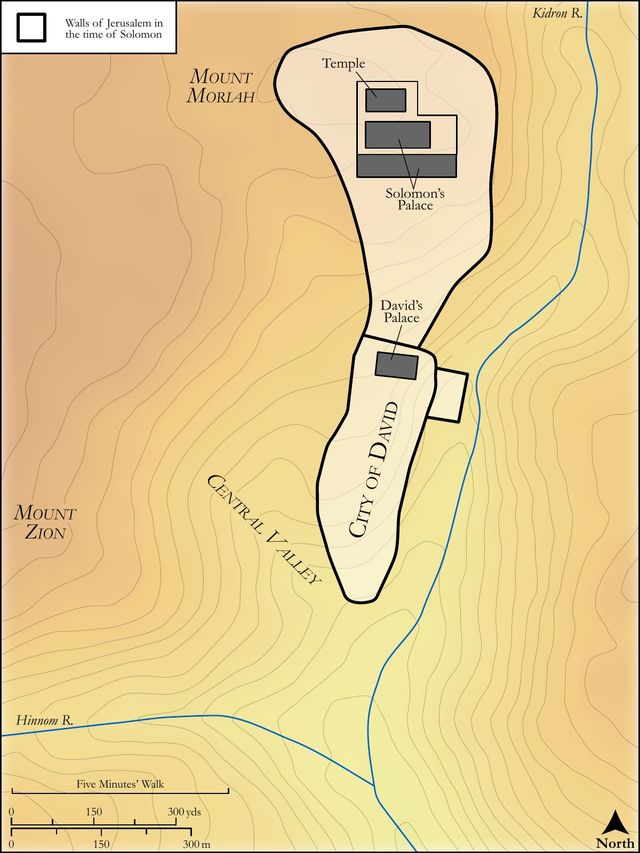
See on the biblical-era map
Study this verse
Public-domain commentary
Matthew Henry
From his Commentary on the Whole Bible. Henry comments on passages, not single verses — this entry covers 1 Kings 3:5–15. His four-level outline is real structure in the source text, so it is rendered as structure.
We have here an account of a gracious visit which God paid to Solomon, and the communion he had with God in it, which put a greater honour upon Solomon than all the wealth and power of his kingdom did.
I.The circumstances of this visit, Kg1 3:5.
1.The place. It was in Gibeon; that was the great high place, and should have been the only one, because there the tabernacle and the brazen altar were, Ch2 1:3. There Solomon offered his great sacrifices, and there God owned him more than in any other of the high places. The nearer we come to the rule in our worship the more reason we have to expect the tokens of God's presence. Where God records his name, there he will meet us and bless us.
2.The time. It was by night, the night after he had offered that generous sacrifice, Kg1 3:4. The more we abound in God's work the more comfort we may expect in him; if the day has been busy for him, the night will be easy in him. Silence and retirement befriend our communion with God. His kindest visits are often in the night, Psa 17:3.
3.The manner. It was in a dream, when he was asleep, his senses locked up, that God's access to his mind might be the more free and immediate. In this way God used to speak to the prophets (Num 12:6) and to private persons, for their own benefit, Job 33:15, Job 33:16. These divine dreams, no doubt, were plainly distinguishable from those in which there are divers vanities, Ecc 5:7.
II.The gracious offer God made him of the favour he should choose, whatever it might be, Kg1 3:5.
He saw the glory of God shine about him, and heard a voice saying, Ask what I shall give thee. Not that God was indebted to him for his sacrifices, but thus he would testify his acceptance of them, and signify to him what great mercy he had in store for him, if he were not wanting to himself. Thus he would try his inclinations and put an honour upon the prayer of faith. God, in like manner, condescends to us, and puts us in the ready way to be happy by assuring us that we shall have what we will for the asking, Joh 16:23; Jo1 5:14. What would we more? Ask, and it shall be given you.
III.The pious request Solomon hereupon made to God.
He readily laid hold of this offer. Why do we neglect the like offer made to us, like Ahaz, who said, I will not ask? Isa 7:12. Solomon prayed in his sleep, God's grace assisting him; yet it was a lively prayer. What we are most in care about, and which makes the greatest impression upon us when we are awake, commonly affects us when we are asleep; and by our dreams, sometimes, we may know what our hearts are upon and how our pulse beats. Plutarch makes virtuous dreams one evidence of increase in virtue. Yet this must be attributed to a higher source. Solomon's making such an intelligent choice as this when he was asleep, and the powers of reason were least active, showed that it came purely from the grace of God, which wrought in him these gracious desires. If his reins thus instruct him in the night season, he must bless the Lord who gave him counsel, Psa 16:7. Now, in this prayer,
1.He acknowledges God's great goodness to his father David, Kg1 3:6. He speaks honourably of his father's piety, that he had walked before God in uprightness of heart, drawing a veil over his faults. It is to be hoped that those who praise their godly parents will imitate them. But he speaks more honourably of God's goodness to his father, the mercy he had shown to him while he lived, in giving him to be sincerely religious and then recompensing his sincerity and the great kindness he had kept for him, to be bestowed on the family when he was gone, in giving him a son to sit on his throne. Children should give God thanks for his mercies to their parents, for the sure mercies of David. God's favours are doubly sweet when we observe them transmitted to us through the hands of those that have gone before us. The way to get the entail perpetuated is to bless God that it has hitherto been preserved.
2.He owns his own insufficiency for the discharge of that great trust to which he is called, Kg1 3:7, Kg1 3:8. And here is a double plea to enforce his petition for wisdom: - (1.) That his place required it, as he was successor to David ("Thou hast made me king instead of David, who was a very wise and good man: Lord, give me wisdom, that I may keep up what he wrought, and carry on what he began") and as he was ruler over Israel: "Lord, give me wisdom to rule well; for they are a numerous people, that will not be managed without much care, and they are thy people, whom thou hast chosen, and therefore to be ruled for thee, and the more wisely they are ruled the more glory thou wilt have from them." (2.) That he wanted it. As one that had a humble sense of his own deficiency, he pleads, "Lord, I am but a little child (so he calls himself, a child in understanding, though his father called him a wise man, Kg1 2:9); I know not how to go out or come in as I should, nor to do so much as the common daily business of the government, much less what to do in a critical juncture." Note, Those who are employed in public stations ought to be very sensible of the weight and importance of their work and their own insufficiency for it, and then they are qualified for receiving divine instruction. Paul's question (Who is sufficient for these things?) is much like Solomon's here, Who is able to judge this thy so great a people? Kg1 3:9. Absalom, who was a wise man, trembles at the undertaking and suspects his own fitness for it. The more knowing and considerate men are the better acquainted they are with their own weakness and the more jealous of themselves.
3.He begs of God to give him wisdom (Kg1 3:9); Give therefore thy servant an understanding heart. He calls himself God's servant, pleased with that relation to God (Psa 116:16) and pleading it with him: "I am devoted to thee, and employed for thee; give me that which is requisite to the services in which I am employed." Thus his good father prayed, and thus he pleaded. Psa 119:125, I am thy servant, give me understanding. An understanding heart is God's gift, Pro 2:6. We must pray for it (Jam 1:5), and pray for it with application to our particular calling and the various occasions we have for it; as Solomon, Give me an understanding, not to please my own curiosity with, or puzzle my neighbours, but to judge thy people. That is the best knowledge which will be serviceable to us in doing our duty; and such that knowledge is which enables us to discern between good and bad, right and wrong, sin and duty, truth and falsehood, so as not to be imposed upon by false colours in judging either of others' actions or of our own.
4.The favourable answer God gave to his request. It was a pleasing prayer (Kg1 3:10): The speech pleased the Lord. God is well pleased with his own work in his people, the desires of his own kindling, the prayers of his Spirit's inditing. By this choice Solomon made it appear that he desired to be good more than great, and to serve God's honour more than to advance his own. Those are accepted of God who prefer spiritual blessings to temporal, and are more solicitous to be found in the way of their duty than in the way to preferment. But that was not all; it was a prevailing prayer, and prevailed for more than he asked.
(1.)God gave him wisdom, Kg1 3:12. He fitted him for all that great work to which he had called him, gave him such a right understanding of the law which he was to judge by, and the cases he was to judge of, that he was unequalled for a clear head, a solid judgment, and a piercing eye. Such an insight, and such a foresight, never was prince so blessed with.
(2.)He gave him riches and honour over and above into the bargain (Kg1 3:13), and it was promised that in these he should as much exceed his predecessors, his successors, and all his neighbours, as in wisdom. These also are God's gift, and, as far as is good for them, are promised to all that seek first the kingdom of God and the righteousness thereof, Mat 6:33. Let young people learn to prefer grace to gold in all that they choose, because godliness has the promise of the life that now is, but the life that now is has not the promise of godliness. How completely blessed was Solomon, that had both wisdom and wealth! He that has wealth and power without wisdom and grace is in danger of doing hurt with them; he that has wisdom and grace without wealth and power is not capable of doing so much good with them as he that has both. Wisdom is good, is so much the better, with an inheritance, Ecc 7:11. But, if we make sure of wisdom and grace, these will either bring outward prosperity with them or sweeten the want of it. God promised Solomon riches and honour absolutely, but long life upon condition (Kg1 3:14). If thou wilt walk in my ways, as David did, then I will lengthen thy days. He failed in the condition; and therefore, though he had riches and honour, he did not live so long to enjoy them as in the course of nature he might have done. Length of days is wisdom's right-hand blessing, typical of eternal life; but it is in her left hand that riches and honour are, Pro 3:16. Let us see here,
[1.]That the way to obtain spiritual blessings is to be importunate for them, to wrestle with God in prayer for them, as Solomon did for wisdom, asking that only, as the one thing needful.
[2.]That the way to obtain temporal blessings is to be indifferent to them and to refer ourselves to God concerning them. Solomon had wisdom given him because he did ask it and wealth because he did not ask it.
5.The grateful return Solomon made for the visit God was pleased to pay him, Kg1 3:15. He awoke, we may suppose in a transport of joy, awoke, and his sleep was sweet to him, as the prophet speaks (Jer 31:26); being satisfied of God's favour, he was satisfied with it, and he began to think what he should render to the Lord. He had made his prayer at the high place at Gibeon, and there God had graciously met him; but he comes to Jerusalem to give thanks before the ark of the covenant, blaming himself, as it were, that he had not prayed there, the ark being the token of God's presence, and wondering that God had met him any where else. God's passing by our mistakes should persuade us to amend them. There he,
(1.)Offered a great sacrifice to God. We must give God praise for his gifts in the promise, though not yet fully performed. David used to praise God's word, as well as his works (Psa 56:10, and particularly, Sa2 7:18), and Solomon trod in his steps.
(2.)He made a great feast upon the sacrifice, that those about him might rejoice with him in the grace of God.
Continue studying 1 Kings 3:7 across the web’s major study libraries — every link below opens this exact verse, chapter, or book on the destination site.
Read & Compare
 BibleGatewayThis verse in more than 200 translations and 70 languages.
 Bible.comThe YouVersion reader — hundreds of translations, reading plans, and highlights.
 ESV.orgCrossway's official English Standard Version reader.
 NET BibleThe NET translation with 60,000+ translators' notes on every rendering decision.
 STEP BibleTyndale House's free study tool — original text, vocabulary, and scholarly resources.
 BibliaLogos Bible Software's free web reader.
 USCCBThe New American Bible (Revised Edition) with the U.S. bishops' study notes.
Commentaries
 BibleHub CommentariesDozens of classic commentaries on this verse, gathered on one page.
 StudyLightMore than 100 commentary sets — the largest collection on the web.
 BibleRefPlain-English commentary on what this verse means, verse by verse.
 Enduring WordDavid Guzik's free commentary on this chapter, widely used by Bible teachers.
 Bible Study ToolsVerse commentary alongside Greek and Hebrew study aids.
Original Language & Research
- BibleHub InterlinearThe verse word by word — original language, transliteration, and English.
- BibleHub LexiconEvery word's original-language definition and Strong's entry.
 Blue Letter BibleDeep-study tools — Strong's numbers, concordance, and word studies.
 SefariaThe Hebrew text with Rashi and centuries of Jewish commentary.
Sermons, Hymns & Audio


TrulyRandomVerse is not affiliated with these sites and doesn’t control their content. They’re linked because they’re genuinely useful.
Summary
In this pivotal moment at the dawn of his reign, King Solomon offers a profound confession of humility and inadequacy before God. He acknowledges the divine sovereignty that has placed him on the throne in succession to his father, David, while simultaneously admitting his own perceived inexperience and lack of practical wisdom. This sincere declaration of personal limitation and dependence sets the stage for his subsequent, Spirit-led request for an understanding heart to govern God's vast and beloved people justly.
Context
ShowHideLiterary Context
The narrative of 1 Kings 3 opens with Solomon solidifying his kingdom, notably through a strategic alliance with Pharaoh, sealed by marriage. However, the focus quickly shifts to his spiritual disposition, emphasizing his "love for the Lord" and his worship practices, particularly at Gibeon. This verse is embedded within a monumental encounter at Gibeon, where Solomon offered a thousand burnt offerings—an extraordinary act of devotion. It is here, as recorded in 1 Kings 3:5, that the Lord appears to Solomon in a dream, extending an open invitation to ask for anything he desires. Solomon's humble prayer, which begins with a grateful remembrance of God's steadfast love for David in 1 Kings 3:6, culminates in this deeply personal confession of unreadiness, immediately preceding his selfless and famous request for wisdom to judge God's people in 1 Kings 3:9.
Historical & Cultural Context
Solomon's ascension followed the illustrious and unifying reign of his father, David, who had established a formidable kingdom and made Jerusalem its spiritual and political capital. This succession placed an immense burden on Solomon to maintain and expand the kingdom's stability, prosperity, and spiritual integrity. Kingship in Israel was a divinely sanctioned and demanding role, encompassing comprehensive judicial, military, and administrative responsibilities. Gibeon, though distinct from Jerusalem, held significant religious importance as a "high place" where the tabernacle of meeting and the bronze altar from the wilderness wanderings were located, as noted in 1 Kings 3:4. Solomon's grand offering and subsequent prayer align with the cultural practice of new monarchs seeking divine favor, guidance, and legitimacy for their rule from the reigning deity, demonstrating a profound act of public piety and dependence.
Key Themes
ShowHideThis verse is foundational to several major theological and narrative themes woven throughout 1 Kings and the broader Deuteronomistic History. It powerfully introduces the theme of Humility in Leadership, as Solomon contrasts his own perceived inadequacy ("a little child") with the monumental task of governing God's chosen nation. This profound humility is the bedrock for the subsequent theme of Dependence on God for Wisdom, directly preceding his earnest plea for an "understanding heart" to discern justice in 1 Kings 3:9. The verse also strongly emphasizes Divine Sovereignty and Appointment, as Solomon explicitly acknowledges that his kingship is not a result of human machination or personal merit, but solely by God's direct and gracious hand. This initial posture of humble dependence serves as a critical benchmark against which Solomon's entire reign is implicitly measured, foreshadowing the tragic consequences when this vital dependence on God eventually wanes, a recurring motif throughout the later chapters of 1 Kings.
Exposition and Analysis
ShowHideKey Word Analysis
ShowHideThis word, translated as "little," denotes something abbreviated, diminutive, or insignificant, whether literally in size or quantity, or figuratively in age or importance. When Solomon describes himself as a "little child," the emphasis on qâṭân highlights not his chronological age (he was likely an adult), but his profound sense of unimportance, immaturity, and inadequacy in the face of the immense responsibilities of kingship. It conveys a deep feeling of being utterly unqualified for the task without divine intervention.
Translated as "child" or "boy," this term typically refers to an active young person, from infancy to adolescence. By combining naʻar with qâṭân, Solomon paints a vivid picture of his perceived inexperience. It signifies a lack of the seasoned judgment, practical wisdom, and mature discernment expected of a king, presenting himself as a novice unprepared for the complexities of leadership.
This primitive root means "to know," encompassing a vast array of senses from intellectual comprehension to experiential acquaintance, recognition, and discernment. When Solomon states, "I know not how to go out or come in," his use of yâdaʻ signifies a complete absence of practical knowledge, administrative skill, and strategic insight required for effective governance. It is a confession of his inability to navigate the intricate daily affairs of the kingdom with competence.
Verse Breakdown
ShowHide"And now, O LORD my God,"
Solomon initiates his prayer with a direct, intimate address to Yahweh, using the covenantal name "LORD" (Yᵉhôvâh) and affirming his personal relationship with "my God" (ʼĕlôhîym). The introductory "And now" serves as a transition, signaling his immediate and humble response to God's prior appearance and gracious offer, positioning his prayer as a direct consequence of divine initiative.
"thou hast made thy servant king instead of David my father:"
This clause is a profound and unequivocal acknowledgment of divine sovereignty and appointment. Solomon explicitly recognizes that his ascent to the throne is not a result of human will, political maneuvering, or personal merit, but solely through God's direct and gracious action. He humbly identifies himself as God's "servant" (ʻebed) and places his reign within the esteemed legacy of his father, David, implicitly recognizing the immense weight and responsibility of this succession.
"and I [am but] a little child:"
Here, Solomon expresses deep personal humility and a profound sense of inadequacy. As analyzed above, this phrase refers not to his chronological age but to his perceived inexperience, immaturity, and lack of mature judgment for the weighty responsibilities of kingship. It is a sincere confession of his unreadiness and unfitness for the task based on his own limited human abilities and understanding.
"I know not [how] to go out or come in."
This is a well-known and potent Hebrew idiom signifying the totality of one's public activity, particularly in leadership, military, or administrative contexts. It encompasses the full range of responsibilities involved in leading and managing a people effectively. Solomon's statement is a confession of his complete lack of practical skill, administrative acumen, and strategic insight required for the daily complexities of kingship, from judicial decisions to public appearances and military campaigns. It underscores his profound need for divine guidance in every aspect of his rule.
Literary Devices
ShowHideSolomon's prayer in 1 Kings 3:7 is rich with impactful literary devices that underscore his profound humility and dependence. The declaration "I am but a little child" functions as a potent metaphor or hyperbole, as Solomon was not literally a young boy but rather felt utterly inadequate and inexperienced for the monumental task of kingship. This exaggeration vividly conveys his deep sense of personal insufficiency. The subsequent confession, "I know not how to go out or come in," is a classic idiom in Hebrew, representing the entirety of one's public conduct, leadership, and daily affairs. Its use here emphasizes Solomon's comprehensive lack of practical wisdom and administrative skill. The entire verse, framed as a direct address to God, operates as a profound supplication within a larger prayer, effectively setting the tone for his subsequent request for wisdom and modeling a posture of humble dependence before the sovereign God.
Theological and Thematic Connections
ShowHideSolomon's humble confession in 1 Kings 3:7 establishes a foundational theological principle: true leadership, especially over God's people, is not rooted in human self-sufficiency but in divine enablement. His explicit acknowledgment of God's sovereign appointment and his own profound inadequacy sets a timeless precedent for righteous governance. This posture of humility is precisely what God honors, leading to the extraordinary blessing of wisdom that Solomon subsequently receives, demonstrating that the Almighty delights in empowering those who recognize their desperate need for Him. This passage underscores that God's strength is made perfect in weakness, inviting leaders to lean fully on His infinite wisdom and power.
Reflection and Application
ShowHideSolomon's prayer in 1 Kings 3:7 offers a timeless and profound model for believers approaching new responsibilities, particularly those involving leadership, whether in the church, the workplace, or the family. His humility reminds us that true strength and capability are not found in self-reliance or inflated confidence, but in acknowledging our inherent limitations and absolute dependence on God. When faced with daunting tasks, new roles, or overwhelming challenges, our first inclination should be to emulate Solomon: to confess our inadequacy before the Lord, recognizing that our own abilities, wisdom, and strength are utterly insufficient apart from His divine guidance and empowerment. This posture of humble dependence invites God's enabling presence, His discerning wisdom, and His equipping grace, allowing us to navigate complexities with supernatural insight and perform tasks far beyond our natural capacities. It encourages us to prioritize seeking God's will and wisdom above all else, trusting that He will faithfully equip us for every good work to which He calls us, transforming our weaknesses into opportunities for His glory.
Questions for Reflection
ShowHideFAQ
ShowHideWas Solomon literally a child when he became king?
ShowHideNo, Solomon was not literally a child in terms of chronological age when he ascended to the throne. While the Bible does not explicitly state his exact age, scholarly estimates place him in his late teens or early twenties, old enough to be married, administer justice, and take significant political actions. The phrase "little child" (Hebrew: naʻar qâṭân) is a powerful expression of profound humility and self-assessment. It signifies his perceived lack of experience, mature judgment, and practical wisdom required for the immense responsibilities of governing a nation, especially when compared to the seasoned and revered leadership of his father, David. It emphasizes his spiritual and practical inadequacy for the task, not his literal age.
What does the idiom "I know not how to go out or come in" mean?
ShowHideThis is a common and significant Hebrew idiom that signifies the totality of one's conduct, activities, or ability to manage affairs, particularly in a leadership, military, or public context. It encompasses the full range of responsibilities and daily operations, from making judicial decisions and leading the people in public life to organizing military campaigns or overseeing administrative duties. When Solomon declares, "I know not how to go out or come in," he is confessing his complete lack of practical skill, administrative acumen, and strategic insight needed to effectively lead the people of Israel. It's an admission that he feels utterly unprepared for the practicalities and complexities of kingship. This idiom is also used elsewhere in scripture to describe comprehensive leadership, such as Joshua's role in Numbers 27:17 or God's constant protection over one's entire life in Psalm 121:8.
Why was Gibeon a significant place for Solomon to offer sacrifices?
ShowHideGibeon was a prominent "high place" (a traditional site of worship and sacrifice) during the early monarchy, holding immense historical and spiritual significance. It was the location of the tabernacle of meeting and the great bronze altar that Moses had made, as explicitly mentioned in 1 Kings 3:4 and 2 Chronicles 1:3. While the Ark of the Covenant had been brought to Jerusalem, Gibeon remained a legitimate and highly significant center for national worship and sacrifice. Solomon's offering of a thousand burnt offerings there was an act of immense devotion, public piety, and a profound demonstration of his commitment to God at the very outset of his reign. It was at this hallowed spiritual site that God chose to appear to Solomon in a dream, initiating the pivotal conversation where Solomon requested and subsequently received the extraordinary gift of wisdom.
Christ-Centered Fulfillment
ShowHideSolomon's humble confession in 1 Kings 3:7 serves as a powerful and poignant foreshadowing of the ultimate King, Jesus Christ, who perfectly embodies the wisdom, authority, and flawless leadership that Solomon only aspired to and received by grace. While Solomon confessed his inability to "go out or come in" effectively, feeling utterly inadequate for the task of governing, Jesus, the Son of God, is the one in whom "are hidden all the treasures of wisdom and knowledge" (Colossians 2:3). Unlike Solomon, who needed to be granted wisdom from an external source, Christ is wisdom personified, made unto us "wisdom from God, and righteousness and sanctification and redemption" (1 Corinthians 1:30). He perfectly "goes out and comes in" for His people, leading them with infallible judgment, protecting them with divine power, and shepherding them with perfect understanding and boundless compassion. His kingship is not merely by divine appointment but by divine nature, making Him inherently capable of bearing the weight of all creation and perfectly redeeming humanity. Through His life of perfect obedience, His sacrificial death, and His glorious resurrection, Christ demonstrates the ultimate wisdom of God's plan for salvation, fulfilling the ideal of a perfectly wise and humble King who truly knows how to lead His people into eternal life and abundant provision (John 10:9).