


Old Testament · History · Book 11 of 66
1 Kings
Israel’s history from David’s last days to the death of Ahab: Solomon’s temple, the kingdom torn in two, and Elijah sent against Baal.
- 22 chapters
- 816 verses
- About 1.9 hours to read
- Solomon & The Temple, c. 970–930 BC
- The Divided Kingdom, c. 930–586 BC
1 Kings opens with David old and failing, and Adonijah exalting himself to take the throne. It closes with dogs licking Ahab’s blood by the pool of Samaria, “according unto the word of the LORD which he spake” (1 Kings 22:38). Between them the kingdom reaches its height and breaks. Solomon asks for an understanding heart, builds the house of the LORD, and sees the glory fill it. Then “his wives turned away his heart after other gods” (11:4), and ten tribes are torn from his son. Jeroboam sets up golden calves at Bethel and Dan, and the kings of Israel after him walk “in the way of Jeroboam” (15:34).
Two measures run through the history. Each king is weighed against David, whose heart was perfect with the LORD, and each turn of events comes as a prophet said it would. The last chapters bring both to a point. With Baal served in Samaria, Elijah stands on Carmel and asks the people, “How long halt ye between two opinions?” (18:21).
And Elijah came unto all the people, and said, How long halt ye between two opinions? if the LORD be God, follow him: but if Baal, then follow him. And the people answered him not a word.
1 Kings 18:21 KJV
Before you read
- Who wrote it
- Not named in the book; traditionally Jeremiah. For the rest of each reign the writer sends readers to fuller records: “the book of the acts of Solomon” (11:41), and the books of the chronicles of the kings of Israel and of Judah (14:19; 14:29).
- When it was written
- Not dated. In the Hebrew Bible 1 and 2 Kings are one book, as Jerome records:
Fourth is Malachim, that is Kings, which book contains Third and Fourth Kingdoms
. That book runs on to Jehoiachin’s release in Babylon (2 Kings 25:27), so it was finished in the exile. - When it happens
- From David’s last days to the seventeenth year of Jehoshaphat (22:51): Solomon’s forty years (11:42), then nearly eighty more as Judah and Israel stand apart. The temple is begun “in the four hundred and eightieth year after the children of Israel were come out of the land of Egypt” (6:1).
- Where
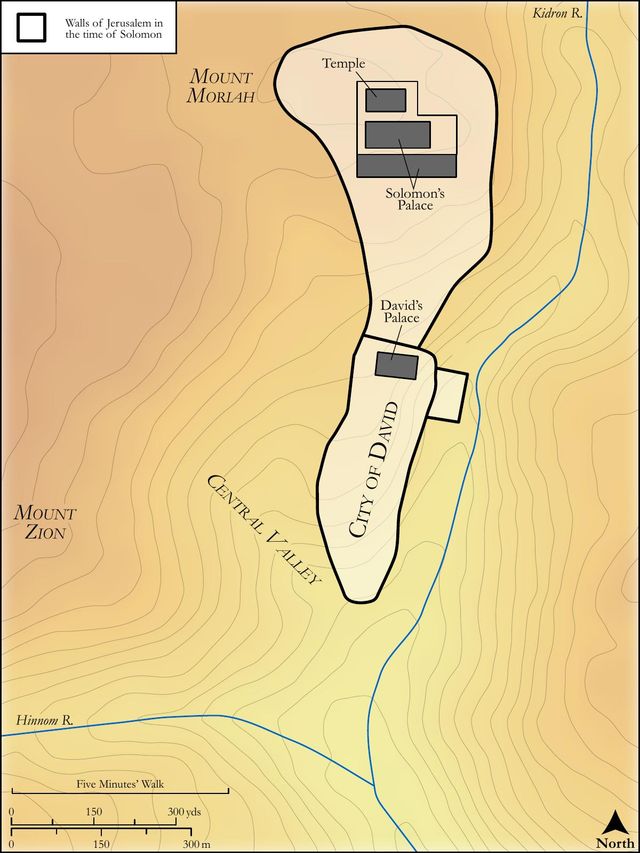
- Jerusalem, where Solomon builds; then the northern capitals, Shechem, Tirzah and Samaria. Elijah’s chapters range from the brook Cherith and Zarephath of Zidon to Carmel and Horeb.
How 1 Kings is laid out
8 movements · 98 passages · 816 verses
Solomon on David’s throne
Chapters 1–2 · 99 verses
David is old and gets no heat. Adonijah exalts himself as king by En-rogel, until Nathan and Bathsheba remind David of his oath, and Solomon is anointed at Gihon. David charges his son to keep the law of Moses, and dies. Solomon has Adonijah, Joab and Shimei put to death, thrusts Abiathar from the priesthood, and “the kingdom was established in the hand of Solomon.”
9 passages
- 1:1–4 David's Old Age and Frailty
- 1:5–10 Adonijah Claims the Throne
- 1:11–31 Nathan and Bathsheba Intervene
- 1:32–40 Solomon Is Anointed King
- 1:41–53 Adonijah's Plot Fails
- 2:1–11 David’s Final Charge to Solomon
- 2:12–25 Solomon Enthroned; Adonijah's Fatal Request
- 2:26–35 The Purge of Joab and Abiathar
- 2:36–46 The Execution of Shimei
Wisdom asked and given
Chapters 3–4 · 62 verses
Solomon makes affinity with Pharaoh and sacrifices at the high places. At Gibeon the LORD says, “Ask what I shall give thee,” and Solomon asks for an understanding heart; God adds riches and honour. Two harlots claim one living child, and the order to divide it shows the true mother. His princes, twelve officers and daily provision are listed, and his wisdom is famed in all nations.
7 passages
The house of the LORD
5:1–9:9 · 182 verses
Hiram king of Tyre sends cedar, and Solomon raises a levy out of all Israel. The temple is built in seven years and his own house in thirteen; Hiram the craftsman casts the pillars and the molten sea. The ark is brought into the oracle and the cloud fills the house. Solomon prays at its dedication, and the LORD appears to him again, with a promise and a warning.
Glory, and a turned heart
9:10–11:43 · 91 verses
Solomon gives Hiram twenty cities, builds with his levy, and sends ships to Ophir. The queen of Sheba comes with hard questions and says, “the half was not told me.” Silver is as stones in Jerusalem. But his foreign wives turn his heart to their gods, and the LORD raises up adversaries. Ahijah tears a new garment in twelve pieces and gives Jeroboam ten. Solomon dies after forty years.
11 passages
- 9:10–14 Solomon's Dealings with Hiram
- 9:15–25 Solomon's Levy and Building Programs
- 9:26–28 The Trade Expedition to Ophir
- 10:1–13 The Queen of Sheba Visits Solomon
- 10:14–25 Solomon's Unparalleled Wealth
- 10:26–29 Military Strength and Extensive Trade
- 11:1–8 Solomon's Apostasy and Idolatry
- 11:9–13 God Announces Judgment
- 11:14–25 External Adversaries Raised Up
- 11:26–40 Jeroboam Chosen to Rule Ten Tribes
- 11:41–43 Death of Solomon
The kingdom torn in two
Chapters 12–14 · 98 verses
At Shechem Rehoboam answers Israel by the young men’s counsel, and the ten tribes cry, “to your tents, O Israel.” Jeroboam reigns in the north and sets golden calves at Bethel and Dan. A man of God from Judah cries against the altar, then is slain by a lion for disobeying the word. Ahijah foretells the end of Jeroboam’s house, and Shishak takes the temple’s treasures.
16 passages
- 12:1–5 Rehoboam Goes to Shechem
- 12:6–12 Rehoboam Seeks Counsel
- 12:13–15 Rehoboam Rejects the Elders' Advice
- 12:16–20 Israel Secedes and Crowns Jeroboam
- 12:21–24 God Forbids Civil War
- 12:25–27 Jeroboam Establishes New Capitals
- 12:28–33 Jeroboam Institutes Idolatry
- 13:1–10 The Man of God Confronts Jeroboam
- 13:11–22 The Deception of the Old Prophet
- 13:23–32 Judgment and Burial of the Man of God
- 13:33–34 Jeroboam’s Continued Rebellion
- 14:1–6 Jeroboam's Wife Seeks the Prophet
- 14:7–18 Ahijah Pronounces Judgment on Jeroboam
- 14:19–20 Summary of Jeroboam's Reign
- 14:21–24 Rehoboam's Wicked Reign in Judah
- 14:25–31 Shishak Invades Jerusalem
King after king
Chapters 15–16 · 68 verses
In Judah, Abijam walks in his father’s sins, but Asa removes the idols and deposes Maachah, and his heart is perfect with the LORD. In Israel, Baasha kills Nadab and destroys Jeroboam’s house; Zimri kills Elah and reigns seven days; Omri builds Samaria. Ahab marries Jezebel and serves Baal, and Hiel rebuilds Jericho at the cost Joshua foretold.
10 passages
- 15:1–8 Abijam Reigns in Judah
- 15:9–15 Asa's Righteous Reign and Reforms
- 15:16–24 Asa's War with Baasha of Israel
- 15:25–31 Nadab's Short Reign in Israel
- 15:32–34 Baasha Kills Nadab and Reigns
- 16:1–7 Judgment on the House of Baasha
- 16:8–14 Elah Reigns in Israel
- 16:15–20 Zimri’s Seven-Day Reign
- 16:21–28 Omri Secures the Throne
- 16:29–34 Ahab Reigns; Extreme Idolatry
Elijah, the fire and the voice
Chapters 17–19 · 91 verses
Elijah tells Ahab there shall be neither dew nor rain. Ravens feed him at Cherith; a widow of Zarephath feeds him from meal that does not waste, and he raises her son. On Carmel the LORD answers by fire and the people cry, “The LORD, he is the God.” Rain follows. Elijah flees Jezebel to Horeb, hears a still small voice, and calls Elisha.
12 passages
- 17:1–7 Elijah Prophesies Drought and Hides at Cherith
- 17:8–16 Sustained by the Widow of Zarephath
- 17:17–24 Resurrection of the Widow's Son
- 18:1–6 Elijah Returns to Ahab
- 18:7–16 Elijah Meets Obadiah
- 18:17–20 The Confrontation with Ahab
- 18:21–40 The Contest on Mount Carmel
- 18:41–46 The Drought Ends; Rain Returns
- 19:1–3 Jezebel Threatens Elijah's Life
- 19:4–8 Elijah Finds Refuge and Despairs
- 19:9–18 The Lord Appears to Elijah at Horeb
- 19:19–21 The Call of Elisha
Ahab’s wars and end
Chapters 20–22 · 125 verses
The LORD gives Ahab two victories over Ben-hadad, but Ahab lets him go and is told, “thy life shall go for his life.” Jezebel has Naboth stoned for his vineyard; Elijah foretells that dogs will lick Ahab’s blood, and when Ahab humbles himself the evil is deferred. Micaiah alone foretells defeat at Ramoth-gilead, where Ahab dies. Jehoshaphat’s reign and Ahaziah’s close the book.
15 passages
- 20:1–12 Ben-Hadad Demands Tribute
- 20:13–21 The First Victory: God’s Intervention
- 20:22–30 Syria Attributes Defeat to Geography
- 20:31–34 Ahab Spares Ben-Hadad
- 20:35–43 A Prophet Condemns Ahab
- 21:1–7 Ahab Covets Naboth's Vineyard
- 21:8–16 Jezebel Plots Naboth's Death
- 21:17–26 Elijah Pronounces Judgment
- 21:27–29 Ahab Humbles Himself
- 22:1–4 Ahab Seeks War with Syria
- 22:5–12 Consulting the Prophets
- 22:13–28 Micaiah's True Prophecy
- 22:29–40 The Death of Ahab
- 22:41–50 The Reign of Jehoshaphat
- 22:51–53 Ahaziah Reigns in Israel
The words 1 Kings turns on
Build and gold crowd chapters 5–10, reign the kings of 14–16, and prophet the Elijah chapters; heart runs from 2:4 to 15:14.
What 1 Kings teaches
shêm · name
A house for the name
The law spoke of a place chosen “to put his name there” (Deuteronomy 12:5), and Solomon purposes “to build an house unto the name of the LORD my God” (5:5). At the dedication “the glory of the LORD had filled the house of the LORD” (8:11), as it filled the tabernacle (Exodus 40:34–35). Yet Solomon knows that “the heaven and heaven of heavens cannot contain thee” (8:27). He asks that prayer toward the house be heard “in heaven thy dwelling place” (8:30): the sinner’s, the stranger’s, “that all people of the earth may know thy name” (8:43), and the captive’s in the land of the enemy (8:46–50). The LORD hallows the house “to put my name there for ever” (9:3), and will cast it out of his sight if Israel turns to other gods (9:6–7).
lêbâb · heart
A perfect heart
David’s charge makes the throne depend on walking before God “with all their heart and with all their soul” (2:4). Solomon asks for “an understanding heart” (3:9), and at the dedication tells Israel, “Let your heart therefore be perfect with the LORD our God” (8:61). Then the measure is turned on him: “his heart was not perfect with the LORD his God, as was the heart of David his father” (11:4). The kings after him are weighed the same way. Abijam’s heart “was not perfect” (15:3); Asa’s “was perfect with the LORD all his days” (15:14). David is the measure not because he was without sin, for the book names “the matter of Uriah the Hittite” (15:5), but because, in the LORD’s words, he “followed me with all his heart” (14:8).
dâbâr · word
The word that came to pass
Each turn of the history fulfils a word of the LORD. Abiathar is thrust out “that he might fulfil the word of the LORD” against Eli’s house (2:27). Rehoboam refuses the people, “for the cause was from the LORD, that he might perform his saying” by Ahijah (12:15). A man of God names Josiah, who will burn bones on Jeroboam’s altar (13:2; 2 Kings 23:16), and the dogs lick Ahab’s blood “according unto the word of the LORD” (22:38). Micaiah, whom Ahab hated (22:8), told him that “the LORD hath put a lying spirit in the mouth of all these thy prophets” (22:19–23). A king who would not hear the truth was given over to the lie he wanted, as Paul says of those who “received not the love of the truth” (2 Thessalonians 2:10–11), and was warned first.
ʻânâh · answer
The God that answereth by fire
Ahab marries Jezebel of the Zidonians and serves Baal (16:31), and heaven is shut at Elijah’s word (17:1). On Carmel Elijah sets the test: “the God that answereth by fire, let him be God” (18:24). Baal’s prophets call from morning until noon, but “there was no voice, nor any that answered” (18:26). Elijah prays, “Hear me, O LORD, hear me, that this people may know that thou art the LORD God, and that thou hast turned their heart back again” (18:37), and the fire falls. At Horeb the LORD is not in the wind, the earthquake or the fire; after the fire comes “a still small voice” (19:12). Elijah, who said “I, even I only, am left” (19:10), is told of seven thousand whose knees “have not bowed unto Baal” (19:18).
Christ in 1 Kings
Jesus set himself beside this book’s king. The queen of Sheba “came from the uttermost parts of the earth to hear the wisdom of Solomon; and, behold, a greater than Solomon is here” (Matthew 12:42). The promise repeated to Solomon, “There shall not fail thee a man upon the throne of Israel” (1 Kings 9:5), was joined to an obedience he did not keep, and Augustine saw why: Solomon fell and so made room for people to stretch their hope toward Christ.
The angel promised Mary’s son “the throne of his father David” (Luke 1:32).
Solomon asked, “will God indeed dwell on the earth?” (8:27). Stephen, citing the prophet, said “the most High dwelleth not in temples made with hands” (Acts 7:48), and Jesus spoke “of the temple of his body” (John 2:21). As Clement of Alexandria put it, He dwells on the earth clothed in flesh
.
Elijah’s chapters reach past Israel. Jesus told Nazareth that Elijah was sent to none of Israel’s widows “save unto Sarepta, a city of Sidon” (Luke 4:25–26), and Paul reads the seven thousand as “a remnant according to the election of grace” (Romans 11:4–5).
- David
- Solomon built the house
- Rehoboam kept Judah
- Abijam Abijam in this book
- Asa his heart perfect
- Jehoshaphat
- … Matthew 1:8–16
- Jesus, who is called Christ
People
By how many verses name them
- SolomonSon of David and Bathsheba; a brother of Shammua, Shobab and Nathan140
- DavidSon of Jesse74
- JeroboamA son of Nebat and Zeruah; father of Abijah, Nadab48
- AhabA son of Omri; husband of Jezebel; father of Joash, Ahaziah, Joram, Athaliah45
- Elijah38
- AsaA son of Abijah; husband of Azubah; father of Jehoshaphat24
- AdonijahA son of David and Haggith22
- BaashaA son of Ahijah; father of Elah20
150 more are named.
Places
92 named
- JerusalemWhere Solomon builds the house for the LORD’s name28
- Egypt20
- SamariaOmri’s new capital, bought from Shemer; Ahab builds Baal’s house there17
- Syria13
- TirzahCapital of the north until Omri; Zimri burns the palace there9
- BethelWhere Jeroboam sets one golden calf and his own altar8
- Ramoth-gileadWhere Ahab dies in battle, as Micaiah foretold8
- Edom5
Where 1 Kings reaches
The passages it leans on, and the ones that lean on it
Deuteronomy 17:16–17 1 Kings 10:26–28 1 Kings 11:4
The law of the king forbade multiplying horses from Egypt, wives, and silver and gold; Solomon multiplied all three.
1 Kings 8:27 Isaiah 66:1 Acts 7:48
Solomon’s confession that heaven cannot contain God, Isaiah’s “where is the house that ye build unto me?”, and Stephen’s answer to his accusers.
The same choice set before Israel: Joshua’s “choose you this day whom ye will serve,” Elijah’s “if the LORD be God, follow him.”
Joshua’s curse on the man who rebuilt Jericho, fulfilled in Hiel’s firstborn and youngest son.
The seven thousand who had not bowed to Baal, which Paul reads as the remnant of grace in his own day.
Books 1 Kings links to most
The Church Fathers on 1 Kings
230 quotations from 28 writers before AD 800 · the ten most quoted, in date order
- Origen253
- Cyprian258
- Ephrem373
- Ambrose397
- Chrysostom407
- Jerome420
- Augustine430
- John Cassian435
- Caesarius542
- Bede735
Ephrem on why Solomon’s unmatched wisdom points past him to Christ.
It is certain, nevertheless, that these qualities, and others, which are described in the psalms about Solomon, mostly are to be transferred to Christ … Therefore Christ is that prince of peace whose wisdom and royal power were never preceded in time or overcome in greatness.
Cyril of Jerusalem heard in Solomon’s question a foresight of the One who would come to the house.
Afterwards Solomon, hearing his father David say these things, and having built a wondrous house and foreseeing him who would come to it, says in astonishment, “Is it then to be thought that God should indeed dwell on earth?”
Augustine on how Solomon lost the wisdom he had asked for.
However, in [David’s] son Solomon libido was not a passing guest; it reigned as a king. Scripture does not pass this over in silence but blames him as a lover of women. His beginnings were redolent with the desire for wisdom; when he had obtained it through spiritual love, he lost it through carnal love.
Ephrem saw in Elijah’s offering on Carmel an image of the one offering on Golgotha.
Elijah, who on mount Carmel abolished the sacrifices of the pagan priests, ministers of vanity, through the burnt offering which he offered to the living God, gives us a living image of the burnt offering that the Emmanuel made on Mount Golgotha …
Keep studying
Articles