


1 Kings 15:3
- וַיֵּלֶךְvai·Ye·lekhand he walkedH1980Conj-w ¦ V-Qal-ConsecImperf-3msVerb Qal Consecutive Imperfect 3rd Singular Masculineוַandיֵּלֶךְhe walked
- בְּכָלbe·kholin allH3605Prep-b ¦ N-mscNoun Singular Masculine Constructבְּinכָלall
- חַטֹּאותcha·Tot[the] sins ofH2403N-fpcNoun Plural Feminine Construct
- אָבִיו'a·Vivhis fatherH1N-msc ¦ 3msNoun Singular Masculine Constructאָבִיfatherוhis
- אֲשֶׁר'a·SherwhichH834RelParticle Relative
- עָשָׂה'a·Sahhe had doneH6213V-Qal-Perf-3msVerb Qal Perfect 3rd Singular Masculine
- לְפָנָיוle·fa·Nav<to> before himH6440Prep-l ¦ N-mpc ¦ 3msNoun Plural Masculine Constructלְ<to>פָנָיbeforeוhim
- וְלֹאve·lo'and notH3808Conj-w ¦ NegParticle Negativeוְandלֹאnot
- הָיָהha·Yahit wasH1961V-Qal-Perf-3msVerb Qal Perfect 3rd Singular Masculine
- לְבָבוֹle·va·Vohis heartH3824N-msc ¦ 3msNoun Singular Masculine Constructלְבָבheartוֹhis
- שָׁלֵםsha·LemcompleteH8003Adj-msAdjective Singular Masculine Absolute
- עִם'imwithH5973PrepPreposition
- יְהוָהYah·wehYahwehH3068N-properNoun Proper Title
- אֱלֹהָיו'e·lo·Havhis GodH430N-mpc ¦ 3msNoun Plural Masculine ConstructאֱלֹהָיGodוhis
- כִּלְבַבkil·Vavlike [the] heart ofH3824Prep-k ¦ N-mscNoun Singular Masculine Constructכִּlikeלְבַב[the] heart of
- דָּוִדda·VidDavidH1732N-proper-mNoun Proper Masculine
- אָבִיו'a·Vivhis ancestorH1N-msc ¦ 3msNoun Singular Masculine Constructאָבִיancestorוhis
English is a literal word-by-word gloss of the Hebrew, not the KJV's wording. Why?
This is the original text the KJV's translators worked from — each Hebrew word with its own literal English meaning in this verse, prepared by scholars at Tyndale House, Cambridge. The KJV translates whole sentences, not word by word, so its wording differs: one Hebrew word can become several English words, and the KJV may choose “the LORD” where the gloss reads “Yahweh”. Both are faithful — they answer different questions. For the KJV's own rendering, switch to the KJV text.
Details
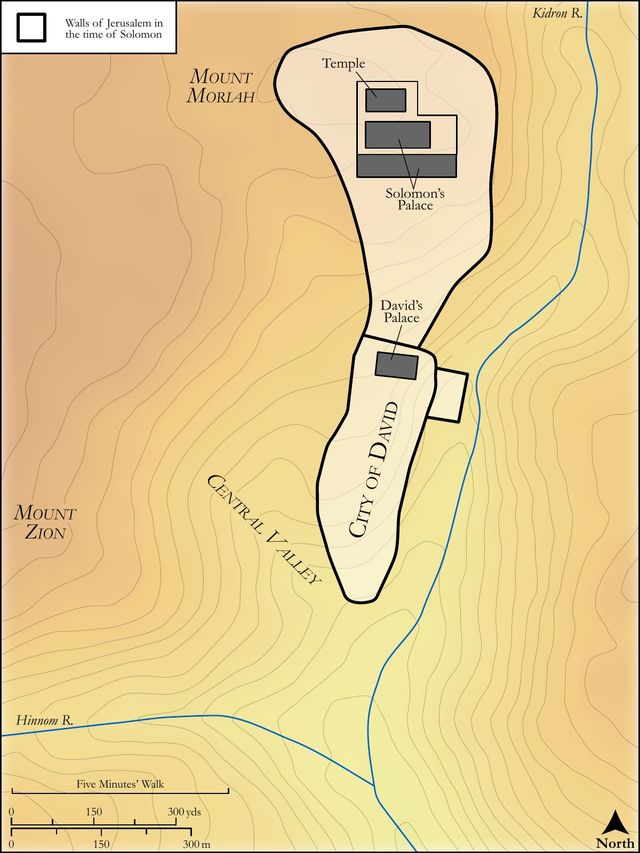
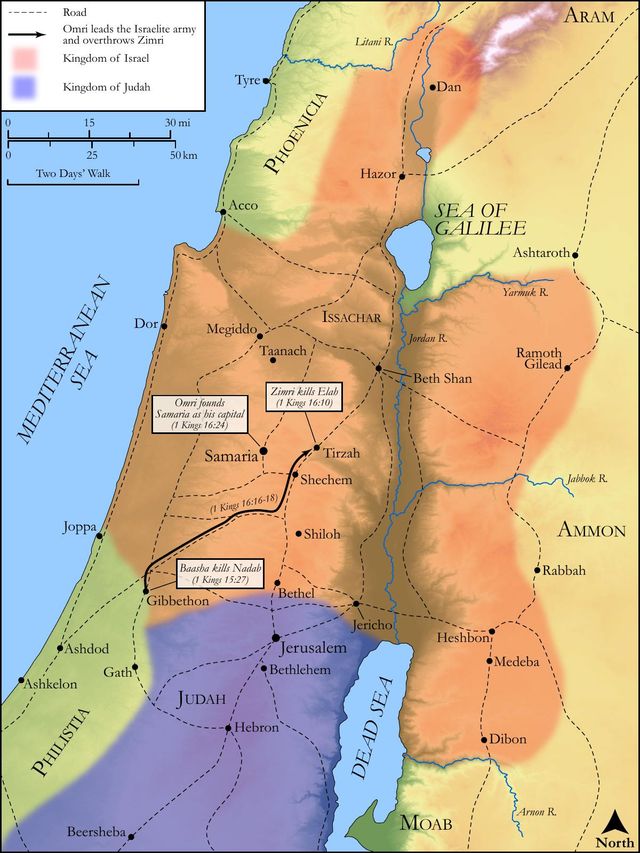
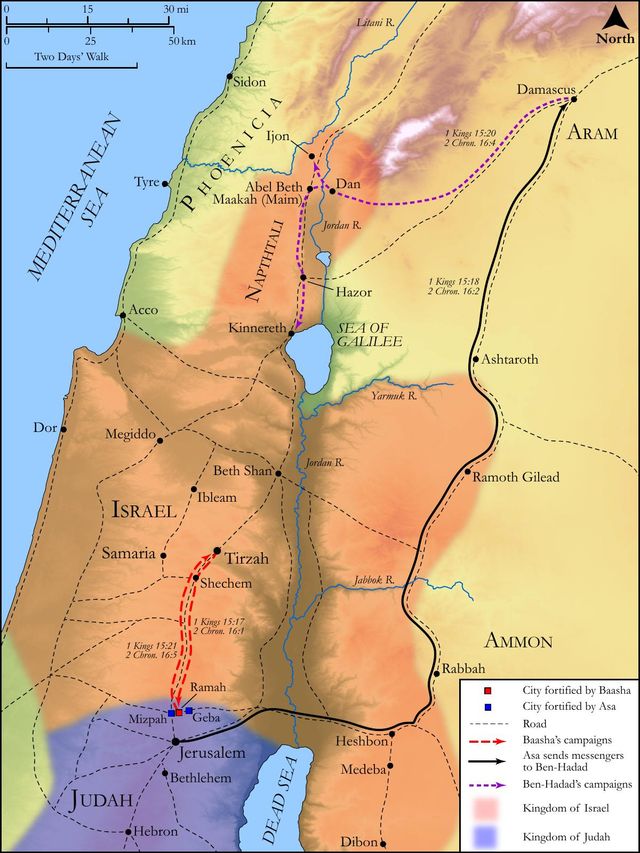
See on the biblical-era maps
Study this verse
Public-domain commentary
Matthew Henry
From his Commentary on the Whole Bible. Henry comments on passages, not single verses — this entry covers 1 Kings 15:1–8. His three-level outline is real structure in the source text, so it is rendered as structure.
We have here a short account of the short reign of Abijam the son of Rehoboam king of Judah. He makes a better figure, 2 Chr. 13, where we have an account of his war with Jeroboam, the speech which he made before the armies engaged, and the wonderful victory he obtained by the help of God. There he is called Abijah - My father is the Lord, because no wickedness is there laid to his charge. But here, where we are told of his faults, Jah, the name of God, is, in disgrace to him, taken away from his name, and he is called Abijam. See Jer 22:24.
I.Few particulars are related concerning him.
1.Here began his reign in the beginning of Jeroboam's eighteenth year; for Rehoboam reigned but seventeen, Kg1 14:21. Jeroboam indeed survived Rehoboam, but Rehoboam's Abijah lived to succeed him and to be a terror to Jeroboam, while Jeroboam's Abijah (whom we read of Kg1 14:1) died before him.
2.He reigned scarcely three years, for he died before the end of Jeroboam's twentieth year, Kg1 15:9. Being made proud and secure by his great victory over Jeroboam (Ch2 13:21), God cut him off, to make way for his son Asa, who would be a better man.
3.His mother's name was Maachah, the daughter of Abishalom, that is, Absalom, David's son, as I am the rather inclined to think because two other of Rehoboam's wives were his near relations (Ch2 11:18), one the daughter of Jerimoth, David's son, and another the daughter of Eliab, David's brother. He took warning by his father not to marry strangers; yet thought it below him to marry his subjects, except they were of the royal family.
4.He carried on his father's wars with Jeroboam. As there was continual war between Rehoboam and Jeroboam, not set battles (these were forbidden, Kg1 12:24), but frequent encounters, especially upon the borders, one making incursions and reprisals on the other, so there was between Abijam and Jeroboam (Kg1 15:7), till Jeroboam, with a great army, invaded him, and then Abijam, not being forbidden to act in his own defence, routed him, and weakened him, so that he compelled him to be quiet during the rest of his reign, Ch2 13:20.
II.But, in general, we are told,
1.That he was not like David, had no hearty affection for the ordinances of God, though, to serve his purpose against Jeroboam, he pleaded his possession of the temple and priesthood, as that upon which he valued himself, Ch2 13:10-12. Many boast of their profession of godliness who are strangers to the power of it, and plead the truth of their religion who yet are not true to it. His heart was not perfect with the Lord his God. He seemed to have zeal, but he wanted sincerity; he began pretty well, but he fell off, and walked in all the sins of his father, followed his bad example, though he had seen the bad consequences of it. He that was all his days in war ought to have been so wise as to make and keep his peace with God, and not to make him his enemy, especially having found him so good a friend in his war with Jeroboam, Ch2 13:18. Let favour be shown to the wicked, yet will he not learn righteousness, Isa 26:10.
2.That yet it was for David's sake that he was advanced, and continued upon the throne; it was for his sake (Kg1 15:4, Kg1 15:5) that God thus set up his son after him; not for his own sake, nor for the sake of his father, in whose steps he trod, but for the sake of David, whose example he would not follow. Note, It aggravates the sin of a degenerate seed that they fare the better for the piety of their ancestors and owe their blessings to it, and yet will not imitate it. They stand upon that ground, and yet despise it, and trample upon it, and unreasonably ridicule and oppose that which they enjoy the benefit of. The kingdom of Judah was supported,
(1.)That David might have a lamp, pursuant to the divine ordination of a lamp for his anointed, Psa 132:17.
(2.)That Jerusalem might be established, not only that the honours put upon it in David's and Solomon's time might be preserved to it, but that it might be reserved to the honours designed for it in after-times. The character here given of David is very great - that he did that which was right in the eyes of the Lord; but the exception is very remarkable - save only in the matter of Uriah, including both his murder and the debauching of his wife. That was a bad matter; it was a remaining blot upon his name, a bar in his escutcheon, and the reproach of it was not wiped away, though the guilt was. David was guilty of other faults, but they were nothing in comparison of that; yet even that being repented of, though it be mentioned for warning to others, did not prevail to throw him out of the covenant, nor to cut off the entail of the promise upon his seed.
Historical interpretation
Historical reception
1 surviving comment on this verse from the historical church.
“Now in the eighteenth year of King Jeroboam son of Nebat, Abijam began to reign over Judah,” and under his rule the Jews obtained a magnificent victory over the Israelites in a battle, which was greater than all those fought before in their civil wars. It is said that after the two multitudes of soldiers were drawn up in fighting order, Abijam appeared to have four hundred thousand men, and Jeroboam eight hundred thousand. The Jews won, while the number of the Israelites who fell in action was larger than five hundred thousand, which is an extremely rare occurrence in history.
Continue studying 1 Kings 15:3 across the web’s major study libraries — every link below opens this exact verse, chapter, or book on the destination site.
Read & Compare
 BibleGatewayThis verse in more than 200 translations and 70 languages.
 Bible.comThe YouVersion reader — hundreds of translations, reading plans, and highlights.
 ESV.orgCrossway's official English Standard Version reader.
 NET BibleThe NET translation with 60,000+ translators' notes on every rendering decision.
 STEP BibleTyndale House's free study tool — original text, vocabulary, and scholarly resources.
 BibliaLogos Bible Software's free web reader.
 USCCBThe New American Bible (Revised Edition) with the U.S. bishops' study notes.
Commentaries
 BibleHub CommentariesDozens of classic commentaries on this verse, gathered on one page.
 StudyLightMore than 100 commentary sets — the largest collection on the web.
 BibleRefPlain-English commentary on what this verse means, verse by verse.
 Enduring WordDavid Guzik's free commentary on this chapter, widely used by Bible teachers.
 Bible Study ToolsVerse commentary alongside Greek and Hebrew study aids.
Original Language & Research
- BibleHub InterlinearThe verse word by word — original language, transliteration, and English.
- BibleHub LexiconEvery word's original-language definition and Strong's entry.
 Blue Letter BibleDeep-study tools — Strong's numbers, concordance, and word studies.
 SefariaThe Hebrew text with Rashi and centuries of Jewish commentary.
Sermons, Hymns & Audio


TrulyRandomVerse is not affiliated with these sites and doesn’t control their content. They’re linked because they’re genuinely useful.
Summary
1 Kings 15:3 delivers a stark and somber theological assessment of King Abijam of Judah, the son of Rehoboam, declaring that his reign was characterized by a continuation of his father's idolatrous and disobedient patterns. The verse critically notes that Abijam's devotion to the LORD his God was not complete or undivided, establishing a profound and unfavorable contrast with the wholehearted commitment that consistently marked his revered ancestor, King David. This immediate spiritual verdict sets the tone for understanding the brevity and compromised nature of Abijam's kingship.
Context
ShowHideLiterary Context
This verse functions as the pivotal spiritual evaluation of Abijam's three-year reign, immediately following his introduction in 1 Kings 15:1-2. It is a concise theological summation, a common narrative device throughout the Books of Kings, where each monarch's rule is judged primarily by their faithfulness to the Mosaic covenant and their adherence to the worship of the LORD. This assessment precedes the account of Abijam's military conflict with Jeroboam I of Israel and his subsequent death, providing the divine perspective that frames the historical events. By explicitly stating his failure to depart from his father's "sins" and contrasting his heart with David's, the text establishes a critical lens through which to interpret Abijam's actions and the ongoing spiritual decline within the southern kingdom of Judah.
Historical & Cultural Context
Abijam ruled over the kingdom of Judah, which had formally separated from the northern kingdom of Israel following the death of Solomon. His father, Rehoboam, had already deeply entrenched Judah in spiritual apostasy, including the establishment of high places for pagan worship and the adoption of foreign religious practices, as detailed in 1 Kings 14:22-24. Abijam inherited a kingdom where deviations from the Mosaic Law were not only tolerated but institutionalized. In ancient Israel and Judah, the king held a unique dual role as both political leader and spiritual head; he was expected to uphold the covenant, enforce the Law, and lead the nation in exclusive worship of Yahweh. Abijam's failure to reverse this spiritual decline, instead choosing to perpetuate his father's sins, underscores the profound challenges facing Judah and the pervasive influence of royal example, which often dictated the spiritual trajectory of the entire nation.
Key Themes
ShowHide1 Kings 15:3 powerfully articulates several foundational themes prevalent throughout the Books of Kings. First, it highlights the continuity of sin across generations, demonstrating how the unfaithfulness of Rehoboam directly impacted and was perpetuated by his successor, Abijam. This emphasizes the weighty responsibility of leadership and the perilous nature of inherited patterns of disobedience. Second, the verse introduces the crucial theme of a divided heart, contrasting Abijam's compromised devotion with the ideal of wholehearted commitment to God. This concept, often expressed as a "perfect" or "whole" heart toward the LORD, serves as the consistent standard by which kings are judged, as also seen in the assessment of Solomon's later reign in 1 Kings 11:4. Finally, the verse unequivocally establishes David as the enduring standard for faithful kingship. Despite his personal moral failings, David's fundamental orientation and unwavering commitment to the LORD served as the benchmark against which all subsequent kings of Judah were measured, underscoring the paramount importance of sincere and undivided devotion to God's covenant.
Exposition and Analysis
ShowHideKey Word Analysis
ShowHideThis primitive root is frequently used in the Old Testament not merely for physical locomotion, but metaphorically to describe one's conduct, manner of life, or habitual behavior. To "walk in the sins of his father" implies a consistent, deliberate pattern of living that conformed to the unrighteous practices and idolatry established by Rehoboam. It signifies an active embrace and continuation of a spiritually corrupt path, indicating a chosen way of life.
Derived from a root meaning "to miss the mark," this term refers to an offense, often habitual sinfulness, against God's revealed will. It encompasses deviations through commission (doing what is forbidden) or omission (failing to do what is commanded). In the context of Israelite kings, these sins frequently included idolatry, the construction of forbidden high places for pagan worship, and a failure to uphold the covenant stipulations, which were direct affronts to the LORD's exclusive claim on Israel's worship. The term also carries the connotation of the penalty or expiation for such offenses.
This adjective, when used in relation to the "heart" (lêbâb), signifies completeness, wholeness, soundness, or undivided loyalty. It does not imply moral sinlessness, but rather a heart fully devoted to God, without compromise, wavering allegiance, or syncretism with other deities. David's heart was considered "perfect" because, despite his moral failures, his fundamental orientation was always toward the LORD, marked by repentance and a desire to obey God's commands. Abijam's heart, by contrast, was "not perfect," indicating a divided loyalty or a lack of singular, unreserved devotion to the LORD.
Verse Breakdown
ShowHide"And he walked in all the sins of his father, which he had done before him:"
This opening clause immediately establishes Abijam's spiritual trajectory, indicating a direct and comprehensive continuation of the unfaithfulness and idolatrous practices initiated or perpetuated by his father, Rehoboam. The phrase "all the sins" suggests a full and unreserved adherence to his father's wicked ways, implying a lack of spiritual discernment, a deliberate choice to follow a path of disobedience, or an unwillingness to pursue repentance and reform. This highlights the powerful influence of inherited patterns, particularly in leadership, and the tragic cycle of apostasy.
"and his heart was not perfect with the LORD his God,"
This is the core theological assessment of Abijam's reign, revealing the internal spiritual condition that underpinned his actions. The "heart" in biblical thought represents the totality of a person's inner being—their will, intellect, emotions, and moral center, the seat of character and devotion. To say his heart was "not perfect" means it was not whole, undivided, or completely devoted to the LORD. This indicates a profound spiritual compromise, likely involving syncretism (worship of Yahweh alongside other gods) or a fundamental lack of genuine, exclusive commitment to God alone, which stands in sharp contrast to the covenantal expectation of exclusive worship of Yahweh.
"as the heart of David his father."
This concluding phrase provides the definitive and enduring standard by which Abijam, and indeed all subsequent kings of Judah, are judged. King David, despite his personal moral failures (e.g., the Bathsheba incident), is consistently presented in the Books of Kings as the ideal king because his fundamental heart attitude was one of repentance, obedience, and wholehearted devotion to the LORD. This comparison underscores Abijam's profound spiritual deficiency and emphasizes the enduring legacy and the high spiritual expectation associated with the Davidic covenant. Abijam tragically failed to live up to the spiritual benchmark set by his great ancestor, highlighting the importance of personal spiritual integrity regardless of one's lineage.
Literary Devices
ShowHideThe verse employs several significant literary devices to convey its powerful and concise message. Contrast is central, starkly juxtaposing Abijam's "imperfect" heart with the exemplary "heart of David." This comparison functions as a theological yardstick, highlighting Abijam's spiritual failure by measuring him against the gold standard of Israelite kingship. The phrase "walked in all the sins of his father" demonstrates Repetition of a negative pattern, emphasizing the generational continuity of unfaithfulness and the tragic failure of leadership to break cycles of disobedience. This also carries an element of Irony, as Abijam, a direct descendant of the divinely chosen Davidic line, fails to embody the very spiritual core that made David a "man after God's own heart." The use of "heart" as the locus of spiritual devotion and commitment is a powerful form of Metonymy, where the inner being represents the entirety of one's spiritual commitment and relationship with God.
Theological and Thematic Connections
ShowHide1 Kings 15:3 profoundly illustrates the biblical emphasis on the internal state of the heart as the true measure of one's relationship with God. It teaches that outward actions, while significant, are ultimately a reflection of the heart's orientation. Abijam's continuation of his father's sins and his "imperfect" heart serve as a potent cautionary tale against spiritual compromise and divided loyalties. God consistently demands wholehearted devotion, not merely ritualistic observance or partial obedience. The consistent comparison to David reinforces the enduring standard of genuine faithfulness, reminding us that God seeks a heart fully committed to Him, even amidst human imperfection. This verse underscores the critical importance of spiritual heritage and the individual responsibility to choose righteousness, regardless of past influences or the examples set by others.
Reflection and Application
ShowHideThe assessment of King Abijam's heart in 1 Kings 15:3 serves as a timeless mirror for our own spiritual lives. It challenges us to deeply examine the true condition of our hearts: Is our devotion to the LORD undivided, or is it compromised by competing loyalties, worldly desires, or inherited patterns of unfaithfulness from our family or culture? Just as Abijam "walked in all the sins of his father," we too can unconsciously adopt behaviors and attitudes that deviate from God's will, whether from family history, societal norms, or past experiences. This verse calls us to a radical self-assessment, urging us to consciously break free from any chains of generational sin or spiritual apathy. It reminds us that God desires a "perfect" heart—one that is whole, sincere, and fully surrendered to Him, not a heart that is merely religious, outwardly compliant, or selectively obedient. Our ultimate standard is not the flawed examples around us, but the profound devotion exemplified by David, and ultimately, by Christ. We are invited to cultivate a heart that truly loves God above all else, seeking His will and pursuing His righteousness with unwavering commitment, trusting in His grace to transform us into His likeness.
Questions for Reflection
ShowHideFAQ
ShowHideWhat does it mean for a king's heart to be "perfect with the LORD" in the biblical context?
ShowHideIn the biblical context, particularly in the Books of Kings, a "perfect" (Hebrew: shalem) heart does not imply sinless perfection, but rather a heart that is complete, whole, and undivided in its devotion to the LORD. It signifies singular loyalty to God, without compromise with idolatry or syncretism. For a king, this meant upholding the Mosaic covenant, leading the nation in true worship of Yahweh, and not allowing the worship of foreign gods or the establishment of forbidden religious practices. David's heart was considered "perfect" because, despite his moral failures (e.g., adultery and murder), his fundamental orientation was always toward God, marked by repentance, a desire to obey God's commands, and honor His covenant. Abijam's heart was "not perfect" because he allowed spiritual compromise and continued the idolatrous practices of his father, indicating a divided allegiance that was an affront to God's exclusive claim on His people's worship. This concept is crucial for understanding the divine evaluation of Israel's kings throughout the narrative of 1 Kings and 2 Kings.
Christ-Centered Fulfillment
ShowHide1 Kings 15:3, with its somber assessment of Abijam's imperfect heart and his continuation in sin, powerfully anticipates the profound need for a perfect King and a new heart for humanity. Abijam's failure to live up to the standard of David underscores the inherent inability of all human kings to perfectly fulfill God's covenant demands. While David's heart was "perfect" in its devotion compared to his successors, even he was flawed, highlighting that the ultimate "perfect heart" could only belong to one greater than David. This points directly to Jesus Christ, the true Son of David, who alone possessed a truly and absolutely perfect heart and lived a life of flawless obedience to God (Hebrews 4:15). Unlike Abijam, who "walked in all the sins of his father," Jesus "committed no sin, nor was deceit found in his mouth" (1 Peter 2:22). He is the King whose heart was always perfectly aligned with the Father's will, even to the point of sacrificial death on a cross (Philippians 2:8). Furthermore, Christ's atoning work on the cross not only provides forgiveness for our own "imperfect" hearts but also offers the promise of a new heart, one of flesh instead of stone, enabling us to walk in God's statutes and obey His rules (Ezekiel 36:26-27). Through faith in Him, we are granted the Holy Spirit, who empowers us to pursue the very wholehearted devotion that Abijam lacked, aligning our hearts with the perfect heart of our Savior and King, who truly fulfills the Davidic covenant.