


2 Chronicles 16:9
Bible text: King James Version (1769 Blayney text) · Public domain
Bible text: King James Version with Strong's numbers · Public domain
Bible text: Berean Standard Bible · Public domain
Bible text: American Standard Version (1901) · Public domain
Bible text: World English Bible, Messianic edition · Public domain
Bible text: Geneva Bible (1599) · Public domain
Bible text: Young's Literal Translation · Public domain
- כִּיkiforH3588PrtParticle Conditional
- יְהוָהYah·wehYahwehH3068N-properNoun Proper Title
- עֵינָיו'ei·Navhis eyesH5869N-fdc ¦ 3msNoun Dual Feminine Constructעֵינָיeyesוhis
- מְשֹׁטְטוֹתme·sho·te·Tot[are] roving aboutH7751V-Piel-Prtcpl-fpVerb Piel Participle Plural Feminine Absolute
- בְּכָלbe·kholin allH3605Prep-b ¦ N-mscNoun Singular Masculine Constructבְּinכָלall
- הָאָרֶץha·'A·retzthe earthH776Art ¦ N-fsNoun Singular Feminine Absoluteהָtheאָרֶץearth
- לְהִתְחַזֵּקLe·hit·cha·zekto show himself strongH2388Prep-l ¦ V-Hithpael-InfVerb Hithpael Infinitive Constructלְtoהִתְחַזֵּקshow himself strong
- עִם'imwithH5973PrepPreposition
- לְבָבָםle·va·Vam[those who] their heartH3824N-msc ¦ 3mpNoun Singular Masculine Constructלְבָבָ[those who] heartםtheir
- שָׁלֵםsha·Lem[is] completeH8003Adj-msAdjective Singular Masculine Absolute
- אֵלָיו'e·Lavto himH413Prep ¦ 3msPrepositionאֵלָיtoוhim
- נִסְכַּלְתָּnis·Kal·tayou have acted foolishlyH5528V-Niphal-Perf-2msVerb Niphal Perfect 2nd Singular Masculine
- עַל'alonH5921PrepPreposition
- זֹאתZotthisH2063PrtParticle Demonstrative
- כִּיkiforH3588PrtParticle Conditional
- מֵעַתָּהme·'A·tahfrom nowH6258Prep-m ¦ AdvAdverbמֵfromעַתָּהnow
- יֵשׁyeshthereH3426Adj-csAdjective Numerical Singular common gender Absolute
- עִמְּךָ'i·me·Khawith youH5973Prep ¦ 2msPrepositionעִמְּwithךָyou
- מִלְחָמוֹתmil·cha·Mot[will be] warsH4421N-fpNoun Plural Feminine Absolute
English is a literal word-by-word gloss of the Hebrew, not the KJV's wording. Why?
This is the original text the KJV's translators worked from — each Hebrew word with its own literal English meaning in this verse, prepared by scholars at Tyndale House, Cambridge. The KJV translates whole sentences, not word by word, so its wording differs: one Hebrew word can become several English words, and the KJV may choose “the LORD” where the gloss reads “Yahweh”. Both are faithful — they answer different questions. For the KJV's own rendering, switch to the KJV text.
Details
See on the biblical-era map
Study this verse
Public-domain commentary
Matthew Henry
From his Commentary on the Whole Bible. Henry comments on passages, not single verses — this entry covers 2 Chronicles 16:7–14. His three-level outline is real structure in the source text, so it is rendered as structure.
Here is, I. A plain and faithful reproof given to Asa by a prophet of the Lord, for making this league with Baasha. The reprover was Hanani the seer, the father of Jehu, another prophet, whom we read of Kg1 16:1; Ch2 19:2. We observed several things amiss in Asa's treaty with Benhadad. But that which the prophet here charges upon him as the greatest fault he was guilty of in that matter is his relying on the king of Syria and not on the Lord his God, Ch2 16:7. He thought that, though God was on his side, this would not stand him in stead unless he had Benhadad on his side, that God either could not or would not help him, but he must take this indirect course to help himself. Note, God is much displeased when he is distrusted and when an arm of flesh is relied on more than his power and goodness. By putting our confidence in God we give honour to him, and therefore he thinks himself affronted if we give that honour to another. He plainly tells the king that herein he had done foolishly, Ch2 16:9. It is a foolish thing to lean on a broken reed, when we have the rock of ages to rely upon. To convince him of his folly he shows him,
1.That he acted against his experience, Ch2 16:8. He, of all men, had no reason to distrust God, who had found him such a present powerful helper, by whom he had been made to triumph over a threatening enemy, as his father before him, because he relied upon the Lord his God, Ch2 13:18; Ch2 14:11. "What!" said the prophet, "Were not the Ethiopians and the Lubim a huge host, enough to swallow up a kingdom? And yet, because thou didst rely on the Lord, he delivered them into thy hand; and was not he sufficient to help thee against Baasha?" Note, The many experiences we have had of the goodness of God to us aggravate our distrust of him. Has he not helped us in six troubles? And have we any reason to suspect him in the seventh? But see how deceitful our hearts are! We trust in God when we have nothing else to trust to, when need drives us to him; but, when we have other things to stay on, we are apt to stay too much on them and to lean on our own understanding as long as that has any thing to offer; but a believing confidence will be in God only, when a smiling world courts it most.
2.That he acted against his knowledge of God and his providence, Ch2 16:9. Asa could not be ignorant that the eyes of the Lord run to and fro through the earth, strongly to hold with those (so it may be read) whose heart is perfect towards him; that is,
(1.)That God governs the world in infinite wisdom, and the creatures, and all their actions, are continually under his eye. The eye of Providence is quick-sighted - it runs; it is intent - it runs to and fro; it reaches far - through the whole earth, no corner of which is from under it, not the most dark or distant; and his eye directs his hand, and the arm of his power; for he shows himself strong. Does Satan walk to and fro in the earth? Providence runs to and fro, is never out of the way, never to seek, never at a loss.
(2.)That God governs the world for the good of his people, does all in pursuance of the counsels of his love concerning their salvation, all for Jacob his servant's sake, and Israel his elect, Isa 45:4. Christ is head over all things to his church, Eph 1:22.
(3.)That those whose hearts are upright with him may be sure of his protection and have all the reason in the world to depend upon it. He is able to protect them in the way of their duty (for wisdom and might are his), and he actually intends their protection. A practical disbelief of this is at the bottom of all our departures from God and double-dealing with him. Asa could not trust God and therefore made court to Benhadad.
3.That he acted against his interest.
(1.)He had lost an opportunity of checking the growing greatness of the king of Syria, (Ch2 16:7): His host has escaped out of thy hand, which otherwise would have joined with Baasha's and fallen with it.
(2.)He had incurred God's displeasure and henceforth must expect no peace, but the constant alarms of war, Ch2 16:9. Those that cannot find in their hearts to trust God forfeit his protection and throw themselves out of it.
II.Asa's displeasure at this reproof.
Though it came from God by one that was known to be his messenger, though the reproof was just and the reasoning fair, and all intended for his good, yet he was wroth with the seer for telling him of his folly; nay, he was in a rage with him, Ch2 16:10. Is this Asa? Is this he whose heart was perfect with the Lord all his days? Well, let him that thinks he stands take heed lest he fall. A wise man, and yet in a rage! An Israelite, and yet in a rage with a prophet! A good man, and yet impatient of reproof, and that cannot bear to be told of his faults! Lord, what is man, when God leaves him to himself? Those that idolize their own conduct cannot bear contradiction; and those that indulge a peevish passionate temper may be transported by it into impieties as well as into indecencies, and will, some time or other, fly in the face of God himself. See what gall and wormwood this root of bitterness bore.
1.In his rage he committed the prophet to the jail, put him in a prison-house, as a malefactor, in the stocks (so some read it,) or into little-ease. God's prophets meet with many that cannot bear reproof, but take it much amiss, yet they must do their duty.
2.Having proceeded thus far, he oppressed some of the people, probably such as owned the prophet in his sufferings, or were known to be his particular friends. He that abused his power for the persecuting of God's prophet was left to himself further to abuse it for the crushing of his own subjects, whereby he weakened himself and lost his interest. Most persecutors have been tyrants.
III.His sickness.
Two years before he died he was diseased in his feet (Ch2 16:12), afflicted with the gout in a high degree. He had put the prophet in the stocks, and now God put him in the stocks; so his punishment answered his sin. His disease was exceedingly great; it came to the height (so some); it flew up to his head (so others), and then it was mortal. This was his affliction; but his sin was that in his disease, instead of seeking to the Lord for relief, he sought to the physicians. His making use of physicians was his duty; but trusting to them, and expecting that from them which was to be had from God only, were his sin and folly. The help of creatures must always be used with an eye to the Creator, and in dependence upon him, who makes every creature that to us which it is, and without whom the most skilful and faithful are physicians of no value. Some think that these physicians were strangers to the commonwealth of Israel, and were a sort of conjurers, to whom he applied as if there were not a God in Israel.
IV.His death and burial.
His funeral had something of extraordinary solemnity in it, Ch2 16:14. They made a very magnificent burying for him. I am loth to think (as some do) that he himself ordered this funeral pomp, and that it was an instance of his vanity, that he would be buried like the Gentiles, and not after the way of the Jews. It is said indeed, He digged the sepulchre for himself, as one mindful of his grave; but I am willing to believe that this funeral pomp was rather an expression of the great respect his people retained for him, notwithstanding the failings and infirmities of his latter days. It was agreed to do him honour at his death. Note, The eminent piety and usefulness of good men ought to be remembered to their praise, though they have had their blemishes. Let their faults be buried in their graves, while their services are remembered over their graves. He that said, There is not a just man that doeth good and sinneth not, yet said also, The memory of the just is blessed; and let it be so.
Continue studying 2 Chronicles 16:9 across the web’s major study libraries — every link below opens this exact verse, chapter, or book on the destination site.
Read & Compare
 BibleGatewayThis verse in more than 200 translations and 70 languages.
 Bible.comThe YouVersion reader — hundreds of translations, reading plans, and highlights.
 ESV.orgCrossway's official English Standard Version reader.
 NET BibleThe NET translation with 60,000+ translators' notes on every rendering decision.
 STEP BibleTyndale House's free study tool — original text, vocabulary, and scholarly resources.
 BibliaLogos Bible Software's free web reader.
 USCCBThe New American Bible (Revised Edition) with the U.S. bishops' study notes.
Commentaries
 BibleHub CommentariesDozens of classic commentaries on this verse, gathered on one page.
 StudyLightMore than 100 commentary sets — the largest collection on the web.
 BibleRefPlain-English commentary on what this verse means, verse by verse.
 Enduring WordDavid Guzik's free commentary on this chapter, widely used by Bible teachers.
 Bible Study ToolsVerse commentary alongside Greek and Hebrew study aids.
Original Language & Research
- BibleHub InterlinearThe verse word by word — original language, transliteration, and English.
- BibleHub LexiconEvery word's original-language definition and Strong's entry.
 Blue Letter BibleDeep-study tools — Strong's numbers, concordance, and word studies.
 SefariaThe Hebrew text with Rashi and centuries of Jewish commentary.
Sermons, Hymns & Audio


TrulyRandomVerse is not affiliated with these sites and doesn’t control their content. They’re linked because they’re genuinely useful.
Summary
Second Chronicles 16:9 presents a profound divine declaration delivered by Hanani the seer to King Asa, revealing God's ceaseless, omniscient observation of the entire earth. This active scrutiny is not for judgment of the righteous, but to identify and powerfully intervene on behalf of those whose hearts are wholly devoted to Him. The verse sharply contrasts God's readiness to display His strength with Asa's foolish decision to rely on a worldly alliance rather than divine aid, culminating in a prophetic pronouncement of future conflict as a direct consequence of his lack of trust.
Context
ShowHideLiterary Context
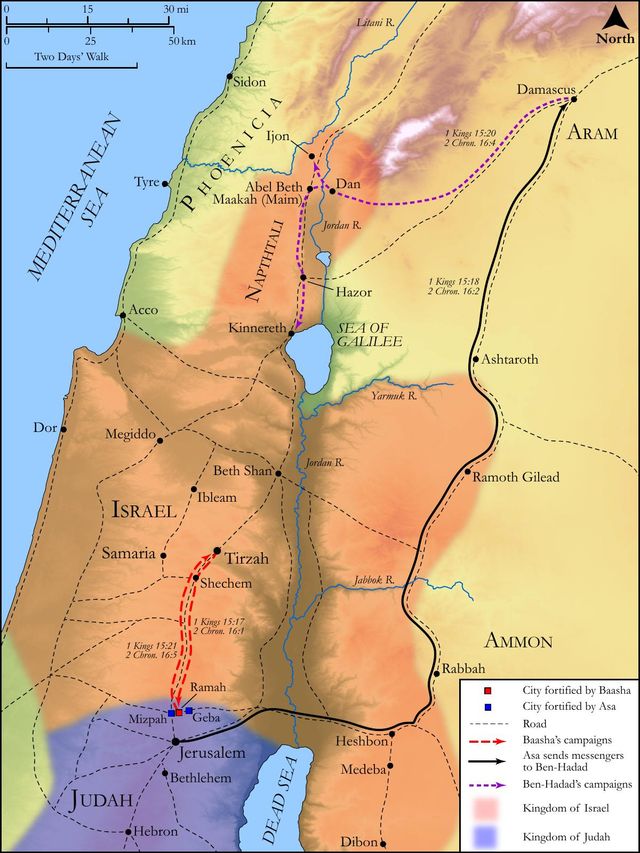
This verse serves as a critical turning point in the narrative of King Asa's reign within 2 Chronicles. Prior to this chapter, Asa is portrayed as a righteous king who initiated significant religious reforms and experienced remarkable divine deliverance, most notably in his victory over the vast Ethiopian army through prayer and faith in 2 Chronicles 14:9-15. However, in chapter 16, when faced with an invasion from King Baasha of Israel, Asa deviates from his established pattern of reliance on God. Instead of seeking the Lord, he resorts to political expediency, emptying the temple and royal treasuries to bribe Ben-hadad, King of Syria, into breaking his treaty with Baasha (2 Chronicles 16:2-3). Hanani's prophetic confrontation in 2 Chronicles 16:7-9 directly challenges Asa's spiritual misstep, highlighting his inconsistency and pronouncing the consequences. Tragically, Asa responds with anger and imprisons Hanani (2 Chronicles 16:10), marking a decline in his reign that culminates in his reliance on physicians rather than God in his final illness (2 Chronicles 16:12).
Historical & Cultural Context
King Asa reigned over the Southern Kingdom of Judah during the divided monarchy, approximately from 913 to 873 BC. His reign followed a period of spiritual compromise, and he is largely commended for his early zeal in purging idolatry and restoring proper worship of Yahweh. The geopolitical landscape of the time was characterized by constant tension between the northern kingdom of Israel and the southern kingdom of Judah, often involving shifting alliances with larger regional powers like Aram (Syria). Asa's decision to form an alliance with Ben-hadad was a common strategic move, but it represented a spiritual failure given his past experiences of divine intervention. Kings frequently sought such alliances, often involving substantial tribute, to secure their borders. The role of a prophet like Hanani, who fearlessly confronted a king with a divine message, was a deeply embedded, though often perilous, aspect of Israelite society, demonstrating that even monarchs were held accountable to God's covenant and law.
Key Themes
ShowHideThe central theme of 2 Chronicles 16:9 is the sovereignty and active involvement of God in human affairs, sharply contrasted with the consequences of human distrust and self-reliance. It powerfully illustrates that God is not a passive observer but is actively seeking opportunities to display His strength on behalf of those who are fully committed to Him. This verse also underscores the critical importance of wholehearted devotion (a "perfect heart") as the indispensable foundation for experiencing God's full provision and protection. Asa's failure to maintain this wholehearted trust, despite his earlier successes, serves as a cautionary tale about the dangers of spiritual complacency and the temptation to rely on human wisdom or power instead of divine guidance. The pronouncement of "wars" highlights the biblical truth that actions of faith or unfaithfulness have direct, tangible repercussions, a principle echoed throughout the historical books and wisdom literature of the Old Testament, such as in Proverbs 1:32-33.
Exposition and Analysis
ShowHideKey Word Analysis
ShowHideThe Hebrew word עַיִן (ʻayin) literally refers to the physical organ, but here it is used anthropomorphically to represent God's omniscience, awareness, and watchful care. As the "eye of the landscape" can refer to a fountain, so God's "eyes" are the source of His pervasive knowledge and active observation. It signifies His comprehensive knowledge and intimate awareness of all things, particularly the inner disposition of human hearts.
The verb שׁוּט (shûwṭ) describes a vigorous, purposeful movement, literally "to go about," "to roam," or "to traverse." When applied to the "eyes of the LORD," it conveys a sense of active, diligent, and pervasive observation. This is not a casual glance but an intensive, intentional search, emphasizing God's omnipresence and His active engagement in discerning the hearts of humanity. It suggests a God who is intimately aware of every situation and every individual's disposition, actively seeking opportunities to intervene.
The Hebrew word שָׁלֵם (shâlêm) translates as "perfect" in the KJV, but its core meaning is "complete," "whole," "sound," or "undivided." It does not imply sinless perfection, but rather a heart that is sincere, unreserved, and fully devoted in its loyalty to God. It signifies integrity of purpose and an unreserved commitment, contrasting sharply with a double-minded or wavering heart. Asa's heart was not shâlêm in this instance because he divided his trust, relying on human alliances rather than God alone.
Verse Breakdown
ShowHide"For the eyes of the LORD run to and fro throughout the whole earth,"
This opening clause establishes God's omnipresence and omniscient awareness. It paints a vivid picture of God's active, continuous, and diligent observation of all humanity across the entire globe. The imagery suggests a purposeful search, not merely passive seeing, but an intentional seeking out of specific qualities in people.
"to shew himself strong in the behalf of [them] whose heart [is] perfect toward him."
This clause reveals the divine purpose behind God's pervasive observation. His ultimate goal is not to find fault, but to find opportunities to manifest His power, to intervene mightily, and to provide strong support for those who possess a "perfect"—that is, wholehearted, undivided, and sincere—devotion to Him. It underscores God's eager desire to actively support, defend, and empower those who fully trust Him.
"Herein thou hast done foolishly:"
This is the direct, unvarnished indictment against King Asa delivered by the prophet Hanani. The prophet declares Asa's recent action—relying on a Syrian alliance instead of God—as "foolish." This folly is not a mere intellectual deficiency, but a profound moral and spiritual failure, a lack of divine wisdom rooted in a departure from covenant faithfulness and a profound distrust in God's ability or willingness to provide. It highlights the spiritual shortsightedness of prioritizing human means over divine power.
"therefore from henceforth thou shalt have wars."
This final clause pronounces the direct and inevitable consequence of Asa's foolishness and lack of faith. Instead of the peace and rest God had previously granted him (as seen in 2 Chronicles 14:6-7), Asa's spiritual misstep will result in continuous conflict and instability. This serves as a stark reminder that choices of faith (or lack thereof) have tangible, often negative, repercussions, illustrating a principle of divine justice and the natural consequences of departing from God's intended path.
Literary Devices
ShowHideThe verse employs several powerful literary devices to convey its profound message. Anthropomorphism is prominently featured in the phrase "the eyes of the LORD run to and fro," attributing human characteristics (eyes, movement) to God to make His omnipresence, active observation, and personal engagement comprehensible to human understanding. This creates a vivid and dynamic image of God's pervasive awareness. The phrase "to shew himself strong" utilizes metonymy, where "strong" represents the full scope of God's power, intervention, and protective action. There is also a clear cause-and-effect relationship established: Asa's foolishness (the cause) directly leads to future wars (the effect), powerfully highlighting the biblical principle of divine consequence and the direct repercussions of spiritual choices. Finally, the entire verse functions as a prophetic oracle, delivering a direct divine message of rebuke, judgment, and warning through Hanani to King Asa, characteristic of prophetic literature in the Old Testament.
Theological and Thematic Connections
ShowHide2 Chronicles 16:9 profoundly articulates God's active engagement with humanity, emphasizing His desire to powerfully intervene for those who demonstrate wholehearted devotion. It reveals a God who is not distant or passive, but intimately involved in discerning the sincerity of hearts, poised to display His strength on behalf of the faithful. This principle underscores that true security, lasting peace, and ultimate success are found not in human alliances, political maneuvering, or finite resources, but in unwavering, undivided trust in the Almighty. Asa's failure serves as a stark reminder that even those with a history of profound faith can falter, and that such spiritual missteps carry significant consequences, disrupting the peace and blessing God intends for His people.
Reflection and Application
ShowHideThis verse serves as a timeless mirror for our own hearts, challenging us to deeply examine the depth and sincerity of our trust in God in every facet of life. In moments of crisis, uncertainty, or significant decision, do we instinctively turn to human strategies, personal strength, or worldly resources first, or do we, like Asa initially demonstrated, seek the Lord with undivided devotion? The imagery of God's "eyes running to and fro" is not a threat of judgment for the faithful, but a profound and encouraging truth that He is actively, diligently searching for opportunities to bless, strengthen, and deliver those who fully rely on Him. Our challenges today may not be literal armies at our borders, but perhaps financial insecurity, health crises, relational conflicts, career pressures, or spiritual battles. The call remains the same: to cultivate a heart that is "perfect"—whole, undivided, and fully surrendered to God's will and power, knowing with confidence that He is eager to "shew himself strong" on our behalf, providing a peace that surpasses all understanding.
Questions for Reflection
ShowHideFAQ
ShowHideWhat does "perfect heart" mean in this context?
ShowHideIn 2 Chronicles 16:9, "perfect heart" (Hebrew: shalem) does not signify sinless perfection, but rather a heart that is whole, complete, sound, sincere, or undivided in its devotion and loyalty to God. It speaks to integrity of purpose and an unreserved commitment. King Asa's heart was deemed imperfect in this specific instance because he divided his trust, choosing to rely on a worldly alliance with Syria rather than solely on God for deliverance, as he had so powerfully done previously in 2 Chronicles 14:11. It emphasizes the singularity and uncompromised nature of one's trust and obedience towards God.
Why did God punish Asa with wars if he had done so much good previously?
ShowHideWhile King Asa had indeed initiated significant religious reforms and demonstrated great faith in earlier battles, 2 Chronicles 16:9 highlights a critical turning point where his faith faltered. God's response was not a punishment for past sins, but a direct and proportional consequence of his current lack of trust and spiritual folly. The prophet Hanani explicitly states, "Herein thou hast done foolishly: therefore from henceforth thou shalt have wars." This illustrates a profound biblical principle that even righteous individuals face tangible consequences when they deviate from God's ways and choose self-reliance over divine dependence. God's desire was for Asa to continue in the peace and security that comes from trusting Him, but by choosing human means over divine power, Asa opened the door to ongoing conflict and instability. It underscores that God values consistent, wholehearted reliance on Him above all else, and that He holds His leaders accountable for their decisions and the state of their hearts.
Christ-Centered Fulfillment
ShowHide2 Chronicles 16:9, with its declaration of God's active search for those with wholehearted devotion, finds its ultimate fulfillment and deepest meaning in the person and work of Jesus Christ. While the Old Testament reveals God's desire to "shew himself strong" on behalf of His people, it is in Christ that this strength is perfectly manifested and made eternally available to all who believe. Our "perfect heart," in the sense of being wholly devoted and undivided in loyalty, is not achieved through our own flawless performance, but through the perfect obedience and atoning sacrifice of Jesus, who perfectly fulfilled the Law and offered Himself as the ultimate sacrifice for sin (Hebrews 10:14). Through faith in Him, we are given a new heart, made perfect in God's sight, enabling us to truly seek Him with undivided devotion, not out of our own merit, but out of gratitude for His boundless grace (Ezekiel 36:26 and 2 Corinthians 5:17). The "wars" that Asa faced due to his lack of trust are overcome in Christ, who offers us true and lasting peace, having conquered sin, death, and the power of the enemy (John 14:27 and Colossians 2:15). Thus, the divine principle of God actively seeking to empower the devoted is fully realized in the New Covenant, where believers, united with Christ, are empowered by the Holy Spirit to live lives of wholehearted trust, experiencing God's strength not just for temporal victories, but for eternal salvation and spiritual triumph over all adversity (Philippians 4:13 and Romans 8:37).