


1 Kings 6:1
Bible text: King James Version (1769 Blayney text) · Public domain
Bible text: King James Version with Strong's numbers · Public domain
Bible text: Berean Standard Bible · Public domain
Bible text: American Standard Version (1901) · Public domain
Bible text: World English Bible, Messianic edition · Public domain
Bible text: Geneva Bible (1599) · Public domain
Bible text: Young's Literal Translation · Public domain
- וַיְהִיvay·Hiand it wasH1961Conj-w ¦ V-Qal-ConsecImperf-3msVerb Qal Consecutive Imperfect 3rd Singular Masculineוַandיְהִיit was
- בִשְׁמוֹנִיםvish·mo·Nimin eightyH8084Prep-b ¦ N-mpNoun Plural Masculine Absoluteבִinשְׁמוֹנִיםeighty
- שָׁנָהsha·NahyearH8141N-fsNoun Singular Feminine Absolute
- וְאַרְבַּעve·'ar·Ba'and fourH702Conj-w ¦ N-csNoun Singular common gender Absoluteוְandאַרְבַּעfour
- מֵאוֹתme·'othundred<s>H3967N-fpNoun Plural Feminine Absolute
- שָׁנָהsha·NahyearH8141N-fsNoun Singular Feminine Absolute
- לְצֵאתle·Tzetof [the] coming out ofH3318Prep-l ¦ V-Qal-InfVerb Qal Infinitive Constructלְofצֵאת[the] coming out of
- בְּנֵיbe·nei[the] people ofH1121N-mpcNoun Plural Masculine Construct
- יִשְׂרָאֵלYis·ra·'ElIsraelH3478N-properNoun Proper Location
- מֵאֶרֶץme·'e·retzfrom [the] land ofH776Prep-m ¦ N-fscNoun Singular Feminine Constructמֵfromאֶרֶץ[the] land of
- מִצְרַיִםmitz·ra·YimEgyptH4714N-properNoun Proper Location
- בַּשָּׁנָהba·sha·Nahin the yearH8141Prep-b ¦ N-fsNoun Singular Feminine Absoluteבַּin theשָּׁנָהyear
- הָרְבִיעִיתha·re·vi·'It<the> fourthH7243Art ¦ Adj-fsAdjective Numerical Position Singular Feminine Absoluteהָ<the>רְבִיעִיתfourth
- בְּחֹדֶשׁbe·Cho·deshin [the] month ofH2320Prep-b ¦ N-mscNoun Singular Masculine Constructבְּinחֹדֶשׁ[the] month of
- זִוZivZivH2099N-properNoun Proper Title
- הוּאhu'thatH1931Pro-3msPronoun Personal 3rd Singular Masculine
- הַחֹדֶשׁha·Cho·desh[was] the monthH2320Art ¦ N-msNoun Singular Masculine Absoluteהַ[was] theחֹדֶשׁmonth
- הַשֵּׁנִיha·she·Ni<the> secondH8145Art ¦ Adj-msAdjective Numerical Position Singular Masculine Absoluteהַ<the>שֵּׁנִיsecond
- לִמְלֹךְlim·Lokhof [the] reigning ofH4427Prep-l ¦ V-Qal-InfVerb Qal Infinitive Constructלִofמְלֹךְ[the] reigning of
- שְׁלֹמֹהshe·lo·MohSolomonH8010N-proper-mNoun Proper Masculine
- עַל'aloverH5921PrepPreposition
- יִשְׂרָאֵלYis·ra·'ElIsraelH3478N-properNoun Proper Location
- וַיִּבֶןvai·Yi·venand he builtH1129Conj-w ¦ V-Qal-ConsecImperf-3msVerb Qal Consecutive Imperfect 3rd Singular Masculineוַandיִּבֶןhe built
- הַבַּיִתha·Ba·yitthe houseH1004Art ¦ N-msNoun Singular Masculine Absoluteהַtheבַּיִתhouse
- לַיהוָהla·Yah·wehfor YahwehH3068Prep-l ¦ N-properNoun Proper TitleלַforיהוָהYahweh
English is a literal word-by-word gloss of the Hebrew, not the KJV's wording. Why?
This is the original text the KJV's translators worked from — each Hebrew word with its own literal English meaning in this verse, prepared by scholars at Tyndale House, Cambridge. The KJV translates whole sentences, not word by word, so its wording differs: one Hebrew word can become several English words, and the KJV may choose “the LORD” where the gloss reads “Yahweh”. Both are faithful — they answer different questions. For the KJV's own rendering, switch to the KJV text.
Details
See on the biblical-era maps
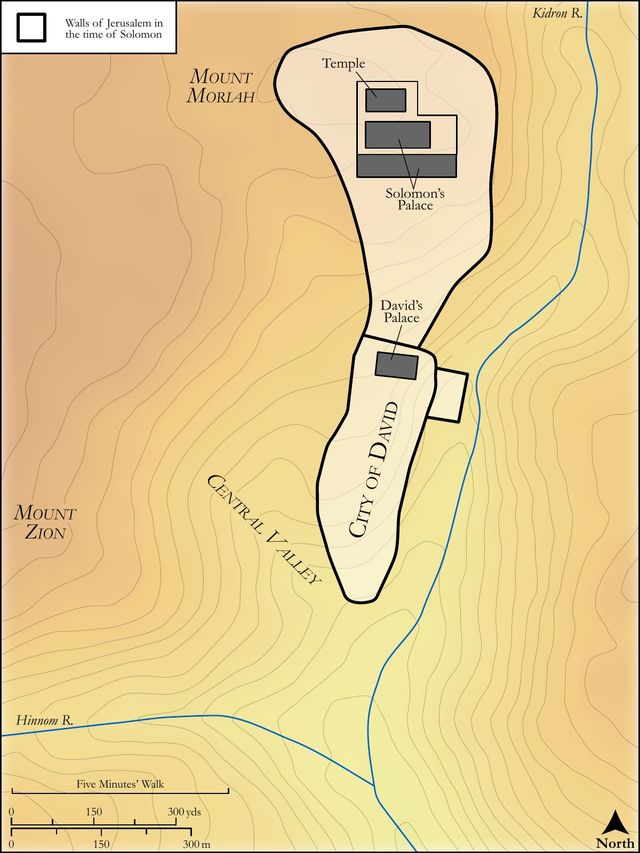
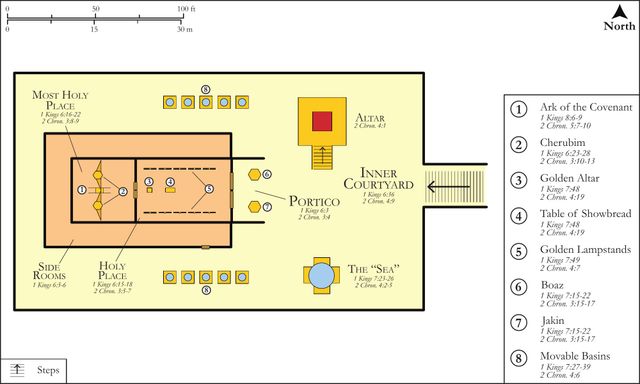
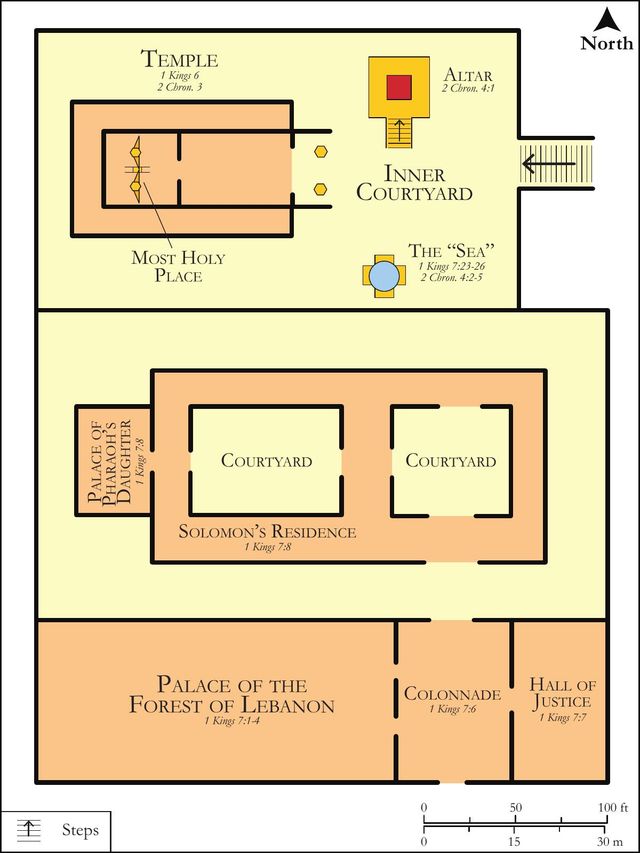
Study this verse
Public-domain commentary
Matthew Henry
From his Commentary on the Whole Bible. Henry comments on passages, not single verses — this entry covers 1 Kings 6:1–10. His two-level outline is real structure in the source text, so it is rendered as structure.
Here, I. The temple is called the house of the Lord (Kg1 6:1), because it was, 1. Directed and modelled by him. Infinite Wisdom was the architect, and gave David the plan or pattern by the Spirit, not by word of mouth only, but, for the greater certainty and exactness, in writing (Ch1 28:11, Ch1 28:12), as he had given to Moses in the mouth a draught of the tabernacle. 2. Dedicated and devoted to him and to his honour, to be employed in his service, so his as never any other house was, for he manifested his glory in it (so as never in any other) in a way agreeable to that dispensation; for, when there were carnal ordinances, there was a worldly sanctuary, Heb 9:1, Heb 9:10. This gave it its beauty of holiness, that it was the house of the Lord, which far transcended all its other beauties.
II.The time when it began to be built is exactly set down.
1.It was just 480 years after the bringing of the children of Israel out of Egypt. Allowing forty years to Moses, seventeen to Joshua, 299 to the Judges, forty to Eli, forty to Samuel and Saul, forty to David, and four to Solomon before he began the work, we have just the sum of 480. So long it was after that holy state was founded before that holy house was built, which, in less than 430 years, was burnt by Nebuchadnezzar. It was thus deferred because Israel had, by their sins, rendered themselves unworthy of this honour, and because God would show how little he values external pomp and splendour in his service: he was in no haste for a temple. David's tent, which was clean and convenient, though it was neither stately nor rich, nor, for aught that appears, ever consecrated, is called the house of the Lord (Sa2 12:20), and served as well as Solomon's temple; yet, when God gave Solomon great wealth, he put it into his heart thus to employ it, and graciously accepted him, chiefly because it was to be a shadow of good things to come, Heb 9:9.
2.It was in the fourth year of Solomon's reign, the first three years being taken up in settling the affairs of his kingdom, that he might not find any embarrassment from them in this work. It is not time lost which is spent in composing ourselves for the work of God, and disentangling ourselves from every thing which might distract or divert us. During this time he was adding to the preparations which his father had made (Ch1 22:14), hewing the stone, squaring the timber, and getting every thing ready, so that he is not to be blamed for slackness in deferring it so long. We are truly serving God when we are preparing for his service and furnishing ourselves for it.
III.The materials are brought in, ready for their place (Kg1 6:7), so ready that there was neither hammer nor ax heard in the house while it was in building. In all building Solomon prescribes it as a rule of prudence to prepare the work in the field, and afterwards build, Pro 24:27. But here, it seems, the preparation was more than ordinarily full and exact, to such a degree that, when the several parts came to be put together, there was nothing defective to be added, nothing amiss to be amended. It was to be the temple of God of peace, and therefore no iron tool must be heard in it. Quietness and silence both become and befriend religious exercises: God's work should be done with as much care and as little noise as may be. The temple was thrown down with axes and hammers, and those that threw it down roared in the midst of the congregation (Psa 74:4, Psa 74:6); but it was built up in silence. Clamour and violence often hinder the work of God, but never further it.
IV.The dimensions are laid down (Kg1 6:2, Kg1 6:3) according to the rules of proportion.
Some observe that the length and breadth were just double to that of the tabernacle. Now that Israel had grown more numerous the place of their meeting needed to be enlarged (Isa 54:1, Isa 54:2), and now that they had grown richer they were the better able to enlarge it. Where God sows plentifully he expects to reap so.
V.An account of the windows (Kg1 6:4):
They were broad within, and narrow without, Marg. Such should the eyes of our mind be, reflecting nearer on ourselves than on other people, looking much within, to judge ourselves, but little without, to censure our brethren. The narrowness of the lights intimated the darkness of that dispensation, in comparison with the gospel day.
VI.The chambers are described (Kg1 6:5, Kg1 6:6), which served as vestries, in which the utensils of the tabernacle were carefully laid up, and where the priests dressed and undressed themselves and left the clothes in which they ministered: probably in some of these chambers they feasted upon the holy things. Solomon was not so intent upon the magnificence of the house as to neglect the conveniences that were requisite for the offices thereof, that every thing might be done decently and in order. Care was taken that the beams should not be fastened in the walls to weaken them, Kg1 6:6. Let not the church's strength be impaired under pretence of adding to its beauty or convenience.
Historical interpretation
Historical reception
1 surviving comment on this verse from the historical church.
Where it says, “in the fourth year in the month of Zio, which is the second month of the reign of Solomon over Israel,” the intended order is, in the fourth year of the reign of Solomon in the month of Zio, that is, the second month. He calls the second month May, for April, in which the Pasch, the principal feast among the Hebrews, is held, was the first month of the year. From this it is quite clear that later when the Pasch was over, he began to build a house for the Lord, and after they had been consecrated by the mystical solemnity, the people set their hands to the mystical task. A commemoration is made of the exodus from Egypt when work began on the building of the tabernacle so that the reader may be made aware what a period of time had passed between the building of both houses and learn the spiritual mystery attaching to this period of time. For four times 120 make 480; now four is very appropriate to evangelical perfection on account of the actual number of the Evangelists; 120 is appropriate to the teaching of the law on account of the same number of years of the legislator. It was also in this number of men that the primitive church received the grace of the Holy Spirit, clearly showing that those who use the law legitimately, that is, those who recognize and embrace the grace of Christ in it, are deservedly filled with the grace of his Spirit so that they may become more ardent in his love.
Continue studying 1 Kings 6:1 across the web’s major study libraries — every link below opens this exact verse, chapter, or book on the destination site.
Read & Compare
 BibleGatewayThis verse in more than 200 translations and 70 languages.
 Bible.comThe YouVersion reader — hundreds of translations, reading plans, and highlights.
 ESV.orgCrossway's official English Standard Version reader.
 NET BibleThe NET translation with 60,000+ translators' notes on every rendering decision.
 STEP BibleTyndale House's free study tool — original text, vocabulary, and scholarly resources.
 BibliaLogos Bible Software's free web reader.
 USCCBThe New American Bible (Revised Edition) with the U.S. bishops' study notes.
Commentaries
 BibleHub CommentariesDozens of classic commentaries on this verse, gathered on one page.
 StudyLightMore than 100 commentary sets — the largest collection on the web.
 BibleRefPlain-English commentary on what this verse means, verse by verse.
 Enduring WordDavid Guzik's free commentary on this chapter, widely used by Bible teachers.
 Bible Study ToolsVerse commentary alongside Greek and Hebrew study aids.
Original Language & Research
- BibleHub InterlinearThe verse word by word — original language, transliteration, and English.
- BibleHub LexiconEvery word's original-language definition and Strong's entry.
 Blue Letter BibleDeep-study tools — Strong's numbers, concordance, and word studies.
 SefariaThe Hebrew text with Rashi and centuries of Jewish commentary.
Sermons, Hymns & Audio


TrulyRandomVerse is not affiliated with these sites and doesn’t control their content. They’re linked because they’re genuinely useful.
Summary
1 Kings 6:1 serves as a pivotal chronological marker, precisely dating the commencement of construction on the First Temple in Jerusalem. This verse meticulously connects the building of God's permanent dwelling place with two foundational moments in Israel's history: the epochal Exodus from Egypt and the establishment of the Davidic monarchy under King Solomon. It underscores the divine timing and covenant faithfulness that culminated in this monumental undertaking, marking a new era for Israel's worship and national identity as God's presence became permanently established among His people.
Context
ShowHideLiterary Context
This verse initiates the detailed account of the construction of Solomon's Temple, which spans 1 Kings 6 and 1 Kings 7. Preceding this, the narrative in 1 Kings 1-5 establishes Solomon's reign, his renowned wisdom, his consolidation of power, and the extensive preparations for the Temple's construction, including strategic alliances with Hiram of Tyre and the gathering of vast quantities of materials. 1 Kings 5:1-18 specifically details the agreements for timber and labor, setting the stage for the actual building to commence. The precise dating in 1 Kings 6:1 acts as a formal declaration, transitioning the narrative from the planning and preparation phase to the active construction, emphasizing the profound historical and theological significance of this event within the broader narrative of Israel's kingship and its covenant relationship with God.
Historical & Cultural Context
The specified "four hundred and eightieth year after the children of Israel were come out of the land of Egypt" highlights the Exodus as the pivotal event defining Israel's national and religious identity. This precise dating connects the Temple's construction directly to God's redemptive work in liberating His people, signifying a long-awaited culmination of His promises for a settled dwelling place for His name. Solomon's reign, described in 1 Kings 4 as a period of unprecedented peace, prosperity, and wisdom, provided the ideal conditions for such a massive and expensive undertaking, requiring immense resources and stability. The "month Zif," corresponding to late April or early May, was the second month of the Hebrew calendar (also known as Iyyar), a favorable time in the agricultural cycle to begin large-scale building projects, ensuring optimal weather for quarrying, transporting, and assembling materials. Culturally, the Temple was not merely a grand edifice but the central locus of Israelite worship, replacing the nomadic Tabernacle as the permanent dwelling place for God's name and presence among His people, thereby solidifying Jerusalem's status as the religious and political capital.
Key Themes
ShowHideThe verse profoundly contributes to several key themes within 1 Kings and the broader biblical narrative. Firstly, it underscores Divine Timing and Providence, demonstrating God's meticulous orchestration of history, bringing His plans to fruition at the appointed moment after centuries of the Tabernacle's itinerancy. The specific dates emphasize that this was not a random occurrence but a divinely ordained event. Secondly, it powerfully illustrates the Fulfillment of the Davidic Covenant, specifically God's promise to King David that his son would build a "house" for the Lord's name (2 Samuel 7:12-13). This construction solidifies the Davidic dynasty and its integral role in God's redemptive plan, establishing a permanent place for God's worship. Thirdly, the commencement of the "house of the LORD" emphasizes the Centrality of Worship and God's Presence. The Temple was designed to be the focal point of Israel's spiritual life, where sacrifices, prayers, and festivals would continually reinforce their covenant relationship with Yahweh, symbolizing His dwelling among them and His accessibility. This act of building reinforces the theme of God's desire for an intimate, established relationship with His chosen people, as seen in the broader narrative of 1 Kings.
Exposition and Analysis
ShowHideKey Word Analysis
ShowHideFrom a root meaning to build, this term refers to a physical structure, but in this context, it signifies much more than a mere building. It denotes a dwelling place, a home, and by extension, a sacred edifice dedicated to the divine presence. Here, it specifically refers to the Temple, emphasizing its purpose as the dedicated dwelling place for the name of Yahweh, the covenant God of Israel, and the central locus of His manifest presence among His people.
A primitive root meaning "to build" literally and figuratively. In this verse, it denotes the physical act of constructing the Temple, but it also carries the theological weight of establishing, repairing, and setting up something of lasting significance. The commencement of this "building" signifies the fulfillment of God's promise to David and the establishment of a permanent, central place for Israel's worship, moving beyond the temporary nature of the Tabernacle.
Probably from an unused root meaning "to be prominent," this is an ancient Canaanite-Phoenician name for the second month of the Hebrew calendar, corresponding to late April or early May. The name itself means "brightness" or "radiance," likely referring to the blossoming of flowers and the vibrant light of spring. Its inclusion provides precise chronological detail, anchoring the event not just in a specific year but in a specific, favorable season for large-scale construction, subtly hinting at the glory that would fill the completed "house of the LORD."
Verse Breakdown
ShowHide"And it came to pass in the four hundred and eightieth year after the children of Israel were come out of the land of Egypt,"
This opening clause establishes the primary chronological anchor for the Temple's construction, linking it directly to the pivotal event of the Exodus. The precise numerical detail emphasizes the long span of God's faithfulness and the culmination of His promises over centuries, highlighting the profound historical depth and divine timing of this monumental undertaking.
"in the fourth year of Solomon's reign over Israel,"
This clause provides a secondary, more immediate chronological marker, placing the Temple's commencement early in Solomon's prosperous and peaceful reign. It connects the building project to the stability, wisdom, and unified power characteristic of Solomon's rule, indicating that the conditions were ideally suited for such a grand endeavor, thereby fulfilling God's promise to David that his son would build the Temple.
"in the month Zif, which [is] the second month,"
This specifies the exact month of the year, providing further precision and grounding the event in the seasonal rhythms of ancient Israel. "Zif" (Iyyar) is identified as the second month of the Hebrew calendar, corresponding to late spring. This detail suggests a practical consideration for building, as the weather would be favorable for large-scale outdoor construction, and also imbues the timing with a sense of natural readiness and divine blessing.
"that he began to build the house of the LORD."
This culminating clause states the central action of the verse: the commencement of the Temple's construction. "He" refers to Solomon, acting as God's chosen instrument and fulfilling the divine mandate. "The house of the LORD" explicitly identifies the sacred purpose of the structure—a dwelling dedicated to Yahweh, signifying the establishment of a permanent, central place for Israel's worship and God's manifest presence among His people.
Literary Devices
ShowHideThe primary literary device at play in 1 Kings 6:1 is Chronological Precision. The verse provides an unusually detailed and multi-layered dating system, referencing the Exodus, Solomon's reign, and the specific month. This precision serves not merely as historical record-keeping but as a profound theological statement. It underscores the divine orchestration of history, demonstrating that the Temple's construction was not an arbitrary event but the meticulously planned fulfillment of God's long-term covenant promises, unfolding over centuries. This meticulous dating lends an air of authority and divine intentionality to the narrative, emphasizing the profound significance of the event as a culmination of God's work in Israel's history. The use of the ancient month name "Zif" also adds a touch of Archaism, grounding the narrative in a specific historical and cultural milieu, connecting the present moment of construction to the deep past of Israel's traditions and their unique calendar.
Theological and Thematic Connections
ShowHideThe commencement of the Temple's construction in 1 Kings 6:1 is a profound theological milestone, signifying the culmination of God's promise to establish a permanent dwelling for His name among His people. For centuries, God's presence had been associated with the portable Tabernacle, a symbol of Israel's nomadic journey and God's accompanying presence. The Temple, however, represented a new era of stability, a fixed point for worship that reflected the settled nature of the promised land and the established Davidic monarchy. This act of building underscores God's faithfulness to His covenant with David, who desired to build a house for God but was told his son would accomplish it. It also highlights the importance of a central place of worship for the unity and spiritual health of the nation, a place where God's glory could dwell and His people could draw near to Him through prescribed rituals and sacrifices. The very act of building, with its immense resources and precise timing, speaks to the supreme value God places on His relationship with His people and the means by which they are to worship Him.
Reflection and Application
ShowHide1 Kings 6:1 invites us to consider the significance of God's timing and the fulfillment of His promises in our own lives. Just as the Temple's construction was a divinely appointed moment, meticulously prepared for over centuries and through generations, so too does God work in our lives with intentionality and purpose. We are reminded that God's plans unfold not always according to our immediate desires, but according to His perfect schedule, often requiring patience, preparation, and faithfulness through various seasons. The Temple, as the central place of worship, also challenges us to consider what is central in our lives. While we no longer build physical temples for God to dwell in—for He now indwells believers through the Holy Spirit (1 Corinthians 6:19) and the Church is His spiritual house (1 Peter 2:5)—the principle of dedicating our lives as a dwelling place for God remains paramount. This verse calls us to intentionality in our spiritual walk, ensuring that our lives, our families, and our communities are built on foundations that honor God and serve as places where His presence is welcomed and His name is glorified.
Questions for Reflection
ShowHideFAQ
ShowHideWhy is the dating in 1 Kings 6:1 so precise, referencing both the Exodus and Solomon's reign?
ShowHideThe precise dating in 1 Kings 6:1 serves several crucial purposes. Firstly, it chronologically anchors the Temple's construction to the Exodus, the foundational event of Israel's national identity and covenant with God. This connection emphasizes that the Temple was not an arbitrary project but a culmination of God's long-term plan for His people, demonstrating His faithfulness over centuries. Secondly, linking it to Solomon's fourth year highlights the ideal conditions for the project: a period of unprecedented peace, prosperity, and wisdom under a unified monarchy. This dual dating underscores the divine orchestration of history, showing that the Temple was built at God's appointed time, when both the nation's history and its current leadership were optimally aligned for such a monumental undertaking. It adds a theological weight to the historical record, marking the event as divinely significant.
What is the significance of the "month Zif" being mentioned?
ShowHideThe mention of "Zif" (also known as Iyyar) as the second month is significant for both practical and symbolic reasons. Practically, it indicates that construction began in late April or early May, a favorable season in the land of Israel for large-scale building projects, before the intense summer heat and after the spring rains. This detail suggests careful planning and ideal conditions for the work. Symbolically, the name "Zif" means "radiance" or "light," which could subtly allude to the glory and light of God that would soon fill the Temple. It grounds this momentous spiritual event in the natural rhythms and agricultural calendar of the land, connecting the divine plan to the tangible realities of life in Israel.
How does the building of the Temple in 1 Kings 6:1 relate to the earlier Tabernacle?
ShowHideThe commencement of the Temple in 1 Kings 6:1 marks a significant transition from the portable Tabernacle, which had served as God's dwelling place among Israel since the Exodus. The Tabernacle symbolized God's accompanying presence during Israel's nomadic wanderings in the wilderness and during their early settlement in the Promised Land. The Temple, in contrast, represented a permanent, fixed dwelling for God's name, signifying Israel's settled status in the land and the establishment of the Davidic monarchy. While both structures served as the central place of worship and the symbolic locus of God's presence, the Temple's permanence reflected the stability of God's covenant with David and His enduring commitment to dwell among His people in a fixed location, reinforcing Jerusalem's role as the spiritual capital.
Christ-Centered Fulfillment
ShowHide1 Kings 6:1, marking the beginning of the physical Temple in Jerusalem, finds its ultimate and profound fulfillment in Jesus Christ. While the First Temple was a magnificent structure, it was ultimately a shadow pointing to a greater reality. Jesus Himself declared, "Destroy this temple, and in three days I will raise it up," referring to the temple of His body (John 2:19-21). Christ is the true and ultimate Temple, the perfect dwelling place of God among humanity, where the fullness of the Godhead dwells bodily (Colossians 2:9). His incarnation is the ultimate "building" of God's presence among us, making God accessible not through bricks and mortar, but through His very person. Furthermore, through Christ, believers are incorporated into a "spiritual house" and become "temples of the Holy Spirit" (1 Peter 2:5; 1 Corinthians 3:16; 1 Corinthians 6:19). This signifies that God's dwelling place is no longer confined to a physical building in Jerusalem, but is now in His people, collectively as the Church and individually through the indwelling Spirit. The meticulous timing of the Temple's construction in 1 Kings 6:1 foreshadows God's perfect timing in sending Christ "in the fullness of time" (Galatians 4:4) to establish the new covenant and the ultimate, living Temple. Ultimately, the vision of the New Jerusalem in Revelation 21:22 reveals that in the eternal state, there will be no need for a physical temple, "for the Lord God Almighty and the Lamb are its temple," signifying the complete and unmediated presence of God with His redeemed people.