


2 Chronicles 3:1
Bible text: King James Version (1769 Blayney text) · Public domain
Bible text: King James Version with Strong's numbers · Public domain
Bible text: Berean Standard Bible · Public domain
Bible text: American Standard Version (1901) · Public domain
Bible text: World English Bible, Messianic edition · Public domain
Bible text: Geneva Bible (1599) · Public domain
Bible text: Young's Literal Translation · Public domain
- וַיָּחֶלvai·Ya·cheland he beganH2490Conj-w ¦ V-Hiphil-ConsecImperf-3msVerb Hiphil Consecutive Imperfect 3rd Singular Masculineוַandיָּחֶלhe began
- שְׁלֹמֹהshe·lo·MohSolomonH8010N-proper-mNoun Proper Masculine
- לִבְנוֹתliv·Notto buildH1129Prep-l ¦ V-Qal-InfVerb Qal Infinitive Constructלִtoבְנוֹתbuild
- אֶת'et<obj.>H853DirObjMParticle Object Indicator
- בֵּיתbeit[the] house ofH1004N-mscNoun Singular Masculine Construct
- יְהוָהYah·wehYahwehH3068N-properNoun Proper Title
- בִּירוּשָׁלִַםbi·Ru·sha·Limin JerusalemH3389Prep-b ¦ N-properNoun Proper LocationבִּinירוּשָׁלִַםJerusalem
- בְּהַרbe·Haron [the] mountain ofH2022Prep-b ¦ N-mscNoun Singular Masculine Constructבְּonהַר[the] mountain of
- הַמּוֹרִיָּהha·Mo·ri·Yah<the> MoriahH4179Art ¦ N-properNoun Proper Locationהַ<the>מּוֹרִיָּהMoriah
- אֲשֶׁר'a·SherwhereH834RelParticle Relative
- נִרְאָהnir·'Ahhe had appearedH7200V-Niphal-Perf-3msVerb Niphal Perfect 3rd Singular Masculine
- לְדָוִידle·da·Vidto DavidH1732Prep-l ¦ N-proper-mNoun Proper MasculineלְtoדָוִידDavid
- אָבִיהוּ'a·Vi·huhis fatherH1N-msc ¦ 3msNoun Singular Masculine Constructאָבִיfatherהוּhis
- אֲשֶׁר'a·SherwhichH834RelParticle Relative
- הֵכִיןhe·Khinhe had preparedH3559V-Hiphil-Perf-3msVerb Hiphil Perfect 3rd Singular Masculine
- בִּמְקוֹםbim·Komin [the] place ofH4725Prep-b ¦ N-mscNoun Singular Masculine Constructבִּinמְקוֹם[the] place of
- דָּוִידda·VidDavidH1732N-proper-mNoun Proper Masculine
- בְּגֹרֶןbe·Go·renon [the] threshing floor ofH1637Prep-b ¦ N-fscNoun Singular Feminine Constructבְּonגֹרֶן[the] threshing floor of
- אָרְנָן'a·re·NanOrnanH771N-proper-mNoun Proper Masculine
- הַיְבוּסִיhay·vu·Sithe JebusiteH2983Art ¦ N-msNoun Gentilic Singular Masculine AbsoluteהַtheיְבוּסִיJebusite
English is a literal word-by-word gloss of the Hebrew, not the KJV's wording. Why?
This is the original text the KJV's translators worked from — each Hebrew word with its own literal English meaning in this verse, prepared by scholars at Tyndale House, Cambridge. The KJV translates whole sentences, not word by word, so its wording differs: one Hebrew word can become several English words, and the KJV may choose “the LORD” where the gloss reads “Yahweh”. Both are faithful — they answer different questions. For the KJV's own rendering, switch to the KJV text.
Details
See on the biblical-era maps
Study this verse
Public-domain commentary
Matthew Henry
From his Commentary on the Whole Bible. Henry comments on passages, not single verses — this entry covers 2 Chronicles 3:1–9.
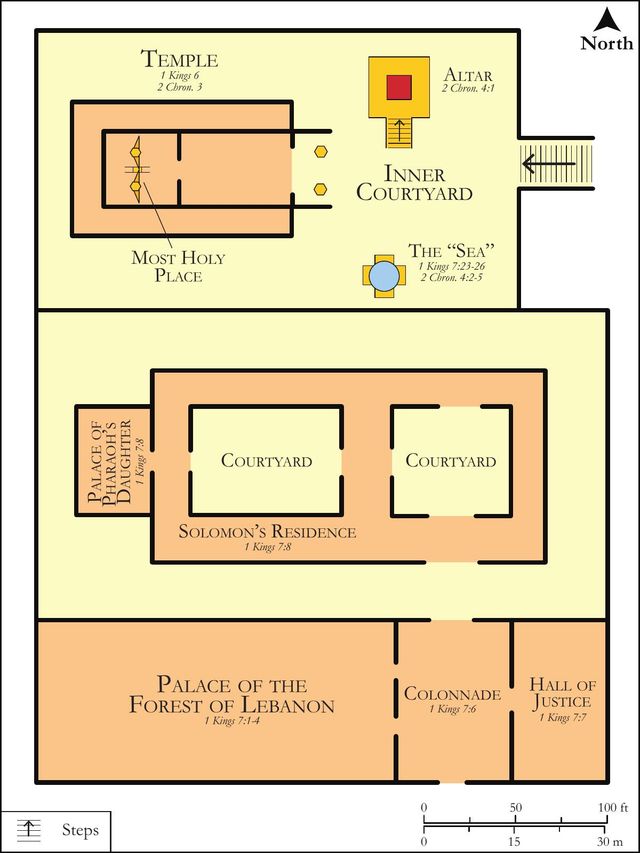
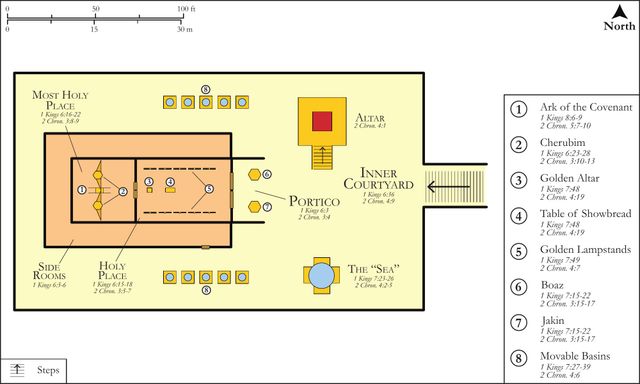
Here is, I. The place where the temple was built. Solomon was neither at liberty to choose nor at a loss to fix the place. It was before determined (Ch1 22:1), which was an ease to his mind. 1. It must be at Jerusalem; for that was the place where God had chosen to put his name there. The royal city must be the holy city. There must be the testimony of Israel; for there are set the thrones of judgment, Psa 122:4, Psa 122:5. 2. It must be on Mount Moriah, which, some think, was that very place in the land of Moriah where Abraham offered Isaac, Gen 22:2. So the Targum says expressly, adding, But he was delivered by the word of the Lord, and a ram provided in his place. That was typical of Christ's sacrifice of himself; therefore fitly was the temple, which was likewise a type of him, built there. 3. It must be where the Lord appeared to David, and answered him by fire, Ch1 21:18, Ch1 21:26. There atonement was made once; and therefore, in remembrance of that, there atonement was made once; and therefore, in remembrance of that, there atonement must still be made. Where God has met with me it is to be hoped that he will still manifest himself. 4. It must be in the place which David has prepared, not only which he had purchased with his money, but which he had purchased with his money, but which he had pitched upon divine direction. It was Solomon's wisdom not to enquire out a more convenient place, but to acquiesce in the appointment of God, whatever might be objected against it. 5. It must be in the threshold floor of Ornan, which, if (as a Jebusite) it gives encouragement to the Gentiles, obliges us to look upon temple-work as that which requires the labour of the mind, no less than threshing-work dos that of the body.
II.The time when it was begun; not till the fourth year of Solomon's reign, Ch2 3:2.
Not that the first three years were trifled away, or spent in deliberating whether they should build the temple or no; but they were employed in the necessary preparations for it, wherein three years would be soon gone, considering how many hands were to be got together and set to work. Some conjecture that this was a sabbatical year, or year of release and rest to the land, when the people, being discharged from their husbandry, might more easily lend a hand to the beginning of this work; and then the year in which it was finished would fall out to be another sabbatical year, when they would likewise have leisure to attend the solemnity of the dedication of it.
III.The dimensions of it, in which Solomon was instructed (Ch2 3:3), as he was in other things, by his father.
This was the foundation (so it may be read) which Solomon laid for the building of the house. This was the rule he went by, so many cubits the length and breadth, after the first measure, that is, according to the measure first fixed, which there was no reason to make any alteration of when the work came to be done; for the dimensions were given by divine wisdom, and what God does shall be for ever; nothing can be put to it, or taken from it, Ecc 3:14. His first measure will be the last.
IV.The ornaments of the temple.
The timber-work was very fine, and yet, within, it was overlaid with pure gold (Ch2 3:4), with fine gold (Ch2 3:5). and that embossed with palm-trees and chains. It was gold of Parvaim (Ch2 3:6), the best gold. The beams and posts, the walls and doors, were overlaid with gold, Ch2 3:7. The most holy place, which was ten yards square, was all overlaid with fine gold (Ch2 3:8), even the upper chambers, or rather the upper floor or roof - top, bottom, and sides, were all overlaid with gold. Every nail, or screw, or pin, with which the golden plates were fastened to the walls that were overlaid with them, weighed fifty shekels, or was worth so much, workmanship and all. A great many precious stones were dedicated to God (Ch1 29:2, Ch1 29:8), and these were set here and there, where they would show to the best advantage. The finest houses now pretend to no better garnishing than good paint on the roof and walls; but the ornaments of the temple were most substantially rich. It was set with precious stones, because it was a type of the new Jerusalem, which has no temple in it because it is all temple, and the walls, gates, and foundations of which are said to be of precious stones and pearls, Rev 21:18, Rev 21:19, Rev 21:21.
Continue studying 2 Chronicles 3:1 across the web’s major study libraries — every link below opens this exact verse, chapter, or book on the destination site.
Read & Compare
 BibleGatewayThis verse in more than 200 translations and 70 languages.
 Bible.comThe YouVersion reader — hundreds of translations, reading plans, and highlights.
 ESV.orgCrossway's official English Standard Version reader.
 NET BibleThe NET translation with 60,000+ translators' notes on every rendering decision.
 STEP BibleTyndale House's free study tool — original text, vocabulary, and scholarly resources.
 BibliaLogos Bible Software's free web reader.
 USCCBThe New American Bible (Revised Edition) with the U.S. bishops' study notes.
Commentaries
 BibleHub CommentariesDozens of classic commentaries on this verse, gathered on one page.
 StudyLightMore than 100 commentary sets — the largest collection on the web.
 BibleRefPlain-English commentary on what this verse means, verse by verse.
 Enduring WordDavid Guzik's free commentary on this chapter, widely used by Bible teachers.
 Bible Study ToolsVerse commentary alongside Greek and Hebrew study aids.
Original Language & Research
- BibleHub InterlinearThe verse word by word — original language, transliteration, and English.
- BibleHub LexiconEvery word's original-language definition and Strong's entry.
 Blue Letter BibleDeep-study tools — Strong's numbers, concordance, and word studies.
 SefariaThe Hebrew text with Rashi and centuries of Jewish commentary.
Sermons, Hymns & Audio


TrulyRandomVerse is not affiliated with these sites and doesn’t control their content. They’re linked because they’re genuinely useful.
Summary
2 Chronicles 3:1 inaugurates the monumental construction of the First Temple in Jerusalem, under the visionary leadership of King Solomon. This pivotal verse precisely identifies the sacred building site as Mount Moriah, a location steeped in Israel's theological history due to prior divine appearances to David, and specifically pinpoints the threshingfloor of Ornan the Jebusite, which David had consecrated through purchase and sacrifice. It signifies the profound culmination of David's fervent preparations and God's unwavering faithfulness in bringing His promises to fruition through Solomon, establishing a permanent and central dwelling place for the LORD's manifest presence among His chosen people.
CONTEXT
ShowHideLiterary Context: This verse serves as the decisive opening to the detailed narrative of the Temple's construction in 2 Chronicles, immediately following the extensive preparations orchestrated by King David (as chronicled in 1 Chronicles 22, 1 Chronicles 28-29) and Solomon's initial establishment of his reign and display of wisdom (documented in 2 Chronicles 1-2). The Chronicler, writing for a post-exilic community, meticulously emphasizes the profound continuity of God's redemptive plan and David's enduring spiritual legacy. Solomon is portrayed not merely as a successor, but as the faithful executor of his father's divinely inspired vision and God's explicit command. In contrast to the book of Kings, which often interweaves political and royal affairs with the Temple narrative, Chronicles distinctly highlights the Temple's paramount theological significance, framing its construction as the supreme act of national worship and its role as the indispensable center for the nation's spiritual life and covenant fidelity. The subsequent chapters (2 Chronicles 3-5) provide exhaustive details of the Temple's dimensions, materials, and furnishings, underscoring its immense importance as the tangible manifestation of God's covenant presence among His people.
Historical & Cultural Context: The erection of magnificent temples was common among the nations round about, where such structures typically served as the perceived dwelling places of their gods and powerful symbols of national prowess and divine favor. However, for Israel, the "house of the LORD" (Bet YHWH) stood unique; it was not merely a shrine but the divinely designated locus of Yahweh's manifest presence among His chosen people, representing the ultimate fulfillment of His long-standing desire to dwell with them since the Exodus (as commanded in Exodus 25:8). Solomon's reign, renowned for its unprecedented era of peace, prosperity, and expansive international relations, provided the ideal socio-economic and political conditions for undertaking such a monumental and costly endeavor. Jerusalem, recently established as the unified capital by King David, was the natural and divinely sanctioned choice for this central sanctuary, thereby solidifying its status as both the political and spiritual heart of the burgeoning nation. The specific site, Mount Moriah, carried immense historical and theological weight, intrinsically linking the Temple's foundation to foundational acts of faith and divine intervention, most notably Abraham's near-sacrifice of Isaac (as profoundly detailed in Genesis 22:2) and David's pivotal encounter with the angel of the LORD at Ornan's threshingfloor (as recounted in 1 Chronicles 21:15-30).
Key Themes:
Exposition and Analysis
ShowHideKey Word Analysis
ShowHideDerived from H1004, this primitive word refers to "a house (in the greatest variation of applications, especially family, etc.); court, daughter, door, [phrase] dungeon, family, [phrase] forth of, [idiom] great as would contain, hangings, home(born), (winter) house(-hold), inside(-ward), palace, place, [phrase] prison, [phrase] steward, [phrase] tablet, temple, web, [phrase] within(-out)." In the context of "the house of the LORD," it specifically denotes the Temple, emphasizing its function as the designated dwelling place for Yahweh, not in the sense of containing Him, but as the unique locus of His manifest presence and glory among His people.
Derived from H4179, this proper noun is "from רָאָה and יָהּ; seen of Jah; Morijah, a hill in Palestine; Moriah." This specific geographical designation carries immense theological weight, linking the Temple site to the ancient patriarchal narrative of Abraham's near-sacrifice of Isaac in Genesis 22:2, suggesting a place divinely "seen" or "chosen" by Yahweh for profound acts of testing, provision, and covenant faithfulness.
Derived from H1637, this word is "from an unused root meaning to smooth; a threshing-floor (as made even); by analogy, any open area; (barn, corn, threshing-) floor, (threshing-, void) place." This seemingly ordinary agricultural site was divinely transformed into sacred ground, becoming the specific location where the angel of the LORD appeared to David, where a plague was halted, and where David was commanded to build an altar, thereby consecrating it as the chosen site for the future Temple.
Verse Breakdown
ShowHide"Then Solomon began to build the house of the LORD at Jerusalem"
This opening clause marks the official and long-anticipated commencement of the Temple project, a monumental undertaking that had been the fervent desire and meticulous preparation of his father, David. The phrase "began to build" highlights the initiation of the physical construction, signifying the transition from planning to execution. The chosen location, "at Jerusalem," underscores the city's divinely appointed role as the unified political and spiritual capital, the very place where God had chosen for His name to dwell.
"in mount Moriah"
This precise geographical specification within Jerusalem immediately evokes the site's profound sacred history. The mention of Mount Moriah directly links the Temple's foundation to the foundational narrative of Abraham's test of faith and God's miraculous provision of a ram in Isaac's place (Genesis 22), thereby establishing a deep theological continuity between the patriarchs and the era of the unified monarchy and the permanent sanctuary.
"where [the LORD] appeared unto David his father"
This crucial phrase directly connects the Temple site to a specific, transformative divine encounter experienced by King David. This appearance occurred during a devastating plague, where the LORD, through the prophet Gad, instructed David to build an altar on Ornan's threshingfloor to halt the pestilence. This direct divine manifestation sanctified the site, making it a place of atonement, direct communication with God, and divine revelation, thereby legitimizing it as the chosen and consecrated location for the permanent sanctuary.
"in the place that David had prepared in the threshingfloor of Ornan the Jebusite"
This final clause emphasizes David's direct and intentional involvement in preparing the site. His preparation involved not only the rightful purchase of the land from Ornan (also known as Araunah in 2 Samuel 24) at full price, but also its consecration through the offering of sacrifices and the reception of divine instruction there. The transformation of the "threshingfloor of Ornan the Jebusite" from a common agricultural area into the most sacred ground in Israel serves as a powerful testament to God's sovereign choice and the vital importance of human obedience and sacrificial giving in the unfolding of His divine plans.
Literary Devices
ShowHide2 Chronicles 3:1 is rich with profound Symbolism, as the "house of the LORD" itself stands as the preeminent symbol of God's covenant presence and immanence among His people, a tangible manifestation of His promise to dwell with them. The transformation of Ornan's threshingfloor from a mundane agricultural site into the consecrated ground for the Temple serves as a powerful Metaphor for divine election, the sanctifying power of atonement, and the way God redeems ordinary spaces for extraordinary purposes. The verse also employs a potent Allusion by referencing Mount Moriah, immediately recalling the foundational narrative of Abraham and Isaac in Genesis 22, thereby imbuing the Temple site with deep historical, theological, and redemptive significance that transcends its immediate context. Furthermore, there is a strong sense of Continuity and Legacy, as Solomon's action directly fulfills David's fervent desire, meticulous planning, and extensive preparations, highlighting the essential intergenerational faithfulness required in God's grand redemptive plan. The precise geographical and historical details provided in the verse contribute to its Verisimilitude, grounding the profound spiritual significance in concrete, verifiable events within Israel's historical narrative.
Theological and Thematic Connections
ShowHideThe commencement of the Temple's construction on Mount Moriah, as described in 2 Chronicles 3:1, represents a profound theological statement regarding God's enduring desire for intimate communion with humanity and His unwavering faithfulness to His covenant promises. The Temple, as the "house of the LORD," served as the physical epicenter of Israel's relationship with God, a sacred space where His presence was uniquely manifested, and where atonement for sin was made possible through the prescribed sacrificial system. Its strategic location on Mount Moriah, a site already hallowed by Abraham's obedient faith and God's miraculous provision, and later by David's act of atonement that dramatically halted a national plague, profoundly underscores the interconnected themes of divine election, sacrificial redemption, and God's sovereign choice that permeate the entirety of biblical theology. This sacred space was not merely a building but a tangible reminder of God's immanence, His absolute holiness, and His steadfast commitment to dwelling among His people, thereby setting the stage for the progressive revelation of His overarching redemptive plan for all humanity.
Reflection and Application
ShowHide2 Chronicles 3:1 offers profound and enduring insights for contemporary believers, calling us to consider our own roles in God's ongoing work. Just as Solomon faithfully executed the divine blueprint for the Temple, building upon the foundations laid by his father, David, we are similarly called to be obedient to God's revealed will in our lives, diligently building upon the spiritual foundations laid by those who have preceded us—whether through family, mentors, or the collective wisdom of the church. This verse powerfully reminds us that God often chooses specific, sometimes unexpected or seemingly ordinary, "places" or circumstances in our lives for profound spiritual encounters and transformative work, much like the humble threshingfloor of Ornan was divinely consecrated. Our very lives, as "temples of the Holy Spirit" (as described in 1 Corinthians 6:19-20), are intended to be living sanctuaries where God's presence continually dwells, where worship is authentically offered, and where His glory is made manifest through our lives. The combined legacy of David's fervent preparation and Solomon's faithful execution teaches us the indispensable importance of both diligent planning and resolute action in God's work, emphasizing that our individual acts of faithfulness, no matter how small, contribute significantly to His larger, eternal purposes, culminating in the progressive building of His spiritual kingdom and the spread of His redemptive reign.
Questions for Reflection
ShowHideFAQ
ShowHideWhy was Mount Moriah so significant for the Temple location?
ShowHideMount Moriah was chosen for its profound historical and theological significance, making it a divinely consecrated site long before Solomon's Temple. It is identified as the very place where Abraham was commanded by God to offer his son Isaac as a sacrifice in Genesis 22:2. This pivotal event, known as the Akedah (the binding of Isaac), powerfully demonstrated Abraham's ultimate faith and God's miraculous provision of a substitute ram, thereby establishing Moriah as a place of divine testing, faithfulness, and substitutionary sacrifice. Centuries later, it was the site of Ornan's threshingfloor, where the LORD appeared to David, stopping a devastating plague and instructing him to build an altar (as detailed in 1 Chronicles 21:15-30). Thus, Moriah was not merely a convenient geographical location but a place hallowed by multiple, foundational divine encounters and acts of redemption, making it the ideal and divinely sanctioned site for God's permanent dwelling among His people.
What was the significance of Ornan's threshingfloor?
ShowHideOrnan's threshingfloor (also known as Araunah's threshingfloor in 2 Samuel 24) was the specific spot on Mount Moriah where the angel of the LORD appeared to David, bringing a devastating plague upon Israel to a halt. David was instructed by the prophet Gad to build an altar there and offer sacrifices to appease God's wrath (as recorded in 1 Chronicles 21:18). David famously purchased the threshingfloor and the oxen from Ornan at full price, declaring his refusal to offer to the LORD what cost him nothing (as powerfully stated in 1 Chronicles 21:24). This act of purchase and sacrifice transformed a common agricultural site into a place of atonement, divine encounter, and profound worship, making it sacred ground specifically chosen by God for the Temple's foundation. It symbolizes the transition from a place of judgment and plague to a place of mercy, reconciliation, and vibrant worship.
How does Chronicles' account of the Temple building differ in emphasis from Kings?
ShowHideWhile both 1 Kings 6-8 and 2 Chronicles 3-5 meticulously recount the building and dedication of Solomon's Temple, the Chronicler's account places a distinct and profound theological emphasis. The book of Kings presents the Temple's construction within the broader narrative of the monarchy, often highlighting political events, royal succession, and the kings' obedience or disobedience to the covenant. In stark contrast, Chronicles, written for a post-exilic audience, focuses heavily on the Temple's spiritual significance, its direct continuity with David's divinely inspired vision, and its central role as the indispensable place of worship for a restored Israel. The Chronicler emphasizes David's extensive and meticulous preparations (e.g., 1 Chronicles 22), the divine sanction of the chosen site, and the meticulous adherence to divine instructions for its construction and operation. It underscores the Temple as the preeminent symbol of God's enduring presence and unwavering covenant faithfulness, serving to encourage the returned community to prioritize proper worship, adherence to God's law, and a renewed commitment to the covenant.
Christ-Centered Fulfillment
ShowHideThe physical Temple built by Solomon on Mount Moriah, as meticulously described in 2 Chronicles 3:1, finds its ultimate, profound, and eternal Christ-centered fulfillment in the person and work of Jesus Christ. The Old Testament Temple was the preeminent dwelling place of God's manifest presence, the designated locus of atonement for sin, and the very center of Israel's worship life. In the New Testament, Jesus Himself boldly declares His identity as the greater Temple, stating, "Destroy this temple, and in three days I will raise it up," explicitly referring to His own body (as recorded in John 2:19-21). He is the incarnate Word, God Himself dwelling among humanity, full of grace and truth (as beautifully articulated in John 1:14). Furthermore, the very site of the Temple's construction, Mount Moriah, carries deep and powerful typological significance. Traditionally, Mount Moriah is identified with the hill of Calvary, where Jesus, the true and perfect Lamb of God, offered Himself as the singular, perfect, and final sacrifice for the sins of the entire world (as recounted in Matthew 27:33). The Temple's intricate sacrificial system, designed to provide temporary and provisional atonement, pointed forward inexorably to Christ's once-for-all sacrifice, which perfectly cleanses from sin and grants direct, unhindered access to God's holy presence (as profoundly explained in Hebrews 9:11-12 and Hebrews 10:19-20). Thus, Jesus is not only the fulfillment of the Temple as God's ultimate dwelling among humanity but also the perfect realization of the sacrificial purpose foreshadowed on Mount Moriah, making Him the ultimate, eternal, and all-sufficient means of reconciliation and communion with God.