


1 Chronicles 22:1
Bible text: King James Version (1769 Blayney text) · Public domain
Bible text: Berean Standard Bible · Public domain
Bible text: American Standard Version (1901) · Public domain
Bible text: World English Bible, Messianic edition · Public domain
Bible text: Geneva Bible (1599) · Public domain
Bible text: Young's Literal Translation · Public domain
- וַיֹּאמֶרvai·Yo·merand he saidH559Conj-w ¦ V-Qal-ConsecImperf-3msVerb Qal Consecutive Imperfect 3rd Singular Masculineוַandיֹּאמֶרhe said
- דָּוִידda·VidDavidH1732N-proper-mNoun Proper Masculine
- זֶהzehthisH2088PrtParticle Demonstrative
- הוּאHu'itH1931Pro-3msPronoun Personal 3rd Singular Masculine
- בֵּיתbeit[is] [the] houseH1004N-mscNoun Singular Masculine Construct
- יְהוָהYah·wehYahwehH3068N-properNoun Proper Title
- הָאֱלֹהִיםha·'E·lo·Him<the> GodH430Art ¦ N-mpNoun Plural Masculine Absoluteהָ<the>אֱלֹהִיםGod
- וְזֶהve·zehand thisH2088Conj-w ¦ PrtParticle Demonstrativeוְandזֶהthis
- מִּזְבֵּחַmiz·Be·ach[is the] altarH4196N-msNoun Singular Masculine Absolute
- לְעֹלָהle·'o·Lahfor burnt offeringH5930Prep-l ¦ N-fsNoun Singular Feminine Absoluteלְforעֹלָהburnt offering
- לְיִשְׂרָאֵלle·Yis·ra·'Elfor IsraelH3478Prep-l ¦ N-properNoun Proper LocationלְforיִשְׂרָאֵלIsrael
English is a literal word-by-word gloss of the Hebrew, not the KJV's wording. Why?
This is the original text the KJV's translators worked from — each Hebrew word with its own literal English meaning in this verse, prepared by scholars at Tyndale House, Cambridge. The KJV translates whole sentences, not word by word, so its wording differs: one Hebrew word can become several English words, and the KJV may choose “the LORD” where the gloss reads “Yahweh”. Both are faithful — they answer different questions. For the KJV's own rendering, switch to the KJV text.
Details
See on the biblical-era map
Study this verse
Public-domain commentary
Matthew Henry
From his Commentary on the Whole Bible. Henry comments on passages, not single verses — this entry covers 1 Chronicles 22:1–5. His two-level outline is real structure in the source text, so it is rendered as structure.
Here is, I. The place fixed for the building of the temple (Ch1 22:1): Then David said, by inspiration of God, and as a declaration of his mind, This is the house of the Lord God. If a temple must be built for God, it is fit that it be left to him to choose the ground, for all the earth is his; and this is the ground he makes choice of - ground that pertained to a Jebusite, and perhaps there was not a spot of ground besides, in or about Jerusalem, that did so - a happy presage of the setting up of the gospel temple among the Gentiles. See Act 15:16, Act 15:17. The ground was a threshing-floor; for the church of the living God is his floor, his threshing, and the corn of his floor, Isa 21:10. Christ's fan is in his hand, thoroughly to purge his floor. This is to be the house because this is the altar. The temple was built for the sake of the altar. There were altars long before there were temples.
II.Preparation made for that building.
David must not build it, but he would do all he could towards it: He prepared abundantly before his death, Ch1 22:5. This intimates that the consideration of his age and growing infirmities, which showed him his death approaching, quickened him, towards his latter end, to be very diligent in making this preparation. What our hands find to do for God, and our souls, and our generation, let us do it with all our might before our death, because, after death, there is no device nor working. Now we are here told,
1.What induced him to make such preparation. Two things he considered: - (1.) That Solomon was young and tender, and not likely to apply with any great vigour to this business at first; so that, unless he found the wheels set a-going, he would be in danger of losing a great deal of time at first, the rather because, being young, he would be tempted to put it off; whereas, if he found the materials got ready to his hand, the most difficult part of the work would be over, and this would excite and encourage him to go about it in the beginnings of his reign. Note, Those that are aged and experienced should consider those that are young and tender, and provide them what help they can, that they may make the work of God as easy to them as possible. (2.) That the house must be exceedingly magnificent, very stately and sumptuous, strong and beautiful, every thing about it the best in its kind, and for a good reason, since it was intended for the honour of the great God, the Lord of the whole earth, and was to be a type of Christ, in whom all fulness dwells and in whom are hid all treasures. Men were then to be taught by sensible methods. The grandeur of the house would help to affect the worshippers with a holy awe and reverence of God, and would invite strangers to come to see it, and the wonder of the world, who thereby would be brought acquainted with the true God. Therefore it is here designed to be of fame and glory throughout all countries. David foretold this good effect of its being magnificent, Psa 68:29 Because of thy temple at Jerusalem shall kings bring presents unto thee.
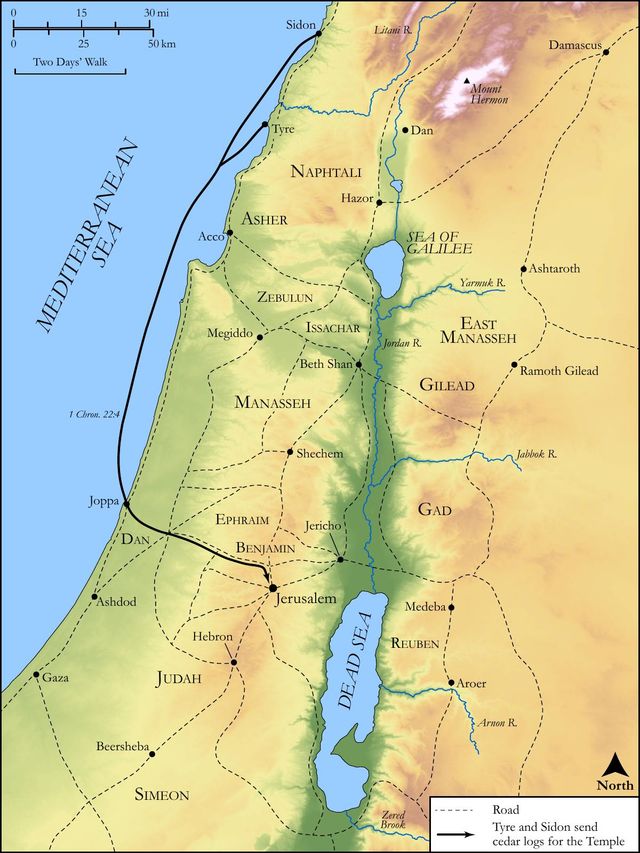
2.What preparation he made. In general, he prepared abundantly, as we shall find afterwards; cedar and stones, iron and brass, are here specified, Ch1 22:2-4. Cedar he had from the Tyrians and the Zidonians. The daughter of Tyre shall be there with a gift, Psa 45:12. He also got workmen together, the strangers that were in the land of Israel. Some think that he employed them because they were generally better artists, and more ingenious in manual operations, than the Israelites; or, rather, because he would not employ the free-born Israelites in any thing that looked mean and servile. They were delivered from the bondage of making bricks in Egypt, and must not return to hew stone. These strangers were proselytes to the Jewish religion, but, though not enslaved, they were not of equal dignity with Israelites.
Continue studying 1 Chronicles 22:1 across the web’s major study libraries — every link below opens this exact verse, chapter, or book on the destination site.
Read & Compare
 BibleGatewayThis verse in more than 200 translations and 70 languages.
 Bible.comThe YouVersion reader — hundreds of translations, reading plans, and highlights.
 ESV.orgCrossway's official English Standard Version reader.
 NET BibleThe NET translation with 60,000+ translators' notes on every rendering decision.
 STEP BibleTyndale House's free study tool — original text, vocabulary, and scholarly resources.
 BibliaLogos Bible Software's free web reader.
 USCCBThe New American Bible (Revised Edition) with the U.S. bishops' study notes.
Commentaries
 BibleHub CommentariesDozens of classic commentaries on this verse, gathered on one page.
 StudyLightMore than 100 commentary sets — the largest collection on the web.
 BibleRefPlain-English commentary on what this verse means, verse by verse.
 Enduring WordDavid Guzik's free commentary on this chapter, widely used by Bible teachers.
 Bible Study ToolsVerse commentary alongside Greek and Hebrew study aids.
Original Language & Research
- BibleHub InterlinearThe verse word by word — original language, transliteration, and English.
- BibleHub LexiconEvery word's original-language definition and Strong's entry.
 Blue Letter BibleDeep-study tools — Strong's numbers, concordance, and word studies.
 SefariaThe Hebrew text with Rashi and centuries of Jewish commentary.
Sermons, Hymns & Audio


TrulyRandomVerse is not affiliated with these sites and doesn’t control their content. They’re linked because they’re genuinely useful.
Summary
1 Chronicles 22:1 records a pivotal declaration by King David, identifying the threshing floor of Ornan the Jebusite as the divinely appointed and consecrated site for the future Temple of the LORD God and its central altar for burnt offerings. This momentous pronouncement immediately follows a devastating plague halted by divine intervention, signifying the sacredness of the location and initiating David's extensive, Spirit-led preparations for the construction of God's permanent dwelling place in Jerusalem, a task he would delegate to his son Solomon.
Context
ShowHideLiterary Context
This verse serves as a crucial transition point, immediately following the dramatic and somber events of 1 Chronicles 21. In the preceding chapter, David's unauthorized census provoked divine wrath, leading to a severe plague that decimated Israel. The plague was mercifully halted when David, under the direct instruction of the prophet Gad, purchased the threshing floor of Ornan (also known as Araunah in 2 Samuel 24) and built an altar there. Upon David's offering of burnt offerings and peace offerings, fire miraculously descended from heaven, consuming the sacrifice and signifying God's acceptance and the cessation of the plague. David's declaration in 1 Chronicles 22:1 thus transforms a site of judgment, repentance, and atonement into the permanent, divinely sanctioned location for the central place of worship for all Israel. It marks a shift from crisis and divine judgment to a renewed focus on God's presence and the establishment of His dwelling among His people, setting the stage for the detailed preparations described in the remainder of 1 Chronicles 22.
Historical & Cultural Context
The concept of a central sanctuary was deeply embedded in Israelite worship, evolving from the portable Tabernacle in the wilderness to the vision of a more permanent structure. Jerusalem, recently captured and established as David's capital, held immense strategic and symbolic significance as the city of David. The threshing floor, typically an open, elevated space for winnowing grain, was a common feature outside ancient cities, often serving as a public gathering place. Ornan, a Jebusite, represented a remnant of the pre-Israelite inhabitants of Jerusalem, and David's honorable purchase of the land, refusing to take it for free, underscored his integrity and the sacredness of the transaction. The miraculous act of God sending fire to consume the sacrifice was a powerful and unmistakable sign of divine approval, reminiscent of the dedication of the Tabernacle (Leviticus 9:24) and Elijah's confrontation with the prophets of Baal on Mount Carmel (1 Kings 18:38). This divine endorsement solidified the location's status as holy ground, preparing the nation for a new era of centralized worship under God's chosen king, a pivotal moment in the history of Israelite religion.
Key Themes
ShowHide1 Chronicles 22:1 powerfully articulates several core themes prevalent throughout the Books of Chronicles. Firstly, Divine Sovereignty and Guidance is profoundly evident; the designation of the Temple site was not a human decision but a direct divine appointment, confirmed by a miraculous sign. This emphasizes that the Temple's foundation was rooted in God's will, not human ambition. Secondly, David's Piety and Obedience are highlighted. Despite being personally forbidden to build the Temple due to his involvement in warfare (1 Chronicles 22:8), David immediately recognizes and acts upon God's clear sign, dedicating himself to the extensive preparations detailed in the remainder of 1 Chronicles 22 and 1 Chronicles 29. Thirdly, the verse underscores the Centrality of Worship and Atonement for Israel. By identifying the location for both the "house of the LORD God" and the "altar of the burnt offering," David emphasizes that the Temple's primary function would be to facilitate the sacrificial system, which was foundational for maintaining the covenant relationship and achieving atonement for sin, as meticulously prescribed in Leviticus 1 through Leviticus 7. This established the enduring spiritual purpose of the future Temple.
Exposition and Analysis
ShowHideKey Word Analysis
ShowHideWhile literally referring to a physical dwelling, in this context, "house of the LORD God" signifies much more than a mere building. It denotes a sacred space, a sanctuary, where God's presence would symbolically reside among His people. It implies a place of intimate communion, worship, and the administration of God's covenant. The use of "house" for God's dwelling is deeply rooted in Israelite theology, echoing the Tabernacle as God's temporary "tent" or "house" among them, and foreshadowing the permanent structure that would be the epicenter of Israel's spiritual life.
The combination of these two divine names is profoundly significant. "Yᵉhôvâh" (often rendered "LORD" in English translations) is the personal, covenantal name of God, revealing His faithfulness, self-existence, and intimate relationship with Israel. "ʼĕlôhîym" is the more general term for God, emphasizing His power, sovereignty, and role as Creator and supreme ruler. Together, "Yᵉhôvâh ʼĕlôhîym" underscores the comprehensive nature of the God who is both transcendent and immanent, all-powerful yet personally committed to His covenant people, and who is now establishing His permanent dwelling place among them.
This specific term refers to a sacrifice that was entirely consumed by fire on the altar, ascending to God as a "soothing aroma" (Leviticus 1:9). Unlike other sacrifices where portions were returned to the offerer or priests, the ʻôlâh symbolized complete dedication, consecration, and atonement for general, unintentional sin. Its prominence here highlights the foundational role of complete surrender, expiation, and reconciliation in the worship life centered at this future Temple, emphasizing the necessity of a divinely provided means for humanity to approach a holy God.
Verse Breakdown
ShowHide"Then David said,"
This opening phrase establishes David's authority and intentionality. It is not a casual observation but a deliberate, kingly declaration, following a profound divine encounter and revelation (the cessation of the plague by fire on the altar). It marks a decisive moment of recognition and commitment on David's part to act in accordance with God's revealed will, setting in motion the grand project of the Temple.
"This [is] the house of the LORD God,"
David identifies the specific location—the threshing floor of Ornan—as the divinely designated site for the Temple. The phrase "house of the LORD God" signifies that this physical structure will serve as the central sanctuary where God's presence is uniquely manifested among His people. It will be the focal point for national worship, covenant interaction, and divine revelation, implying a permanent and established dwelling place, unlike the portable Tabernacle that had served for centuries.
"and this [is] the altar of the burnt offering for Israel."
This clause further specifies the primary function of the designated site. The "altar of the burnt offering" was the central piece of furniture in the Tabernacle and later the Temple, where the ʻôlâh (whole burnt offering) was offered daily and on special occasions. Its specific mention emphasizes the sacrificial system as foundational to Israel's relationship with God, providing a means for atonement, consecration, and communal worship for the entire nation ("for Israel"). The location of this altar, where the plague was stopped by God's fire, underscores its divine validation and sacred purpose as the place of reconciliation.
Literary Devices
ShowHideThe verse employs several significant Literary Devices. The most prominent is Declaration, as David makes a definitive, authoritative statement about the sacred purpose of the site. This declaration serves as a powerful Foreshadowing of the Temple's construction, which will be carried out by his son Solomon, but is initiated here by David's vision and extensive preparations. There is also a strong element of Symbolism: the threshing floor, once a place of agricultural labor and then divine judgment, is transformed into a potent symbol of divine grace, atonement, and the future center of Israel's spiritual life. The "house of the LORD God" and the "altar of the burnt offering" are themselves profound Symbols of God's presence, the centrality of worship, and the necessity of atonement for sin. The concise and direct nature of David's statement lends it an air of Authority and Divine Mandate, reflecting the gravity of the moment and the clear divine sign that preceded it, establishing the site's enduring sanctity.
Theological and Thematic Connections
ShowHide1 Chronicles 22:1 is profoundly theological, marking the transition from a mobile, temporary sanctuary (the Tabernacle) to a fixed, permanent dwelling place for God's presence in Israel. This shift underscores God's desire for a stable, central location for His people to gather, worship, and seek atonement, reflecting His enduring covenant faithfulness and His commitment to dwelling among them. The divine designation of the site, confirmed by fire from heaven, emphasizes that true worship is not based on human preference or architectural ingenuity but on divine revelation and acceptance. It highlights the crucial principle that access to God and the means of atonement are divinely provided, not humanly contrived. The verse also sets the stage for the fulfillment of God's promise to David concerning his dynasty and the building of a "house" for God, even though David himself would not build the physical structure, demonstrating God's sovereign plan unfolding through His chosen servants.
Reflection and Application
ShowHideDavid's immediate and decisive declaration in 1 Chronicles 22:1, following God's dramatic intervention, serves as a powerful reminder of how we, as believers, should respond when God makes His will clear. It is not enough to merely acknowledge divine revelation; true faith compels us to act, to consecrate places, resources, and ourselves for God's purposes. While we no longer build physical temples for God to dwell in—for believers are now the temple of the Holy Spirit and the Church is the temple of the living God—the principle of designated sacred space remains. This can manifest as our personal prayer closet, a dedicated time for devotion, or the corporate gathering of believers for worship and fellowship. The emphasis on the "altar of the burnt offering" also points us to the necessity of complete surrender and atonement. For us, this means embracing the finished work of Christ on the cross and living lives of complete dedication to Him, offering ourselves as living sacrifices, holy and pleasing to God (Romans 12:1). Our worship, like David's response, should be marked by intentionality, reverence, and a deep understanding of God's holiness and His gracious provision for our reconciliation.
Questions for Reflection
ShowHideFAQ
ShowHideWhy was this specific location chosen for the Temple?
ShowHideThe location was chosen not by human design or preference but by divine designation, confirmed through a miraculous sign. In 1 Chronicles 21, David's sinful census led to a devastating plague upon Israel. When David, at the prophet Gad's instruction, built an altar on the threshing floor of Ornan the Jebusite and offered sacrifices, fire miraculously came down from heaven to consume them, and the plague immediately ceased. This divine intervention confirmed the site as divinely chosen and sacred, marking it as the precise place where God's judgment was appeased and His presence was revealed in acceptance. David's declaration in 1 Chronicles 22:1 formally recognized and affirmed this divine selection, establishing it as the permanent site for the future Temple.
What is the significance of "the altar of the burnt offering"?
ShowHideThe "altar of the burnt offering" (Hebrew: mizbeach ha'olah) was the primary altar in the Tabernacle and later the Temple where the ʻôlâh or whole burnt offering was made. This specific sacrifice was entirely consumed by fire, symbolizing complete dedication, consecration, and atonement for general, unintentional sins. Its prominent mention in David's declaration underscores the foundational role of sacrifice and atonement in Israel's worship and their covenant relationship with God. It signifies that the Temple's central purpose would be to facilitate the divinely ordained means by which Israel could approach a holy God, receive forgiveness for their sins, and maintain fellowship with Him, as meticulously detailed in Leviticus 1. It was the place of reconciliation and purification for the nation.
Christ-Centered Fulfillment
ShowHide1 Chronicles 22:1, with its designation of a permanent "house of the LORD God" and "altar of the burnt offering," finds its ultimate and glorious fulfillment in the person and work of Jesus Christ. While David's declaration pointed to a physical structure where God's presence would symbolically dwell and atonement would be made through animal sacrifices, the New Testament reveals that Jesus Himself is the true and ultimate Temple, the very dwelling place of God among humanity (John 2:19-21). He is the embodiment of God's presence, the place where heaven and earth meet. Furthermore, Jesus is the perfect and final "burnt offering," whose single, once-for-all sacrifice on the cross completely atoned for the sins of the world, rendering all animal sacrifices obsolete (Hebrews 10:10-14). The fire from heaven that consumed David's sacrifice on Ornan's threshing floor powerfully foreshadows the divine acceptance of Christ's perfect offering, which opened the way for direct and confident access to God for all who believe (Hebrews 4:16). Thus, the sacred space and sacrificial system envisioned by David are not merely historical relics but profound types pointing to Jesus, through whom God fully dwells with His people and provides eternal, complete atonement.