


2 Chronicles 3:5
Bible text: King James Version (1769 Blayney text) · Public domain
Bible text: Berean Standard Bible · Public domain
Bible text: American Standard Version (1901) · Public domain
Bible text: World English Bible, Messianic edition · Public domain
Bible text: Geneva Bible (1599) · Public domain
Bible text: Young's Literal Translation · Public domain
- וְאֵתve·'Etand <obj.>H853Conj-w ¦ DirObjMParticle Object Indicatorוְandאֵת<obj.>
- הַבַּיִתha·Ba·yitthe houseH1004Art ¦ N-msNoun Singular Masculine Absoluteהַtheבַּיִתhouse
- הַגָּדוֹלha·ga·Dol<the> greatH1419Art ¦ Adj-msAdjective Singular Masculine Absoluteהַ<the>גָּדוֹלgreat
- חִפָּהchi·Pahhe overlaidH2645V-Piel-Perf-3msVerb Piel Perfect 3rd Singular Masculine
- עֵץ'etzwood ofH6086N-mscNoun Singular Masculine Construct
- בְּרוֹשִׁיםbe·ro·ShimcypressesH1265N-mpNoun Plural Masculine Absolute
- וַיְחַפֵּהוּvay·cha·Pe·huand he overlaid itH2645Conj-w ¦ V-Piel-ConsecImperf-3ms ¦ 3msVerb Piel Consecutive Imperfect 3rd Singular Masculineוַandיְחַפֵּhe overlaidהוּit
- זָהָבza·HavgoldH2091N-msNoun Singular Masculine Absolute
- טוֹבTovfineH2896Adj-msAdjective Singular Masculine Absolute
- וַיַּעַלvai·Ya·'aland he put upH5927Conj-w ¦ V-Hiphil-ConsecImperf-3msVerb Hiphil Consecutive Imperfect 3rd Singular Masculineוַandיַּעַלhe put up
- עָלָיו'a·Lavon itH5921Prep ¦ 3msPrepositionעָלָיonוit
- תִּמֹרִיםti·mo·Rimpalm treesH8561N-mpNoun Plural Masculine Absolute
- וְשַׁרְשְׁרוֹתve·shar·she·Rotand chainsH8333Conj-w ¦ N-fpNoun Plural Feminine Absoluteוְandשַׁרְשְׁרוֹתchains
English is a literal word-by-word gloss of the Hebrew, not the KJV's wording. Why?
This is the original text the KJV's translators worked from — each Hebrew word with its own literal English meaning in this verse, prepared by scholars at Tyndale House, Cambridge. The KJV translates whole sentences, not word by word, so its wording differs: one Hebrew word can become several English words, and the KJV may choose “the LORD” where the gloss reads “Yahweh”. Both are faithful — they answer different questions. For the KJV's own rendering, switch to the KJV text.
Details
See on the biblical-era maps
Study this verse
Public-domain commentary
Matthew Henry
From his Commentary on the Whole Bible. Henry comments on passages, not single verses — this entry covers 2 Chronicles 3:1–9.
Here is, I. The place where the temple was built. Solomon was neither at liberty to choose nor at a loss to fix the place. It was before determined (Ch1 22:1), which was an ease to his mind. 1. It must be at Jerusalem; for that was the place where God had chosen to put his name there. The royal city must be the holy city. There must be the testimony of Israel; for there are set the thrones of judgment, Psa 122:4, Psa 122:5. 2. It must be on Mount Moriah, which, some think, was that very place in the land of Moriah where Abraham offered Isaac, Gen 22:2. So the Targum says expressly, adding, But he was delivered by the word of the Lord, and a ram provided in his place. That was typical of Christ's sacrifice of himself; therefore fitly was the temple, which was likewise a type of him, built there. 3. It must be where the Lord appeared to David, and answered him by fire, Ch1 21:18, Ch1 21:26. There atonement was made once; and therefore, in remembrance of that, there atonement was made once; and therefore, in remembrance of that, there atonement must still be made. Where God has met with me it is to be hoped that he will still manifest himself. 4. It must be in the place which David has prepared, not only which he had purchased with his money, but which he had purchased with his money, but which he had pitched upon divine direction. It was Solomon's wisdom not to enquire out a more convenient place, but to acquiesce in the appointment of God, whatever might be objected against it. 5. It must be in the threshold floor of Ornan, which, if (as a Jebusite) it gives encouragement to the Gentiles, obliges us to look upon temple-work as that which requires the labour of the mind, no less than threshing-work dos that of the body.
II.The time when it was begun; not till the fourth year of Solomon's reign, Ch2 3:2.
Not that the first three years were trifled away, or spent in deliberating whether they should build the temple or no; but they were employed in the necessary preparations for it, wherein three years would be soon gone, considering how many hands were to be got together and set to work. Some conjecture that this was a sabbatical year, or year of release and rest to the land, when the people, being discharged from their husbandry, might more easily lend a hand to the beginning of this work; and then the year in which it was finished would fall out to be another sabbatical year, when they would likewise have leisure to attend the solemnity of the dedication of it.
III.The dimensions of it, in which Solomon was instructed (Ch2 3:3), as he was in other things, by his father.
This was the foundation (so it may be read) which Solomon laid for the building of the house. This was the rule he went by, so many cubits the length and breadth, after the first measure, that is, according to the measure first fixed, which there was no reason to make any alteration of when the work came to be done; for the dimensions were given by divine wisdom, and what God does shall be for ever; nothing can be put to it, or taken from it, Ecc 3:14. His first measure will be the last.
IV.The ornaments of the temple.
The timber-work was very fine, and yet, within, it was overlaid with pure gold (Ch2 3:4), with fine gold (Ch2 3:5). and that embossed with palm-trees and chains. It was gold of Parvaim (Ch2 3:6), the best gold. The beams and posts, the walls and doors, were overlaid with gold, Ch2 3:7. The most holy place, which was ten yards square, was all overlaid with fine gold (Ch2 3:8), even the upper chambers, or rather the upper floor or roof - top, bottom, and sides, were all overlaid with gold. Every nail, or screw, or pin, with which the golden plates were fastened to the walls that were overlaid with them, weighed fifty shekels, or was worth so much, workmanship and all. A great many precious stones were dedicated to God (Ch1 29:2, Ch1 29:8), and these were set here and there, where they would show to the best advantage. The finest houses now pretend to no better garnishing than good paint on the roof and walls; but the ornaments of the temple were most substantially rich. It was set with precious stones, because it was a type of the new Jerusalem, which has no temple in it because it is all temple, and the walls, gates, and foundations of which are said to be of precious stones and pearls, Rev 21:18, Rev 21:19, Rev 21:21.
Continue studying 2 Chronicles 3:5 across the web’s major study libraries — every link below opens this exact verse, chapter, or book on the destination site.
Read & Compare
 BibleGatewayThis verse in more than 200 translations and 70 languages.
 Bible.comThe YouVersion reader — hundreds of translations, reading plans, and highlights.
 ESV.orgCrossway's official English Standard Version reader.
 NET BibleThe NET translation with 60,000+ translators' notes on every rendering decision.
 STEP BibleTyndale House's free study tool — original text, vocabulary, and scholarly resources.
 BibliaLogos Bible Software's free web reader.
 USCCBThe New American Bible (Revised Edition) with the U.S. bishops' study notes.
Commentaries
 BibleHub CommentariesDozens of classic commentaries on this verse, gathered on one page.
 StudyLightMore than 100 commentary sets — the largest collection on the web.
 BibleRefPlain-English commentary on what this verse means, verse by verse.
 Enduring WordDavid Guzik's free commentary on this chapter, widely used by Bible teachers.
 Bible Study ToolsVerse commentary alongside Greek and Hebrew study aids.
Original Language & Research
- BibleHub InterlinearThe verse word by word — original language, transliteration, and English.
- BibleHub LexiconEvery word's original-language definition and Strong's entry.
 Blue Letter BibleDeep-study tools — Strong's numbers, concordance, and word studies.
 SefariaThe Hebrew text with Rashi and centuries of Jewish commentary.
Sermons, Hymns & Audio


TrulyRandomVerse is not affiliated with these sites and doesn’t control their content. They’re linked because they’re genuinely useful.
Summary
2 Chronicles 3:5 provides a meticulous and awe-inspiring description of the interior adornment of King Solomon's Temple, specifically focusing on the ceiling of the "greater house," or the Holy Place. This verse details the use of durable fir wood as the foundational material, which was then lavishly overlaid with the purest, finest gold. Further enhancing its sacred beauty, the golden surface was intricately embellished with carved palm trees and decorative chains. This elaborate design powerfully communicates the unparalleled reverence, immense value, and profound dedication attributed to God's dwelling place among His people, reflecting a commitment to offer only the most precious and beautiful for the Lord of all creation.
Context
ShowHideLiterary Context
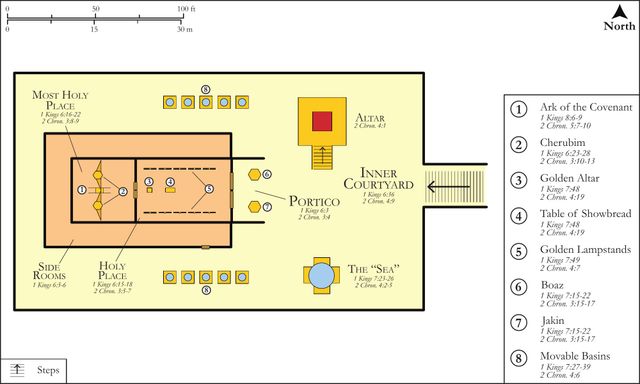
This verse is intricately woven into the broader narrative of the construction of Solomon's Temple, a monumental undertaking meticulously chronicled from 2 Chronicles 2 through 2 Chronicles 7. Following the establishment of the Temple's overall dimensions and the design of its porch in preceding verses (e.g., 2 Chronicles 3:3-4), 2 Chronicles 3 shifts its focus to the exquisite materials and intricate decorative elements of the Temple's interior. The "greater house" specifically refers to the nave or sanctuary, the larger, main chamber of the Temple where priests would regularly perform their daily duties. This distinguishes it from the smaller, most sacred inner chamber, the Most Holy Place, which is described in 2 Chronicles 3:8. By highlighting the opulence of these publicly accessible areas, the verse sets a tone of sacred grandeur that pervades the entire structure.
Historical & Cultural Context
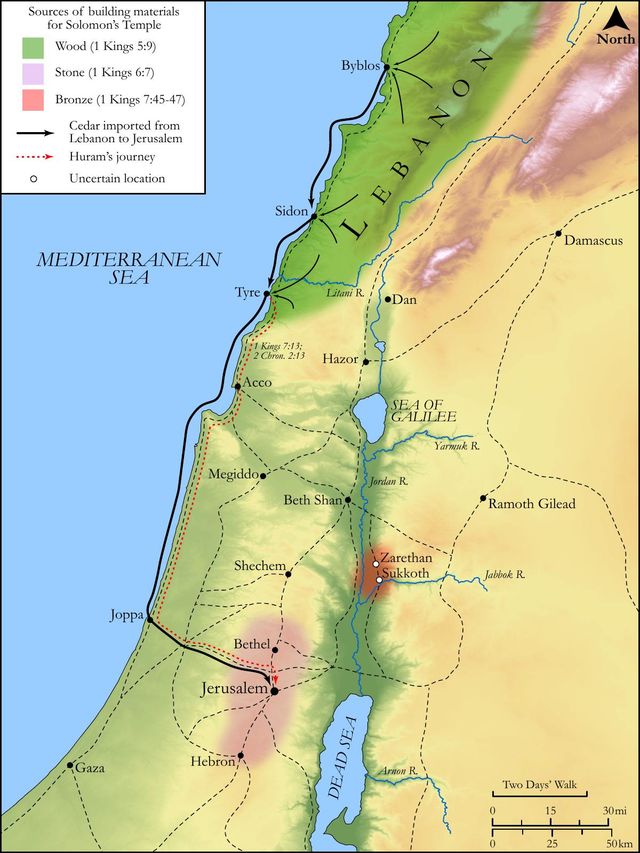
King Solomon's reign, roughly from 970-931 BC, marked an era of unprecedented peace, immense prosperity, and extensive international trade for the nascent Israelite kingdom. This period allowed for the accumulation of vast resources, making an ambitious architectural project like the Temple feasible. The construction of a permanent Temple in Jerusalem fulfilled King David's fervent desire to build a "house of rest" for the Ark of the Covenant, signifying a profound shift from the portable Tabernacle to a stable, enduring symbol of God's presence among His people. Among the nations round about, grand temples were common, often constructed with the finest materials to honor their respective gods. However, Israel's Temple was unique in its singular dedication to Yahweh, the one true God. Its lavishness was not merely for display but served as a profound expression of covenant faithfulness, national identity, and devout worship. The use of imported fir wood and vast quantities of gold underscores Solomon's extensive trade networks and the immense wealth of his kingdom, all meticulously channeled into this singular sacred endeavor.
Key Themes
ShowHide2 Chronicles 3:5 contributes significantly to several overarching themes within the book of Chronicles and the broader biblical narrative. Firstly, it profoundly emphasizes Divine Presence and Dwelling, illustrating the physical manifestation of God's desired presence among His people, a concept first introduced with the Tabernacle (e.g., Exodus 25:8). Secondly, the verse highlights the theme of Lavish Worship and Unwavering Dedication, demonstrating that Israel offered its absolute best—the most precious materials and skilled craftsmanship—for the Lord's house, signifying His supreme worthiness and glory. This theme of giving one's finest is a recurrent motif throughout scripture, from the firstfruits offerings to the dedication of lives. Thirdly, the verse underscores the Symbolism of Sacred Space, where every material and decoration, from the "fine gold" to the "palm trees," carried profound theological meaning. These elements were intended to evoke awe, reverence, and a deep understanding of God's glory, purity, and life-giving presence. The Temple's beauty was meticulously designed to prepare the people for the anticipated Glory of God that would eventually fill the structure upon its dedication, as vividly described in 2 Chronicles 7:1-3.
Exposition and Analysis
ShowHideKey Word Analysis
ShowHideThis verb, derived from H2645, means "to cover," "to veil," or "to encase." In this context, it describes the act of completely covering the fir wood with gold. The dual use of this root in the KJV ("cieled" and "overlaid") emphasizes the thoroughness of the application, indicating that the wood was not merely decorated but entirely encased, transforming its appearance and signifying the complete dedication of the material to a sacred purpose.
Derived from H2091, this noun refers to the precious metal, gold. In the biblical context, gold is consistently associated with purity, divinity, royalty, and immense value. Its extensive use in the Temple, particularly as an overlay for the entire ceiling, symbolically communicates the unblemished holiness of God, the radiant glory of His presence, and the supreme worthiness of the One to whom the Temple was dedicated. It signifies that only the most perfect and precious material was deemed suitable for the Lord's house.
This plural noun, from H8561, refers to palm-like pilasters or architectural motifs. Palm trees were a recurring decorative element of the Temple, carved on the walls of the house together with cherubim and open flowers, and held rich symbolic meaning in biblical contexts, often representing righteousness, flourishing, victory, fruitfulness, and life. Their presence on the Temple ceiling suggests a desire for God's blessings, prosperity, and the vibrant, abundant life that springs from His presence within His sacred dwelling.
Verse Breakdown
ShowHide"And the greater house he cieled with fir tree"
This initial clause precisely identifies the specific area of the Temple being adorned: the "greater house," which refers to the Holy Place or nave. It then specifies the primary structural material used for its ceiling: durable fir wood. This highlights the foundational quality of the craftsmanship, providing a sturdy, reliable, and naturally beautiful base upon which further embellishment would be applied.
"which he overlaid with fine gold"
This phrase reveals the extraordinary opulence and profound symbolic significance of the ceiling's treatment. The fir wood, though valuable, was not left exposed but was completely covered with the purest, "fine gold." This act of overlaying transformed the natural material into a radiant, shimmering surface, profoundly emphasizing the sacredness, purity, and divine glory intrinsically associated with God's dwelling place. It visually communicated the unparalleled value placed on the Lord's presence.
"and set thereon palm trees and chains"
This concluding clause details the intricate decorative elements that further embellished the already magnificent golden ceiling. The "palm trees" were likely carved or embossed motifs, adding symbolic layers related to life, flourishing, and righteousness, suggesting the blessings and vitality that emanate from God's presence. The "chains" could refer to decorative garlands, intricate gold chains, or interwoven patterns, further enhancing the overall splendor, intricate design, and contributing to an atmosphere of profound awe and reverence within the sacred space.
Literary Devices
ShowHideThe verse makes significant use of Symbolism. The "fine gold" is not merely a material; it profoundly symbolizes purity, divinity, royalty, and the unapproachable glory of God. Its pervasive use throughout the Temple, as seen here on the ceiling, visually communicated the sacredness and supreme worthiness of the One worshipped within. The "fir tree," while a literal material, also carries symbolic weight, representing the finest of creation dedicated to the Creator. The "palm trees" are rich in symbolic meaning, representing victory, righteousness, and flourishing life, suggesting the blessings and vitality associated with God's presence. The "chains" could symbolize connection, unity, or intricate beauty, further enhancing the sense of divine order and splendor. The overall description evokes a powerful sense of Awe and Magnificence, intended to impress upon the reader the unparalleled grandeur and sacredness of the Temple.
Theological and Thematic Connections
ShowHideThe lavishness described in 2 Chronicles 3:5, particularly the extensive use of "fine gold" and symbolic adornments, conveys a profound theological message: God is worthy of the absolute best. This dedication of immense resources and exquisite craftsmanship was not for human comfort or display, but as an act of worship, reflecting Israel's understanding of God's supreme holiness, glory, and infinite value. The Temple, as God's dwelling place, was designed to be a microcosm of heavenly perfection and beauty, a tangible representation of His holy presence among His people. This commitment to excellence in sacred space foreshadows the New Testament concept of offering our "firstfruits" and our very lives as a "living sacrifice" to God, reflecting a heart that truly values His presence and purposes above all else.
Reflection and Application
ShowHideWhile the physical Temple no longer stands, the profound principles behind its construction and adornment remain deeply relevant for believers today. 2 Chronicles 3:5 challenges us to critically examine the quality of our offering to God, not solely in terms of material possessions, but in every facet of our lives. Just as the Temple was meticulously adorned with the finest materials, reflecting God's glory and purity, we are called to dedicate our absolute best—our time, talents, resources, and affections—in worship, service, and daily living. As New Testament believers, we are now understood as "temples of the Holy Spirit" (1 Corinthians 6:19), and the church collectively is continually "built together into a holy temple in the Lord" (Ephesians 2:21). This verse inspires us to cultivate lives that are spiritually "overlaid with fine gold"—marked by purity of heart, integrity in action, and a radiant reflection of Christ's character. Our "fir tree" foundations should be strong and unwavering in faith and biblical truth, and our lives should be adorned with the "palm trees" of righteousness, spiritual fruitfulness, and victorious living, thereby demonstrating God's beauty and life-transforming power to a watching world.
Questions for Reflection
ShowHideFAQ
ShowHideWhy was so much gold used in the Temple, and what did it signify?
ShowHideThe extensive use of "fine gold" in the Temple, as vividly described in 2 Chronicles 3:5 and throughout the construction accounts (e.g., 1 Kings 6:21-22), was far more than mere aesthetic appeal; it carried profound theological significance. Gold, being a precious, incorruptible, and radiant metal, symbolized purity, divinity, royalty, and immense value among the nations. In the Temple, its pervasive presence underscored the absolute holiness and transcendent glory of God, emphasizing that only the most perfect, valuable, and unblemished materials were suitable for His dwelling place. It served as a powerful visual representation of the divine presence, reflecting light and creating an atmosphere of profound awe and reverence, much like the gold used extensively in the Tabernacle (e.g., Exodus 25:11). This lavishness communicated the immeasurable worthiness of the God of Israel and His transcendent nature, setting apart His dwelling as uniquely sacred and glorious, a place where heaven touched earth.
Christ-Centered Fulfillment
ShowHideThe physical Temple, with its "fir tree" foundation meticulously overlaid with "fine gold" and adorned with symbolic "palm trees," served as a magnificent and tangible foreshadowing of the ultimate dwelling of God among humanity: Jesus Christ. While the Temple was a house built by human hands, subject to destruction and decay, Christ is the true and perfect Temple, the very embodiment of God's eternal presence. As John 1:14 profoundly declares, "the Word became flesh and dwelt among us, and we have seen his glory, glory as of the only Son from the Father, full of grace and truth." The gold-overlaid interior of Solomon's Temple, symbolizing purity, divine glory, and unblemished holiness, finds its ultimate and complete fulfillment in Christ's sinless perfection and inherent deity. He is the "greater house" (John 2:19-21), the one in whom "all the fullness of God was pleased to dwell" bodily (Colossians 1:19 and Colossians 2:9). The "palm trees" symbolizing victory, righteousness, and flourishing life point directly to Christ's triumphant work over sin and death, bringing eternal life and perfect righteousness to all who believe. Furthermore, through Christ, believers themselves become living stones in a spiritual temple (1 Peter 2:5), collectively forming the body of Christ, a holy dwelling place for God's Spirit (Ephesians 2:19-22). Thus, the physical splendor of 2 Chronicles 3:5 ultimately points to the infinitely greater spiritual glory and perfection found in Jesus, the Lamb of God who takes away the sin of the world (John 1:29), and in His redeemed people, who are being transformed into His image.