


1 Chronicles 22:5
Bible text: King James Version (1769 Blayney text) · Public domain
Bible text: King James Version with Strong's numbers · Public domain
Bible text: Berean Standard Bible · Public domain
Bible text: American Standard Version (1901) · Public domain
Bible text: World English Bible, Messianic edition · Public domain
Bible text: Geneva Bible (1599) · Public domain
Bible text: Young's Literal Translation · Public domain
- וַיֹּאמֶרvai·Yo·merand he saidH559Conj-w ¦ V-Qal-ConsecImperf-3msVerb Qal Consecutive Imperfect 3rd Singular Masculineוַandיֹּאמֶרhe said
- דָּוִידda·VidDavidH1732N-proper-mNoun Proper Masculine
- שְׁלֹמֹהshe·lo·MohSolomonH8010N-proper-mNoun Proper Masculine
- בְנִיve·Nimy sonH1121N-msc ¦ 1csNoun Singular Masculine Constructבְנִsonיmy
- נַעַרNa·'ar[is] a youthH5288N-msNoun Singular Masculine Absolute
- וָרָךְva·roKhand weakH7390Conj-w ¦ Adj-msAdjective Singular Masculine Absoluteוָandרָךְweak
- וְהַבַּיִתve·ha·Ba·yitand the houseH1004Conj-w ¦ Art ¦ N-msNoun Singular Masculine Absoluteוְandהַtheבַּיִתhouse
- לִבְנוֹתliv·Notto buildH1129Prep-l ¦ V-Qal-InfVerb Qal Infinitive Constructלִtoבְנוֹתbuild
- לַיהוָהla·Yah·wehfor YahwehH3068Prep-l ¦ N-properNoun Proper TitleלַforיהוָהYahweh
- לְהַגְדִּילle·hag·Dil[is] to make greatH1431Prep-l ¦ V-Hiphil-InfVerb Hiphil Infinitive Constructלְ[is] toהַגְדִּילmake great
- לְמַעְלָהle·Ma'·lah<to> upwards <towards>H4605Prep-l ¦ Adj-cs ¦ SfxAdjective Numerical Singular common gender Absoluteלְ<to>מַעְלָupwardsה<towards>
- לְשֵׁםle·Shemfor a nameH8034Prep-l ¦ N-msNoun Singular Masculine Absoluteלְforשֵׁםa name
- וּלְתִפְאֶרֶתu·le·tif·'E·retand for honorH8597Conj-w ¦ Prep-l ¦ N-fsNoun Singular Feminine Absoluteוּandלְforתִפְאֶרֶתhonor
- לְכָלle·kholto allH3605Prep-l ¦ N-mscNoun Singular Masculine Constructלְtoכָלall
- הָאֲרָצוֹתha·'a·ra·Tzotthe landsH776Art ¦ N-fpNoun Plural Feminine Absoluteהָtheאֲרָצוֹתlands
- אָכִינָה'a·Khi·nahI will prepareH3559V-Hiphil-Imperf-1csVerb Hiphil Imperfect 1st Singular common gender
- נָּאna'pleaseH4994PrtParticle Interjection
- לוֹlofor itPrep-l ¦ 3msSuffix Personal 3rd Singular Masculineלforוֹit
- וַיָּכֶןvai·Ya·khenand he preparedH3559Conj-w ¦ V-Hiphil-ConsecImperf-3msVerb Hiphil Consecutive Imperfect 3rd Singular Masculineוַandיָּכֶןhe prepared
- דָּוִידda·VidDavidH1732N-proper-mNoun Proper Masculine
- לָרֹבla·Roto abundanceH7230Prep-l ¦ N-msNoun Singular Masculine Absoluteלָtoרֹבabundance
- לִפְנֵיlif·Nei<to> beforeH6440Prep-l ¦ N-mpcNoun Plural Masculine Constructלִ<to>פְנֵיbefore
- מוֹתוֹmo·Tohis deathH4194N-msc ¦ 3msNoun Singular Masculine Constructמוֹתdeathוֹhis
English is a literal word-by-word gloss of the Hebrew, not the KJV's wording. Why?
This is the original text the KJV's translators worked from — each Hebrew word with its own literal English meaning in this verse, prepared by scholars at Tyndale House, Cambridge. The KJV translates whole sentences, not word by word, so its wording differs: one Hebrew word can become several English words, and the KJV may choose “the LORD” where the gloss reads “Yahweh”. Both are faithful — they answer different questions. For the KJV's own rendering, switch to the KJV text.
Details
See on the biblical-era map
Study this verse
Public-domain commentary
Matthew Henry
From his Commentary on the Whole Bible. Henry comments on passages, not single verses — this entry covers 1 Chronicles 22:1–5. His two-level outline is real structure in the source text, so it is rendered as structure.
Here is, I. The place fixed for the building of the temple (Ch1 22:1): Then David said, by inspiration of God, and as a declaration of his mind, This is the house of the Lord God. If a temple must be built for God, it is fit that it be left to him to choose the ground, for all the earth is his; and this is the ground he makes choice of - ground that pertained to a Jebusite, and perhaps there was not a spot of ground besides, in or about Jerusalem, that did so - a happy presage of the setting up of the gospel temple among the Gentiles. See Act 15:16, Act 15:17. The ground was a threshing-floor; for the church of the living God is his floor, his threshing, and the corn of his floor, Isa 21:10. Christ's fan is in his hand, thoroughly to purge his floor. This is to be the house because this is the altar. The temple was built for the sake of the altar. There were altars long before there were temples.
II.Preparation made for that building.
David must not build it, but he would do all he could towards it: He prepared abundantly before his death, Ch1 22:5. This intimates that the consideration of his age and growing infirmities, which showed him his death approaching, quickened him, towards his latter end, to be very diligent in making this preparation. What our hands find to do for God, and our souls, and our generation, let us do it with all our might before our death, because, after death, there is no device nor working. Now we are here told,
1.What induced him to make such preparation. Two things he considered: - (1.) That Solomon was young and tender, and not likely to apply with any great vigour to this business at first; so that, unless he found the wheels set a-going, he would be in danger of losing a great deal of time at first, the rather because, being young, he would be tempted to put it off; whereas, if he found the materials got ready to his hand, the most difficult part of the work would be over, and this would excite and encourage him to go about it in the beginnings of his reign. Note, Those that are aged and experienced should consider those that are young and tender, and provide them what help they can, that they may make the work of God as easy to them as possible. (2.) That the house must be exceedingly magnificent, very stately and sumptuous, strong and beautiful, every thing about it the best in its kind, and for a good reason, since it was intended for the honour of the great God, the Lord of the whole earth, and was to be a type of Christ, in whom all fulness dwells and in whom are hid all treasures. Men were then to be taught by sensible methods. The grandeur of the house would help to affect the worshippers with a holy awe and reverence of God, and would invite strangers to come to see it, and the wonder of the world, who thereby would be brought acquainted with the true God. Therefore it is here designed to be of fame and glory throughout all countries. David foretold this good effect of its being magnificent, Psa 68:29 Because of thy temple at Jerusalem shall kings bring presents unto thee.
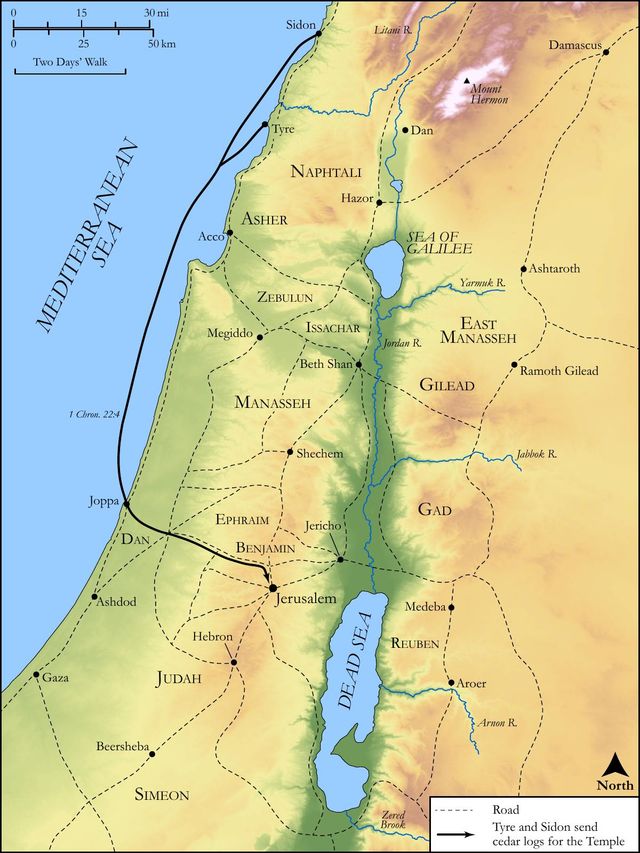
2.What preparation he made. In general, he prepared abundantly, as we shall find afterwards; cedar and stones, iron and brass, are here specified, Ch1 22:2-4. Cedar he had from the Tyrians and the Zidonians. The daughter of Tyre shall be there with a gift, Psa 45:12. He also got workmen together, the strangers that were in the land of Israel. Some think that he employed them because they were generally better artists, and more ingenious in manual operations, than the Israelites; or, rather, because he would not employ the free-born Israelites in any thing that looked mean and servile. They were delivered from the bondage of making bricks in Egypt, and must not return to hew stone. These strangers were proselytes to the Jewish religion, but, though not enslaved, they were not of equal dignity with Israelites.
Continue studying 1 Chronicles 22:5 across the web’s major study libraries — every link below opens this exact verse, chapter, or book on the destination site.
Read & Compare
 BibleGatewayThis verse in more than 200 translations and 70 languages.
 Bible.comThe YouVersion reader — hundreds of translations, reading plans, and highlights.
 ESV.orgCrossway's official English Standard Version reader.
 NET BibleThe NET translation with 60,000+ translators' notes on every rendering decision.
 STEP BibleTyndale House's free study tool — original text, vocabulary, and scholarly resources.
 BibliaLogos Bible Software's free web reader.
 USCCBThe New American Bible (Revised Edition) with the U.S. bishops' study notes.
Commentaries
 BibleHub CommentariesDozens of classic commentaries on this verse, gathered on one page.
 StudyLightMore than 100 commentary sets — the largest collection on the web.
 BibleRefPlain-English commentary on what this verse means, verse by verse.
 Enduring WordDavid Guzik's free commentary on this chapter, widely used by Bible teachers.
 Bible Study ToolsVerse commentary alongside Greek and Hebrew study aids.
Original Language & Research
- BibleHub InterlinearThe verse word by word — original language, transliteration, and English.
- BibleHub LexiconEvery word's original-language definition and Strong's entry.
 Blue Letter BibleDeep-study tools — Strong's numbers, concordance, and word studies.
 SefariaThe Hebrew text with Rashi and centuries of Jewish commentary.
Sermons, Hymns & Audio


TrulyRandomVerse is not affiliated with these sites and doesn’t control their content. They’re linked because they’re genuinely useful.
Summary
1 Chronicles 22:5 captures King David's profound foresight and selfless dedication concerning the construction of the Temple in Jerusalem. Recognizing his son Solomon's youth and the immense, sacred nature of the task—a house for the Lord that must be "exceeding magnifical, of fame and of glory throughout all countries"—David committed his remaining years to meticulously gathering vast quantities of materials and resources. This verse encapsulates David's strategic preparation, ensuring that the divine project, though not his to complete, would be set up for unparalleled success by his designated successor.
Context
ShowHideLiterary Context
This verse is strategically placed within a pivotal section of 1 Chronicles (chapters 21-29) that meticulously details David's final acts of leadership and his comprehensive preparations for the building of the Temple. Having been divinely prohibited from constructing the Temple himself due to his history as a man of war, a detail explicitly stated in 1 Chronicles 22:8, David wholeheartedly embraced his alternative, divinely appointed role as the primary preparer. Immediately preceding this declaration, David had already initiated the organization of resources, including the enlistment of foreign residents to cut stones and the procurement of vast quantities of iron and bronze, as described in 1 Chronicles 22:2-4. Following this verse, David formally charges his son Solomon with the monumental task of building the Temple, providing detailed instructions and encouragement in 1 Chronicles 22:6-16. He then enlists the full support of the leaders of Israel, urging them to assist his son in 1 Chronicles 22:17-19. Thus, 1 Chronicles 22:5 serves as David's explicit rationale and solemn commitment to this extensive preparatory work, seamlessly bridging his personal desire to build with Solomon's ultimate responsibility to execute the divine mandate.
Historical & Cultural Context
The construction of a central, permanent sanctuary was an undertaking of immense theological and political significance in ancient Israel, symbolizing God's enduring presence among His chosen people, a concept previously embodied by the portable Tabernacle. Among the nations round about, kings frequently undertook grand building projects, particularly temples, to solidify their legacy, demonstrate their devotion to their deities, and project their power and wealth, whereas David prepared for a house built after the pattern he had received by the Spirit. David, having successfully established Jerusalem as both the political and spiritual capital of Israel, profoundly understood the immense symbolic and practical significance of a permanent Temple. Culturally, the transition of power from an aging, established monarch to a young, potentially inexperienced heir was often a period fraught with instability and challenges to legitimacy. David's meticulous and public preparations for Solomon, which included not only the gathering of vast material resources but also the organization of labor and the clear articulation of the divine mandate, were not merely practical necessities. They also served to legitimize Solomon's reign, ensure a smooth and stable succession, and demonstrate David's responsible and faithful transfer of the divine commission, thereby securing the future of the kingdom and the worship of Yahweh.
Key Themes
ShowHideThis verse powerfully underscores several significant theological and narrative themes central to the Chronicler's message. Firstly, it highlights the theme of generational faithfulness and succession, as David, despite being divinely prevented from building the Temple himself, diligently prepares the way for his son, Solomon. This demonstrates a profound and selfless commitment to God's long-term plan, prioritizing divine purpose over personal ambition, a principle deeply rooted in God's covenant promise to David regarding his enduring dynasty found in 2 Samuel 7:12-13. Secondly, the emphatic description of the Temple as needing to be "exceeding magnifical, of fame and of glory throughout all countries" points to the overarching theme of God's transcendent glory and universal witness. The Temple was envisioned not merely as a local shrine for Israelite worship but as a magnificent testament to the unparalleled greatness of the God of Israel, intended to attract the attention and respect of surrounding nations, much like the later account of the Queen of Sheba's visit to Solomon in 1 Kings 10. Finally, the verse powerfully illustrates the theme of diligent preparation and faithful stewardship in service to God's overarching purposes, demonstrating that even when one cannot directly fulfill a divine calling, supporting and enabling others in that calling is an equally vital act of obedience, worship, and kingdom advancement.
Exposition and Analysis
ShowHideKey Word Analysis
ShowHideThis term refers to a boy or youth, typically from infancy to adolescence, often implying a lack of full maturity or independence. In this context, David uses it to describe Solomon's relative inexperience and youthfulness, highlighting the immense challenge of the Temple project for someone of his age and limited leadership tenure. It underscores David's realistic assessment of Solomon's capacity for such a monumental undertaking without extensive prior preparation.
This word denotes softness, weakness, or vulnerability, either literally or figuratively. When applied to Solomon, it further emphasizes his perceived immaturity, perhaps even a lack of the hardened resolve or extensive experience typically expected of a king embarking on a project of this scale. David's use of this term is not a criticism but a candid recognition of Solomon's need for comprehensive support and resources to succeed.
This root means to be or make large, great, or magnificent, encompassing various senses such as physical size, mental capacity, estate, or honor. In the context of the Temple, "magnifical" (often intensified by "exceeding" in English translations, reflecting the Hebrew's superlative construction) signifies unparalleled grandeur, splendor, and importance. It conveys David's vision for a structure that would not merely be large but would radiate a glory truly reflective of the majesty and holiness of Yahweh, for whom it was to be built.
Verse Breakdown
ShowHide"And David said, Solomon my son [is] young and tender"
This opening clause immediately establishes David's perspective and motivation. His assessment of Solomon's youth and inexperience is not a statement of doubt in his son's eventual capability but a pragmatic recognition of the immense scale of the task ahead. This candid acknowledgment underscores the necessity of David's own extensive preparatory work, as he understands that a project of such divine importance cannot be left to an unseasoned leader without significant foundational support.
"and the house [that is] to be builded for the LORD [must be] exceeding magnifical, of fame and of glory throughout all countries"
This segment articulates the divine standard and universal purpose of the Temple. David understood that the dwelling place for the Almighty God of Israel could not be an ordinary structure. It had to be of unparalleled splendor, reflecting God's infinite greatness, majesty, and holiness. Furthermore, its magnificence was intended to serve as a powerful testimony to God's glory that would extend far beyond Israel's borders, drawing the attention, respect, and awe of all nations, thereby fulfilling God's broader redemptive plan for the world.
"I will [therefore] now make preparation for it. So David prepared abundantly before his death."
This concluding section highlights David's selfless commitment, decisive action, and diligent stewardship. Recognizing both Solomon's youth and the Temple's required grandeur, David takes it upon himself to gather vast resources and make all necessary arrangements. The emphatic phrase "prepared abundantly before his death" underscores the thoroughness, extensiveness, and urgency of his efforts. It demonstrates his unwavering dedication to ensuring the success of God's project, even though he would not live to see its glorious completion, embodying a profound act of faith and intergenerational responsibility.
Literary Devices
ShowHide1 Chronicles 22:5 employs several literary devices that enrich its meaning and underscore its theological significance. Juxtaposition is prominently featured in the contrast between Solomon's "young and tender" state and the Temple's required "exceeding magnifical" nature. This stark comparison vividly highlights the immense gap that David's meticulous preparations are intended to bridge, emphasizing the critical role of his foresight and provision. The phrase "exceeding magnifical" itself functions as a powerful superlative or hyperbole, utilizing a double intensifier in the Hebrew (literally "upward, upward, for greatness") to convey an extraordinary, unparalleled grandeur envisioned for the Temple, thereby underscoring its divine significance and the supreme worth of the God it would house. The entire verse serves as a form of foreshadowing, as David's diligent and extensive preparations lay the groundwork for the glorious completion of the Temple under Solomon's reign, a fulfillment meticulously detailed in subsequent narratives within 1 Kings and 2 Chronicles. Finally, there is a subtle element of irony in David, the mighty warrior and man of war, being divinely forbidden from building the Temple, yet dedicating his final years to selflessly preparing for it, while his son, a man destined for peace, is chosen to construct it. This ironic twist subtly underscores God's sovereign choice and the distinct, complementary roles assigned to each leader in the advancement of His kingdom.
Theological and Thematic Connections
ShowHide1 Chronicles 22:5 offers profound theological insights into God's desire to dwell among His people, the nature of worship, and the vital importance of intergenerational faithfulness in God's kingdom. David's expansive vision for an "exceeding magnifical" Temple underscores the biblical principle that God, though transcendent and beyond human comprehension, graciously condescends to dwell among His people, and that the worship offered to Him should reflect His supreme worth, majesty, and holiness. The Temple was not merely a physical building but a tangible symbol of God's covenant presence, a sacred space where His glory would be uniquely manifest. David's selfless and diligent preparation, despite being denied the ultimate privilege of building, exemplifies a profound commitment to God's purposes that transcends personal ambition and immediate gratification. It powerfully teaches that true service to God often involves laying robust foundations for future generations, ensuring the continuity of His redemptive work and the flourishing of His kingdom across time. This act of faithful stewardship, foresight, and self-sacrifice ensures that God's glory is upheld and His mission advanced through successive generations of His people.
Reflection and Application
ShowHideDavid's meticulous preparation for the Temple, as vividly described in 1 Chronicles 22:5, provides a powerful and enduring paradigm for believers today across all spheres of life and ministry. It challenges us to cultivate a long-term, kingdom-minded vision, understanding that our most significant contributions may not always culminate in immediate, visible results but are often foundational for the flourishing of future generations. Like David, we are called to invest our resources—our time, talents, spiritual gifts, and material treasures—with excellence, generosity, and unwavering dedication, not for personal recognition or fleeting glory, but for the enduring "fame and glory" of God alone. This requires a selfless spirit, recognizing that God's work is infinitely bigger than any single individual, generation, or lifetime. It also highlights the critical importance of mentoring, equipping, and empowering the next generation, providing them with the necessary resources, wisdom, and spiritual support to faithfully carry forward the divine mandate. Our efforts, whether in our personal lives, our families, our churches, or our communities, should always aim for the highest standard, reflecting the magnificence and supreme worth of the God we serve, thereby leaving a legacy of faithfulness for those who follow.
Questions for Reflection
ShowHideFAQ
ShowHideWhy couldn't David build the Temple himself, despite his fervent desire?
ShowHideWhile King David passionately desired to build a permanent dwelling for the Lord, God specifically forbade him from doing so because he was a man of war who had shed much blood (1 Chronicles 22:8). Instead, God chose David's son, Solomon, a man whose reign would be characterized by peace, to undertake this sacred task. This divine decision underscored God's sovereignty and the symbolic nature of the Temple as a place of peace, worship, and reconciliation, rather than a monument built by conquest. David's divinely appointed role was to diligently prepare the way, ensuring all necessary resources and architectural plans were meticulously in place for Solomon's successful execution of the project.
What does "exceeding magnifical" imply for our service to God today?
ShowHideThe phrase "exceeding magnifical" does not necessarily demand material opulence or extravagant displays in our modern context, but rather a profound spirit of excellence, dedication, and utmost reverence in all that we do for God's kingdom. It implies that our efforts, whether in our worship, our service to others, our personal integrity, or our professional endeavors, should consistently reflect the infinite worth, majesty, and glory of God. As Colossians 3:23-24 powerfully states, "Whatever you do, work heartily, as for the Lord and not for men, knowing that from the Lord you will receive the inheritance as your reward. You are serving the Lord Christ." It is a call to give our very best, our first fruits, and our most diligent efforts, motivated by love and honor for Him, rather than offering Him our leftovers or half-hearted attempts.
How does David's preparation for Solomon relate to modern leadership and succession?
ShowHideDavid's actions in 1 Chronicles 22:5 provide a timeless and exemplary model for effective leadership, particularly concerning succession planning and intergenerational stewardship. It profoundly emphasizes the importance of identifying, empowering, and investing in the next generation of leaders. Rather than clinging to power, fostering dependency, or leaving a leadership vacuum, David strategically and selflessly poured into Solomon, providing him with abundant resources, clear guidance, and a compelling divine mandate. This selfless approach ensures continuity, stability, and the sustained flourishing of the mission beyond one's own tenure. It highlights the profound wisdom of preparing others for future responsibilities, fostering a vibrant culture of mentorship, shared vision, and collaborative effort, and ultimately prioritizing the long-term success and advancement of God's cause over individual recognition or personal legacy.
Christ-Centered Fulfillment
ShowHideThe magnificent Temple, which King David so meticulously prepared for and his son Solomon ultimately built, served as the central dwelling place of God among His people, a tangible symbol of His divine presence, glory, and covenant faithfulness. In the grand narrative of the New Testament, this physical structure finds its ultimate and perfect fulfillment in the person of Jesus Christ. He is the true and greater Temple, the very embodiment of God's presence on earth, for in Him "all the fullness of God dwells bodily" (Colossians 2:9). Just as David prepared abundantly for the earthly Temple, God the Father meticulously prepared the way for the coming of His Son, orchestrating all of history and prophecy to bring about the ultimate dwelling of God with humanity. Jesus himself boldly declared, "Destroy this temple, and in three days I will raise it up," referring prophetically to His own body and His resurrection (John 2:19-21). Furthermore, through Christ's atoning work and the indwelling of the Holy Spirit, believers are now incorporated into a spiritual temple, the Church, becoming "a dwelling place for God by the Spirit" (Ephesians 2:19-22). David's visionary desire for a Temple of "fame and of glory throughout all countries" is fully and eternally realized in the global spread of the gospel through the Church, proclaiming the unparalleled fame and glory of Christ to every nation, tribe, and tongue, thereby fulfilling the Great Commission given by Jesus in Matthew 28:19-20.