


Ezra 3:12
Bible text: King James Version (1769 Blayney text) · Public domain
Bible text: King James Version with Strong's numbers · Public domain
Bible text: Berean Standard Bible · Public domain
Bible text: American Standard Version (1901) · Public domain
Bible text: World English Bible, Messianic edition · Public domain
Bible text: Geneva Bible (1599) · Public domain
Bible text: Young's Literal Translation · Public domain
- וְרַבִּיםve·ra·Bimand manyH7227Conj-w ¦ Adj-mpAdjective Plural Masculine Absoluteוְandרַבִּיםmany
- מֵהַכֹּהֲנִיםme·ha·ko·ha·Nimof the priestsH3548Prep-m ¦ Art ¦ N-mpNoun Plural Masculine Absoluteמֵofהַtheכֹּהֲנִיםpriests
- וְהַלְוִיִּםve·hal·vi·Yimand the LevitesH3881Conj-w ¦ Art ¦ N-mpNoun Gentilic Plural Masculine AbsoluteוְandהַtheלְוִיִּםLevites
- וְרָאשֵׁיve·ra·Sheiand [the] heads ofH7218Conj-w ¦ N-mpcNoun Plural Masculine Constructוְandרָאשֵׁי[the] heads of
- הָאָבוֹתha·'a·Votthe fathersH1Art ¦ N-fpNoun Plural Feminine Absoluteהָtheאָבוֹתfathers
- הַזְּקֵנִיםha·ze·ke·Nim<the> oldH2205Art ¦ Adj-mpAdjective Plural Masculine Absoluteהַ<the>זְּקֵנִיםold
- אֲשֶׁר'a·SherwhoH834RelParticle Relative
- רָאוּra·'Uthey had seenH7200V-Qal-Perf-3cpVerb Qal Perfect 3rd Plural common gender
- אֶת'et<obj.>H853DirObjMParticle Object Indicator
- הַבַּיִתha·Ba·yitthe houseH1004Art ¦ N-msNoun Singular Masculine Absoluteהַtheבַּיִתhouse
- הָרִאשׁוֹןha·ri·shOn<the> firstH7223Art ¦ Adj-msAdjective Numerical Position Singular Masculine Absoluteהָ<the>רִאשׁוֹןfirst
- בְּיָסְדוֹbe·ya·se·Dowhen founded itH3245Prep-b ¦ V-Qal-Prtcpl-ms ¦ 3msVerb Qal Participle Singular Masculine Constructבְּwhenיָסְדfoundedוֹit
- זֶהzehthisH2088PrtParticle Demonstrative
- הַבַּיִתha·Ba·yitthe houseH1004Art ¦ N-msNoun Singular Masculine Absoluteהַtheבַּיִתhouse
- בְּעֵינֵיהֶםbe·'Ei·nei·Hemwith their own eyesH5869Prep-b ¦ N-fdc ¦ 3mpNoun Dual Feminine Constructבְּwithעֵינֵיown eyesהֶםtheir
- בֹּכִיםbo·Khim[were] weepingH1058V-Qal-Prtcpl-mpVerb Qal Participle Plural Masculine Absolute
- בְּקוֹלbe·Kolwith a voiceH6963Prep-b ¦ N-msNoun Singular Masculine Absoluteבְּwithקוֹלa voice
- גָּדוֹלga·DolgreatH1419Adj-msAdjective Singular Masculine Absolute
- וְרַבִּיםve·ra·Bimand many [people]H7227Conj-w ¦ Adj-mpAdjective Plural Masculine Absoluteוְandרַבִּיםmany [people]
- בִּתְרוּעָהbit·ru·'Ahwith a shout of joyH8643Prep-b ¦ N-fsNoun Singular Feminine Absoluteבִּwithתְרוּעָהa shout of joy
- בְשִׂמְחָהve·sim·Chahwith gladnessH8057Prep-b ¦ N-fsNoun Singular Feminine Absoluteבְwithשִׂמְחָהgladness
- לְהָרִיםle·ha·Rimto lift upH7311Prep-l ¦ V-Hiphil-InfVerb Hiphil Infinitive Constructלְtoהָרִיםlift up
- קוֹלKola voiceH6963N-msNoun Singular Masculine Absolute
English is a literal word-by-word gloss of the Hebrew, not the KJV's wording. Why?
This is the original text the KJV's translators worked from — each Hebrew word with its own literal English meaning in this verse, prepared by scholars at Tyndale House, Cambridge. The KJV translates whole sentences, not word by word, so its wording differs: one Hebrew word can become several English words, and the KJV may choose “the LORD” where the gloss reads “Yahweh”. Both are faithful — they answer different questions. For the KJV's own rendering, switch to the KJV text.
Details
See on the biblical-era maps
Study this verse
Public-domain commentary
Matthew Henry
From his Commentary on the Whole Bible. Henry comments on passages, not single verses — this entry covers Ezra 3:8–13. His three-level outline is real structure in the source text, so it is rendered as structure.
There was no dispute among the returned Jews whether they should build the temple or no; that was immediately resolved on, and that it should be done with all speed; what comfort could they take in their own land if they had not that token of God's presence with them and the record of his name among them? We have here therefore an account of the beginning of that good work. Observe,
I.When it was begun-in the second month of the second year, as soon as ever the season of the year would permit (Ezr 3:8), and when they had ended the solemnities of the passover. They took little more than half a year for making preparation of the ground and materials; so much were their hearts upon it. Note, When any good work is to be done it will be our wisdom to set about it quickly, and not to lose time, yea, though we foresee difficulty and opposition in it. Thus we engage ourselves to it, and engage God for us. Well begun (we say) is half ended.
II.Who began it - Zerubbabel, and Jeshua, and their brethren.
Then the work of God is likely to go on well when magistrates, ministers, and people, are hearty for it, and agree in their places to promote it. It was God that gave them one heart for this service, and it boded well.
III.Who were employed to further it.
They appointed the Levites to set forward the work (Ezr 3:8), and they did it by setting forward the workmen (Ezr 3:9), and strengthening their hands with good and comfortable words. Note, Those that do not work themselves may yet do good service by quickening and encouraging those that do work.
IV.How God was praised at the laying of the foundation of the temple (Ezr 3:10, Ezr 3:11); the priests with the trumpets appointed by Moses, and the Levites with the cymbals appointed by David, made up a concert of music, not to please the ear, but to assist the singing of that everlasting hymn which will never be out of date, and to which our tongues should never be out of tune, God is good, and his mercy endureth for ever, the burden of Ps. 136. Let all the streams of mercy be traced up to the fountain. Whatever our condition is, how many soever our griefs and fears, let it be owned that God is good; and, whatever fails, that his mercy fails not. Let this be sung with application, as here; not only his mercy endures for ever, but it endures for ever towards Israel, Israel when captives in a strange land and strangers in their own land. However it be, yet God is good to Israel (Psa 73:1), good to us. Let the reviving of the church's interests, when they seemed dead, be ascribed to the continuance of God's mercy for ever, for therefore the church continues.
V.How the people were affected.
A remarkable mixture of various affections there was upon this occasion. Different sentiments there were among the people of God, and each expressed himself according to his sentiments, and yet there was no disagreement among them, their minds were not alienated from each other nor the common concern retarded by it.
1.Those that only knew the misery of having no temple at all praised the Lord with shouts of joy when they saw but the foundation of one laid, Ezr 3:11. To them even this foundation seemed great, and was as life from the dead; to their hungry souls even this was sweet. They shouted, so that the noise was heard afar off. Note, We ought to be thankful for the beginnings of mercy, though we have not yet come to the perfection of it; and the foundations of a temple, after long desolations, cannot but be fountains of joy to every faithful Israelite.
2.Those that remembered the glory of the first temple which Solomon built, and considered how far this was likely to be inferior to that, perhaps in dimensions, certainly in magnificence and sumptuousness, wept with a loud voice, Ezr 3:12. If we date the captivity with the first, from the fourth of Jehoiakim, it was about fifty-two years since the temple was burnt; if from Jeconiah's captivity, it was but fifty-nine. So that many now alive might remember it standing; and a great mercy it was to the captives that they had the lives of so many of their priests and Levites lengthened out, who could tell them what they themselves remembered of the glory of Jerusalem, to quicken them in their return. These lamented the disproportion between this temple and the former. And,
(1.)There was some reason for it; and if they turned their tears into the right channel, and bewailed the sin that was the cause of this melancholy change, they did well. Sin sullies the glory of any church or people, and, when they find themselves diminished and brought low, that must bear the blame.
(2.)Yet it was their infirmity to mingle those tears with the common joys and so to cast a damp upon them. They despised the day of small things, and were unthankful for the good they enjoyed, because it was not so much as their ancestors had, though it was much more than they deserved. In the harmony of public joys, let not us be jarring strings. It was an aggravation of the discouragement they hereby gave to the people that they were priests and Levites, who should have known and taught others how to be duly affected under various providences, and not to let the remembrance of former afflictions drown the sense of present mercies. This mixture of sorrow and joy here is a representation of this world. Some are bathing in rivers of joy, while others are drowned in floods of tears. In heaven all are singing, and none sighing; in hell all are weeping and wailing, and none rejoicing; but here on earth we can scarcely discern the shouts of joy from the noise of the weeping. Let us learn to rejoice with those that do rejoice and weep with those that weep, and ourselves to rejoice as though we rejoiced not, and weep as though we wept not.
Historical interpretation
Historical reception
1 surviving comment on this verse from the historical church.
Many also of the priests and Levites, etc., who had seen the first temple founded, and this temple before their eyes, were emitting voices partly of weeping, partly of joy. Joy indeed, because the temple of the Lord, which had been destroyed, had now begun to be restored. Weeping, however, because they were grieving, seeing how much the wall that had begun at that time differed from the most magnificent power of Solomon, by which the first temple was founded. They rejoiced greatly because, having been freed from captivity, they had received the ability to rebuild the temple. But they wept with a loud voice, because they knew that the first temple had been destroyed due to their own crimes, whose greatness nor glory they were able to match at all. For the prophet was saying: "Great will be the glory of this last house of the Lord, more than the first" (Haggai 2), because it pertains to a greater matter, not to the magnitude or ornament of the house; because it was a greater miracle and a more evident display of divine power that a few remnants of captives, even with enemies resisting, were able to complete such a work, than that the most opulent king, having no adversary at all, indeed having the most powerful and wealthy king of Tyre as a helper, did this with the most learned craftsmen as he desired. Also, the glory of that last house will be greater than the first; because in the former house, the devotees of the Old Testament proclaimed to the people the writings of the law and the prophets. In the second, however, Christ and the apostles evangelized the grace of the New Testament and the entrance of the heavenly kingdom. But even in the rebuilding of the spiritual temple, both weeping and joy are born among the leaders. For the holy teachers rejoice in the salvation of the penitent; they mourn because they have ever committed sins to be repented of, and have not always persisted in the will of their Creator. Those who have risen from the death of the soul through repentance rejoice in their salvation; they mourn having ever lost the life of the soul through sin. The neophytes also rejoice that they have been gathered by the grace of their Redeemer; they grieve that they, along with all humankind, perished in the first parent and, as if the temple of God was corrupted by enemies, were transferred to Babylon, that is, the confusion of the present exile, in the state of the immortal body and soul. But because, as the progress of the good increases, so does the envy of the wicked, and there will never be a lack of temptations from the depraved during the growth of the pious, who either by feigning good or openly inflicting evil, try to harm the saints, it is rightly added:
Continue studying Ezra 3:12 across the web’s major study libraries — every link below opens this exact verse, chapter, or book on the destination site.
Read & Compare
 BibleGatewayThis verse in more than 200 translations and 70 languages.
 Bible.comThe YouVersion reader — hundreds of translations, reading plans, and highlights.
 ESV.orgCrossway's official English Standard Version reader.
 NET BibleThe NET translation with 60,000+ translators' notes on every rendering decision.
 STEP BibleTyndale House's free study tool — original text, vocabulary, and scholarly resources.
 BibliaLogos Bible Software's free web reader.
 USCCBThe New American Bible (Revised Edition) with the U.S. bishops' study notes.
Commentaries
 BibleHub CommentariesDozens of classic commentaries on this verse, gathered on one page.
 StudyLightMore than 100 commentary sets — the largest collection on the web.
 BibleRefPlain-English commentary on what this verse means, verse by verse.
 Enduring WordDavid Guzik's free commentary on this chapter, widely used by Bible teachers.
 Bible Study ToolsVerse commentary alongside Greek and Hebrew study aids.
Original Language & Research
- BibleHub InterlinearThe verse word by word — original language, transliteration, and English.
- BibleHub LexiconEvery word's original-language definition and Strong's entry.
 Blue Letter BibleDeep-study tools — Strong's numbers, concordance, and word studies.
 SefariaThe Hebrew text with Rashi and centuries of Jewish commentary.
Sermons, Hymns & Audio


TrulyRandomVerse is not affiliated with these sites and doesn’t control their content. They’re linked because they’re genuinely useful.
Summary
Ezra 3:12 vividly captures the profound and contrasting emotions that marked the laying of the Second Temple's foundation in Jerusalem. This pivotal moment in the post-exilic history of Israel was met with both loud weeping from the older generation, who mourned the perceived lesser glory compared to Solomon's magnificent First Temple, and exuberant shouts of joy from others, particularly the younger generation, who celebrated this tangible sign of God's faithfulness and the restoration of their worship life. The verse encapsulates the complex human experience of restoration, where past loss and future hope converge in a single, powerful event.
Context
ShowHideLiterary Context
Ezra 3 details the initial steps of the Jewish remnant's return from Babylonian exile and their efforts to re-establish their religious life in Jerusalem. Following the decree of King Cyrus, recorded in Ezra 1, the people first rebuilt the altar and resumed daily sacrifices, as detailed in Ezra 3:1-6. This re-establishment of worship served as a spiritual foundation. The narrative then progresses to the more ambitious project of rebuilding the Temple itself. Ezra 3:8-9 describes the appointment of Levites to oversee the work, and Ezra 3:10-11 recounts the joyous celebration, complete with trumpets and cymbals, as the foundation of the Second Temple was laid, praising the Lord "because he is good, for his love endures forever toward Israel." It is immediately following this communal praise that Ezra 3:12 introduces the poignant dichotomy of emotions, providing a realistic and deeply human response to a moment of divine restoration.
Historical & Cultural Context
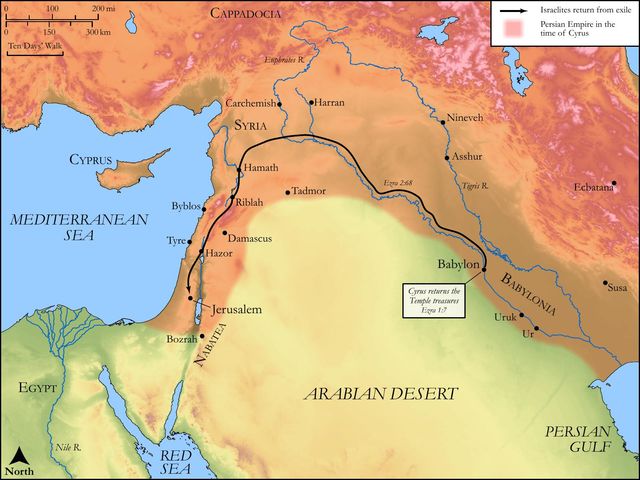
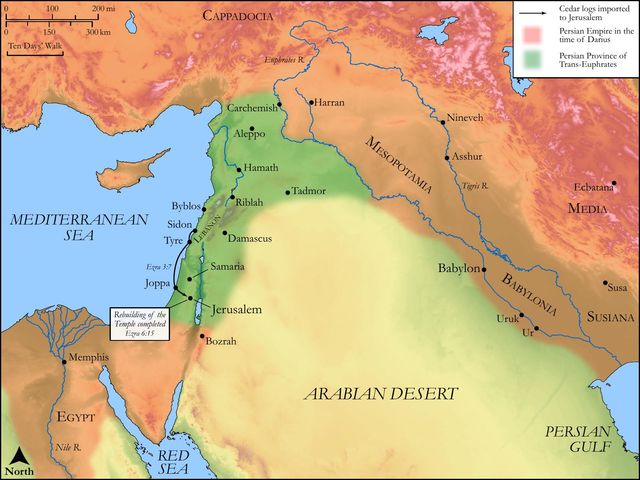
The events of Ezra 3:12 unfold approximately seventy years after the catastrophic destruction of the First Temple (Solomon's Temple) by Nebuchadnezzar's Babylonian forces in 586 BC, as recounted in 2 Kings 25:8-10. This destruction, along with the subsequent exile of the Jewish people to Babylon, represented a profound national and spiritual trauma. The Temple was not merely a building; it was the symbolic dwelling place of God, the center of Israelite worship, identity, and covenant relationship. The return from exile, facilitated by King Cyrus's decree, was a miraculous fulfillment of prophetic promises, particularly those found in Jeremiah 29:10. For the returning exiles, rebuilding the Temple was paramount to restoring their religious life and national identity. The cultural significance of the Temple meant that its reconstruction was an event of immense emotional weight, stirring both the pain of past loss and the hope of future renewal.
Key Themes
ShowHideEzra 3:12 powerfully illustrates several key themes central to the book of Ezra and the broader post-exilic narrative. Firstly, it highlights the complex emotions of restoration. While the laying of the foundation was a cause for celebration and a testament to God's faithfulness, it also evoked deep sorrow for the lost glory of the past, particularly for those who remembered the magnificence of Solomon's Temple, described in 1 Kings 6:1-38. Secondly, the verse underscores generational perspectives. The "ancient men" carried the weight of historical memory and loss, while the younger generation, unburdened by such direct experience, could embrace the new beginning with unadulterated joy. This dynamic reveals the diverse ways individuals and communities process profound change. Finally, the passage affirms God's unwavering faithfulness despite varied human responses. Regardless of the mixed emotions, the foundation was laid, signifying God's covenant loyalty to His people and His commitment to fulfilling His promises of restoration, echoing the divine plans for hope and a future found in Jeremiah 29:11.
Exposition and Analysis
ShowHideKey Word Analysis
ShowHideThis term (H2205) refers to those who are "old" or "aged," often carrying the connotation of wisdom and experience. In this context, it specifically identifies the generation that had lived through the destruction of the First Temple and the Babylonian exile. Their "ancient" status means they possessed direct, painful memories of the past glory and its devastating loss, which profoundly shaped their emotional response to the new, comparatively humble, foundation.
This primitive root (H1058) signifies a deep, often public, expression of sorrow, lamentation, or mourning. It implies a profound emotional outpouring, not merely a few tears. The act of weeping here is a visceral response to the memory of the First Temple's splendor and its destruction, highlighting the lingering trauma and grief that even a moment of restoration could not fully erase for the older generation.
This noun (H8057) denotes blithesomeness, glee, or gladness, often associated with religious festivals or celebrations. It describes the exuberant, unreserved happiness of those who saw the laying of the foundation as a pure sign of God's renewed favor and the fulfillment of His promises. Their joy contrasts sharply with the weeping, emphasizing the diverse emotional landscape of the returning exiles.
Verse Breakdown
ShowHide"But many of the priests and Levites and chief of the fathers, [who were] ancient men, that had seen the first house,"
This clause identifies the specific group experiencing sorrow. These "ancient men" were the elders, comprising spiritual leaders (priests and Levites) and community leaders (heads of families), who had personally witnessed the grandeur of Solomon's Temple before its destruction. Their vivid memory of the "first house" (the First Temple) provided a stark contrast to the humble beginnings of "this house" (the Second Temple), fueling their lament.
"when the foundation of this house was laid before their eyes, wept with a loud voice;"
This part describes the catalyst for their sorrow. The very act of laying the foundation, a cause for celebration for others, brought forth tears from the elders. Their weeping was not a rejection of the rebuilding, but a deep, audible expression of grief for the past glory, the trauma of exile, and perhaps the perceived inadequacy of the new structure compared to the old. It was a lament for what had been lost, even as something new was being established.
"and many shouted aloud for joy:"
In sharp contrast, this final clause highlights the opposing emotional response. "Many" others, likely the younger generation who had only known exile or the narratives of the past, or perhaps those simply overwhelmed with gratitude for God's faithfulness, responded with unreserved joy. For them, the foundation represented pure hope, the tangible fulfillment of God's promise to restore His people and their worship, and the beginning of a new chapter free from the burdens of the past.
Literary Devices
ShowHideThe primary literary device at play in Ezra 3:12 is Juxtaposition or Contrast. The verse starkly places two opposing emotional responses—loud weeping and loud shouting for joy—side by side, occurring simultaneously at the same event. This highlights the complex and multifaceted nature of human experience, particularly in moments of significant transition or restoration. The Repetition of the Hebrew phrase b'qol gadol (translated as "with a loud voice" and "aloud for joy") for both reactions further emphasizes the intensity and public nature of these contrasting emotions. This repetition suggests that both sorrow and joy were expressed with equal fervor and were equally valid responses to the moment. Additionally, there is a subtle use of Symbolism: the "first house" symbolizes past glory, loss, and the full extent of God's dwelling among His people in a time of national prosperity, while "this house" symbolizes renewed hope, God's enduring faithfulness even in humility, and the beginning of a new, albeit different, era of divine presence.
Theological and Thematic Connections
ShowHideEzra 3:12 offers profound theological insights into God's work of restoration and humanity's response to it. It teaches that divine faithfulness often unfolds in ways that evoke mixed emotions, reminding us that God's plan is not always a linear progression of unadulterated joy. The tears of the elders, while born of grief for a lost glory, do not negate God's goodness or the importance of the new work; rather, they add depth and realism to the narrative of redemption. God's commitment to His covenant people endures through periods of desolation and renewal, and He meets them in their varied emotional states. The Temple, though rebuilt on a smaller scale, remained a critical symbol of God's presence and a place for His people to worship, affirming His desire to dwell among them. This moment foreshadows the ongoing tension between past expectations and present realities in God's unfolding plan.
Reflection and Application
ShowHideThe scene in Ezra 3:12 resonates deeply with the human experience of transition, loss, and new beginnings. It validates the complex tapestry of emotions that often accompany significant life changes, whether personal or communal. We are encouraged to acknowledge and process both the grief over what has been lost or changed, and the joy for what God is doing anew. This passage challenges us to cultivate empathy for differing perspectives, especially across generations, recognizing that each individual's experience shapes their response to present realities. In our own lives, as we navigate seasons of rebuilding—whether in relationships, careers, or spiritual journeys—we can trust in God's unwavering faithfulness to restore and renew, even when the "new" may not perfectly mirror the "old." Our focus should be on God's present work and future promises, embracing the hope He offers while honoring the lessons of the past.
Questions for Reflection
ShowHideFAQ
ShowHideWhy did the ancient men weep if the Temple was being rebuilt?
ShowHideThe ancient men wept not because they were against the rebuilding, but out of a profound sense of grief and loss for what had been. They remembered the breathtaking magnificence of Solomon's First Temple, built during Israel's golden age, adorned with gold and precious materials, as described in 1 Kings 6. The new foundation, while a sign of hope, likely appeared humble and insufficient in comparison, a stark reminder of their national humiliation, the seventy years of exile, and the destruction they had endured. Their tears were a lament for the lost glory and a poignant recognition that the new Temple, though a blessing, would not replicate the splendor of the past, a sentiment later articulated by the prophet Haggai in Haggai 2:3.
What is the significance of the "first house" vs. "this house"?
ShowHideThe "first house" refers to Solomon's Temple, built with immense resources and artistry during a period of national prosperity and political stability. It was a symbol of God's glorious presence and Israel's spiritual and national zenith. "This house" refers to the Second Temple, whose foundation was being laid by a struggling, impoverished remnant returning from exile. It was built with fewer resources and under less favorable circumstances. The contrast highlights the difference between Israel's former glory and its current humbled state. However, it also underscores God's enduring faithfulness: even in their diminished state, God was fulfilling His promise to restore them and their worship, ensuring His presence would once again dwell among them, albeit in a less outwardly grand structure. The prophet Haggai would later declare that the glory of this latter house would be greater than the former, not due to its physical splendor, but because of the Messiah's future presence within it, as prophesied in Haggai 2:9.
Christ-Centered Fulfillment
ShowHideThe mixed emotions at the laying of the Second Temple's foundation in Ezra 3:12 powerfully foreshadow the complex reception of Jesus Christ, the ultimate Temple and the fulfillment of God's dwelling among humanity. Just as the "ancient men" mourned the perceived lack of glory in the Second Temple compared to the first, many in Israel struggled to accept Jesus because He did not fit their expectations of a glorious, conquering Messiah. He came not as a king enthroned in earthly splendor, but as a humble servant, born in poverty, and ultimately crucified, as described in Philippians 2:5-8. For those who held onto a vision of a restored Israel that mirrored its past glory, Jesus's ministry and eventual crucifixion were a source of lament and rejection, tragically evidenced by the cries of "Crucify him!" in Mark 15:13. Yet, for others, particularly His disciples and those who recognized His divine authority and saving grace, His arrival and resurrection sparked unbridled joy and hope, echoing the shouts of exultation in Ezra's day. Jesus Himself declared, "Destroy this temple, and in three days I will raise it up," speaking of the temple of His body, as recorded in John 2:19-21. He is the new and living Temple, the true dwelling place of God, making the former physical structures obsolete, as explained in Hebrews 9:11-14. The "greater glory" prophesied for the Second Temple in Haggai 2:9 was ultimately realized not in its architectural grandeur, but in the physical presence of Christ within its courts, and supremely in His resurrected body, which now serves as the spiritual temple in which believers are built together as a dwelling place for God by the Spirit, as taught in Ephesians 2:19-22. Through Christ, the ultimate restoration is not of a building, but of humanity's relationship with God, culminating in the promise of a new heaven and a new earth where God Himself dwells with His people, and there is no need for a temple, for the Lord God Almighty and the Lamb are its temple, as revealed in Revelation 21:1-4 and Revelation 21:22.