


Matthew 13:31
“Parables of Growth and Influence”Matthew 13:31–35
Bible text: King James Version (1769 Blayney text) · Public domain
Bible text: King James Version with Strong's numbers · Public domain
Bible text: Berean Standard Bible · Public domain
Bible text: American Standard Version (1901) · Public domain
Bible text: World English Bible, Messianic edition · Public domain
Bible text: Geneva Bible (1599) · Public domain
Bible text: Young's Literal Translation · Public domain
- ἌλληνAllēnAnotherG243A-ASFAdjective Accusative Singular Feminine
- παραβολὴνparabolēnparableG3850N-ASFNoun Accusative Singular Feminine
- παρέθηκενparethēkenput He beforeG3908V-AAI-3SVerb Aorist Active Indicative 3rd Singular
- αὐτοῖςautoisthemG846P-DPMPersonal pronoun Dative Plural Masculine
- λέγων·legōnsayingG3004V-PAP-NSMVerb Present Active Participle Nominative Singular Masculine
- ὁμοίαhomoiaLikeG3664A-NSFAdjective Nominative Singular Feminine
- ἐστὶνestinisG1510V-PAI-3SVerb Present Active Indicative 3rd Singular
- ἡhētheG3588T-NSFDefinite article Nominative Singular Feminine
- βασιλείαbasileiakingdomG932N-NSFNoun Nominative Singular Feminine
- τῶνtōnof theG3588T-GPMDefinite article Genitive Plural Masculine
- οὐρανῶνouranōnheavensG3772N-GPMNoun Genitive Plural Masculine
- κόκκῳkokkōto a grainG2848N-DSMNoun Dative Singular Masculine
- σινάπεωςsinapeōsof mustardG4615N-GSNNoun Genitive Singular Neuter
- ὃνhonwhichG3739R-ASMRelative pronoun Accusative Singular Masculine
- λαβὼνlabōnhaving takenG2983V-2AAP-NSMVerb 2nd Aorist Active Participle Nominative Singular Masculine
- ἄνθρωποςanthrōposa manG444N-NSMNoun Nominative Singular Masculine
- ἔσπειρενespeirensowedG4687V-AAI-3SVerb Aorist Active Indicative 3rd Singular
- ἐνeninG1722PREPPreposition
- τῷtōtheG3588T-DSMDefinite article Dative Singular Masculine
- ἀγρῷagrōfieldG68N-DSMNoun Dative Singular Masculine
- αὐτοῦ·autouof himG846P-GSMPersonal pronoun Genitive Singular Masculine
English is a literal word-by-word gloss of the Greek, not the KJV's wording. Why?
This is the original text the KJV's translators worked from — each Greek word with its own literal English meaning in this verse, prepared by scholars at Tyndale House, Cambridge. The KJV translates whole sentences, not word by word, so its wording differs: one Greek word can become several English words, and the KJV may choose “charity” where the gloss reads “love”. Both are faithful — they answer different questions. For the KJV's own rendering, switch to the KJV text.
Words in [ ] are added by the English.
Details
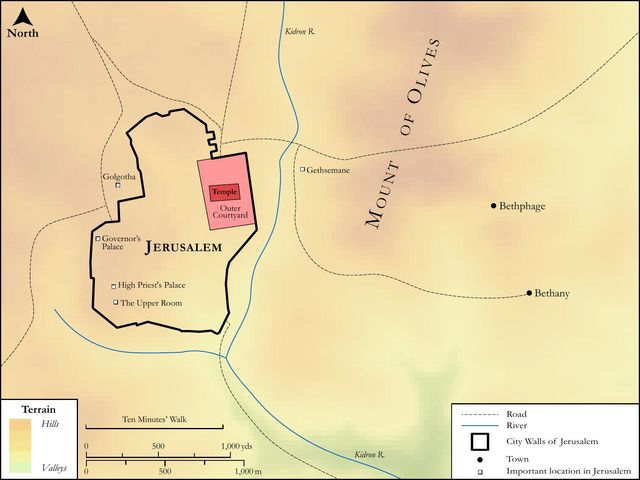
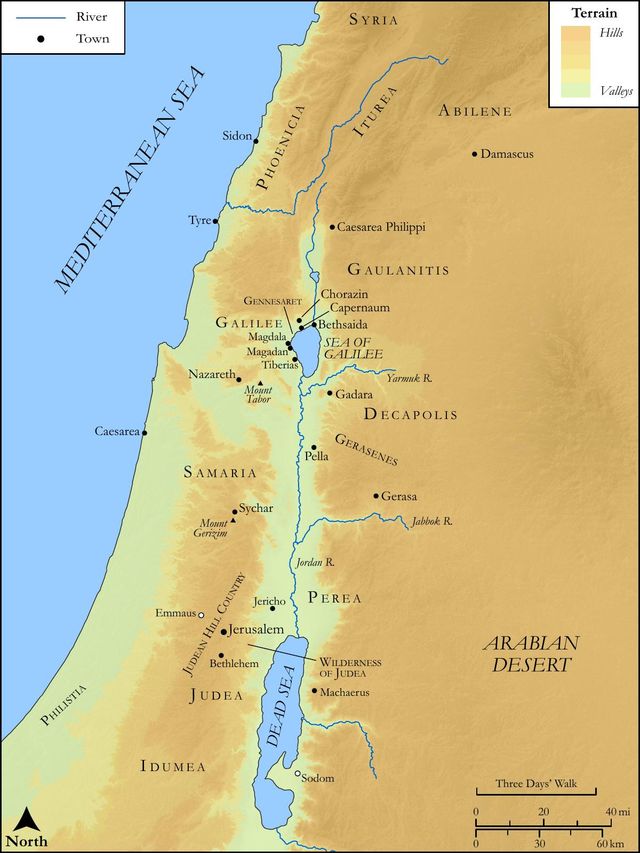
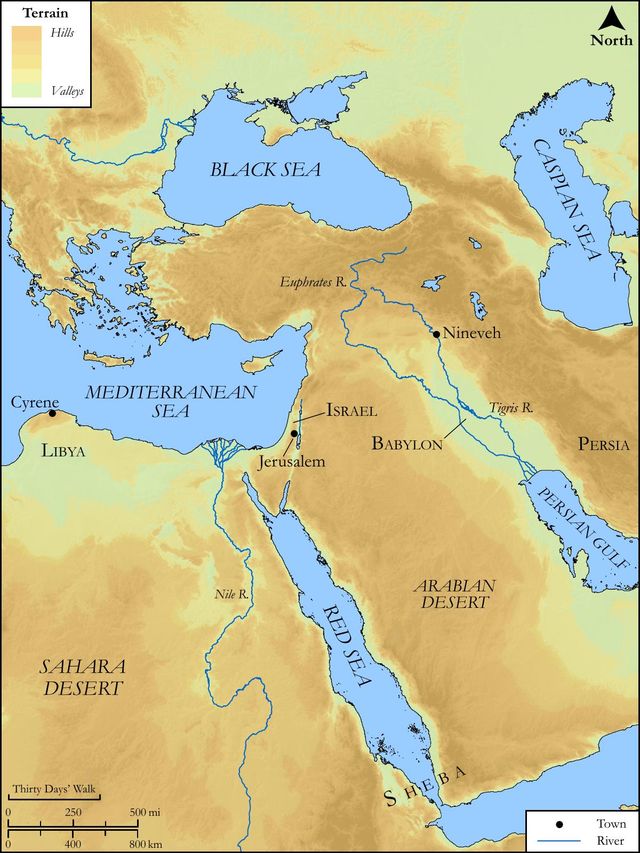
See on the biblical-era maps
Study this verse
Public-domain commentary
Matthew Henry
From his Commentary on the Whole Bible. Henry wrote on whole passages, and this entry covers Matthew 13:24–43. He set out his notes in a four-level outline, kept here as he numbered it.
In these verses, we have, I. Another reason given why Christ preached by parables, Matthew 13:34, Matthew 13:35. All these things he spoke in parables, because the time was not yet come for the more clear and plain discoveries of the mysteries of the kingdom. Christ, to keep the people attending and expecting, preached in parables, and without a parable spake he not unto them; namely, at this time and in this sermon. Note, Christ tries all ways and methods to do good to the souls of men, and to make impressions upon them; if men will not be instructed and influenced by plain preaching, he will try them with parables; and the reason here given is, That the scripture might be fulfilled. The passage here quoted for it, is part of the preface to that historical Psalm 78:2, I will open my mouth in a parable. What the Psalmist David, or Asaph, says there of his narrative, is accommodated to Christ's sermons; and that great precedent would serve to vindicate this way of preaching from the offence which some took at it. Here is, 1. The matter of Christ's preaching; he preached things which had been kept secret from the foundation of the world. The mystery of the gospel had been hid in God, in his councils and decrees, from the beginning of the world. Ephesians 3:9. Compare Romans 16:25; 1 Corinthians 2:7; Colossians 1:26. If we delight in the records of ancient things, and in the revelation of secret things, how welcome should the gospel be to us, which has in it such antiquity and such mystery! It was from the foundation of the world wrapt up in types and shadows, which are now done away; and those secret things are now become such things revealed as belong to us and to our children, Deuteronomy 29:29. 2. The manner of Christ's preaching; he preached by parables; wise sayings, but figurative, and which help to engage attention and a diligent search. Solomon's sententious dictates, which are full of similitudes, are called proverbs, or parables; it is the same word; but in this, as in other things, Behold a greater than Solomon is here, in whom are hid treasures of wisdom.
II.The parable of the tares, and the exposition of it; they must be taken together, for the exposition explains the parable and the parable illustrates the exposition.
Observe, 1. The disciples' request to their Master to have this parable expounded to them (Matthew 13:36); Jesus sent the multitude away; and it is to be feared many of them went away no wiser than they came; they had heard a sound of words, and that was all. It is sad to think how many go away from sermons without the word of grace in their hearts. Christ went into the house, not so much for his own repose, as for particular converse with his disciples, whose instruction he chiefly intended in all his preaching. He was ready to do good in all places; the disciples laid hold on the opportunity, and they came to him. Note, Those who would be wise for every thing else, must be wise to discern and improve their opportunities, especially of converse with Christ, of converse with him alone, in secret meditation and prayer. It is very good, when we return from the solemn assembly, to talk over what we have heard there, and by familiar discourse to help one another to understand and remember it, and to be affected with it; for we lose the benefit of many a sermon by vain and unprofitable discourse after it. See Luke 24:32; Deuteronomy 6:6, Deuteronomy 6:7. It is especially good, if it may be, to ask of the ministers of the word the meaning of the word, for their lips should keep knowledge, Malachi 2:7. Private conference would contribute much to our profiting by public preaching. Nathan's Thou art the man, was that which touched David to the heart.
The disciples' request to their Master was, Declare unto us the parable of the tares. This implied an acknowledgement of their ignorance, which they were not ashamed to make. It is probable they apprehended the general scope of the parable, but they desired to understand it more particularly, and to be assured that they took it right. Note, Those are rightly disposed for Christ's teaching, that are sensible of their ignorance, and sincerely desirous to be taught. He will teach the humble (Psalm 25:8, Psalm 25:9), but will for this be enquired of. If any man lack instruction, let him ask it of God. Christ had expounded the foregoing parable unasked, but for the exposition of this they ask him. Note, The mercies we have received must be improved, both for direction what to pray for, and for our encouragement in prayer. The first light and the first grace are given in a preventing way, further degrees of both which must be daily prayed for.
2.The exposition Christ gave of the parable, in answer to their request; so ready is Christ to answer such desires of his disciples. Now the drift of the parable is, to represent to us the present and future state of the kingdom of heaven, the gospel church: Christ's care of it, the devil's enmity against it, the mixture that there is in it of good and bad in the other world. Note, The visible church is the kingdom of heaven; though there be many hypocrites in it, Christ rules in it as a King; and there is a remnant in it, that are the subjects and heirs of heaven, from whom, as the better part, it is denominated: the church is the kingdom of heaven upon earth.
Let us go over the particulars of the exposition of the parable.
(1.)He that sows the good seed is the Son of man. Jesus Christ is the Lord of the field, the Lord of the harvest, the Sower of good seed. When he ascended on high, he gave gifts to the world; not only good ministers, but other good men. Note, Whatever good seed there is in the world, it all comes from the hand of Christ, and is of his sowing: truths preached, graces planted, souls sanctified, are good seed, and all owing to Christ. Ministers are instruments in Christ's hand to sow good seed; are employed by him and under him, and the success of their labours depends purely upon his blessing; so that it may well be said, It is Christ, and no other, that sows the good seed; he is the Son of man, one of us, that his terror might not make us afraid; the Son of man, the Mediator, and that has authority.
(2.)The field is the world; the world of mankind, a large field, capable of bringing forth good fruit; the more is it to be lamented that it brings forth so much bad fruit: the world here is the visible church, scattered all the world over, not confined to one nation. Observe, In the parable it is called his field; the world is Christ's field, for all things are delivered unto him of the Father: whatever power and interest the devil has in the world, it is usurped and unjust; when Christ comes to take possession, he comes whose right it is; it is his field, and because it is his he took care to sow it with good seed.
(3.)The good seed are the children of the kingdom, true saints. They are,
[1.]The children of the kingdom; not in profession only, as the Jews were (Matthew 8:12), but in sincerity; Jews inwardly, Israelites indeed, incorporated in faith and obedience to Jesus Christ the great King of the church.
[2.]They are the good seed, precious as seed, Psalm 126:6. The seed is the substance of the field; so the holy seed, Isaiah 6:13. The seed is scattered, so are the saints; dispersed, here one and there another, though in some places thicker sown than in others. The seed is that from which fruit is expected; what fruit of honour and service God has from this world he has from the saints, whom he has sown unto himself in the earth, Hosea 2:23.
(4.)The tares are the children of the wicked one. Here is the character of sinners, hypocrites, and all profane and wicked people.
[1.]They are the children of the devil, as a wicked one. Though they do not own his name, yet they bear his image, do his lusts, and from him they have their education; he rules over them, he works in them, Ephesians 2:2; John 8:44.
[2.]They are tares in the field of this world; they do no good, they do hurt; unprofitable in themselves, and hurtful to the good seed, both by temptation and persecution: they are weeds in the garden, have the same rain, and sunshine, and soil, with the good plants, but are good for nothing: the tares are among the wheat. Note, God has so ordered it, that good and bad should be mixed together in this world, that the good may be exercised, the bad left inexcusable, and a difference made between earth and heaven.
(5.)The enemy that sowed the tares is the devil; a sworn enemy to Christ and all that is good, to the glory of the good God, and the comfort and happiness of all good men. He is an enemy to the field of the world, which he endeavours to make his own, by sowing his tares in it. Ever since he became a wicked spirit himself, he has been industrious to promote wickedness, and has made it his business, aiming therein to counterwork Christ.
Now concerning the sowing of the tares, observe in the parable,
[1.]That they were sown while men slept. Magistrates slept, who by their power, ministers slept, who by their preaching, should have prevented this mischief. Note, Satan watches all opportunities, and lays hold of all advantages, to propagate vice and profaneness. The prejudice he does to particular persons is when reason and conscience sleep, when they are off their guard; we have therefore need to be sober, and vigilant. It was in the night, for that is the sleeping time. Note, Satan rules in the darkness of this world; that gives him an opportunity to sow tares, Psalm 104:20. It was while men slept; and there is no remedy but men must have some sleeping time. Note, It is as impossible for us to prevent hypocrites being in the church, as it is for the husbandman, when he is asleep, to hinder an enemy from spoiling his field.
[2.]The enemy, when he had sown the tares, went his way (Matthew 13:25), that it might not be known who did it. Note, When Satan is doing the greatest mischief, he studies most to conceal himself; for his design is in danger of being spoiled if he be seen in it; and therefore, when he comes to sow tares, he transforms himself into an angel of light, 2 Corinthians 11:13, 2 Corinthians 11:14. He went his way, as if he had done no harm; such is the way of the adulterous woman, Proverbs 30:20. Observe, Such is the proneness of fallen man to sin, that if the enemy sow the tares, he may even go his way, they will spring up of themselves and do hurt; whereas, when good seed is sown, it must be tended, watered, and fenced, or it will come to nothing.
[3.]The tares appeared not till the blade sprung up, and brought forth fruit, Matthew 13:26. There is a great deal of secret wickedness in the hearts of men, which is long hid under the cloak of a plausible profession, but breaks out at last. As the good seed, so the tares, lie a great while under the clods, and at first springing up, it is hard to distinguish them; but when a trying time comes, when fruit is to be brought forth, when good is to be done that has difficulty and hazard attending it, then you will return and discern between the sincere and the hypocrite: then you may say, This is wheat, and that is tares.
[4.]The servants, when they were aware of it, complained to their master (Matthew 13:27); Sir, didst thou not sow good seed in thy field? No doubt he did; whatever is amiss in the church, we are sure it is not of Christ: considering the seed which Christ sows, we may well ask, with wonder, Whence should these tares come? Note, The rise of errors, the breaking out of scandals, and the growth of profaneness, are matter of great grief to all the servants of Christ; especially to his faithful ministers, who are directed to complain of it to him whose the field is. It is sad to see such tares, such weeds, in the garden of the Lord; to see the good soil wasted, the good seed choked, and such a reflection cast on the name and honour of Christ, as if his field were no better than the field of the slothful, all grown over with thorns.
[5.]The Master was soon aware whence it was (Matthew 13:28); An enemy has done this. He does not lay the blame upon the servants; they could not help it, but had done what was in their power to prevent it. Note, The ministers of Christ, that are faithful and diligent, shall not be judged of Christ, and therefore should not be reproached by men, for the mixtures of bad with good, hypocrites with the sincere, in the field of the church. It must needs be that such offences will come; and they shall not be laid to our charge, if we do our duty, though it have not the desired success. Though they sleep, if they do not love sleep; though tares be sown, if they do not sow them nor water them, nor allow of them, the blame shall not lie at their door.
[6.]The servants were very forward to have these tares rooted up. "Wilt thou that we go and do it presently?" Note, The over-hasty and inconsiderate zeal of Christ's servants, before they have consulted with their Master, is sometimes ready, with the hazard of the church, to root out all that they presume to be tares: Lord, wilt thou that we call for fire from heaven?
[7.]The Master very wisely prevented this (Matthew 13:29); Nay, lest while ye gather up the tares, ye root up also the wheat with them. Note, It is not possible for any man infallibly to distinguish between tares and wheat, but he may be mistaken; and therefore such is the wisdom and grace of Christ, that he will rather permit the tares, than any way endanger the wheat. It is certain, scandalous offenders are to be censured, and we are to withdraw from them; those who are openly the children of the wicked one, are not to be admitted to special ordinances; yet it is possible there may be a discipline, either so mistaken in its rules, or so over-nice in the application of them, as may prove vexatious to many that are truly godly and conscientious. Great caution and moderation must be used in inflicting and continuing church censures, lest the wheat be trodden down, if not plucked up. The wisdom from above, as it is pure, so it is peaceable, and those who oppose themselves must not be cut off, but instructed, and with meekness, 2 Timothy 2:25. The tares, if continued under the means of grace, may become good corn; therefore have patience with them.
(6.)The harvest is the end of the world, Matthew 13:39. This world will have an end; though it continue long, it will not continue always; time will shortly be swallowed up in eternity. At the end of the world, there will be a great harvest-day, a day of judgment; at harvest all is ripe and ready to be cut down: both good and bad are ripe at the great-day, Revelation 6:11. It is the harvest of the earth, Revelation 14:15. At harvest the reapers cut down all before them; not a field, not a corner, is left behind; so at the great day all must be judged (Revelation 20:12, Revelation 20:13); God has set a harvest (Hosea 6:11), and it shall not fail, Genesis 8:22. At harvest every man reaps as he sowed; every man's ground, and seed, and skill, and industry, will be manifested: see Galatians 6:7, Galatians 6:8. Then they who sowed precious seed, will come again with rejoicing (Psalm 126:5, Psalm 126:6), with the joy of harvest (Isaiah 9:3); when the sluggard, who would not plough by reason of cold, shall beg, and have nothing (Proverbs 20:4); shall cry, Lord, Lord, but in vain; when the harvest of those who sowed to the flesh, shall be a day of grief, and of desperate sorrow, Isaiah 17:11.
(7.)The reapers are the angels: they shall be employed, in the great day, in executing Christ's righteous sentences, both of approbation and condemnation, as ministers of his justice, Matthew 25:31. The angels are skilful, strong, and swift, obedient servants to Christ, holy enemies to the wicked, and faithful friends to all the saints, and therefore fit to be thus employed. He that reapeth receiveth wages, and the angels will not be unpaid for their attendance; for he that soweth, and he that reapeth, shall rejoice together (John 4:36); that is joy in heaven in the presence of the angels of God.
(8.)Hell-torments are the fire, into which the tares shall then be cast, and in which they shall be burned. At the great day a distinction will be made, and with it a vast difference; it will be a notable day indeed.
[1.]The tares will then be gathered out: The reapers (whose primary work it is to gather in the corn) shall be charged first to gather out the tares. Note, Though good and bad are together in this world undistinguished, yet at the great day they shall be parted; no tares shall then be among the wheat; no sinners among the saints: then you shall plainly discern between the righteous and the wicked, which here sometimes it is hard to do, Malachi 3:18; Malachi 4:1. Christ will not bear always, Psalm 50:1, etc. They shall gather out of his kingdom all wicked things that offend, and all wicked persons that do iniquity: when he begins, he will make a full end. All those corrupt doctrines, worships, and practices, which have offended, have been scandals to the church, and stumbling-blocks to men's consciences, shall be condemned by the righteous Judge in that day, and consumed by the brightness of his coming; all the wood, hay, and stubble (1 Corinthians 3:12); and then woe to them that do iniquity, that make a trade of it, and persist in it; not only those in the last age of Christ's kingdom upon earth, but those in every age. Perhaps here is an allusion to Zephaniah 1:3, I will consume the stumbling-blocks with the wicked.
[2.]They will then be bound in bundles, Matthew 13:30. Sinners of the same sort will be bundled together in the great day: a bundle of atheists, a bundle of epicures, a bundle of persecutors, and a great bundle of hypocrites. Those who have been associates in sin, will be so in shame and sorrow; and it will be an aggravation of their misery, as the society of glorified saints will add to their bliss. Let us pray, as David, Lord, gather not my soul with sinners (Psalm 26:9), but let it be bound in the bundle of life, with the Lord our God, 1 Samuel 25:29.
[3.]They will be cast into a furnace of fire; such will be the end of wicked, mischievous people, that are in the church as tares in the field; they are fit for nothing but fire; to it they shall go, it is the fittest place for them. Note, Hell is a furnace of fire, kindled by the wrath of God, and kept burning by the bundles of tares cast into it, who will be ever in the consuming, but never consumed. But he slides out of the metaphor into a description of those torments that are designed to be set forth by it: There shall be weeping, and gnashing of teeth; comfortless sorrow, and an incurable indignation at God, themselves, and one another, will be the endless torture of damned souls. Let us therefore, knowing these terrors of the Lord, be persuaded not to do iniquity.
(9.)Heaven is the barn into which all God's wheat shall be gathered in that harvest-day. But gather the wheat into my barn: so it is in the parable, Matthew 13:30. Note,
[1.]In the field of this world good people are the wheat, the most precious grain, and the valuable part of the field.
[2.]This wheat shall shortly be gathered, gathered from among the tares and weeds: all gathered together in a general assembly, all the Old Testament saints, all the New Testament saints, not one missing. Gather my saints together unto me, Psalm 50:5.
[3.]All God's wheat shall be lodged together in God's barn: particular souls are housed at death as a shock of corn (Job 5:26), but the general in-gathering will be at the end of time: God's wheat will then be put together, and no longer scattered; there will be sheaves of corn, as well as bundles of tares: they will then be secured, and no longer exposed to wind and weather, sin and sorrow: no longer afar off, and at a great distance, in the field, but near, in the barn. Nay, heaven is a garner (Matthew 3:12), in which the wheat will not only be separated from the tares of ill companions, but sifted from the chaff of their own corruptions.
In the explanation of the parable, this is gloriously represented (Matthew 13:43); Then shall the righteous shine forth as the sun in the kingdom of their Father. First, It is their present honour, that God is their Father. Now are we the sons of God (1 John 3:2); our Father in heaven is King there. Christ, when he went to heaven, went to his Father, and our Father, John 20:17. It is our Father's house, nay, it is our Father's palace, his throne, Revelation 3:21. Secondly, The honour in reserve for them is, that they shall shine forth as the sun in that kingdom. Here they are obscure and hidden (Colossians 3:3), their beauty is eclipsed by their poverty, and the meanness of their outward condition; their own weaknesses and infirmities, and the reproach and disgrace cast upon them, cloud them; but then they shall shine forth as the sun from behind a dark cloud; at death they shall shine forth to themselves; at the great day they will shine forth publicly before all the world, their bodies will be made like Christ's glorious body: they shall shine by reflection, with a light borrowed from the Fountain of light; their sanctification will be perfected, and their justification published; God will own them for his children, and will produce the record of all their services and sufferings for his name: they shall shine as the sun, the most glorious of all visible beings. The glory of the saints is in the Old Testament compared to that of the firmament and the stars, but here to that of the sun; for life and immortality are brought to a much clearer light by the gospel, than under the law. Those who shine as lights in this world, that God may be glorified, shall shine as the sun in the other world, that they may be glorified. Our Saviour concludes, as before, with a demand of attention; Who hath ears to hear, let him hear. These are things which it is our happiness to hear of, and our duty to hearken to.
III.Here is the parable of the grain of mustard-seed, Matthew 13:31, Matthew 13:32.
The scope of this parable is to show, that the beginnings of the gospel would be small, but that its latter end would greatly increase. In this way the gospel church, the kingdom of God among us, would be set up in the world; in this way the work of grace in the heart, the kingdom of God within us, would be carried on in particular persons.
Now concerning the work of the gospel, observe,
1.That it is commonly very weak and small at first, like a grain of mustard-seed, which is one of the least of all seeds. The kingdom of the Messiah, which was now in the setting up, made but a small figure; Christ and the apostles, compared with the grandees of the world, appeared like a grain of mustard-seed, the weak things of the world. In particular places, the first breaking out of the gospel light is but as the dawning of the day; and in particular souls, it is at first the day of small things, like a bruised reed. Young converts are like lambs that must be carried in his arms, Isaiah 40:11. There is a little faith, but there is much lacking in it (1 Thessalonians 3:10), and the groanings such as cannot be uttered, they are so small; a principle of spiritual life, and some motion, but scarcely discernible.
2.That yet it is growing and coming on. Christ's kingdom strangely got ground; great accessions were made to it; nations were born at once, in spite of all the oppositions it met with from hell and earth. In the soul where grace is true it will grow really, though perhaps insensibly. A grain of mustard-seed is small, but however it is seed, and has in it a disposition to grow. Grace will be getting ground, shining more and more, Proverbs 4:18. Gracious habits confirmed, actings quickened, and knowledge more clear, faith more confirmed, love more inflamed; here is the seed growing.
3.That it will at last come to a great degree of strength and usefulness; when it is grown to some maturity, it becomes a tree, much larger in those countries than in ours. The church, like the vine brought out of Egypt, has taken root, and filled the earth, Psalm 80:9-11. The church is like a great tree, in which the fowls of the air do lodge; God's people have recourse to it for food and rest, shade and shelter. In particular persons, the principle of grace, if true, will persevere and be perfected at last: growing grace will be strong grace, and will bring much to pass. Grown Christians must covet to be useful to others, as the mustard-seed when grown is to the birds; that those who dwell near or under their shadow may be the better for them, Hosea 14:7.
IV.Here is the parable of the leaven, Matthew 13:33.
The scope of this is much the same with that of the foregoing parable, to show that the gospel should prevail and be successful by degrees, but silently and insensibly; the preaching of the gospel is like leaven, and works like leaven in the hearts of those who receive it.
1.A woman took this leaven; it was her work. Ministers are employed in leavening places, in leavening souls, with the gospel. The woman is the weaker vessel, and we have this treasure in such vessels.
2.The leaven was hid in three measures of meal. The heart is, as the meal, soft and pliable; it is the tender heart that is likely to profit by the word: leaven among corn unground does not work, nor does the gospel in souls unhumbled and unbroken for sin: the law grinds the heart, and then the gospel leavens it. It is three measures of meal, a great quantity, for a little leaven leaveneth the whole lump. The meal must be kneaded, before it receive the leaven; our hearts, as they must be broken, so they must be moistened, and pains taken with them to prepare them for the word, that they may receive the impressions of it. The leaven must be hid in the heart (Psalm 119:11), not so much for secrecy (for it will show itself) as for safety; our inward thought must be upon it, we must lay it up, as Mary laid up the sayings of Christ, Luke 2:51. When the woman hides the leaven in the meal, it is with an intention that it should communicate its taste and relish to it; so we must treasure up the word in our souls, that we may be sanctified by it, John 17:17.
3.The leaven thus hid in the dough, works there, it ferments; the word is quick and powerful, Hebrews 4:12. The leaven works speedily, so does the word, and yet gradually. What a sudden change did Elijah's mantle make upon Elisha! 1 Kings 19:20. It works silently and insensibly (Mark 4:26), yet strongly and irresistibly: it does its work without noise, for so is the way of the Spirit, but does it without fail. Hide but the leaven in the dough, and all the world cannot hinder it from communicating its taste and relish to it, and yet none sees how it is done, but by degrees the whole is leavened.
(1.)Thus it was in the world. The apostles, by their preaching, hid a handful of leaven in the great mass of mankind, and it had a strange effect; it put the world into a ferment, and in a sense turned it upside down (Acts 17:6), and by degrees made a wonderful change in the taste and relish of it: the savour of the gospel was manifested in every place, 2 Corinthians 2:14; Romans 15:19. It was thus effectual, not by outward force, and therefore not by any such force resistible and conquerable, but by the Spirit of the Lord of hosts, who works, and none can hinder.
(2.)Thus it is in the heart. When the gospel comes into the soul,
[1.]It works a change, not in the substance; the dough is the same, but in the quality; it makes us to savour otherwise than we have done, and other things to savour with us otherwise than they used to do, Romans 8:5.
[2.]It works a universal change; it diffuses itself into all the powers and faculties of the soul, and alters the property even of the members of the body, Romans 6:13.
[3.]This change is such as makes the soul to partake of the nature of the word, as the dough does of the leaven. We are delivered into it as into a mould (Romans 6:17), changed into the same image (2 Corinthians 3:18), like the impression of the seal upon the wax. The gospel savours of God, and Christ, and free grace, and another world, and these things now relish with the soul. It is a word of faith and repentance, holiness and love, and these are wrought in the soul by it. This savour is communicated insensibly, for our life is hid; but inseparably, for grace is a good part that shall never be taken away from those who have it. When the dough is leavened, then to the oven with it; trials and afflictions commonly attend this change; but thus saints are fitted to be bread for our Master's table.
Historical interpretation
Eighteen Centuries of Reception
13 surviving comments on this verse. Each one is dated, so this reads as a timeline rather than a list.
Select a marker to jump to its quote. Markers stagger vertically where authors wrote within a few decades of each other.
The word which proclaims the kingdom of heaven is sharp and pungent as mustard, and represses bile, that is, anger, and checks inflammation, that is, pride; and from this word the soul's true health and eternal soundness flow. To such increased size did the growth of the word come, that the tree which sprang from it (that is the Church of Christ established over the whole earth) filled the world, so that the fowls of the air — that is, divine angels and lofty souls— dwelt in its branches.
For why should God, the founder of the universe, the Governor of the whole world, the Fashioner of humanity, the Sower of universal nations be believed to have given a law through Moses to one people, and not be said to have assigned it to all nations? For unless He had given it to all by no means would He have habitually permitted even proselytes out of the nations to have access to it.
Or; The Lord compares Himself to a grain of mustard seed, sharp to the taste, and the least of all seeds, whose strength is extracted by bruising.
This grain then when sown in the field, that is, when seized by the people and delivered to death, and as it were buried in the ground by a sowing of the body, grew up beyond the size of all herbs, and exceeded all the glory of the Prophets. For the preaching of the Prophets was allowed as it were herbs to a sick man; but now the birds of the air lodge in the branches of the tree. By which we understand the Apostles, who put forth of Christ's might, and overshadowing the world with their boughs, are a tree to which the Gentiles flee in hope of life, and having been long tossed by the winds, that is by the spirits of the Devil, may have rest in its branches.
The Lord compared his reign with a grain of mustard seed, which is very pungent and the smallest of all seeds. Its inherent potency is heightened under stress and pressure. Therefore, after this grain is sown in the field—that is, when it has been seized by someone and delivered up to death as though buried in the field by a sowing of its body—it grows up to become larger than any herb and surpasses all the glory of the prophets.
Seeing the Lord had said above that three parts of the seed perish, and one only is preserved, and of that one part there is much loss by reason of the tares that are sown upon it; that none might say, Who then and how many shall they be that believe; He removes this cause of fear by the parable of the mustard seed: therefore it is said, Another parable put he forth unto them, saying, The kingdom of heaven is like unto a grain of mustard seed.
Or; The seed of the Gospel is the least of seeds, because the disciples were weaker than the whole of mankind; yet forasmuch as there was great might in them, their preaching spread throughout the whole world, and therefore it follows, But when it is grown it is the greatest among herbs, that is among dogmas.
"Another parable put He forth unto them, saying, The Kingdom of Heaven is like to a grain of mustard seed."
That is, since He had said, that of the crop three parts are lost, and but one saved, and in the very part again which is saved so great damage ensues; lest they should say, "And who, and how many will be the faithful?" this fear again He removes, by the parable of the mustard seed leading them on to belief, and signifying that in any case the gospel shall be spread abroad.
Therefore He brought forward the similitude of this herb, which has a very strong resemblance to the subject in hand; "Which indeed is the least," He saith, "of all seeds, but when it is grown, it is the greatest among herbs, and becometh a tree, so that the birds of the air come and lodge in the branches thereof."
Thus He meant to set forth the most decisive sign of its greatness. "Even so then shall it be with respect to the gospel too," saith He. Yea, for His disciples were weakest of all, and least of all; but nevertheless, because of the great power that was in them, it hath been unfolded in every part of the world.
The kingdom of heaven is the preaching of the Gospel, and the knowledge of the Scriptures which leads to life, concerning which it is said to the Jews, The kingdom of God shall be taken from you. (Mat. 21:43.) It is the kingdom of heaven thus understood which is likened to a grain of mustard seed.
The man who sows is by most understood to be the Saviour, who sows the seed in the minds of believers; by others the man himself, who sows in his field, that is, in his own heart. Who indeed is he that soweth, but our own mind and understanding, which receiving the grain of preaching, and nurturing it by the dew of faith, makes it to spring up in the field of our own breast? Which is the least of all seeds. The Gospel preaching is the least of all the systems of the schools; at first view it has not even the appearance of truth, announcing a man as God, God put to death, and proclaiming the offence of the cross. Compare this teaching with the dogmas of the Philosophers, with their books, the splendour of their eloquence, the polish of their style, and you will see how the seed of the Gospel is the least of all seeds.
For the dogmas of Philosophers when they have grown up, show nothing of life or strength, but watery and insipid they grow into grasses and other greens, which quickly dry up and wither away. Brit the Gospel preaching; though it seem small in its beginning, when sown in the mind of the hearer, or upon the world, comes up not a garden herb, but a tree, so that the birds of the air (which we must suppose to be either the souls of believers or the Powers of God set free from slavery) come and abide in its branches. The branches of the Gospel tree which have grown of the grain of mustard seed, I suppose to signify the various dogmas in which each of the birds (as explained above) takes his rest. Let us then take the wings of the dove, that flying aloft we may dwell in the branches of this tree, and may make ourselves nests of doctrines, and soaring above earthly things may hasten towards heavenly. (Ps. 55:6.)
The man who sows in his field is interpreted by many as the Savior. He sows in the souls of believers. By others he is interpreted as one who sows in his field—that is to say, in himself and in his heart. Who is it that sows if not our mind and heart? They take up the grain of preaching and nurture the plant with the moisture of faith, making it sprout and shoot up in the field of the heart. The preaching of faith in the gospel appears to be least among all tasks. Indeed, anyone who preaches the God-man of truth, Christ who died, and the stumbling block of the cross may not think immediately of mere faith as the primary doctrine. Put this particular doctrine side by side with the teachings of the philosophers, their books, their splendid eloquence and fine discourses, and you will see just how small it is compared with the other seeds of the gospel plant. When those teachings grow, they have nothing to show that is pungent or vigorous or vital. Everything turns out weak and withering in a plant and in herbs that quickly dry up and fall to the ground. But when this tiny gospel teaching that seemed insignificant at the beginning has been planted either in the soul of the believer or throughout the world, it does not turn out to be just a plant. It grows into a tree, so that the birds of the air, which we interpret as the souls of believers or deeds dedicated to the service of God, come and dwell on its branches.
(Verse 31.) He proposed another parable to them, saying: The Lord was sitting in a boat, and the crowd stood on the shore: those far away, the disciples closer, could hear. He presents them with another parable, about a rich head of the household who invited guests and provided them with various foods according to the nature of their appetite. Therefore, in the previous parable, He did not say 'another' but 'another one'. For if He had said 'another', we could not expect a third; instead, He said 'another one', so that more would follow.
(Quaest. in Ev. i. 11.) A grain of mustard seed may allude to the warmth of faith, or to its property as antidote to poison. It follows; Which a man took and sowed in his field.
(ubi sup.) Dogmas are the decisions of sects, the points, that is, that they have determined.
(Mor. xix. 1.) Christ Himself is the grain of mustard seed, who, planted in the garden of the sepulchre, grew up a great tree; He was a grain of seed when He died, and a tree when He rose again; a grain of seed in the humiliation of the flesh, a tree in the power of His majesty.
(ubi sup.) The birds lodge in its branches, when holy souls that raise themselves aloft from thoughts of earth on the wings of the virtues, breathe again from the troubles of this life in their words and comfortings.
And it should be noted that, when He says, Sowed good seed, He intends that good will which is in the elect; when He adds, An enemy came, He intimates that watch should be kept against him; when as the tares grow up, He suffers it patiently, saying, An enemy hath done this, He recommends to us patience; when He says, Lest haply in gathering the tares, &c. He sets us an example of discretion; when He says, Suffer both to grow together till the harvest, He teaches us long-suffering; and, lastly, He inculcates justice, when He says, Bind them into bundles to burn.
I know quite well that, to you as to me, the Church which once felt like a refuge, now often feels like a trap. There is nowhere else to go! (I wonder if this desperate feeling, the last state of loyalty hanging on, was not, even more often than is actually recorded in the Gospels, felt by Our Lord's followers in His earthly life-time?) I think there is nothing to do but to pray, for the Church, the Vicar of Christ, and for ourselves; and meanwhile to exercise the virtue of loyalty, which indeed only becomes a virtue when one is under pressure to desert it...
The 'protestant' search backwards for 'simplicity' and directness - which, of course, though it contains some good or at least intelligible motives, is mistaken and indeed vain. Because 'primitive Christianity' is now and in spite of all 'research' will ever remain largely unknown; because 'primitiveness' is no guarantee of value, and is and was in great part a reflection of ignorance. Grave abuses were as much an element in Christian 'liturgical' behaviour from the beginning as now. (St Paul's strictures on eucharistic behaviour are sufficient to show this!)
Still more because 'my church' was not intended by Our Lord to be static or remain in perpetual childhood; but to be a living organism (likened to a plant), which develops and changes in externals by the interaction of its bequeathed divine life and history - the particular circumstances of the world into which it is set. There is no resemblance between the 'mustard-seed' and the full-grown tree. For those living in the days of its branching growth the Tree is the thing, for the history of a living thing is pan of its life, and the history of a divine thing is sacred.
The wise may know that it began with a seed, but it is vain to try and dig it up, for it no longer exists, and the virtue and powers that it had now reside in the Tree. Very good: but in husbandry the authorities, the keepers of the Tree, must look after it, according to such wisdom as they possess, prune it, remove cankers, rid it of parasites, and so forth. (With trepidation, knowing how little their knowledge of growth is!) But they will certainly do harm, if they are obsessed with the desire of going back to the seed or even to the first youth of the plant when it was (as they imagine) pretty and unafflicted by evils. The other motive (now so confused with the primitivist one, even in the mind of any one of the reformers): aggiornamento: bringing up to date: that has its own grave dangers, as has been apparent throughout history. With this 'ecumenicalness' has also become confused.
Continue studying Matthew 13:31 across the web’s major study libraries — every link below opens this exact verse, chapter, or book on the destination site.
Read & Compare
 BibleGatewayThis verse in more than 200 translations and 70 languages.
 Bible.comThe YouVersion reader — hundreds of translations, reading plans, and highlights.
 ESV.orgCrossway's official English Standard Version reader.
 NET BibleThe NET translation with 60,000+ translators' notes on every rendering decision.
 STEP BibleTyndale House's free study tool — original text, vocabulary, and scholarly resources.
 BibliaLogos Bible Software's free web reader.
 USCCBThe New American Bible (Revised Edition) with the U.S. bishops' study notes.
Commentaries
 BibleHub CommentariesDozens of classic commentaries on this verse, gathered on one page.
 StudyLightMore than 100 commentary sets — the largest collection on the web.
 BibleRefPlain-English commentary on what this verse means, verse by verse.
 Enduring WordDavid Guzik's free commentary on this chapter, widely used by Bible teachers.
 Bible Study ToolsVerse commentary alongside Greek and Hebrew study aids.
Original Language & Research
- BibleHub InterlinearThe verse word by word — original language, transliteration, and English.
- BibleHub LexiconEvery word's original-language definition and Strong's entry.
 Blue Letter BibleDeep-study tools — Strong's numbers, concordance, and word studies.
 CNTR CollationThe earliest Greek manuscripts of this verse, collated letter by letter.
Sermons, Hymns & Audio


TrulyRandomVerse is not affiliated with these sites and doesn’t control their content. They’re linked because they’re genuinely useful.
Written with AI assistance. Always check it against Scripture.
This verse
Jesus likens the kingdom of heaven to a single grain of mustard seed that a man sows in his field, a kingdom that begins small and in an ordinary place.
“Another parable put he forth unto them, saying,”
The verb for “put forth”, paratíthēmi, means to set before someone, as food is set on a table. Jesus lays this truth before the crowd as one more in a series.
“The kingdom of heaven is like to a grain of mustard seed,”
A simile. God’s reign, which we cannot see, is compared with something every Galilean had held in his hand, and the point of likeness is its humble, almost unnoticed beginning.
“which a man took, and sowed in his field:”
The man, ánthrōpos, is Jesus, and after him those who proclaim the gospel. The field, agros, is an ordinary farmer’s field and stands for the world. The sowing is deliberate: the seed is taken and planted on purpose.
Passage studyMatthew 13:31–35
The Mustard Seed and the Leaven
Summary
Jesus gives the crowd two short parables about how the kingdom of heaven grows. It is like a mustard seed, the least of the seeds a farmer sowed, which becomes a tree where birds lodge. It is like leaven hidden in a great batch of meal, which works unseen until the whole is leavened. Matthew then tells us that Jesus spoke to the multitude only in parables, and that in doing so he fulfilled the prophet’s words about uttering things kept secret from the foundation of the world. Together the five verses teach that God’s reign begins small and hidden, grows by his own power, and is made known through his Son.
The kingdom is like a grain of mustard seed
These verses belong to the long discourse of Matthew 13, which Jesus delivers from a boat to a large crowd on the shore of the Sea of Galilee. He has already told the parable of the sower (Matthew 13:3–9) and the parable of the weeds (Matthew 13:24–30), and now he “put forth” another. A parable, parabolḗ, is a comparison, a short story drawn from common life that carries a spiritual truth. Mark and Luke record this one as well (Mark 4:30–32, Luke 13:18–19).
The kingdom of heaven is the subject of both parables. The word for kingdom, basileía, comes from the word for king and means royalty, rule or a realm. In Matthew “the kingdom of heaven” means the same as “the kingdom of God”: God’s own reign, breaking into human history through Jesus Christ.
Jesus says that this reign is like a grain of mustard seed which a man took and sowed in his field. The people of rural Galilee knew the mustard plant well (likely Sinapis alba or Brassica nigra), and they knew how small its seed was. The verb for sowing, speírō, means to scatter seed, and here it pictures the kingdom being planted through the work of Christ and the preaching of the gospel. The man who sows is Jesus himself, and after him those who proclaim his gospel. The field is the world, an ordinary place for God’s extraordinary kingdom to begin.
Many in Israel expected God’s kingdom to arrive at once, with political power and open display. Jesus teaches that it begins quietly and grows from within, the way a plant grows. The life is in the seed, which is to say in the gospel and the Spirit’s work, and human effort alone could never produce what follows. Paul was told the same thing about God’s way of working, that his strength is made perfect in weakness (2 Corinthians 12:9).
Is the mustard seed really the smallest of all seeds?
Jesus is speaking as the farmers and teachers of his day spoke. To them the mustard seed was proverbially the smallest seed a person would deliberately sow in a garden or field, and “small as a mustard seed” was a common way of talking. Botany knows smaller seeds, such as those of orchids, and Jesus is using a familiar proverb about sown seeds, which is a different thing from a botanical measurement. The word translated “least”, mikrós, means small in size, in quantity, in number or even in dignity, and it fits a kingdom that looked so slight at its start.
The force of the saying lies in the contrast that follows. “But when it is grown”, Jesus says, and the verb auxánō means to grow or increase. The same plant becomes “the greatest among herbs”. Mustard is a garden herb, yet in Palestine it could reach ten to fifteen feet and take on the size of a small tree, with branches strong enough for birds to perch and nest in. Something a farmer could barely see in his palm becomes the largest plant in the garden. In the same way, small beginnings in God’s work are never to be despised (Zechariah 4:10), and the kingdom that began in obscurity will fill the whole earth, as the stone in Daniel’s vision became a great mountain (Daniel 2:34–35).
Who are the birds of the air?
The birds stand for people of all nations who come into the kingdom and find shelter there. The prophets had already used this picture. In Ezekiel the LORD plants a tender twig that becomes a great cedar, and birds of every kind dwell in the shadow of its branches (Ezekiel 17:22–23). In Nebuchadnezzar’s dream a great tree gives shelter to the birds and to all living things (Daniel 4:10–12). In both places the birds lodging in a tree picture many peoples finding refuge under a great kingdom.
The word for “lodge”, kataskēnóō, means to camp down, to settle and to remain. The birds do more here than land for a moment. They make the branches their dwelling. So the kingdom of heaven becomes a place of rest, safety and belonging, and it reaches far past Israel. Isaiah foretold that all nations would flow to the LORD’s house (Isaiah 2:2), and the parable looks ahead to the gathering in of the Gentiles in the early church.
The kingdom is like leaven hidden in meal
The second parable is a household scene. Leaven, zýmē, is yeast, the ferment every home in Israel used for baking bread. A woman takes a little of it and hides it in three measures of meal, and in time the whole batch rises. Everyone listening had watched this happen.
The mustard seed showed the kingdom’s outward, visible growth. The leaven shows its inward and unseen work. The word for “hid”, enkrýptō, means to conceal in something, to mix it in. The leaven is worked right into the meal and disappears from sight, and from the inside it changes everything around it. God’s reign works this way in a person, in a household and in the world, quietly and from within, with little open show of power.
The amount of meal is very large. “Three measures” is three seahs, about fifty pounds of flour, enough bread to feed a great many people. The size of the batch points to how much is to be changed, the world and the people in it. The woman is the one through whom the kingdom’s influence is brought in, which we may understand of God’s own work, of the church, and of each believer who carries the gospel into ordinary life.
The parable ends on its outcome: “till the whole was leavened.” The word hólos means whole, complete, entire. The work is slow and hidden, and yet it is thorough, and it will be finished. This fits what Scripture says elsewhere about how God works. The seed in Mark’s parable grows by itself while the sower sleeps (Mark 4:26–29), God’s word accomplishes what he sends it to do (Isaiah 55:10–11), and believers are transformed by the renewing of their minds (Romans 12:2).
Why does Jesus use leaven, which often pictures sin?
Jesus uses leaven here for what it does to dough: a small amount spreads through a great mass and changes all of it. That one physical property is the point of the comparison, and the parable says nothing about leaven’s moral quality.
Elsewhere in Scripture leaven often carries a bad sense. Israel was to put leaven out of their houses at the Passover (Exodus 12:15). Jesus warns his disciples against the leaven of the Pharisees (Matthew 16:6). Paul twice says that a little leaven leavens the whole lump, speaking of malice, wickedness and false teaching (1 Corinthians 5:6–8, Galatians 5:9). A picture in Scripture takes its meaning from the place where it is used, and in this place Jesus himself says what the leaven is like: the kingdom of heaven.
Why Jesus spoke to the multitude in parables
Verse 34 looks back over the whole day’s teaching. “All these things spake Jesus unto the multitude in parables.” The verb laléō is the general word for talking and uttering words. The word for “multitude”, óchlos, means a throng or crowd, the common people and the general public as distinct from the circle of disciples. Matthew then says it a second time the other way round, “and without a parable spake he not unto them”, so that we cannot miss it. On this occasion the parable was the only way Jesus addressed the crowd.
Teaching by story and comparison was common in Israel. The rabbis and the wise used the mashal, the Hebrew word for a parable or proverb, to teach moral and spiritual lessons. The crowds by the Sea of Galilee were farming and fishing people, and seeds, fields and households were pictures they understood at once.
Jesus had already told the disciples why he taught this way (Matthew 13:10–17). The parables do two things at once. To a hearer with a receptive heart they open the truth and invite him to ask and seek further, and to a hearer who has hardened his heart they veil it, as Isaiah had foretold. Mark records the same explanation (Mark 4:11–12). A rabbi’s parable usually made a known truth clearer, while the parables of Jesus were a window for some and a veil for others, according to the state of the hearer’s heart. This agrees with what Paul writes, that the things of the Spirit of God are spiritually discerned (1 Corinthians 2:14), and with what Moses said long before, that the secret things belong to the LORD and the things revealed belong to us (Deuteronomy 29:29).
The disciples received what the crowd did not. To them it was given to know the mysteries of the kingdom of heaven (Matthew 13:11), and straight after these verses Jesus goes into the house and explains the parable of the tares to them privately (Matthew 13:36–43).
The prophet’s words fulfilled
Matthew adds that all of this happened “that it might be fulfilled which was spoken by the prophet”. The verb plēróō means to make full, to accomplish, to bring to completion what was foretold. Matthew uses it throughout his Gospel to show that the life and ministry of Jesus follow what God had already said, and here he shows that this is true even of the way Jesus taught.
The words come from Psalm 78:2. That psalm retells Israel’s history as a poem of instruction, and its “parables”, or dark sayings, teach God’s faithfulness and Israel’s rebellion. Matthew sees the psalmist’s words filled up in Jesus. He too opens his mouth in parables, and what he utters reaches back further than Israel’s history, to “the foundation of the world”.
Why does Matthew say “the prophet”?
Matthew is pointing to the prophetic character of the words themselves. Psalm 78 is attributed to Asaph, a Levitical choirmaster and a prophet, and Matthew’s interest is that God spoke these words through a prophet and that they have now come true in Jesus. The word is prophḗtēs, and Matthew often speaks of prophetic Scripture in this general way.
What had been kept secret from the foundation of the world?
The secret things are truths about the kingdom of God that were always in his counsel and that he made known in full only when his Son came. The verb krýptō means to hide, to conceal, to keep secret. The Old Testament gave hints of God’s plan for the whole world, and God held its full disclosure in reserve until the appointed time.
Jesus’ parables bring several of these truths into the open. The kingdom is spiritual in nature. Its completion is delayed, and good and evil grow side by side until the harvest (Matthew 13:24–30). God’s reign triumphs from very small beginnings, as the two parables of this passage teach. And the Gentiles are brought in, which Paul calls the mystery of Christ (Ephesians 3:4–6).
The apostles speak of the same unveiling. Paul writes of the mystery kept secret since the world began and now made manifest (Romans 16:25–26), of the mystery hidden from ages and generations and now shown to the saints, which is Christ in you, the hope of glory (Colossians 1:26–27), and of his own calling to make plain the mystery that had been hidden in God (Ephesians 3:8–10). Jesus himself thanked the Father that these things are revealed to those whom the Father chooses to enlighten (Matthew 11:25–27).
Christ in the seed and the leaven
Both parables describe Jesus’ own course. He came into the world in the humblest way, born in Bethlehem, a town counted little among the thousands of Judah (Micah 5:2), and laid in a manger (Luke 2:7). He grew up in a carpenter’s family, began his ministry in Galilee and gathered a small band of obscure disciples. He was the stone the builders refused, which became the head of the corner (Psalm 118:22). His death on the cross looked like defeat, and it was the very act by which the kingdom’s power was released, for the preaching of the cross is the power of God to those who are saved (1 Corinthians 1:18).
From that seed the kingdom has grown. Jesus promised his followers power from the Holy Spirit to be his witnesses from Jerusalem to the ends of the earth (Acts 1:8), and John saw the result, a great multitude from every nation, tribe, people and tongue (Revelation 7:9).
Christ is also the leaven hidden in the meal. The Word was made flesh and dwelt among us (John 1:14), and through his Spirit he goes on working within hearts and throughout the world. The whole being leavened looks ahead to the day when all things are reconciled to God through him (Colossians 1:19–20) and every knee bows to him (Philippians 2:9–11).
And he is the one who reveals the secret things, because he was there before the foundation of the world. He was with God in the beginning and all things were made through him (John 1:1–3), and he is the Alpha and the Omega (Revelation 22:13). He is the wisdom of God (1 Corinthians 1:24), and all the treasures of wisdom and knowledge are hidden in him (Colossians 2:3). As the Word made flesh he is himself the supreme parable, God’s truth shown to us in a human life, and the veil that lies over the heart is taken away when a person turns to him (2 Corinthians 3:14–16).
What small and hidden beginnings come to
These parables show us a God who is patient and who finishes what he starts. He chose to begin his kingdom with a seed and a pinch of leaven, and he has told us ahead of time how the story ends: a tree full of birds, and a whole batch risen. The growth belongs to him. We sow and we mix in the leaven, in a word about Christ, an act of obedience or of kindness, a quiet faithfulness at home or at work, and he gives the increase.
That is a comfort when our part looks small and slow. The kingdom often works where nobody is watching, and what is hidden in the meal is still at work. The tree also shows what God means his church to be, a place where people of every background can come and find rest.
The last two verses give us something to be thankful for. Things kept secret from the foundation of the world have been spoken aloud by the Son of God, and we live in the time when they are known. Jesus’ word to that crowd still stands over every reading of his parables: whoever has ears to hear, let him hear.
Matthew 13:31 This verse
“Another parable put he forth unto them, saying,”
The verb for “put forth”, paratíthēmi, means to set before someone, as food is set on a table. Jesus lays this truth before the crowd as one more in a series.
“The kingdom of heaven is like to a grain of mustard seed,”
A simile. God’s reign, which we cannot see, is compared with something every Galilean had held in his hand, and the point of likeness is its humble, almost unnoticed beginning.
“which a man took, and sowed in his field:”
The man, ánthrōpos, is Jesus, and after him those who proclaim the gospel. The field, agros, is an ordinary farmer’s field and stands for the world. The sowing is deliberate: the seed is taken and planted on purpose.
Matthew 13:32
“Which indeed is the least of all seeds:”
A farmer’s proverb. The mustard seed was the smallest seed anyone sowed on purpose, and the kingdom’s start was just as slight in the world’s eyes.
“but when it is grown, it is the greatest among herbs,”
The “but”, dé, turns the saying from the small beginning to the great result. Mustard grows larger than every other garden plant, as the kingdom outgrows every earthly kingdom and movement in its final reach.
“and becometh a tree,”
Mustard is an herb, yet full grown it has the size and strength of a small tree. The kingdom passes from what looks weak to what is firm and lasting.
“so that the birds of the air come and lodge in the branches thereof.”
The purpose of the growth. Birds lodging in a great tree are the prophets’ picture of many peoples sheltered under a kingdom, and here they are people of every nation who settle and find rest in God’s kingdom.
Matthew 13:33
“Another parable spake he unto them;”
Jesus continues with the same hearers and the same subject, turning from the field to the kitchen.
“The kingdom of heaven is like unto leaven,”
The comparison rests on what leaven does, spreading through dough and changing it, and leaves its moral sense elsewhere in Scripture aside.
“which a woman took, and hid in three measures of meal,”
Baking was an everyday household task. The Greek is sata tria, three seahs, a very large batch. The leaven is mixed in until it is out of sight.
“till the whole was leavened.”
The work goes on until all of it is done. The kingdom’s quiet influence ends in a complete change.
Matthew 13:34
“All these things spake Jesus unto the multitude in parables;”
“All these things” are the teachings on the kingdom given that day by the sea, to the crowd as distinct from the disciples.
“and without a parable spake he not unto them:”
The same statement turned round for emphasis. On this occasion the crowd heard only parables, while the disciples were given the explanations in private.
Matthew 13:35
“That it might be fulfilled which was spoken by the prophet, saying,”
Matthew’s fulfilment formula. Even Jesus’ manner of teaching was foretold and was part of God’s plan.
“I will open my mouth in parables;”
From Psalm 78:2, where the psalmist teaches Israel through dark sayings drawn from its history. This clause tells how the truths will be made known.
“I will utter things which have been kept secret from the foundation of the world.”
This clause tells what will be made known: truths of God’s kingdom held in his counsel since creation and now spoken by his Son.
Last revised