


Mark 4:32
Bible text: King James Version (1769 Blayney text) · Public domain
Bible text: King James Version with Strong's numbers · Public domain
Bible text: Berean Standard Bible · Public domain
Bible text: American Standard Version (1901) · Public domain
Bible text: World English Bible, Messianic edition · Public domain
Bible text: Geneva Bible (1599) · Public domain
Bible text: Young's Literal Translation · Public domain
- καὶkaiandG2532CONJConjunction
- ὅτανhotanwhenG3752CONJConjunction
- σπαρῇsparēait may be sownG4687V-2APS-3SVerb 2nd Aorist Passive Subjunctive 3rd Singular
- ἀναβαίνειanabaineiit grows upG305V-PAI-3SVerb Present Active Indicative 3rd Singular
- καὶkaiandG2532CONJConjunction
- γίνεταιginetaibecomesG1096V-PNI-3SVerb Present Middle Or Passive Deponent Indicative 3rd Singular
- μεῖζονmeizongreaterG3173A-NSN-CAdjective Nominative Singular Neuter Comparative
- πάντωνpantōnthan allG3956A-GPNAdjective Genitive Plural Neuter
- τῶνtōntheG3588T-GPNDefinite article Genitive Plural Neuter
- λαχάνωνlachanōngarden plantsG3001N-GPNNoun Genitive Plural Neuter
- καὶkaiandG2532CONJConjunction
- ποιεῖpoieiit producesG4160V-PAI-3SVerb Present Active Indicative 3rd Singular
- κλάδουςkladousbranchesG2798N-APMNoun Accusative Plural Masculine
- μεγάλουςmegalousgreatG3173A-APMAdjective Accusative Plural Masculine
- ὥστεhōsteso thatG5620CONJConjunction
- δύνασθαιdunasthaito be ableG1410V-PNNVerb Present Middle Or Passive Deponent Infinitive
- ὑπὸhupounderG5259PREPPreposition
- τὴνtēntheG3588T-ASFDefinite article Accusative Singular Feminine
- σκιὰνskianshadowG4639N-ASFNoun Accusative Singular Feminine
- αὐτοῦautouof itG846P-GSNPersonal pronoun Genitive Singular Neuter
- τὰtatheG3588T-APNDefinite article Accusative Plural Neuter
- πετεινὰpeteinabirdsG4071N-APNNoun Accusative Plural Neuter
- τοῦtouof theG3588T-GSMDefinite article Genitive Singular Masculine
- οὐρανοῦouranouairG3772N-GSMNoun Genitive Singular Masculine
- κατασκηνοῦνkataskēnounto perchG2681V-PANVerb Present Active Infinitive
English is a literal word-by-word gloss of the Greek, not the KJV's wording. Why?
This is the original text the KJV's translators worked from — each Greek word with its own literal English meaning in this verse, prepared by scholars at Tyndale House, Cambridge. The KJV translates whole sentences, not word by word, so its wording differs: one Greek word can become several English words, and the KJV may choose “charity” where the gloss reads “love”. Both are faithful — they answer different questions. For the KJV's own rendering, switch to the KJV text.
Details
See on the biblical-era maps
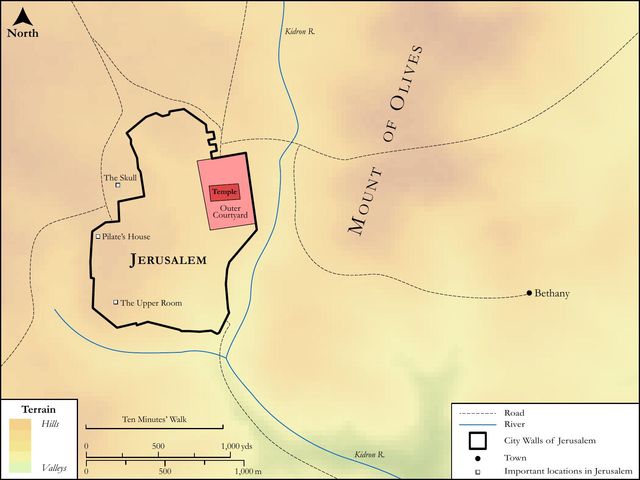
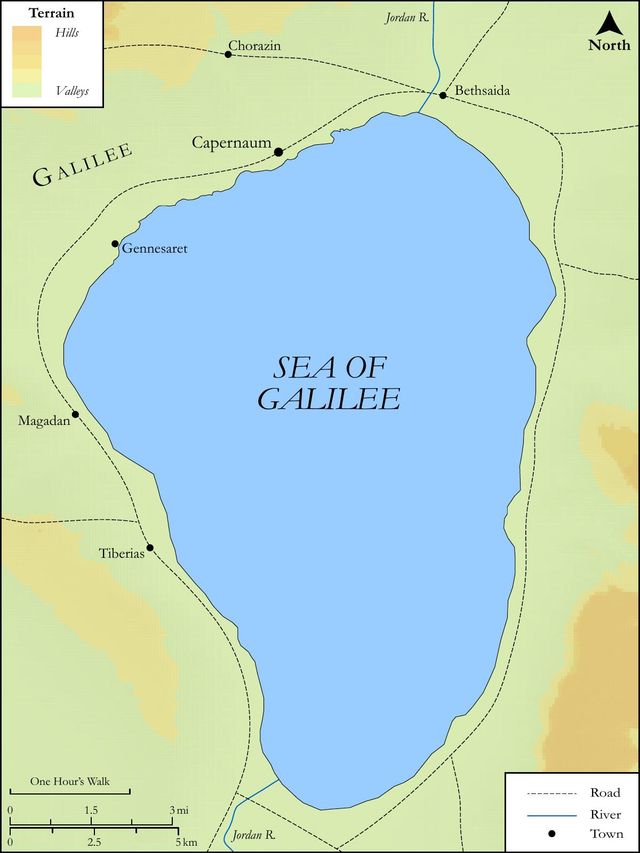
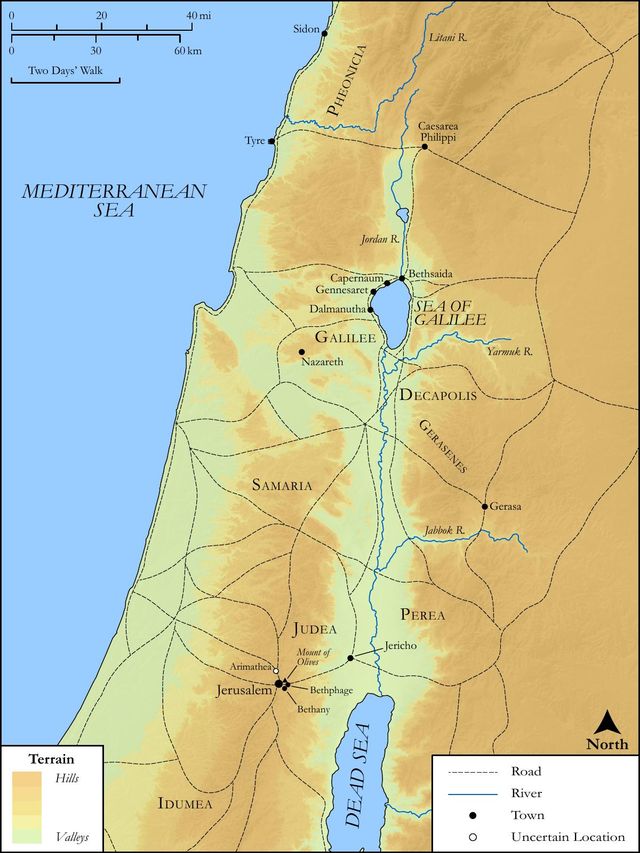
Study this verse
Public-domain commentary
Matthew Henry
From his Commentary on the Whole Bible. Henry comments on passages, not single verses — this entry covers Mark 4:21–34. His three-level outline is real structure in the source text, so it is rendered as structure.
The lessons which our Saviour designs to teach us here by parables and figurative expressions are these: -
I.That those who are good ought to consider the obligations they are under to do good; that is, as in the parable before, to bring forth fruit. God expects a grateful return of his gifts to us, and a useful improvement of his gifts in us; for (Mar 4:21), Is a candle brought to be put under a bushel, or under a bed? No, but that it may be set on a candlestick. The apostles were ordained, to receive the gospel, not for themselves only, but for the good of others, to communicate it to them. All Christians, as they have received the gift, must minister the same. Note,
1.Gifts and graces make a man as a candle; the candle of the Lord (Pro 20:27), lighted by the Father of lights; the most eminent are but candles, poor lights, compared with the Sun of righteousness. A candle gives light but a little way, and but a little while, and is easily blown out, and continually burning down and wasting.
2.Many who are lighted as candles, put themselves under a bed, or under a bushel: they do not manifest grace themselves, nor minister grace to others; they have estates, and do no good with them; have their limbs and senses, wit and learning perhaps, but nobody is the better for them; they have spiritual gifts, but do not use them; like a taper in an urn, they burn to themselves.
3.Those who are lighted as candles, should set themselves on a candlestick; that is, should improve all opportunities of doing good, as those that were made for the glory of God, and the service of the communities they are members of; we are not born for ourselves.
The reason given for this, is, because there is nothing hid, which shall not be manifested, which should not be made manifest (so it might better be read), Mar 4:22. There is no treasure of gifts and graces lodged in any but with design to be communicated; nor was the gospel made a secret to the apostles, to be concealed, but that it should come abroad, and be divulged to all the world. Though Christ expounded the parables to his disciples privately, yet it was with design to make them the more publicly useful; they were taught, that they might teach; and it is a general rule, that the ministration of the Spirit is given to every man to profit withal, not himself only, but others also.
II.It concerns those who hear the word of the gospel, to mark what they hear, and to make a good use of it, because their weal or woe depends upon it; what he had said before he saith again, If any man have ears to hear, let him hear, Mar 4:23. Let him give the gospel of Christ a fair hearing; but that is not enough, it is added (Mar 4:24), Take heed what ye hear, and give a due regard to that which ye do hear; Consider what ye hear, so Dr. Hammond reads it. Note, What we hear, doth us no good, unless we consider it; those especially that are to teach others must themselves be very observant of the things of God; must take notice of the message they are to deliver, that they may be exact. We must likewise take heed what we hear, by proving all things, that we may hold fast that which is good. We must be cautious, and stand upon our guard, lest we be imposed upon. To enforce this caution, consider,
1.As we deal with God, God will deal with us, so Dr. Hammond explains these words, "With what measure ye mete, it shall be measured to you. If ye be faithful servants to him, he will be a faithful Master to you: with the upright he will show himself upright."
2.As we improve the talents we are entrusted with, we shall increase them; if we make use of the knowledge we have, for the glory of God and the benefit of others, it shall sensibly grow, as stock in trade doth by being turned; Unto you that hear, shall more be given; to you that have, it shall be given, Mar 4:25. If the disciples deliver that to the church, which they have received of the Lord, they shall be led more into the secret of the Lord. Gifts and graces multiply by being exercised; and God has promised to bless the hand of the diligent.
3.If we do not use, we lose, what we have; From him that hath not, that doeth no good with what he hath, and so hath it in vain, is as if he had it not, shall be taken even that which he hath. Burying a talent is the betraying of a trust, and amounts to a forfeiture; and gifts and graces rust for want of wearing.
III.The good seed of the gospel sown in the world, and sown in the heart, doth by degrees produce wonderful effects, but without noise (Mar 4:26, etc.); So is the kingdom of God; so is the gospel, when it is sown, and received, as seed in good ground.
1.It will come up; though it seem lost and buried under the clods, it will find or make its way through them. The seed cast into the ground will spring. Let but the word of Christ have the place it ought to have in a soul, and it will show itself, as the wisdom from above doth in a good conversation. After a field is sown with corn, how soon is the surface of it altered! How gay and pleasant doth it look, when it is covered with green!
2.The husbandman cannot describe how it comes up; it is one of the mysteries of nature; It springs and grows up, he knows not how, Mar 4:27. He sees it has grown, but he cannot tell in what manner it grew, or what was the cause and method of its growth. Thus we know not how the Spirit by the word makes a change in the heart, any more than we can account for the blowing of the wind, which we hear the sound of, but cannot tell whence it comes, or whither it goes. Without controversy, great is the mystery of godliness; how God manifested in the flesh came to be believed on in the world, Ti1 3:16.
3.The husbandman, when he hath sown the seed, doth nothing toward the springing of it up; He sleeps, and rises, night and day; goes to sleep at night, gets up in the morning, and perhaps never so much as thinks of the corn he hath sown, or ever looks upon it, but follows his pleasures or other business, and yet the earth brings forth fruit of itself, according to the ordinary course of nature, and by the concurring power of the God of nature. Thus the word of grace, when it is received in faith, is in the heart a work of grace, and the preachers contribute nothing to it. The Spirit of God is carrying it on when they sleep, and can do no business (Job 33:15, Job 33:16), or when they rise to go about other business. The prophets do not live for ever; but the word which they preached, is doing its work, when they are in their graves, Zac 1:5, Zac 1:6. The dew by which the seed is brought up tarrieth not for man, nor waiteth for the sons of men, Mic 5:7.
4.It grows gradually; first the blade, then the ear, after that the full corn in the ear, Mar 4:28. When it is sprung up, it will go forward; nature will have its course, and so will grace. Christ's interest, both in the world and in the heart, is, and will be, a growing interest; and though the beginning be small, the latter end will greatly increase. Though thou sowest not that body that shall be, but bare grain, yet God will give to every seed its own body; though at first it is but a tender blade, which the frost may nip, or the foot may crush, yet it will increase to the ear, to the full corn in the ear. Natura nil facit per saltum - Nature does nothing abruptly. God carries on his work insensibly and without noise, but insuperably and without fail.
5.It comes to perfection at last (Mar 4:29); When the fruit is brought forth, that is, when it is ripe, and ready to be delivered into the owner's hand; then he puts in the sickle. This intimates,
(1.)That Christ now accepts the services which are done to him by an honest heart from a good principle; from the fruit of the gospel taking place and working in the soul, Christ gathers in a harvest of honour to himself. See Joh 4:35.
(2.)That he will reward them in eternal life. When those that receive the gospel aright, have finished their course, the harvest comes, when they shall be gathered as wheat into God's barn (Mat 13:30), as a shock of corn in his season.
IV.The work of grace is small in its beginnings, but comes to be great and considerable at last (Mar 4:30-32); "Whereunto shall I liken the kingdom of God, as now to be set up by the Messiah? How shall I make you to understand the designed method of it?" Christ speaks as one considering and consulting with himself, how to illustrate it with an apt similitude; With what comparison shall we compare it? Shall we fetch it from the motions of the sun, or the revolutions of the moon? No, the comparison is borrowed from this earth, it is like a grain of mustard-seed; he had compared it before to seed sown, here to that seed, intending thereby to show,
1.That the beginnings of the gospel kingdom would be very small, like that which is one of the least of all seeds. When a Christian church was sown in the earth for God, it was all contained in one room, and the number of the names was but one hundred and twenty (Act 1:15), as the children of Israel, when they went down into Egypt, were but seventy souls. The work of grace in the soul, is, at first, but the day of small things; a cloud no bigger than a man's hand. Never were there such great things undertaken by such an inconsiderable handful, as that of the discipling of the nations by the ministry of the apostles; nor a work that was to end in such great glory, as the work of grace raised from such weak and unlikely beginnings. Who hath begotten me these?
2.That the perfection of it will be very great; When it grows up, it becomes greater than all herbs. The gospel kingdom in the world, shall increase and spread to the remotest nations of the earth, and shall continue to the latest ages of time. The church hath shot out great branches, strong ones, spreading far, and fruitful. The work of grace in the soul has mighty products, now while it is in its growth; but what will it be, when it is perfected in heaven? The difference between a grain of mustard seed and a great tree, is nothing to that between a young convert on earth and a glorified saint in heaven. See Joh 12:24.
After the parables thus specified the historian concludes with this general account of Christ's preaching - that with many such parables he spoke the word unto them (Mar 4:33); probably designing to refer us to the larger account of the parables of this kind, which we had before, Mt. 13. He spoke in parables, as they were able to hear them; he fetched his comparisons from those things that were familiar to them, and level to their capacity, and delivered them in plain expressions, in condescension to their capacity; though he did not let them into the mystery of the parables, yet his manner of expression was easy, and such as they might hereafter recollect to their edification. But, for the present, without a parable spoke he not unto them, Mar 4:34. The glory of the Lord was covered with a cloud, and God speaks to us in the language of the sons of men, that, though not at first, yet by degrees, we may understand his meaning; the disciples themselves understood those sayings of Christ afterward, which at first they did not rightly take the sense of. But these parables he expounded to them, when they were alone. We cannot but wish we had had that exposition, as we had of the parable of the sower; but it was not so needful; because, when the church should be enlarged, that would expound these parables to us, without any more ado.
Historical interpretation
Sixteen Centuries of Reception
10 surviving comments on this verse. Each one is dated, so this reads as a timeline rather than a list.
Select a marker to jump to its quote. Markers stagger vertically where authors wrote within a few decades of each other.
Or else, that seed is very small in fear, but great when it has grown into charity, which is greater than all herbs; for God is love, (1 John 4:16) whilst all flesh is grass. (Isa. 40:6 But the boughs which it puts forth are those of mercy and compassion, since under its shade the poor of Christ, who are meant by the living creatures of the heavens, delight to dwell.
For they were worthy to hear mysteries apart, in the most secret haunt of wisdom, for they were men, who, removed from the crowds of evil thoughts, remained in the solitude of virtue; and wisdom is received in a time of quiet.
Now let us consider the nature of mustard, and the power of comparison. The mustard seed itself is certainly a cheap and simple thing: if it is ground, it releases its strength. Similarly, faith at first seems simple, but if it is tested by adversity, it reveals the grace of its virtue; so that it also fills others who either hear or read with the fragrance of itself. The mustard seed of our martyrs is Felix, Nabor, and Victor: they had the fragrance of faith, but it was hidden. Persecution came, they laid down their weapons, bowed their necks, and with a broken sword spread the grace of their martyrdom throughout the whole world, so that it may rightly be said: Their sound has gone out into all the earth.
But faith is worn in one way, pressured in another, and sown in another. The Lord Himself is the grain of mustard seed. He was blameless from injury, but as the grain of mustard seed which the people had not crushed, he did not know. He preferred to be worn, so that we may say: "For we are the good odor of Christ unto God."
(non occ. leg. ap. Possin. Cyril.) And also because the wisdom spoken amongst the perfect expands, to an extent greater than all other sayings, that which was told to men in short discourses, for there is nothing greater than this truth.
(non occ. sed v. Cat. in Marc.) Then after this, Mark, who delights in brevity, to show the nature of the parables, subjoins, And with many such parables spake he the word unto them as they could hear him.
In the same manner, then, the catholicity of our mother becomes palpable when others who are not her sons make war on her. It is a fact that this little branch of worshipers in Africa has been broken off from the great tree which embraces the whole world in the spreading of its branches. She is in labor with them in charity, that they may return to the root without which they cannot have true life.
It is up to us to sow this mustard seed in our minds and let it grow within us into a great tree of understanding reaching up to heaven and elevating all our faculties; then it will spread out branches of knowledge, the pungent savor of its fruit will make our mouths burn, its fiery kernel will kindle a blaze within us inflaming our hearts, and the taste of it will dispel our unenlightened repugnance. Yes, it is true: a mustard seed is indeed an image of the kingdom of God. Christ is the kingdom of heaven. Sown like a mustard seed in the garden of the virgin’s womb, he grew up into the tree of the cross whose branches stretch across the world. Crushed in the mortar of the passion, its fruit has produced seasoning enough for the flavoring and preservation of every living creature with which it comes in contact. As long as a mustard seed remains intact, its properties lie dormant; but when it is crushed they are exceedingly evident. So it was with Christ; he chose to have his body crushed, because he would not have his power concealed.… Christ became all things in order to restore all of us in himself. The man Christ received the mustard seed which represents the kingdom of God; as man he received it, though as God he had always possessed it. He sowed it in his garden, that is in his bride, the Church. The Church is a garden extending over the whole world, tilled by the plough of the gospel, fenced in by stakes of doctrine and discipline, cleared of every harmful weed by the labor of the apostles, fragrant and lovely with perennial flowers: virgins’ lilies and martyrs’ roses set amid the pleasant verdure of all who bear witness to Christ and the tender plants of all who have faith in him. Such then is the mustard seed which Christ sowed in his garden. When he promised a kingdom to the patriarchs, the seed took root in them; with the prophets it sprang up; with the apostles it grew tall; in the Church it became a great tree putting forth innumerable branches laden with gifts. And now you too must take the wings of the psalmist’s dove, gleaming gold in the rays of divine sunlight, and fly to rest for ever among those sturdy, fruitful branches. No snares are set to trap you there; fly off, then, with confidence and dwell securely in its shelter.
(in Ezech. 2. Hom. 3) Or else; Man casts seed into the ground, when he places a good intention in his heart; and he sleeps, when he already rests in the hope which attends on a good work. But he rises night and day, because he advances amidst prosperity and adversity, though he knows it not, for he is as yet unable to measure his increase, and yet virtue, once conceived, goes on increasing. When therefore we conceive good desires, we put seed into the ground; when we begin to work rightly, we are the blade. When we increase to the perfection of good works, we arrive at the ear; when we are firmly fixed in the perfection of the same working, we already put forth the full corn in the ear.
(ubi sup.) Again, the man who sows is by many taken to mean the Saviour Himself, by others, man himself sowing in his own heart.
Most brief indeed is the word of faith; Believe in God, and thou shalt be saved. But the preaching of it has been spread far and wide over the earth, and increased so, that the birds of heaven, that is, contemplative men, sublime in understanding and knowledge, dwell under it. For how many wise men among the Gentiles, quitting their wisdom, have found rest in the preaching of the Gospel! Its preaching then is greater than all.
Again, it put forth great boughs, for the Apostles were divided off as the boughs of a tree, some to Rome, some to India, some to other parts of the world.
For since the multitude was unlearned, he instructs them from objects of food and familiar names, and for this reason he adds, But without a parable spake he not unto them, that is, in order that they might be induced to approach and to ask Him. It goes on; And when they were alone, he expounded all things to his disciples, that is, all things about which they were ignorant and asked Him, not simply all, whether obscure or not.
(non occ.) After having narrated the parable concerning the coming forth of the fruit from the seed of the Gospel, he here subjoins another parable, to show the excellence of the doctrine of the Gospel before all other doctrines. Wherefore it is said, And he said, Whereunto shall we liken the kingdom of God?
I know quite well that, to you as to me, the Church which once felt like a refuge, now often feels like a trap. There is nowhere else to go! (I wonder if this desperate feeling, the last state of loyalty hanging on, was not, even more often than is actually recorded in the Gospels, felt by Our Lord's followers in His earthly life-time?) I think there is nothing to do but to pray, for the Church, the Vicar of Christ, and for ourselves; and meanwhile to exercise the virtue of loyalty, which indeed only becomes a virtue when one is under pressure to desert it...
The 'protestant' search backwards for 'simplicity' and directness - which, of course, though it contains some good or at least intelligible motives, is mistaken and indeed vain. Because 'primitive Christianity' is now and in spite of all 'research' will ever remain largely unknown; because 'primitiveness' is no guarantee of value, and is and was in great part a reflection of ignorance. Grave abuses were as much an element in Christian 'liturgical' behaviour from the beginning as now. (St Paul's strictures on eucharistic behaviour are sufficient to show this!)
Still more because 'my church' was not intended by Our Lord to be static or remain in perpetual childhood; but to be a living organism (likened to a plant), which develops and changes in externals by the interaction of its bequeathed divine life and history - the particular circumstances of the world into which it is set. There is no resemblance between the 'mustard-seed' and the full-grown tree. For those living in the days of its branching growth the Tree is the thing, for the history of a living thing is pan of its life, and the history of a divine thing is sacred.
The wise may know that it began with a seed, but it is vain to try and dig it up, for it no longer exists, and the virtue and powers that it had now reside in the Tree. Very good: but in husbandry the authorities, the keepers of the Tree, must look after it, according to such wisdom as they possess, prune it, remove cankers, rid it of parasites, and so forth. (With trepidation, knowing how little their knowledge of growth is!) But they will certainly do harm, if they are obsessed with the desire of going back to the seed or even to the first youth of the plant when it was (as they imagine) pretty and unafflicted by evils. The other motive (now so confused with the primitivist one, even in the mind of any one of the reformers): aggiornamento: bringing up to date: that has its own grave dangers, as has been apparent throughout history. With this 'ecumenicalness' has also become confused.
Continue studying Mark 4:32 across the web’s major study libraries — every link below opens this exact verse, chapter, or book on the destination site.
Read & Compare
 BibleGatewayThis verse in more than 200 translations and 70 languages.
 Bible.comThe YouVersion reader — hundreds of translations, reading plans, and highlights.
 ESV.orgCrossway's official English Standard Version reader.
 NET BibleThe NET translation with 60,000+ translators' notes on every rendering decision.
 STEP BibleTyndale House's free study tool — original text, vocabulary, and scholarly resources.
 BibliaLogos Bible Software's free web reader.
 USCCBThe New American Bible (Revised Edition) with the U.S. bishops' study notes.
Commentaries
 BibleHub CommentariesDozens of classic commentaries on this verse, gathered on one page.
 StudyLightMore than 100 commentary sets — the largest collection on the web.
 BibleRefPlain-English commentary on what this verse means, verse by verse.
 Enduring WordDavid Guzik's free commentary on this chapter, widely used by Bible teachers.
 Bible Study ToolsVerse commentary alongside Greek and Hebrew study aids.
Original Language & Research
- BibleHub InterlinearThe verse word by word — original language, transliteration, and English.
- BibleHub LexiconEvery word's original-language definition and Strong's entry.
 Blue Letter BibleDeep-study tools — Strong's numbers, concordance, and word studies.
 CNTR CollationThe earliest Greek manuscripts of this verse, collated letter by letter.
Sermons, Hymns & Audio


TrulyRandomVerse is not affiliated with these sites and doesn’t control their content. They’re linked because they’re genuinely useful.
Summary
Mark 4:32 concludes Jesus' Parable of the Mustard Seed, a profound illustration of the Kingdom of God's nature and growth. It vividly portrays an astonishing transformation, where the Kingdom, originating from the most humble and seemingly insignificant beginnings, expands into a vast, encompassing, and welcoming presence, offering shelter and refuge to all. This verse underscores the divine power at work in the Kingdom's expansion, far exceeding natural expectations.
Context
ShowHideLiterary Context
This verse is the concluding statement of the Parable of the Mustard Seed, which is strategically placed within a series of parables in Mark 4. Following the Parable of the Sower and the Parable of the Growing Seed, the Mustard Seed parable (Mark 4:30-32) serves to further illuminate the mysterious and dynamic nature of the Kingdom of God. While the Sower parable addresses the reception of the Word and the Growing Seed parable emphasizes the hidden, autonomous growth of the Kingdom, the Mustard Seed parable specifically highlights the contrast between the Kingdom's humble origins and its eventual, divinely orchestrated, immense influence and global reach. It provides a powerful visual metaphor for the disciples, who at this point were a small, seemingly insignificant group, to grasp the future magnitude of their mission.
Historical & Cultural Context
In ancient Israel, mustard seeds were proverbially known as the smallest of all seeds, a common idiom for something tiny or insignificant. While the mustard plant (likely Sinapis alba or Brassica nigra) is botanically an herb, in the warm climate of the Middle East, it could grow into a substantial bush or even a small tree, often reaching heights of 10-15 feet, large enough to provide shade. This made it a familiar and striking image for Jesus' audience. The idea of "fowls of the air" (birds) nesting in a large tree was also a common Old Testament motif, often symbolizing Gentile nations or peoples finding refuge and blessing under a great kingdom or ruler, as seen in prophetic texts like Ezekiel 17:23 and Daniel 4:12. Jesus' use of this imagery would have resonated deeply with His Jewish listeners, hinting at the universal scope of the Kingdom He was inaugurating.
Key Themes
ShowHideMark 4:32 contributes significantly to several key themes within Mark's Gospel and broader biblical theology. Foremost is the theme of Small Beginnings, Explosive Growth, illustrating how God's Kingdom, initiated by Jesus' seemingly humble ministry and a small band of disciples, would expand exponentially to encompass the entire world. This theme offers profound encouragement that even the most modest acts of faith or seemingly insignificant ministries can yield profound, far-reaching impact, defying human expectations. Another crucial theme is Universal reach and Shelter. The imagery of birds finding refuge in the branches powerfully symbolizes the Kingdom's universal reach and its welcoming nature, signifying that the Gospel message and the spiritual shelter of Christ's Kingdom are intended for all people, from every nation, offering peace, rest, and security. Finally, the verse underscores the Divine Power at Work in the Kingdom's expansion. The growth described is not merely natural but supernatural, driven by God's irresistible power, demonstrating that the Kingdom's ultimate triumph is assured by divine orchestration, not human effort alone.
Exposition and Analysis
ShowHideKey Word Analysis
ShowHideThis verb signifies a process of coming into being, becoming, or happening. In this context, it emphasizes the dynamic, transformative growth of the mustard seed, highlighting that the Kingdom of God is not static but actively expanding and developing from its humble origins into something substantial. It points to a divinely enabled unfolding rather than a mere natural progression.
Referring to a garden vegetable, this term underscores the seemingly ordinary and common nature of the mustard plant in its initial state. The stark contrast between this common "herb" and its extraordinary growth into a tree-like structure powerfully illustrates the unexpected and divinely empowered expansion of the Kingdom beyond typical expectations and natural limitations.
Meaning to camp down, settle, or find rest, this word evokes the imagery of refuge, security, and shelter. The fowls of the air finding lodging under the branches symbolizes the Kingdom of God as a place of universal welcome, safety, and spiritual rest for all peoples and nations, offering a haven from the storms of the world.
Verse Breakdown
ShowHide"But when it is sown, it groweth up"
This clause establishes the initial, seemingly insignificant phase of the Kingdom's development, likening it to a seed being planted. It implies a beginning that is perhaps small, hidden, and unnoticeable to the world, yet inherently possesses the divine capacity for vigorous growth.
"and becometh greater than all herbs"
This highlights the astonishing and disproportionate growth of the mustard plant compared to other garden vegetables. It signifies the Kingdom of God's surpassing influence, magnitude, and unique nature, exceeding all earthly expectations and comparisons in its ultimate scope and impact.
"and shooteth out great branches"
This imagery further details the plant's robust and extensive development, emphasizing its substantial and widespread reach. The "great branches" represent the expansive nature of the Kingdom, providing ample space, support, and a welcoming canopy.
"so that the fowls of the air may lodge under the shadow of it"
This final clause reveals the ultimate purpose and inclusive impact of the Kingdom's growth: to provide shelter, refuge, and welcome to all who seek it. The "fowls of the air" symbolize diverse peoples and nations from across the globe finding peace, security, and spiritual rest within its protective embrace.
Literary Devices
ShowHideMark 4:32 employs several powerful literary devices to convey its message. The primary device is Simile, as Jesus likens the Kingdom of God to a mustard seed and its subsequent growth. This comparison effectively communicates the paradox of the Kingdom's humble origins and its magnificent destiny. Hyperbole is also evident in the description of the mustard plant becoming "greater than all herbs." While mustard plants can grow large, they are not typically considered trees in the same category as those that birds truly nest in, making the statement an exaggeration to emphasize the extraordinary and unexpected nature of the Kingdom's expansion beyond its natural classification. Finally, Symbolism is richly present. The "mustard seed" symbolizes the seemingly insignificant beginning of the Kingdom, inaugurated by Jesus and His small band of disciples. The "great branches" symbolize the vast and far-reaching influence of the Kingdom, while "the fowls of the air" symbolize the diverse nations and peoples who will find refuge and belonging within its embrace, echoing Old Testament prophetic imagery.
Theological and Thematic Connections
ShowHideMark 4:32 profoundly illustrates the paradoxical nature of God's Kingdom: it begins imperceptibly, yet its growth is divinely powered and unstoppable, ultimately encompassing all who seek refuge within it. This growth is not merely quantitative but qualitative, transforming lives and societies. The parable teaches that the Kingdom's power lies not in outward displays of might or human grandiosity, but in the inherent, life-giving power of God's Word and Spirit, which works from within to bring about vast, redemptive change. It reassures believers that even small acts of faith and obedience contribute to a global, eternal reality, demonstrating God's sovereign plan to gather a people for Himself from every tribe and tongue.
Reflection and Application
ShowHideMark 4:32 offers profound and enduring encouragement for believers today, reminding us of the immense potential within seemingly small beginnings and the expansive, inclusive nature of God's work. It calls us to faithfulness in the humble tasks, knowing that our efforts, no matter how insignificant they appear, are part of a divinely orchestrated plan for global impact. This verse challenges us to embrace a long-term perspective, trusting in God's sovereign power to bring about His purposes, even when immediate results are not apparent. It also inspires us to participate actively in the Kingdom's mission, extending its welcoming "shadow" to all people, recognizing that the Gospel is for every nation, tribe, and tongue. We are reminded that the Kingdom's growth is ultimately God's work, freeing us from the pressure of self-reliance and inviting us into a partnership of faith and dependence on His unstoppable power.
Questions for Reflection
ShowHideFAQ
ShowHideWhat is the "mustard seed" a symbol of in this parable?
ShowHideThe "mustard seed" in this parable is a symbol of the seemingly insignificant and humble beginnings of the Kingdom of God. At the time Jesus spoke this parable, His ministry was just beginning, and His followers were a small, often overlooked group. The mustard seed, proverbially the smallest of all seeds, powerfully illustrates that despite its modest origins, the Kingdom possesses an inherent, divine capacity for extraordinary and expansive growth, far exceeding all human expectations. It signifies that God often works through what appears small and weak to accomplish His mighty purposes.
Why does Jesus say it "becometh greater than all herbs" if it's still an herb?
ShowHideJesus' statement that the mustard plant "becometh greater than all herbs" uses a form of hyperbole to emphasize the astonishing and unexpected nature of its growth. While botanically the mustard plant is an herb, in the climate of ancient Israel, it could grow into a large bush or even a small tree, often reaching heights of 10-15 feet. This exaggerated description highlights the dramatic contrast between its tiny seed and its eventual substantial size. The point is not botanical precision but theological impact: the Kingdom of God will grow to a magnitude that surpasses all natural expectations for its humble beginnings, becoming something far more significant and impactful than its initial appearance suggests. It underscores the miraculous, divinely empowered expansion of the Kingdom.
Christ-Centered Fulfillment
ShowHideMark 4:32 finds its ultimate Christ-centered fulfillment in the person and work of Jesus Christ, who is the very embodiment and inaugurator of the Kingdom of God. The "sowing" of the Kingdom began with Christ's incarnation, His humble birth, and His seemingly unassuming public ministry, which was often overlooked or despised by the powerful of His day (Isaiah 53:2-3). Yet, from this "smallest of seeds"—Christ's life, sacrificial death on the cross, and triumphant resurrection—the Kingdom of God burst forth with unparalleled power (1 Corinthians 15:3-4). The "growing up" and "great branches" are fulfilled in the rapid expansion of the Church, empowered by the Holy Spirit, as the Gospel spread from Jerusalem to the ends of the earth through the Great Commission). The "fowls of the air lodging under its shadow" symbolizes the universal reach of Christ's redemptive work, welcoming people from every nation, tribe, and tongue into the spiritual refuge and blessing of His Kingdom (Revelation 7:9-10). Thus, the parable points directly to Christ as the source and sustainer of this ever-expanding Kingdom, which continues to grow through His Church until His glorious return and the full establishment of His eternal reign (Revelation 11:15).