


Matthew 17:20
- ὉHo<the>G3588T-NSMDefinite article Nominative Singular Masculine
- δὲdeAndG1161CONJConjunction
- ἸησοῦςIēsousJesusG2424N-NSM-PNoun Nominative Singular Masculine Individual
- λέγειlegeispokeG3004V-PAI-3SVerb Present Active Indicative 3rd Singular
- αὐτοῖς·autoisto themG846P-DPMPersonal pronoun Dative Plural Masculine
- διὰdiaBecause ofG1223PREPPreposition
- τὴνtēntheG3588T-ASFDefinite article Accusative Singular Feminine
- ὀλιγοπιστίανoligopistianlittle faithN-ASFNoun Accusative Singular Feminine
- ὑμῶνhumōnof youG4771P-2GPPersonal pronoun Genitive 2nd Plural
- ἀμὴνamēnAmenG281INJ-HEBInterjection
- γὰρgarforG1063CONJConjunction
- λέγωlegōI sayG3004V-PAI-1SVerb Present Active Indicative 1st Singular
- ὑμῖν·huminto youG4771P-2DPPersonal pronoun Dative 2nd Plural
- ἐὰνeanIfG1437CONDConjunction
- ἔχητεechēteyou shall haveG2192V-PAS-2PVerb Present Active Subjunctive 2nd Plural
- πίστινpistinfaithG4102N-ASFNoun Accusative Singular Feminine
- ὡςhōsasG5613PRTParticle or Disjunctive
- κόκκονkokkona seedG2848N-ASMNoun Accusative Singular Masculine
- σινάπεωςsinapeōsof mustardG4615N-GSNNoun Genitive Singular Neuter
- ἐρεῖτεereiteyou will sayG4483V-FAI-2PVerb Future Active Indicative 2nd Plural
- τῷtōto theG3588T-DSNDefinite article Dative Singular Neuter
- ὄρειoreimountainG3735N-DSNNoun Dative Singular Neuter
- τούτῳ·toutōto thisG3778D-DSNDemonstrative pronoun Dative Singular Neuter
- μετάβαmetabado moveG3327V-2AAM-2SVerb 2nd Aorist Active Imperative 2nd Singular
- ἔνθενenthenfrom hereADVAdverb
- ἐκεῖekeito thereG1563ADVAdverb
- καὶkaiandG2532CONJConjunction
- μεταβήσεται·metabēsetaiit will moveG3327V-FDI-3SVerb Future Middle Deponent Indicative 3rd Singular
- καὶkaiAndG2532CONJConjunction
- οὐδὲνoudenno [thing]G3762A-NSNAdjective Nominative Singular Neuter
- ἀδυνατήσειadunatēseiwill be impossibleG101V-FAI-3SVerb Future Active Indicative 3rd Singular
- ὑμῖνhuminfor youG4771P-2DPPersonal pronoun Dative 2nd Plural
English is a literal word-by-word gloss of the Greek, not the KJV's wording. Why?
This is the original text the KJV's translators worked from — each Greek word with its own literal English meaning in this verse, prepared by scholars at Tyndale House, Cambridge. The KJV translates whole sentences, not word by word, so its wording differs: one Greek word can become several English words, and the KJV may choose “charity” where the gloss reads “love”. Both are faithful — they answer different questions. For the KJV's own rendering, switch to the KJV text.
Details
See on the biblical-era map

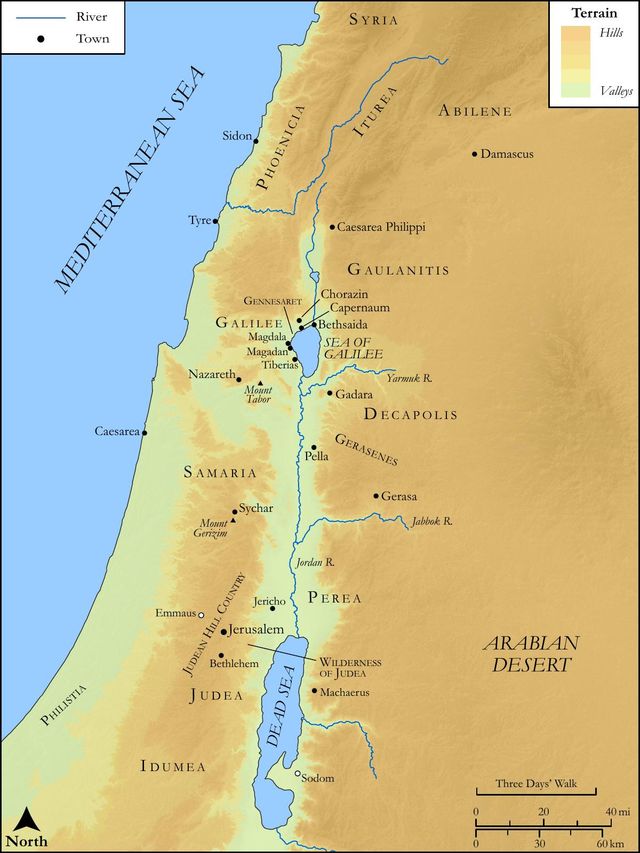
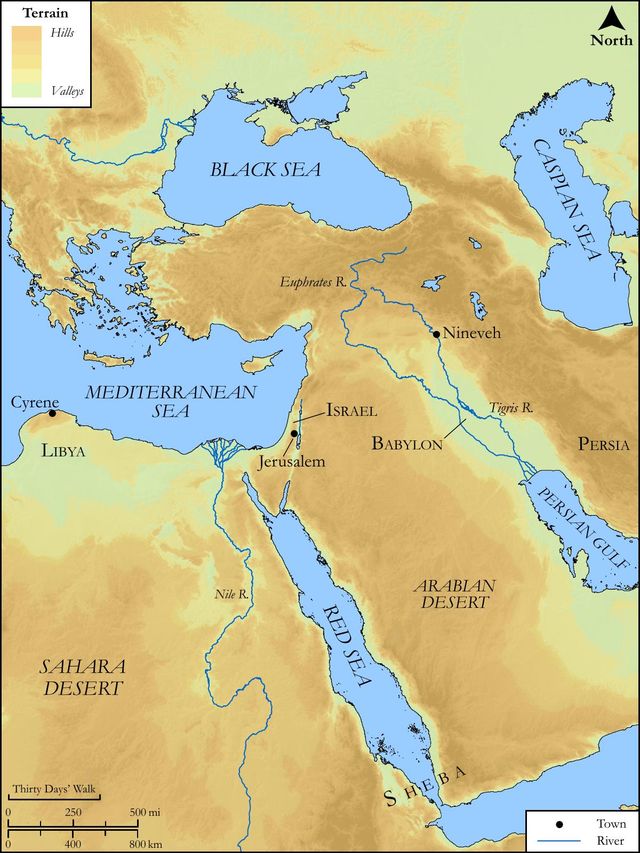
Study this verse
Public-domain commentary
Matthew Henry
From his Commentary on the Whole Bible. Henry comments on passages, not single verses — this entry covers Matthew 17:14–21. His four-level outline is real structure in the source text, so it is rendered as structure.
We have here the miraculous cure of a child that was lunatic and vexed with a devil. Observe,
I.A melancholy representation of the case of this child, made to Christ by the afflicted father.
This was immediately upon his coming down from the mountain where he was transfigured. Note, Christ's glories do not make him unmindful of us and of our wants and miseries. Christ, when he came down from the mount, where had conversation with Moses and Elias, did not take state upon him, but was as easy of access, as ready to poor beggars, and as familiar with the multitude, as ever he used to be. This poor man's address was very importunate; he came kneeling to Christ. Note, Sense of misery will bring people to their knees. Those who see their need of Christ will be earnest, will be in good earnest, in their applications to him; and he delights to be thus wrestled with.
Two things the father of the child complains of.
1.The distress of his child (Mat 17:15); Lord have mercy on my son. The affliction of the children cannot but affect the tender parents, for they are pieces of themselves. And the case of afflicted children should be presented to God by faithful and fervent prayer. This child's distemper, probably, disabled him to pray for himself. Note, Parents are doubly concerned to pray for their children, not only that are weak and cannot, but much more that are wicked and will not, pray for themselves. Now, (1.). The nature of this child's disease was very sad; He was lunatic and sore vexed. A lunatic is properly one whose distemper lies in the brain, and returns with the change of the moon. The devil, by the divine permission, either caused this distemper, or at least concurred with it, to heighten and aggravate it. The child had the falling-sickness, and the hand of Satan was in it; by it he tormented then, and made it much more grievous than ordinarily it is. Those whom Satan got possession of, he afflicted by those diseases of the body which do most affect the mind; for it is the soul that he aims to do mischief to. The father, in his complain, saith, He is lunatic, taking notice of the effect; but Christ, in the cure, rebuked the devil, and so struck at the cause. Thus he doth in spiritual cures. (2.) The effects of the disease were very deplorable; He oft falls into the fire, and into the water. If the force of the disease made him to fall, the malice of the devil made him to fall into the fire or water; so mischievous is he where he gains possession and power in any soul. He seeks to devour, Pe1 5:8.
2.The disappointment of his expectation from the disciples (Mat 17:16); I brought him to thy disciples, and they could not cured him. Christ gave his disciples power to cast out devils (Mat 10:1, Mat 10:8), and therein they were successful (Luk 10:17); yet at this time they failed in the operation, though there were nine of them together, and before a great multitude. Christ permitted this,
(1.)To keep them humble, and to show their dependence upon him, that without him they could do nothing.
(2.)To glorify himself and his own power. It is for the honour of Christ to come in with help at a dead-lift, when other helpers cannot help. Elisha's staff in Gehazi's hand will not raise the child: he must come himself. Note, There are some special favours which Christ reserves the bestowment of to himself; and sometimes he keeps the cistern empty; that he may bring us to himself, the Fountain. But the failures of instruments shall not hinder the operations of his grace, which will work, if not by them, yet without them.
II.The rebukes that Christ gave to the people first, and then to the devil.
1.He chid those about him (Mat 17:17); O faithless and perverse generation! This is not spoken to the disciples, but to the people, and perhaps especially to the scribes, who are mentioned in Mar 9:14, and who, as it should seem, insulted over the disciples, because they had now met with a case that was too hard for them. Christ himself could not do many mighty works among a people in whom unbelief reigned. It was here owing to the faithlessness of this generation, that they could not obtain those blessings from God, which otherwise they might have had; as it was owing to the weakness of the disciples' faith, that they could not do those works for God, which otherwise they might have done. They were faithless and perverse. Note, Those that are faithless will be perverse; and perverseness is sin in its worst colours. Faith is compliance with God, unbelief is opposition and contradiction to God. Israel of old was perverse, because faithless (Psa 95:9), forward, for in them is no faith, Deu 32:20.
Two things he upbraids them with. (1.) His presence with them so long; "How long shall I be with you? Will you always need my bodily presence, and never come to such maturity as to be fit to be left, the people to the conduct of the disciples, and the disciples to the conduct of the Spirit and of their commission? Must the child be always carried, and will it never learn to go alone?" (2.) His patience with them so long; How long shall I suffer you? Note, [1.] The faithlessness and perverseness of those who enjoy the means of grace are a great grief to the Lord Jesus. Thus did he suffer the manners of Israel of old, Act 13:18. [2.] The longer Christ has borne with a perverse and faithless people, the more he is displeased with their perverseness and unbelief; and he is God, and not man, else he would not suffer so long, nor bear so much, as he doth.
2.He cured the child, and set him to-rights again. He called, Bring him hither to me. Though the people were perverse, and Christ was provoked, yet care was taken of the child. Note, Though Christ may be angry, he is never unkind, nor doth he, in the greatest of his displeasure, shut up the bowels of his compassion from the miserable; Bring him to me. Note, When all other helps and succours fail, we are welcome to Christ, and may be confident in him and in his power and goodness.
See here an emblem of Christ's undertaking as our Redeemer.
(1.)He breaks the power of Satan (Mat 17:18); Jesus rebuked the devil, as one having authority, who could back with force his word of command. Note, Christ's victories over Satan are obtained by the power of his word, the sword that comes out of his mouth, Rev 19:21. Satan cannot stand before the rebukes of Christ, though his possession has been ever so long. It is comfortable to those who are wrestling with principalities and powers, that Christ hath spoiled them, Col 2:15. The lion of the tribe of Judah will be too hard for the roaring lion that seeks to devour.
(2.)He redresses the grievances of the children of men; The child was cured from that very hour. It was an immediate cure, and a perfect one. This is an encouragement to parents to bring their children to Christ, whose souls are under Satan's power; he is able to heal them, and as willing as he is able. Not only bring them to Christ by prayer, but bring them to the word of Christ, the ordinary means by which Satan's strongholds are demolished in the soul. Christ's rebukes, brought home to the heart, will ruin Satan's power there.
III.Christ's discourse with his disciples hereupon.
1.They ask the reason why they could not cast out the devil at this time (Mat 17:19); They came to Jesus apart. Note, Ministers, who are to deal for Christ in public, have need to keep up a private communion with him, that they may in secret, where no eye sees, bewail their weakness and straitness, their follies and infirmities, in their public performances, and enquire into the cause of them. We should make use of the liberty of access we have to Jesus apart, where we may be free and particular with him. Such questions as the disciples put to Christ, we should put to ourselves, in communing with our own hearts upon our beds; Why were we so dull and careless at such a time? Why came we so much short in such a duty? That which is amiss may, when found out, be amended.
2.Christ gives them two reasons why they failed.
(1.)It was because of their unbelief, Mat 17:20. When he spake to the father of the child and to the people, he charged it upon their unbelief; when he spake to his disciples, he charged it upon theirs; for the truth was, there were faults on both sides; but we are more concerned to hear of our own faults than of other people's, and to impute what is amiss to ourselves than to others. When the preaching of the word seems not to be so successful as sometimes it has been, the people are apt to lay all the fault upon the ministers, and the ministers upon the people; whereas, it is more becoming for each to own his own faultiness, and to say, "It is owing to me." Ministers, in reproving, must learn thus to give to each his portion of the word; and to take people off from judging others, by teaching all to judge themselves; It is because of your unbelief. Though they had faith, yet that faith was weak and ineffectual. Note,
[1.]As far as faith falls short of its due strength, vigour, and activity, it may truly be said, "There is unbelief." Many are chargeable with unbelief, who yet are not to be called unbelievers.
[2.]It is because of our unbelief, that we bring so little to pass in religion, and so often miscarry, and come short, in that which is good.
Our Lord Jesus takes this occasion to show them the power of faith, that they might not be defective in that, another time, as they were now; If ye have faith as a grain of mustard-seed, ye shall do wonders, Mat 17:20. Some make the comparison to refer to the quality of the mustard-seed, which is, when bruised, sharp and penetrating; "If you have an active growing faith, not dead, flat, or insipid, you will not be baffled thus." But it rather refers to the quantity; "If you had but a grain of true faith, though so little that it were like that which is the least of all seeds, you would do wonders." Faith in general is a firm assent to, a compliance with, and a confidence in, all divine revelation. The faith here required, is that which had for its object that particular revelation by which Christ gave his disciples power to work miracles in his name, for the confirmation of the doctrine they preached. It was a faith in this revelation that they were defective in; either doubting the validity of their commission, or fearing that it expired with their first mission, and was not to continue when they were returning to their Master; or that it was some way or other forfeited or withdrawn. Perhaps their Master's absence with the three chief of his disciples, with a charge to the rest not to follow them, might occasion some doubts concerning their power, or rather the power of the Lord with them, to do this; however, there were not, at present, such a strong actual dependence upon, and confidence in, the promise of Christ's presence with them, as there should have been. It is good for us to be diffident of ourselves and of our own strength; but it is displeasing to Christ, when we distrust any power derived from him or granted by him.
If ye have ever so little of this faith in sincerity, if ye truly rely upon the powers committed to you, ye shall say to this mountain, Remove. This is a proverbial expression, denoting that which follows, and no more, Nothing shall be impossible to you. They had a full commission, among other things, to cast out devils without exception; but, this devil being more than ordinarily malicious and inveterate, they distrusted the power they had received, and so failed. To convince them of this, Christ shows them what they might have done. Note, An active faith can remove mountains, not of itself, but in the virtue of a divine power engaged by a divine promise, both which faith fastens upon.
(2.)Because there was something in the kind of the malady, which rendered the cure more than ordinarily difficult (Mat 17:21); "This kind goes not out but by prayer and fasting. This possession, which works by a falling-sickness, or this kind of devils that are thus furious, is not cast out ordinarily but by great acts of devotion, and wherein ye were defective." Note,
[1.]Though the adversaries we wrestle, be all principalities and powers, yet some are stronger than others, and their power more hardly broken.
[2.]The extraordinary power of Satan must not discourage our faith, but quicken us to a greater intenseness in the acting of it, and more earnestness in praying to God for the increase of it; so some understand it here; "This kind of faith (which removeth mountains) doth not proceed, is not obtained, from God, nor is it carried up to its full growth, nor drawn out into act and exercise, but by earnest prayer." [3.] Fasting and prayer are proper means for the bringing down of Satan's power against us, and the fetching in of divine power to our assistance. Fasting is of use to put an edge upon prayer; it is an evidence and instance of humiliation which is necessary in prayer, and is a means of mortifying some corrupt habits, and of disposing the body to serve the soul in prayer. When the devil's interest in the soul is confirmed by the temper and constitution of the body, fasting must be joined with prayer, to keep under the body.
Historical interpretation
Ten Centuries of Reception
12 surviving comments on this verse. Each one is dated, so this reads as a timeline rather than a list.
Select a marker to jump to its quote. Markers stagger vertically where authors wrote within a few decades of each other.
The mountains here spoken of, in my opinion, are the hostile powers that have their being in a flood of great wickedness, such as are settled down, so to speak, in some souls of various people. But when someone has total faith, such that he no longer disbelieves in anything found in holy Scripture and has faith like that of Abraham, who so believed in God to such a degree that his faith was reckoned to him as righteousness, then he has all faith like a grain of mustard seed. Then such a man will say to this mountain—I mean in this case the deaf and dumb spirit in him who is said to be epileptic—“Move from here to another place.” It will move. This means it will move from the suffering person to the abyss. The apostle, taking this as his starting point, said with apostolic authority, “If I have all faith, so as to remove mountains.” For he who has all faith—which is like a grain of mustard seed—moves not just one mountain but also more just like it. And nothing will be impossible for the person who has so much faith.Let us examine also this statement: “This kind is not cast out except through prayer and fasting.” If at any time it is necessary that we should be engaged in the healing of one suffering from such a disorder, we are not to adjure nor put questions nor speak to the impure spirit as if it heard. But [by] devoting ourselves to prayer and fasting, we may be successful as we pray for the sufferer, and by our own fasting we may thrust out the unclean spirit from him.
Or, all faith is likened to a grain of mustard-seed, because faith is looked on with contempt by men, and shows as something poor and mean; but when a seed of this kind lights upon a good heart as its soil, it becomes a great tree. The weakness of this lunatic's faith is yet so great, and Christ is so strong to heal him amidst all his evils, that He likens it to a mountain which cannot be cast out but by the whole faith of him who desires to heal afflictions of this sort.
The Apostles had believed, yet their faith was imperfect; while the Lord tarried in the mount, and they abode below with the multitude, then faith had become stagnant.
The disciples had received from the Lord the power over unclean spirits, and when they could not heal the dæmoniac thus brought to them, they seem to have had misgivings lest they had forfeited the grace once given to them; hence their question. And they ask it apart, not out of shame, but because of the unspeakable matter of which they were to ask. Jesus said unto them, Because of your unbelief.
Whence it is plain that the disciples' faith was grown weak, yet not all, for those pillars were there, Peter, and James, and John.
But it is to be known, that, as ofttimes the faith of him that draweth near to receive supplies the miraculous virtue, so ofttimes the power of those that work the miracle is sufficient even without the faith of those who sought to receive. (Acts 10:4.) Cornelius and his household, by their faith, attracted to them the grace of the Holy Spirit; but the dead man who was cast into the sepulchre of Elisha, was revived solely by virtue of the holy body. (2 Kings 13:21.) It happened that the disciples were then weak in faith, for indeed they were but in an imperfect condition before the cross; wherefore He here tells them, that faith is the mean of miracles, Verily I say unto you, if ye shall have faith as a grain of mustard-seed, ye shall say to this mountain, Remove hence, and it shall remove.
So He not only promises the removal of mountains, but goes beyond, saying, And nothing shall be impossible to you.
If you shall ask, Where did the Apostles remove mountains? I answer, that they did greater things, bringing many dead to life. It is told also of some saints, who came after the Apostles, that they have in urgent necessity removed mountainsb. But if mountains were not removed in the. Apostles' time, this was not because they could not, but because they would not, there being no pressing occasion. And the Lord said not that they should do this thing, but that they should have power to do it. Yet it is likely that they did do this, but that it is not written, for indeed not all the miracles that they wrought are written.
And this He says not of lunatics in particular, but of the whole class of dæmons. For fast endues with great wisdom, makes a man as an Angel from heaven, and beats down the unseen powers of evil. But there is need of prayer as even still more important. And who prays as he ought, and fasts, had need of little more, and so is not covetous, but ready to almsgiving. For he who fasts, is light and active, and prays wakefully, and quenches his evil lusts, makes God propitious, and humbles his proud stomach. And he who prays with his fasting, has two wings, lighter than the winds themselves. For he is not heavy and wandering in his prayers, (as is the case with many,) but his zeal is as the warmth of fire, and his constancy as the firmness of the earth. Such an one is most able to contend with dæmons, for there is nothing more powerful than a man who prays properly. But if your health be too weak for strict fast, yet is it not for prayer, and if you cannot fast, you can abstain from indulgences. And this is not a little, and not very different from fast.
"Then came His disciples unto Him apart, and asked Him, why they could not themselves cast out the devil." To me they seem to be in anxiety and fear, lest haply they had lost the grace, with which they had been entrusted. For they received power against unclean spirits. Wherefore also they ask, coming to Him apart; not out of shame (for if the fact had gone abroad, and they were convicted, it were superfluous after that to be ashamed of confessing it in words); but it was a secret and great matter they were about to ask Him of. What then saith Christ? "Because of your unbelief," saith He; "for if ye have faith as a grain of mustard seed, ye shall say unto this mountain, Remove, and it shall remove; and nothing shall be impossible unto you." Now if you say, "Where did they remove a mountain?" I would make this answer, that they did far greater things, having raised up innumerable dead. For it is not at all the same thing, to remove a mountain, and to remove death from a body. And certain saints after them, far inferior to them, are said actually to have removed mountains, when necessity called for it. Whereby we see that these also would have done the same, need calling on them. But if there was then no need for it, do not thou find fault. And besides, He Himself said not, "ye shall surely remove it," but "ye shall be able to do even this." And if they did it not, it was not because they were unable (how could this be, when they had power to do the greater things?), but because they would not, there being no need.
And it is likely that this too may have been done, and not have been written; for we know that not all the miracles they wrought were written. Then however they were in a state by comparison very imperfect. What then? Had they not at that time so much as this faith? They had not, for neither were they always the same men, since even Peter is now pronounced blessed, now reproved; and the rest also are mocked by Him for folly, when they understood not His saying concerning the leaven. And so it was, that then also the disciples were weak, for they were but imperfectly minded before the cross.
But by faith here He means that which related to the miracles, and mentions a mustard seed, to declare its unspeakable power. For though in bulk the mustard seed seem to be small, yet in power it is the strongest of all things. To indicate therefore that even the least degree of genuine faith can do great things, He mentioned the mustard seed; neither by any means did He stop at this only, but added even mountains, and went on beyond that. "For nothing," saith He, "shall be impossible to you."
But do thou herein also marvel at their self-denial, and the might of the Spirit; their self-denial in not hiding their fault, and the might of the Spirit in so leading on by degrees them who had not so much as a grain of mustard seed, that rivers and fountains of faith sprang up within them.
"Howbeit, this kind goeth not out, but by prayer and fasting;" meaning the whole kind of evil spirits, not that of lunatics only.
Seest thou how He now proceeds to lay beforehand in them the foundation of His doctrine about fasting? Nay, argue not with me from rare cases, that some even without fasting have cast them out. For although one might say this, in one or two instances, of them that rebuke the evil spirits, yet for the patient it is a thing impossible, living luxuriously, to be delivered from such madness: this thing being especially necessary for him that is diseased in that way. "And yet, if faith be requisite," one may say, "what need of fasting?" Because, together with our faith, that also brings no small power. For it both implants much strictness, and of a man makes one an angel, and fights against the incorporeal powers: yet not by itself, but prayer too is needed, and prayer must come first.
See, at any rate, how many blessings spring from them both. For he that is praying as he ought, and fasting, hath not many wants, and he that hath not many wants, cannot be covetous; he that is not covetous, will be also more disposed for almsgiving. He that fasts is light, and winged, and prays with wakefulness, and quenches his wicked lusts, and propitiates God, and humbles his soul when lifted up. Therefore even the apostles were almost always fasting. He that prays with fasting hath his wings double, and lighter than the very winds. For neither doth he gape, nor stretch himself, nor grow torpid in prayer, as is the case with most men, but is more vehement than fire, and rises above the earth. Wherefore also such a one is most especially a hater and an enemy to the evil spirits. For nothing is mightier than a man who prays sincerely. For if a woman had power to prevail with a savage ruler, one neither fearing God, nor regarding man; much more will he prevail with God, who is continually waiting upon Him, and controlling the belly, and casting out luxury. But if thy body be too weak to fast continually, still it is not too weak for prayer, nor without vigor for contempt of the belly. For although thou canst not fast, yet canst thou avoid luxurious living; and even this is no little thing, nor far removed from fasting, but even this is enough to pluck down the devil's madness. For indeed nothing is so welcome to that evil spirit, as luxury and drunkenness; since it is both fountain and parent of all our evils.
(Verse 20.) However, this kind does not go out, except by prayer and fasting. While he teaches how the most wicked demon can be expelled, he instructs everyone for life.
This is what the Lord says in another place, Whatsoever ye shall ask in my name believing, ye shall receive. (John 16:23.) Therefore when we receive not, it is not the weakness of Him that gives, but the fault of them that ask. Mat. 21:22.)
Some think that the faith that is compared to a grain of mustard-seed is a little faith, whereas the Apostle says, If I shall have such faith that I could remove mountains. (1 Cor. 13:2.) The faith therefore which is compared to a grain of mustard-seed is a great faith.
Or; the mountain is not said of that which we see with the eyes of the body, but signified that spirit which was removed by the Lord out of the lunatic, who is said by the Prophet to be the corrupter of the whole earth,
(ubi sup.) Otherwise; That the disciples in working their miracles should not be lifted up with pride, they are warned rather by the humbleness of their faith, as by a grain of mustard-seed, to take care that they remove all pride of earth, which is signified by the mountain in this place.
Or, fasting is here understood generally as abstinence not from food only, but from all carnal allurements, and sinful passions. In like manner prayer is to be understood in general as consisting in pious and good acts, concerning which the Apostle speaks, Pray without ceasing. (1 Thess. 5:17.)
(Mor. pref. c. 2.) The mustard-seed, unless it be bruised, does not give out its qualities, so if persecution fall upon a holy man, straightway what had seemed weak and contemptible in him is roused into the heat and fervour of virtue.
For faith gives our minds such a capacity for the heavenly gifts, that whatsoever we will we may easily obtain from a faithful Master.
But while He teaches the Apostles how the dæmon ought to be cast out, He instructs all in regulation of life; that we may all know that all the heavier inflictions, whether of unclean spirits, or temptations of men, may be removed by fasts and prayers; and that the wrath also of the Lord may be appeased by this remedy alone; whence he adds, Howbeit this kind is not cast out but by prayer and fasting.
(interlin.) So that the sense then is, Ye shall say to this mountain, that is to the proud devil, Remove hence, that is from the possessed body into the sea, that is into the depths of hell, and it shall remove, and nothing shall be impossible to you, that is, no sickness shall be incurable.
(ord.) Or; This class of dæmons, that is the variety of carnal pleasures, is not overcome unless the spirit be strengthened by prayer, and the flesh enfeebled by fast.
Continue studying Matthew 17:20 across the web’s major study libraries — every link below opens this exact verse, chapter, or book on the destination site.
Read & Compare
 BibleGatewayThis verse in more than 200 translations and 70 languages.
 Bible.comThe YouVersion reader — hundreds of translations, reading plans, and highlights.
 ESV.orgCrossway's official English Standard Version reader.
 NET BibleThe NET translation with 60,000+ translators' notes on every rendering decision.
 STEP BibleTyndale House's free study tool — original text, vocabulary, and scholarly resources.
 BibliaLogos Bible Software's free web reader.
 USCCBThe New American Bible (Revised Edition) with the U.S. bishops' study notes.
Commentaries
 BibleHub CommentariesDozens of classic commentaries on this verse, gathered on one page.
 StudyLightMore than 100 commentary sets — the largest collection on the web.
 BibleRefPlain-English commentary on what this verse means, verse by verse.
 Enduring WordDavid Guzik's free commentary on this chapter, widely used by Bible teachers.
 Bible Study ToolsVerse commentary alongside Greek and Hebrew study aids.
Original Language & Research
- BibleHub InterlinearThe verse word by word — original language, transliteration, and English.
- BibleHub LexiconEvery word's original-language definition and Strong's entry.
 Blue Letter BibleDeep-study tools — Strong's numbers, concordance, and word studies.
 CNTR CollationThe earliest Greek manuscripts of this verse, collated letter by letter.
Sermons, Hymns & Audio


TrulyRandomVerse is not affiliated with these sites and doesn’t control their content. They’re linked because they’re genuinely useful.
Summary
Matthew 17:20 presents Jesus' direct explanation for His disciples' inability to cast out a demon, attributing their failure to a lack of faith. He powerfully declares that even a faith as minuscule as a mustard seed possesses the capacity to overcome seemingly insurmountable obstacles, metaphorically represented by moving a mountain, thereby asserting that "nothing shall be impossible" for those who truly believe. This statement underscores the profound connection between genuine faith and the manifestation of divine power in the world.
Context
ShowHideLiterary Context
This declaration by Jesus immediately follows a significant event in His ministry: the Transfiguration on the mountain, where Peter, James, and John witnessed His glory (Matthew 17:1-8). Upon descending, they are met by a crowd, including a desperate father whose son is severely afflicted by a demon, causing him to have seizures and fall into fire or water (Matthew 17:14-16). The disciples, who had previously been given authority to cast out demons (Matthew 10:1), failed to heal the boy. Their private question to Jesus, "Why could not we cast him out?" (Matthew 17:19), directly prompts Jesus' teaching on faith and unbelief in verse 20. This sequence highlights a contrast between Jesus' divine power demonstrated in the Transfiguration and His subsequent healing, versus the disciples' spiritual impotence, setting the stage for a crucial lesson on the nature of faith.
Historical & Cultural Context
In the ancient Near East, mountains were often perceived as symbols of immense, immovable obstacles or powerful kingdoms. The hyperbolic expression "to move a mountain" was a common idiom among Jewish rabbis to describe the ability to overcome an extraordinary difficulty or to solve a complex problem. Therefore, Jesus' use of this imagery would have been readily understood by His audience as referring to the accomplishment of the humanly impossible. The mustard seed, though tiny, was also a well-known symbol for something incredibly small that could grow into a large plant, providing shelter (Matthew 13:31-32). This cultural understanding reinforces the idea that it is not the quantity but the quality and object of faith that matters. Demonic possession was a recognized reality, and the inability to cast out demons was a significant failure for those claiming spiritual authority.
Key Themes
ShowHideMatthew 17:20 contributes significantly to several key themes within Matthew's Gospel and broader biblical theology. Firstly, it profoundly addresses the nature and power of faith, emphasizing that even a small amount of genuine faith directed towards God can yield extraordinary results, making the humanly impossible, possible. Secondly, it highlights the hindrance of unbelief (apistia), revealing it as a significant barrier to experiencing God's power and working His will. The disciples' failure serves as a cautionary tale against spiritual doubt and distrust. Thirdly, the passage underscores the sovereignty and omnipotence of God, affirming that His power is limitless, and it is through human faith that this divine power is channeled into the world. This teaching also relates to the broader theme of discipleship, exposing the spiritual immaturity of the disciples even after significant time with Jesus, and calling them (and us) to a deeper reliance on God. This echoes Jesus' earlier teachings on the necessity of faith for miracles, as seen in His inability to do many mighty works in Nazareth due to their unbelief (Matthew 13:58).
Exposition and Analysis
ShowHideKey Word Analysis
ShowHideThis term denotes a state of distrust, lack of faith, or faithlessness. It is not merely an intellectual absence of belief but a condition of the heart that fails to fully rely on God's power and promises. In this context, it signifies the disciples' failure to trust God's ability to act through them, despite the authority Jesus had previously given them.
This word signifies persuasion, credence, or moral conviction, especially reliance upon Christ for salvation. Here, it refers to a genuine trust in God's power and willingness to intervene. Jesus emphasizes that it is not the size of this conviction but its authenticity and proper object (God) that unlocks divine potential.
This term means to be unable or, passively, to be impossible. Jesus' declaration that "nothing shall be impossible unto you" directly contrasts with the disciples' inability, asserting that with faith, the humanly unachievable becomes attainable through God's power.
Verse Breakdown
ShowHide"And Jesus said unto them, Because of your unbelief:"
Jesus directly addresses the disciples' private question, pinpointing the root cause of their failure: their lack of faith or distrust. This reveals that spiritual efficacy is not about technique or inherent power, but about the condition of one's heart and reliance on God.
"for verily I say unto you, If ye have faith as a grain of mustard seed,"
Jesus introduces a solemn truth ("verily I say unto you"), emphasizing the profound nature of His upcoming statement. The comparison to a mustard seed highlights that the quantity of faith is not the issue, but its quality – a genuine, living faith, no matter how small its initial manifestation.
"ye shall say unto this mountain, Remove hence to yonder place; and it shall remove;"
This is a powerful hyperbole, a vivid metaphor for overcoming any seemingly insurmountable obstacle or difficulty. It signifies that with God's power activated through faith, even the most daunting challenges can be overcome and transformed.
"and nothing shall be impossible unto you."
This climactic statement serves as a sweeping promise and a profound theological truth. It asserts the boundless potential available to those who operate in genuine faith, implying that when human faith aligns with divine will, God's omnipotence is unleashed, making all things possible according to His purposes.
Literary Devices
ShowHideMatthew 17:20 is rich with Figurative Language, employing both Simile and Hyperbole to convey its profound message. The Simile "faith as a grain of mustard seed" vividly compares the smallest known seed to the potential of genuine faith. This comparison is not about the amount of faith but its vitality and potential for growth, suggesting that even a tiny spark of true belief can yield immense results. Following this, the Hyperbole "ye shall say unto this mountain, Remove hence to yonder place" is a deliberate exaggeration used to emphasize the extraordinary power available through faith. Mountains were symbols of permanence and immovability, so commanding one to move highlights the overcoming of truly impossible obstacles. This is not meant to be taken literally as a physical relocation of geological formations, but as a powerful Metaphor for the spiritual and practical challenges that can be surmounted when one trusts in God. The combination of these devices makes Jesus' teaching memorable and impactful, underscoring the limitless possibilities when faith is exercised.
Theological and Thematic Connections
ShowHideMatthew 17:20 stands as a foundational text regarding the nature and power of faith, illustrating that human faith is the conduit through which God's omnipotence operates in the world. It is not a declaration of human self-sufficiency, but rather an affirmation of God's boundless power made accessible to those who trust Him. The passage underscores that the hindrance to divine activity is often not God's unwillingness or inability, but humanity's lack of genuine reliance on Him. This concept challenges believers to move beyond intellectual assent to a dynamic, active trust that expects God to work in and through their lives, even in the face of overwhelming circumstances. It teaches that true faith, regardless of its perceived size, connects us to an infinite power source, transforming what appears impossible into reality according to God's will.
Reflection and Application
ShowHideMatthew 17:20 offers a profound challenge and immense encouragement for believers navigating the complexities of life. It compels us to honestly assess the areas where unbelief might be limiting God's work in our lives, whether in personal struggles, ministry endeavors, or societal challenges. Instead of being overwhelmed by the "mountains" before us, Jesus redirects our focus to the transformative power of even a nascent, authentic faith. This verse calls us to cultivate a deeper trust in God's character and promises, recognizing that He is able and willing to act far beyond our human limitations. It invites us to pray with bold expectation, to confront our doubts with God's truth, and to step out in courageous obedience, knowing that our small faith, when placed in a great God, can accomplish extraordinary things for His glory.
Questions for Reflection
ShowHideFAQ
ShowHideDoes "moving mountains" mean I can literally move physical mountains with faith?
ShowHideNo, Jesus' statement about "moving mountains" is a classic example of hyperbole, a literary device used to emphasize a point through exaggeration. In ancient Jewish culture, "moving mountains" was a common idiom for overcoming immense, seemingly impossible obstacles or solving incredibly difficult problems. Jesus is not promising literal geological shifts but rather the ability to surmount the greatest challenges and accomplish what is humanly impossible through the power of God activated by genuine faith. The focus is on spiritual and practical victories, not on defying the laws of physics for trivial purposes.
What is the difference between "unbelief" and "little faith"?
ShowHideWhile closely related, "unbelief" (Greek: apistía) in Matthew 17:20 refers to a fundamental lack of trust or active distrust in God's power and willingness to act, leading to spiritual impotence. It's a state where faith is absent or significantly compromised. "Little faith" (Greek: oligopistía), which Jesus uses elsewhere (e.g., Matthew 6:30), implies that faith is present, but it is weak, wavering, or insufficient to overcome current anxieties or challenges. In Matthew 17:20, the disciples' failure was attributed to "unbelief," suggesting a more profound spiritual deficiency than simply having a small amount of faith. Jesus teaches that even a "grain of mustard seed" of genuine faith is enough, implying that the quality and object of faith are more crucial than its perceived quantity.
Christ-Centered Fulfillment
ShowHideMatthew 17:20, while a powerful statement on the efficacy of faith, finds its ultimate fulfillment and deepest meaning in the person and work of Jesus Christ. He is the perfect embodiment of faith, always perfectly aligned with the Father's will, demonstrating the very power He promises to His disciples. The "mountains" that were truly impossible for humanity to move were the mountains of sin, death, and separation from God. These were not moved by human faith, but by the perfect obedience and sacrificial work of Christ on the cross. His death and resurrection are the ultimate demonstration that "nothing shall be impossible" with God, as He conquered the greatest enemies of humanity (Romans 8:37-39). Through Christ, believers are united with Him by faith, and it is His Spirit within them that empowers them to overcome spiritual "mountains" and live lives that reflect God's kingdom. Our faith, no matter how small, is effective because it is placed in the all-sufficient Christ, who has already accomplished the impossible, making us participants in His victory and enabling us to do "greater works" through Him (John 14:12). Thus, the power to move mountains is not inherent in human faith, but flows from our union with the One who is the "author and perfecter of our faith" (Hebrews 12:2).