


Matthew 17:21
- ΤοῦτοToutothisG3778D-NSNDemonstrative pronoun Nominative Singular Neuter
- δὲdenowG1161CONJConjunction
- τὸto<the>G3588T-NSNDefinite article Nominative Singular Neuter
- γένοςgenoskindG1085N-NSNNoun Nominative Singular Neuter
- οὐκouknotG3756PRT-NNegative Particle Negative
- ἐκπορεύεταιekporeuetaigoes outG1607V-PNI-3SVerb Present Middle Or Passive Deponent Indicative 3rd Singular
- εἰeionlyG1487CONDConjunction
- μὴmēexceptG3361PRT-NNegative Particle Negative
- ἐνenwithG1722PREPPreposition
- προσευχῇproseuchēaprayerG4335N-DSFNoun Dative Singular Feminine
- καὶkaiandG2532CONJConjunction
- νηστείᾳnēsteiawith fastingsG3521N-DSFNoun Dative Singular Feminine
English is a literal word-by-word gloss of the Greek, not the KJV's wording. Why?
This is the original text the KJV's translators worked from — each Greek word with its own literal English meaning in this verse, prepared by scholars at Tyndale House, Cambridge. The KJV translates whole sentences, not word by word, so its wording differs: one Greek word can become several English words, and the KJV may choose “charity” where the gloss reads “love”. Both are faithful — they answer different questions. For the KJV's own rendering, switch to the KJV text.
Details
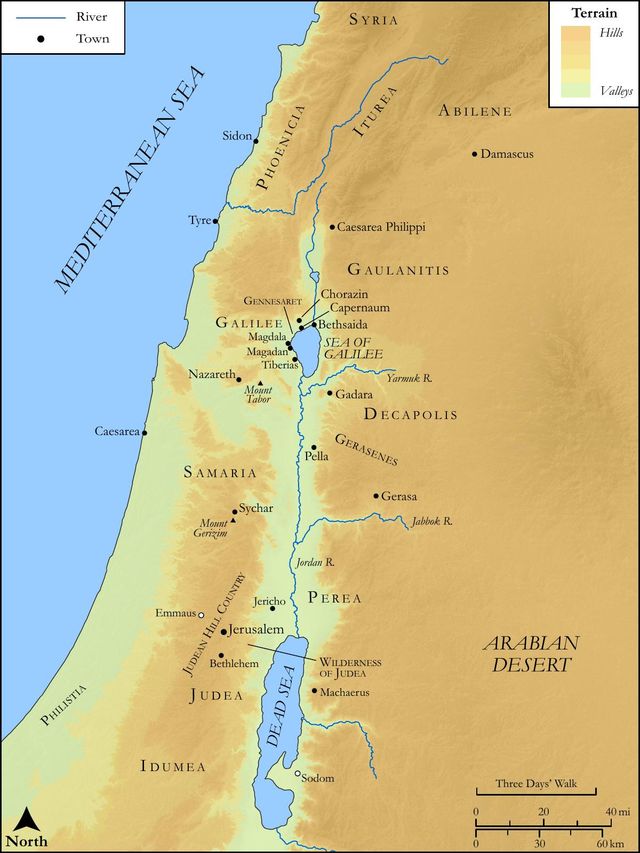
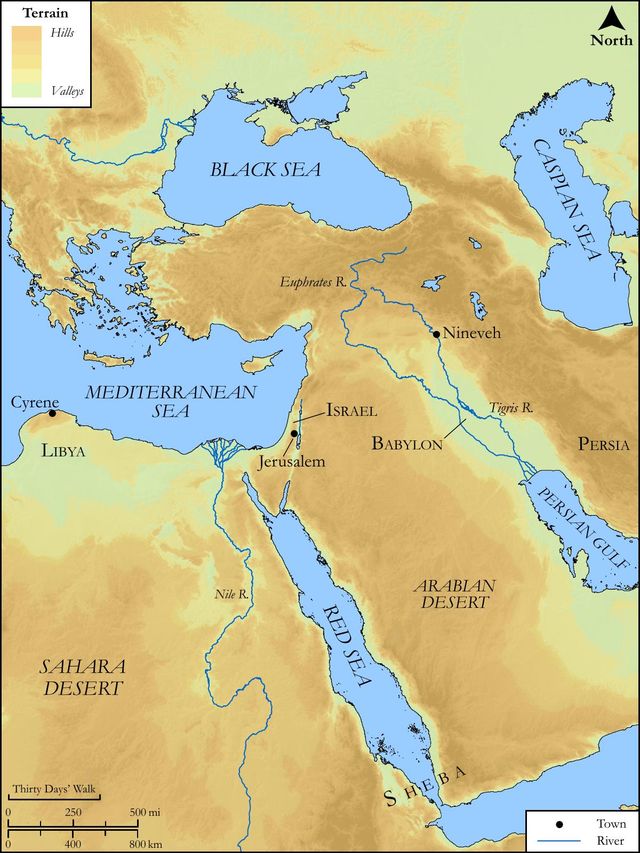
See on the biblical-era map

Study this verse
Public-domain commentary
Matthew Henry
From his Commentary on the Whole Bible. Henry comments on passages, not single verses — this entry covers Matthew 17:14–21. His four-level outline is real structure in the source text, so it is rendered as structure.
We have here the miraculous cure of a child that was lunatic and vexed with a devil. Observe,
I.A melancholy representation of the case of this child, made to Christ by the afflicted father.
This was immediately upon his coming down from the mountain where he was transfigured. Note, Christ's glories do not make him unmindful of us and of our wants and miseries. Christ, when he came down from the mount, where had conversation with Moses and Elias, did not take state upon him, but was as easy of access, as ready to poor beggars, and as familiar with the multitude, as ever he used to be. This poor man's address was very importunate; he came kneeling to Christ. Note, Sense of misery will bring people to their knees. Those who see their need of Christ will be earnest, will be in good earnest, in their applications to him; and he delights to be thus wrestled with.
Two things the father of the child complains of.
1.The distress of his child (Mat 17:15); Lord have mercy on my son. The affliction of the children cannot but affect the tender parents, for they are pieces of themselves. And the case of afflicted children should be presented to God by faithful and fervent prayer. This child's distemper, probably, disabled him to pray for himself. Note, Parents are doubly concerned to pray for their children, not only that are weak and cannot, but much more that are wicked and will not, pray for themselves. Now, (1.). The nature of this child's disease was very sad; He was lunatic and sore vexed. A lunatic is properly one whose distemper lies in the brain, and returns with the change of the moon. The devil, by the divine permission, either caused this distemper, or at least concurred with it, to heighten and aggravate it. The child had the falling-sickness, and the hand of Satan was in it; by it he tormented then, and made it much more grievous than ordinarily it is. Those whom Satan got possession of, he afflicted by those diseases of the body which do most affect the mind; for it is the soul that he aims to do mischief to. The father, in his complain, saith, He is lunatic, taking notice of the effect; but Christ, in the cure, rebuked the devil, and so struck at the cause. Thus he doth in spiritual cures. (2.) The effects of the disease were very deplorable; He oft falls into the fire, and into the water. If the force of the disease made him to fall, the malice of the devil made him to fall into the fire or water; so mischievous is he where he gains possession and power in any soul. He seeks to devour, Pe1 5:8.
2.The disappointment of his expectation from the disciples (Mat 17:16); I brought him to thy disciples, and they could not cured him. Christ gave his disciples power to cast out devils (Mat 10:1, Mat 10:8), and therein they were successful (Luk 10:17); yet at this time they failed in the operation, though there were nine of them together, and before a great multitude. Christ permitted this,
(1.)To keep them humble, and to show their dependence upon him, that without him they could do nothing.
(2.)To glorify himself and his own power. It is for the honour of Christ to come in with help at a dead-lift, when other helpers cannot help. Elisha's staff in Gehazi's hand will not raise the child: he must come himself. Note, There are some special favours which Christ reserves the bestowment of to himself; and sometimes he keeps the cistern empty; that he may bring us to himself, the Fountain. But the failures of instruments shall not hinder the operations of his grace, which will work, if not by them, yet without them.
II.The rebukes that Christ gave to the people first, and then to the devil.
1.He chid those about him (Mat 17:17); O faithless and perverse generation! This is not spoken to the disciples, but to the people, and perhaps especially to the scribes, who are mentioned in Mar 9:14, and who, as it should seem, insulted over the disciples, because they had now met with a case that was too hard for them. Christ himself could not do many mighty works among a people in whom unbelief reigned. It was here owing to the faithlessness of this generation, that they could not obtain those blessings from God, which otherwise they might have had; as it was owing to the weakness of the disciples' faith, that they could not do those works for God, which otherwise they might have done. They were faithless and perverse. Note, Those that are faithless will be perverse; and perverseness is sin in its worst colours. Faith is compliance with God, unbelief is opposition and contradiction to God. Israel of old was perverse, because faithless (Psa 95:9), forward, for in them is no faith, Deu 32:20.
Two things he upbraids them with. (1.) His presence with them so long; "How long shall I be with you? Will you always need my bodily presence, and never come to such maturity as to be fit to be left, the people to the conduct of the disciples, and the disciples to the conduct of the Spirit and of their commission? Must the child be always carried, and will it never learn to go alone?" (2.) His patience with them so long; How long shall I suffer you? Note, [1.] The faithlessness and perverseness of those who enjoy the means of grace are a great grief to the Lord Jesus. Thus did he suffer the manners of Israel of old, Act 13:18. [2.] The longer Christ has borne with a perverse and faithless people, the more he is displeased with their perverseness and unbelief; and he is God, and not man, else he would not suffer so long, nor bear so much, as he doth.
2.He cured the child, and set him to-rights again. He called, Bring him hither to me. Though the people were perverse, and Christ was provoked, yet care was taken of the child. Note, Though Christ may be angry, he is never unkind, nor doth he, in the greatest of his displeasure, shut up the bowels of his compassion from the miserable; Bring him to me. Note, When all other helps and succours fail, we are welcome to Christ, and may be confident in him and in his power and goodness.
See here an emblem of Christ's undertaking as our Redeemer.
(1.)He breaks the power of Satan (Mat 17:18); Jesus rebuked the devil, as one having authority, who could back with force his word of command. Note, Christ's victories over Satan are obtained by the power of his word, the sword that comes out of his mouth, Rev 19:21. Satan cannot stand before the rebukes of Christ, though his possession has been ever so long. It is comfortable to those who are wrestling with principalities and powers, that Christ hath spoiled them, Col 2:15. The lion of the tribe of Judah will be too hard for the roaring lion that seeks to devour.
(2.)He redresses the grievances of the children of men; The child was cured from that very hour. It was an immediate cure, and a perfect one. This is an encouragement to parents to bring their children to Christ, whose souls are under Satan's power; he is able to heal them, and as willing as he is able. Not only bring them to Christ by prayer, but bring them to the word of Christ, the ordinary means by which Satan's strongholds are demolished in the soul. Christ's rebukes, brought home to the heart, will ruin Satan's power there.
III.Christ's discourse with his disciples hereupon.
1.They ask the reason why they could not cast out the devil at this time (Mat 17:19); They came to Jesus apart. Note, Ministers, who are to deal for Christ in public, have need to keep up a private communion with him, that they may in secret, where no eye sees, bewail their weakness and straitness, their follies and infirmities, in their public performances, and enquire into the cause of them. We should make use of the liberty of access we have to Jesus apart, where we may be free and particular with him. Such questions as the disciples put to Christ, we should put to ourselves, in communing with our own hearts upon our beds; Why were we so dull and careless at such a time? Why came we so much short in such a duty? That which is amiss may, when found out, be amended.
2.Christ gives them two reasons why they failed.
(1.)It was because of their unbelief, Mat 17:20. When he spake to the father of the child and to the people, he charged it upon their unbelief; when he spake to his disciples, he charged it upon theirs; for the truth was, there were faults on both sides; but we are more concerned to hear of our own faults than of other people's, and to impute what is amiss to ourselves than to others. When the preaching of the word seems not to be so successful as sometimes it has been, the people are apt to lay all the fault upon the ministers, and the ministers upon the people; whereas, it is more becoming for each to own his own faultiness, and to say, "It is owing to me." Ministers, in reproving, must learn thus to give to each his portion of the word; and to take people off from judging others, by teaching all to judge themselves; It is because of your unbelief. Though they had faith, yet that faith was weak and ineffectual. Note,
[1.]As far as faith falls short of its due strength, vigour, and activity, it may truly be said, "There is unbelief." Many are chargeable with unbelief, who yet are not to be called unbelievers.
[2.]It is because of our unbelief, that we bring so little to pass in religion, and so often miscarry, and come short, in that which is good.
Our Lord Jesus takes this occasion to show them the power of faith, that they might not be defective in that, another time, as they were now; If ye have faith as a grain of mustard-seed, ye shall do wonders, Mat 17:20. Some make the comparison to refer to the quality of the mustard-seed, which is, when bruised, sharp and penetrating; "If you have an active growing faith, not dead, flat, or insipid, you will not be baffled thus." But it rather refers to the quantity; "If you had but a grain of true faith, though so little that it were like that which is the least of all seeds, you would do wonders." Faith in general is a firm assent to, a compliance with, and a confidence in, all divine revelation. The faith here required, is that which had for its object that particular revelation by which Christ gave his disciples power to work miracles in his name, for the confirmation of the doctrine they preached. It was a faith in this revelation that they were defective in; either doubting the validity of their commission, or fearing that it expired with their first mission, and was not to continue when they were returning to their Master; or that it was some way or other forfeited or withdrawn. Perhaps their Master's absence with the three chief of his disciples, with a charge to the rest not to follow them, might occasion some doubts concerning their power, or rather the power of the Lord with them, to do this; however, there were not, at present, such a strong actual dependence upon, and confidence in, the promise of Christ's presence with them, as there should have been. It is good for us to be diffident of ourselves and of our own strength; but it is displeasing to Christ, when we distrust any power derived from him or granted by him.
If ye have ever so little of this faith in sincerity, if ye truly rely upon the powers committed to you, ye shall say to this mountain, Remove. This is a proverbial expression, denoting that which follows, and no more, Nothing shall be impossible to you. They had a full commission, among other things, to cast out devils without exception; but, this devil being more than ordinarily malicious and inveterate, they distrusted the power they had received, and so failed. To convince them of this, Christ shows them what they might have done. Note, An active faith can remove mountains, not of itself, but in the virtue of a divine power engaged by a divine promise, both which faith fastens upon.
(2.)Because there was something in the kind of the malady, which rendered the cure more than ordinarily difficult (Mat 17:21); "This kind goes not out but by prayer and fasting. This possession, which works by a falling-sickness, or this kind of devils that are thus furious, is not cast out ordinarily but by great acts of devotion, and wherein ye were defective." Note,
[1.]Though the adversaries we wrestle, be all principalities and powers, yet some are stronger than others, and their power more hardly broken.
[2.]The extraordinary power of Satan must not discourage our faith, but quicken us to a greater intenseness in the acting of it, and more earnestness in praying to God for the increase of it; so some understand it here; "This kind of faith (which removeth mountains) doth not proceed, is not obtained, from God, nor is it carried up to its full growth, nor drawn out into act and exercise, but by earnest prayer." [3.] Fasting and prayer are proper means for the bringing down of Satan's power against us, and the fetching in of divine power to our assistance. Fasting is of use to put an edge upon prayer; it is an evidence and instance of humiliation which is necessary in prayer, and is a means of mortifying some corrupt habits, and of disposing the body to serve the soul in prayer. When the devil's interest in the soul is confirmed by the temper and constitution of the body, fasting must be joined with prayer, to keep under the body.
Historical interpretation
Eleven Centuries of Reception
13 surviving comments on this verse. Each one is dated, so this reads as a timeline rather than a list.
Select a marker to jump to its quote. Markers stagger vertically where authors wrote within a few decades of each other.
Thereafter He prescribed to fasts a law-that they are to be performed "without sadness: " for why should what is salutary be sad? He taught likewise that fasts are to be the weapons for battling with the more direful demons: for what wonder if the same operation is the instrument of the iniquitous spirit's egress as of the Holy Spirit's ingress? Finally, granting that upon the centurion Cornelius, even before baptism, the honourable gift of the Holy Spirit, together with the gift of prophecy besides, had hastened to descend, we see that his fasts had been heard, I think, moreover, that the apostle too, in the Second of Corinthians, among his labours, and perils, and hardships, after "hunger and thirst," enumerates "fasts" also "very many"
If then we shall ever be required to be employed in the healing of those who are suffering any thing of this sort, we shall not adjure them, nor ask them questions, nor even speak, as though the unclean spirit could hear us, but by our fasting and our prayers drive away the evil spirits.
The Apostles had believed, yet their faith was imperfect; while the Lord tarried in the mount, and they abode below with the multitude, then faith had become stagnant.
The disciples had received from the Lord the power over unclean spirits, and when they could not heal the dæmoniac thus brought to them, they seem to have had misgivings lest they had forfeited the grace once given to them; hence their question. And they ask it apart, not out of shame, but because of the unspeakable matter of which they were to ask. Jesus said unto them, Because of your unbelief.
Whence it is plain that the disciples' faith was grown weak, yet not all, for those pillars were there, Peter, and James, and John.
But it is to be known, that, as ofttimes the faith of him that draweth near to receive supplies the miraculous virtue, so ofttimes the power of those that work the miracle is sufficient even without the faith of those who sought to receive. (Acts 10:4.) Cornelius and his household, by their faith, attracted to them the grace of the Holy Spirit; but the dead man who was cast into the sepulchre of Elisha, was revived solely by virtue of the holy body. (2 Kings 13:21.) It happened that the disciples were then weak in faith, for indeed they were but in an imperfect condition before the cross; wherefore He here tells them, that faith is the mean of miracles, Verily I say unto you, if ye shall have faith as a grain of mustard-seed, ye shall say to this mountain, Remove hence, and it shall remove.
So He not only promises the removal of mountains, but goes beyond, saying, And nothing shall be impossible to you.
If you shall ask, Where did the Apostles remove mountains? I answer, that they did greater things, bringing many dead to life. It is told also of some saints, who came after the Apostles, that they have in urgent necessity removed mountainsb. But if mountains were not removed in the. Apostles' time, this was not because they could not, but because they would not, there being no pressing occasion. And the Lord said not that they should do this thing, but that they should have power to do it. Yet it is likely that they did do this, but that it is not written, for indeed not all the miracles that they wrought are written.
And this He says not of lunatics in particular, but of the whole class of dæmons. For fast endues with great wisdom, makes a man as an Angel from heaven, and beats down the unseen powers of evil. But there is need of prayer as even still more important. And who prays as he ought, and fasts, had need of little more, and so is not covetous, but ready to almsgiving. For he who fasts, is light and active, and prays wakefully, and quenches his evil lusts, makes God propitious, and humbles his proud stomach. And he who prays with his fasting, has two wings, lighter than the winds themselves. For he is not heavy and wandering in his prayers, (as is the case with many,) but his zeal is as the warmth of fire, and his constancy as the firmness of the earth. Such an one is most able to contend with dæmons, for there is nothing more powerful than a man who prays properly. But if your health be too weak for strict fast, yet is it not for prayer, and if you cannot fast, you can abstain from indulgences. And this is not a little, and not very different from fast.
"Then came His disciples unto Him apart, and asked Him, why they could not themselves cast out the devil." To me they seem to be in anxiety and fear, lest haply they had lost the grace, with which they had been entrusted. For they received power against unclean spirits. Wherefore also they ask, coming to Him apart; not out of shame (for if the fact had gone abroad, and they were convicted, it were superfluous after that to be ashamed of confessing it in words); but it was a secret and great matter they were about to ask Him of. What then saith Christ? "Because of your unbelief," saith He; "for if ye have faith as a grain of mustard seed, ye shall say unto this mountain, Remove, and it shall remove; and nothing shall be impossible unto you." Now if you say, "Where did they remove a mountain?" I would make this answer, that they did far greater things, having raised up innumerable dead. For it is not at all the same thing, to remove a mountain, and to remove death from a body. And certain saints after them, far inferior to them, are said actually to have removed mountains, when necessity called for it. Whereby we see that these also would have done the same, need calling on them. But if there was then no need for it, do not thou find fault. And besides, He Himself said not, "ye shall surely remove it," but "ye shall be able to do even this." And if they did it not, it was not because they were unable (how could this be, when they had power to do the greater things?), but because they would not, there being no need.
And it is likely that this too may have been done, and not have been written; for we know that not all the miracles they wrought were written. Then however they were in a state by comparison very imperfect. What then? Had they not at that time so much as this faith? They had not, for neither were they always the same men, since even Peter is now pronounced blessed, now reproved; and the rest also are mocked by Him for folly, when they understood not His saying concerning the leaven. And so it was, that then also the disciples were weak, for they were but imperfectly minded before the cross.
But by faith here He means that which related to the miracles, and mentions a mustard seed, to declare its unspeakable power. For though in bulk the mustard seed seem to be small, yet in power it is the strongest of all things. To indicate therefore that even the least degree of genuine faith can do great things, He mentioned the mustard seed; neither by any means did He stop at this only, but added even mountains, and went on beyond that. "For nothing," saith He, "shall be impossible to you."
But do thou herein also marvel at their self-denial, and the might of the Spirit; their self-denial in not hiding their fault, and the might of the Spirit in so leading on by degrees them who had not so much as a grain of mustard seed, that rivers and fountains of faith sprang up within them.
"Howbeit, this kind goeth not out, but by prayer and fasting;" meaning the whole kind of evil spirits, not that of lunatics only.
Seest thou how He now proceeds to lay beforehand in them the foundation of His doctrine about fasting? Nay, argue not with me from rare cases, that some even without fasting have cast them out. For although one might say this, in one or two instances, of them that rebuke the evil spirits, yet for the patient it is a thing impossible, living luxuriously, to be delivered from such madness: this thing being especially necessary for him that is diseased in that way. "And yet, if faith be requisite," one may say, "what need of fasting?" Because, together with our faith, that also brings no small power. For it both implants much strictness, and of a man makes one an angel, and fights against the incorporeal powers: yet not by itself, but prayer too is needed, and prayer must come first.
See, at any rate, how many blessings spring from them both. For he that is praying as he ought, and fasting, hath not many wants, and he that hath not many wants, cannot be covetous; he that is not covetous, will be also more disposed for almsgiving. He that fasts is light, and winged, and prays with wakefulness, and quenches his wicked lusts, and propitiates God, and humbles his soul when lifted up. Therefore even the apostles were almost always fasting. He that prays with fasting hath his wings double, and lighter than the very winds. For neither doth he gape, nor stretch himself, nor grow torpid in prayer, as is the case with most men, but is more vehement than fire, and rises above the earth. Wherefore also such a one is most especially a hater and an enemy to the evil spirits. For nothing is mightier than a man who prays sincerely. For if a woman had power to prevail with a savage ruler, one neither fearing God, nor regarding man; much more will he prevail with God, who is continually waiting upon Him, and controlling the belly, and casting out luxury. But if thy body be too weak to fast continually, still it is not too weak for prayer, nor without vigor for contempt of the belly. For although thou canst not fast, yet canst thou avoid luxurious living; and even this is no little thing, nor far removed from fasting, but even this is enough to pluck down the devil's madness. For indeed nothing is so welcome to that evil spirit, as luxury and drunkenness; since it is both fountain and parent of all our evils.
This is what the Lord says in another place, Whatsoever ye shall ask in my name believing, ye shall receive. (John 16:23.) Therefore when we receive not, it is not the weakness of Him that gives, but the fault of them that ask. Mat. 21:22.)
Some think that the faith that is compared to a grain of mustard-seed is a little faith, whereas the Apostle says, If I shall have such faith that I could remove mountains. (1 Cor. 13:2.) The faith therefore which is compared to a grain of mustard-seed is a great faith.
Or; the mountain is not said of that which we see with the eyes of the body, but signified that spirit which was removed by the Lord out of the lunatic, who is said by the Prophet to be the corrupter of the whole earth,
(Ver. 21 seq.) While they were conversing in Galilee, Jesus said to them: The Son of Man is to be handed over to the hands of men, and they will kill him; and on the third day he will rise again. And they were greatly saddened. He always mixes sorrows with prosperity, so that when they come suddenly, they do not terrify the apostles; but they are carried by their prepared minds: For if they are saddened by his impending death, they should be joyful at the news of his resurrection on the third day. Furthermore, their grief and sorrow are not due to disbelief (otherwise they would have known that Peter was rebuked because he did not understand the things of God, but those of men), but rather because out of love for their master, they are willing to hear nothing negative or humiliating about him.
John the Short said, ‘If a king wants to take a city filled with his enemies, he first captures their food and water, and when they are starving he subdues them. So it is with gluttony. If a man is sincere about fasting and is hungry, the enemies that trouble his soul will grow weak.’
Or, fasting is here understood generally as abstinence not from food only, but from all carnal allurements, and sinful passions. In like manner prayer is to be understood in general as consisting in pious and good acts, concerning which the Apostle speaks, Pray without ceasing. (1 Thess. 5:17.)
(Mor. pref. c. 2.) The mustard-seed, unless it be bruised, does not give out its qualities, so if persecution fall upon a holy man, straightway what had seemed weak and contemptible in him is roused into the heat and fervour of virtue.
For faith gives our minds such a capacity for the heavenly gifts, that whatsoever we will we may easily obtain from a faithful Master.
But while He teaches the Apostles how the dæmon ought to be cast out, He instructs all in regulation of life; that we may all know that all the heavier inflictions, whether of unclean spirits, or temptations of men, may be removed by fasts and prayers; and that the wrath also of the Lord may be appeased by this remedy alone; whence he adds, Howbeit this kind is not cast out but by prayer and fasting.
. The apostles were afraid that they had lost the grace against demons that had been given to them; this is why they asked Jesus in private and with great anxiety. But the Lord reproves them for being imperfect in faith, saying, "Because of your unbelief." For if you had fervent, ardent faith, you would accomplish great things even though they appeared to be small. The location of the mountains which the apostles moved is nowhere recorded, yet it is likely that they did move them, but the event was not written down; for not everything was written down. Or, by another interpretation, they did not move a mountain because the occasion did not present itself, but they did even greater things than that. Note how the Lord said, "Ye shall say unto this mountain, Remove hence," in other words, the mountain shall move when you say the word. But the apostles did not say the word as there was neither occasion nor necessity, and so they did not move mountains. But if indeed they had spoken, they would have moved. "This kind’’ of demon is cast out by prayer and fasting. For they themselves who are demonized must fast, as well as those who would heal them; then comes the prayer, preceded by fasting, not drunkenness. Understand, then, that even perfect faith is as the grain of mustard seed, considered worthless on account of the foolishness of the preaching. Yet if it should find good soil, it grows into a tree in which the winged creatures of heaven, that is, soaring thoughts, may alight. Whoever, then, has perfect faith can say to this mountain, that is, to the demon, ‘‘Remove hence." For Christ was also referring to the demon that had gone out.
(interlin.) So that the sense then is, Ye shall say to this mountain, that is to the proud devil, Remove hence, that is from the possessed body into the sea, that is into the depths of hell, and it shall remove, and nothing shall be impossible to you, that is, no sickness shall be incurable.
(ord.) Or; This class of dæmons, that is the variety of carnal pleasures, is not overcome unless the spirit be strengthened by prayer, and the flesh enfeebled by fast.
Continue studying Matthew 17:21 across the web’s major study libraries — every link below opens this exact verse, chapter, or book on the destination site.
Read & Compare
 BibleGatewayThis verse in more than 200 translations and 70 languages.
 Bible.comThe YouVersion reader — hundreds of translations, reading plans, and highlights.
 ESV.orgCrossway's official English Standard Version reader.
 NET BibleThe NET translation with 60,000+ translators' notes on every rendering decision.
 STEP BibleTyndale House's free study tool — original text, vocabulary, and scholarly resources.
 BibliaLogos Bible Software's free web reader.
 USCCBThe New American Bible (Revised Edition) with the U.S. bishops' study notes.
Commentaries
 BibleHub CommentariesDozens of classic commentaries on this verse, gathered on one page.
 StudyLightMore than 100 commentary sets — the largest collection on the web.
 BibleRefPlain-English commentary on what this verse means, verse by verse.
 Enduring WordDavid Guzik's free commentary on this chapter, widely used by Bible teachers.
 Bible Study ToolsVerse commentary alongside Greek and Hebrew study aids.
Original Language & Research
- BibleHub InterlinearThe verse word by word — original language, transliteration, and English.
- BibleHub LexiconEvery word's original-language definition and Strong's entry.
 Blue Letter BibleDeep-study tools — Strong's numbers, concordance, and word studies.
 CNTR CollationThe earliest Greek manuscripts of this verse, collated letter by letter.
Sermons, Hymns & Audio


TrulyRandomVerse is not affiliated with these sites and doesn’t control their content. They’re linked because they’re genuinely useful.
Summary
Matthew 17:21, a verse found in the King James Version and other textual traditions, provides a crucial clarification following the disciples' inability to cast out a demon from a young boy. After Jesus successfully performs the exorcism and addresses their lack of faith, this verse emphasizes that certain particularly stubborn spiritual entities or "kinds" of demonic influence require a deeper level of spiritual engagement, specifically through dedicated prayer and fasting, highlighting the necessity of divine power accessed through humble spiritual discipline.
Context
ShowHideLiterary Context
This verse immediately follows the dramatic account of Jesus' transfiguration on the mountain and His subsequent descent to a scene of spiritual distress. In Matthew 17:14-18, a father brings his demon-possessed son to the disciples, who fail to heal him. Jesus rebukes the demon and heals the boy, demonstrating His supreme authority. Privately, the disciples ask Jesus, "Why could not we cast him out?" Jesus responds in Matthew 17:20 by attributing their failure to their "unbelief" or "little faith," famously stating that faith as small as a mustard seed can move mountains. Matthew 17:21 then serves as an additional, vital clarification, suggesting that while faith is foundational, certain spiritual strongholds necessitate intensified spiritual disciplines beyond mere intellectual assent or a general belief. It's important to note for KJV users that this verse, while integral to the Textus Receptus tradition, is absent from some of the earliest and most prominent Greek manuscripts (like Codex Vaticanus and Codex Sinaiticus), which is why it is often omitted or bracketed in many modern translations. However, its theological message aligns with other biblical teachings on spiritual warfare and discipline.
Historical & Cultural Context
In the ancient world, and particularly within Jewish culture, the concept of demon possession was widely accepted, and exorcism was a recognized practice. Various methods were employed, often involving incantations, rituals, or the invocation of divine names. Jesus' ministry, however, consistently demonstrated an unparalleled and effortless authority over evil spirits, distinguishing Him from other exorcists of His time. The disciplines of prayer and fasting were deeply ingrained in Jewish piety. Fasting was practiced for various reasons: as an expression of repentance, a sign of mourning, a means of seeking God's favor, or to intensify prayer and spiritual focus. Examples include Moses (Exodus 34:28), Elijah (1 Kings 19:8), and Daniel (Daniel 9:3). The Pharisees were known for their regular fasting (Luke 18:12). Jesus Himself fasted for forty days in the wilderness (Matthew 4:2), setting an example of profound spiritual discipline. Thus, the disciples would have been familiar with these practices, and Jesus' instruction would have resonated within their cultural understanding of spiritual engagement.
Key Themes
ShowHideMatthew 17:21 contributes significantly to several key themes within the Gospel of Matthew and broader biblical theology. Firstly, it underscores the reality and intensity of spiritual warfare, indicating that not all demonic forces are equally susceptible to expulsion and that some require a more concentrated spiritual effort. Secondly, it highlights the power and necessity of spiritual disciplines, specifically prayer and fasting, as essential means by which believers can access and wield divine authority against entrenched evil. This reinforces the theme of dependence on God, emphasizing that victory in spiritual battles is not achieved through human strength or technique, but through humble reliance on God's omnipotence. Finally, it subtly refines the theme of faith, suggesting that while faith is the fundamental prerequisite for divine intervention (Matthew 17:20), the depth and efficacy of that faith in confronting formidable spiritual opposition are often cultivated and expressed through diligent spiritual practices like prayer and fasting.
Exposition and Analysis
ShowHideKey Word Analysis
ShowHideThis word refers to a "kin" or "offspring," and by extension, a "class," "species," or "type." In this context, "this kind" (τοῦτο τὸ γένος, touto to génos) specifically denotes a particular type or category of demonic entity. It implies that there are varying degrees of spiritual opposition, and some are more deeply entrenched or resistant than others, requiring a distinct approach.
Meaning "to depart," "be discharged," or "proceed." Here, it directly refers to the expulsion or casting out of the demon. The phrase "goeth not out" (οὐκ ἐκπορεύεται, ouk ekporeúetai) emphasizes the difficulty and resistance of this particular "kind" of demon, indicating that its departure is not easily achieved and requires a specific, powerful intervention.
Meaning "prayer" or "worship." This term denotes direct, earnest communication with God. In the context of exorcism, it signifies a humble yet fervent appeal to divine power, acknowledging human inadequacy and relying solely on God's authority to overcome spiritual strongholds. It is the primary means of accessing God's intervention.
Meaning "abstinence from food," particularly for religious purposes. Fasting, when coupled with prayer, is presented as a spiritual discipline that intensifies focus, expresses deep earnestness, and humbles the individual before God. It is not a magical formula but a means of denying the flesh to sharpen spiritual sensitivity and demonstrate profound dependence on God for breakthrough.
Verse Breakdown
ShowHide"Howbeit this kind"
The introductory "Howbeit" (Greek: δέ, dé) serves as a conjunction, connecting this statement to Jesus' previous explanation about faith. It introduces a qualification or further clarification. "This kind" refers specifically to the particularly stubborn and resistant type of demon that the disciples had failed to cast out, indicating a category of spiritual opposition that presents unique challenges.
"goeth not out"
This phrase directly addresses the difficulty of expelling such a demon. It implies that the usual or expected methods of spiritual authority might be insufficient for this specific "kind" of spiritual entity, underscoring its tenacious grip and the need for a more potent spiritual engagement.
"but by prayer"
This clause introduces the indispensable means by which such a demonic entity can be dislodged. "Prayer" is presented as the essential pathway for accessing divine power. It emphasizes that human effort alone is futile against such forces, and genuine reliance on God through earnest supplication is paramount.
"and fasting"
This addition specifies a second, complementary spiritual discipline. Fasting, when combined with prayer, intensifies the spiritual focus, demonstrates profound humility and desperation before God, and can lead to a heightened spiritual sensitivity that facilitates breakthrough against particularly stubborn spiritual strongholds. It signifies a deeper level of commitment and dependence.
Literary Devices
ShowHideThe primary literary device at play in Matthew 17:21 is Explanatory Clarification. Following Jesus' general statement about the power of faith in Matthew 17:20, this verse provides a specific addendum, detailing the intensified spiritual practices required for certain formidable spiritual battles. This serves to refine the disciples' understanding, moving beyond a simplistic view of faith to acknowledge the nuanced demands of spiritual warfare. There is also an element of Emphasis placed on the disciplines of prayer and fasting, highlighting their critical role in situations where ordinary spiritual efforts prove insufficient. The phrase "this kind" functions as a form of Categorization, distinguishing between different levels of demonic influence and implying a hierarchy or varying degrees of resistance within the spiritual realm.
Theological and Thematic Connections
ShowHideMatthew 17:21 reveals profound theological truths about the nature of spiritual warfare and the means by which believers engage with it. It teaches that while all authority belongs to Christ and is delegated to His followers, the exercise of this authority against deeply entrenched spiritual strongholds often requires a heightened level of spiritual discipline and dependence on God. Prayer is presented not merely as a request but as a vital conduit for divine power, and fasting as a means of humbling oneself, intensifying spiritual focus, and demonstrating profound earnestness in seeking God's intervention. This verse underscores that true victory is rooted in God's power, accessed through humble and persistent spiritual engagement, rather than human strength or technique. It challenges believers to cultivate a deeper spiritual life, prepared for the more formidable battles that may arise.
Reflection and Application
ShowHideMatthew 17:21 offers timeless principles for believers navigating the complexities of life and faith. It reminds us that not all challenges are equal; some "kinds" of spiritual strongholds, persistent sins, generational patterns, or seemingly insurmountable obstacles in our lives or ministries may require a more intensified and dedicated approach. This verse calls us to move beyond casual spirituality to a deeper, more disciplined reliance on God. When confronted with situations that seem resistant to our usual efforts, it prompts us to engage in fervent, persistent prayer, often coupled with the spiritual discipline of fasting. This is not about earning God's favor or manipulating Him, but about humbling ourselves, sharpening our spiritual focus, and demonstrating our profound dependence on His power, not our own. It's an invitation to cultivate a spiritual resilience that trusts God for breakthrough even in the most stubborn circumstances, leading to greater spiritual sensitivity and experiencing His transformative power.
Questions for Reflection
ShowHideFAQ
ShowHideWhy is Matthew 17:21 sometimes missing or bracketed in modern Bible translations?
ShowHideMatthew 17:21 is absent from some of the earliest and most reliable Greek manuscripts, such as Codex Vaticanus and Codex Sinaiticus. Its inclusion in the King James Version and other translations stems from its presence in later manuscripts, particularly those that form the basis of the Textus Receptus. Scholars believe it may have been an early scribal addition, possibly imported from the parallel account in Mark 9:29, which explicitly includes the "prayer and fasting" clause. While its textual authenticity is debated, its theological message regarding the efficacy of prayer and fasting for spiritual breakthrough is consistent with other biblical teachings found throughout Scripture.
Is fasting always necessary for spiritual breakthrough, according to this verse?
ShowHideMatthew 17:21 suggests that for "this kind" of particularly stubborn or resistant spiritual entity, prayer and fasting are necessary. This implies that while not every spiritual battle may require fasting, certain deeply entrenched strongholds or significant spiritual challenges may indeed call for this intensified discipline. Fasting, when undertaken with the right heart—not as a magical formula, but as an act of humble dependence, self-denial, and intensified focus on God—can sharpen spiritual sensitivity and demonstrate a profound earnestness that God honors. It is a tool for deeper spiritual engagement, not a universal prerequisite for all answered prayers, but a powerful one for specific, difficult circumstances.
Christ-Centered Fulfillment
ShowHideMatthew 17:21, though focusing on the disciples' need for prayer and fasting, ultimately points to Christ as the ultimate embodiment and source of authority over all "kinds" of spiritual opposition. Jesus Himself lived a life of perfect dependence on the Father, marked by deep prayer (Luke 5:16) and periods of fasting, most notably His forty days in the wilderness where He decisively defeated the temptations of the devil (Matthew 4:1-11). He is the one who perfectly lived out the principle of overcoming through complete reliance on God. The "kind" of demon that resisted the disciples ultimately bows to the name and authority of Jesus, who, through His death and resurrection, disarmed and triumphed over all principalities and powers (Colossians 2:15). Believers now operate not in their own strength, but in the power of the Holy Spirit, wielding the authority granted to them by Christ, the Victorious One (Luke 10:19). Thus, "this kind" and every other kind of spiritual darkness ultimately "goeth out" because of the finished work of Christ on the cross, which broke the power of sin and death, and through His ongoing intercession (Hebrews 7:25). Our prayer and fasting are not to earn victory, but to align ourselves with and appropriate the victory already secured by our Lord Jesus Christ.