


1 Corinthians 13:2
Bible text: King James Version (1769 Blayney text) · Public domain
Bible text: King James Version with Strong's numbers · Public domain
Bible text: Berean Standard Bible · Public domain
Bible text: American Standard Version (1901) · Public domain
Bible text: World English Bible, Messianic edition · Public domain
Bible text: Geneva Bible (1599) · Public domain
Bible text: Young's Literal Translation · Public domain
- καὶkaiAndG2532CONJConjunction
- ἐὰνeanifG1437CONDConjunction
- ἔχωechōI shall haveG2192V-PAS-1SVerb Present Active Subjunctive 1st Singular
- προφητείανprophēteianprophecyG4394N-ASFNoun Accusative Singular Feminine
- καὶkaiandG2532CONJConjunction
- εἰδῶeidōunderstandG1492V-RAS-1SVerb Perfect Active Subjunctive 1st Singular
- τὰtatheG3588T-APNDefinite article Accusative Plural Neuter
- μυστήριαmustēriamysteriesG3466N-APNNoun Accusative Plural Neuter
- πάνταpantaallG3956A-APNAdjective Accusative Plural Neuter
- καὶkaiandG2532CONJConjunction
- πᾶσανpasanallG3956A-ASFAdjective Accusative Singular Feminine
- τὴνtēntheG3588T-ASFDefinite article Accusative Singular Feminine
- γνῶσινgnōsinknowledgeG1108N-ASFNoun Accusative Singular Feminine
- καὶkaiAndG2532CONJConjunction
- ἐὰνeanifG1437CONDConjunction
- ἔχωechōI shall haveG2192V-PAS-1SVerb Present Active Subjunctive 1st Singular
- πᾶσανpasanallG3956A-ASFAdjective Accusative Singular Feminine
- τὴνtēntheG3588T-ASFDefinite article Accusative Singular Feminine
- πίστινpistinfaithG4102N-ASFNoun Accusative Singular Feminine
- ὥστεhōsteso asG5620CONJConjunction
- ὄρηorēmountainsG3735N-APNNoun Accusative Plural Neuter
- μεθιστάναιmethistanaito removeG3179V-PANVerb Present Active Infinitive
- ἀγάπηνagapēnloveG26N-ASFNoun Accusative Singular Feminine
- δὲdehoweverG1161CONJConjunction
- μὴmēnotG3361PRT-NNegative Particle Negative
- ἔχωechōmay haveG2192V-PAS-1SVerb Present Active Subjunctive 1st Singular
- οὐθένouthenno [thing]G3762A-NSNAdjective Nominative Singular Neuter
- εἰμιeimiI amG1510V-PAI-1SVerb Present Active Indicative 1st Singular
English is a literal word-by-word gloss of the Greek, not the KJV's wording. Why?
This is the original text the KJV's translators worked from — each Greek word with its own literal English meaning in this verse, prepared by scholars at Tyndale House, Cambridge. The KJV translates whole sentences, not word by word, so its wording differs: one Greek word can become several English words, and the KJV may choose “charity” where the gloss reads “love”. Both are faithful — they answer different questions. For the KJV's own rendering, switch to the KJV text.
Details
See on the biblical-era maps

Study this verse
Public-domain commentary
Matthew Henry
From his Commentary on the Whole Bible. Henry comments on passages, not single verses — this entry covers 1 Corinthians 13:1–3.
Here the apostle shows what more excellent way he meant, or had in view, in the close of the former chapter, namely, charity, or, as it is commonly elsewhere rendered, love - agapē: not what is meant by charity in our common use of the word, which most men understand of alms - giving, but love in its fullest and most extensive meaning, true love to God and man, a benevolent disposition of mind towards our fellow-christians, growing out of sincere and fervent devotion to God. This living principle of all duty and obedience is the more excellent way of which the apostle speaks, preferable to all gifts. Nay, without this the most glorious gifts are nothing, of no account to us, of no esteem in the sight of God. He specifies, 1. The gift of tongues: Though I speak with the tongues of men and of angels, and have not charity, I am become as sounding brass, or a tinkling cymbal, Co1 13:1. Could a man speak all the languages on earth, and that with the greatest propriety, elegance, and fluency, could he talk like an angel, and yet be without charity, it would be all empty noise, mere unharmonious and useless sound, that would neither profit nor delight. It is not talking freely, nor finely, nor learnedly, of the things of God, that will save ourselves, or profit others, if we are destitute of holy love. It is the charitable heart, not the voluble tongue, that is acceptable with God. The apostle specifies first this gift because hereupon the Corinthians seemed chiefly to value themselves and despise their brethren. 2. Prophecy, and the understanding of mysteries, and all knowledge. This without charity is as nothing, Co1 13:2. Had a man ever so clear an understanding of the prophecies and types under the old dispensation, ever so accurate a knowledge of the doctrines of Christianity, nay, and this by inspiration, from the infallible dictates and illumination of the Spirit of God, without charity he would be nothing; all this would stand him in no stead. Note, A clear and deep head is of no signification, without a benevolent and charitable heart. It is not great knowledge that God sets a value upon, but true and hearty devotion and love. 3. Miraculous faith, the faith of miracles, or the faith by which persons were enabled to work miracles: Had I all faith (the utmost degree of this kind of faith), that I could remove mountains (or say to them, "Go hence into the midst of the sea," and have my command obeyed, Mar 11:23), and had no charity, I am nothing. The most wonder-working faith, to which nothing is in a manner impossible, is itself nothing without charity. Moving mountains is a great achievement in the account of men; but one dram of charity is, in God's account, of much greater worth than all the faith of this sort in the world. Those may do many wondrous works in Christ's name whom yet he will disown, and bid depart from him, as workers of iniquity, Mat 7:22, Mat 7:23. Saving faith is ever in conjunction with charity, but the faith of miracles may be without it. 4. The outward acts of charity: Bestowing his goods to feed the poor, Co1 13:3. Should all a man has be laid out in this manner, if he had no charity, it would profit him nothing. There may be an open and lavish hand, where there is no liberal and charitable heart. The external act of giving alms may proceed from a very ill principle. Vain-glorious ostentation, or a proud conceit of merit, may put a man to large expense this way who has no true love to God nor men. Our doing good to others will do none to us, if it be not well done, namely, from a principle of devotion and charity, love to God, and good-will to men. Note, If we leave charity out of religion, the most costly services will be of no avail to us. If we give away all we have, while we withhold the heart from God, it will not profit. 5. Even sufferings, and even those of the most grievous kind: If we give our bodies to be burnt, without charity, it profiteth nothing, Co1 13:3. Should we sacrifice our lives for the faith of the gospel, and be burnt to death in maintenance of its truth, this will stand us in no stead without charity, unless we be animated to these sufferings by a principle of true devotion to God, and sincere love to his church and people, and good-will to mankind. The outward carriage may be plausible, when the invisible principle is very bad. Some men have thrown themselves into the fire to procure a name and reputation among men. It is possible that the very same principle may have worked up some to resolution enough to die for their religion who never heartily believed and embraced it. But vindicating religion at the cost of our lives will profit nothing if we feel not the power of it; and true charity is the very heart and spirit of religion. If we feel none of its sacred heat in our hearts, it will profit nothing, though we be burnt to ashes for the truth. Note, The most grievous sufferings, the most costly sacrifices, will not recommend us to God, if we do not love the brethren; should we give our own bodies to be burnt, it would not profit us. How strange a way of recommending themselves to God are those got into who hope to do it by burning others, by murdering, and massacring, and tormenting their fellow-christians, or by any injurious usage of them! My soul, enter not thou into their secrets. If I cannot hope to recommend myself to God by giving my own body to be burnt while I have no charity, I will never hope to do it by burning or maltreating others, in open defiance to all charity.
Historical interpretation
Four Centuries of Reception
11 surviving comments on this verse. Each one is dated, so this reads as a timeline rather than a list.
Select a marker to jump to its quote. Markers stagger vertically where authors wrote within a few decades of each other.
Every one that teaches anything beyond what is commanded, though he be [deemed] worthy of credit, though he be in the habit of fasting, though he live in continence, though he work miracles, though he have the gift of prophecy, let him be in thy sight as a wolf in sheep's clothing, labouring for the destruction of the sheep. If any one denies the cross, and is ashamed of the passion, let him be to thee as the adversary himself. "Though he gives all his goods to feed the poor, though he remove mountains, though he give his body to be burned," let him be regarded by thee as abominable. If any one makes light of the law or the prophets, which Christ fulfilled at His coming, let him be to thee as antichrist. If any one says that the Lord is a mere man, he is a Jew, a murderer of Christ.
And Paul in like manner declares, "Love is the fulfilling of the law:" and [he declares] that when all other things have been destroyed, there shall remain "faith, hope, and love; but the greatest of all is love;" and that apart from the love of God, neither knowledge avails anything, nor the understanding of mysteries, nor faith, nor prophecy, but that without love all are hollow and vain; moreover, that love makes man perfect; and that he who loves God is perfect, both in this world and in that which is to come. For we do never cease from loving God; but in proportion as we continue to contemplate Him, so much the more do we love Him.
Such were the apostles, in whose case it is said that "faith removed mountains and transplanted trees." Whence, perceiving the greatness of its power, they asked "that faith might be added to them;" a faith which salutarily bites the soil "like a grain of mustard," and grows magnificently in it, to such a degree that the reasons of things sublime rest on it.
This Gnostic, to speak compendiously, makes up for the absence of the apostles, by the rectitude of his life, the accuracy of his knowledge, by benefiting his relations, by "removing the mountains" of his neighbours, and putting away the irregularities of their soul. Although each of us is his own vineyard and labourer.
That charity and brotherly affection are to be religiously and stedfastly practised. In Malachi: "Hath not one God created us? Is there not one Father of us all? Why have ye certainly deserted every one his brother? " Of this same thing according to John: "Peace I leave with you, my peace I give unto you." Also in the same place: "This is my commandment, That ye love one another, even as I have loved you. Greater love than this has no man, than that one should lay down his life for his friends." Also in the same place: "Blessed are the peacemakers, for they shall be called the sons of God." Also in the same place: "Verily I say unto you, That if two of you shall agree on earth concerning everything, whatever you shall ask it shall be given you from my Father which is in heaven. For wherever two or three are gathered together in my name, I am with them." Of this same thing in the first Epistle to the Corinthians: "And I indeed, brethren, could not speak unto you as to spiritual, but as to carnal, as to babes in Christ. I have given you milk for drink, not meat: for while ye were yet little ye were not able to bear it, neither now are ye able. For ye are still carnal: for where there are in you emulation, and strife, and dissensions, are ye not carnal, and walk after man? " Likewise in the same place: "And if I should have all faith, so that I can remove mountains, but have not charity, I am nothing. And if I should distribute all my goods for food, and if I should deliver up my body to be burned, but have not charity, I avail nothing. Charity is great-souled; charity is kind; charity envieth not; charity dealeth not falsely; is not puffed up; is not irritated; thinketh not evil; rejoiceth not in injustice, but rejoiceth in the truth. It loveth all things, believeth all things, hopeth all things, beareth all things. Charity shall never fail." Of this same thing to the Galatians: "Thou shalt love thy neighbour as thyself. But if ye bite and accuse one another, see that ye be not consumed one of another." Of this same thing in the Epistle of John: "In this appear the children of God and the children of the devil. Whosoever is not righteous is not of God, and he who loveth not his brother. For he who hateth his brother is a murderer; and ye know that no murderer hath eternal life abiding in him." Also in the same place: "If any one shall say that he loves God, and hates his brother, he is a liar: for he who loveth not his brother whom he seeth, how can he love God whom he seeth not? " Of this same thing in the Acts of the Apostles: "But the multitude of them that had believed acted with one soul and mind: nor was there among them any distinction, neither did they esteem as their own anything of the possessions that they had; but all things were common to them." Of this same thing in the Gospel according to Matthew: If thou wouldest offer thy gift at the altar, and there rememberest that thy brother hath ought against thee; leave thou thy gift before the altar, and go; first be reconciled to thy brother, and then come and offer thy gift at the altar." Also in the Epistle of John: "God is love l and he that dwelleth in love dwelleth in God, and God in him." Also in the same place: "He who saith he is in the light, and hateth his brother, is a liar, and walketh in darkness even until now."
Even if such men were slain in confession of the Name, that stain is not even washed away by blood: the inexpiable and grave fault of discord is not even purged by suffering. He cannot be a martyr who is not in the Church; he cannot attain unto the kingdom who forsakes that which shall reign there. Christ gave us peace; He bade us be in agreement, and of one mind. He charged the bonds of love and charity to be kept uncorrupted and inviolate; he cannot show himself a martyr who has not maintained brotherly love. Paul the apostle teaches this, and testifies, saying, "And though I have faith, so that I can remove mountains, and have not charity, I am nothing. And though I give all my goods to feed the poor, and though I give my body to be burned, and have not charity, it profiteth me nothing. Charity is magnanimous; charity is kind; charity envieth not; charity acteth not vainly, is not puffed up, is not easily provoked, thinketh no evil; loveth all things, believeth all things, hopeth all things, endureth all things Charity never falleth." "Charity," says he, "never faileth." For she will ever be in the kingdom, she will endure for ever in the unity of a brotherhood linked to herself. Discord cannot attain to the kingdom of heaven; to the rewards of Christ, who said, "This is my commandment that ye love one another even as I have loved you: " he cannot attain who has violated the love of Christ b faithless dissension. He who has not charity has not God. The word of the blessed Apostle John is: "God," saith he, "is love; and he that dwelleth in love dwelleth in God, and God dwelleth in him." They cannot dwell with God who would not be of one mind in God's Church. Although they burn, given up to flames and fires, or lay down their lives, thrown to the wild beasts, that will not be the crown of faith, but the punishment of perfidy; nor will it be the glorious ending of religious valour, but the destruction of despair. Such a one may be slain; crowned he cannot be. He professes himself to be a Christian in such a way as the devil often feigns himself to be Christ, as the Lord Himself forewarns us, and says, "Many shall come in my name, saying, I am Christ, and shall deceive many." As he is not Christ, although he deceives in respect of the name; so neither can he appear as a Christian who does not abide in the truth of His Gospel and of faith.
Charity is the bond of brotherhood, the foundation of peace, the holdfast and security of unity, which is greater than both hope and faith, which excels both good works and martyrdoms, which will abide with us always, eternal with God in the kingdom of heaven. Take from it patience; and deprived of it, it does not endure. Take from it the substance of bearing and of enduring, and it continues with no roots nor strength. The apostle, finally, when he would speak of charity, joined to it endurance and patience. "Charity," he says, "is large-souled; charity is kind; charity envieth not, is not puffed up, is not provoked, thinketh not evil; loveth all things, believeth all things, hopeth all things, beareth all things." Thence he shows that it can tenaciously persevere, because it knows how to endure all things. And in another place: "Forbearing one another," he says, "in love, using every effort to keep the unity of the spirit in the bond of peace." He proved that neither unity nor peace could be kept unless brethren should cherish one another with mutual toleration, and should keep the bond of concord by the intervention of patience.
For "though I sell all my goods and give to the poor, and though I yield up my body to the fire, and though I have so great faith that I can remove mountains, and have not charity, I am nothing."
Balaam prophesied even though he was not a prophet, and Caiaphas also prophesied. So did Saul when, because of his disobedience, he was filled with an evil spirit. Judas accompanied the other disciples and understood all the mysteries and knowledge given to them, but as an enemy of love he betrayed the Savior. Both Tertullian and Novatian were men of no small learning, but because of their pride they lost the fellowship of love and falling into schism devised heresies, to their own damnation.
Then, in order that his discourse may be acceptable, he stops not at the gift of tongues, but proceeds also to the remaining gifts; and having depreciated all in the absence of love, he then depicts her image. And because he preferred to conduct his argument by amplification, he begins from the less and ascends to the greater. For whereas, when he indicated their order, he placed the gift of tongues last, this he now numbers first; by degrees, as I said, ascending to the greater gifts. Thus having spoken of tongues, he proceeds immediately to prophecy; and saith; "And if I have the gift of prophecy."
And this gift again with an excellency. For as in that case he mentioned not tongues, but the tongues of all mankind, and as he proceeded, those of angels, and then signified that the gift was nothing without love: so also here he mentions not prophecy alone but the very highest prophecy: in having said, "If I have prophecy," he added, "and know all mysteries and all knowledge;" expressing this gift also with intensity.
Then after this also he proceeds to the other gifts. And again, that he might not seem to weary them, naming each one of the gifts, he sets down the mother and fountain of all, and this again with an excellency, thus saying, "And if I have all faith." Neither was he content with this, but even that which Christ spake of as greatest, this also he added, saying, "so as to remove mountains and have not love, I am nothing." And consider how again here also he lowers the dignity of the tongues. For whereas in regard of prophecy he signifies the great advantage arising from it, "the understanding mysteries, and having all knowledge;" and in regard of faith, no trifling work, even "the removing mountains;" in respect of tongues, on the other hand, having named the gift itself only, he quits it.
But do thou, I pray, consider this also, how in brief he comprehended all gifts when he named prophecy and faith: for miracles are either in words or deeds. And how doth Christ say, that the least degree of faith is the being able to remove a mountain? For as though he were speaking something very small, did He express Himself when He said, "If ye have faith as a grain of mustard-seed, ye shall say to this mountain, Remove, and it shall remove;" whereas Paul saith that this is "all faith." What then must one say? Since this was a great thing, the removing a mountain, therefore also he mentioned it, not as though "all faith" were only able to do this, but since this seemed to be great to the grosser sort because of the bulk of the outward mass, from this also he extols his subject. And what he saith is this: "If I have all faith, and can remove mountains, but have not love, I am nothing."
By faith, Paul does not mean the common and universal faith of believers but the spiritual gift of faith. The two things have the same name, because when the Holy Spirit comes upon us it is our human faith which expands to make room for the divine gift.
Continue studying 1 Corinthians 13:2 across the web’s major study libraries — every link below opens this exact verse, chapter, or book on the destination site.
Read & Compare
 BibleGatewayThis verse in more than 200 translations and 70 languages.
 Bible.comThe YouVersion reader — hundreds of translations, reading plans, and highlights.
 ESV.orgCrossway's official English Standard Version reader.
 NET BibleThe NET translation with 60,000+ translators' notes on every rendering decision.
 STEP BibleTyndale House's free study tool — original text, vocabulary, and scholarly resources.
 BibliaLogos Bible Software's free web reader.
 USCCBThe New American Bible (Revised Edition) with the U.S. bishops' study notes.
Commentaries
 BibleHub CommentariesDozens of classic commentaries on this verse, gathered on one page.
 StudyLightMore than 100 commentary sets — the largest collection on the web.
 BibleRefPlain-English commentary on what this verse means, verse by verse.
 Enduring WordDavid Guzik's free commentary on this chapter, widely used by Bible teachers.
 Bible Study ToolsVerse commentary alongside Greek and Hebrew study aids.
Original Language & Research
- BibleHub InterlinearThe verse word by word — original language, transliteration, and English.
- BibleHub LexiconEvery word's original-language definition and Strong's entry.
 Blue Letter BibleDeep-study tools — Strong's numbers, concordance, and word studies.
 CNTR CollationThe earliest Greek manuscripts of this verse, collated letter by letter.
Sermons, Hymns & Audio


TrulyRandomVerse is not affiliated with these sites and doesn’t control their content. They’re linked because they’re genuinely useful.
Summary
The Apostle Paul, in 1 Corinthians 13:2, profoundly asserts the indispensable nature of divine love (agape) by contrasting it with the most extraordinary spiritual gifts and human achievements. He declares that even possessing the gift of prophecy, comprehensive understanding of mysteries, vast knowledge, and faith powerful enough to move mountains, are rendered utterly meaningless and without value if they are not accompanied by or rooted in genuine, selfless love. This verse serves as a foundational statement, elevating love above all other spiritual manifestations and intellectual prowess, positioning it as the ultimate measure of spiritual worth and effectiveness.
Context
ShowHideLiterary Context
This verse is situated at the very beginning of 1 Corinthians 13, often referred to as the "love chapter," which immediately follows Paul's extensive discussion of spiritual gifts in 1 Corinthians 12. In chapter 12, Paul emphasizes the diversity and unity of gifts within the body of Christ, likening the church to a human body with many members. He concludes chapter 12 by stating, "But earnestly desire the best gifts: and yet shew I unto you a more excellent way" (1 Corinthians 12:31). Chapter 13 then unfolds as the exposition of this "more excellent way"—the way of love (agape). Paul systematically demonstrates that without this love, even the most impressive spiritual endowments, intellectual insights, and acts of self-sacrifice are ultimately futile, setting the stage for the detailed description of love's characteristics in the subsequent verses.
Historical & Cultural Context
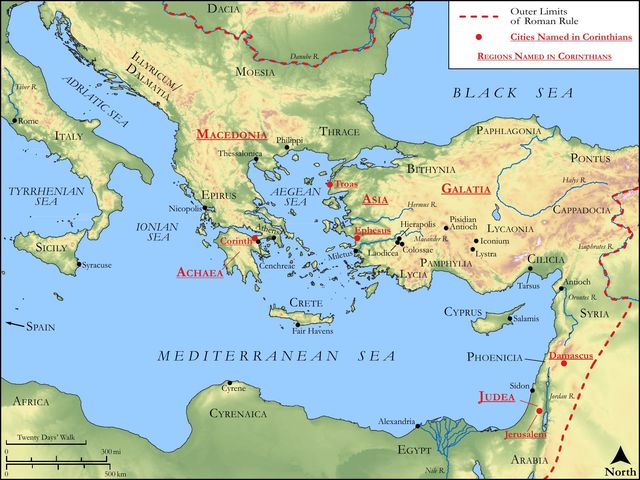
The Corinthian church was plagued by various issues, including divisions, factions, and a competitive spirit regarding spiritual gifts. Certain gifts, particularly those that were outwardly spectacular like speaking in tongues and prophecy, were highly esteemed, leading to pride and disorder within the assembly. Believers were often valuing themselves and others based on their perceived spiritual power or knowledge, rather than on the unifying principle of Christ's love. Paul's letter addresses these internal conflicts and corrects their distorted understanding of spiritual hierarchy. He challenges their cultural inclination towards status and outward display by reorienting their focus to agape, a concept that transcended typical Greek and Roman understandings of love, which often centered on personal gain or familial/friendship bonds. Paul introduces agape as a divine, self-sacrificial love, essential for the healthy functioning and witness of the church in a bustling, pagan city like Corinth.
Key Themes
ShowHide1 Corinthians 13 introduces and develops several critical themes that resonate throughout the entire letter and the broader New Testament. The primary theme is The Supremacy of Love, asserting that agape is not merely one gift among many, but the foundational and most excellent virtue that gives meaning and value to all other spiritual expressions. It corrects the Corinthian church's overemphasis on showy gifts by highlighting that without love, even the most profound spiritual manifestations are "nothing." This leads to the theme of Motives in Ministry, emphasizing that genuine spiritual service must flow from a heart of love, not from a desire for personal recognition or power. Paul's declaration that without love, "I am nothing," underscores the theme of Humility, contrasting human boasting with God's standard of selfless devotion. Furthermore, the chapter implicitly touches on Christian Unity, as love is presented as the essential bond that holds believers together, overcoming divisions and fostering harmony, a constant concern for Paul in his letters to the Corinthians (e.g., 1 Corinthians 1:10).
Exposition and Analysis
ShowHideKey Word Analysis
ShowHideMeaning "prediction (scriptural or other)." In the New Testament, this often refers to inspired utterance, speaking forth God's message, which could include foretelling the future but more commonly involved forth-telling, or proclaiming God's truth to edify, exhort, and comfort the church. Paul lists this gift first, indicating its high esteem in the Corinthian church, yet he immediately qualifies its value without love.
Meaning "knowing (the act), i.e. (by implication) knowledge." This refers to intellectual understanding, insight into divine truths, or comprehensive comprehension of mysteries. In Corinth, where philosophical and intellectual pursuits were valued, spiritual knowledge might have been a source of pride. Paul asserts that even the most profound spiritual or theological knowledge, if devoid of love, is ultimately empty.
Meaning "love, i.e. affection or benevolence; specially (plural) a love-feast." This is the pivotal word, translated as "charity" in the KJV and "love" in most modern versions. Unlike other Greek words for love (phileo for brotherly affection, eros for romantic love), agape denotes a divine, unconditional, self-sacrificial love that seeks the highest good of the other, irrespective of their worthiness. It is the very nature of God and the defining characteristic of Christian discipleship.
Verse Breakdown
ShowHide"And though I have [the gift of] prophecy"
Paul begins by identifying one of the most highly regarded spiritual gifts in the Corinthian church—the ability to speak on behalf of God, revealing divine truth. This gift was powerful and authoritative, often seen as a direct conduit of God's voice.
"and understand all mysteries, and all knowledge"
He then expands the scope to intellectual and spiritual comprehension. "Mysteries" refers to divine truths once hidden but now revealed, and "all knowledge" signifies a complete and exhaustive understanding of these truths. This encompasses profound theological insight and comprehensive spiritual wisdom, addressing those who might pride themselves on their intellectual superiority.
"and though I have all faith, so that I could remove mountains"
Paul escalates the list to include extraordinary faith, even miraculous faith. The phrase "remove mountains" is a hyperbolic expression, echoing Jesus' teaching (e.g., Matthew 17:20) to signify the power to accomplish the seemingly impossible. This represents the pinnacle of spiritual power and miraculous ability.
"and have not charity"
This is the crucial turning point, introduced by the conjunction "and" (G1161, dé, often "but" or "moreover"), indicating a strong contrast. Despite possessing all the aforementioned impressive qualities, the absence of agape love renders them void. The KJV's "charity" accurately captures the profound, active, and benevolent nature of agape.
"I am nothing"
The shocking conclusion. Paul, speaking hypothetically of himself, declares that without agape, all these magnificent gifts, profound insights, and miraculous powers amount to "nothing" (G3762, oudeís), meaning "not even one," "none," "nobody," "nought." This signifies a complete lack of value, purpose, or eternal significance in God's eyes. It's a statement of absolute spiritual emptiness.
Literary Devices
ShowHidePaul employs several potent Literary Devices to underscore his central message. Hyperbole is evident in the phrase "so that I could remove mountains," which is a deliberate exaggeration to emphasize the most extreme and impressive manifestation of faith, making the subsequent declaration of "nothing" even more impactful. The repeated structure, "And though I have... and understand... and though I have..." demonstrates Anaphora, creating a rhythmic build-up of impressive spiritual endowments, only to be dramatically deflated by the absence of love. This creates a powerful Anticlimax, as the reader is led through a crescendo of powerful abilities only to arrive at the stark reality of their utter worthlessness without agape. The entire verse functions as a profound Contrast, setting the temporary, gift-based achievements against the eternal, character-based virtue of love, highlighting love's absolute supremacy.
Theological and Thematic Connections
ShowHide1 Corinthians 13:2 serves as a theological anchor, asserting that the true measure of spiritual vitality and effectiveness is not found in outward displays of power, intellectual prowess, or even miraculous deeds, but in the presence of agape love. This divine love is the very essence of God's character and the ultimate expression of His will for humanity. Without it, all human and spiritual endeavors, no matter how impressive, lack eternal substance and fail to glorify God in a way that truly matters. It underscores that God values the heart and motive above external performance, reminding believers that love is the indispensable foundation upon which all genuine Christian life and ministry must be built.
Reflection and Application
ShowHide1 Corinthians 13:2 challenges believers to deeply examine the motivation and substance of their spiritual lives. It forces us to ask whether our pursuit of knowledge, our exercise of spiritual gifts, or our acts of service are genuinely rooted in a selfless, God-centered love for others, or if they are subtly driven by a desire for recognition, power, or personal fulfillment. The verse reminds us that even admirable achievements, if devoid of agape, are ultimately empty in God's sight. This calls for a radical re-evaluation of our priorities, urging us to cultivate a heart of love as the primary and most essential spiritual discipline. It encourages us to prioritize relational warmth, compassion, and genuine concern for others over impressive spiritual displays or intellectual superiority, recognizing that true spiritual fruitfulness flows from a transformed heart saturated with divine love.
Questions for Reflection
ShowHideFAQ
ShowHideWhat does Paul mean by "I am nothing" in this context?
ShowHideWhen Paul states, "I am nothing," he is not referring to a person's inherent worth as a creation of God, but rather to the spiritual efficacy and eternal value of their actions and gifts when love is absent. He means that without agape love, even the most extraordinary spiritual endowments (like prophecy, knowledge, or miraculous faith) become utterly devoid of true purpose, meaning, or lasting significance in God's economy. They are like a resounding gong or clanging cymbal (1 Corinthians 13:1), making noise but producing no real spiritual fruit or benefit. It's a powerful rhetorical device to underscore that love is the indispensable ingredient that validates all other spiritual expressions.
How does "charity" in the KJV relate to the Greek word agape?
ShowHideThe King James Version's translation of "charity" for the Greek word agape (G26) is an accurate and historically rich rendering. In 17th-century English, "charity" carried a broader and deeper meaning than it often does today, encompassing not just almsgiving but also a profound, benevolent, and self-sacrificial love that seeks the highest good of others. It specifically conveyed the divine love that God has for humanity and the love that believers are called to demonstrate. This is distinct from other Greek words for love like phileo (brotherly affection) or eros (romantic desire). Paul's use of agape throughout 1 Corinthians 13 emphasizes this unique, unconditional, and active love that defines Christian character and community.
Christ-Centered Fulfillment
ShowHide1 Corinthians 13:2 finds its ultimate fulfillment and embodiment in the person and work of Jesus Christ. He is the perfect manifestation of agape love, demonstrating its supremacy over all other attributes. While Jesus certainly possessed unparalleled wisdom, knowledge, and performed countless miracles, His entire life and ministry were fundamentally driven by a self-sacrificial love for humanity. His willingness to lay down His life on the cross, as described in John 15:13, is the supreme act of agape. He did not just teach about love; He was love incarnate. His teachings, such as the command to "love one another" (John 13:34), flow from His very being. Therefore, when Paul declares that without agape, one is "nothing," he implicitly points to Christ as the standard. To be "in Christ" means to partake in His love, to be transformed into His likeness, and to live a life characterized by the same selfless agape that defined His earthly existence and His redemptive work on the cross, which is the very heart of the Gospel message found in passages like Romans 5:8.