


Galatians 5:6
Bible text: King James Version (1769 Blayney text) · Public domain
Bible text: Berean Standard Bible · Public domain
Bible text: American Standard Version (1901) · Public domain
Bible text: World English Bible, Messianic edition · Public domain
Bible text: Geneva Bible (1599) · Public domain
Bible text: Young's Literal Translation · Public domain
- ἐνenInG1722PREPPreposition
- γὰρgarforG1063CONJConjunction
- ΧριστῷChristōChristG5547N-DSM-TNoun Dative Singular Masculine Title
- ἸησοῦIēsouJesusG2424N-DSM-PNoun Dative Singular Masculine Individual
- οὔτεouteneitherG3777CONJ-NConjunction Negative
- περιτομήperitomēcircumcisionG4061N-NSFNoun Nominative Singular Feminine
- τιtianyG5100X-ASNIndefinite pronoun Accusative Singular Neuter
- ἰσχύειischueihas powerG2480V-PAI-3SVerb Present Active Indicative 3rd Singular
- οὔτεoutenorG3777CONJ-NConjunction Negative
- ἀκροβυστίαakrobustiauncircumcisionG203N-NSFNoun Nominative Singular Feminine
- ἀλλὰallabut onlyG235CONJConjunction
- πίστιςpistisfaithG4102N-NSFNoun Nominative Singular Feminine
- δι᾽di᾽throughG1223PREPPreposition
- ἀγάπηςagapēsloveG26N-GSFNoun Genitive Singular Feminine
- ἐνεργουμένηenergoumenēworkingG1754V-PMP-NSFVerb Present Middle Participle Nominative Singular Feminine
English is a literal word-by-word gloss of the Greek, not the KJV's wording. Why?
This is the original text the KJV's translators worked from — each Greek word with its own literal English meaning in this verse, prepared by scholars at Tyndale House, Cambridge. The KJV translates whole sentences, not word by word, so its wording differs: one Greek word can become several English words, and the KJV may choose “charity” where the gloss reads “love”. Both are faithful — they answer different questions. For the KJV's own rendering, switch to the KJV text.
Details
See on the biblical-era maps

Study this verse
Public-domain commentary
Matthew Henry
From his Commentary on the Whole Bible. Henry comments on passages, not single verses — this entry covers Galatians 5:1–12. His four-level outline is real structure in the source text, so it is rendered as structure.
In the former part of this chapter the apostle cautions the Galatians to take heed of the judaizing teachers, who endeavoured to bring them back under the bondage of the law. He had been arguing against them before, and had largely shown how contrary the principles and spirit of those teachers were to the spirit of the gospel; and now this is as it were the general inference or application of all that discourse. Since it appeared by what had been said that we can be justified only by faith in Jesus Christ, and not by the righteousness of the law, and that the law of Moses was no longer in force, nor Christians under any obligation to submit to it, therefore he would have them to stand fast in the liberty wherewith Christ hath made us free, and not to be again entangled with the yoke of bondage. Here observe, 1. Under the gospel we are enfranchised, we are brought into a state of liberty, wherein we are freed from the yoke of the ceremonial law and from the curse of the moral law; so that we are no longer tied to the observance of the one, nor tied up to the rigour of the other, which curses every one that continues not in all things written therein to do them, Gal 3:10. 2. We owe this liberty to Jesus Christ. It is he who has made us free; by his merits he has satisfied the demands of the broken law, and by his authority as a king he has discharged us from the obligation of those carnal ordinances which were imposed on the Jews. And, 3. It is therefore our duty to stand fast in this liberty, constantly and faithfully to adhere to the gospel and to the liberty of it, and not to suffer ourselves, upon any consideration, to be again entangled in the yoke of bondage, nor persuaded to return back to the law of Moses. This is the general caution or exhortation, which in the following verses the apostle enforces by several reasons or arguments. As,
I.That their submitting to circumcision, and depending on the works of the law for righteousness, were an implicit contradiction of their faith as Christians and a forfeiture of all their advantages by Jesus Christ, Gal 5:2-4. And here we may observe,
1.With what solemnity the apostle asserts and declares this: Behold, I Paul say unto you (Gal 5:2), and he repeats it (Gal 5:3), I testify unto you; as it he had said, "I, who have proved myself an apostle of Christ, and to have received my authority and instructions from him, do declare, and am ready to pawn my credit and reputation upon it, that if you be circumcised Christ shall profit you nothing, etc.," wherein he shows that what he was now saying was not only a matter of great importance, but what might be most assuredly depended on. He was so far from being a preacher of circumcision (as some might report him to be) that he looked upon it as a matter of the greatest consequence that they did not submit to it.
2.What it is which he so solemnly, and with so much assurance, declares; it is that, if they were circumcised, Christ would profit them nothing, etc. We are not to suppose that it is mere circumcision which the apostle is here speaking of, or that it was his design to say that none who are circumcised could have any benefit by Christ; for all the Old Testament saints had been circumcised, and he himself had consented to the circumcising of Timothy. But he is to be understood as speaking of circumcision in the sense in which the judaizing teachers imposed it, who taught that except they were circumcised, and kept the law of Moses, they could not be saved, Act 15:1. That this is his meaning appears from Gal 5:4, where he expresses the same thing by their being justified by the law, or seeking justification by the works of it. Now in this case, if they submitted to circumcision in this sense, he declares that Christ would profit them nothing, that they were debtors to do the whole law, that Christ had become of no effect to them, and that they were fallen from grace. From all these expressions it appears that thereby they renounced that way of justification which God had established; yea, that they laid themselves under an impossibility of being justified in his sight, for they became debtors to do the whole law, which required such an obedience as they were not capable of performing, and denounced a curse against those who failed in it, and therefore condemned, but could not justify them; and, consequently, that having thus revolted from Christ, and built their hopes upon the law, Christ would profit them nothing, nor be of any effect to them. Thus, as by being circumcised they renounced their Christianity, so they cut themselves off from all advantage by Christ; and therefore there was the greatest reason why they should stedfastly adhere to that doctrine which they had embraced, and not suffer themselves to be brought under this yoke of bondage. Note,
(1.)Though Jesus Christ is able to save to the uttermost, yet there are multitudes whom he will profit nothing.
(2.)All those who seek to be justified by the law do thereby render Christ of no effect to them. By building their hopes on the works of the law, they forfeit all their hopes from him; for he will not be the Saviour of any who will not own and rely upon him as their only Saviour.
II.To persuade them to stedfastness in the doctrine and liberty of the gospel, he sets before them his own example, and that of other Jews who had embraced the Christian religion, and acquaints them what their hopes were, namely, That through the Spirit they were waiting for the hope of righteousness by faith. Though they were Jews by nature, and had been bred up under the law, yet being, through the Spirit, brought to the knowledge of Christ, they had renounced all dependence on the works of the law, and looked for justification and salvation only by faith in him; and therefore it must needs be the greatest folly in those who had never been under the law to suffer themselves to be brought into subjection to it, and to found their hopes upon the works of it. Here we may observe,
1.What it is that Christians are waiting for: it is the hope of righteousness, by which we are chiefly to understand the happiness of the other world. This is called the hope of Christians, as it is the great object of their hope, which they are above every thing else desiring and pursuing; and the hope of righteousness, as their hopes of it are founded on righteousness, not their own, but that of our Lord Jesus: for, though a life of righteousness is the way that leads to this happiness, yet it is the righteousness of Christ alone which has procured it for us, and on account of which we can expect to be brought to the possession of it.
2.How they hope to obtain this happiness, namely, by faith, that is, in our Lord Jesus Christ, not by the works of the law, or any thing they can do to deserve it, but only by faith, receiving and relying upon him as the Lord our righteousness. It is in this way only that they expect either to be entitled to it here or possessed of it hereafter. And,
3.Whence it is that they are thus waiting for the hope of righteousness: it is through the Spirit. Herein they act under the direction and influence of the Holy Spirit; it is under his conduct, and by his assistance, that they are both persuaded and enabled to believe on Christ, and to look for the hope of righteousness through him. When the apostle thus represents the case of Christians, it is implied that if they expected to be justified and saved in any other way they were likely to meet with a disappointment, and therefore that they were greatly concerned to adhere to the doctrine of the gospel which they had embraced.
III.He argues from the nature and design of the Christian institution, which was to abolish the difference between Jew and Gentile, and to establish faith in Christ as the way of our acceptance with God. He tells them (Gal 5:6) that in Christ Jesus, or under the gospel dispensation, neither circumcision availeth any thing nor uncircumcision. Though, while the legal state lasted, there was a difference put between Jew and Greek, between those who were and those who were not circumcised, the former being admitted to those privileges of the church of God from which the other were excluded, yet it was otherwise in the gospel state: Christ, who is the end of the law, having come, now it was neither here nor there whether a man were circumcised or uncircumcised; he was neither the better for the one nor the worse for the other, nor would either the one or the other recommend him to God; and therefore as their judaizing teachers were very unreasonable in imposing circumcision upon them, and obliging them to observe the law of Moses, so they must needs be very unwise in submitting to them herein. But, though he assures them that neither circumcision nor uncircumcision would avail to their acceptance with God, yet he informs them what would do so, and that is faith, which worketh by love: such a faith in Christ as discovers itself to be true and genuine by a sincere love to God and our neighbour. If they had this, it mattered not whether they were circumcised or uncircumcised, but without it nothing else would stand them in any stead. Note,
1.No external privileges nor profession will avail to our acceptance with God, without a sincere faith in our Lord Jesus.
2.Faith, where it is true, is a working grace: it works by love, love to God and love to our brethren; and faith, thus working by love, is all in all in our Christianity.
IV.To recover them from their backslidings, and engage them to greater stedfastness for the future, he puts them in mind of their good beginnings, and calls upon them to consider whence it was that they were so much altered from what they had been, Gal 5:7.
1.He tells them that they did run well; at their first setting out in Christianity they had behaved themselves very commendably, they had readily embraced the Christian religion, and discovered a becoming zeal in the ways and work of it; as in their baptism they were devoted to God, and had declared themselves the disciples of Christ, so their behaviour was agreeable to their character and profession. Note,
(1.)The life of a Christian is a race, wherein he must run, and hold on, if he would obtain the prize.
(2.)It is not enough that we run in this race, by a profession of Christianity, but we must run well, by living up to that profession. Thus these Christians had done for awhile, but they had been obstructed in their progress, and were either turned out of the way or at least made to flag and falter in it. Therefore,
2.He asks them, and calls upon them to ask themselves, Who did hinder you? How came it to pass that they did not hold on in the way wherein they had begun to run so well? He very well knew who they were, and what it was that hindered them; but he would have them to put the question to themselves, and seriously consider whether they had any good reason to hearken to those who gave them this disturbance, and whether what they offered was sufficient to justify them in their present conduct. Note,
(1.)Many who set out fair in religion, and run well for awhile - run within the bounds appointed for the race, and run with zeal and alacrity too-are yet by some means or other hindered in their progress, or turned out of the way.
(2.)It concerns those who have run well, but now begin either to turn out of the way or to tire in it, to enquire what it is that hinders them. Young converts must expect that Satan will be laying stumbling blocks in their way, and doing all he can to divert them from the course they are in; but, whenever they find themselves in danger of being turned out of it, they would do well to consider who it is that hinders them. Whoever they were that hindered these Christians, the apostle tells them that by hearkening to them they were kept from obeying the truth, and were thereby in danger of losing the benefit of what they had done in religion. The gospel which he had preached to them, and which they had embraced and professed, he assures them was the truth; it was therein only that the true way of justification and salvation was fully discovered, and, in order to their enjoying the advantage of it, it was necessary that they should obey it, that they should firmly adhere to it, and continue to govern their lives and hopes according to the directions of it. If therefore they should suffer themselves to be drawn away from it they must needs be guilty of the greatest weakness and folly. Note,
[1.]The truth is not only to be believed, but to be obeyed, to be received not only in the light of it, but in the love and power of it.
[2.]Those do not rightly obey the truth, who do not stedfastly adhere to it.
[3.]There is the same reason for our obeying the truth that there was for our embracing it: and therefore those act very unreasonably who, when they have begun to run well in the Christian race, suffer themselves to be hindered, so as not to persevere in it.
V.He argues for their stedfastness in the faith and liberty of the gospel from the ill rise of that persuasion whereby they were drawn away from it (Gal 5:8): This persuasion, says he, cometh not of him that calleth you. The opinion or persuasion of which the apostle here speaks was no doubt that of the necessity of their being circumcised, and keeping the law of Moses, or of their mixing the works of the law with faith in Christ in the business of justification. This was what the judaizing teachers endeavoured to impose upon them, and what they had too easily fallen into. To convince them of their folly herein, he tells them that this persuasion did not come of him that called them, that is, either of God, by whose authority the gospel had been preached to them and they had been called into the fellowship of it, or of the apostle himself, who had been employed as the instrument of calling them hereunto. It could not come from God, for it was contrary to that way of justification and salvation which he had established; nor could they have received it from Paul himself; for, whatever some might pretend, he had all along been an opposer and not a preacher of circumcision, and, if in any instance he had submitted to it for the sake of peace, yet he had never pressed the use of it upon Christians, much less imposed it upon them as necessary to salvation. Since then this persuasion did not come of him that had called them, he leaves them to judge whence it must arise, and sufficiently intimates that it could be owing to none but Satan and his instruments, who by this means were endeavouring to overthrow their faith and obstruct the progress of the gospel, and therefore that the Galatians had every reason to reject it, and to continue stedfast in the truth which they had before embraced. Note,
1.In order to our judging aright of the different persuasions in religion which there are among Christians, it concerns us to enquire whether they come of him that calleth us, whether or no they are founded upon the authority of Christ and his apostles.
2.If, upon enquiry, they appear to have no such foundation, how forward soever others may be to impose them upon us, we should by no means submit to them, but reject them.
VI.The danger there was of the spreading of this infection, and the ill influence it might have upon others, are a further argument which the apostle urges against their complying with their false teachers in what they would impose on them. It is possible that, to extenuate their fault, they might be ready to say that there were but few of those teachers among them who endeavoured to draw them into this persuasion and practice, or that they were only some smaller matters wherein they complied with them - that though they submitted to be circumcised, and to observe some few rites of the Jewish laws, yet they had by no means renounced their Christianity and gone over to Judaism. Or, suppose their complying thus far was as faulty as he could represent it, yet perhaps they might further say that there were but few among them who had done so, and therefore he needed not be so much concerned about it. Now, to obviate such pretences as these, and to convince them that there was more danger in it than they were aware of, he tells them (Gal 5:9) that a little leaven leaveneth the whole lump - that the whole lump of Christianity may be tainted and corrupted by one such erroneous principle, or that the whole lump of the Christian society may be infected by one member of it, and therefore that they were greatly concerned not to yield in this single instance, or, if any had done so, to endeavour by all proper methods to purge out the infection from among them. Note, It is dangerous for Christian churches to encourage those among them who entertain, especially who set themselves to propagate, destructive errors. This was the case here. The doctrine which the false teachers were industrious to spread, and which some in these churches had been drawn into, was subversive of Christianity itself, as the apostle had before shown; and therefore, though the number either of the one or the other of these might be but small, yet, considering the fatal tendency of it and the corruption of human nature, whereby others were too much disposed to be infected with it, he would not have them on that account to be easy and unconcerned, but remember that a little leaven leaveneth the whole lump. If these were indulged the contagion might soon spread further and wider; and, if they suffered themselves to be imposed upon in this instance, it might soon issue in the utter ruin of the truth and liberty of the gospel.
VII.That he might conciliate the greater regard to what he had said, he expresses the hopes he had concerning them (Gal 5:10):
I have confidence in you, says he, through the Lord, that you will be none otherwise minded. Though he had many fears and doubts about them (which was the occasion of his using so much plainness and freedom with them), yet he hoped that through the blessing of God upon what he had written they might be brought to be of the same mind with him, and to own and abide by that truth and that liberty of the gospel which he had preached to them, and was now endeavouring to confirm them in. Herein he teaches us that we ought to hope the best even of those concerning whom we have cause to fear the worst. That they might be the less offended at the reproofs he had given them for their unstedfastness in the faith, he lays the blame of it more upon others than themselves; for he adds, But he that troubleth you shall bear his judgment, whosoever he be. He was sensible that there were some that troubled them, and would pervert the gospel of Christ (as Gal 1:7), and possibly he may point to some one particular man who was more busy and forward than others, and might be the chief instrument of the disorder that was among them; and to this he imputes their defection or inconstancy more than to any thing in themselves. This may give us occasion to observe that, in reproving sin and error, we should always distinguish between the leaders and the led, such as set themselves to draw others thereinto and such as are drawn aside by them. Thus the apostle softens and alleviates the fault of these Christians, even while he is reproving them, that he might the better persuade them to return to, and stand fast in, the liberty wherewith Christ had made them free: but as for him or those that troubled them, whoever he or they were, he declares they should bear their judgment, he did not doubt but God would deal with them according to their deserts, and out of his just indignation against them, as enemies of Christ and his church, he wishes that they were even cut off - not cut off from Christ and all hopes of salvation by him, but cut off by the censures of the church, which ought to witness against those teachers who thus corrupted the purity of the gospel. Those, whether ministers or others, who set themselves to overthrow the faith of the gospel, and disturb the peace of Christians, do thereby forfeit the privileges of Christian communion and deserve to be cut off from them.
VIII.To dissuade these Christians from hearkening to their judaizing teachers, and to recover them from the ill impressions they had made upon them, he represents them as men who had used very base and disingenuous methods to compass their designs, for they had misrepresented him, that they might the more easily gain their ends upon them. That which they were endeavouring was to bring them to submit to circumcision, and to mix Judaism with their Christianity; and, the better to accomplish this design, they had given out among them that Paul himself was a preacher of circumcision: for when he says (Gal 5:11), And I brethren, if I yet preach circumcision, it plainly appears that they had reported him to have done so, and that they had made use of this as an argument to prevail with the Galatians to submit to it. It is probable that they grounded this report upon his having circumcised Timothy, Act 16:3. But, though for good reasons he had yielded to circumcision in that instance, yet that he was a preacher of it, and especially in that sense wherein they imposed it, he utterly denies. To prove the injustice of that charge upon him, he offers such arguments as, if they would allow themselves to consider, could not fail to convince them of it.
1.If he would have preached circumcision, he might have avoided persecution. If I yet preach circumcision, says he, why do I yet suffer persecution? It was evident, and they could not but be sensible of it, that he was hated and persecuted by the Jews; but what account could be given of this their behaviour towards him, if he had so far symbolized with them as to preach up circumcision, and the observance of the law of Moses, as necessary to salvation? This was the great point they were contending for; and, if he had fallen in with them herein, instead of being exposed to their rage he might have been received into their favour. When therefore he was suffering persecution from them, this was a plain evidence that he had not complied with them; yea, that he was so far from preaching the doctrine he was charged with, that, rather than do so, he was willing to expose himself to the greatest hazards.
2.If he had yielded to the Jews herein, then would the offence of the cross have ceased. They would not have taken so much offence against the doctrine of Christianity as they did, nor would he and others have been exposed to so much suffering on the account of it as they were. He informs us (Co1 1:23) that the preaching of the cross of Christ (or the doctrine of justification and salvation only by faith in Christ crucified) was to the Jews a stumbling-block. That which they were most offended at in Christianity was, that thereby circumcision, and the whole frame of the legal administration, were set aside, as no longer in force. This raised their greatest outcries against it, and stirred them up to oppose and persecute the professors of it. Now if Paul and others could have given into this opinion, that circumcision was still to be retained, and the observance of the law of Moses joined with faith in Christ as necessary to salvation, then their offence against it would have been in a great measure removed, and they might have avoided the sufferings they underwent for the sake of it. But though others, and particularly those who were so forward to asperse him as a preacher of this doctrine, could easily come into it, yet so could not he. He rather chose to hazard his ease and credit, yea his very life itself, than thus to corrupt the truth and give up the liberty of the gospel. Hence it was that the Jews continued to be so much offended against Christianity, and against him as the preacher of it. Thus the apostle clears himself from the unjust reproach which his enemies had cast upon him, and at the same time shows how little regard was due to those men who could treat him in such an injurious manner, and how much reason he had to wish that they were even cut off.
Historical interpretation
Three Centuries of Reception
9 surviving comments on this verse. Each one is dated, so this reads as a timeline rather than a list.
Select a marker to jump to its quote. Markers stagger vertically where authors wrote within a few decades of each other.
If, now, he were for excluding circumcision, as the messenger of a new god, why does he say that "in Christ neither circumcision availeth anything, nor uncircumcision? For it was his duty to prefer the rival principle of that which he was abolishing, if he had a mission from the god who was the enemy of circumcision.
Furthermore, since both circumcision and uncircumcision were attributed to the same Deity, both lost their power in Christ, by reason of the excellency of faith-of that faith concerning which it had been written, "And in His name shall the Gentiles trust? " -of that faith "which," he says "worketh by love." By this saying he also shows that the Creator is the source of that grace.
Since circumcision and uncircumcision belonged to the one God, both therefore were annulled in Christ because of the priority given to faith, this being the faith of which it was written “the Gentiles shall believe in his name.”
Everywhere he says that faith in the gospel of Christ accords no value to rank or sex or works done with regard to the body or from the body or for the sake of the body, such as circumcision, works and other things of this kind. None of these, he says, has saving value in Christ. Circumcision is therefore vain, nor by uncircumcision do we gain value in Christ. Because we have conceived faith in him and because we have believed his promises and because through his resurrection we too rise and have suffered all things with him and rise to life with him but also through him, our faith is sure. Through this faith comes works fitting to salvation. This comes about through the love that we have for Christ and God and thus toward every human being. For it is these two relationships above all that set life straight and fulfill the whole sense of the law. They contain all the commands in the Decalogue—if it follows necessarily that he who keeps faith will also keep love, since these two fulfill all the precepts of the law of Christ.
Observe the great boldness with which he now encounters them; Let him that hath put on Christ, he says, no longer be careful about such matters. Having before said that Circumcision was hurtful, how is it that he now considers it indifferent? It is indifferent as to those who had it previously to the Faith, but not as to those who are circumcised after the Faith was given. Observe too the view in which he places it, by setting it by the side of Uncircumcision; it is Faith that makes the difference. As in the selection of wrestlers, whether they be hook-nosed or flat-nosed, black or white, is of no importance in their trial, it is only necessary to seek that they be strong and skilful; so all these bodily accidents do not injure one who is to be enrolled under the New Covenant, nor does their presence assist him.
What is the meaning of "working through love?" Here he gives them a hard blow, by showing that this error had crept in because the love of Christ had not been rooted within them. For to believe is not all that is required, but also to abide in love. It is as if he had said, Had ye loved Christ as ye ought, ye would not have deserted to bondage, nor abandoned Him who redeemed you, nor treated with contumely Him who gave you freedom. Here he also hints at those who have plotted against them, implying that they would not have dared to do so, had they felt affection towards them. He wishes too by these words to correct their course of life.
(Ver. 6.) For in Christ Jesus, neither circumcision avails anything, nor uncircumcision, but faith which works by charity. For those who wish to live in Christ Jesus, virtues are to be desired, vices are to be avoided. But the things that are in between virtues and vices, neither to be avoided nor desired, such as circumcision and uncircumcision, and other similar things. Certainly, circumcision is beneficial if you keep the Law. Therefore, it was useful for those who lived under the Law, not because they were circumcised, but because the words of God were entrusted to them, which, when they turned into actions, were not foreign to salvation. And let it not move us that Sephora, taking up a stone, circumcised her son, and the angel prevented her husband from suffocating him (Exodus IV), or as it is otherwise said in Hebrew, because now circumcision is not beneficial at all, as it has testified in Christ Jesus, since the time when the Gospel has spread throughout the whole world, the injury of circumcision is unnecessary. It was valid then, like the rest of the Law, when physical blessings were promised to those who observed the Law; namely, if they fulfilled it, they would be blessed in the city, blessed in the field, have full barns, and many other things contained in the promises (Deuteronomy XXVIII). But we, in Christ Jesus, want to be strong and strengthened, that is, in true circumcision, and not in Jewish circumcision. For neither is he a Jew who is openly a Jew, nor is circumcision openly in the flesh, but he is a Jew who is hidden, and circumcision of the heart in the spirit, not in the letter (Rom. II, 28, 29). Therefore, the circumcision of the flesh is of no avail in Christ, but the circumcision of the heart and of the ears, which removes that reproach of the Jews: Behold, your ears are uncircumcised, and you cannot hear (Exod. VI, 12). The circumcision of the lips is beneficial, as Moses himself testified in Scripture: 'But I myself have foreskin on my lips.' It provides many benefits, and in matters of sexual desire, circumcision is defiled by unchastity. Therefore, in Christ Jesus, neither circumcision nor uncircumcision has any value, for they are placed in the middle, that is, between vices and virtues; but faith, which works through love, is what matters, just as the faith that was reckoned to Abraham as righteousness is confirmed, and every work of faith is placed in love, based on the whole Law and the Prophets, which depend on love. Indeed, in these two commandments: 'You shall love your God' and 'you shall love your neighbor,' the Savior asserted that the Law and the Prophets consist. And Paul in another place: 'For you shall not commit adultery, you shall not steal, you shall not covet,' and if there is any other commandment, it is summed up in this saying: 'You shall love your neighbor as yourself' (Rom. XIII, 9). Therefore, if every commandment is summed up in what has been said: 'You shall love your neighbor as yourself,' and faith works through love, it is clear that the work of faith through love contains the fullness of all the commandments. However, according to the apostle James, faith without works is dead (James 2:26): likewise, without faith, even if good works are present, they are considered dead. Therefore, those who do not believe in Christ but have good morals, what else do they possess besides the works of virtues? Let that example of faith which operates through charity be attributed to that prostitute from the Gospel, who, when she had washed the feet of the Lord while reclining at the table in the Pharisee's house, with her tears, wiped them with her hair, anointed them with ointment, and when the Pharisee murmured, the Lord presented a parable of a debtor who owed fifty and five hundred denarii, and added: For this reason, I tell you: her many sins are forgiven, for she loved much (Luke 7:47, 50). And turning to the woman, he said: Your faith has saved you, go in peace. For it has been clearly demonstrated in this place that this woman had faith through charity, which was very powerful in Christ. For who can say that circumcision in Christ is of no value, when it was known to have been valuable at one time? Did anyone ever doubt whether circumcision was circumcision? But if we consider the many Christians, that is, those of us who have been grafted onto the root of the good olive tree (Rom. 11), rejoicing against the broken branches of the Jewish people, and saying that the uncircumcised is more valuable, in which Abraham pleased God, and faith was reckoned to him for righteousness, than circumcision, which was given as a sign of faith and did not benefit those who had it, we will also see this usurpation of some now carefully excluded.
[Lest Gentiles should say] that uncircumcision, in which “Abraham pleased God and had his faith counted for righteousness” is better than circumcision, which was given as a sign and was of no profit to Israel though it possessed it, we shall see that this arrogant boast has also been excluded with the greatest foresight.
This is the faith that separates the righteous from the unclean demons, for they too, as the apostle James says, “believe and tremble,” but their actions are not good. Therefore they do not have that faith by which “the righteous live.”
If anyone, holding the faith that works through love, repents of his former sin in such as a way that he from then on turns his back on it, he will be guiltless of the blasphemy that is spoken against the Holy Spirit [namely, impenitence], which is not forgiven to the speaker either in this age or in the one to come.
Continue studying Galatians 5:6 across the web’s major study libraries — every link below opens this exact verse, chapter, or book on the destination site.
Read & Compare
 BibleGatewayThis verse in more than 200 translations and 70 languages.
 Bible.comThe YouVersion reader — hundreds of translations, reading plans, and highlights.
 ESV.orgCrossway's official English Standard Version reader.
 NET BibleThe NET translation with 60,000+ translators' notes on every rendering decision.
 STEP BibleTyndale House's free study tool — original text, vocabulary, and scholarly resources.
 BibliaLogos Bible Software's free web reader.
 USCCBThe New American Bible (Revised Edition) with the U.S. bishops' study notes.
Commentaries
 BibleHub CommentariesDozens of classic commentaries on this verse, gathered on one page.
 StudyLightMore than 100 commentary sets — the largest collection on the web.
 BibleRefPlain-English commentary on what this verse means, verse by verse.
 Enduring WordDavid Guzik's free commentary on this chapter, widely used by Bible teachers.
 Bible Study ToolsVerse commentary alongside Greek and Hebrew study aids.
Original Language & Research
- BibleHub InterlinearThe verse word by word — original language, transliteration, and English.
- BibleHub LexiconEvery word's original-language definition and Strong's entry.
 Blue Letter BibleDeep-study tools — Strong's numbers, concordance, and word studies.
 CNTR CollationThe earliest Greek manuscripts of this verse, collated letter by letter.
Sermons, Hymns & Audio


TrulyRandomVerse is not affiliated with these sites and doesn’t control their content. They’re linked because they’re genuinely useful.
Summary
Galatians 5:6 succinctly encapsulates the core of the Christian gospel as articulated by the Apostle Paul, asserting that in the new covenant reality established by Jesus Christ, external religious markers like circumcision or their absence hold no spiritual efficacy. Instead, what truly matters for one's standing before God and for genuine Christian living is an authentic faith that is not static but dynamically expressed and made active through divine love. This verse serves as a powerful theological declaration, redirecting focus from human performance and ritual to the transformative power of a faith energized by love.
Context
ShowHideLiterary Context
Galatians 5:6 is a pivotal statement within Paul's impassioned defense of the gospel against the Judaizers, who insisted that Gentile converts needed to be circumcised and observe the Mosaic Law for salvation. The preceding verses in Galatians 5 emphasize the freedom believers have in Christ, warning against returning to a "yoke of bondage" (Galatians 5:1). Paul argues that if salvation were dependent on circumcision, Christ would be of no benefit (Galatians 5:2). He highlights that those who seek justification by the Law have fallen from grace (Galatians 5:4). Verse 6, therefore, acts as a concise summary of Paul's argument, contrasting the futility of legalistic adherence with the vital essence of true Christian experience. It sets the stage for Paul's subsequent exhortations to live by the Spirit and to manifest the "fruit of the Spirit," particularly love, as seen in Galatians 5:22-23.
Historical & Cultural Context
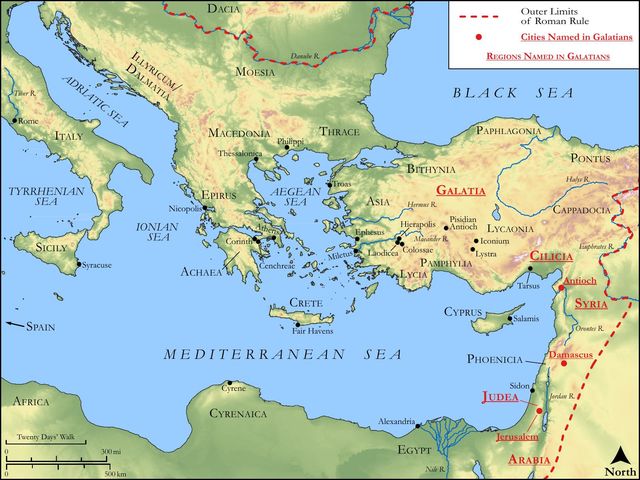
The letter to the Galatians was written to churches in the Roman province of Galatia, where Jewish Christians (Judaizers) were actively undermining Paul's gospel by teaching that Gentile converts must undergo circumcision and adhere to Mosaic Law for full salvation and acceptance. Circumcision was the covenant sign given to Abraham (Genesis 17:9-14) and a core identity marker for Jews. The Judaizers believed it was still necessary, even for those who believed in Christ. Paul's strong stance directly challenged this deeply ingrained cultural and religious practice, asserting that the new covenant in Christ transcended ethnic and ceremonial distinctions. The controversy was not merely theological but also had significant social implications, as it questioned the basis of fellowship between Jewish and Gentile believers within the early church.
Key Themes
ShowHideThis verse contributes significantly to several major theological themes throughout Galatians and Paul's broader theology. Firstly, it underscores the theme of justification by faith alone, apart from works of the Law, a central tenet of Paul's gospel articulated earlier in Galatians 2:16. Secondly, it highlights the irrelevance of external rituals for salvation or spiritual standing in the new covenant, directly challenging the legalistic tendencies of the Judaizers. This theme extends beyond circumcision to any human effort or religious performance relied upon for righteousness. Thirdly, it defines the nature of true Christian faith as an active, dynamic force, not merely intellectual assent. This "faith which worketh by love" points to the transformative power of the Holy Spirit, who produces love as the primary fruit (Galatians 5:22). Finally, it emphasizes Christian freedom from the Mosaic Law's ceremonial requirements, while simultaneously defining this freedom not as license for sin, but as a call to serve one another through love, as Paul states in Galatians 5:13.
Exposition and Analysis
ShowHideKey Word Analysis
ShowHideThis word means "to have or exercise force," "to be able," "to be strong," or "to prevail." In this context, it signifies efficacy, power, or value. Paul declares that neither circumcision nor uncircumcision possesses any inherent power or spiritual benefit whatsoever in the context of one's standing with God through Christ. They are utterly without spiritual force or advantage.
Derived from which we get "energy," this verb means "to be active," "to be efficient," or "to work effectually in." It describes an internal, dynamic, and powerful operation. Here, it indicates that true faith is not passive or inert, but is an active, living force that manifests its reality through its outward expression. It is a faith that is energized and made effective by love.
This term refers to divine, unconditional, self-sacrificial love. It is not merely human affection or sentiment but a profound commitment and benevolent action towards others, reflecting God's own character. In this verse, agápē is presented as the medium or channel through which genuine faith operates and demonstrates its authenticity. It is the defining characteristic and outward manifestation of a living faith.
Verse Breakdown
ShowHide"For in Jesus Christ"
This opening phrase establishes the new spiritual reality and sphere of existence for believers. It signifies that the principles Paul is about to state are true specifically within the context of union with Christ, apart from the old covenant system. It is in Christ that the old distinctions and requirements lose their salvific significance.
"neither circumcision availeth any thing"
Paul directly addresses the core issue dividing the Galatian churches. He asserts that the physical rite of circumcision, a central marker of Jewish identity and covenant membership under the Mosaic Law, has no spiritual value or efficacy for salvation or righteousness in Christ. It provides no advantage whatsoever.
"nor uncircumcision"
This clause provides a crucial balance, ensuring that Paul's argument is not misunderstood as elevating uncircumcision to a position of spiritual merit. Just as circumcision is valueless, so too is the absence of circumcision. Neither external status, whether Jewish or Gentile, confers any spiritual advantage or disadvantage in Christ.
"but faith"
Having dismissed the efficacy of external markers, Paul pivots to declare what truly matters. "Faith" (Greek: pistis) here refers to a deep, abiding trust and reliance upon Jesus Christ and His finished work on the cross for salvation and justification. It is the sole means by which one enters into a right relationship with God.
"which worketh by love."
This final, crucial phrase defines the nature of the saving faith Paul extols. It is not a dead, intellectual assent, but a vibrant, active, and dynamic faith. The preposition "by" (Greek: dia) indicates the channel or means through which this faith operates. True faith is energized, expressed, and made manifest through agápē love—a love for God and for neighbor that is a fruit of the Spirit and the fulfillment of the law.
Literary Devices
ShowHidePaul employs several potent literary devices in Galatians 5:6 to convey his theological argument with clarity and force. The most prominent is Antithesis, where he contrasts "circumcision" with "uncircumcision," and then contrasts both with "faith which worketh by love." This stark opposition highlights the irrelevance of external religious markers versus the supreme importance of an internal, active faith. The phrase "neither...nor...but" functions as a powerful negation and affirmation, systematically dismissing what is not essential ("circumcision," "uncircumcision") to emphatically affirm what is ("faith which worketh by love"). This creates a strong sense of emphasis on the true nature of Christian life. Furthermore, the verse functions as a theological declaration, a concise and authoritative statement of doctrine that summarizes the core of Paul's argument throughout the letter, serving as a memorable and foundational truth for believers.
Theological and Thematic Connections
ShowHideGalatians 5:6 stands as a cornerstone of Pauline theology, profoundly shaping our understanding of justification, the nature of true faith, and the essence of Christian living. It unequivocally declares that salvation and spiritual standing are not achieved through adherence to external rituals or ethnic identity, but solely through a living faith in Jesus Christ. This faith, however, is never barren; it is intrinsically dynamic and finds its ultimate expression and authentic validation in agápē love. This concept harmonizes the seemingly disparate emphases of Paul and James, showing that while justification is by faith alone, true faith is never alone, but always accompanied by the fruit of love, demonstrating its genuineness in action. The verse thus serves as a powerful reminder that the new covenant's focus is on internal transformation and the Spirit's work, rather than outward conformity to legal codes.
Reflection and Application
ShowHideGalatians 5:6 offers profound guidance for contemporary believers, urging us to constantly examine the source and expression of our faith. In a world often preoccupied with external appearances, religious performances, or identity markers, this verse calls us back to the heart of the gospel: genuine faith in Christ, which is always active and expressed through love. It challenges us to move beyond superficial religiosity or self-righteousness based on what we do or don't do, and instead to root our identity and security solely in Christ. True faith is not a passive belief system, but a dynamic, living relationship that compels us to love God and our neighbor, demonstrating the transformative power of the Holy Spirit within us. This love is not merely an emotion but a sacrificial, benevolent action that seeks the good of others, fulfilling the "royal law" of Christ.
Questions for Reflection
ShowHideFAQ
ShowHideWhat does "neither circumcision availeth any thing, nor uncircumcision" mean for Christians today?
ShowHideThis phrase means that external religious rites, ethnic backgrounds, or cultural identities have no bearing on a person's salvation or standing before God in Christ. For believers today, this extends beyond circumcision to any outward practice or status that people might rely on for spiritual merit—such as baptism, church membership, dietary laws, specific clothing, or even a lack of such things. Paul's point is that God looks at the heart and the genuine, active faith in Jesus Christ, not at external markers. The focus is shifted from human performance or lineage to divine grace received through faith.
How does "faith which worketh by love" relate to the doctrine of "faith alone" (sola fide)?
ShowHideThis verse beautifully clarifies and complements the doctrine of "faith alone." Paul consistently teaches that salvation is by grace through faith alone, apart from works of the law (e.g., Ephesians 2:8-9). "Faith which worketh by love" does not mean that love is a condition for salvation or a work that earns it. Rather, it describes the nature of genuine, saving faith. True faith is not a dead, intellectual assent, but a living, dynamic reality that inevitably produces good works, particularly through the expression of agápē love. Love is the fruit and evidence of authentic faith, not its root or cause. As James 2:26 states, "For as the body without the spirit is dead, so faith without works is dead also." Paul and James are not contradicting each other but emphasizing different aspects: Paul focuses on the means of justification (faith alone), while James focuses on the evidence of genuine faith (works, especially love).
Christ-Centered Fulfillment
ShowHideGalatians 5:6 finds its ultimate fulfillment in Jesus Christ, who embodies the perfect intersection of faith and love, and through whom the new covenant reality is established. Christ himself is the "in whom" of the verse, the one in whom external distinctions become meaningless because He is the complete and final revelation of God's saving work. His life perfectly demonstrated a faith that "worketh by love"—His entire ministry, culminating in His sacrificial death on the cross, was an act of profound, agápē love, fulfilling the law not by external adherence but by internal, perfect obedience and self-giving (Romans 5:8). Through His finished work, Christ inaugurated a new way of relating to God, where righteousness is imputed by grace through faith, not earned by works (Romans 3:21-26). He is the source of the faith that saves and the love that empowers, for it is His Spirit who indwells believers, producing love as the primary fruit (Galatians 5:22). Thus, in Christ, the old covenant's emphasis on outward signs is superseded by an inward transformation, where faith in Him expresses itself through His very own divine love, making believers new creations in Him (2 Corinthians 5:17).