


Ezra 3:9
- וַיַּעֲמֹדvai·ya·'a·Modand he stoodH5975Conj-w ¦ V-Qal-ConsecImperf-3msVerb Qal Consecutive Imperfect 3rd Singular Masculineוַandיַּעֲמֹדhe stood
- יֵשׁוּעַye·Shu·a'JeshuaH3442N-proper-mNoun Proper Masculine
- בָּנָיוba·Navhis sonsH1121N-mpc ¦ 3msNoun Plural Masculine Constructבָּנָיsonsוhis
- וְאֶחָיוVe·'e·chavand his brothersH251Conj-w ¦ N-mpc ¦ 3msNoun Plural Masculine Constructוְandאֶחָיbrothersוhis
- קַדְמִיאֵלkad·mi·'ElKadmielH6934N-proper-mNoun Proper Masculine
- וּבָנָיוu·va·Navand his sonsH1121Conj-w ¦ N-mpc ¦ 3msNoun Plural Masculine Constructוּandבָנָיsonsוhis
- בְּנֵיbe·nei[the] sons ofH1121N-mpcNoun Plural Masculine Construct
- יְהוּדָהye·hu·DahJudahH3063N-properNoun Proper Location
- כְּאֶחָדke·'e·Chadas oneH259Prep-k ¦ Adj-fsAdjective Numerical Singular Feminine Absoluteכְּasאֶחָדone
- לְנַצֵּחַle·na·Tze·achto act as overseersH5329Prep-l ¦ V-Piel-InfVerb Piel Infinitive Constructלְtoנַצֵּחַact as overseers
- עַל'aloverH5921PrepPreposition
- עֹשֵׂה'o·Seh[the] doer ofH6213V-Qal-Prtcpl-msVerb Qal Participle Singular Masculine Construct
- הַמְּלָאכָהha·me·la·Khahthe workH4399Art ¦ N-fsNoun Singular Feminine Absoluteהַtheמְּלָאכָהwork
- בְּבֵיתbe·Veiton [the] house ofH1004Prep-b ¦ N-mscNoun Singular Masculine Constructבְּonבֵית[the] house of
- הָאֱלֹהִיםha·'E·lo·Him<the> GodH430Art ¦ N-mpNoun Plural Masculine Absoluteהָ<the>אֱלֹהִיםGod
- בְּנֵיbe·Nei[the] sons ofH1121N-mpcNoun Plural Masculine Construct
- חֵנָדָדche·na·DadHenadadH2582N-proper-mNoun Proper Masculine
- בְּנֵיהֶםbe·nei·Hemtheir sonsH1121N-mpc ¦ 3mpNoun Plural Masculine Constructבְּנֵיsonsהֶםtheir
- וַאֲחֵיהֶםva·'a·chei·Hemand their brothersH251Conj-w ¦ N-mpc ¦ 3mpNoun Plural Masculine Constructוַandאֲחֵיbrothersהֶםtheir
- הַלְוִיִּםhal·vi·Yimthe LevitesH3881Art ¦ N-mpNoun Gentilic Plural Masculine AbsoluteהַtheלְוִיִּםLevites
English is a literal word-by-word gloss of the Hebrew, not the KJV's wording. Why?
This is the original text the KJV's translators worked from — each Hebrew word with its own literal English meaning in this verse, prepared by scholars at Tyndale House, Cambridge. The KJV translates whole sentences, not word by word, so its wording differs: one Hebrew word can become several English words, and the KJV may choose “the LORD” where the gloss reads “Yahweh”. Both are faithful — they answer different questions. For the KJV's own rendering, switch to the KJV text.
Details
See on the biblical-era maps
Study this verse
Public-domain commentary
Matthew Henry
From his Commentary on the Whole Bible. Henry comments on passages, not single verses — this entry covers Ezra 3:8–13. His three-level outline is real structure in the source text, so it is rendered as structure.
There was no dispute among the returned Jews whether they should build the temple or no; that was immediately resolved on, and that it should be done with all speed; what comfort could they take in their own land if they had not that token of God's presence with them and the record of his name among them? We have here therefore an account of the beginning of that good work. Observe,
I.When it was begun-in the second month of the second year, as soon as ever the season of the year would permit (Ezr 3:8), and when they had ended the solemnities of the passover. They took little more than half a year for making preparation of the ground and materials; so much were their hearts upon it. Note, When any good work is to be done it will be our wisdom to set about it quickly, and not to lose time, yea, though we foresee difficulty and opposition in it. Thus we engage ourselves to it, and engage God for us. Well begun (we say) is half ended.
II.Who began it - Zerubbabel, and Jeshua, and their brethren.
Then the work of God is likely to go on well when magistrates, ministers, and people, are hearty for it, and agree in their places to promote it. It was God that gave them one heart for this service, and it boded well.
III.Who were employed to further it.
They appointed the Levites to set forward the work (Ezr 3:8), and they did it by setting forward the workmen (Ezr 3:9), and strengthening their hands with good and comfortable words. Note, Those that do not work themselves may yet do good service by quickening and encouraging those that do work.
IV.How God was praised at the laying of the foundation of the temple (Ezr 3:10, Ezr 3:11); the priests with the trumpets appointed by Moses, and the Levites with the cymbals appointed by David, made up a concert of music, not to please the ear, but to assist the singing of that everlasting hymn which will never be out of date, and to which our tongues should never be out of tune, God is good, and his mercy endureth for ever, the burden of Ps. 136. Let all the streams of mercy be traced up to the fountain. Whatever our condition is, how many soever our griefs and fears, let it be owned that God is good; and, whatever fails, that his mercy fails not. Let this be sung with application, as here; not only his mercy endures for ever, but it endures for ever towards Israel, Israel when captives in a strange land and strangers in their own land. However it be, yet God is good to Israel (Psa 73:1), good to us. Let the reviving of the church's interests, when they seemed dead, be ascribed to the continuance of God's mercy for ever, for therefore the church continues.
V.How the people were affected.
A remarkable mixture of various affections there was upon this occasion. Different sentiments there were among the people of God, and each expressed himself according to his sentiments, and yet there was no disagreement among them, their minds were not alienated from each other nor the common concern retarded by it.
1.Those that only knew the misery of having no temple at all praised the Lord with shouts of joy when they saw but the foundation of one laid, Ezr 3:11. To them even this foundation seemed great, and was as life from the dead; to their hungry souls even this was sweet. They shouted, so that the noise was heard afar off. Note, We ought to be thankful for the beginnings of mercy, though we have not yet come to the perfection of it; and the foundations of a temple, after long desolations, cannot but be fountains of joy to every faithful Israelite.
2.Those that remembered the glory of the first temple which Solomon built, and considered how far this was likely to be inferior to that, perhaps in dimensions, certainly in magnificence and sumptuousness, wept with a loud voice, Ezr 3:12. If we date the captivity with the first, from the fourth of Jehoiakim, it was about fifty-two years since the temple was burnt; if from Jeconiah's captivity, it was but fifty-nine. So that many now alive might remember it standing; and a great mercy it was to the captives that they had the lives of so many of their priests and Levites lengthened out, who could tell them what they themselves remembered of the glory of Jerusalem, to quicken them in their return. These lamented the disproportion between this temple and the former. And,
(1.)There was some reason for it; and if they turned their tears into the right channel, and bewailed the sin that was the cause of this melancholy change, they did well. Sin sullies the glory of any church or people, and, when they find themselves diminished and brought low, that must bear the blame.
(2.)Yet it was their infirmity to mingle those tears with the common joys and so to cast a damp upon them. They despised the day of small things, and were unthankful for the good they enjoyed, because it was not so much as their ancestors had, though it was much more than they deserved. In the harmony of public joys, let not us be jarring strings. It was an aggravation of the discouragement they hereby gave to the people that they were priests and Levites, who should have known and taught others how to be duly affected under various providences, and not to let the remembrance of former afflictions drown the sense of present mercies. This mixture of sorrow and joy here is a representation of this world. Some are bathing in rivers of joy, while others are drowned in floods of tears. In heaven all are singing, and none sighing; in hell all are weeping and wailing, and none rejoicing; but here on earth we can scarcely discern the shouts of joy from the noise of the weeping. Let us learn to rejoice with those that do rejoice and weep with those that weep, and ourselves to rejoice as though we rejoiced not, and weep as though we wept not.
Historical interpretation
Four Centuries of Reception
2 surviving comments on this verse. Each one is dated, so this reads as a timeline rather than a list.
Select a marker to jump to its quote. Markers stagger vertically where authors wrote within a few decades of each other.
When Jerusalem was demolished by Nebuchadnezzar, the kingdom was destroyed, and no longer were there hereditary successions to the sovereignty as formerly; at that time, moreover, being out of power, the posterity of David were living in captivity. But, when the followers of Salathiel and Zerubbabel returned, they led the people more democratically, transferring the rule henceforth to the priesthood because of the intermingling of the priestly and royal tribes.
And Joshua stood and his sons, etc. In this place, Joshua does not refer to the son of Josedek, the high priest, but to one of the Levites, of whom it had been foretold that they would be appointed from twenty years old and above to attend to the work of the Lord, among whom were also Kadmiel and the sons of Henadad, who were recorded as having taken heed of the same work, along with their sons and brothers; indeed, earlier in the catalogue of the people of Israel, these, after the priests, are the first Levites mentioned by name. "The Levites," he says, "the sons of Joshua, and Kadmiel of the sons of Hodaviah, seventy-four" (Ezra 2). From both passages it can be gathered that they were chiefs and patriarchs of the Levites of that time. Here, the sons of Judah are rightly interspersed among the Levites, who together took care in restoring the temple of the Lord; and these, on account of the same agreement in piety, are remembered as having stood as one. For this is the order of virtue previously mentioned, always to be imitated by us, that each person in their own way may build up the holy Church, all the ranks dedicated to God, and the devotion of the entire people. And it is to be noted and more frequently remembered how much good was bestowed upon the people by the evil of captivity; from which being freed, they are all shown to have given such great attention to heavenly services as never before. But even today, it has benefited many who had lived negligently in the peace of the Church to suddenly err and fall into some sins, while after their fall, being lifted up by penance, they began to serve the Lord more diligently; and those who seemed sluggish and slothful in standing innocent, when reminded by their accidental fall, girded themselves more vigorously for their own protection against all the snares of the ancient enemy; so that those who had previously offended by neglecting their own life, afterwards even cared for the safety of their brothers along with their own rise. Therefore, all the people returning from Babylon to Jerusalem took care for restoring the temple, but especially the Levites and the sons of Judah, namely because of the priestly and royal dignity of the holy Church. For the royal and especially the priestly tribe builds the temple; because undoubtedly all those who form the hearts of the faithful, either by teaching or by good living, belong to the body of the eternal king and priest, that is, our Lord and Savior. Hence, even the leaders of the work, Jesus from the priestly tribe and Zerubbabel from the royal tribe, took their origin from both tribes.
Continue studying Ezra 3:9 across the web’s major study libraries — every link below opens this exact verse, chapter, or book on the destination site.
Read & Compare
 BibleGatewayThis verse in more than 200 translations and 70 languages.
 Bible.comThe YouVersion reader — hundreds of translations, reading plans, and highlights.
 ESV.orgCrossway's official English Standard Version reader.
 NET BibleThe NET translation with 60,000+ translators' notes on every rendering decision.
 STEP BibleTyndale House's free study tool — original text, vocabulary, and scholarly resources.
 BibliaLogos Bible Software's free web reader.
 USCCBThe New American Bible (Revised Edition) with the U.S. bishops' study notes.
Commentaries
 BibleHub CommentariesDozens of classic commentaries on this verse, gathered on one page.
 StudyLightMore than 100 commentary sets — the largest collection on the web.
 BibleRefPlain-English commentary on what this verse means, verse by verse.
 Enduring WordDavid Guzik's free commentary on this chapter, widely used by Bible teachers.
 Bible Study ToolsVerse commentary alongside Greek and Hebrew study aids.
Original Language & Research
- BibleHub InterlinearThe verse word by word — original language, transliteration, and English.
- BibleHub LexiconEvery word's original-language definition and Strong's entry.
 Blue Letter BibleDeep-study tools — Strong's numbers, concordance, and word studies.
 SefariaThe Hebrew text with Rashi and centuries of Jewish commentary.
Sermons, Hymns & Audio


TrulyRandomVerse is not affiliated with these sites and doesn’t control their content. They’re linked because they’re genuinely useful.
Summary
Ezra 3:9 provides a vivid snapshot of the organized and unified leadership overseeing the crucial work of rebuilding the Second Temple in Jerusalem. It details how various priestly and Levitical families, prominently led by Jeshua and Kadmiel, stood together in a collaborative effort to actively supervise the skilled laborers. This verse underscores the essential role of dedicated, communal leadership in re-establishing the physical dwelling place for God's presence among the returned exiles, immediately following the foundational laying ceremony.
Context
ShowHideLiterary Context
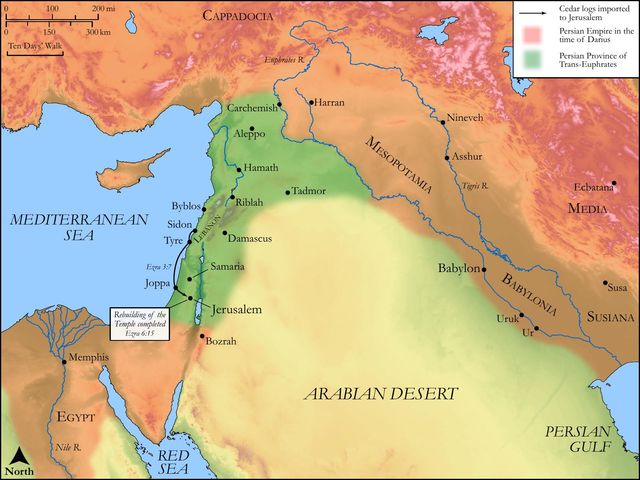
This verse is strategically placed within the narrative of the Jewish exiles' return to Judah, a period marked by profound spiritual and national reconstruction. It directly follows Ezra 3:8, which describes the formal appointment of Levites, aged twenty and older, to take charge of the work on the "house of the Lord." Verse 9 then specifies the key individuals and family groups—Jeshua, Kadmiel, the sons of Henadad, and their respective kin—who assumed this vital supervisory role. This detailed enumeration sets the immediate stage for the highly significant event of laying the temple's foundation in the subsequent verse, highlighting the meticulous organization and dedicated leadership that preceded this monumental milestone. The emphasis on specific names and family lines reinforces the historical veracity and the importance of structured authority in sacred undertakings.
Historical & Cultural Context
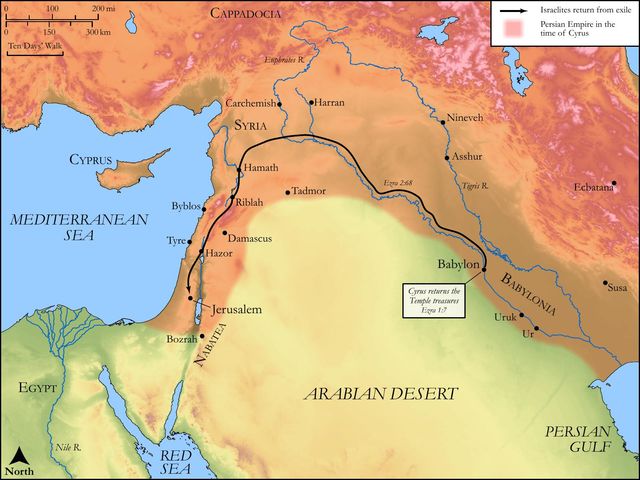
The events of Ezra 3:9 transpire approximately 70 years after the catastrophic destruction of Solomon's Temple and the subsequent Babylonian exile, a period of immense national and spiritual trauma for the Jewish people. Following King Cyrus of Persia's decree in 538 BC, a remnant of the exiles returned to Jerusalem, not merely for physical resettlement but for a profound act of national and religious restoration. The "house of God" was far more than a mere edifice; it was the sacred epicenter of Jewish worship, the tangible symbol of God's covenant presence, and the bedrock of their national identity. Culturally, the rebuilding of the Temple was understood as a divinely mandated task, necessitating careful adherence to sacred protocols and meticulous oversight by those with priestly and Levitical authority, who were steeped in the traditions and intricacies of temple service. This context illuminates the gravity and spiritual significance of the supervisory roles detailed in the verse.
Key Themes
ShowHideEzra 3:9 powerfully contributes to several overarching themes pervasive throughout the book of Ezra and the broader post-exilic prophetic literature. Foremost is the theme of Reconstruction and Restoration, not solely of a physical structure but of a broken covenant community. The exiles' return and the rebuilding of the Temple embody God's unwavering faithfulness to His promises and the restoration of proper worship. Secondly, Divine Mandate and Human Obedience is clearly evident; the people are actively responding to God's sovereign call, facilitated by Cyrus's decree, to rebuild His house, despite the formidable opposition they would later encounter (as detailed in Ezra 4). Thirdly, the theme of Organized Leadership and Unity is central. The explicit listing of Jeshua, Kadmiel, the sons of Henadad, and their respective families working "together" underscores the indispensable nature of a structured, collaborative effort involving various tribal and Levitical groups to accomplish God's sacred work. This unity was paramount for overcoming the daunting challenges inherent in rebuilding a devastated city and restoring a shattered society.
Exposition and Analysis
ShowHideKey Word Analysis
ShowHideDerived from the root H5329, this verb (לְנַצֵּחַ, le-natzeaḥ') signifies "to glitter from afar," implying eminence, and thus "to oversee," "to supervise," or "to direct." It denotes active management, effective organization, and ensuring the efficient progress of a project. In the context of temple work, it suggests a role of skilled, authoritative oversight, not merely passive observation, but one that involves encouragement, problem-solving, and quality control. This term is notably used in the superscriptions of many Psalms (e.g., Psalm 4:1), indicating direction for musical performance, highlighting its connotation of expert guidance and successful execution.
The word יַחַד (H259, yaḥad) means "united," "one," or "as one." Its inclusion here profoundly emphasizes the solidarity, collective purpose, and harmonious cooperation of the various groups involved in the supervision. It highlights that despite their distinct family lines—Jeshua's priestly lineage, Kadmiel's, Henadad's Levites, and the sons of Judah—they functioned as a cohesive, unified entity. This unity was not incidental but absolutely essential for the successful completion of such a massive and sacred undertaking, underscoring the vital importance of cooperation and shared vision in God's work.
The term בַּיִת (H1004, bayith) primarily denotes a "house" but carries a wide range of applications, including family, household, palace, and, significantly, "temple." In Ezra 3:9, "house of God" explicitly refers to the Temple, the sacred dwelling place of Yahweh. The choice of this word emphasizes not just a physical structure but its profound theological significance as the center of worship, the locus of God's presence, and the symbol of His covenant relationship with His people. The rebuilding of this "house" was therefore a restoration of divine order and communal identity.
Verse Breakdown
ShowHide"Then stood Jeshua [with] his sons and his brethren"
This clause introduces Jeshua, the High Priest, and his immediate priestly family and colleagues. Their "standing" (from H5975, ʻâmad) signifies readiness, authority, and active, engaged participation in the oversight. As the primary spiritual leader, Jeshua's presence was paramount for legitimizing, sanctifying, and guiding the entire rebuilding effort.
"Kadmiel and his sons, the sons of Judah, together"
This introduces Kadmiel, likely a prominent Levitical leader, and his descendants, along with "the sons of Judah." The inclusion of "sons of Judah" indicates a broader tribal representation beyond just the priestly and Levitical clans, emphasizing that the entire community, particularly the dominant tribe, was united in this sacred endeavor. The crucial word "together" (H259, ʼechâd) underscores their collective, harmonious, and unified effort.
"to set forward the workmen in the house of God"
This is the core purpose clause, articulating the objective of their collective standing and unity. Their role was "to set forward" (H5329, nâtsach)—meaning to actively supervise, encourage, and manage—the laborers (H6213, ʻâsâh and H4399, mᵉlâʼkâh). The object of their diligent work, "the house of God" (H1004, bayith and H430, ʼĕlôhîym), highlights the sacred and ultimate goal of their efforts: to rebuild the Temple as the central place of worship and the visible manifestation of God's dwelling among His people.
"the sons of Henadad, [with] their sons and their brethren the Levites"
This final clause specifically identifies another prominent Levitical family, the sons of Henadad (H2582, Chênâdâd), and their extended Levitical kin (H3881, Lêvîyîy). The Levites, by divine appointment, were historically responsible for the care, service, and maintenance of the Temple, making their supervisory role over its reconstruction particularly fitting and necessary for ensuring proper adherence to sacred building practices and liturgical requirements.
Literary Devices
ShowHideEzra 3:9 masterfully employs several literary devices to convey its profound message. Enumeration is prominently featured, as the verse meticulously lists the various family groups and key individuals involved in the supervisory task: Jeshua and his kin, Kadmiel and his, and the sons of Henadad and their Levitical brethren. This detailed listing not only provides historical specificity and authenticity but also underscores the breadth of participation and the highly organized structure of the rebuilding effort. The repetition of "sons" (H1121, bên) and "brethren" (H251, ʼâch) serves as a powerful form of Emphasis, highlighting the familial, generational, and communal nature of the leadership, suggesting that the responsibility for this sacred task was shared across established family lines and generations. Furthermore, the recurring phrase "house of God" (H1004, bayith and H430, ʼĕlôhîym) functions as profound Symbolism, representing not merely a physical structure but the very tangible presence of Yahweh among His people, the restoration of proper worship, and the re-establishment of the covenant relationship. The careful selection of these specific groups and the explicit mention of their unified action ("together," H259, ʼechâd) further emphasizes the critical theme of collective responsibility, harmonious cooperation, and divine blessing upon their united endeavors.
Theological and Thematic Connections
ShowHideEzra 3:9 offers profound theological insights into the nature of God's work and human participation. It vividly demonstrates that divine purposes are often accomplished through human organization, dedicated leadership, and unwavering unity. The meticulous supervision of the Temple's rebuilding reflects a deep reverence for God's dwelling place and an unyielding commitment to executing His work with excellence, order, and faithfulness. It underscores that spiritual endeavors, even those with a significant physical component, require diligent oversight and collaborative effort from various parts of the community. This verse reminds us that God calls different individuals and groups—priests, Levites, and lay leaders—to work "together" for a common, sacred purpose, reflecting the enduring principle that every member has a vital and indispensable role in building His kingdom.
Reflection and Application
ShowHideEzra 3:9 serves as a powerful and enduring reminder of the paramount importance of leadership, unity, and unwavering dedication in any significant endeavor, particularly within the context of God's kingdom work today. Just as Jeshua, Kadmiel, and the Levites stood "together" to diligently supervise the rebuilding of the physical temple, believers are called to collaborate harmoniously in the spiritual building of God's church and the advancement of His redemptive purposes in the world. This requires discerning and empowering gifted leaders, intentionally fostering a spirit of genuine unity among diverse members, and maintaining a steadfast commitment to the "house of God"—which is now His people, the church, the body of Christ. Our collective efforts, whether expressed through teaching, serving, evangelism, compassionate outreach, or faithful support, contribute profoundly to the ongoing work of making God's presence known and glorifying His name. The verse challenges us to critically examine how we can better organize our efforts, overcome potential divisions, and diligently apply our unique gifts and resources to ensure that God's work progresses efficiently, faithfully, and effectively for His glory.
Questions for Reflection
ShowHideFAQ
ShowHideWho were Jeshua, Kadmiel, and Henadad, and what were their roles in the rebuilding effort?
ShowHideJeshua (also known as Joshua, H3442, Yêshûwaʻ) was the High Priest who returned with Zerubbabel and was a pivotal spiritual leader of the post-exilic community. His presence and leadership were essential for re-establishing proper worship and the temple service. Kadmiel (H6934, Qadmîyʼêl) and Henadad (H2582, Chênâdâd) were prominent Levitical family heads. The Levites (H3881, Lêvîyîy), by divine decree, were responsible for assisting the priests in the temple service, maintaining the temple, and providing instruction to the people. In the context of rebuilding the "house of God" (H1004, bayith and H430, ʼĕlôhîym), their role was crucial for organizing and supervising the workmen, ensuring that the construction proceeded according to sacred and practical requirements. Their involvement, along with their sons and brethren (H251, ʼâch), highlights the collective, multi-generational commitment of the priestly and Levitical orders to the restoration of God's dwelling among His people, as explicitly detailed in Ezra 3:8-9.
Why was the "house of God" so significant to the returned exiles, and why was its rebuilding such a priority?
ShowHideThe "house of God," the Temple, was profoundly significant to the returned Jewish exiles for several intertwined reasons. Spiritually, it was considered the dwelling place of Yahweh's glorious presence on earth, the sacred space where His glory resided, and where atonement for sin was made through prescribed sacrifices. Its destruction during the Babylonian exile was a devastating blow, symbolizing God's judgment and the apparent absence of His favor. Rebuilding it was therefore a paramount act of faith and obedience, signifying a renewed covenant relationship with God and a restoration of His favor. Culturally and nationally, the Temple was the undisputed center of Jewish life, identity, and community. It was where major festivals were celebrated, the Mosaic Law was taught, and the people gathered for communal worship. Its restoration was vital for the re-establishment of their national identity, religious practices, and communal cohesion, providing a tangible anchor for their hope and future in the land. The urgency to rebuild, powerfully encouraged by prophets like Haggai, stemmed from the deep-seated belief that their spiritual and national well-being was inextricably linked to the restoration of God's dwelling among them.
Christ-Centered Fulfillment
ShowHideEzra 3:9, with its vivid depiction of a unified, organized effort to rebuild the physical "house of God," finds its ultimate and profound fulfillment in Jesus Christ and the spiritual reality He inaugurates. While the exiles diligently worked to restore a temporary dwelling place for God's earthly presence, Christ Himself is the true, eternal, and perfect Temple, as He boldly declared, "Destroy this temple, and in three days I will raise it up, speaking of the temple of His body" (John 2:21). He is the Chief Cornerstone upon whom God's new spiritual house, the Church, is immutably built (Ephesians 2:20, 1 Peter 2:6-7). Furthermore, through Christ's atoning work and the indwelling of the Holy Spirit, believers are now incorporated into this spiritual Temple, becoming "lively stones... built up a spiritual house" (1 Peter 2:5), a holy priesthood, and collectively, a dwelling place for God's Spirit (1 Corinthians 3:16). The unity and organized leadership seen in Ezra 3:9 powerfully foreshadow the unity of the church, the body of Christ, where diverse members, gifted by the Spirit, work "together" under Christ's supreme headship to build up one another and fulfill God's redemptive purposes in the world (Ephesians 4:11-16). Thus, the physical rebuilding in Ezra points to the greater spiritual reality of Christ building His church, a living, dynamic temple where God is truly worshipped in spirit and truth (John 4:23-24).