


2 Samuel 24:25
- וַיִּבֶןvai·yi·Venand he builtH1129Conj-w ¦ V-Qal-ConsecImperf-3msVerb Qal Consecutive Imperfect 3rd Singular Masculineוַandיִּבֶןhe built
- שָׁםshamthereH8033AdvAdverb
- דָּוִדda·VidDavidH1732N-proper-mNoun Proper Masculine
- מִזְבֵּחַmiz·Be·achan altarH4196N-msNoun Singular Masculine Absolute
- לַיהוָהla·Yah·wehto YahwehH3068Prep-l ¦ N-properNoun Proper TitleלַtoיהוָהYahweh
- וַיַּעַלvai·Ya·'aland he offered upH5927Conj-w ¦ V-Hiphil-ConsecImperf-3msVerb Hiphil Consecutive Imperfect 3rd Singular Masculineוַandיַּעַלhe offered up
- עֹלוֹתo·Lotburnt offeringsH5930N-fpNoun Plural Feminine Absolute
- וּשְׁלָמִיםu·she·la·Mimand peace offeringsH8002Conj-w ¦ N-mpNoun Plural Masculine Absoluteוּandשְׁלָמִיםpeace offerings
- וַיֵּעָתֵרvai·ye·'a·Terand he was entreatedH6279Conj-w ¦ V-Niphal-ConsecImperf-3msVerb Niphal Consecutive Imperfect 3rd Singular Masculineוַandיֵּעָתֵרhe was entreated
- יְהוָהYah·wehYahwehH3068N-properNoun Proper Title
- לָאָרֶץla·'A·retzfor the landH776Prep-l ¦ N-fsNoun Singular Feminine Absoluteלָfor theאָרֶץland
- וַתֵּעָצַרva·te·'a·Tzarand it was restrainedH6113Conj-w ¦ V-Niphal-ConsecImperf-3fsVerb Niphal Consecutive Imperfect 3rd Singular Feminineוַandתֵּעָצַרit was restrained
- הַמַּגֵּפָהha·ma·ge·Fahthe plagueH4046Art ¦ N-fsNoun Singular Feminine Absoluteהַtheמַּגֵּפָהplague
- מֵעַלme·'Alfrom onH5921Prep-m ¦ PrepPrepositionמֵfromעַלon
- יִשְׂרָאֵלYis·ra·'ElIsraelH3478N-properNoun Proper Location
English is a literal word-by-word gloss of the Hebrew, not the KJV's wording. Why?
This is the original text the KJV's translators worked from — each Hebrew word with its own literal English meaning in this verse, prepared by scholars at Tyndale House, Cambridge. The KJV translates whole sentences, not word by word, so its wording differs: one Hebrew word can become several English words, and the KJV may choose “the LORD” where the gloss reads “Yahweh”. Both are faithful — they answer different questions. For the KJV's own rendering, switch to the KJV text.
Details
See on the biblical-era map
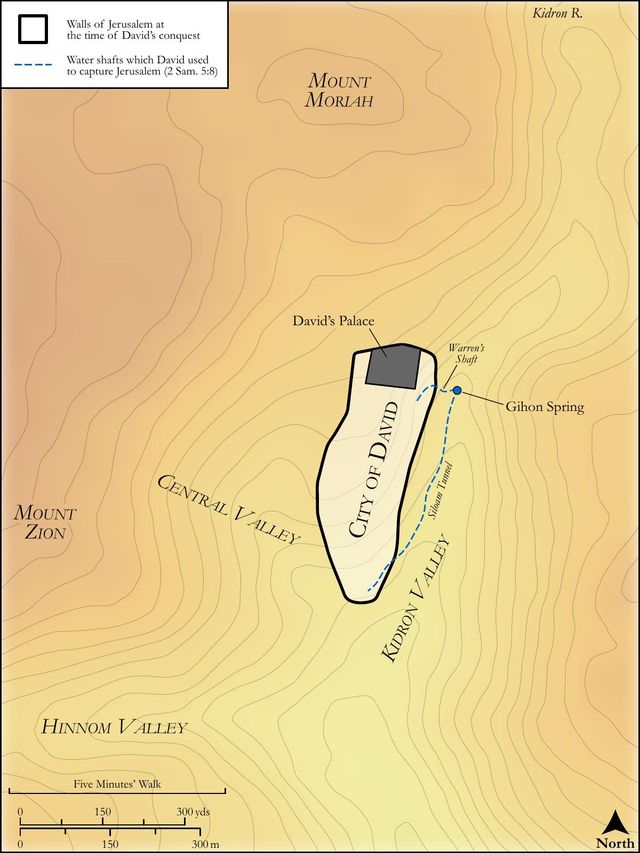
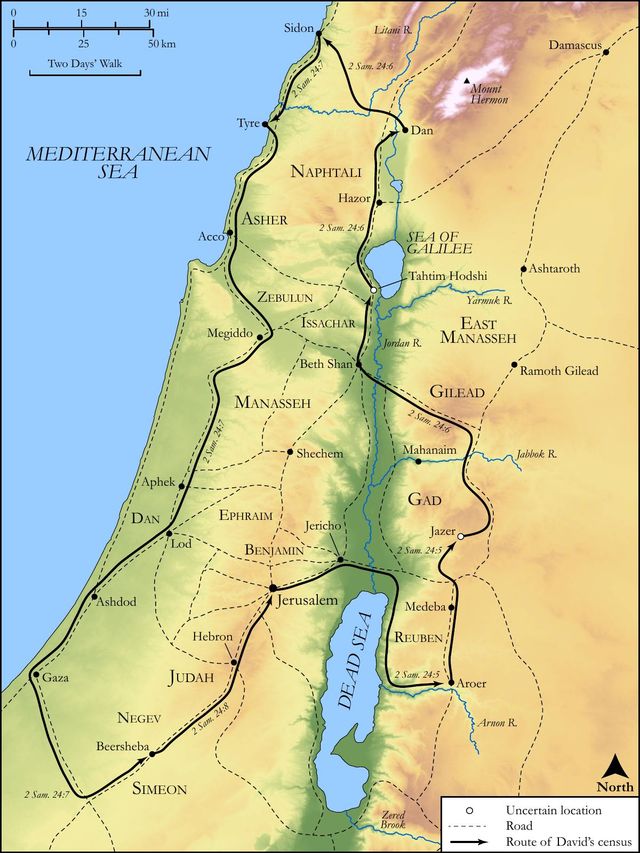
Study this verse
Historical interpretation
Historical reception
1 surviving comment on this verse from the historical church.
Therefore, the king himself offered blessed David the threshing floor and oxen for a burnt offering, but King David refused to accept them without first paying a price. This, too, was fulfilled at the coming of our Lord and Savior, for he refused to take the hearts of the Gentiles for himself without first giving his precious blood for them. What, then, did he give? “Fifty shekels of silver,” it says. In the number fifty the grace of the Holy Spirit is understood and the remission of sins is designated. Indeed, on the fiftieth day the Holy Spirit was sent to the apostles, and in the Old Testament the fiftieth year was dedicated to forgiveness and pardon. That David, to be sure, gave silver; our David, whose type the other prefigured, shed his precious blood. Thus, in order to buy the pagan king’s threshing floor David offered fifty shekels; in order to build an altar to himself on the threshing floor of the Gentiles Christ, the true David, gave the grace of the Holy Spirit and forgiveness of sins on the fiftieth day. Therefore, brothers, since he has deigned to make a temple for himself in us and out of us, let him not suffer any insult in his home. If he does suffer injury because of our sins, he quickly withdraws, and woe to the unhappy soul from which he departs. Doubtless, if one is deserted by the light he will be seized by darkness. For this reason let us with his aid endeavor so to live that we may merit to have the good Lord not only as our guest but as a perpetual inhabitant: with the help of our same Lord Jesus Christ, to whom is honor and glory together with the Father and the Holy Spirit world without end. Amen.
Continue studying 2 Samuel 24:25 across the web’s major study libraries — every link below opens this exact verse, chapter, or book on the destination site.
Read & Compare
 BibleGatewayThis verse in more than 200 translations and 70 languages.
 Bible.comThe YouVersion reader — hundreds of translations, reading plans, and highlights.
 ESV.orgCrossway's official English Standard Version reader.
 NET BibleThe NET translation with 60,000+ translators' notes on every rendering decision.
 STEP BibleTyndale House's free study tool — original text, vocabulary, and scholarly resources.
 BibliaLogos Bible Software's free web reader.
 USCCBThe New American Bible (Revised Edition) with the U.S. bishops' study notes.
Commentaries
 BibleHub CommentariesDozens of classic commentaries on this verse, gathered on one page.
 StudyLightMore than 100 commentary sets — the largest collection on the web.
 BibleRefPlain-English commentary on what this verse means, verse by verse.
 Enduring WordDavid Guzik's free commentary on this chapter, widely used by Bible teachers.
 Bible Study ToolsVerse commentary alongside Greek and Hebrew study aids.
Original Language & Research
- BibleHub InterlinearThe verse word by word — original language, transliteration, and English.
- BibleHub LexiconEvery word's original-language definition and Strong's entry.
 Blue Letter BibleDeep-study tools — Strong's numbers, concordance, and word studies.
 SefariaThe Hebrew text with Rashi and centuries of Jewish commentary.
Sermons, Hymns & Audio


TrulyRandomVerse is not affiliated with these sites and doesn’t control their content. They’re linked because they’re genuinely useful.
Summary
2 Samuel 24:25 serves as the climactic and redemptive conclusion to the narrative of King David's sinful census and the subsequent divine judgment upon Israel. This pivotal verse recounts David's immediate and obedient construction of an altar and the offering of burnt and peace sacrifices at the threshing floor of Araunah the Jebusite. Through this act of humble repentance and prescribed atonement, God's righteous wrath was appeased, and the devastating plague afflicting the land was brought to an immediate and merciful halt, underscoring the profound biblical truth that divine judgment, provoked by human sin, can be averted and fellowship restored through costly obedience and the divinely ordained means of reconciliation.
Context
ShowHideLiterary Context
This verse provides the definitive resolution to the intense narrative arc of 2 Samuel 24. The chapter begins with God's anger against Israel, leading to David's ill-advised decision to number the people. Despite the warnings of Joab, David proceeds, resulting in a profound sense of guilt and confession (2 Samuel 24:10). As a consequence, God offers David a choice of three punishments, and David chooses to fall into the hand of the Lord, resulting in a devastating plague that claims 70,000 lives (2 Samuel 24:11-15). The plague is dramatically halted by the angel of the LORD at the threshing floor of Araunah, where David is instructed by the prophet Gad to build an altar (2 Samuel 24:18). The preceding verses detail David's refusal to accept the land and sacrifices for free, insisting on purchasing them at full price (2 Samuel 24:21-24), thereby emphasizing the sincerity, costliness, and personal responsibility of his repentance and worship. Thus, 2 Samuel 24:25 marks the definitive cessation of judgment and the restoration of God's favor, bringing the book of 2 Samuel to a theological and narrative close.
Historical & Cultural Context
The act of taking a census in ancient Israel was not inherently sinful, as evidenced by earlier censuses commanded by God for military or administrative purposes (e.g., Numbers 1). However, David's census in 2 Samuel 24 was deemed a grave offense against the covenant relationship, likely motivated by pride, a desire to boast in military strength, or a lack of trust in God's provision and protection. Kings in the ancient Near East often conducted censuses for military conscription or taxation, asserting their own power and dominion. The concept of divine judgment through plague was a common understanding in the ancient world, often seen as a direct consequence of displeasing the gods. The threshing floor, a common, open-air location for agricultural work, was often elevated and considered a liminal space, making it suitable for an altar. The purchase of the land from Araunah, a Jebusite, is highly significant, as it represents David's legitimate acquisition of a sacred site that would later become the location for Solomon's Temple in Jerusalem (2 Chronicles 3:1). This act of purchase also demonstrates David's adherence to proper legal and religious protocols for establishing a sacred space, ensuring its legitimacy and sanctity.
Key Themes
ShowHideThis concluding verse powerfully encapsulates several overarching themes present in 2 Samuel and the broader Old Testament narrative. Firstly, it highlights the theme of Divine Sovereignty and Justice, demonstrating God's ultimate control over human affairs and His righteous response to sin, even in His chosen king. Secondly, the narrative underscores Repentance and Atonement, illustrating that genuine contrition, expressed through humble obedience and prescribed sacrifice, can turn away divine wrath and secure forgiveness. David's insistence on paying for the offerings, as seen in 2 Samuel 24:24, emphasizes the Cost of True Worship and the sincerity required for effective intercession and reconciliation. Finally, the verse subtly introduces the theme of Sacred Space and Divine Presence, as the site of atonement becomes consecrated, foreshadowing its future significance as the location of the Temple, where God's presence would dwell among His people, as described in 1 Kings 6.
Exposition and Analysis
ShowHideKey Word Analysis
ShowHideThis primitive root signifies not merely physical construction but also establishment and formation. In this context, David "built" an altar, indicating his active and immediate obedience to God's command. The act of building an altar is foundational to establishing a place of worship and interaction with the divine, symbolizing the re-establishment of a sacred space for reconciliation.
This verb conveys the idea of earnest prayer, supplication, or being moved by intercession. When applied to God, as here, it means He was favorably inclined or responded mercifully to the prayers and sacrifices offered. It implies that God's disposition shifted from judgment to compassion, indicating the efficacy of David's humble approach and the atoning sacrifices.
Derived from a root meaning "to strike" or "to smite," this noun specifically refers to a pestilence or a divine stroke of judgment. Its use here highlights the severity and divine origin of the affliction upon Israel. The "staying" of the plague signifies the removal of this direct divine punishment, demonstrating God's power to both inflict and cease judgment.
Verse Breakdown
ShowHide"And David built there an altar unto the LORD"
This clause highlights David's immediate and obedient response to God's command, conveyed through the prophet Gad (2 Samuel 24:18). The adverb "there" refers specifically to the threshing floor of Araunah the Jebusite, the very spot where the angel of the LORD had halted the plague (2 Samuel 24:16). The construction of the altar signifies the establishment of a designated, sacred place for worship and sacrifice, acknowledging God's holiness and sovereignty, and serving as a focal point for national repentance.
"and offered burnt offerings and peace offerings"
David's act of offering these specific sacrifices demonstrates his adherence to the Mosaic Law and his profound understanding of the divinely prescribed means by which reconciliation with God could be achieved. The burnt offerings (ʿōlāh) were entirely consumed by fire, symbolizing complete dedication and providing atonement for sin. The peace offerings (šĕlāmîm) were offerings of thanksgiving and fellowship, with portions eaten by the worshiper and priests, symbolizing restored communion. This dual offering underscores both the gravity of the sin requiring expiation and the desire for renewed, harmonious relationship with God.
"So the LORD was intreated for the land"
This is the direct, divine response to David's obedient worship and sacrifice. The verb "intreated" (Hebrew ʿāthar) signifies that God favorably received David's supplication and the offerings. It indicates that God's righteous anger was appeased, and His disposition towards the land and its people shifted from judgment to mercy. This phrase emphasizes God's responsiveness to genuine repentance and the prescribed means of atonement, demonstrating His readiness to forgive and restore.
"and the plague was stayed from Israel"
This final clause confirms the immediate and tangible outcome of God being "intreated." The devastating plague, which had claimed 70,000 lives, was definitively halted. This demonstrates God's absolute power to both inflict and remove judgment, and it serves as a clear, undeniable sign that the divine wrath had been satisfied through David's actions, bringing an end to the national suffering and restoring divine favor to Israel.
Literary Devices
ShowHideThe verse employs several significant literary devices that amplify its theological impact. Cause and Effect is central, as David's obedient actions (building an altar and offering sacrifices) directly lead to God's favorable response and the immediate cessation of the plague. This highlights the theological principle of divine responsiveness to human repentance and atonement. There is also a strong element of Resolution, as this verse brings the intense narrative of judgment, suffering, and national crisis to a definitive and peaceful conclusion. The use of Synecdoche can be observed in "the land" being "intreated for," where "the land" stands in for the people inhabiting it, emphasizing the widespread nature of the judgment and the national scope of the reconciliation. Furthermore, the entire account, culminating in this verse, functions as a Type, foreshadowing the ultimate and perfect sacrifice that would truly and permanently "entreat" God for humanity's sin, establishing lasting peace and a new covenant.
Theological and Thematic Connections
ShowHide2 Samuel 24:25 profoundly illustrates the Old Testament principle that sin incurs divine judgment, but God, in His infinite mercy and steadfast love, provides a way for atonement and reconciliation. David's actions, though specific to his historical context, reveal timeless truths about the nature of God and humanity's relationship with Him. It teaches that God is both just in punishing sin and gracious in providing a means of forgiveness when approached with genuine repentance and obedient faith. The immediate cessation of the plague underscores God's absolute power and His willingness to restore fellowship when the proper conditions are met. This episode reinforces the necessity of sacrifice as a means of bridging the gap created by sin, a concept foundational to the entire biblical narrative of redemption and a prefigurement of the ultimate sacrifice.
Reflection and Application
ShowHide2 Samuel 24:25 offers profound lessons for believers today, reminding us that sin, whether individual or corporate, carries real consequences, disrupting our fellowship with God and bringing about spiritual or even tangible suffering. Yet, it simultaneously proclaims God's boundless mercy and His readiness to forgive and restore when we respond with genuine repentance and humble obedience. David's refusal to offer to God what cost him nothing (2 Samuel 24:24) serves as a powerful reminder that true worship and repentance are costly, requiring a willingness to sacrifice our pride, resources, and self-sufficiency. It challenges us to consider the sincerity and depth of our own repentance when we confess our sins, urging us to approach God not with superficial words but with a contrite heart and a readiness to obey His commands. This verse ultimately points us to the enduring truth that peace with God is found not through human effort or merit, but through the divinely provided means of atonement, which demands our humble participation.
Questions for Reflection
ShowHideFAQ
ShowHideWhy was David's census considered a sin, and what does it teach us about pride?
ShowHideWhile censuses were sometimes commanded by God (e.g., in Numbers 1), David's census in 2 Samuel 24 was considered a sin because it likely stemmed from pride, a reliance on his own military strength, or a lack of trust in God's divine protection and provision. It was not the act of counting itself, but the heart attitude behind it that was offensive to God. David's confession in 2 Samuel 24:10 indicates his recognition of his folly and the sinfulness of his motivation. This teaches us that even seemingly neutral actions can become sinful if motivated by self-exaltation, a desire for human glory, or a failure to depend solely on God. It's a reminder that God examines the heart, not just the outward deed, as seen in 1 Samuel 16:7, and that true strength comes from humble reliance on Him.
Christ-Centered Fulfillment
ShowHide2 Samuel 24:25, while an Old Testament narrative of atonement, finds its ultimate and perfect fulfillment in Jesus Christ. David's offering of burnt and peace offerings on the newly built altar at Araunah's threshing floor—a temporary, symbolic act—foreshadows the once-for-all, perfect sacrifice of Jesus on the cross. Just as the plague was "stayed" and the Lord "intreated" for the land through David's obedience and the shedding of animal blood, so too was God's righteous wrath against humanity's sin fully satisfied by the precious blood of the Lamb of God, who takes away the sin of the world!. Jesus is not merely the offerer, but also the perfect offering itself, making atonement for sins "once for all when he offered himself" (Hebrews 7:27). Through His sacrifice, we receive not just a temporary cessation of judgment but eternal peace with God (Romans 5:1). The threshing floor, a place of judgment and then atonement, prefigures Golgotha, where the ultimate reconciliation between God and humanity was achieved, establishing a new and living way to approach God's presence (Hebrews 10:19-20). Thus, 2 Samuel 24:25 points us directly to the person and work of Christ, who is our true altar, our perfect sacrifice, and the source of our everlasting peace and restoration.