


2 Samuel 24:24
Bible text: King James Version (1769 Blayney text) · Public domain
Bible text: King James Version with Strong's numbers · Public domain
Bible text: Berean Standard Bible · Public domain
Bible text: American Standard Version (1901) · Public domain
Bible text: World English Bible, Messianic edition · Public domain
Bible text: Geneva Bible (1599) · Public domain
Bible text: Young's Literal Translation · Public domain
- וַיֹּאמֶרvai·Yo·merand he saidH559Conj-w ¦ V-Qal-ConsecImperf-3msVerb Qal Consecutive Imperfect 3rd Singular Masculineוַandיֹּאמֶרhe said
- הַמֶּלֶךְha·Me·lekhthe kingH4428Art ¦ N-msNoun Singular Masculine Absoluteהַtheמֶּלֶךְking
- אֶל'eltoH413PrepPreposition
- אֲרַוְנָה'a·Rav·nahAraunahH728N-proper-mNoun Proper Masculine
- לֹאlo'In-H3808NegParticle Negative
- כִּיkideedH3588PrtParticle Conditional
- קָנוֹka·Nocertainly <to buy>H7069V-Qal-InfAbsVerb Qal Infinitive Absolute
- אֶקְנֶה'ek·NehI will buy [it]H7069V-Qal-Imperf-1csVerb Qal Imperfect 1st Singular common gender
- מֵאוֹתְךָme·'ot·Khafrom <obj.> youH853Prep-m ¦ DirObjM ¦ 2msParticle Object Indicatorמֵfromאוֹתְ<obj.>ךָyou
- בִּמְחִירbim·Chirfor a priceH4242Prep-b ¦ N-msNoun Singular Masculine Absoluteבִּforמְחִירa price
- וְלֹאve·Lo'and notH3808Conj-w ¦ NegParticle Negativeוְandלֹאnot
- אַעֲלֶה'a·'a·LehI will offer upH5927V-Hiphil-Imperf-1csVerb Hiphil Imperfect 1st Singular common gender
- לַיהוָהla·Yah·wehto YahwehH3068Prep-l ¦ N-properNoun Proper TitleלַtoיהוָהYahweh
- אֱלֹהַי'e·lo·Haimy GodH430N-mpc ¦ 1csNoun Plural Masculine ConstructאֱלֹהַGodיmy
- עֹלוֹתo·Lotburnt offeringsH5930N-fpNoun Plural Feminine Absolute
- חִנָּםchi·Namwithout payingH2600AdvAdverb
- וַיִּקֶןvai·Yi·kenand he boughtH7069Conj-w ¦ V-Qal-ConsecImperf-3msVerb Qal Consecutive Imperfect 3rd Singular Masculineוַandיִּקֶןhe bought
- דָּוִדda·VidDavidH1732N-proper-mNoun Proper Masculine
- אֶת'et<obj.>H853DirObjMParticle Object Indicator
- הַגֹּרֶןha·Go·renthe threshing floorH1637Art ¦ N-fsNoun Singular Feminine Absoluteהַtheגֹּרֶןthreshing floor
- וְאֶתve·'Etand <obj.>H853Conj-w ¦ DirObjMParticle Object Indicatorוְandאֶת<obj.>
- הַבָּקָרha·ba·Karthe ox[en]H1241Art ¦ N-csNoun Singular common gender Absoluteהַtheבָּקָרox[en]
- בְּכֶסֶףbe·Khe·seffor silverH3701Prep-b ¦ N-msNoun Singular Masculine Absoluteבְּforכֶסֶףsilver
- שְׁקָלִיםshe·ka·LimshekelsH8255N-mpNoun Plural Masculine Absolute
- חֲמִשִּׁיםcha·mi·ShimfiftyH2572N-mpNoun Plural Masculine Absolute
English is a literal word-by-word gloss of the Hebrew, not the KJV's wording. Why?
This is the original text the KJV's translators worked from — each Hebrew word with its own literal English meaning in this verse, prepared by scholars at Tyndale House, Cambridge. The KJV translates whole sentences, not word by word, so its wording differs: one Hebrew word can become several English words, and the KJV may choose “the LORD” where the gloss reads “Yahweh”. Both are faithful — they answer different questions. For the KJV's own rendering, switch to the KJV text.
Details
See on the biblical-era maps
Study this verse
Historical interpretation
Historical reception
1 surviving comment on this verse from the historical church.
Therefore, the king himself offered blessed David the threshing floor and oxen for a burnt offering, but King David refused to accept them without first paying a price. This, too, was fulfilled at the coming of our Lord and Savior, for he refused to take the hearts of the Gentiles for himself without first giving his precious blood for them. What, then, did he give? “Fifty shekels of silver,” it says. In the number fifty the grace of the Holy Spirit is understood and the remission of sins is designated. Indeed, on the fiftieth day the Holy Spirit was sent to the apostles, and in the Old Testament the fiftieth year was dedicated to forgiveness and pardon. That David, to be sure, gave silver; our David, whose type the other prefigured, shed his precious blood. Thus, in order to buy the pagan king’s threshing floor David offered fifty shekels; in order to build an altar to himself on the threshing floor of the Gentiles Christ, the true David, gave the grace of the Holy Spirit and forgiveness of sins on the fiftieth day. Therefore, brothers, since he has deigned to make a temple for himself in us and out of us, let him not suffer any insult in his home. If he does suffer injury because of our sins, he quickly withdraws, and woe to the unhappy soul from which he departs. Doubtless, if one is deserted by the light he will be seized by darkness. For this reason let us with his aid endeavor so to live that we may merit to have the good Lord not only as our guest but as a perpetual inhabitant: with the help of our same Lord Jesus Christ, to whom is honor and glory together with the Father and the Holy Spirit world without end. Amen.
Continue studying 2 Samuel 24:24 across the web’s major study libraries — every link below opens this exact verse, chapter, or book on the destination site.
Read & Compare
 BibleGatewayThis verse in more than 200 translations and 70 languages.
 Bible.comThe YouVersion reader — hundreds of translations, reading plans, and highlights.
 ESV.orgCrossway's official English Standard Version reader.
 NET BibleThe NET translation with 60,000+ translators' notes on every rendering decision.
 STEP BibleTyndale House's free study tool — original text, vocabulary, and scholarly resources.
 BibliaLogos Bible Software's free web reader.
 USCCBThe New American Bible (Revised Edition) with the U.S. bishops' study notes.
Commentaries
 BibleHub CommentariesDozens of classic commentaries on this verse, gathered on one page.
 StudyLightMore than 100 commentary sets — the largest collection on the web.
 BibleRefPlain-English commentary on what this verse means, verse by verse.
 Enduring WordDavid Guzik's free commentary on this chapter, widely used by Bible teachers.
 Bible Study ToolsVerse commentary alongside Greek and Hebrew study aids.
Original Language & Research
- BibleHub InterlinearThe verse word by word — original language, transliteration, and English.
- BibleHub LexiconEvery word's original-language definition and Strong's entry.
 Blue Letter BibleDeep-study tools — Strong's numbers, concordance, and word studies.
 SefariaThe Hebrew text with Rashi and centuries of Jewish commentary.
Sermons, Hymns & Audio


TrulyRandomVerse is not affiliated with these sites and doesn’t control their content. They’re linked because they’re genuinely useful.
Summary
2 Samuel 24:24 captures King David's profound theological conviction that genuine worship and acceptable sacrifice to the Lord must involve personal cost and investment. Refusing to offer burnt offerings from that which cost him nothing, David insists on purchasing Araunah's threshingfloor and oxen, thereby establishing a foundational principle that true devotion is demonstrated through sacrificial giving, whether of resources, time, or self, setting a powerful precedent for authentic engagement with God.
Context
ShowHideLiterary Context
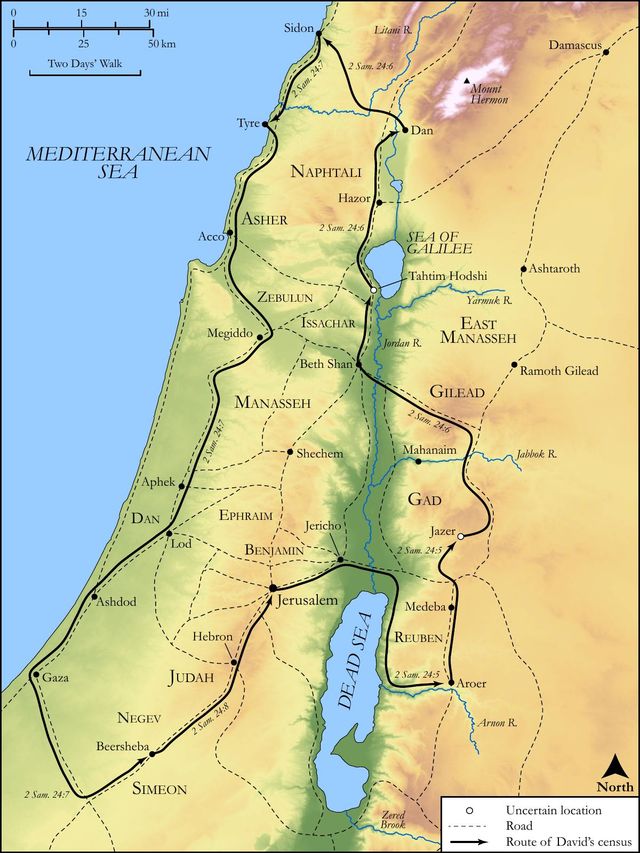
This pivotal verse serves as the climax and resolution to the narrative of David's unauthorized census, which commences in 2 Samuel 24:1. Driven by what is implied to be pride or a lack of trust in God's sovereign provision, David commands Joab to number the fighting men of Israel and Judah. This act incurs the Lord's righteous wrath, leading to a devastating plague that claims 70,000 lives (2 Samuel 24:15). David, deeply repentant and burdened by the consequences of his sin, confesses his transgression and pleads for the plague to cease (2 Samuel 24:17). The prophet Gad then delivers a divine instruction to David: he is to ascend to the threshingfloor of Araunah the Jebusite and build an altar there to atone for the sin (2 Samuel 24:18-19). When Araunah, recognizing the king's distress and the divine context, generously offers the land, oxen, and wood for free, David's resolute refusal in verse 24 highlights his conviction that a truly acceptable sacrifice must involve personal expense, not merely convenience or charity. The narrative concludes with David's costly purchase and the immediate cessation of the plague (2 Samuel 24:25).
Historical & Cultural Context
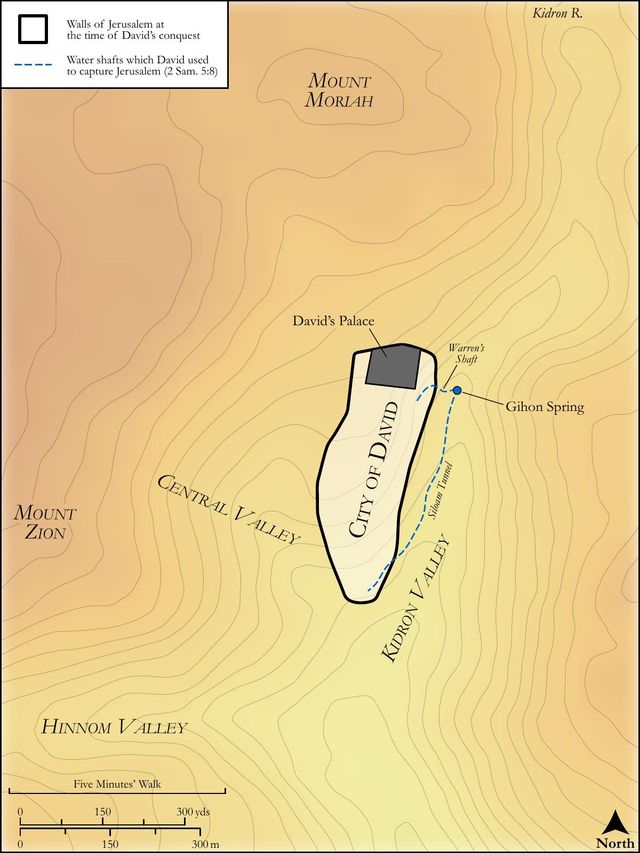
The setting for this profound exchange is Jerusalem, specifically the threshingfloor of Araunah, a Jebusite who, even after David's conquest of the city, likely retained significant land rights and a position of respect. Threshingfloors were typically elevated, open areas, often situated on hilltops, where grain could be threshed, and the chaff separated by the wind. Their elevated and exposed nature made them naturally suitable locations for altars, as the smoke from sacrifices would ascend unimpeded to the heavens. David's census, while seemingly a practical administrative act, was problematic because it reflected a reliance on human strength and military might rather than on God's power and covenant promises. Among the kings of the nations, a king's strength was often measured by the size of his army, but for Israel, the unique covenant nation, reliance on Yahweh was paramount. The plague was a direct divine judgment, a common form of divine discipline in the Old Testament, demonstrating God's absolute sovereignty over life and death. Araunah's offer of the land and animals for free was a culturally appropriate gesture of profound respect and generosity towards the king, yet David's refusal transcends mere social custom, revealing a deeper theological understanding of the nature of true sacrifice.
Key Themes
ShowHideThe central and most prominent theme in 2 Samuel 24:24 is The Nature of True Sacrifice. David's unequivocal declaration, "neither will I offer burnt offerings unto the LORD my God of that which doth cost me nothing," profoundly articulates that genuine worship and atonement necessitate personal investment and tangible cost. This principle stands in stark contrast to superficial or convenient acts of devotion, emphasizing that God values the heart, sincerity, and willingness behind the offering, not just the offering itself. It underscores that a sacrifice without personal cost diminishes its spiritual significance. Another crucial theme is Repentance and Atonement. David's sin of the census, his deep remorse, and his subsequent costly act of obedience in building the altar and offering sacrifices demonstrate a divinely ordained path to forgiveness and the cessation of judgment. This narrative illustrates that true repentance often involves tangible, costly actions that demonstrate a turning from sin. Finally, Divine Sovereignty and Grace are powerfully evident. While God brings judgment as a consequence of sin, He also graciously provides the means for atonement and the cessation of wrath through the prophet's instruction and David's obedient response, showcasing His ultimate control and His willingness to extend mercy when His people humbly turn to Him. This event also holds immense prophetic significance, as this very threshingfloor would later become the sacred site for Solomon's magnificent Temple, a permanent place of costly worship and sacrifice for the nation.
Exposition and Analysis
ShowHideKey Word Analysis
ShowHideThis term (H5930), derived from the root ʿālāh (עָלָה), meaning "to go up" or "ascend," refers to a specific type of sacrifice where the entire animal (except for the hide, which went to the priest) was consumed by fire on the altar, with the smoke ascending to God. It symbolized complete dedication, consecration, and atonement for sin. David's insistence on paying for the animals for this particular type of offering underscores his desire for a total, unreserved act of devotion and propitiation for his grave sin, signifying that nothing less than a full, costly surrender was appropriate.
The word ḥinnām (H2600) means "for nothing," "freely," "without cause," or "gratis." David's use of this phrase highlights his theological conviction that an offering given without personal sacrifice or expense lacked the sincerity, integrity, and spiritual weight required for true worship before God. It implies that a "free" offering would diminish the act of worship, turning it into a mere formality rather than a heartfelt expression of repentance and devotion. The value of the sacrifice, in David's view, was tied not just to the object itself, but profoundly to the cost incurred by the worshiper.
The verb qānāh (H7069) means "to acquire," "to buy," or "to purchase." David's deliberate choice to "buy" rather than accept a gift emphasizes his active participation, personal investment, and ownership in the act of worship. It signifies a transaction that involved a transfer of value and ownership, making the sacrifice truly his own. This act of purchasing underscores the principle that genuine worship is not passive reception but active, intentional, and often costly engagement, reflecting the worshiper's sincere commitment.
Verse Breakdown
ShowHide"And the king said unto Araunah, Nay; but I will surely buy [it] of thee at a price:"
This opening clause reveals David's firm resolve and unyielding theological conviction. Despite Araunah's generous and culturally appropriate offer to provide the threshingfloor and oxen for free, David unequivocally refuses. His insistence on purchasing the items "at a price" (בִּמְחִיר, bim'ḥîr) signifies his deep understanding that true sacrifice for atonement requires a tangible, personal cost. This refusal is not a rejection of Araunah's kindness, but a profound affirmation of a higher spiritual principle concerning the nature of acceptable worship and repentance before a holy God.
"neither will I offer burnt offerings unto the LORD my God of that which doth cost me nothing."
This is the heart of David's declaration and the core theological message of the verse, articulating a timeless principle. David powerfully states that a sacrifice without personal cost is an inadequate, insincere, or even invalid offering to God. For David, the spiritual efficacy and sincerity of the offering were intrinsically linked to the personal sacrifice involved. To offer something that cost him nothing would be to diminish the gravity of his sin, the holiness of God, and the sincerity of his repentance. This statement sets a profound precedent for all future acts of worship, emphasizing that genuine devotion is demonstrated through personal investment and sacrifice.
"So David bought the threshingfloor and the oxen for fifty shekels of silver."
This concluding clause records David's immediate and obedient action, demonstrating his unwavering commitment to the principle he just articulated. The specific price of "fifty shekels of silver" provides a concrete detail, highlighting the tangible cost David incurred. This act of purchase was not merely a financial transaction; it was a profound act of worship, a tangible expression of deep repentance, and a demonstration of faith that ultimately led to the cessation of the devastating plague (2 Samuel 24:25). This significant purchase also has immense historical and prophetic implications, as this very site would later become the hallowed location for the First Temple in Jerusalem.
Literary Devices
ShowHideThe passage employs several significant Literary Devices that enhance its theological impact. Contrast is prominently featured, highlighting the stark difference between Araunah's generous offer of a free gift and David's resolute insistence on paying a substantial price. This contrast powerfully underscores the theological weight of David's decision, emphasizing that for him, the act of worship and atonement transcended mere convenience or social etiquette. The phrase "cost me nothing" functions as a powerful Litotes, a rhetorical understatement that emphasizes the opposite: the sacrifice must indeed cost him something significant. This negative phrasing ("neither will I offer... of that which doth cost me nothing") powerfully conveys David's conviction about the absolute necessity of personal sacrifice. Furthermore, the narrative uses potent Symbolism: the threshingfloor, typically a place of agricultural labor and the separation of grain from chaff, is transformed into a sacred space for atonement and worship, symbolizing a profound transition from divine judgment to reconciliation and restoration. The act of purchasing and offering the sacrifice also serves as a Metonymy for David's genuine repentance and his earnest desire to re-establish a right relationship with God, where the physical act of costly giving stands for the deeper spiritual reality of a contrite heart.
Theological and Thematic Connections
ShowHideDavid's profound declaration in 2 Samuel 24:24 establishes a timeless theological principle: true worship and genuine devotion are invariably characterized by personal cost and sacrifice. This is not merely about monetary expense, but about the giving of oneself—time, effort, resources, and even comfort—in sincere service and adoration of God. A "cost-nothing" offering, in David's view, lacks the sincerity, commitment, and reverence necessary for an acceptable sacrifice. This principle resonates throughout the biblical narrative, from the early laws of sacrifice in the Pentateuch to the teachings of the prophets and apostles, consistently affirming that God desires a willing heart and a costly commitment over mere ritual or convenience. It challenges believers in every age to examine the depth of their own worship and service, prompting the question of whether their faith truly demands anything of them, or if it remains comfortably within the bounds of what is easy or convenient.
Reflection and Application
ShowHideDavid's refusal to offer a "cost-nothing" sacrifice provides a powerful and enduring challenge for believers in every generation. In an age where convenience is often prioritized, this verse calls us to a deeper, more demanding form of discipleship. True worship is not merely attendance at a service or the recitation of prayers; it is an act of costly self-giving that stems from a heart wholly devoted to God. This cost can manifest in various ways: the sacrifice of our precious time to serve others, the surrender of our comfort zones to share the Gospel, the disciplined and generous allocation of our financial resources to support God's work, or the humble submission of our wills to His divine leading. If our faith demands nothing of us, if it costs us no personal inconvenience, no significant effort, and no tangible resource, then we must honestly ask if it truly reflects the depth of devotion David exemplified. This verse invites us to examine our hearts and ensure that our offerings to God—whether in worship, service, or giving—are truly expressions of costly love and not merely convenient gestures or empty rituals.
Questions for Reflection
ShowHideFAQ
ShowHideWhy was David's census considered a sin, warranting such severe judgment?
ShowHideWhile the Bible doesn't explicitly state why the census was a sin, theological consensus points to several interconnected factors. It likely stemmed from David's pride and a misplaced trust in human strength and military numbers rather than in God's power and provision. In ancient Israel, a census was often associated with military conscription or taxation, and conducting one without divine command or for self-aggrandizement indicated a lack of humble reliance on God as the true source of Israel's strength and security. It could also have been an infringement on God's unique ownership of Israel, implying that David was taking stock of "his" people rather than God's covenant people. This act of self-reliance and potential pride, rather than humble dependence on the Lord, provoked divine wrath, leading to the devastating plague described in 2 Samuel 24:15.
What is the significance of Araunah's threshingfloor, and why is there a discrepancy in the purchase price with 1 Chronicles?
ShowHideAraunah's threshingfloor is profoundly significant because it later became the sacred site where King Solomon built the First Temple in Jerusalem (2 Chronicles 3:1). This transformation from a place of agricultural labor and divine judgment to the holiest site in Israel, where God's presence dwelt, powerfully underscores themes of atonement, reconciliation, and the establishment of true worship. Regarding the apparent price discrepancy, 2 Samuel 24:24 states David bought the threshingfloor and oxen for "fifty shekels of silver," whereas 1 Chronicles 21:25 states he paid "six hundred shekels of gold for the site." This is generally understood as referring to different scopes of purchase. In 2 Samuel, David buys only the threshingfloor and the oxen necessary for the immediate sacrifice. In 1 Chronicles, the larger sum of gold likely refers to the purchase of the entire "site" or "place" (מָקוֹם, maqom), a much larger area encompassing the threshingfloor, which would eventually become the expansive Temple Mount complex. Thus, the accounts are complementary, not contradictory, describing different stages or extents of the land acquisition for the future Temple.
Does David's statement mean God requires us to "pay" for our salvation or earn His favor through sacrifice?
ShowHideAbsolutely not. David's statement in 2 Samuel 24:24 is about the nature of worship and atonement under the Old Covenant, emphasizing the sincerity and commitment required in offering sacrifices for sin. It does not imply that salvation can be earned or that God's favor is merited by human effort. The Old Testament sacrificial system, while costly, always pointed forward to the ultimate, perfect sacrifice of Jesus Christ, which is freely given by God's grace. Our salvation is a gift received through faith in Christ's finished work, not through any merit or payment of our own (Ephesians 2:8-9). However, David's principle remains profoundly relevant for Christian living in that true discipleship and worship will always involve a personal "cost" in terms of self-denial, surrender, and obedient service as a grateful response to God's free gift of salvation (Luke 9:23). We are called to offer ourselves as "living sacrifices" (Romans 12:1), which means giving our best to God, not what is convenient or "costs us nothing."
Christ-Centered Fulfillment
ShowHideDavid's insistence on a costly sacrifice at Araunah's threshingfloor finds its ultimate and perfect fulfillment in the person and work of Jesus Christ. David understood that true atonement for sin could not be achieved by a "cost-nothing" offering; it demanded personal expense and a tangible price. This Old Testament principle powerfully foreshadows the immeasurable, infinite cost of the New Covenant sacrifice. While David paid fifty shekels of silver for the means of atonement for his people, Christ himself became the ultimate, unblemished Lamb of God, who takes away the sin of the world!, offering His very life as the perfect propitiation for humanity's sin. His sacrifice was not merely costly, but infinite and perfect, involving the shedding of His precious blood (1 Peter 1:18-19). Unlike the animal sacrifices that had to be repeated, Christ's single offering on the cross was sufficient for all time, having been made "once for all" (Hebrews 9:11-14). He did not offer something that cost Him nothing; rather, He "emptied himself, by taking the form of a servant" and becoming obedient to the point of death on a cross (Philippians 2:5-8). Therefore, our response to God is not to earn His favor through our own costly sacrifices, for the ultimate price has already been paid. Instead, our "cost" is now one of grateful, joyful surrender—presenting our entire lives as a "living sacrifice" (Romans 12:1) in response to the immeasurable, free gift of salvation purchased at Christ's infinite cost.