


2 Samuel 24:17
- וַיֹּאמֶרvai·yo·Merand he saidH559Conj-w ¦ V-Qal-ConsecImperf-3msVerb Qal Consecutive Imperfect 3rd Singular Masculineוַandיֹּאמֶרhe said
- דָּוִדda·VidDavidH1732N-proper-mNoun Proper Masculine
- אֶל'eltoH413PrepPreposition
- יְהוָהYah·wehYahwehH3068N-properNoun Proper Title
- בִּרְאֹתוֹbir·'o·Towhen he sawH7200Prep-b ¦ V-Qal-Inf ¦ 3msVerb Qal Infinitive Constructבִּwhenרְאֹתsawוֹhe
- אֶת'et<obj.>H853DirObjMParticle Object Indicator
- הַמַּלְאָךְha·mal·'Akhthe angelH4397Art ¦ N-msNoun Singular Masculine Absoluteהַtheמַּלְאָךְangel
- הַמַּכֶּהha·ma·Kehwho was striking downH5221Art ¦ V-Hiphil-Prtcpl-msVerb Hiphil Participle Singular Masculine Absoluteהַwhoמַּכֶּהwas striking down
- בָעָםva·'Am<on> the peopleH5971Prep-b ¦ N-msNoun Singular Masculine Absoluteבָ<on> theעָםpeople
- וַיֹּאמֶרvai·Yo·merand he saidH559Conj-w ¦ V-Qal-ConsecImperf-3msVerb Qal Consecutive Imperfect 3rd Singular Masculineוַandיֹּאמֶרhe said
- הִנֵּהhi·Nehhere!H2009PrtParticle Interjection
- אָנֹכִי'a·no·KhiIH595Pro-1csPronoun Personal 1st Singular common gender
- חָטָאתִיcha·Ta·tiI have sinnedH2398V-Qal-Perf-1csVerb Qal Perfect 1st Singular common gender
- וְאָנֹכִיve·'a·no·Khiand IH595Conj-w ¦ Pro-1csPronoun Personal 1st Singular common genderוְandאָנֹכִיI
- הֶעֱוֵיתִיhe·'e·Vei·tiI have done wrongH5753V-Hiphil-Perf-1csVerb Hiphil Perfect 1st Singular common gender
- וְאֵלֶּהve·'E·lehand theseH428Conj-w ¦ PrtParticle Demonstrativeוְandאֵלֶּהthese
- הַצֹּאןha·Tzonthe sheepH6629Art ¦ N-csNoun Singular common gender Absoluteהַtheצֹּאןsheep
- מֶהmehwhat?H4100InterrogPronoun Interrogative
- עָשׂוּ'a·Suhave they doneH6213V-Qal-Perf-3cpVerb Qal Perfect 3rd Plural common gender
- תְּהִיte·Hilet it beH1961V-Qal-Imperf-3fsVerb Qal Imperfect 3rd Singular Feminine
- נָאna'pleaseH4994PrtParticle Interjection
- יָדְךָya·de·Khayour handH3027N-csc ¦ 2msNoun Singular common gender Constructיָדְhandךָyour
- בִּיbion mePrep-b ¦ 1csSuffix Personal 1st Singular common genderבִּonיme
- וּבְבֵיתu·ve·Veitand on [the] house ofH1004Conj-w ¦ Prep-b ¦ N-mscNoun Singular Masculine Constructוּandבְonבֵית[the] house of
- אָבִי'a·Vimy fatherH1N-msc ¦ 1csNoun Singular Masculine Constructאָבִfatherיmy
- הָרֹעֶהha·ro·'Ehthe shepherdH7462Art ¦ V-Qal-Prtcpl-msVerb Qal Participle Singular Masculine Absoluteהָtheרֹעֶהshepherd
English is a literal word-by-word gloss of the Hebrew, not the KJV's wording. Why?
This is the original text the KJV's translators worked from — each Hebrew word with its own literal English meaning in this verse, prepared by scholars at Tyndale House, Cambridge. The KJV translates whole sentences, not word by word, so its wording differs: one Hebrew word can become several English words, and the KJV may choose “the LORD” where the gloss reads “Yahweh”. Both are faithful — they answer different questions. For the KJV's own rendering, switch to the KJV text.
Details
See on the biblical-era maps
Study this verse
Historical interpretation
Historical reception
4 surviving comments on this verse. Each one is dated, so this reads as a timeline rather than a list.
Select a marker to jump to its quote. Markers stagger vertically where authors wrote within a few decades of each other.
He is a most diligent pastor who delivered over himself on behalf of his sheep. He is an excellent leader who gave himself in behalf of his sheep.… And when David numbered the flock of his sheep, wrath came upon them, and they began to be destroyed. Then David delivered himself over on behalf of his sheep, when he prayed, saying, “O Lord God, I have sinned in that I have numbered Israel. Let your hand be on me and on my father’s house. These innocent sheep, how have they sinned?” So also [in this way] all the diligent pastors used to give themselves on behalf of their sheep.But those pastors who did not care for the sheep, those were hirelings who used to feed themselves alone.
Good, therefore, is humility. It delivers those who are in danger and raises those who have fallen. This humility was known to him who said, “Behold, it is I that have sinned, and I the shepherd have acted wickedly; and these in this flock, what have they done? Let your hand be against me.” Well does David say this who made his kingdom subject to God and did penance and, having confessed his sin, asked pardon. He attained salvation through humility. Christ humbled himself to raise up all, and whoever follows the humility of Christ attains the rest of Christ.
Therefore since the apostle taught that a person who has passed out of this body will be with Christ, provided he deserves it, let us consider the nature of life and of death. We know from the teaching of Scripture that death is a freeing of the soul from the body, a kind of separation in man. For we are freed from this bond between soul and body, when we depart.… He [David] readily offered himself to death to atone for his offense against the Lord and presented himself, prepared to suffer God’s vengeance for the well-being of his afflicted people. He knew that it was more glorious to die for Christ than to rule in this world, for what is more excellent than to become a victim for Christ?
And how is it possible (you say) that one should so love his neighbor as himself? If others had not done this, you might well think it impossible: but if they have done it, it is plain that from indolence it is not done by ourselves.And besides, Christ enjoins nothing impossible, seeing that many have even gone beyond his commands. Who has done this? Paul, Peter, all the company of the saints. No, indeed if I say that they loved their neighbors, I say no great matter: they so loved their enemies as no one would love those who were likeminded with himself. For who would choose for the sake of those likeminded to go away into hell when he was about to depart into a kingdom? No one. But Paul chose this for the sake of his enemies, for those who stoned him, those who scourged him. What pardon then will there be for us, what excuse, if we shall not show toward our friends even the very smallest portion of that love which Paul showed toward his enemies?
And before him too, the blessed Moses was willing to be blotted out of God’s book for the sake of his enemies who had stoned him. David also when he saw those who had stood up against him slain, said, “I, the shepherd, have sinned, but these, what have they done?” And when he had Saul in his hands, he would not slay him but saved him; and this when he himself would be in danger. But if these things were done under the old [covenant], what excuse shall we have who live under the new and do not attain even to the same measure with them? For … “unless our righteousness exceed that of the scribes and Pharisees, we shall not enter into the kingdom of heaven,” how shall we enter in when we have even less than they?
Continue studying 2 Samuel 24:17 across the web’s major study libraries — every link below opens this exact verse, chapter, or book on the destination site.
Read & Compare
 BibleGatewayThis verse in more than 200 translations and 70 languages.
 Bible.comThe YouVersion reader — hundreds of translations, reading plans, and highlights.
 ESV.orgCrossway's official English Standard Version reader.
 NET BibleThe NET translation with 60,000+ translators' notes on every rendering decision.
 STEP BibleTyndale House's free study tool — original text, vocabulary, and scholarly resources.
 BibliaLogos Bible Software's free web reader.
 USCCBThe New American Bible (Revised Edition) with the U.S. bishops' study notes.
Commentaries
 BibleHub CommentariesDozens of classic commentaries on this verse, gathered on one page.
 StudyLightMore than 100 commentary sets — the largest collection on the web.
 BibleRefPlain-English commentary on what this verse means, verse by verse.
 Enduring WordDavid Guzik's free commentary on this chapter, widely used by Bible teachers.
 Bible Study ToolsVerse commentary alongside Greek and Hebrew study aids.
Original Language & Research
- BibleHub InterlinearThe verse word by word — original language, transliteration, and English.
- BibleHub LexiconEvery word's original-language definition and Strong's entry.
 Blue Letter BibleDeep-study tools — Strong's numbers, concordance, and word studies.
 SefariaThe Hebrew text with Rashi and centuries of Jewish commentary.
Sermons, Hymns & Audio


TrulyRandomVerse is not affiliated with these sites and doesn’t control their content. They’re linked because they’re genuinely useful.
Summary
2 Samuel 24:17 captures King David's profound and immediate repentance in the face of devastating divine judgment. After his unauthorized census brought a severe plague upon Israel, David, witnessing the angel of the LORD actively smiting the people, expresses deep remorse for his sin. He intercedes with a shepherd's heart, offering himself and his household as a substitute for the suffering "sheep," demonstrating a powerful blend of contrite confession, empathetic identification, and self-sacrificial love for his nation.
Context
ShowHideLiterary Context
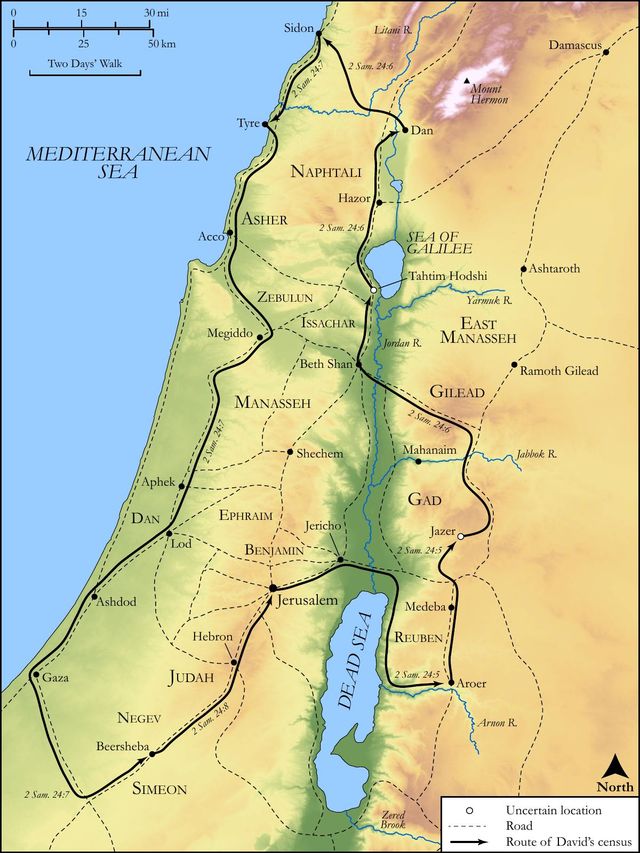
This pivotal verse is situated at the dramatic climax of 2 Samuel, specifically within the account of David's census and its dire consequences (the entirety of 2 Samuel 24). The narrative begins with the LORD's anger against Israel, which leads David to be incited (or to allow himself to be incited, as 1 Chronicles 21:1 clarifies, by Satan) to number the people. This act, likely born of a proud reliance on military strength rather than divine provision, is immediately recognized by David as a grievous sin (2 Samuel 24:10). The prophet Gad then presents David with three choices of judgment (2 Samuel 24:11-13), from which David chooses to "fall into the hand of the LORD" (2 Samuel 24:14). Consequently, a devastating plague descends upon Israel, claiming seventy thousand lives (2 Samuel 24:15). Verse 17 marks the precise moment David sees the angel of the LORD actively executing judgment, prompting his desperate and contrite plea. This heartfelt intercession directly precedes the halting of the plague at the threshing floor of Araunah and the subsequent building of an altar, which ultimately brings atonement and the cessation of the judgment (2 Samuel 24:18-25).
Historical & Cultural Context
In ancient Israel, a king was often viewed as the shepherd of his people, responsible for their well-being, protection, and spiritual integrity, a role David himself had embodied from his youth (compare Psalm 78:70-72). A census, while sometimes legitimate (e.g., for military conscription or taxation, as seen in Numbers 1), could also signify a king's presumptuous reliance on human might rather than God's covenant faithfulness, especially if undertaken without divine command or proper ritual (Exodus 30:12, which required a ransom for each person counted to avert plague). David's census appears to fall into this category of presumptuous pride and a lack of trust. The concept of corporate solidarity was also prominent, where the sin of a leader could bring severe consequences upon the entire community, as the king represented the nation before God. The "angel of the LORD" (מַלְאַךְ יְהוָה, malʾaḵ YHWH) often served as a divine agent, executing God's will, whether for deliverance or judgment. David's plea to "let thine hand... be against me" reflects a deep understanding of his leadership responsibility and the corporate ramifications of his actions.
Key Themes
ShowHideThis verse powerfully illustrates several key themes central to the Davidic narrative and broader biblical theology. First, the gravity of sin, especially leadership sin, is starkly portrayed, as David's single act of disobedience brings widespread suffering and death upon seventy thousand innocent lives. Second, profound and immediate repentance is evident in David's unequivocal confession, "Lo, I have sinned, and I have done wickedly," echoing the contrite heart seen elsewhere in his life (e.g., Psalm 51). Third, the theme of a shepherd's heart and intercession shines through David's compassionate identification with his people as "these sheep" and his willingness to bear the punishment himself, reminiscent of Moses' intercession for Israel (e.g., Exodus 32:32). Finally, the narrative highlights God's justice and mercy, demonstrating that while sin incurs judgment, genuine repentance and intercession can move God to halt the destructive consequences and open a path to atonement (as seen in 2 Samuel 24:25).
Exposition and Analysis
ShowHideKey Word Analysis
ShowHideThis verb (H2398), commonly translated "to sin," literally means "to miss the mark" or "to go astray." In David's confession, it signifies a failure to meet God's standard, a deviation from the path of righteousness and obedience. It implies a moral and spiritual transgression against God's will, a forfeiture of divine favor.
Derived from the root H5753, meaning "to crook, literally or figuratively; do amiss, bow down, make crooked, commit iniquity, pervert, (do) perverse(-ly), trouble, [idiom] turn, do wickedly, do wrong." This term is stronger than "sinned" and denotes a deliberate act of evil or injustice, a perversion of what is right. David's use of this word indicates his deep understanding that his census was not merely an error but a profound moral failing that had severe consequences.
This term (H6629) is a poignant metaphor for the people of Israel. It emphasizes their innocence, vulnerability, and blamelessness in the context of David's personal transgression. For David, a former shepherd and now the "shepherd" of God's people, this word underscores his pastoral responsibility and the tragic irony of his sin bringing harm to his own flock.
Verse Breakdown
ShowHide"And David spake unto the LORD when he saw the angel that smote the people"
This clause establishes the immediate and visceral catalyst for David's prayer. The visual, direct encounter with the angel of the LORD actively executing judgment is what breaks David's heart and drives him to direct, desperate communication with God. It underscores the terrifying reality and severity of divine judgment, prompting a response of profound humility and urgency.
"and said, Lo, I have sinned, and I have done wickedly"
This is David's unreserved, unequivocal confession. The exclamation "Lo!" (or "Behold!") emphasizes the immediacy and sincerity of his acknowledgment. He takes full personal responsibility, offering no excuses, no blame-shifting, and no attempts to mitigate his guilt. This raw, honest confession is foundational to his subsequent intercession and demonstrates a truly broken and contrite spirit.
"but these sheep, what have they done?"
Here, David transitions from confession to passionate intercession, expressing profound empathy and a sense of injustice on behalf of his people. He sees them as innocent victims, "sheep" who have done nothing to deserve the plague brought on by his sin. This rhetorical question highlights his pastoral heart, his deep concern for his flock, and his willingness to absorb the consequences of his actions rather than see them fall upon the blameless.
"let thine hand, I pray thee, be against me, and against my father's house."
This is the climax of David's intercession, a powerful act of self-sacrifice and substitution. He is willing to bear the full brunt of God's wrath himself, and even extend it to his own family and lineage, to spare the innocent people. This demonstrates a selfless love and a profound understanding of his responsibility as king, willing to take the punishment for his people's sake, embodying the very essence of a true shepherd.
Literary Devices
ShowHideThe verse is rich in Pathos, skillfully evoking deep emotion, particularly pity for the suffering people and profound admiration for David's contrite and self-sacrificial spirit. David's plea, "but these sheep, what have they done?", functions as a powerful Rhetorical Question, designed not to elicit an answer, but to highlight the perceived injustice of the people's suffering for his sin, thereby intensifying the emotional impact and underscoring his plea for substitution. The use of Metaphor is central, with the people of Israel being referred to as "these sheep," directly connecting to David's own background as a shepherd and his divinely appointed role as the shepherd-king of God's flock. This metaphor underscores their vulnerability, their dependence, and his ultimate responsibility for their welfare. Furthermore, the entire latter half of the verse functions as a profound act of Intercession, where David stands in the gap for his people, offering himself and his household as a substitute for the nation's punishment, a powerful act of solidarity and selflessness.
Theological and Thematic Connections
ShowHide2 Samuel 24:17 stands as a powerful testament to the nature of true repentance and the profound responsibility of leadership within God's covenant. David's immediate and unreserved confession, coupled with his willingness to bear the consequences of his sin, illustrates that genuine contrition involves not only acknowledging wrongdoing but also accepting its painful repercussions and seeking to mitigate harm to others. The verse underscores the corporate impact of individual sin, particularly for those in positions of authority, demonstrating how a leader's actions can bring widespread judgment or blessing upon an entire community. Yet, it also reveals God's responsiveness to a broken and contrite heart, showing that even in the midst of judgment, divine mercy can be extended through humble intercession and the offering of a substitute. David's self-sacrificial offer, though imperfect, foreshadows a greater, perfect sacrifice that would truly atone for sin.
Reflection and Application
ShowHideDavid's raw and immediate confession in 2 Samuel 24:17 serves as a timeless paradigm for our own approach to sin and responsibility. It challenges us to abandon excuses, blame-shifting, and self-justification, moving instead toward a posture of radical honesty and humility before God. His "shepherd's heart" for "these sheep" compels us to consider the ripple effects of our actions, especially for those under our care or influence. Leaders, whether in family, church, or society, are called to recognize the profound weight of their decisions and to cultivate a selfless concern for the well-being of those they lead, even to the point of personal cost. This verse is a powerful call to intercessory prayer, urging us to stand in the gap for others, bearing their burdens and seeking God's mercy on their behalf, even when their suffering is a consequence of our own failings. Ultimately, it reminds us that God, though perfectly just, is also infinitely merciful and responsive to genuine repentance and a humble spirit, always providing a way for atonement and restoration.
Questions for Reflection
ShowHideFAQ
ShowHideWhy was David's census considered a sin?
ShowHideThe biblical text does not explicitly state why the census was a sin, but contextual clues and theological implications strongly suggest it was rooted in a lack of trust in God and an act of pride. Numbering the people for military strength or taxation could imply a reliance on human might and resources rather than divine provision and protection, especially if undertaken without divine command or proper ritual. The parallel account in 1 Chronicles 21:1 states that "Satan stood up against Israel and incited David to take a census," indicating a spiritual temptation that exploited David's pride or desire for self-reliance. It was not the act of counting itself that was inherently sinful, but the underlying motivation and the spirit in which it was done, which demonstrated a departure from full dependence on the Lord and a presumptuous claim to authority that belonged solely to God.
What does David mean by "my father's house" in his plea?
ShowHideWhen David says, "let thine hand, I pray thee, be against me, and against my father's house," he is referring to his own immediate household, his family, and his lineage. In ancient Near Eastern culture, the head of the household represented the entire family, and consequences often extended to the family unit, reflecting the concept of corporate solidarity. By including "my father's house," David is intensifying his plea for personal and familial suffering over that of the innocent nation. It underscores his willingness to bear the full, corporate weight of the judgment, extending beyond himself to those closest to him, demonstrating the depth of his self-sacrificial intercession and his profound understanding of the repercussions of his actions.
Christ-Centered Fulfillment
ShowHideDavid's profound confession and self-sacrificial intercession in 2 Samuel 24:17 serve as a powerful Old Testament shadow pointing to the ultimate, perfect intercessor and substitute: Jesus Christ. David, the shepherd-king, pleads for his "sheep" and offers himself as a substitute for their punishment, demonstrating a deep love and willingness to bear the consequences of his own sin on behalf of his people. However, David himself was a sinner, and his intercession, while effective in halting the plague, could not fundamentally atone for sin or provide a lasting solution. In contrast, Jesus Christ is the Good Shepherd who lays down His life for the sheep. He, though utterly sinless, willingly became sin for us, bearing the full wrath of God on the cross, so that we might become the righteousness of God (2 Corinthians 5:21). David's poignant cry, "what have they done?", finds its ultimate answer in Christ, who truly "had done no violence, nor was any deceit in His mouth" (Isaiah 53:9), yet was "pierced for our transgressions" (Isaiah 53:5). Unlike David, whose intercession was a temporary reprieve, Christ's sacrifice provides eternal atonement and His ongoing intercession before the Father ensures our salvation and access to grace (Hebrews 7:25). Thus, David's broken plea anticipates the perfect Lamb of God who takes away the sin of the world (John 1:29).