


1 Kings 2:9
- וְעַתָּהve·'a·Tahand thereforeH6258Conj-w ¦ AdvAdverbוְandעַתָּהtherefore
- אַל'almay notH408NegParticle Negative
- תְּנַקֵּהוּte·na·Ke·huyou leave unpunished himH5352V-Piel-Imperf-2ms ¦ 3msVerb Piel Imperfect 2nd Singular Masculineתְּנַקֵּyou leave unpunishedהוּhim
- כִּיkiforH3588PrtParticle Conditional
- אִישׁ'ish[are] a manH376N-msNoun Singular Masculine Absolute
- חָכָםcha·KhamwiseH2450Adj-msAdjective Singular Masculine Absolute
- אָתָּה'A·tahyouH859Pro-2msPronoun Personal 2nd Singular Masculine
- וְיָדַעְתָּve·ya·da'·Taand you will knowH3045Conj-w ¦ V-Qal-ConsecPerf-2msVerb Qal Consecutive Perfect 2nd Singular Masculineוְandיָדַעְתָּyou will know
- אֵת'et<obj.>H853DirObjMParticle Object Indicator
- אֲשֶׁר'a·Sher[that] whichH834RelParticle Relative
- תַּעֲשֶׂהta·'a·sehyou will doH6213V-Qal-Imperf-2msVerb Qal Imperfect 2nd Singular Masculine
- לּוֹloto himPrep-l ¦ 3msSuffix Personal 3rd Singular Masculineלּtoוֹhim
- וְהוֹרַדְתָּve·ho·rad·Taand you will bring downH3381Conj-w ¦ V-Hiphil-ConsecPerf-2msVerb Hiphil Consecutive Perfect 2nd Singular Masculineוְandהוֹרַדְתָּyou will bring down
- אֶת'et<obj.>H853DirObjMParticle Object Indicator
- שֵׂיבָתוֹsei·va·Tohis grey hairH7872N-fsc ¦ 3msNoun Singular Feminine Constructשֵׂיבָתgrey hairוֹhis
- בְּדָםbe·Damin bloodH1818Prep-b ¦ N-msNoun Singular Masculine Absoluteבְּinדָםblood
- שְׁאוֹלshe·'olSheolH7585N-csNoun Singular common gender Absolute
English is a literal word-by-word gloss of the Hebrew, not the KJV's wording. Why?
This is the original text the KJV's translators worked from — each Hebrew word with its own literal English meaning in this verse, prepared by scholars at Tyndale House, Cambridge. The KJV translates whole sentences, not word by word, so its wording differs: one Hebrew word can become several English words, and the KJV may choose “the LORD” where the gloss reads “Yahweh”. Both are faithful — they answer different questions. For the KJV's own rendering, switch to the KJV text.
Details
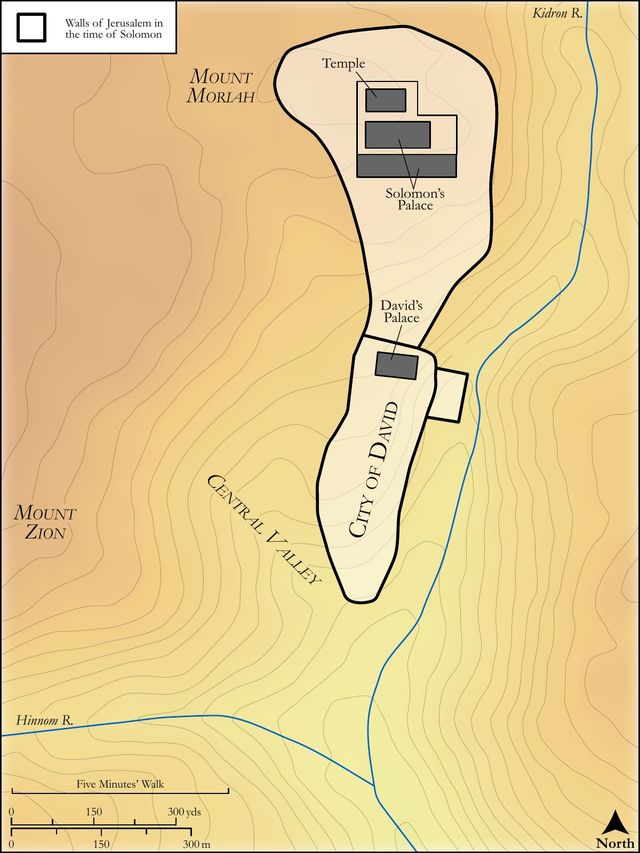
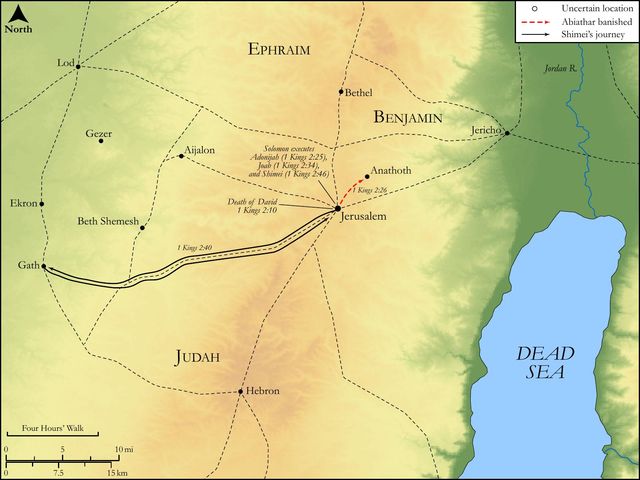
See on the biblical-era maps
Study this verse
Historical interpretation
Historical reception
1 surviving comment on this verse from the historical church.
After expounding the crimes of Joab and Shimei, David entrusts Solomon with their punishment, but only gives him few details about the manner and quality of the punishment: “You will do,” he says, “according to your wisdom.” It is as if he said, Since both Joab and Shimei committed such [terrible] actions, it is unlawful that they are left unpunished. Therefore, solve this matter with the help of your wisdom so that your equity may catch them in their iniquity: may your severity, with the revelation of new crimes, find out the sins that your father’s indulgence had hidden.
Continue studying 1 Kings 2:9 across the web’s major study libraries — every link below opens this exact verse, chapter, or book on the destination site.
Read & Compare
 BibleGatewayThis verse in more than 200 translations and 70 languages.
 Bible.comThe YouVersion reader — hundreds of translations, reading plans, and highlights.
 ESV.orgCrossway's official English Standard Version reader.
 NET BibleThe NET translation with 60,000+ translators' notes on every rendering decision.
 STEP BibleTyndale House's free study tool — original text, vocabulary, and scholarly resources.
 BibliaLogos Bible Software's free web reader.
 USCCBThe New American Bible (Revised Edition) with the U.S. bishops' study notes.
Commentaries
 BibleHub CommentariesDozens of classic commentaries on this verse, gathered on one page.
 StudyLightMore than 100 commentary sets — the largest collection on the web.
 BibleRefPlain-English commentary on what this verse means, verse by verse.
 Enduring WordDavid Guzik's free commentary on this chapter, widely used by Bible teachers.
 Bible Study ToolsVerse commentary alongside Greek and Hebrew study aids.
Original Language & Research
- BibleHub InterlinearThe verse word by word — original language, transliteration, and English.
- BibleHub LexiconEvery word's original-language definition and Strong's entry.
 Blue Letter BibleDeep-study tools — Strong's numbers, concordance, and word studies.
 SefariaThe Hebrew text with Rashi and centuries of Jewish commentary.
Sermons, Hymns & Audio


TrulyRandomVerse is not affiliated with these sites and doesn’t control their content. They’re linked because they’re genuinely useful.
Summary
In 1 Kings 2:9, King David, on his deathbed, issues a final, crucial directive to his son and successor, Solomon, concerning Shimei. Despite a prior oath of clemency, David charges Solomon not to let Shimei's past treachery go unaddressed. Recognizing Solomon's inherent wisdom, David instructs him to ensure that Shimei, despite his advanced age, meets a violent end as a consequence of his disloyalty. This command underscores the critical need for a new monarch to consolidate power, neutralize lingering threats, and establish the kingdom on a foundation of secure justice, even if it requires decisive and severe judgment.
Context
ShowHideLiterary Context
This verse is intricately woven into the fabric of David's final instructions to Solomon, marking the pivotal transition of power at the dawn of 1 Kings chapter 2. David, keenly aware of his impending death, meticulously outlines a strategic plan for Solomon to secure his nascent reign. The chapter commences with a foundational charge for Solomon to adhere to God's statutes and commandments (1 Kings 2:1-4), setting the spiritual and moral tone for his kingship. Following this, David addresses specific individuals crucial to the stability of the kingdom: Joab, the powerful but morally ambiguous general (1 Kings 2:5-6), and the loyal sons of Barzillai (1 Kings 2:7). The instructions concerning Shimei, detailed in 1 Kings 2:8-9, constitute David's final specific directive, underscoring its paramount importance in ensuring the kingdom's security and the definitive establishment of Solomon's authority. This structured approach reveals David's foresight and his desire to bequeath a stable and righteous kingdom to his successor.
Historical & Cultural Context
The historical setting for 1 Kings 2:9 is the precarious period of royal succession in ancient Israel, a time frequently fraught with political intrigue, purges, and the elimination of potential rivals or past enemies to solidify a new king's power. Shimei, a Benjamite from Bahurim and a relative of King Saul, had publicly and vehemently cursed King David and thrown stones at him during David's desperate flight from Absalom's rebellion (2 Samuel 16:5-13). While David had, in a moment of magnanimity and national reconciliation, sworn to Shimei that he would not put him to death upon his return to Jerusalem (2 Samuel 19:23), this oath was context-specific. David's deathbed charge to Solomon reflects the understanding that Shimei's deep-seated disloyalty and his potential to incite future sedition could not be permanently overlooked for the long-term security of the Davidic dynasty. The reference to Shimei's "hoar head" emphasizes his advanced age, highlighting that even the respect typically accorded to elders would not exempt him from the ultimate consequences of his treasonous actions in the eyes of royal justice and political necessity.
Key Themes
ShowHideThis verse significantly contributes to several profound themes within the Deuteronomistic History, particularly as presented in the book of 1 Kings. Firstly, it powerfully illustrates the theme of Justice and Accountability. Despite David's earlier act of mercy, the passage asserts that acts of rebellion and profound disloyalty against God's anointed king, though temporarily pardoned, ultimately demand a just resolution to ensure national stability and uphold divine order. Secondly, the verse highlights Solomon's Wisdom, as David explicitly states, "for thou art a wise man, and knowest what thou oughtest to do unto him." This declaration not only reflects David's trust but also foreshadows the extraordinary divine wisdom that God would later bestow upon Solomon, enabling him to discern and administer justice with unparalleled insight (1 Kings 3:9). Thirdly, the passage underscores the critical theme of Royal Authority and Stability. David's instructions are meticulously designed to neutralize any lingering threats to the throne, thereby securing Solomon's reign and preventing future insurrections. The decisive nature of the command, "bring thou his hoar head down to the grave with blood," vividly portrays the severe consequences awaiting those who dare to undermine the divinely appointed monarch. Finally, it touches upon the Consequences of Actions, demonstrating that past deeds, especially those involving treason, can have far-reaching repercussions, even if immediate retribution is deferred.
Exposition and Analysis
ShowHideKey Word Analysis
ShowHideThe Hebrew verb נָקָה (nâqâh), used here in the Hiphil stem (causative active) and negated ("hold him not guiltless," לֹא תְנַקֵּהוּ, lo' t'naqqehu), means "to be (or make) clean," "to acquit," or "to leave unpunished." In this context, it is an imperative not to declare Shimei innocent or to allow him to escape punishment. David's command emphasizes that Shimei's actions were not truly blameless, and despite any prior clemency, justice required an ultimate reckoning. This word underscores the moral and legal obligation to address Shimei's culpability decisively.
The adjective חָכָם (châkâm) describes an individual possessing intelligence, skill, and practical discernment. David's affirmation, "for thou art a wise man," is more than a compliment; it is an entrustment. It signifies that Solomon will possess the necessary insight to understand the political imperative and moral justification for dealing with Shimei, executing judgment with appropriate timing and method, rather than acting impulsively. This declaration sets the stage for Solomon's renowned wisdom, a central hallmark of his reign.
The noun שֵׂיבָה (sêybâh) literally translates to "gray hair" or "old age." In ancient Near Eastern cultures, gray hair often symbolized wisdom, experience, and commanded respect. However, in this specific context, it serves to highlight that Shimei's advanced age should not grant him immunity from the severe consequences of his profound disloyalty. The phrase "bring thou his hoar head down to the grave with blood" is a stark, vivid idiom, emphasizing that his age will not spare him from a violent, fatal end for his past treasonous actions, underscoring the gravity of his offense.
Verse Breakdown
ShowHide"Now therefore hold him not guiltless:"
This powerful opening clause functions as a direct, emphatic command, explicitly revoking any prior assumption of Shimei's innocence or permanent pardon. David, who had previously extended mercy in a moment of vulnerability, now instructs Solomon to ensure that Shimei's egregious act of cursing the anointed king is not overlooked or permitted to go unpunished. It conveys a profound legal and moral imperative to address the offense definitively.
"for thou art a wise man, and knowest what thou oughtest to do unto him;"
This phrase provides the rationale for the command and expresses David's profound trust in Solomon's discernment and capabilities. David deliberately places the burden of execution and the specific timing and method of judgment upon Solomon's wisdom. It implies that Solomon, with his divinely-granted wisdom, will grasp the political and spiritual necessity of neutralizing such a persistent threat to the throne, not out of personal vindictiveness, but for the enduring stability and justice of the kingdom.
"but his hoar head bring thou down to the grave with blood."
This is the grim, decisive, and unequivocal instruction. The term "hoar head" refers to Shimei's old age, underscoring that even his advanced years will not exempt him from the decreed judgment. The phrase "bring down to the grave with blood" is a potent idiom signifying a violent, fatal end. It is a direct command to execute Shimei, ensuring that his life concludes violently as a direct consequence of his treason, rather than allowing him to die peacefully of natural causes. This final, stark phrase emphasizes the extreme severity of Shimei's offense and the absolute necessity of eliminating a potential source of future rebellion for the security of the new reign.
Literary Devices
ShowHideThe verse masterfully employs several potent literary devices to convey David's final, weighty instruction with maximum impact. The most prominent is Idiom, particularly evident in the phrase "bring thou his hoar head down to the grave with blood." This is not a literal directive for a physical act but a vivid and forceful expression meaning "to put him to death violently." The inclusion of "hoar head" (gray hair) creates a striking Juxtaposition, contrasting the typical reverence and respect accorded to old age with the decreed violent and ignominious end, thereby emphasizing that even advanced years will not grant immunity from the consequences of severe disloyalty. Furthermore, the entirety of David's instruction serves as powerful Foreshadowing of Solomon's future actions and his emerging reputation for decisive, often harsh, justice, a recurring motif throughout the early chapters of 1 Kings. The command also carries a subtle yet profound sense of Irony, as David, who famously demonstrated mercy to his enemies (such as Saul), now instructs his son to execute a man he had previously pardoned, highlighting the complex and often ruthless demands of kingship and the ultimate need for long-term dynastic stability over immediate clemency.
Theological and Thematic Connections
ShowHideDavid's charge to Solomon regarding Shimei illuminates the Old Testament understanding of kingship, justice, and the consequences of disloyalty. While David had previously extended mercy, the long-term stability and divine mandate of the Israelite monarchy necessitated that acts of treason and profound disrespect against God's anointed king not ultimately go unpunished. This reflects the theological principle that divinely ordained authority must be upheld to maintain order, prevent chaos, and ensure the integrity of the covenant community. Solomon's wisdom, explicitly noted by David, would be profoundly tested in how he executed this command—not as an act of personal vengeance, but as a necessary measure for the security of the kingdom and the righteous administration of justice. This passage underscores that while divine mercy is a profound attribute, true justice often demands accountability for serious offenses, particularly those that undermine the very fabric of national and spiritual leadership.
Reflection and Application
ShowHideThe passage from 1 Kings 2:9, though deeply rooted in the specific historical and cultural context of ancient Israelite monarchy and Old Testament judicial law, offers enduring principles applicable to contemporary life, particularly concerning leadership, justice, and the inevitable consequences of our actions. It serves as a powerful reminder that authentic leadership, whether within families, communities, or spiritual organizations, frequently requires profound discernment to address past wrongs and ensure the long-term well-being, stability, and integrity of those under one's care. David's instruction to Solomon is not an endorsement of personal vendetta but a solemn charge to establish a just and secure reign, free from the lingering threats of rebellion and disloyalty. This necessitates a wise and discerning assessment of character and past behavior, understanding that unchecked disloyalty or unresolved grievances can fester, undermining future harmony and stability. For believers, this passage can prompt deep reflection on the seriousness of disloyalty, not only to earthly authorities but, more profoundly, to God himself. While God's mercy is boundless and freely offered, there are also divine principles of justice and accountability at play, and our actions, whether righteous or unrighteous, carry consequences—sometimes deferred, but ultimately certain. It challenges us to consider how we, as individuals and as communities, are called to uphold truth and justice, even when it involves making difficult decisions or confronting uncomfortable truths about past behaviors, always striving for a balance between grace and accountability.
Questions for Reflection
ShowHideFAQ
ShowHideWhy did David wait until his deathbed to address Shimei, given his earlier oath of clemency?
ShowHideDavid's initial oath to Shimei, recorded in 2 Samuel 19:23, was a specific act of political expediency and personal mercy enacted on the very day David returned to Jerusalem and re-established his throne after Absalom's rebellion. It was a moment of national reconciliation, where David chose to demonstrate grace and avoid immediate retribution to foster unity. However, David, as a seasoned and wise king, understood that Shimei's profound disloyalty and public cursing of the anointed king represented a significant, unaddressed threat to the long-term stability of the monarchy. By deferring the judgment to Solomon, David ensured that the issue would be handled not out of personal vengeance, but as a matter of state security and justice under a new, strong reign. David trusted Solomon's discerning wisdom to execute this judgment appropriately, recognizing that some acts of treason, even if temporarily pardoned, cannot be left unpunished indefinitely for the enduring health and security of the kingdom. Solomon later gave Shimei a chance to prove his loyalty by restricting him to Jerusalem, a condition Shimei ultimately violated, leading to his execution (1 Kings 2:36-46).
Christ-Centered Fulfillment
ShowHideWhile 1 Kings 2:9 details a grim act of Old Testament justice, its underlying principles find profound Christ-centered fulfillment not in earthly vengeance, but in the ultimate justice and perfect kingship of Jesus Christ. David's charge to Solomon to deal decisively with Shimei, a man whose disloyalty threatened the stability of the earthly kingdom, powerfully foreshadows the absolute authority and flawless justice of the coming King, Jesus. Unlike Solomon, who brought a "hoar head... down to the grave with blood" for earthly treason, Christ, the true and eternal Son of David, deals with the ultimate rebellion of sin and death. He is the supremely wise King who perfectly discerns all hearts and actions. While David's instruction resulted in physical death, Christ's sacrificial work on the cross brought spiritual life and reconciliation to those who were spiritually "dead in trespasses and sins" (Ephesians 2:1). He did not come to bring down the "hoar head" of an enemy with blood in an act of earthly retribution, but rather, through the shedding of His own precious blood, He disarmed the spiritual powers of darkness (Colossians 2:15) and conquered death itself, thereby ensuring eternal stability and security for His heavenly kingdom. Ultimately, all disloyalty and rebellion against God will be brought to perfect account, not by an earthly king, but by the Lamb of God who is also the triumphant Lion of Judah, ensuring perfect justice and the eternal, unshakeable security of His reign, where no enemy can ever threaten His glorious throne (Revelation 20:11-15).