


Genesis 42:38
- וַיֹּאמֶרvai·Yo·merand he saidH559Conj-w ¦ V-Qal-ConsecImperf-3msVerb Qal Consecutive Imperfect 3rd Singular Masculineוַandיֹּאמֶרhe said
- לֹאlo'notH3808NegParticle Negative
- יֵרֵדye·Redhe will go downH3381V-Qal-Imperf-3msVerb Qal Imperfect 3rd Singular Masculine
- בְּנִיbe·Nimy sonH1121N-msc ¦ 1csNoun Singular Masculine Constructבְּנִsonיmy
- עִמָּכֶם'i·ma·Khemwith youH5973Prep ¦ 2mpPreposition Definiteעִמָּwithכֶםyou
- כִּיkiforH3588PrtParticle Conditional
- אָחִיו'a·Chivhis brotherH251N-msc ¦ 3msNoun Singular Masculine Constructאָחִיbrotherוhis
- מֵתmethe has diedH4191V-Qal-Prtcpl-msVerb Qal Participle Singular Masculine Absolute
- וְהוּאve·Hu'and heH1931Conj-w ¦ Pro-3msPronoun Personal 3rd Singular Masculineוְandהוּאhe
- לְבַדּוֹle·va·Doto only himH905Prep-l ¦ N-msc ¦ 3msNoun Singular Masculine Constructלְtoבַדּonlyוֹhim
- נִשְׁאָרnish·'Ar[is] remainingH7604V-Niphal-Prtcpl-msVerb Niphal Participle Singular Masculine Absolute
- וּקְרָאָהוּu·ke·ra·'A·huand it will happen to himH7122Conj-w ¦ V-Qal-ConsecPerf-3ms ¦ 3msVerb Qal Consecutive Perfect 3rd Singular Masculineוּandקְרָאָit will happen toהוּhim
- אָסוֹן'a·sOnharmH611N-msNoun Singular Masculine Absolute
- בַּדֶּרֶךְba·De·rekhon the journeyH1870Prep-b ¦ N-csNoun Singular common gender Absoluteבַּon theדֶּרֶךְjourney
- אֲשֶׁר'a·SherwhichH834RelParticle Relative
- תֵּלְכוּte·le·khuyou will goH1980V-Qal-Imperf-2mpVerb Qal Imperfect 2nd Plural Masculine
- בָהּVahon <the> itPrep-b ¦ 3fsSuffix Personal 3rd Singular Feminineבָon <the>הּit
- וְהוֹרַדְתֶּםve·ho·rad·Temand you will cause to go downH3381Conj-w ¦ V-Hiphil-ConsecPerf-2mpVerb Hiphil Consecutive Perfect 2nd Plural Masculineוְandהוֹרַדְתֶּםyou will cause to go down
- אֶת'et<obj.>H853DirObjMParticle Object Indicator
- שֵׂיבָתִיsei·va·Timy gray hairH7872N-fsc ¦ 1csNoun Singular Feminine Constructשֵׂיבָתִgray hairיmy
- בְּיָגוֹןbe·ya·Gonin sorrowH3015Prep-b ¦ N-msNoun Singular Masculine Absoluteבְּinיָגוֹןsorrow
- שְׁאוֹלָהshe·'o·lahSheol towardsH7585N-cs ¦ SfxNoun Singular common gender AbsoluteשְׁאוֹלָSheolהtowards
English is a literal word-by-word gloss of the Hebrew, not the KJV's wording. Why?
This is the original text the KJV's translators worked from — each Hebrew word with its own literal English meaning in this verse, prepared by scholars at Tyndale House, Cambridge. The KJV translates whole sentences, not word by word, so its wording differs: one Hebrew word can become several English words, and the KJV may choose “the LORD” where the gloss reads “Yahweh”. Both are faithful — they answer different questions. For the KJV's own rendering, switch to the KJV text.
Details
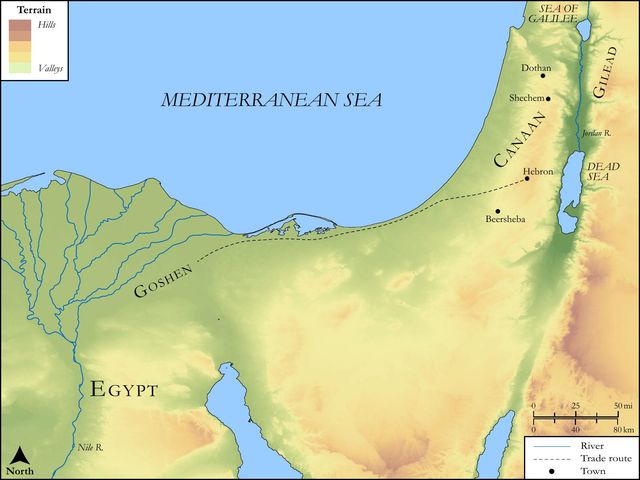
See on the biblical-era map


Study this verse
Public-domain commentary
Matthew Henry
From his Commentary on the Whole Bible. Henry comments on passages, not single verses — this entry covers Genesis 42:29–38.
Here is, 1. The report which Jacob's sons made to their father of the great distress they had been in in Egypt; how they had been suspected, and threatened, and obliged to leave Simeon a prisoner there, till they should bring Benjamin with them thither. Who would have thought of this when they left home? When we go abroad we should consider how many sad accidents, that we little think of, may befall us before we return home. We know not what a day may bring forth; we ought therefore to be always ready for the worst. 2. The deep impression this made upon the good man. The very bundles of money which Joseph returned, in kindness to his father, frightened him (Gen 42:35); for he concluded it was done with some mischievous design, or perhaps suspected his own sons to have committed some offence, and so to have run themselves into a praemunire - a penalty, which is intimated in what he says (Gen 42:36): Me have you bereaved. He seems to lay the fault upon them; knowing their characters, he feared they had provoked the Egyptians, and perhaps forcibly, or fraudulently, brought home their money. Jacob is here much out of temper. (1.) He has very melancholy apprehensions concerning the present state of his family: Joseph is not, and Simeon is not; whereas Joseph was in honour and Simeon in the way to it. Note, We often perplex ourselves with our own mistakes, even in matters of fact. True griefs may arise from false intelligence and suppositions, Sa2 13:31. Jacob gives up Joseph for gone, and Simeon and Benjamin as being in danger; and he concludes, All these things are against me. It proved otherwise, that all these were for him, were working together for his good and the good of his family: yet here he thinks them all against him. Note, Through our ignorance and mistake, and the weakness of our faith, we often apprehend that to be against us which is really for us. We are afflicted in body, estate, name, and relations; and we think all these things are against us, whereas these are really working for us the weight of glory. (2.) He is at present resolved that Benjamin shall not go down. Reuben will undertake to bring him back in safety (Gen 42:37), not so much as putting in, If the Lord will, nor expecting the common disasters of travellers; but he foolishly bids Jacob slay his two sons (which, it is likely, he was very proud of) if he brought him not back; as if the death of two grandsons could satisfy Jacob for the death of a son. No, Jacob's present thoughts are, My son shall not go down with you. He plainly intimates a distrust of them, remembering that he never saw Joseph since he had been with them; therefore, "Benjamin shall not go with you, by the way in which you go, for you will bring down my gray hairs with sorrow to the grave." Note, It is bad with a family when children conduct themselves so ill that their parents know not how to trust them.
Historical interpretation
Historical reception
1 surviving comment on this verse from the historical church.
After they had loaded their supplies, the [brothers] went up and related to their father the evils that they had endured on this trip and how they had become objects of ridicule in Egypt, having been falsely accused of spying in Egypt, and that they would not have escaped this suffering had it not been for Benjamin. While some of them were recounting these things to their father, the others were emptying their sacks, and behold, each one found his money in the opening of his sack.Jacob was full of grief because of all that had happened to them, but even more because of Simeon who was imprisoned. Although the brothers implored him daily to send Benjamin with them, Jacob would not assent because of his fear due to [what had happened to] Joseph. Then, when their grain had run out and all the children of his household were languishing from hunger, all his sons drew near and said to Jacob, “Spare Simeon for the sake of his children and be without your youngest son for a few days, lest Simeon’s wife be widowed of Simeon.”
Continue studying Genesis 42:38 across the web’s major study libraries — every link below opens this exact verse, chapter, or book on the destination site.
Read & Compare
 BibleGatewayThis verse in more than 200 translations and 70 languages.
 Bible.comThe YouVersion reader — hundreds of translations, reading plans, and highlights.
 ESV.orgCrossway's official English Standard Version reader.
 NET BibleThe NET translation with 60,000+ translators' notes on every rendering decision.
 STEP BibleTyndale House's free study tool — original text, vocabulary, and scholarly resources.
 BibliaLogos Bible Software's free web reader.
 USCCBThe New American Bible (Revised Edition) with the U.S. bishops' study notes.
Commentaries
 BibleHub CommentariesDozens of classic commentaries on this verse, gathered on one page.
 StudyLightMore than 100 commentary sets — the largest collection on the web.
 BibleRefPlain-English commentary on what this verse means, verse by verse.
 Enduring WordDavid Guzik's free commentary on this chapter, widely used by Bible teachers.
 Bible Study ToolsVerse commentary alongside Greek and Hebrew study aids.
Original Language & Research
- BibleHub InterlinearThe verse word by word — original language, transliteration, and English.
- BibleHub LexiconEvery word's original-language definition and Strong's entry.
 Blue Letter BibleDeep-study tools — Strong's numbers, concordance, and word studies.
 SefariaThe Hebrew text with Rashi and centuries of Jewish commentary.
Sermons, Hymns & Audio


TrulyRandomVerse is not affiliated with these sites and doesn’t control their content. They’re linked because they’re genuinely useful.
Summary
Jacob, overwhelmed by the presumed loss of Joseph and fiercely protective of his youngest son, Benjamin, adamantly refuses to allow him to accompany his brothers to Egypt. His declaration reveals the profound depth of his parental anguish, expressing a desperate fear that any harm befalling Benjamin would hasten his own death, bringing his advanced age and life to a sorrowful end in the grave. This moment encapsulates the devastating impact of perceived loss and the desperate measures a father would consider to protect his last remaining link to a cherished past.
Context
ShowHideLiterary Context
Genesis 42:38 is the climactic expression of Jacob's despair and resistance in the immediate aftermath of his ten eldest sons' first journey to Egypt. They have returned from purchasing grain, but Simeon has been held captive, and the powerful Egyptian governor (who is, unbeknownst to them, Joseph) has demanded that Benjamin, Jacob's youngest and only other son by Rachel, be brought to Egypt as proof of their honesty. This verse follows the sons' recounting of the governor's harsh demands and their father's initial, vehement refusal to part with Benjamin. It sets the stage for the escalating crisis of famine that will eventually force Jacob's hand, leading to the dramatic revelation and reunion that unfolds in later chapters of Genesis.
Historical & Cultural Context
The narrative is set against the backdrop of a severe, multi-year famine that gripped the entire region, forcing people from Canaan to seek sustenance in Egypt, where grain had been providentially stored (Genesis 41:56-57). In ancient Near Eastern patriarchal societies, the loss of children, especially sons, was a profound tragedy, threatening the family line and legacy. Jacob's deep attachment to Rachel's sons, Joseph and Benjamin, is a recurring theme, highlighting the cultural significance of lineage and the emotional weight of family bonds. His "gray hairs" symbolize not just old age but also the accumulated wisdom and dignity of a patriarch, which he fears would be brought to an undignified, sorrowful end.
Key Themes
ShowHideThis verse powerfully contributes to several overarching themes within the book of Genesis and the broader biblical narrative. It underscores the depth of parental love and suffering, particularly Jacob's profound anguish over the perceived loss of Joseph and the potential loss of Benjamin, his last link to his beloved Rachel. It also highlights the theme of divine providence working through human suffering and misunderstanding, as Jacob's despair is ironically rooted in his ignorance of Joseph's survival and exaltation in Egypt, a situation orchestrated by God for the preservation of Jacob's family and the fulfillment of the covenant promises. Furthermore, it foreshadows the theme of reconciliation and restoration that will culminate in the family's reunion and their eventual settlement in Egypt, demonstrating how God can turn seemingly insurmountable trials into opportunities for His redemptive plan, as seen in Joseph's later reflection.
Exposition and Analysis
ShowHideKey Word Analysis
ShowHideJacob's use of "my son" (referring to Benjamin) emphasizes the intensely personal and familial bond. This term, derived from a root meaning "to build," highlights the son's role as a builder or perpetuator of the family name and lineage. For Jacob, Benjamin is not merely a child but the last remaining "builder" from his most beloved wife, Rachel, making his potential loss devastating to his sense of family continuity and personal legacy.
This word denotes "hurt" or "calamity." Jacob's fear is not merely of inconvenience but of a severe, life-threatening disaster befalling Benjamin on the journey. It encapsulates the worst possible outcome, suggesting a fatal accident or violent encounter. This term reflects the deep anxiety and vulnerability felt by travelers in ancient times, where journeys were fraught with dangers.
This feminine noun refers to "old age" or "hoary hairs." It symbolizes Jacob's advanced years and the accumulated dignity and wisdom typically associated with a patriarch. The phrase "bring down my gray hairs with sorrow to the grave" is a powerful idiom indicating that the anticipated grief would be so overwhelming that it would literally hasten his death, stripping his old age of its natural dignity and leading him to an early, sorrowful demise in Sheol.
Verse Breakdown
ShowHide"And he said, My son shall not go down with you;"
Jacob's declaration is an emphatic refusal, born of deep-seated fear and protective instinct. The verb "go down" (yârad) literally means to descend, referring to the geographical descent from Canaan to Egypt, but it also carries the metaphorical weight of Benjamin entering a perilous situation from which he might not return.
"for his brother is dead, and he is left alone:"
This clause reveals the profound emotional wound that drives Jacob's resistance. His belief that Joseph is dead (a misconception, but a deeply held one) has left him with Benjamin as his sole remaining son by Rachel. The phrase "left alone" underscores Benjamin's perceived vulnerability and Jacob's unique attachment to him as the last vestige of a cherished past.
"if mischief befall him by the way in the which ye go,"
Jacob articulates the specific fear that governs his decision. "Mischief" (ʼâçôwn) refers to a calamitous event or fatal injury. The "way" (derek) highlights the inherent dangers of ancient travel—bandits, wild animals, or accidents—which Jacob vividly imagines befalling his beloved son.
"then shall ye bring down my gray hairs with sorrow to the grave."
This is the ultimate expression of Jacob's despair. "Gray hairs" (sêybâh) symbolize his old age and life itself. To "bring down with sorrow to the grave" (shᵉʼôwl) is a poignant Hebrew idiom signifying that the grief would be so overwhelming and unbearable that it would literally cause his death, hastening his descent into the realm of the dead. It expresses a profound emotional collapse, where life itself would lose its meaning without Benjamin.
Literary Devices
ShowHideJacob's lament in Genesis 42:38 is rich with literary devices that amplify its emotional impact. Hyperbole is evident in Jacob's assertion that Benjamin's loss would "bring down my gray hairs with sorrow to the grave." While expressing genuine and profound grief, this is an exaggerated statement intended to convey the utter devastation he anticipates, rather than a literal prediction of immediate death. The "gray hairs" themselves function as Symbolism, representing Jacob's advanced age, his life's journey, and the dignity of a patriarch. Their "descent with sorrow to the grave" symbolizes not just physical death but the complete crushing of his spirit and the end of his hopes. Furthermore, the entire situation is steeped in dramatic Irony. Jacob's deep despair is rooted in his belief that Joseph is dead, yet the very demand for Benjamin's presence in Egypt is orchestrated by Joseph himself, who is alive and in a position of power. This profound irony heightens the tension and foreshadows the dramatic revelation and joyful reunion that God is providentially orchestrating behind the veil of human suffering and misunderstanding.
Theological and Thematic Connections
ShowHideGenesis 42:38 powerfully illustrates the depth of human suffering and parental love, yet it simultaneously serves as a profound testament to God's unseen, sovereign providence. Jacob's despair, though genuine, is born of a limited perspective, unaware that God is actively working through his family's trials to bring about a greater good and fulfill His covenant promises. This narrative reminds us that even when circumstances appear bleak and our understanding is clouded by sorrow, God's redemptive plan is unfolding, often in ways that defy human expectation, transforming apparent tragedy into ultimate triumph and reconciliation.
Reflection and Application
ShowHideJacob's anguish in Genesis 42:38 resonates deeply with the human experience of fear, loss, and the overwhelming desire to protect those we love. His words remind us that life often presents us with agonizing choices, forcing us to confront our deepest fears and the limits of our control. In moments of profound uncertainty and perceived loss, it is natural to feel despair, just as Jacob did. However, this narrative also subtly invites us to consider the unseen hand of God at work, even when our circumstances seem utterly devastating. It challenges us to cultivate a deeper trust in divine providence, recognizing that God's plans are often far grander and more intricate than our immediate perspectives allow. Even when we are called to release what we hold most dear, or face what seems like unbearable sorrow, we are encouraged to lean into the truth that God is sovereign and can bring about unexpected restoration and joy from situations that appear to be utterly hopeless.
Questions for Reflection
ShowHideFAQ
ShowHideWhat is the significance of Jacob's phrase "bring down my gray hairs with sorrow to the grave"?
ShowHideThis phrase is a powerful Hebrew idiom expressing the most profound level of grief and despair. "Gray hairs" (Hebrew, sêybâh) symbolize old age, wisdom, and the dignity associated with a patriarch's long life. By saying his gray hairs would be "brought down with sorrow to the grave" (Hebrew, shᵉʼôwl), Jacob means that the loss of Benjamin would cause him such immense heartache and emotional distress that it would literally hasten his death, leading him to an early and sorrowful demise in the realm of the dead. It underscores the depth of his love for Benjamin and his presumed grief for Joseph, indicating that his very life force would be extinguished by such an unbearable sorrow, a sentiment echoed in other laments within the Old Testament, such as Genesis 37:35.
Christ-Centered Fulfillment
ShowHideJacob's despair over his "lost" son Joseph and his profound fear of losing Benjamin, only to discover Joseph alive and exalted as a savior for his family, provides a powerful and poignant foreshadowing of the redemptive work of Christ. Like Joseph, Jesus was rejected by His own people (John 1:11), seemingly "lost" through His death on the cross, yet was exalted by God the Father to bring salvation and reconciliation to His people (Philippians 2:8-11). The reunion of Jacob's family, brought about by Joseph's providential position and the eventual revelation of his identity, mirrors the ultimate reunion and peace that Christ brings between God and humanity through His atoning sacrifice. Jacob's sorrow is turned to overwhelming joy upon seeing Joseph again (Genesis 46:29-30), prefiguring the eschatological joy of believers who will finally see their Savior face to face, demonstrating God's sovereign plan to redeem His people through unexpected means, turning suffering and separation into glorious restoration and eternal life (Revelation 21:4).