


Genesis 42:37
Bible text: King James Version (1769 Blayney text) · Public domain
Bible text: Berean Standard Bible · Public domain
Bible text: American Standard Version (1901) · Public domain
Bible text: World English Bible, Messianic edition · Public domain
Bible text: Geneva Bible (1599) · Public domain
Bible text: Young's Literal Translation · Public domain
- וַיֹּאמֶרvai·Yo·merand he saidH559Conj-w ¦ V-Qal-ConsecImperf-3msVerb Qal Consecutive Imperfect 3rd Singular Masculineוַandיֹּאמֶרhe said
- רְאוּבֵןre·'u·VenReubenH7205N-proper-mNoun Proper Masculine
- אֶל'eltoH413PrepPreposition
- אָבִיו'a·Vivhis fatherH1N-msc ¦ 3msNoun Singular Masculine Constructאָבִיfatherוhis
- לֵאמֹרle·Mor<to> sayingH559Prep-l ¦ V-Qal-InfVerb Qal Infinitive Constructלֵ<to>אמֹרsaying
- אֶת'et<obj.>H853DirObjMParticle Object Indicator
- שְׁנֵיshe·Neitwo ofH8147Adj-cdcAdjective Numerical Dual common gender Construct
- בָנַיva·Naimy sonsH1121N-mpc ¦ 1csNoun Plural Masculine Constructבָנַsonsיmy
- תָּמִיתta·Mityou will killH4191V-Hiphil-Imperf-2msVerb Hiphil Imperfect 2nd Singular Masculine
- אִם'imifH518PrtParticle Conditional
- לֹאlo'notH3808NegParticle Negative
- אֲבִיאֶנּוּ'a·vi·'E·nuI will bring himH935V-Hiphil-Imperf-1cs ¦ 3msVerb Hiphil Imperfect 1st Singular common genderאֲבִיאֶI will bringנּוּhim
- אֵלֶיךָ'e·Lei·khato youH413Prep ¦ 2msPreposition Definiteאֵלֶיtoךָyou
- תְּנָהte·Nahput !H5414V-Qal-Imp-2ms ¦ SfxVerb Qal Imperative 2nd Singular Masculineתְּנָputה!
- אֹתוֹ'o·To<obj.> himH853DirObjM ¦ 3msParticle Object Indicatorאֹת<obj.>וֹhim
- עַל'alonH5921PrepPreposition
- יָדִיya·Dimy handH3027N-csc ¦ 1csNoun Singular common gender Constructיָדִhandיmy
- וַאֲנִיva·'a·Niand IH589Conj-w ¦ Pro-1csPronoun Personal 1st Singular common genderוַandאֲנִיI
- אֲשִׁיבֶנּוּ'a·shi·Ve·nuI will bring back himH7725V-Hiphil-Imperf-1cs ¦ 3msVerb Hiphil Imperfect 1st Singular common genderאֲשִׁיבֶI will bring backנּוּhim
- אֵלֶיךָ'e·Lei·khato youH413Prep ¦ 2msPrepositionאֵלֶיtoךָyou
English is a literal word-by-word gloss of the Hebrew, not the KJV's wording. Why?
This is the original text the KJV's translators worked from — each Hebrew word with its own literal English meaning in this verse, prepared by scholars at Tyndale House, Cambridge. The KJV translates whole sentences, not word by word, so its wording differs: one Hebrew word can become several English words, and the KJV may choose “the LORD” where the gloss reads “Yahweh”. Both are faithful — they answer different questions. For the KJV's own rendering, switch to the KJV text.
Details
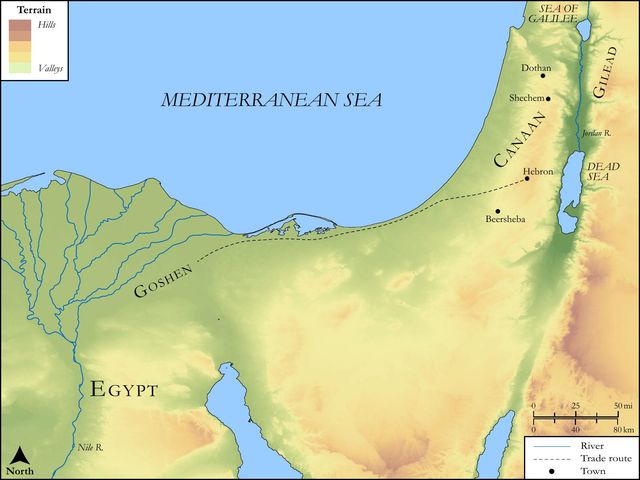
See on the biblical-era maps


Study this verse
Public-domain commentary
Matthew Henry
From his Commentary on the Whole Bible. Henry comments on passages, not single verses — this entry covers Genesis 42:29–38.
Here is, 1. The report which Jacob's sons made to their father of the great distress they had been in in Egypt; how they had been suspected, and threatened, and obliged to leave Simeon a prisoner there, till they should bring Benjamin with them thither. Who would have thought of this when they left home? When we go abroad we should consider how many sad accidents, that we little think of, may befall us before we return home. We know not what a day may bring forth; we ought therefore to be always ready for the worst. 2. The deep impression this made upon the good man. The very bundles of money which Joseph returned, in kindness to his father, frightened him (Gen 42:35); for he concluded it was done with some mischievous design, or perhaps suspected his own sons to have committed some offence, and so to have run themselves into a praemunire - a penalty, which is intimated in what he says (Gen 42:36): Me have you bereaved. He seems to lay the fault upon them; knowing their characters, he feared they had provoked the Egyptians, and perhaps forcibly, or fraudulently, brought home their money. Jacob is here much out of temper. (1.) He has very melancholy apprehensions concerning the present state of his family: Joseph is not, and Simeon is not; whereas Joseph was in honour and Simeon in the way to it. Note, We often perplex ourselves with our own mistakes, even in matters of fact. True griefs may arise from false intelligence and suppositions, Sa2 13:31. Jacob gives up Joseph for gone, and Simeon and Benjamin as being in danger; and he concludes, All these things are against me. It proved otherwise, that all these were for him, were working together for his good and the good of his family: yet here he thinks them all against him. Note, Through our ignorance and mistake, and the weakness of our faith, we often apprehend that to be against us which is really for us. We are afflicted in body, estate, name, and relations; and we think all these things are against us, whereas these are really working for us the weight of glory. (2.) He is at present resolved that Benjamin shall not go down. Reuben will undertake to bring him back in safety (Gen 42:37), not so much as putting in, If the Lord will, nor expecting the common disasters of travellers; but he foolishly bids Jacob slay his two sons (which, it is likely, he was very proud of) if he brought him not back; as if the death of two grandsons could satisfy Jacob for the death of a son. No, Jacob's present thoughts are, My son shall not go down with you. He plainly intimates a distrust of them, remembering that he never saw Joseph since he had been with them; therefore, "Benjamin shall not go with you, by the way in which you go, for you will bring down my gray hairs with sorrow to the grave." Note, It is bad with a family when children conduct themselves so ill that their parents know not how to trust them.
Continue studying Genesis 42:37 across the web’s major study libraries — every link below opens this exact verse, chapter, or book on the destination site.
Read & Compare
 BibleGatewayThis verse in more than 200 translations and 70 languages.
 Bible.comThe YouVersion reader — hundreds of translations, reading plans, and highlights.
 ESV.orgCrossway's official English Standard Version reader.
 NET BibleThe NET translation with 60,000+ translators' notes on every rendering decision.
 STEP BibleTyndale House's free study tool — original text, vocabulary, and scholarly resources.
 BibliaLogos Bible Software's free web reader.
 USCCBThe New American Bible (Revised Edition) with the U.S. bishops' study notes.
Commentaries
 BibleHub CommentariesDozens of classic commentaries on this verse, gathered on one page.
 StudyLightMore than 100 commentary sets — the largest collection on the web.
 BibleRefPlain-English commentary on what this verse means, verse by verse.
 Enduring WordDavid Guzik's free commentary on this chapter, widely used by Bible teachers.
 Bible Study ToolsVerse commentary alongside Greek and Hebrew study aids.
Original Language & Research
- BibleHub InterlinearThe verse word by word — original language, transliteration, and English.
- BibleHub LexiconEvery word's original-language definition and Strong's entry.
 Blue Letter BibleDeep-study tools — Strong's numbers, concordance, and word studies.
 SefariaThe Hebrew text with Rashi and centuries of Jewish commentary.
Sermons, Hymns & Audio


TrulyRandomVerse is not affiliated with these sites and doesn’t control their content. They’re linked because they’re genuinely useful.
Summary
Genesis 42:37 records Reuben's desperate and extreme pledge to his father Jacob, offering the lives of his own two sons as surety for the safe return of Benjamin from Egypt. This dramatic vow underscores the family's dire situation due to the severe famine and their urgent need to comply with the Egyptian governor's demand to bring Benjamin, the youngest brother, to secure more food and Simeon's release. Reuben's offer highlights the immense pressure and the lengths to which the brothers felt compelled to go to ensure their survival and maintain familial unity.
Context
ShowHideLiterary Context
This verse is situated at a critical juncture in the Joseph narrative, immediately following Jacob's profound distress and refusal to send Benjamin to Egypt, fearing that "mischief" would befall him, especially after the presumed loss of Joseph (Genesis 42:36). The brothers have returned from Egypt with a limited supply of grain and Simeon held captive, facing a renewed demand from the Egyptian governor (Joseph, whom they do not recognize) to bring Benjamin as proof of their honesty. Jacob's deep-seated grief and protective instincts create an impasse, as he clings tightly to Benjamin, the only remaining child of his beloved Rachel. In this moment of familial deadlock and escalating crisis, Reuben, as the eldest, steps forward with an extraordinary and shocking proposition, attempting to assert leadership and responsibility by offering a desperate guarantee to persuade his hesitant father. This scene sets the stage for the eventual journey to Egypt with Benjamin, a pivotal moment in the unfolding narrative of Joseph and his brothers.
Historical & Cultural Context
The lands of the patriarchs frequently experienced devastating famines, making the securing of food a matter of life and death, often necessitating migration or desperate measures. Egypt, with its reliance on the Nile, was often a granary for the region, as depicted in this narrative. Within this cultural backdrop, oaths and vows were deeply significant and legally binding commitments. Extreme pledges, such as offering the lives of one's children, while shocking to modern sensibilities, were employed to convey absolute sincerity and an unbreakable commitment, underscoring the gravity of the situation and the speaker's resolve. While not necessarily implying literal execution, the severity of the oath was understood. The cultural emphasis on family lineage, the preservation of sons, and the importance of a patriarch's decision further magnify the weight of Reuben's offer and Jacob's dilemma.
Key Themes
ShowHideGenesis 42:37 contributes to several overarching themes within the broader Jacob narrative and the book of Genesis. It powerfully illustrates the theme of divine providence operating even amidst human desperation, flawed decisions, and seemingly insurmountable obstacles, as God's plan for Jacob's family continues to unfold despite their trials. The verse also highlights the complex dynamics of familial relationships, particularly the evolving leadership roles and responsibilities among Jacob's sons, and their ongoing struggle with guilt and the consequences of their past actions towards Joseph (Genesis 37:18-28). Furthermore, it emphasizes the theme of testing and transformation, as Joseph's actions in Egypt serve to test his brothers' character, fostering repentance and preparing them for reconciliation, a process ultimately designed to preserve the nascent nation of Israel.
Exposition and Analysis
ShowHideReuben's plea in Genesis 42:37 is a moment of profound desperation, revealing the immense pressure on Jacob's family. The KJV text states, "And Reuben spake unto his father, saying, Slay my two sons, if I bring him not to thee: deliver him into my hand, and I will bring him to thee again." This is not merely a promise but an oath of the highest, most shocking magnitude, designed to break through Jacob's resistance.
Key Word Analysis
ShowHideReferring to Jacob, the patriarch, this term emphasizes the familial hierarchy and the ultimate authority Reuben is attempting to sway. The word signifies not just a biological parent but also a figure of authority, a chief, and the foundational head of the family, whose decision is paramount for the family's survival. Reuben's plea is directed at this revered figure, highlighting the deep respect and desperate need for his consent.
"a son (as a builder of the family name), in the widest sense." Reuben's offer to "Slay my two sons" (literally "my two builders of the family name") underscores the extreme nature of his vow. Sons were critical for perpetuating the family line, inheritance, and identity in ancient Israelite culture. To offer them as collateral demonstrates the ultimate commitment and the profound crisis facing the family, where even the continuation of their lineage seems secondary to immediate survival.
Referring to "the open one (indicating power, means, direction, etc.)." When Reuben says "deliver him into my hand," he is requesting full responsibility and control over Benjamin's safety. The "hand" here symbolizes his power, ability, and personal guarantee to protect Benjamin and bring him back. It's an assertion of his capability and commitment, appealing to Jacob to trust his capacity to fulfill his promise.
Verse Breakdown
ShowHide"And Reuben spake unto his father, saying,"
This opening clause sets the scene for Reuben's dramatic intervention. As the eldest son, Reuben is expected to take initiative and responsibility, particularly in a crisis that threatens the entire family. His direct address to "his father" underscores the patriarchal authority Jacob holds and the gravity of the conversation, indicating a plea of utmost seriousness.
"Slay my two sons, if I bring him not to thee:"
This is the core of Reuben's shocking, conditional oath. He offers the lives of his own children as a guarantee for Benjamin's safe return. While likely hyperbolic and not intended for literal execution, this extreme vow was a culturally understood way to convey absolute sincerity and an unbreakable commitment, designed to overcome Jacob's profound reluctance and fear. It highlights the desperate measures the family felt compelled to consider.
"deliver him into my hand, and I will bring him to thee again."
This final clause articulates Reuben's request and his promise. He asks Jacob to entrust Benjamin into his personal care and responsibility ("into my hand"), signifying his willingness to take full accountability. The accompanying promise, "and I will bring him to thee again," is the desired outcome, emphasizing his unwavering commitment to Benjamin's safe return and the family's survival, which hinges on this perilous journey to Egypt.
Literary Devices
ShowHideThe passage employs several significant literary devices to convey the intensity of the moment. Hyperbole is central to Reuben's vow, "Slay my two sons," an extreme and shocking declaration not meant to be taken literally but to convey the utmost sincerity and desperation. This exaggeration highlights the severity of the famine and the family's plight. Foreshadowing is also present, as Reuben's ultimately ineffective pledge subtly anticipates Judah's later, more compelling and self-sacrificial guarantee for Benjamin (Genesis 43:8-9). This contrast sets up the evolving leadership dynamics among Jacob's sons, hinting at Judah's eventual prominence. Furthermore, the narrative uses pathos to evoke sympathy for Jacob's distress and the brothers' desperation, drawing the reader into the emotional intensity of the family's crisis.
Theological and Thematic Connections
ShowHideReuben's desperate vow, while extreme, is a poignant illustration of human attempts to control circumstances and secure outcomes in the face of overwhelming adversity. It highlights the limitations of human pledges, especially when contrasted with God's perfect and unfailing covenant promises. Even in this moment of profound familial crisis and flawed human proposals, God's sovereign hand is at work, orchestrating events for the preservation of Jacob's family and the eventual formation of the nation of Israel. The narrative subtly reveals that true security and deliverance do not ultimately rest on human guarantees, however extreme, but on divine providence, which guides and sustains His people.
Reflection and Application
ShowHideReuben's desperate offer to sacrifice his sons serves as a stark reminder of the lengths to which individuals may go when faced with overwhelming fear, grief, or perceived necessity. It challenges us to consider our own responses in moments of crisis: Do we resort to extreme, self-devised solutions, or do we seek God's wisdom and trust in His provision? While Reuben's intentions were likely noble—to save his family from starvation and secure Simeon's release—his method was both shocking and ultimately ineffective in swaying Jacob. This narrative encourages us to reflect on the nature of our commitments and the source of our security. Instead of relying on human guarantees or desperate measures, we are called to place our trust in God's faithfulness, knowing that His plans for our good are far superior to our own flawed attempts to control outcomes. The larger story of Joseph and his brothers, culminating in reconciliation and preservation, beautifully illustrates that God can work through complex and challenging circumstances, transforming what was meant for evil into good (Genesis 50:20). This invites us to cultivate a deeper reliance on divine providence, even when circumstances seem most dire, finding peace in His perfect timing and unfailing care.
Questions for Reflection
ShowHideFAQ
ShowHideWhy did Reuben make such an extreme vow, offering his own sons?
ShowHideReuben's vow to sacrifice his two sons was an oath of the highest possible magnitude in the household of Jacob, designed to convey absolute sincerity and an unbreakable commitment. He was desperate to convince his father, Jacob, of the dire necessity of sending Benjamin to Egypt to secure food for the starving family and Simeon's release. Reuben hoped such a severe pledge would overcome Jacob's profound reluctance and deep-seated fear for his youngest son, given the previous presumed loss of Joseph.
Was Jacob expected to literally kill Reuben's sons if Benjamin wasn't returned?
ShowHideNo, it was not necessarily expected that Jacob would literally execute his grandsons. The severity of the oath was primarily rhetorical and hyperbolic, intended to impress upon Jacob the gravity of the situation and Reuben's unwavering resolve. It was a cultural idiom used to emphasize the absolute certainty of his commitment and the dire consequences he was willing to face, rather than a literal demand for infanticide.
Did Jacob accept Reuben's offer and send Benjamin with him?
ShowHideNo, Jacob initially refused Reuben's offer, as shown in the very next verse (Genesis 42:38). His grief and fear for Benjamin's safety outweighed Reuben's dramatic pledge. It was later that Judah, a younger brother, provided a more persuasive and effective pledge, offering himself as surety for Benjamin, which ultimately convinced Jacob to let Benjamin go (Genesis 43:8-9).
Christ-Centered Fulfillment
ShowHideReuben's desperate, yet ultimately ineffective, pledge to sacrifice his sons highlights the profound limitations of human guarantees and the inherent need for a perfect surety. While Reuben offered the lives of his descendants—a promise Jacob did not accept—Jesus Christ, the true and eternal firstborn over all creation, willingly offered His own life as the ultimate and perfect guarantee for humanity. Unlike Reuben's flawed attempt to secure a temporary salvation from famine, Jesus, the Lamb of God who takes away the sin of the world, literally gave His life as a perfect sacrifice, not for the return of a brother, but for the eternal redemption and reconciliation of all who believe. His pledge was not a hyperbolic oath but a literal, self-sacrificial act that fully satisfied divine justice (Romans 3:25-26) and secured true, lasting life for His people, fulfilling God's covenant promises with absolute certainty (2 Corinthians 1:20). He is the faithful and true witness (Revelation 3:14) whose sacrifice is eternally sufficient, a perfect and complete fulfillment of all that human vows could only imperfectly grasp.