


1 Kings 2:6
Bible text: King James Version (1769 Blayney text) · Public domain
Bible text: Berean Standard Bible · Public domain
Bible text: American Standard Version (1901) · Public domain
Bible text: World English Bible, Messianic edition · Public domain
Bible text: Geneva Bible (1599) · Public domain
Bible text: Young's Literal Translation · Public domain
- וְעָשִׂיתָve·'a·Si·taand you will actH6213Conj-w ¦ V-Qal-ConsecPerf-2msVerb Qal Consecutive Perfect 2nd Singular Masculineוְandעָשִׂיתָyou will act
- כְּחָכְמָתֶךָke·cha·khe·ma·Te·khaaccording to your wisdomH2451Prep-k ¦ N-fsc ¦ 2msNoun Singular Feminine Constructכְּaccording toחָכְמָתֶwisdomךָyour
- וְלֹאve·lo'and notH3808Conj-w ¦ NegParticle Negativeוְandלֹאnot
- תוֹרֵדto·Redyou must bring downH3381V-Hiphil-Imperf-2msVerb Hiphil Imperfect 2nd Singular Masculine
- שֵׂיבָתוֹsei·va·Tohis grey hairH7872N-fsc ¦ 3msNoun Singular Feminine Constructשֵׂיבָתgrey hairוֹhis
- בְּשָׁלֹםbe·sha·Lomin peaceH7965Prep-b ¦ N-msNoun Singular Masculine Absoluteבְּinשָׁלֹםpeace
- שְׁאֹלshe·'OlSheolH7585N-csNoun Singular common gender Absolute
English is a literal word-by-word gloss of the Hebrew, not the KJV's wording. Why?
This is the original text the KJV's translators worked from — each Hebrew word with its own literal English meaning in this verse, prepared by scholars at Tyndale House, Cambridge. The KJV translates whole sentences, not word by word, so its wording differs: one Hebrew word can become several English words, and the KJV may choose “the LORD” where the gloss reads “Yahweh”. Both are faithful — they answer different questions. For the KJV's own rendering, switch to the KJV text.
Details
See on the biblical-era maps

Study this verse
Historical interpretation
Nine Centuries of Reception
2 surviving comments on this verse. Each one is dated, so this reads as a timeline rather than a list.
Select a marker to jump to its quote. Markers stagger vertically where authors wrote within a few decades of each other.
[David] orders Solomon to punish [Joab], not out of viciousness or hatred for him but because he knew that he was wicked and that, if he had acted with hostility against him who was a mature man, he would act even worse against a young man, so that the kingdom would become unstable, and the house would not be firmly established. Therefore he entrusts his son with the revenge against him who had offended him, in order that, after the killing of that evil man by the hand of the new king, he might be feared by everyone, and no revolt might ever occur.
To hell: This word hell doth not here signify the place or state of damnation; but the place and state of the dead.
Continue studying 1 Kings 2:6 across the web’s major study libraries — every link below opens this exact verse, chapter, or book on the destination site.
Read & Compare
 BibleGatewayThis verse in more than 200 translations and 70 languages.
 Bible.comThe YouVersion reader — hundreds of translations, reading plans, and highlights.
 ESV.orgCrossway's official English Standard Version reader.
 NET BibleThe NET translation with 60,000+ translators' notes on every rendering decision.
 STEP BibleTyndale House's free study tool — original text, vocabulary, and scholarly resources.
 BibliaLogos Bible Software's free web reader.
 USCCBThe New American Bible (Revised Edition) with the U.S. bishops' study notes.
Commentaries
 BibleHub CommentariesDozens of classic commentaries on this verse, gathered on one page.
 StudyLightMore than 100 commentary sets — the largest collection on the web.
 BibleRefPlain-English commentary on what this verse means, verse by verse.
 Enduring WordDavid Guzik's free commentary on this chapter, widely used by Bible teachers.
 Bible Study ToolsVerse commentary alongside Greek and Hebrew study aids.
Original Language & Research
- BibleHub InterlinearThe verse word by word — original language, transliteration, and English.
- BibleHub LexiconEvery word's original-language definition and Strong's entry.
 Blue Letter BibleDeep-study tools — Strong's numbers, concordance, and word studies.
 SefariaThe Hebrew text with Rashi and centuries of Jewish commentary.
Sermons, Hymns & Audio


TrulyRandomVerse is not affiliated with these sites and doesn’t control their content. They’re linked because they’re genuinely useful.
Summary
In his final charge to his son Solomon, King David issues a grave command concerning Joab, his long-serving but notoriously violent and disloyal army commander. This deathbed instruction is not merely a personal vendetta but a strategic and moral directive for Solomon to establish the integrity and stability of his nascent reign by administering justice for Joab's past transgressions, ensuring that the veteran general does not die a peaceful, unpunished death.
Context
ShowHideLiterary Context
This verse is a pivotal component of David's final testament and instructions to Solomon, meticulously recorded in 1 Kings 2:1-9. David commences by exhorting Solomon to walk in God's ways and diligently keep His statutes and commandments, promising divine faithfulness to his dynasty if he adheres to this covenant (1 Kings 2:3). He then transitions from general spiritual principles to specific directives regarding key individuals who have impacted his reign. Joab is presented as a figure who must finally face justice for his past deeds, a stark contrast to David's instruction to show enduring kindness to the sons of Barzillai (1 Kings 2:7) and his cautionary warning about Shimei (1 Kings 2:8-9). This particular charge concerning Joab highlights the complex, often brutal, realities of kingship in that day and the imperative of consolidating power through decisive, righteous action, even against formidable figures.
Historical & Cultural Context
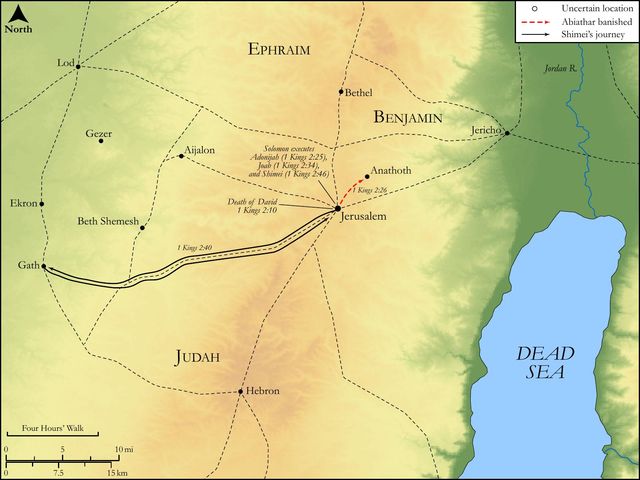
Joab, David's nephew, had served as the unwavering, yet often ruthless, commander of David's army for decades, proving instrumental in numerous military victories that solidified David's kingdom. However, his loyalty was often intertwined with a brutal pragmatism that led to acts David himself condemned. Notably, Joab treacherously murdered Abner, the commander of Saul's army, after David had already made a covenant of peace with him (2 Samuel 3:27), and later, he similarly murdered Amasa, David's newly appointed army commander (2 Samuel 20:10). These acts were considered egregious bloodguilt, defiling the land and demanding retribution according to Mosaic Law. Furthermore, Joab had recently demonstrated profound disloyalty to David's chosen successor by siding with Adonijah in his attempt to usurp the throne from Solomon (1 Kings 1:7). David, likely constrained by his advanced age, political realities, or Joab's immense power base, had been unable to bring Joab to justice during his own lifetime, thus passing this weighty and necessary responsibility to Solomon.
Key Themes
ShowHideThe paramount theme in this verse is the imperative of administering justice and accountability, particularly for those in positions of significant power who have committed grave wrongs. David's charge underscores the king's sacred duty to uphold law and order, ensuring that the kingdom is founded upon righteousness and divine principles rather than unpunished violence or disloyalty. It vividly illustrates the inevitable consequences of sin, demonstrating that even long-past transgressions, if left unaddressed, can profoundly undermine the moral fabric and stability of a nation. This instruction also subtly reveals David's own imperfection and perhaps regret, as he entrusts Solomon with a task he himself could not or would not complete, emphasizing the need for decisive and uncompromised leadership in the new era. Finally, David's directive to "do therefore according to thy wisdom" foreshadows and directly calls upon Solomon's renowned wisdom (1 Kings 3:9), indicating that this was not a simple act of vengeance but a complex, strategic decision requiring divine discernment for the ultimate good and purification of the kingdom.
Exposition and Analysis
ShowHideKey Word Analysis
ShowHideThis primitive root is exceptionally broad in its meaning, encompassing "to do or make, in the broadest sense and widest application." In this context, it signifies Solomon's active responsibility to "accomplish" or "execute" David's charge. It implies a deliberate, intentional act of bringing something to pass, rather than a passive observation. David is commanding Solomon to take decisive action to fulfill this directive.
Derived from the root meaning "to be wise," chokmâh refers not merely to intellectual knowledge but to practical skill, discernment, and the ability to make sound judgments in governing and living. David is not asking Solomon to act impulsively or vengefully, but to apply his God-given sagacity to a complex political and moral situation, ensuring that justice is meted out in a manner that secures the kingdom's stability and righteousness. It suggests a calculated, divinely guided approach.
This feminine noun literally means "old age" or "gray hair." The phrase emphasizes Joab's advanced years and long life. The command "let not his hoar head go down to the grave in peace" is a stark reversal of the cultural ideal of an elder dying peacefully and honorably after a full life. It signifies that despite his age, Joab's violent and disloyal actions demand a violent and dishonorable end, denying him the natural, tranquil conclusion typically afforded to revered elders.
This foundational Hebrew word encompasses much more than just the absence of conflict; it signifies completeness, wholeness, well-being, prosperity, and tranquility. To "go down to the grave in peace" would imply a blessed, undisturbed, and righteous end, indicative of a life lived in harmony with God and man. David's command is the antithesis of this, demanding that Joab's death be marked by the consequences of his unrighteous deeds, denying him the spiritual and physical tranquility of a peaceful passing.
Verse Breakdown
ShowHide"Do therefore according to thy wisdom"
This is a direct, imperative command for Solomon to act decisively and intelligently. David is not prescribing the exact method or timing of Joab's demise, but rather entrusting Solomon with the discernment to execute justice in a way that is both effective for securing the throne and righteous in God's eyes. It implies a calculated, strategic move, requiring careful thought and divine guidance, rather than an emotional outburst or rash decision.
"and let not his hoar head go down to the grave in peace"
This is a powerful, idiomatic expression demanding that Joab not be permitted to die a natural, tranquil death unpunished for his egregious crimes. Despite Joab's old age and his long, albeit complicated, service to David, his past murders of innocent men and recent treason against Solomon's divinely ordained succession were unatoned for. David charges Solomon to ensure that Joab faces the full, deserved consequences of his violent and disloyal actions before his life ends, thereby cleansing the kingdom of bloodguilt and solidifying Solomon's reign on a foundation of uncompromised justice.
Literary Devices
ShowHideThe verse employs several potent literary devices that amplify its gravity and meaning. The most prominent is Idiom, specifically the phrase "let not his hoar head go down to the grave in peace." This is a well-understood Hebrew expression that signifies denying someone a tranquil, honorable, and natural death, instead implying a violent or premature end due to unpunished transgressions. There is also an element of Euphemism, as David's command to not let Joab die "in peace" is a veiled but clear directive for Solomon to execute him, avoiding explicit instruction for a violent act while clearly implying it. Furthermore, a subtle Irony is present: Joab, a man who lived by the sword and committed numerous acts of violence and treachery, is to be denied the very peace and tranquil end that he so often deprived others of. This serves as a grim reflection of the principle that "he who lives by the sword will die by the sword," and underscores the cyclical nature of unaddressed violence.
Theological and Thematic Connections
ShowHideThis verse, while seemingly harsh and rooted in the complexities of kingship in David's day, underscores profound theological principles concerning divine justice and human responsibility. It highlights that God is a God of absolute justice who requires accountability for actions, especially those involving bloodshed and betrayal. While David himself was a man of war and imperfect in his own administration of justice, his final charge to Solomon reflects an understanding that true peace and stability in a kingdom are predicated upon the righteous administration of justice, even when it is difficult or involves powerful figures. The unpunished shedding of innocent blood was considered a defilement of the land, demanding retribution to restore moral order and prevent further divine judgment. Solomon's subsequent action, therefore, is not merely personal vengeance but a necessary act to establish his reign on a foundation of righteousness and to remove a dangerous, disloyal element that threatened the divinely ordained succession and the spiritual purity of the nation.
Reflection and Application
ShowHideThe command in 1 Kings 2:6, though rooted in the specific context of ancient Israelite kingship and the dire need for political stability, holds timeless lessons about justice, accountability, and the weighty responsibilities of leadership. It reminds us that unaddressed wrongs, particularly those involving grave moral offenses, can have lasting and corrosive consequences, and that true societal peace often requires difficult decisions to uphold righteousness. While believers are called to personal forgiveness and reconciliation, this passage also speaks to the legitimate role of governing authorities in administering justice, ensuring that those who commit severe offenses are held accountable, regardless of their status, past achievements, or personal connections. It challenges us to consider what it means to establish a just order in our own spheres of influence—whether in families, communities, or nations—and to seek divine discernment ("wisdom") in navigating complex situations where difficult choices must be made for the greater good, for the sake of integrity, and for the establishment of a righteous foundation.
Questions for Reflection
ShowHideFAQ
ShowHideWhy didn't David deal with Joab himself during his reign?
ShowHideDavid's inability to deal with Joab himself is a complex issue, likely stemming from a combination of factors. Joab was an incredibly powerful figure, deeply entrenched and popular within the army, having served as David's loyal, albeit ruthless, commander for decades. He commanded immense respect and fear, making him indispensable in military campaigns and difficult to challenge without risking widespread dissent. David himself acknowledged Joab's formidable power and the difficulty of controlling him, famously lamenting after Abner's murder, "I am weak this day, though anointed king; and these men, the sons of Zeruiah, are too hard for me" (2 Samuel 3:39). Furthermore, David may have been politically constrained, fearing that any direct action against Joab could lead to a military revolt or severely destabilize his kingdom during times of vulnerability. By entrusting this crucial task to Solomon, David was not only ensuring that justice was finally served for Joab's past atrocities but also providing Solomon with a vital opportunity to assert his authority, consolidate his new reign, and decisively remove a potent threat and a symbol of unpunished injustice from his kingdom.
Christ-Centered Fulfillment
ShowHideWhile 1 Kings 2:6 speaks of an earthly king administering justice through the sword, it ultimately points to the greater King, Jesus Christ, who establishes perfect justice and brings true, eternal peace. Earthly kings like David and Solomon, despite their wisdom and divinely appointed authority, were imperfect and could only offer partial justice, often through violent means, and their reigns were temporary. Joab's refusal to "go down to the grave in peace" serves as a stark foreshadowing of the ultimate judgment against all who reject God's righteous rule and persist in unrighteousness. In Christ, we see the perfect fulfillment of divine justice: He is the righteous Judge who will ultimately bring every deed into account, executing perfect judgment with unwavering righteousness (Revelation 19:11). Yet, unlike earthly kings who execute justice upon others, Christ uniquely bore the full weight of God's justice for humanity's sin upon Himself on the cross. Through His atoning sacrifice, He made a way for those who trust in Him to receive not judgment, but reconciliation, allowing them to "go down to the grave in peace" and even rise to eternal life, justified by faith in His blood (Romans 3:25-26). He is the true "Prince of Peace" (Isaiah 9:6-7) who establishes His eternal kingdom not through the violence of earthly retribution, but through His transforming grace, bringing a peace that transcends human understanding and a justice that perfectly reconciles God and humanity.