


1 Kings 2:10
- וַיִּשְׁכַּבvai·yish·Kavand he lay downH7901Conj-w ¦ V-Qal-ConsecImperf-3msVerb Qal Consecutive Imperfect 3rd Singular Masculineוַandיִּשְׁכַּבhe lay down
- דָּוִדda·VidDavidH1732N-proper-mNoun Proper Masculine
- עִם'imwithH5973PrepPreposition
- אֲבֹתָיו'a·vo·Tavhis ancestorsH1N-fpc ¦ 3msNoun Plural Feminine Constructאֲבֹתָיancestorsוhis
- וַיִּקָּבֵרvai·yi·ka·Verand he was buriedH6912Conj-w ¦ V-Niphal-ConsecImperf-3msVerb Niphal Consecutive Imperfect 3rd Singular Masculineוַandיִּקָּבֵרhe was buried
- בְּעִירbe·'Irin [the] city ofH5892Prep-b ¦ N-fscNoun Singular Feminine Constructבְּinעִיר[the] city of
- דָּוִדda·VidDavidH1732N-proper-mNoun Proper Masculine
English is a literal word-by-word gloss of the Hebrew, not the KJV's wording. Why?
This is the original text the KJV's translators worked from — each Hebrew word with its own literal English meaning in this verse, prepared by scholars at Tyndale House, Cambridge. The KJV translates whole sentences, not word by word, so its wording differs: one Hebrew word can become several English words, and the KJV may choose “the LORD” where the gloss reads “Yahweh”. Both are faithful — they answer different questions. For the KJV's own rendering, switch to the KJV text.
Details
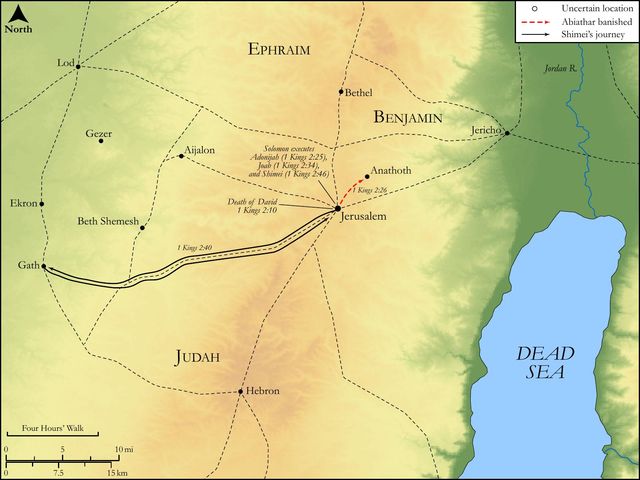
See on the biblical-era map
Study this verse
Historical interpretation
Historical reception
1 surviving comment on this verse from the historical church.
By Abel we understand the Christian who cleaves to God, as David says: “It is good for me to adhere to my God,” that is, to attach oneself to heavenly things and to shun the earthly. Elsewhere he says, “My soul has fainted in your word,” thus indicating his rule of life was directed toward reflections on the Word and not on the pleasures of this world. Wherefore we realize that what we read concerning David in the book of Kings is not an idle statement but is said with due weight and reflection: “And he was laid with his fathers.” We are given to understand that his faith was like that of his father’s. It is clear, then, that there is reference here to participation in life and not to the burial of a body.
Continue studying 1 Kings 2:10 across the web’s major study libraries — every link below opens this exact verse, chapter, or book on the destination site.
Read & Compare
 BibleGatewayThis verse in more than 200 translations and 70 languages.
 Bible.comThe YouVersion reader — hundreds of translations, reading plans, and highlights.
 ESV.orgCrossway's official English Standard Version reader.
 NET BibleThe NET translation with 60,000+ translators' notes on every rendering decision.
 STEP BibleTyndale House's free study tool — original text, vocabulary, and scholarly resources.
 BibliaLogos Bible Software's free web reader.
 USCCBThe New American Bible (Revised Edition) with the U.S. bishops' study notes.
Commentaries
 BibleHub CommentariesDozens of classic commentaries on this verse, gathered on one page.
 StudyLightMore than 100 commentary sets — the largest collection on the web.
 BibleRefPlain-English commentary on what this verse means, verse by verse.
 Enduring WordDavid Guzik's free commentary on this chapter, widely used by Bible teachers.
 Bible Study ToolsVerse commentary alongside Greek and Hebrew study aids.
Original Language & Research
- BibleHub InterlinearThe verse word by word — original language, transliteration, and English.
- BibleHub LexiconEvery word's original-language definition and Strong's entry.
 Blue Letter BibleDeep-study tools — Strong's numbers, concordance, and word studies.
 SefariaThe Hebrew text with Rashi and centuries of Jewish commentary.
Sermons, Hymns & Audio


TrulyRandomVerse is not affiliated with these sites and doesn’t control their content. They’re linked because they’re genuinely useful.
Summary
1 Kings 2:10 solemnly records the death and burial of King David, marking the peaceful conclusion of his forty-year reign over Israel and Judah. This pivotal verse signifies not only the universal truth of human mortality, even for God's chosen leaders, but also the divinely ordained continuity of the Davidic dynasty. David's interment in Jerusalem, the city he established as the nation's spiritual and political heart, powerfully underscores his enduring legacy and the unwavering faithfulness of God's covenant promises as power transitions to his son, Solomon.
Context
ShowHideLiterary Context
This verse serves as the narrative climax to the account of David's final days and the succession of Solomon, which begins in 1 Kings 1. Immediately preceding 1 Kings 2:10 is David's poignant and comprehensive final charge to his son Solomon, detailed in 1 Kings 2:1-9. In this charge, David imparts crucial instructions regarding walking in God's ways, upholding the Law, and dealing justly with both loyal supporters and lingering adversaries from his past. This final testament functions as David's spiritual and political will, meticulously setting the stage for Solomon's reign and ensuring the stability and integrity of the nascent kingdom. David's death, therefore, is not an abrupt or chaotic end, but the culmination of a carefully orchestrated and divinely sanctioned succession, bringing to a close the narrative arc of his extraordinary life as presented across 1 Samuel, 2 Samuel, and the opening chapters of 1 Kings.
Historical & Cultural Context
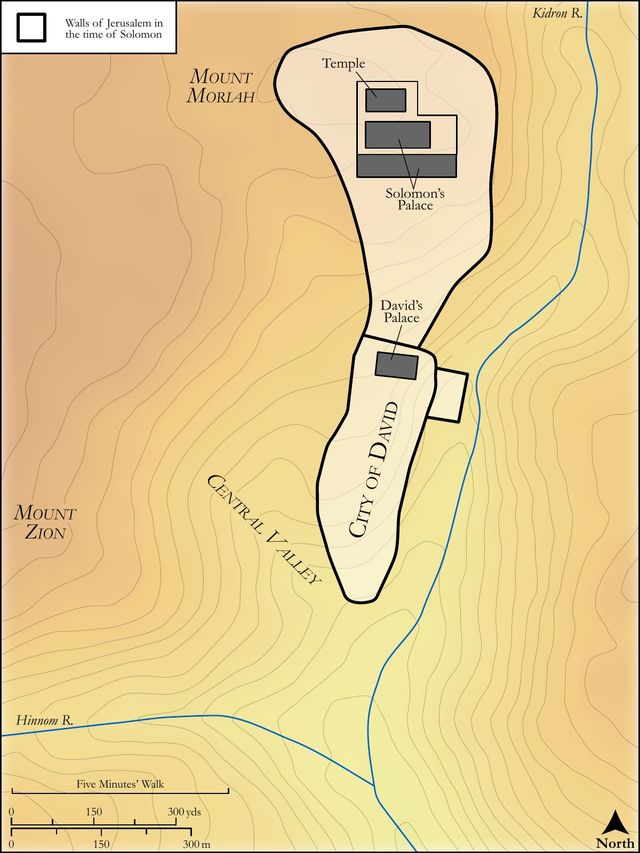
In the volatile political landscape of the ancient Near East, the succession of kings was frequently a tumultuous and violent affair, often characterized by assassinations, coups, and civil strife. In stark contrast, David's death and Solomon's ascension, as meticulously depicted in 1 Kings, represent a remarkably peaceful, orderly, and divinely sanctioned transfer of power. David had dedicated decades to unifying the disparate tribes of Israel, establishing Jerusalem as a neutral and central capital (2 Samuel 5:6-10), and laying the foundational groundwork for a stable monarchy. His burial in the "city of David" (Jerusalem) was far more than a mere geographical detail; it was a profound statement of his unparalleled legacy, his foundational role in shaping the nation's identity, and the enduring significance of the capital city he had secured and elevated. This peaceful transition underscores the unique nature of Israel's monarchy, guided by divine promise rather than solely by human ambition.
Key Themes
ShowHide1 Kings 2:10 encapsulates several profound and enduring themes. Firstly, it powerfully highlights the mortality of even great leaders, serving as a poignant reminder that despite David's unparalleled status as "a man after God's own heart" (1 Samuel 13:14), he was ultimately subject to death, a universal human experience. Secondly, the verse emphasizes succession and legacy, as David's life's work of establishing and consolidating the kingdom seamlessly passes to his son, underscoring the critical importance of preparing and entrusting future generations with leadership responsibilities. Thirdly, it affirms the continuity of God's covenant promises, particularly the unconditional Davidic Covenant (2 Samuel 7:12-16), which guaranteed an enduring dynasty. David's death does not negate this divine promise but rather marks a new and crucial phase in its unfolding. Finally, the narrative emphasizes a peaceful transition of power, a testament to God's guiding hand and David's wise and diligent preparations, standing in sharp contrast to the typical violent successions prevalent in the ancient world.
Exposition and Analysis
ShowHideKey Word Analysis
ShowHideThis primitive root verb signifies "to lie down," encompassing various purposes such as rest, sexual connection, or, as in this context, "decease." When used in the idiom "slept with his fathers," it serves as a common euphemism for death, conveying a peaceful and natural passing rather than a violent or premature end. It suggests that David died in a state of rest, gathered to his ancestors, implying he was in good standing with God and his community.
This primitive word refers to a "father" in a literal, immediate, or figurative, remote sense. In the phrase "slept with his fathers," it refers to David's ancestors, emphasizing the continuity of lineage and the ancient practice of being buried among one's family or tribal forebears. It highlights the idea of joining a collective, an ancestral line, rather than an isolated departure.
This primitive root verb means "to inter" or "to bury." The act of burial was profoundly significant in ancient Israel, signifying respect, honor, and proper closure for the deceased. Being buried in a specific location, especially a place of honor like the "city of David," underscored the individual's status and lasting legacy. For David, it cemented his connection to the kingdom he established and the covenant promises associated with it.
Verse Breakdown
ShowHide"So David slept with his fathers"
This initial clause employs a common and poignant euphemism for death, indicating that King David's earthly life reached its peaceful conclusion. It marks the end of an era—the reign of Israel's most celebrated and pivotal king—and serves as a powerful reminder of the universal truth of mortality that applies even to divinely chosen and highly esteemed leaders. The use of "slept" suggests a quiet, natural passing, contrasting sharply with the often violent and tumultuous ends that characterized many kings in the ancient Near East.
"and was buried in the city of David"
This second clause specifies the honorable location of David's interment. His burial in Jerusalem, the city he famously conquered from the Jebusites (2 Samuel 5:6-9), made his capital, and infused with profound national and religious significance, underscores his foundational and enduring role in Israel's history. This act of burial in the heart of his kingdom symbolizes his lasting legacy, the deep respect accorded to him, and the continuity of the Davidic line in the very city he established as the seat of the monarchy and the future site of the Temple.
Literary Devices
ShowHideThe verse employs several potent literary devices to convey its profound meaning and solemnity. The most prominent is Idiom, specifically the phrase "slept with his fathers," which is a widespread euphemism for death found throughout the Old Testament. This idiom not only softens the stark reality of death but also connects the deceased to a lineage of ancestors, implying a peaceful, natural passing and a joining with those who have gone before. Functioning as a Euphemism, this phrase allows the sacred text to refer to David's death without using a more direct or harsh term, maintaining a tone of reverence. Furthermore, the mention of "the city of David" carries significant Symbolism. It is not merely a geographical location but represents David's monumental legacy, his establishment of a unified kingdom, and the very heart of Israel's national and religious identity. His burial there solidifies his permanent connection to the kingdom he forged and the covenant God made with him, making the city a tangible symbol of his enduring impact.
Theological and Thematic Connections
ShowHide1 Kings 2:10 stands as a profound theological statement concerning God's absolute sovereignty over life and death, the nature of divinely appointed leadership, and the unwavering continuity of His divine plan. David's death, while a moment of profound national sorrow, is presented not as an interruption but as an integral part of God's unfolding purpose, ensuring the peaceful and legitimate transfer of authority to Solomon. It serves as a powerful reminder that even the most influential human instruments of God's will have a finite time on earth, yet God's covenant promises endure beyond the lifespan of any individual. The Davidic covenant, in particular, is powerfully reaffirmed through this orderly succession, pointing to an enduring royal line that would ultimately culminate in the Messiah, whose kingdom would be eternal.
Reflection and Application
ShowHideThe passing of King David, a figure of immense spiritual and political stature, offers profound and timeless lessons for all believers. It confronts us with the sobering reality of our own mortality, urging us to consider the enduring legacy we are actively building—not just for ourselves, but for future generations and, most importantly, for the glory of God. David's life, though marked by significant flaws and failures, was ultimately characterized by a deep devotion to God's purposes, and his peaceful death and orderly succession highlight the critical importance of finishing well and diligently preparing others to carry on the work. For those in positions of leadership, this narrative emphasizes the crucial responsibility of mentorship, intentional succession planning, and faithfully entrusting the next generation with the vision, values, and ongoing mission. For every individual, it underscores the absolute sovereignty of God, who orchestrates both the rise and fall of leaders, ensuring that His overarching plan for redemption and the advancement of His kingdom continues uninterrupted through the ebb and flow of human history. Our lives, like David's, are meant to serve God's purpose in our unique generation, leaving a foundation upon which others can build for His eternal glory.
Questions for Reflection
ShowHideFAQ
ShowHideWhat does the phrase "slept with his fathers" truly mean, and does it imply a specific understanding of the afterlife?
ShowHideThe phrase "slept with his fathers" is a common Hebrew idiom used throughout the Old Testament to denote a peaceful and natural death. It does not necessarily imply a specific theological understanding of the afterlife, such as a conscious existence in a particular spiritual realm, but rather signifies that the individual died naturally and was gathered to their ancestors through burial. It conveys a sense of continuity within the family line and often suggests that the person died in good standing, in contrast to those who died violently or were denied a proper burial. This idiom is used for many kings of Israel and Judah, as well as patriarchs like Abraham in Genesis 47:30 and Moses in Deuteronomy 31:16.
Why was being buried in the "city of David" significant for King David?
ShowHideBeing buried in the "city of David" (Jerusalem) was profoundly significant for David because it was the city he conquered from the Jebusites (2 Samuel 5:6-9), made his capital, and transformed into the political and spiritual heart of Israel. His burial there symbolized his enduring legacy and his foundational role in establishing the unified kingdom. It was an honor reserved for kings and important figures, cementing his identity with the very city that embodied his greatest achievements and the future of the Davidic dynasty. This burial place underscored his permanent connection to the kingdom he forged and the covenant God made with him regarding an everlasting throne.
Christ-Centered Fulfillment
ShowHideWhile 1 Kings 2:10 marks the solemn conclusion of David's earthly reign, it simultaneously points forward with profound theological significance to a greater King and an eternal kingdom found in Jesus Christ. David's death underscores the temporary and finite nature of all human rule, even that of a "man after God's own heart." Yet, God's unconditional covenant with David (2 Samuel 7:12-16) promised an enduring dynasty, a promise that finds its ultimate and everlasting fulfillment not in Solomon, but in Jesus. Jesus is repeatedly identified throughout the New Testament as the "Son of David" (Matthew 1:1), the rightful and eternal heir to David's throne, whose kingdom will have no end (Luke 1:32-33). Unlike David, who "slept with his fathers and was buried," Jesus, though he truly died, did not remain in the grave. As Peter powerfully preached on the Day of Pentecost, David's tomb is still with them, but God raised Jesus from the dead, fulfilling prophecy and demonstrating His eternal reign over death itself (Acts 2:29-31). Thus, David's peaceful passing in 1 Kings 2:10 foreshadows the necessity of a King who would ultimately conquer death, the "Root and Offspring of David" who reigns forevermore (Revelation 22:16).