


Deuteronomy 31:16
Bible text: King James Version (1769 Blayney text) · Public domain
Bible text: King James Version with Strong's numbers · Public domain
Bible text: Berean Standard Bible · Public domain
Bible text: American Standard Version (1901) · Public domain
Bible text: World English Bible, Messianic edition · Public domain
Bible text: Geneva Bible (1599) · Public domain
Bible text: Young's Literal Translation · Public domain
- וַיֹּאמֶרvai·Yo·merand he saidH559Conj-w ¦ V-Qal-ConsecImperf-3msVerb Qal Consecutive Imperfect 3rd Singular Masculineוַandיֹּאמֶרhe said
- יְהוָהYah·wehYahwehH3068N-properNoun Proper Title
- אֶל'eltoH413PrepPreposition
- מֹשֶׁהmo·ShehMosesH4872N-proper-mNoun Proper Masculine
- הִנְּךָhi·ne·Khahere youH2009Prt ¦ 2msParticle Interjectionהִנְּhereךָyou
- שֹׁכֵבsho·Khev[are] about to lie downH7901V-Qal-Prtcpl-msVerb Qal Participle Singular Masculine Absolute
- עִם'imwithH5973PrepPreposition
- אֲבֹתֶיךָ'a·vo·Tei·khayour ancestorsH1N-fpc ¦ 2msNoun Plural Feminine Constructאֲבֹתֶיancestorsךָyour
- וְקָםve·Kamand it will ariseH6965Conj-w ¦ V-Qal-ConsecPerf-3msVerb Qal Consecutive Perfect 3rd Singular Masculineוְandקָםit will arise
- הָעָםha·'Amthe peopleH5971Art ¦ N-msNoun Singular Masculine Absoluteהָtheעָםpeople
- הַזֶּהha·Zeh<the> thisH2088Art ¦ PrtParticle Demonstrativeהַ<the>זֶּהthis
- וְזָנָהve·za·Nahand it will act as a prostituteH2181Conj-w ¦ V-Qal-ConsecPerf-3msVerb Qal Consecutive Perfect 3rd Singular Masculineוְandזָנָהit will act as a prostitute
- אַחֲרֵי'a·cha·ReiafterH310Adj-mpcAdjective Numerical Plural Masculine Construct
- אֱלֹהֵי'e·lo·Hei[the] gods ofH430N-mpcNoun Plural Masculine Construct
- נֵכַרne·khar<the> foreignness ofH5236N-mscNoun Singular Masculine Construct
- הָאָרֶץha·'A·retzthe landH776Art ¦ N-fsNoun Singular Feminine Absoluteהָtheאָרֶץland
- אֲשֶׁר'a·SherwhereH834RelParticle Relative
- הוּאhu'itH1931Pro-3msPronoun Personal 3rd Singular Masculine
- בָאva'[is] about to goH935V-Qal-Prtcpl-msVerb Qal Participle Singular Masculine Absolute
- שָׁמָּהSha·mahthere towardsH8033Adv ¦ SfxAdverbשָׁמָּthereהtowards
- בְּקִרְבּוֹbe·kir·Boin its midstH7130Prep-b ¦ N-msc ¦ 3msNoun Singular Masculine Constructבְּinקִרְבּmidstוֹits
- וַעֲזָבַנִיva·'a·za·Va·niand it will forsake meH5800Conj-w ¦ V-Qal-ConsecPerf-3ms ¦ 1csVerb Qal Consecutive Perfect 3rd Singular Masculineוַandעֲזָבַit will forsakeנִיme
- וְהֵפֵרve·he·Ferand it will breakH6565Conj-w ¦ V-Hiphil-ConsecPerf-3msVerb Hiphil Consecutive Perfect 3rd Singular Masculineוְandהֵפֵרit will break
- אֶת'et<obj.>H853DirObjMParticle Object Indicator
- בְּרִיתִיbe·ri·Timy covenantH1285N-fsc ¦ 1csNoun Singular Feminine Constructבְּרִיתִcovenantיmy
- אֲשֶׁר'a·SherwhichH834RelParticle Relative
- כָּרַתִּיka·Ra·tiI madeH3772V-Qal-Perf-1csVerb Qal Perfect 1st Singular common gender
- אִתּוֹ'i·Towith itH854Prep ¦ 3msPreposition Definiteאִתּwithוֹit
English is a literal word-by-word gloss of the Hebrew, not the KJV's wording. Why?
This is the original text the KJV's translators worked from — each Hebrew word with its own literal English meaning in this verse, prepared by scholars at Tyndale House, Cambridge. The KJV translates whole sentences, not word by word, so its wording differs: one Hebrew word can become several English words, and the KJV may choose “the LORD” where the gloss reads “Yahweh”. Both are faithful — they answer different questions. For the KJV's own rendering, switch to the KJV text.
Details
See on the biblical-era map
Study this verse
Public-domain commentary
Matthew Henry
From his Commentary on the Whole Bible. Henry comments on passages, not single verses — this entry covers Deuteronomy 31:14–21.
Here, I. Moses and Joshua are summoned to attend the divine majesty at the door of the tabernacle, Deu 31:14. Moses is told again that he must shortly die; even those that are most ready and willing to die have need to be often reminded of the approach of death. In consideration of this, he must come himself to meet God; for whatever improves our communion with God furthers our preparation for death. He must also bring Joshua with him to be presented to God for a successor, and to receive his commission and charge. Moses readily obeys the summons, for he was not one of those that look with an evil eye upon their successors, but, on the contrary, rejoiced in him.
II.God graciously gives them the meeting:
He appeared in the tabernacle (as the shechinah used to appear) in a pillar of a cloud, v. 15. This is the only time in all this book that we read of the glory of God appearing, whereas we often read of it in the three foregoing books, which perhaps signifies that in the latter days, under the evangelical law, such visible appearances as these of the divine glory are not to be expected, but we must take heed to the more sure word of prophecy.
III.He tells Moses that, after his death, the covenant which he had taken so much pains to make between Israel and their God would certainly be broken. 1. That Israel would forsake God, v. 16. And we may be sure that if the covenant between God and man be broken the blame must lie on man, it is he that breaks it; we have often observed it, That God never leaves any till they first leave him. Worshipping the gods of the Canaanites (who had been the natives, but henceforward were to be looked upon as the strangers of that land) would undoubtedly be counted a deserting of God, and, like adultery, a violation of the covenant. Thus still those are revolters from Christ, and will be so adjudged, who either make a god of their money by reigning covetousness or a god of their belly by reigning sensuality. Those that turn to other gods (v. 18) forsake their own mercies. This apostasy of theirs is foretold to be the effect of their prosperity (v. 20): They shall have eaten and filled themselves; this is all they will aim at in eating, to gratify their own appetites, and then they will wax fat, grow secure and sensual; their security will take off their dread of God and his judgments; and their sensuality will incline them to the idolatries of the heathen, which made provision for the flesh to fulfil the lusts of it. Note, God has a clear and infallible foresight of all the wickedness of the wicked, and has often covenanted with those who he knew would deal very treacherously (Isa 48:8), and conferred many favours on those who he knew would deal very ungratefully. 2. That then God would forsake Israel; and justly does he cast those off who had so unjustly cast him off (v. 17): My anger shall be kindled against them, and I will forsake them. His providence would forsake them, no longer to protect and prosper them, and then they would become a prey to all their neighbours. His spirit and grace would forsake them, no longer to teach and guide them, and then they would be more and more bigoted, besotted, and hardened in their idolatries. Thus many evils and troubles would befal them. (v. 17, 21), which would be such manifest indications of God's displeasure against them that they themselves would be constrained to own it: Have not these evils come upon us because our God is not among us? Those that have sinned away their God will find that thereby they pull all mischiefs upon their own heads. But that which completed their misery was that God would hide his face from them in that day, that day of their trouble and distress, v. 18. Whatever outward troubles we are in, if we have but the light of God's countenance, we may be easy. But, if God hide his face from us and our prayers, we are undone.
IV.He directs Moses to deliver them a song, in the composing of which he should be divinely inspired, and which should remain a standing testimony for God as faithful to them in giving them warning, and against them as persons false to themselves in not taking the warning, v. 19. The written word in general, as well as this song in particular, is a witness for God against all those that break covenant with him. It shall be for a testimony, Mat 24:14. The wisdom of man has devised many ways of conveying the knowledge of good and evil, by laws, histories, prophecies, proverbs, and, among the rest, by songs; each has its advantages. And the wisdom of God has in the scripture made use of them all, that ignorant and careless men might be left inexcusable. 1. This song, if rightly improved, might be a means to prevent their apostasy; for in the inditing of it God had an eye to their present imagination, now, before they were brought into the land of promise, Deu 31:21. God knew very well that there were in their hearts such gross conceits of the deity, and such inclinations of idolatry, that they would be tinder to the sparks of that temptation; and therefore in this song he gives them warning of their danger that way. Note, The word of God is a discerner of the thoughts and intents of men's hearts, and meets with them strangely by its reproofs and corrections, Heb 4:12. Compare Co1 14:25. Ministers who preach the word know not the imaginations men go about, but God, whose word it is, knows perfectly. 2. If this song did not prevent their apostasy, yet it might help to bring them to repentance, and to recover them from their apostasy. When their troubles come upon them, this song shall not be forgotten, but may serve as a glass to show them their own faces, that they may humble themselves, and return to him from whom they have revolted. Note, Those for whom God has mercy in store he may leave to fall, yet he will provide means for their recovery. Medicines are prepared before-hand for their cure.
Continue studying Deuteronomy 31:16 across the web’s major study libraries — every link below opens this exact verse, chapter, or book on the destination site.
Read & Compare
 BibleGatewayThis verse in more than 200 translations and 70 languages.
 Bible.comThe YouVersion reader — hundreds of translations, reading plans, and highlights.
 ESV.orgCrossway's official English Standard Version reader.
 NET BibleThe NET translation with 60,000+ translators' notes on every rendering decision.
 STEP BibleTyndale House's free study tool — original text, vocabulary, and scholarly resources.
 BibliaLogos Bible Software's free web reader.
 USCCBThe New American Bible (Revised Edition) with the U.S. bishops' study notes.
Commentaries
 BibleHub CommentariesDozens of classic commentaries on this verse, gathered on one page.
 StudyLightMore than 100 commentary sets — the largest collection on the web.
 BibleRefPlain-English commentary on what this verse means, verse by verse.
 Enduring WordDavid Guzik's free commentary on this chapter, widely used by Bible teachers.
 Bible Study ToolsVerse commentary alongside Greek and Hebrew study aids.
Original Language & Research
- BibleHub InterlinearThe verse word by word — original language, transliteration, and English.
- BibleHub LexiconEvery word's original-language definition and Strong's entry.
 Blue Letter BibleDeep-study tools — Strong's numbers, concordance, and word studies.
 SefariaThe Hebrew text with Rashi and centuries of Jewish commentary.
Sermons, Hymns & Audio


TrulyRandomVerse is not affiliated with these sites and doesn’t control their content. They’re linked because they’re genuinely useful.
Summary
Deuteronomy 31:16 records a profoundly solemn and prophetic declaration from the LORD to Moses, revealing not only the venerable leader's impending death but also a stark, divinely foreknown warning concerning the future unfaithfulness of the Israelite nation. This pivotal verse serves as a poignant preview of the spiritual struggles, covenant betrayal, and persistent idolatry Israel would tragically embrace upon entering the Promised Land, highlighting God's perfect omniscience and the enduring human propensity to stray from divine faithfulness.
Context
ShowHideLiterary Context
This verse is strategically placed at a critical and transitional juncture within the book of Deuteronomy, specifically amidst Moses' final discourses to the Israelites on the plains of Moab, just prior to their long-awaited entry into Canaan. The preceding chapters, particularly Deuteronomy 29-30, culminate Moses' extended exhortations, emphasizing the profound implications of covenant blessings and curses, and issuing a fervent call for repentance and unwavering obedience. Deuteronomy 31 itself marks the formal transition of leadership from Moses to Joshua. Deuteronomy 31:14-15 immediately precedes our verse, detailing the LORD's summons of Moses and Joshua to the tabernacle, where He announces Moses' imminent death and formally commissions Joshua. Deuteronomy 31:16, therefore, is a direct divine prophecy delivered in the context of this momentous leadership handover, underscoring the gravity of Israel's future disobedience even as they stand on the very threshold of their promised inheritance. It masterfully sets the stage for the subsequent warnings, the prophetic Song of Moses, and Moses' ultimate blessing and death.
Historical & Cultural Context
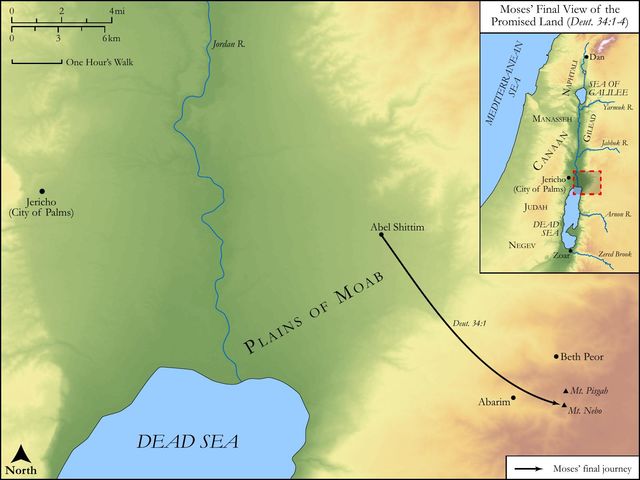
The historical setting for this declaration is the plains of Moab, located east of the Jordan River, around 1406 BC. The Israelites, having completed their forty-year wilderness journey, are now poised to enter the land of Canaan, a region densely populated by various pagan peoples such as the Canaanites, Hittites, and Amorites. These cultures were characterized by pervasive polytheism, often involving fertility cults, ritual prostitution, and tragically, child sacrifice. The phrase "thou shalt sleep with thy fathers" is a common and gentle biblical euphemism for death, signifying a peaceful passing and the joining of one's ancestors in the realm of the dead. This concept was deeply embedded in Hebrew thought, reflecting a communal understanding of mortality. The prophetic warning about "going a whoring after the gods of the strangers of the land" directly addresses the immense cultural and religious pressures Israel would inevitably face. Their unique covenant with Yahweh demanded exclusive loyalty, a radical departure from the syncretistic tendencies prevalent in the surrounding nations, where deities were frequently adopted or assimilated. This verse anticipates the very real temptation for Israel to abandon their distinct covenant relationship with Yahweh for the perceived benefits, social integration, or spiritual allure offered by the idolatrous practices of the land's inhabitants.
Key Themes
ShowHideDeuteronomy 31:16 contributes profoundly to several overarching theological and narrative themes found throughout Deuteronomy and the broader Pentateuch. Firstly, it powerfully illustrates Divine Foreknowledge, revealing God's perfect, unwavering, and sovereign knowledge of Israel's future actions, even their deepest spiritual failures. This foreknowledge does not negate human responsibility but highlights God's penetrating insight into the human heart's persistent propensity to stray, a theme echoed in passages like Psalm 139:4 and Isaiah 46:10. Secondly, the verse underscores the critical importance of Covenant Faithfulness. The core of the divine warning is Israel's breaking of the solemn covenant established at Mount Sinai (Exodus 19:5-6). By turning to foreign gods, they would "forsake me, and break my covenant," a direct violation of the foundational commands to have no other gods before Yahweh (Deuteronomy 5:7). This unfaithfulness would inevitably lead to severe consequences, as meticulously outlined in the covenant curses detailed in Deuteronomy 28:15-68. Lastly, the vivid imagery of "going a whoring" introduces the powerful and recurring theme of Idolatry as Spiritual Adultery. This profound metaphor portrays Israel's relationship with God as a sacred marriage covenant, making the worship of other gods an act of profound betrayal and infidelity. This concept is frequently employed by later prophets to describe Israel's apostasy, as seen in Jeremiah 3:6-9 and Hosea 1:2.
Exposition and Analysis
ShowHideKey Word Analysis
ShowHideA primitive root meaning "to lie down (for rest, sexual connection, decease or any other purpose)." In this context, "sleep with thy fathers" is a well-established Hebrew euphemism for death. It signifies a peaceful passing and the joining of one's ancestors in the grave, implying a natural and expected end to life, rather than a violent or untimely one. It emphasizes continuity with past generations and suggests a collective destiny in death.
A primitive root meaning "to commit adultery (usually of the female, and less often of simple fornication, rarely of involuntary ravishment); figuratively, to commit idolatry (the Jewish people being regarded as the spouse of Jehovah)." In the Old Testament, this verb is consistently and powerfully used metaphorically to describe Israel's spiritual infidelity through idolatry. It vividly portrays the act of abandoning the exclusive covenant relationship with Yahweh for the worship of other gods as a profound act of betrayal and spiritual adultery, akin to a spouse breaking their marriage vows. This imagery underscores the deep personal offense and severity of idolatry in God's eyes.
Meaning "a compact (because made by passing between pieces of flesh); confederacy, (con-) feder(-ate), covenant, league." This term refers to a solemn and binding agreement, often between God and humanity, involving promises, stipulations, and consequences for obedience or disobedience. Here, it specifically refers to the Mosaic Covenant established at Sinai, which defined Israel's unique relationship with Yahweh and outlined their obligations as His chosen people. Breaking this covenant implied a fundamental rupture of their sacred bond with God.
Verse Breakdown
ShowHide"And the LORD said unto Moses,"
This opening clause establishes the divine origin and supreme authority of the message. It is a direct, personal revelation from Yahweh (H3068, Yᵉhôvâh), the self-existent God, to His chosen servant, Moses (H4872, Môsheh), emphasizing the prophetic and authoritative nature of the words that follow.
"Behold, thou shalt sleep with thy fathers;"
This is the solemn declaration of Moses' impending death. "Sleep with thy fathers" (H7901, shâkab with H1, ʼâb) is a common and tender euphemism for death, indicating that Moses' earthly journey and leadership were drawing to a close. It signifies a natural, peaceful end to his life, joining the lineage of his ancestors who had also passed on.
"and this people will rise up, and go a whoring after the gods of the strangers of the land, whither they go [to be] among them,"
This is the core of the prophecy regarding Israel's future unfaithfulness. "This people" (H5971, ʻam) refers to the Israelites, whom Moses has led for forty years. "Rise up" (H6965, qûwm) suggests an active, deliberate turning away. "Go a whoring" (H2181, zânâh) is a powerful metaphor for spiritual adultery, indicating their abandonment of Yahweh for the worship of foreign deities. "Gods of the strangers" (H430, ʼĕlôhîym with H5236, nêkâr) refers to the pagan idols and cults of the Canaanites and other nations they would encounter and settle among (H776, ʼerets), highlighting the external temptations and corrupting influences.
"and will forsake me, and break my covenant which I have made with them."
This concluding clause explicitly states the consequence and nature of their "whoring." To "forsake me" (H5800, ʻâzab) means to abandon Yahweh, the one true God who delivered them from Egypt and sustained them in the wilderness. To "break my covenant" (H6565, pârar with H1285, bᵉrîyth) signifies a direct violation of the sacred agreement established at Sinai, particularly the first two commandments against idolatry and worshipping other gods. This demonstrates that their idolatry is not merely a cultural adoption but a profound act of rebellion against the LORD, the God who "made" (H3772, kârath) this covenant with them.
Literary Devices
ShowHideDeuteronomy 31:16 employs several potent literary devices to convey its weighty and poignant message. The phrase "thou shalt sleep with thy fathers" is a classic example of Euphemism, softening the stark reality of death and presenting it as a peaceful rest or joining of one's ancestors. This gentle phrasing stands in stark contrast to the severe warning that immediately follows. The most prominent device is Metaphor, where Israel's future idolatry is vividly depicted as "going a whoring." This powerful imagery likens the sacred covenant between God and Israel to a marriage, making their worship of other gods an act of spiritual adultery and profound betrayal. This metaphor underscores the intimacy of the relationship God desired and the depth of the offense incurred by their unfaithfulness. Furthermore, the entire verse functions as a Prophecy or Foreshadowing, as it divinely reveals future events—Moses' death and Israel's subsequent apostasy—before they occur. This highlights God's omniscience and His sovereign control over history, even over human choices. Finally, the direct address from "the LORD" to Moses, conveying a personal warning and lament, can be seen as a form of Anthropomorphism, attributing human-like communication and emotional foresight to God in a way that makes His divine perspective relatable.
Theological and Thematic Connections
ShowHideDeuteronomy 31:16 stands as a stark testament to the persistent tension between divine foreknowledge and human free will, while profoundly underscoring the sanctity and exclusivity of God's covenant. God, in His omniscience, knows Israel's future inclination towards idolatry, yet this foreknowledge does not absolve them of responsibility for their choices. The prophecy highlights the tragic and cyclical pattern of sin, judgment, and eventual repentance that would plague Israel throughout their history, demonstrating humanity's deep-seated propensity to turn from the true God towards created things or false deities. This spiritual adultery, vividly depicted as "whoring," is the ultimate betrayal of the exclusive covenant relationship Yahweh initiated, revealing the depth of His jealousy for His people's devotion and the seriousness of breaking faith with Him. The verse thus serves as a foundational warning, not only for ancient Israel but for all who enter into covenant with God, emphasizing the constant need for vigilance against spiritual compromise and the alluring temptations of worldly idols. It reminds us that true worship demands exclusive devotion.
Reflection and Application
ShowHideDeuteronomy 31:16 offers timeless and piercing lessons for believers today, serving as a profound reminder of the enduring human struggle with faithfulness and the ever-present temptation of idolatry. Just as ancient Israel was lured by "the gods of the strangers," modern society presents its own insidious forms of idolatry—materialism, self-worship, the relentless pursuit of power, comfort, technological obsession, or even ideologies that subtly replace God as the ultimate source of meaning and security. This verse calls us to profound introspection: what are the "strangers of the land" in our own lives that compete for our ultimate devotion, subtly or overtly dethroning God from His rightful place? Our relationship with God, established through Christ, is a new covenant, a sacred bond of grace and truth. We are called to exclusive faithfulness, recognizing that any spiritual infidelity grieves the Holy Spirit and diminishes our capacity to experience God's fullness. The passage reveals a consistent human tendency to stray, even after experiencing God's profound faithfulness and miraculous deliverance. This should lead us not to despair, but to humility, a greater reliance on God's sustaining grace, and an active, daily pursuit of His will and presence. It compels us to guard our hearts with diligence, recognizing the seriousness of our walk with God and the constant need to resist the subtle and overt forms of idolatry that seek to usurp His sovereignty in our lives.
Questions for Reflection
ShowHideFAQ
ShowHideDoes God's foreknowledge of Israel's unfaithfulness negate their responsibility for their actions?
ShowHideNo, God's foreknowledge does not negate human responsibility. Deuteronomy 31:16 demonstrates God's omniscience—He knows all things, past, present, and future. However, this divine knowledge does not compel human choices. The Israelites still possessed free will and the capacity to choose obedience or disobedience. God's warning through Moses serves as a testament to His perfect understanding of human nature and the temptations they would face, but it also functions as a solemn call to vigilance and faithfulness. The prophecy is not a decree that forces their sin, but an accurate prediction of the choices they would freely make, underscoring the gravity of those choices and the consequences that would follow. The entire book of Deuteronomy is a passionate call to choose life and obedience, demonstrating that responsibility rests squarely on the people.
Why is idolatry described as "going a whoring" or spiritual adultery?
ShowHideThe description of idolatry as "going a whoring" (spiritual adultery) is a powerful and frequently used metaphor throughout the Old Testament, particularly by the prophets. It stems from the understanding that the covenant relationship between Yahweh and Israel was likened to a marriage. God, as the divine husband, had chosen Israel as His bride, entering into a sacred, exclusive, and intimate bond with them at Mount Sinai. Just as a wife's infidelity (adultery) is a profound betrayal of her marriage vows and a deep wound to her husband, Israel's turning to other gods was considered a profound act of spiritual unfaithfulness and betrayal against Yahweh, their one true God. This metaphor emphasizes the personal and relational nature of their sin, highlighting the depth of God's love, His righteous jealousy for their exclusive devotion, and the severity of their abandonment of Him. It is used in books like Jeremiah 3 and Hosea 1-3 to vividly portray Israel's apostasy and the pain it caused God.
How did this prophecy of Israel's unfaithfulness play out in their history?
ShowHideSadly, the prophecy of Deuteronomy 31:16 found extensive and tragic fulfillment throughout Israel's subsequent history, as documented in various books of the Old Testament. Upon entering the Promised Land, the Israelites repeatedly succumbed to the allure of the pagan gods of the Canaanites and surrounding nations, adopting their idolatrous practices, fertility cults, and even child sacrifice. The book of Judges provides numerous examples of this cycle: Israel would forsake the LORD, serve Baal and Ashtoreth (Judges 2:11-13), fall under oppression, cry out to God, and then be delivered by a judge, only to repeat the pattern. The books of 1 and 2 Kings and 1 and 2 Chronicles recount the persistent idolatry of both the northern kingdom of Israel and the southern kingdom of Judah, leading eventually to their respective exiles in Assyria and Babylon. The prophets, from Isaiah to Malachi, consistently denounced Israel's spiritual adultery and called them back to covenant faithfulness. This historical trajectory tragically confirms the divine foresight revealed in Deuteronomy 31:16, demonstrating the enduring truth of God's word.
Christ-Centered Fulfillment
ShowHideDeuteronomy 31:16, with its somber prophecy of Israel's inevitable unfaithfulness and covenant-breaking, powerfully sets the stage for the necessity of a new and better covenant, ultimately fulfilled in Jesus Christ. The Old Covenant, though good and holy, could not transform the human heart's innate propensity to "go a whoring" after idols and forsake God, as evidenced by Israel's consistent failure throughout their history. This verse highlights humanity's desperate need for a divine intervention that addresses the root problem of sin and a broken will. Jesus Christ enters this narrative as the perfect covenant-keeper, the faithful Israelite who perfectly fulfilled the Law where Israel failed (Matthew 5:17). He is the Lamb of God who takes away the sin of the world (John 1:29), bearing the curse of the broken covenant on our behalf (Galatians 3:13). Through His atoning sacrifice on the cross, Christ inaugurates the New Covenant, prophesied in Jeremiah 31:31-34, where God's law is written not on tablets of stone but on the hearts of His people, and their sins are remembered no more. This New Covenant, established through His blood (Luke 22:20), provides the Holy Spirit who empowers believers to live in faithfulness, overcoming the very "whoring" tendencies that plagued ancient Israel. Thus, Deuteronomy 31:16, while a warning of historical failure, ultimately points to the profound grace and redemptive power found in Christ, who provides the means for true and lasting covenant faithfulness and a restored relationship with God.