


Deuteronomy 31:15
Bible text: King James Version (1769 Blayney text) · Public domain
Bible text: Berean Standard Bible · Public domain
Bible text: American Standard Version (1901) · Public domain
Bible text: World English Bible, Messianic edition · Public domain
Bible text: Geneva Bible (1599) · Public domain
Bible text: Young's Literal Translation · Public domain
- וַיֵּרָאvai·ye·Ra'and he appearedH7200Conj-w ¦ V-Niphal-ConsecImperf-3msVerb Niphal Consecutive Imperfect 3rd Singular Masculineוַandיֵּרָאhe appeared
- יְהוָהYah·wehYahwehH3068N-properNoun Proper Title
- בָּאֹהֶלba·'O·helat the tentH168Prep-b ¦ N-msNoun Singular Masculine Absoluteבָּat theאֹהֶלtent
- בְּעַמּוּדbe·'a·Mudin a pillar ofH5982Prep-b ¦ N-mscNoun Singular Masculine Constructבְּinעַמּוּדa pillar of
- עָנָן'a·NancloudH6051N-msNoun Singular Masculine Absolute
- וַיַּעֲמֹדvai·ya·'a·Modand it stoodH5975Conj-w ¦ V-Qal-ConsecImperf-3msVerb Qal Consecutive Imperfect 3rd Singular Masculineוַandיַּעֲמֹדit stood
- עַמּוּד'a·Mud[the] pillar ofH5982N-mscNoun Singular Masculine Construct
- הֶעָנָןhe·'a·Nan<the> cloudH6051Art ¦ N-msNoun Singular Masculine Absoluteהֶ<the>עָנָןcloud
- עַל'aloverH5921PrepPreposition
- פֶּתַחPe·tach[the] entrance ofH6607N-mscNoun Singular Masculine Construct
- הָאֹהֶלha·'O·helthe tentH168Art ¦ N-msNoun Singular Masculine Absoluteהָtheאֹהֶלtent
English is a literal word-by-word gloss of the Hebrew, not the KJV's wording. Why?
This is the original text the KJV's translators worked from — each Hebrew word with its own literal English meaning in this verse, prepared by scholars at Tyndale House, Cambridge. The KJV translates whole sentences, not word by word, so its wording differs: one Hebrew word can become several English words, and the KJV may choose “the LORD” where the gloss reads “Yahweh”. Both are faithful — they answer different questions. For the KJV's own rendering, switch to the KJV text.
Details
See on the biblical-era map
Study this verse
Public-domain commentary
Matthew Henry
From his Commentary on the Whole Bible. Henry comments on passages, not single verses — this entry covers Deuteronomy 31:14–21.
Here, I. Moses and Joshua are summoned to attend the divine majesty at the door of the tabernacle, Deu 31:14. Moses is told again that he must shortly die; even those that are most ready and willing to die have need to be often reminded of the approach of death. In consideration of this, he must come himself to meet God; for whatever improves our communion with God furthers our preparation for death. He must also bring Joshua with him to be presented to God for a successor, and to receive his commission and charge. Moses readily obeys the summons, for he was not one of those that look with an evil eye upon their successors, but, on the contrary, rejoiced in him.
II.God graciously gives them the meeting:
He appeared in the tabernacle (as the shechinah used to appear) in a pillar of a cloud, v. 15. This is the only time in all this book that we read of the glory of God appearing, whereas we often read of it in the three foregoing books, which perhaps signifies that in the latter days, under the evangelical law, such visible appearances as these of the divine glory are not to be expected, but we must take heed to the more sure word of prophecy.
III.He tells Moses that, after his death, the covenant which he had taken so much pains to make between Israel and their God would certainly be broken. 1. That Israel would forsake God, v. 16. And we may be sure that if the covenant between God and man be broken the blame must lie on man, it is he that breaks it; we have often observed it, That God never leaves any till they first leave him. Worshipping the gods of the Canaanites (who had been the natives, but henceforward were to be looked upon as the strangers of that land) would undoubtedly be counted a deserting of God, and, like adultery, a violation of the covenant. Thus still those are revolters from Christ, and will be so adjudged, who either make a god of their money by reigning covetousness or a god of their belly by reigning sensuality. Those that turn to other gods (v. 18) forsake their own mercies. This apostasy of theirs is foretold to be the effect of their prosperity (v. 20): They shall have eaten and filled themselves; this is all they will aim at in eating, to gratify their own appetites, and then they will wax fat, grow secure and sensual; their security will take off their dread of God and his judgments; and their sensuality will incline them to the idolatries of the heathen, which made provision for the flesh to fulfil the lusts of it. Note, God has a clear and infallible foresight of all the wickedness of the wicked, and has often covenanted with those who he knew would deal very treacherously (Isa 48:8), and conferred many favours on those who he knew would deal very ungratefully. 2. That then God would forsake Israel; and justly does he cast those off who had so unjustly cast him off (v. 17): My anger shall be kindled against them, and I will forsake them. His providence would forsake them, no longer to protect and prosper them, and then they would become a prey to all their neighbours. His spirit and grace would forsake them, no longer to teach and guide them, and then they would be more and more bigoted, besotted, and hardened in their idolatries. Thus many evils and troubles would befal them. (v. 17, 21), which would be such manifest indications of God's displeasure against them that they themselves would be constrained to own it: Have not these evils come upon us because our God is not among us? Those that have sinned away their God will find that thereby they pull all mischiefs upon their own heads. But that which completed their misery was that God would hide his face from them in that day, that day of their trouble and distress, v. 18. Whatever outward troubles we are in, if we have but the light of God's countenance, we may be easy. But, if God hide his face from us and our prayers, we are undone.
IV.He directs Moses to deliver them a song, in the composing of which he should be divinely inspired, and which should remain a standing testimony for God as faithful to them in giving them warning, and against them as persons false to themselves in not taking the warning, v. 19. The written word in general, as well as this song in particular, is a witness for God against all those that break covenant with him. It shall be for a testimony, Mat 24:14. The wisdom of man has devised many ways of conveying the knowledge of good and evil, by laws, histories, prophecies, proverbs, and, among the rest, by songs; each has its advantages. And the wisdom of God has in the scripture made use of them all, that ignorant and careless men might be left inexcusable. 1. This song, if rightly improved, might be a means to prevent their apostasy; for in the inditing of it God had an eye to their present imagination, now, before they were brought into the land of promise, Deu 31:21. God knew very well that there were in their hearts such gross conceits of the deity, and such inclinations of idolatry, that they would be tinder to the sparks of that temptation; and therefore in this song he gives them warning of their danger that way. Note, The word of God is a discerner of the thoughts and intents of men's hearts, and meets with them strangely by its reproofs and corrections, Heb 4:12. Compare Co1 14:25. Ministers who preach the word know not the imaginations men go about, but God, whose word it is, knows perfectly. 2. If this song did not prevent their apostasy, yet it might help to bring them to repentance, and to recover them from their apostasy. When their troubles come upon them, this song shall not be forgotten, but may serve as a glass to show them their own faces, that they may humble themselves, and return to him from whom they have revolted. Note, Those for whom God has mercy in store he may leave to fall, yet he will provide means for their recovery. Medicines are prepared before-hand for their cure.
Continue studying Deuteronomy 31:15 across the web’s major study libraries — every link below opens this exact verse, chapter, or book on the destination site.
Read & Compare
 BibleGatewayThis verse in more than 200 translations and 70 languages.
 Bible.comThe YouVersion reader — hundreds of translations, reading plans, and highlights.
 ESV.orgCrossway's official English Standard Version reader.
 NET BibleThe NET translation with 60,000+ translators' notes on every rendering decision.
 STEP BibleTyndale House's free study tool — original text, vocabulary, and scholarly resources.
 BibliaLogos Bible Software's free web reader.
 USCCBThe New American Bible (Revised Edition) with the U.S. bishops' study notes.
Commentaries
 BibleHub CommentariesDozens of classic commentaries on this verse, gathered on one page.
 StudyLightMore than 100 commentary sets — the largest collection on the web.
 BibleRefPlain-English commentary on what this verse means, verse by verse.
 Enduring WordDavid Guzik's free commentary on this chapter, widely used by Bible teachers.
 Bible Study ToolsVerse commentary alongside Greek and Hebrew study aids.
Original Language & Research
- BibleHub InterlinearThe verse word by word — original language, transliteration, and English.
- BibleHub LexiconEvery word's original-language definition and Strong's entry.
 Blue Letter BibleDeep-study tools — Strong's numbers, concordance, and word studies.
 SefariaThe Hebrew text with Rashi and centuries of Jewish commentary.
Sermons, Hymns & Audio


TrulyRandomVerse is not affiliated with these sites and doesn’t control their content. They’re linked because they’re genuinely useful.
Summary
Deuteronomy 31:15 records a profound divine manifestation at a pivotal moment in Israel's history: the LORD's visible appearance in the tabernacle as a pillar of cloud, positioned directly over its entrance. This dramatic event occurs just as Moses prepares to transfer leadership to Joshua and the nation stands poised to enter the Promised Land, serving as a powerful reaffirmation of God's enduring presence, unwavering faithfulness, and sovereign endorsement of the transition amidst significant change.
Context
ShowHideLiterary Context
This verse is strategically placed within the final discourses of Moses, immediately following his commissioning of Joshua as his successor in Deuteronomy 31:7-8. Moses has just instructed the priests to place the Law in the Ark of the Covenant, emphasizing its perpetual importance for future generations (Deuteronomy 31:9-13). The LORD's appearance here is directly linked to the divine instruction for Moses and Joshua to present themselves at the tabernacle, where God would give further commands concerning a prophetic song that would serve as a witness against Israel's future apostasy (Deuteronomy 31:14-22). Thus, the manifestation underscores the divine authority behind both the leadership transition and the impending prophetic warning, grounding these crucial events in God's direct revelation.
Historical & Cultural Context
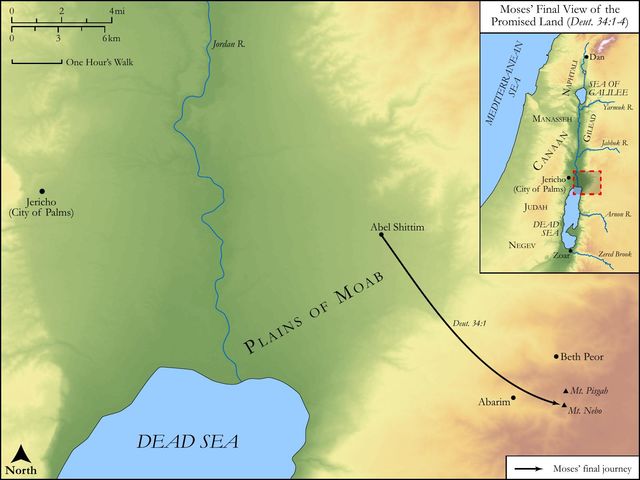
At this point, Israel is encamped on the plains of Moab, on the eastern side of the Jordan River, poised to enter Canaan after forty years of wilderness wandering. The generation that rebelled at Kadesh-Barnea has passed away, and a new generation is about to inherit the promises made to their forefathers. The tabernacle, or "tent of meeting," was the central place of worship and divine communion throughout their wilderness journey, a tangible symbol of God's immanent presence. The "pillar of cloud" was a familiar and consistent sign of God's guidance and protection, having led them from Egypt (Exodus 13:21-22) and resting over the tabernacle whenever they encamped (Numbers 9:15-23). Its appearance at this critical juncture serves to bridge the past divine guidance with future divine leading, assuring the new generation of God's continued faithfulness.
Key Themes
ShowHideThe primary theme highlighted by this verse is the Divine Presence and Faithfulness. The visible manifestation of the LORD, through the familiar pillar of cloud, powerfully reaffirms God's unwavering commitment to His covenant people, even as human leadership transitions. It speaks to God's Divine Authority and Validation, as His appearance at the tabernacle's door signifies His direct endorsement of Moses' final acts and Joshua's impending leadership, ensuring that their authority is divinely sanctioned. Furthermore, the event provides profound Assurance in Transition. For a nation on the brink of a new era without Moses, the visible glory of God served as immense comfort, reminding them that while human leaders are temporary, their divine Leader remains constant, near, and actively involved in guiding them into their inheritance. This divine assurance is crucial as they prepare for the challenges of conquering the land and establishing themselves as a nation, echoing the promise that God would never leave them nor forsake them, as stated in Deuteronomy 31:6.
Exposition and Analysis
ShowHideKey Word Analysis
ShowHideThis is the Tetragrammaton, God's personal covenant name, often rendered "Yahweh" or "Jehovah." Its use here emphasizes God's relational and covenantal faithfulness to Israel. It highlights that the one appearing is not merely a generic deity but the specific God who has entered into a binding relationship with His people, demonstrating His enduring commitment to them through all generations and transitions.
From the root meaning "to be clearly conspicuous from a distance," this refers to the portable sanctuary, the "tent of meeting," where God's presence dwelt among Israel and where He met with Moses. Its significance as the central locus of divine-human encounter underscores the sacredness and intentionality of God's appearance. The fact that the appearance occurs in the tabernacle and over the door signifies that God's presence is both immanent within their sacred space and accessible to His people.
This term denotes a column or a stand. In this context, it refers to the visible, tangible form of God's manifestation, specifically the "pillar of a cloud" (with H6051 ʻânân for cloud). This familiar motif throughout the Pentateuch served as a consistent sign of God's presence, guidance, and protection. Its appearance here connects this pivotal moment to the long history of God's faithful leading, reassuring the Israelites that the same God who led them through the wilderness will continue to lead them into the Promised Land.
Verse Breakdown
ShowHide"And the LORD appeared in the tabernacle"
This phrase signifies a direct, visible, and intentional manifestation of God. The verb "appeared" (Hebrew: râʼâh in the Niphal stem) denotes God making Himself seen, emphasizing His initiative in revealing His presence. The location "in the tabernacle" specifies the sacred space where this theophany occurs, underscoring its significance as the central point of communion between God and Israel, where Moses and Joshua were commanded to present themselves.
"in a pillar of a cloud"
This describes the specific form of God's manifestation. The "pillar of a cloud" was the familiar, visible sign of God's presence, guidance, and protection throughout Israel's wilderness journey. Its appearance here connects this moment to the consistent history of God's leading and reassures the people that the same divine guide remains with them. This form also veiled the full glory of God, making His presence accessible without being overwhelming or destructive, a divine condescension for the sake of His people.
"and the pillar of the cloud stood over the door of the tabernacle"
This detail specifies the precise location of the cloud's manifestation. The "door of the tabernacle" (Hebrew: pethach H6607) was the entryway to the holy place, a point of access and transition. Its standing over the door signifies God's oversight, authority, and control over the events unfolding, particularly the commissioning of Joshua and the giving of the Law. It also suggests accessibility – God's presence is not hidden away but is at the very threshold of their sacred meeting place, signifying His readiness to meet with them and direct their path.
Literary Devices
ShowHideDeuteronomy 31:15 is rich with literary significance. The most prominent device is Theophany, the visible manifestation of God to humanity. Here, God appears in the familiar form of the "pillar of a cloud," a recurring motif throughout the Pentateuch that serves as a tangible representation of His presence and active involvement in Israel's history. This form also functions as Symbolism, where the cloud symbolizes God's guidance, protection, and veiled glory, indicating His power and majesty while allowing for interaction. The Repetition of "pillar of a cloud" within the single verse emphasizes its importance and reinforces the continuity of God's historical presence with His people, reminding the audience of His consistent faithfulness. The precise spatial detail of the cloud standing "over the door of the tabernacle" uses vivid Imagery to convey God's direct oversight and accessibility at this critical juncture of leadership transition and national destiny, highlighting His immanence and authority.
Theological and Thematic Connections
ShowHideDeuteronomy 31:15 powerfully encapsulates the theme of divine immanence and covenant faithfulness. At a moment of profound national transition, with Moses' leadership concluding and Joshua's beginning, God's visible appearance in the familiar pillar of cloud serves as an undeniable affirmation of His enduring presence with His people. This manifestation is not merely a historical event but a theological statement: God is not distant or detached but actively involved in the life and destiny of His covenant nation. It underscores the principle that human leadership, while vital, is always subordinate to and validated by divine authority. The continuity of God's presence, symbolized by the cloud that led them from Egypt, provides profound assurance that the God who began their journey will also complete it, guiding them into the Promised Land. This passage reinforces the foundational biblical truth that God remains faithful to His promises, even when circumstances change and human leaders pass on.
Reflection and Application
ShowHideDeuteronomy 31:15 offers profound comfort and guidance for believers navigating times of transition and uncertainty. Just as the Israelites faced a new era without their beloved leader Moses, we too encounter moments of significant change – new jobs, new seasons of life, loss, or daunting challenges. In such times, this verse reminds us that God's presence is not contingent upon human leadership or familiar circumstances. He remains constant, faithful, and actively involved in our lives. We may not see a literal pillar of cloud, but we have the indwelling Holy Spirit, the written Word, and the assurance of Christ's perpetual presence. This passage calls us to trust in God's sovereign oversight, even when the path ahead seems unclear, knowing that He validates our callings and provides the necessary guidance and comfort for every new beginning. It encourages us to seek His presence, not just in grand manifestations, but in the quiet assurance of His Spirit, allowing His unwavering faithfulness to be our anchor, providing stability and direction in every step of our journey.
Questions for Reflection
ShowHideFAQ
ShowHideWhat is the significance of the "pillar of a cloud" in this verse?
ShowHideThe "pillar of a cloud" is a deeply significant symbol of God's visible presence, guidance, and protection throughout Israel's history, particularly during their wilderness wanderings. It first appeared when God led the Israelites out of Egypt (Exodus 13:21-22) and subsequently rested over the tabernacle, indicating when the camp was to move or remain stationary (Numbers 9:15-23). In Deuteronomy 31:15, its appearance at a critical juncture—as Moses transfers leadership to Joshua and Israel prepares to enter the Promised Land—reaffirms God's unwavering faithfulness and continuity of His presence, assuring the people that the same God who led them thus far will continue to guide them into their future. It signifies divine endorsement and a visible reminder of God's active involvement in their national destiny, providing both comfort and a clear sign of His ongoing covenant relationship.
Christ-Centered Fulfillment
ShowHideDeuteronomy 31:15, with its vivid depiction of God's visible presence in the pillar of cloud at the tabernacle, finds its ultimate and most profound fulfillment in the person of Jesus Christ. While the cloud symbolized God's immanent presence and veiled glory, Christ is the very embodiment of God's presence among humanity, the Word made flesh who "dwelt among us, and we have seen his glory" (John 1:14). The tabernacle, where the cloud appeared, was a temporary dwelling place for God's presence, a shadow pointing to the true "tabernacle" of God among men, which is Christ Himself (Revelation 21:3). Just as the pillar of cloud guided Israel, Jesus is the ultimate guide and the "way, the truth, and the life" (John 14:6), leading His people not merely to a physical land but to eternal life. The divine validation of leadership seen in Moses and Joshua through God's appearance is fully realized in Christ, who is the divinely appointed King and High Priest, whose authority is absolute and eternal (Hebrews 4:14; Matthew 28:18). The assurance of God's presence during transition, so vital for Israel, is now secured for believers through the indwelling Holy Spirit, whom Christ promised as our Helper and constant companion (John 14:16-17), ensuring that God is not just with us, but in us, until the end of the age (Matthew 28:20).