


Deuteronomy 31:14
- וַיֹּאמֶרvai·Yo·merand he saidH559Conj-w ¦ V-Qal-ConsecImperf-3msVerb Qal Consecutive Imperfect 3rd Singular Masculineוַandיֹּאמֶרhe said
- יְהוָהYah·wehYahwehH3068N-properNoun Proper Title
- אֶל'eltoH413PrepPreposition
- מֹשֶׁהmo·ShehMosesH4872N-proper-mNoun Proper Masculine
- הֵןhenhere!H2005PrtParticle Interjection
- קָרְבוּka·re·Vuthey have drawn nearH7126V-Qal-Perf-3cpVerb Qal Perfect 3rd Plural common gender
- יָמֶיךָya·mei·Khayour daysH3117N-mpc ¦ 2msNoun Plural Masculine Constructיָמֶיdaysךָyour
- לָמוּתla·Mutto dieH4191Prep-l ¦ V-Qal-InfVerb Qal Infinitive Constructלָtoמוּתdie
- קְרָאke·Ra'summonH7121V-Qal-Imp-2msVerb Qal Imperative 2nd Singular Masculine
- אֶת'et<obj.>H853DirObjMParticle Object Indicator
- יְהוֹשֻׁעַye·ho·Shu·a'JoshuaH3091N-proper-mNoun Proper Masculine
- וְהִתְיַצְּבוּve·hit·ya·tze·Vuand present yourselvesH3320Conj-w ¦ V-Hithpael-Imp-2mpVerb Hithpael Imperative 2nd Plural Masculineוְandהִתְיַצְּבוּpresent yourselves
- בְּאֹהֶלbe·'O·helat [the] tent ofH168Prep-b ¦ N-mscNoun Singular Masculine Constructבְּatאֹהֶל[the] tent of
- מוֹעֵדmo·'EdmeetingH4150N-msNoun Singular Masculine Absolute
- וַאֲצַוֶּנּוּva·'a·tzav·Ve·nuso I may commission himH6680Conj-w ¦ V-Piel-ConjImperf-1cs ¦ 3msVerb Piel Conjunction+Imperfect 1st Singular common genderוַsoאֲצַוֶּI may commissionנּוּhim
- וַיֵּלֶךְvai·Ye·lekhand he wentH1980Conj-w ¦ V-Qal-ConsecImperf-3msVerb Qal Consecutive Imperfect 3rd Singular Masculineוַandיֵּלֶךְhe went
- מֹשֶׁהmo·ShehMosesH4872N-proper-mNoun Proper Masculine
- וִיהוֹשֻׁעַvi·ho·Shu·a'and JoshuaH3091Conj-w ¦ N-proper-mNoun Proper MasculineוִandיהוֹשֻׁעַJoshua
- וַיִּתְיַצְּבוּvai·yit·ya·tze·Vuand they presented themselvesH3320Conj-w ¦ V-Hithpael-ConsecImperf-3mpVerb Hithpael Consecutive Imperfect 3rd Plural Masculineוַandיִּתְיַצְּבוּthey presented themselves
- בְּאֹהֶלbe·'O·helat [the] tent ofH168Prep-b ¦ N-mscNoun Singular Masculine Constructבְּatאֹהֶל[the] tent of
- מוֹעֵדmo·'EdmeetingH4150N-msNoun Singular Masculine Absolute
English is a literal word-by-word gloss of the Hebrew, not the KJV's wording. Why?
This is the original text the KJV's translators worked from — each Hebrew word with its own literal English meaning in this verse, prepared by scholars at Tyndale House, Cambridge. The KJV translates whole sentences, not word by word, so its wording differs: one Hebrew word can become several English words, and the KJV may choose “the LORD” where the gloss reads “Yahweh”. Both are faithful — they answer different questions. For the KJV's own rendering, switch to the KJV text.
Details
See on the biblical-era map
Study this verse
Public-domain commentary
Matthew Henry
From his Commentary on the Whole Bible. Henry comments on passages, not single verses — this entry covers Deuteronomy 31:14–21.
Here, I. Moses and Joshua are summoned to attend the divine majesty at the door of the tabernacle, Deu 31:14. Moses is told again that he must shortly die; even those that are most ready and willing to die have need to be often reminded of the approach of death. In consideration of this, he must come himself to meet God; for whatever improves our communion with God furthers our preparation for death. He must also bring Joshua with him to be presented to God for a successor, and to receive his commission and charge. Moses readily obeys the summons, for he was not one of those that look with an evil eye upon their successors, but, on the contrary, rejoiced in him.
II.God graciously gives them the meeting:
He appeared in the tabernacle (as the shechinah used to appear) in a pillar of a cloud, v. 15. This is the only time in all this book that we read of the glory of God appearing, whereas we often read of it in the three foregoing books, which perhaps signifies that in the latter days, under the evangelical law, such visible appearances as these of the divine glory are not to be expected, but we must take heed to the more sure word of prophecy.
III.He tells Moses that, after his death, the covenant which he had taken so much pains to make between Israel and their God would certainly be broken. 1. That Israel would forsake God, v. 16. And we may be sure that if the covenant between God and man be broken the blame must lie on man, it is he that breaks it; we have often observed it, That God never leaves any till they first leave him. Worshipping the gods of the Canaanites (who had been the natives, but henceforward were to be looked upon as the strangers of that land) would undoubtedly be counted a deserting of God, and, like adultery, a violation of the covenant. Thus still those are revolters from Christ, and will be so adjudged, who either make a god of their money by reigning covetousness or a god of their belly by reigning sensuality. Those that turn to other gods (v. 18) forsake their own mercies. This apostasy of theirs is foretold to be the effect of their prosperity (v. 20): They shall have eaten and filled themselves; this is all they will aim at in eating, to gratify their own appetites, and then they will wax fat, grow secure and sensual; their security will take off their dread of God and his judgments; and their sensuality will incline them to the idolatries of the heathen, which made provision for the flesh to fulfil the lusts of it. Note, God has a clear and infallible foresight of all the wickedness of the wicked, and has often covenanted with those who he knew would deal very treacherously (Isa 48:8), and conferred many favours on those who he knew would deal very ungratefully. 2. That then God would forsake Israel; and justly does he cast those off who had so unjustly cast him off (v. 17): My anger shall be kindled against them, and I will forsake them. His providence would forsake them, no longer to protect and prosper them, and then they would become a prey to all their neighbours. His spirit and grace would forsake them, no longer to teach and guide them, and then they would be more and more bigoted, besotted, and hardened in their idolatries. Thus many evils and troubles would befal them. (v. 17, 21), which would be such manifest indications of God's displeasure against them that they themselves would be constrained to own it: Have not these evils come upon us because our God is not among us? Those that have sinned away their God will find that thereby they pull all mischiefs upon their own heads. But that which completed their misery was that God would hide his face from them in that day, that day of their trouble and distress, v. 18. Whatever outward troubles we are in, if we have but the light of God's countenance, we may be easy. But, if God hide his face from us and our prayers, we are undone.
IV.He directs Moses to deliver them a song, in the composing of which he should be divinely inspired, and which should remain a standing testimony for God as faithful to them in giving them warning, and against them as persons false to themselves in not taking the warning, v. 19. The written word in general, as well as this song in particular, is a witness for God against all those that break covenant with him. It shall be for a testimony, Mat 24:14. The wisdom of man has devised many ways of conveying the knowledge of good and evil, by laws, histories, prophecies, proverbs, and, among the rest, by songs; each has its advantages. And the wisdom of God has in the scripture made use of them all, that ignorant and careless men might be left inexcusable. 1. This song, if rightly improved, might be a means to prevent their apostasy; for in the inditing of it God had an eye to their present imagination, now, before they were brought into the land of promise, Deu 31:21. God knew very well that there were in their hearts such gross conceits of the deity, and such inclinations of idolatry, that they would be tinder to the sparks of that temptation; and therefore in this song he gives them warning of their danger that way. Note, The word of God is a discerner of the thoughts and intents of men's hearts, and meets with them strangely by its reproofs and corrections, Heb 4:12. Compare Co1 14:25. Ministers who preach the word know not the imaginations men go about, but God, whose word it is, knows perfectly. 2. If this song did not prevent their apostasy, yet it might help to bring them to repentance, and to recover them from their apostasy. When their troubles come upon them, this song shall not be forgotten, but may serve as a glass to show them their own faces, that they may humble themselves, and return to him from whom they have revolted. Note, Those for whom God has mercy in store he may leave to fall, yet he will provide means for their recovery. Medicines are prepared before-hand for their cure.
Continue studying Deuteronomy 31:14 across the web’s major study libraries — every link below opens this exact verse, chapter, or book on the destination site.
Read & Compare
 BibleGatewayThis verse in more than 200 translations and 70 languages.
 Bible.comThe YouVersion reader — hundreds of translations, reading plans, and highlights.
 ESV.orgCrossway's official English Standard Version reader.
 NET BibleThe NET translation with 60,000+ translators' notes on every rendering decision.
 STEP BibleTyndale House's free study tool — original text, vocabulary, and scholarly resources.
 BibliaLogos Bible Software's free web reader.
 USCCBThe New American Bible (Revised Edition) with the U.S. bishops' study notes.
Commentaries
 BibleHub CommentariesDozens of classic commentaries on this verse, gathered on one page.
 StudyLightMore than 100 commentary sets — the largest collection on the web.
 BibleRefPlain-English commentary on what this verse means, verse by verse.
 Enduring WordDavid Guzik's free commentary on this chapter, widely used by Bible teachers.
 Bible Study ToolsVerse commentary alongside Greek and Hebrew study aids.
Original Language & Research
- BibleHub InterlinearThe verse word by word — original language, transliteration, and English.
- BibleHub LexiconEvery word's original-language definition and Strong's entry.
 Blue Letter BibleDeep-study tools — Strong's numbers, concordance, and word studies.
 SefariaThe Hebrew text with Rashi and centuries of Jewish commentary.
Sermons, Hymns & Audio


TrulyRandomVerse is not affiliated with these sites and doesn’t control their content. They’re linked because they’re genuinely useful.
Summary
Deuteronomy 31:14 marks a profoundly significant transition in Israel's history, as the LORD directly instructs Moses regarding his imminent death and commands the formal commissioning of Joshua as his successor. This divine directive, delivered within the sacred space of the tabernacle, initiates the public transfer of leadership, ensuring the continuity of God's covenant purposes for the Israelite nation as they stand on the precipice of entering the Promised Land, thereby underscoring God's sovereign orchestration of His people's destiny and the sacred nature of divinely appointed authority.
Context
ShowHideLiterary Context
This verse is strategically positioned within the concluding section of Deuteronomy, which primarily records Moses's final discourses to the generation poised to inherit Canaan. Following Moses's extensive review of the Law, his recounting of Israel's wilderness journey, and his powerful blessings and curses in Deuteronomy 27-30, chapter 31 pivots to the critical issue of leadership succession. Moses has just completed writing the Law and has commanded its safekeeping and public reading (see Deuteronomy 31:9-13). The divine announcement of Moses's impending death and Joshua's commissioning in this verse serves as the formal, divine initiation of the leadership transition that Moses had anticipated and prepared for since the Lord first designated Joshua in Numbers 27:15-23. This pivotal moment precedes Moses's final instructions to Joshua (found in Deuteronomy 31:23-29), the teaching of the Song of Moses (Deuteronomy 32), and Moses's final blessing upon the tribes (Deuteronomy 33), culminating in his death and burial in Deuteronomy 34.
Historical & Cultural Context
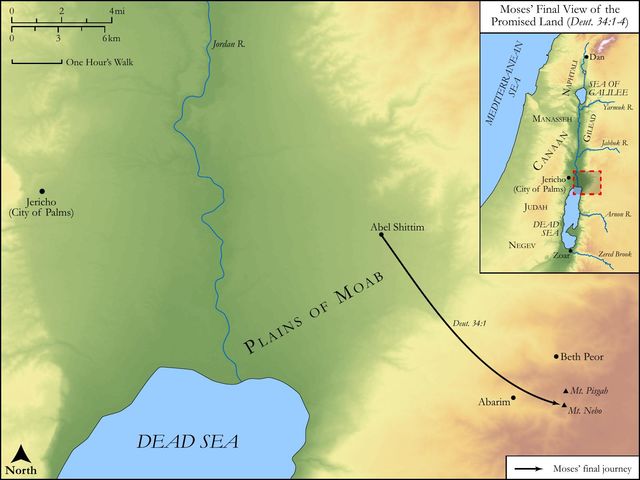
The setting for this profound exchange is the plains of Moab, situated east of the Jordan River, with the long-awaited Promised Land visible but still unconquered. The Israelites, having endured forty years of wilderness wandering, are now an organized nation, though still living in a semi-nomadic state, having recently achieved significant victories over the Amorite kings Sihon and Og. In the ancient Near East, leadership succession was frequently a volatile period, often characterized by political intrigue, power struggles, and instability. However, in Israel, the transfer of authority, particularly for a leader of Moses's unparalleled stature, was uniquely divinely ordained, underscoring God's direct and sovereign involvement in their national life and destiny. The "tabernacle of the congregation" (also known as the Tent of Meeting) served as the spiritual epicenter of Israelite life—the central place of worship, sacrifice, and, crucially, divine communication. The command for this transfer to occur within its sacred confines signifies that this was not merely a political or administrative act, but a deeply sacred, covenantal event, where God's presence validated the authority of the new leader and the legitimacy of the divine "charge" given.
Key Themes
ShowHideDeuteronomy 31:14 powerfully articulates several core theological and narrative themes foundational to Israel's identity and future. Firstly, it highlights the Divine Orchestration of Succession. The transition of power from Moses to Joshua is not a human decision, a democratic process, or a dynastic inheritance, but a direct, explicit command from the LORD Himself. This ensures that the leadership of Israel remains firmly under divine authority and guidance, emphasizing God's unwavering faithfulness to His covenant promises and His active, guiding involvement in the affairs of His people, even as human instruments change. Secondly, the verse confronts the stark reality of Mortality and Legacy. Even Moses, the greatest prophet and unparalleled leader in Israel's history, is subject to death, serving as a poignant reminder of human limitations and the temporary nature of all earthly leadership. Yet, his enduring legacy is secured not by an endless tenure, but by his faithful obedience in preparing and commissioning his successor, thereby ensuring the continuity of God's redemptive work. Thirdly, the command for Moses and Joshua to present themselves in the tabernacle of the congregation emphasizes Divine Commissioning. It is within this sacred space, the very locus of God's presence, that God would "give him a charge," signifying a direct divine mandate, specific instructions, and the impartation of authority and wisdom necessary for Joshua's immense task of leading Israel into and conquering Canaan. Finally, the immediate compliance of both Moses and Joshua demonstrates Obedience and Readiness, showcasing their profound submission to God's sovereign will and their unwavering willingness to fulfill their respective roles, even in the face of profound personal loss and national change.
Exposition and Analysis
ShowHideKey Word Analysis
ShowHideThis primitive root signifies the cessation of life, the ultimate end of earthly existence. In this context, it carries profound theological weight, as it is God Himself who declares Moses's impending death. While Moses's death is a consequence of his disobedience at Meribah (Numbers 20:12), here it is presented as a divinely appointed timing, part of God's sovereign plan for Israel's entry into the Promised Land under new leadership. It underscores the mortality of even the greatest human instruments and the enduring nature of God's covenant, which transcends any single individual.
This primitive root means to constitute, enjoin, command, ordain, appoint, or give specific instructions. The "charge" given to Joshua is far more than a transfer of duties or a passing of the baton; it is a solemn, authoritative, and binding divine mandate. This word highlights the sacred and binding nature of Joshua's leadership, which is rooted in God's direct command and empowerment rather than human election, merit, or political maneuvering alone. It signifies a divine authorization for the immense task ahead.
Literally "tent of meeting," this refers to the portable sanctuary where God manifested His presence and met with His people. It was the central place of worship, sacrifice, and divine revelation. The act of Moses and Joshua presenting themselves here signifies the sacred, public, and divinely sanctioned nature of Joshua's commissioning. It underscores that this leadership transition is not a secular or merely human event but a deeply spiritual one, occurring in the very presence of God, where His will is communicated, His authority is established, and His blessing is imparted.
Verse Breakdown
ShowHide"¶ And the LORD said unto Moses, Behold, thy days approach that thou must die:"
This opening clause immediately establishes the divine origin of the message, emphasizing God's absolute sovereignty over life and death, and His direct, personal communication with Moses. The declaration of Moses's approaching death is not a surprise to Moses, having been previously revealed (Numbers 27:13). It sets an urgent and solemn tone for the subsequent command, highlighting the finality of Moses's earthly ministry and the divine imperative of preparing for the future of the nation.
"call Joshua, and present yourselves in the tabernacle of the congregation, that I may give him a charge."
This is the core divine command, outlining the precise steps for the leadership transition. Moses is instructed to initiate the formal process of succession by summoning Joshua, his faithful aide and divinely chosen successor. The command for both to present themselves "in the tabernacle of the congregation" is crucial, indicating that this is a public, sacred, and divinely witnessed event. The explicit purpose is stated: "that I may give him a charge," signifying that God Himself will directly commission Joshua, bestowing upon him the necessary authority, wisdom, and divine instructions for his immense task of leading Israel into the Promised Land. This ensures Joshua's authority is derived directly from God, not merely from Moses.
"And Moses and Joshua went, and presented themselves in the tabernacle of the congregation."
This final clause records the immediate and unhesitating obedience of both Moses and Joshua to the divine command. Their prompt compliance demonstrates their profound submission to God's will and their readiness to fulfill their respective roles, even in the face of significant personal change for Moses and daunting responsibility for Joshua. This act of obedience sets the stage for the formal commissioning of Joshua, which immediately follows in the subsequent verses of Deuteronomy 31.
Literary Devices
ShowHideDeuteronomy 31:14 employs several significant literary devices that amplify its theological weight and narrative impact. The most prominent is Divine Command, as the verse opens with the authoritative declaration, "And the LORD said unto Moses," immediately establishing God as the primary speaker and initiator of the action. This highlights God's absolute sovereignty and His direct, active involvement in the leadership and destiny of His people. The phrase "thy days approach that thou must die" serves as potent Foreshadowing, preparing the reader for Moses's eventual death detailed in Deuteronomy 34, while simultaneously emphasizing the theme of human mortality, even for the greatest of leaders. The "tabernacle of the congregation" functions as powerful Symbolism of God's manifest presence and the sacred space where divine authority is conferred. Its inclusion underscores that Joshua's commissioning is not merely a political transition but a deeply spiritual and covenantal act, sanctioned and empowered by God Himself. Finally, the swift execution of the command ("And Moses and Joshua went, and presented themselves...") demonstrates Narrative Efficiency and powerfully reinforces the theme of immediate Obedience to divine instruction, setting a precedent for leadership in Israel.
Theological and Thematic Connections
ShowHideDeuteronomy 31:14 is a profound theological statement on divine sovereignty, the nature of leadership in God's kingdom, and the enduring continuity of God's covenant purposes. It teaches that God is not limited by human mortality or the passing of even the most extraordinary leaders; rather, He actively orchestrates transitions, ensuring that His plans for His people endure across generations. The public commissioning of Joshua in the Tabernacle underscores that true spiritual authority is divinely bestowed and operates under God's direct "charge." This model of succession, initiated and guided by God, serves as a blueprint for leadership throughout biblical history, emphasizing faithfulness, humility, obedience, and an absolute reliance on divine empowerment rather than human strength, charisma, or political maneuvering alone. It reassures Israel, and believers today, that God remains utterly faithful to His promises, even as human instruments change and new eras dawn.
Reflection and Application
ShowHideDeuteronomy 31:14 offers timeless and profound lessons for individuals, families, and communities today. It serves as a potent reminder that all earthly leadership, no matter how impactful or long-standing, is ultimately temporary. This truth should cultivate deep humility in those who lead and foster an unwavering reliance on God's enduring faithfulness in those who follow. The verse powerfully illustrates the critical importance of intentional, divinely guided succession planning in all spheres of life—from families and local churches to organizations and national leadership. Moses's final, obedient act was to prepare Joshua, highlighting the indispensable role of mentoring, discipling, and equipping the next generation of leaders. We are called to invest generously in others, empowering them to carry forward God's work with integrity and vision, rather than clinging to positions, power, or personal influence. Furthermore, the immediate and unquestioning obedience of both Moses and Joshua serves as a powerful example for us: when God calls, we are to respond promptly and faithfully, trusting that He will provide the necessary "charge"—the authority, wisdom, resources, and divine backing—to fulfill His purposes, even when the task seems daunting or involves significant personal sacrifice and change.
Questions for Reflection
ShowHideFAQ
ShowHideWhy did God explicitly state that Moses must die at this particular moment?
ShowHideGod's explicit statement about Moses's impending death at this juncture served several crucial purposes, demonstrating His sovereignty and meticulous planning. Firstly, it underscored the divine prerogative over life and death, and God's direct control over the timing of all events. Secondly, while Moses was a great leader, his death was also a direct consequence of his disobedience at Meribah, where he struck the rock instead of speaking to it as commanded, thereby failing to honor God as holy before the Israelites (Numbers 20:12). This moment in Deuteronomy served as a final, public reaffirmation of that divine judgment. Thirdly, and perhaps most importantly for the immediate context, it was absolutely necessary to formally initiate the transfer of leadership to Joshua. God's declaration created the urgency and divine imperative for the public commissioning of the new leader, ensuring a smooth, divinely sanctioned, and unambiguous transition as Israel stood on the very threshold of the Promised Land. This demonstrated God's unwavering faithfulness to His covenant promises, which would be fulfilled under Joshua's leadership, not Moses's.
Christ-Centered Fulfillment
ShowHideDeuteronomy 31:14, with its profound focus on divine succession, the appointment of a new leader for a new era, and the impartation of a sacred "charge," powerfully foreshadows the ultimate divine succession and the new covenant inaugurated by Jesus Christ. Just as Moses, the great lawgiver, reached the limits of his earthly ministry and could not lead Israel into the fullness of the Promised Land, so too the Old Covenant, represented by Moses, was limited in its ability to bring humanity into perfect fellowship with God. Jesus, the greater Joshua (whose name, Yeshua, is the Greek equivalent of Joshua), is the one who truly leads His people into the ultimate "rest" and "Promised Land" of God's presence and salvation (Hebrews 4:8-10). He received His "charge" not in a tabernacle made with human hands, but from the Father Himself, being fully God and fully man, the ultimate mediator of a new and incomparably better covenant (Hebrews 8:6). While Moses's death was a consequence of sin and a mark of human limitation, Christ's death was a redemptive, atoning sacrifice, fulfilling the Law and the Prophets, and opening the way for all who believe to enter God's eternal kingdom and experience true life (John 1:17; Matthew 5:17). The divine commissioning of Joshua for a specific, monumental task finds its ultimate and eternal fulfillment in Christ, who was commissioned by the Father to accomplish salvation and, in turn, commissions His disciples to carry His message of redemption and reconciliation to the ends of the earth, empowering them with His own authority (Matthew 28:18-20).