


Deuteronomy 31:13
Bible text: King James Version (1769 Blayney text) · Public domain
Bible text: King James Version with Strong's numbers · Public domain
Bible text: Berean Standard Bible · Public domain
Bible text: American Standard Version (1901) · Public domain
Bible text: World English Bible, Messianic edition · Public domain
Bible text: Geneva Bible (1599) · Public domain
Bible text: Young's Literal Translation · Public domain
- וּבְנֵיהֶםu·ve·nei·Hemand their childrenH1121Conj-w ¦ N-mpc ¦ 3mpNoun Plural Masculine Constructוּandבְנֵיchildrenהֶםtheir
- אֲשֶׁר'a·SherwhoH834RelParticle Relative
- לֹאlo'notH3808NegParticle Negative
- יָדְעוּya·de·'Uthey have knownH3045V-Qal-Perf-3cpVerb Qal Perfect 3rd Plural common gender
- יִשְׁמְעוּyish·me·'Uthey will hearH8085V-Qal-Imperf-3mpVerb Qal Imperfect 3rd Plural Masculine
- וְלָמְדוּve·La·me·Duand they will learnH3925Conj-w ¦ V-Qal-ConsecPerf-3cpVerb Qal Consecutive Perfect 3rd Plural common genderוְandלָמְדוּthey will learn
- לְיִרְאָהle·yir·'Ahto fearH3372Prep-l ¦ V-Qal-InfVerb Qal Infinitive Constructלְtoיִרְאָהfear
- אֶת'et<obj.>H853DirObjMParticle Object Indicator
- יְהוָהYah·wehYahwehH3068N-properNoun Proper Title
- אֱלֹהֵיכֶם'e·lo·hei·Khemyour GodH430N-mpc ¦ 2mpNoun Plural Masculine ConstructאֱלֹהֵיGodכֶםyour
- כָּלkolallH3605N-mscNoun Singular Masculine Construct
- הַיָּמִיםhai·ya·Mimthe daysH3117Art ¦ N-mpNoun Plural Masculine Absoluteהַtheיָּמִיםdays
- אֲשֶׁר'a·SherwhichH834RelParticle Relative
- אַתֶּם'a·TemyouH859Pro-2mpPronoun Personal 2nd Plural Masculine
- חַיִּיםchai·Yim[will be] aliveH2416Adj-mpAdjective Plural Masculine Absolute
- עַל'alonH5921PrepPreposition
- הָאֲדָמָהha·'a·da·Mahthe landH127Art ¦ N-fsNoun Singular Feminine Absoluteהָtheאֲדָמָהland
- אֲשֶׁר'a·SherwhereH834RelParticle Relative
- אַתֶּם'a·TemyouH859Pro-2mpPronoun Personal 2nd Plural Masculine
- עֹבְרִים'oe·Rim[are] about to pass overH5674V-Qal-Prtcpl-mpVerb Qal Participle Plural Masculine Absolute
- אֶת'et<obj.>H853DirObjMParticle Object Indicator
- הַיַּרְדֵּןhai·yar·Denthe JordanH3383Art ¦ N-properNoun Proper LocationהַtheיַּרְדֵּןJordan
- שָׁמָּהSha·mahthere towardsH8033Adv ¦ SfxAdverbשָׁמָּthereהtowards
- לְרִשְׁתָּהּle·rish·Tahto take possession of itH3423Prep-l ¦ V-Qal-Inf ¦ 3fsVerb Qal Infinitive Constructלְtoרִשְׁתָּtake possession ofהּit
English is a literal word-by-word gloss of the Hebrew, not the KJV's wording. Why?
This is the original text the KJV's translators worked from — each Hebrew word with its own literal English meaning in this verse, prepared by scholars at Tyndale House, Cambridge. The KJV translates whole sentences, not word by word, so its wording differs: one Hebrew word can become several English words, and the KJV may choose “the LORD” where the gloss reads “Yahweh”. Both are faithful — they answer different questions. For the KJV's own rendering, switch to the KJV text.
Details
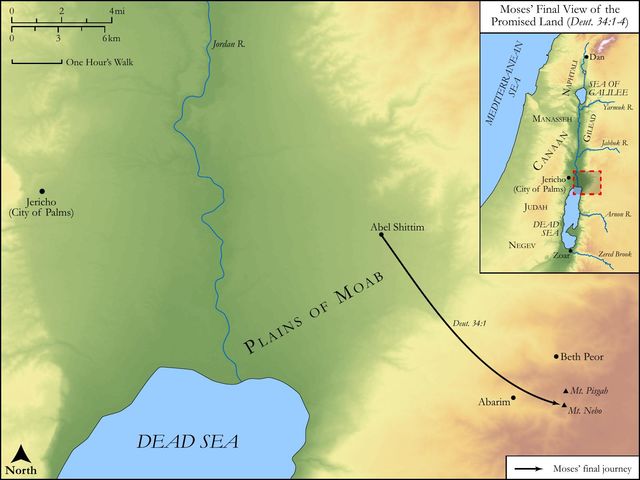
See on the biblical-era map
Study this verse
Public-domain commentary
Matthew Henry
From his Commentary on the Whole Bible. Henry comments on passages, not single verses — this entry covers Deuteronomy 31:9–13. His three-level outline is real structure in the source text, so it is rendered as structure.
The law was given by Moses; so it is said, Joh 1:17. He was not only entrusted to deliver it to that generation, but to transmit it to the generations to come; and here it appears that he was faithful to that trust.
I.Moses wrote this law, Deu 31:9.
The learned bishop Patrick understands this of all the five books of Moses, which are often called the law; he supposes that though Moses had written most of the Pentateuch before, yet he did not finish it till now; now he put his last hand to that sacred volume. Many think that the law here (especially since it is called this law, this grand abridgment of the law) is to be understood of this book of Deuteronomy; all those discourses to the people which have taken up this whole book, he, being in them divinely inspired, wrote them as the word of God. He wrote this law,
1.That those who had heard it might often review it themselves, and call it to mind.
2.That it might be the more safely handed down to posterity. Note, The church has received abundance of advantage from the writing, as well as from the preaching, of divine things; faith comes not only by hearing, but by reading. The same care that was taken of the law, thanks be to God, is taken of the gospel too; soon after it was preached it was written, that it might reach to those on whom the ends of the world shall come.
II.Having written it, he committed it to the care and custody of the priests and elders.
He delivered one authentic copy to the priests, to be laid up by the ark (v. 26), there to remain as a standard by which all other copies must be tried. And it is supposed that he gave another copy to the elders of each tribe, to be transcribed by all of that tribe that were so disposed. Some observe that the elders, as well as the priests, were entrusted with the law, to intimate that magistrates by the power, as well as ministers by their doctrine, are to maintain religion, and to take care that the law be not broken nor lost.
III.He appointed the public reading of this law in a general assembly of all Israel every seventh year.
The pious Jews (it is very probable) read the laws daily in their families, and Moses of old time was read in the synagogue every sabbath day, Act 15:21. But once in seven years, that the law might be the more magnified and made honourable, it must be read in a general assembly. Though we read the word in private, we must not think it needless to hear it read in public. Now here he give direction,
1.When this solemn reading of the law must be, that the time might add to the solemnity; it must be done,
(1.)In the year of release. In that year the land rested, so that they could the better spare time to attend this service. Servants who were then discharged, and poor debtors who were then acquitted from their debts, must know that, having the benefit of the law, it was justly expected they should yield obedience to it, and therefore give up themselves to be God's servants, because he had loosed their bonds. The year of release was typical of gospel grace, which therefore is called the acceptable year of the Lord; for our remission and liberty by Christ engage us to keep his commandments, Luk 1:74, Luk 1:75.
(2.)At the feast of tabernacles in that year. In that feast they were particularly required to rejoice before God, Lev 23:40. Therefore then they must read the law, both to qualify their mirth and keep it in due bounds, and to sanctify their mirth, that they might make the law of God the matter of their rejoicing, and might read it with pleasure and not as a task.
2.To whom it must be read: To all Israel (Deu 31:11), men, women, and children, and the strangers, Deu 31:12. The women and children were not obliged to go up to the other feasts, but to this only in which the law was read. Note, It is the will of God that all people should acquaint themselves with his word. It is a rule to all, and therefore should be read to all. It is supposed that, since all Israel could not possibly meet in one place, nor could one man's voice reach them all, as many as the courts of the Lord's house would hold met there, and the rest at the same time in their synagogues. The Jewish doctors say that the hearers were bound to prepare their hearts, and to hear with fear and reverence, and with joy and trembling, as in the day when the law was given on Mount Sinai; and, though there were great and wise men who knew the whole law very well, yet they were bound to hear with great attention; for he that reads is the messenger of the congregation to cause the words of God to be heard. I wish those that hear the gospel read and preached would consider this.
3.By whom it must be read: Thou shalt read it (Deu 31:11), "Thou, O Israel," by a proper person appointed for that purpose; or, "Thou, O Joshua," their chief ruler; accordingly we find that he did read the law himself, Jos 8:34, Jos 8:35. So did Josiah, Ch2 34:30, and Ezra, Neh 8:3. And the Jews say that the king himself (when they had one) was the person that read in the courts of the temple, that a pulpit was set up for that purpose in the midst of the court, in which the king stood, that the book of the law was delivered to him by the high priest, that he stood up to receive it, uttered a prayer (as every one did that was to read the law in public) before he read; and then, if he pleased, he might sit down and read. But if he read standing it was thought the more commendable, as (they say) king Agrippa did. Here let me offer it as a conjecture that Solomon is called the preacher, in his Ecclesiastes, because he delivered the substance of that book in a discourse to the people, after his public reading of the law in the feast of tabernacles, according to this appointment here.
4.For what end it must be thus solemnly read.
(1.)That the present generation might hereby keep up their acquaintance with the law of God, Deu 31:12. They must hear, that they may learn, and fear God, and observe to do their duty. See here what we are to aim at in hearing the word; we must hear, that we may learn and grow in knowledge; and every time we read the scriptures we shall find that there is still more and more to be learned out of them. We must learn, that we may fear God, that is, that we may be duly affected with divine things; and must fear God, that we may observe and do the words of his law; for in vain do we pretend to fear him if we do not obey him.
(2.)That the rising generation might betimes be leavened with religion (Deu 31:13); not only that those who know something may thus know more, but that the children who have not known any thing may betimes know this, how much it is their interest as well as duty to fear God.
Continue studying Deuteronomy 31:13 across the web’s major study libraries — every link below opens this exact verse, chapter, or book on the destination site.
Read & Compare
 BibleGatewayThis verse in more than 200 translations and 70 languages.
 Bible.comThe YouVersion reader — hundreds of translations, reading plans, and highlights.
 ESV.orgCrossway's official English Standard Version reader.
 NET BibleThe NET translation with 60,000+ translators' notes on every rendering decision.
 STEP BibleTyndale House's free study tool — original text, vocabulary, and scholarly resources.
 BibliaLogos Bible Software's free web reader.
 USCCBThe New American Bible (Revised Edition) with the U.S. bishops' study notes.
Commentaries
 BibleHub CommentariesDozens of classic commentaries on this verse, gathered on one page.
 StudyLightMore than 100 commentary sets — the largest collection on the web.
 BibleRefPlain-English commentary on what this verse means, verse by verse.
 Enduring WordDavid Guzik's free commentary on this chapter, widely used by Bible teachers.
 Bible Study ToolsVerse commentary alongside Greek and Hebrew study aids.
Original Language & Research
- BibleHub InterlinearThe verse word by word — original language, transliteration, and English.
- BibleHub LexiconEvery word's original-language definition and Strong's entry.
 Blue Letter BibleDeep-study tools — Strong's numbers, concordance, and word studies.
 SefariaThe Hebrew text with Rashi and centuries of Jewish commentary.
Sermons, Hymns & Audio


TrulyRandomVerse is not affiliated with these sites and doesn’t control their content. They’re linked because they’re genuinely useful.
Summary
Deuteronomy 31:13 encapsulates Moses' fervent charge to the Israelites, emphasizing the paramount importance of intergenerational spiritual education and the diligent transmission of covenantal faith as they stood on the precipice of entering the Promised Land. This verse highlights God's divine design for His people to cultivate a deep, reverential fear of Him, ensuring the continuity of their relationship with the Almighty and their sustained dwelling in the land He was graciously granting them. It serves as a timeless mandate for the intentional and diligent instruction of future generations in the ways of the Lord, securing the spiritual and national destiny of Israel.
Context
ShowHideLiterary Context
Deuteronomy 31:13 is strategically positioned within Moses' final, poignant instructions and exhortations to Israel, delivered just before his death and their momentous entry into Canaan. Specifically, it directly follows the command in Deuteronomy 31:10-12 for the public reading of the entire Law every seven years during the Feast of Booths (Sukkot). This grand communal assembly, explicitly inclusive of men, women, children, and resident aliens, was far more than a mere ritual; it was a foundational act designed to deeply embed the covenant stipulations within the national consciousness. Moses, keenly aware of his impending demise and the challenges awaiting Israel, instituted this practice to ensure the vibrant continuity of Israel's unique covenant relationship with Yahweh. This public reading provided a structured, communal mechanism for the entire community to regularly refresh their understanding and commitment to God's commands. The verse under consideration, Deuteronomy 31:13, underscores that the primary, overarching purpose of this solemn public reading was for the uninitiated generation to "hear, and learn to fear the LORD."
Historical & Cultural Context
The Israelites stood at a pivotal historical juncture, transitioning from forty arduous years of wilderness wandering to the complex task of settling in the Promised Land. This transition presented multifaceted challenges: establishing a cohesive national identity rooted in their covenant with Yahweh, resisting the pervasive pagan influences and idolatrous practices of the surrounding Canaanite cultures, and maintaining unwavering faithfulness to the Mosaic covenant in a settled agricultural society. Moses' instructions, including this particular verse, were primarily addressed to a generation largely born in the wilderness, many of whom had not directly witnessed the miraculous Exodus from Egypt or the awe-inspiring giving of the Law at Mount Sinai. Consequently, the emphasis on teaching "their children, which have not known [any thing]," was absolutely crucial for bridging this experiential and historical gap. It ensured that the foundational events, divine laws, and theological truths of their national identity were not forgotten but actively transmitted. The regular, public reading of the Law served as a powerful, divinely ordained counter-cultural force, reinforcing their unique identity as God's covenant people amidst the diverse and often corrupt pagan practices of the land.
Key Themes
ShowHideThis verse profoundly contributes to several overarching and interconnected themes prevalent throughout Deuteronomy and the broader Pentateuch. Firstly, Intergenerational Faith is paramount, emphasizing the divine imperative to actively pass on the knowledge and fear of God to successive generations. The phrase "their children, which have not known [any thing]" powerfully highlights the necessity of active, intentional transmission of faith, ensuring that the covenant remains a living, dynamic reality for all. This theme resonates deeply throughout Deuteronomy, particularly in the foundational command to "teach them diligently to your children" found in Deuteronomy 6:7. Secondly, the verse underscores the profound concept of Learning to Fear the LORD. This "fear" (Hebrew: yirah) is not a cowering terror but a profound reverence, awe, and obedient submission to God's absolute authority, holiness, and majesty. It is consistently presented as the very foundation of wisdom and right living, as eloquently echoed in Proverbs 9:10. Finally, the verse intrinsically links spiritual health and obedience to Covenant Continuity and Land Possession. The duration of their dwelling "in the land whither ye go over Jordan to possess it" is directly and explicitly tied to their faithfulness to the covenant, which is meticulously maintained through the continuous teaching and internalization of God's Law. This conditional tenure in the land is a recurring and central motif throughout Deuteronomy, emphasizing that Israel's well-being, security, and prosperity depended entirely on their ongoing, corporate obedience to God's commands.
Exposition and Analysis
ShowHideKey Word Analysis
ShowHideThis word signifies much more than merely perceiving sound with the ears. As a primitive root, shâmaʻ implies attentive listening, deep understanding, and, most importantly, obedient response. When God commands Israel to "hear" His voice or His Law, it is a comprehensive call to internalize His words, comprehend their implications, and act accordingly. In this context, the children are not just to be physically present at the public reading, but to truly listen, grasp the meaning, and allow the Law to profoundly shape their lives, leading to a transformative reverence for the Lord.
This primitive root means "to goad," which by implication refers to teaching, often with the sense of diligent instruction (the rod being an Oriental incentive). It denotes a process of acquiring knowledge and skill, becoming accustomed or expert. For the children, "learning" to fear the LORD involves a disciplined, intentional process of instruction and internalization, moving beyond mere intellectual assent to a practical, lived understanding of God's ways. It implies a cultivation of character and behavior in response to divine truth.
As a primitive root, yârêʼ means "to fear," but morally, "to revere." It encompasses a range of meanings from being affrighted or dreadful to being held in reverence. In the context of "fearing the LORD," it is not a cowering dread, but a profound reverence, awe, and respect for God's holiness, power, and majesty that organically leads to obedience and devotion. It involves recognizing God's absolute sovereignty and one's own dependence upon Him, resulting in a deep desire to please Him and avoid anything that would displease Him. For the children, learning to "fear the LORD" means developing a right relationship with God, characterized by worship, trust, and faithful adherence to His covenant.
Verse Breakdown
ShowHide"And [that] their children, which have not known [any thing],"
This clause precisely identifies the critical target audience for this intergenerational instruction: the younger generation who did not personally experience the pivotal events of the Exodus, the giving of the Law at Sinai, or the arduous wilderness wanderings. They are described as those who "have not known [any thing]," implying a profound lack of direct, experiential knowledge of God's mighty acts and His foundational covenant demands. This highlights the urgent and critical need for intentional, systematic, and comprehensive instruction to bridge this generational gap and ensure the continuity of faith and covenant identity.
"may hear, and learn to fear the LORD your God,"
This is the core, divinely ordained purpose of the public reading and the broader intergenerational instruction. The children are to "hear" (listen attentively, comprehend, and internalize) the Law, and through this diligent hearing, they are to "learn to fear the LORD." This learning process is not merely intellectual assimilation but a transformative journey, leading to a deep, reverential awe and an obedient submission to God's authority. The possessive phrase "your God" powerfully reinforces the personal and covenantal relationship that is to be faithfully passed down and embraced by successive generations.
"as long as ye live in the land whither ye go over Jordan to possess it."
This final clause establishes both the duration and the profound stakes of this spiritual education. The command to hear and learn to fear the LORD is not for a temporary period or a fleeting phase, but for "as long as ye live in the land." This explicitly and unequivocally links Israel's continued possession, prosperity, and flourishing in the Promised Land to their corporate and individual faithfulness to God. This faithfulness, in turn, is directly dependent on the ongoing, diligent transmission and internalization of His Law across all generations. Their tenure and well-being in the land are thus conditional upon their continuous commitment to fearing and obeying God.
Literary Devices
ShowHideDeuteronomy 31:13 masterfully employs several literary devices to convey its profound and urgent message. The most prominent is Didacticism, as the verse functions as a direct, imperative instruction and command for teaching. It is explicitly designed to educate, shape behavior, and transmit core theological truths across generations. There is also strong Emphasis achieved through the repetition of the themes of "hearing" and "learning" throughout Deuteronomy, underscoring their vital importance for covenant fidelity. The verse utilizes rich Covenantal Language, particularly in the phrase "fear the LORD your God," which powerfully invokes the established, exclusive, and intimate relationship between Yahweh and Israel. Furthermore, the precise structure of the verse presents a clear Cause and Effect or Conditionality: the children hearing and learning to fear God is presented as the necessary condition for Israel's sustained dwelling in the Promised Land. This creates a powerful Thematic Linkage between spiritual obedience and national well-being, a central and recurring tenet of Deuteronomic theology.
Theological and Thematic Connections
ShowHideDeuteronomy 31:13 stands as a foundational text for understanding the inherently intergenerational nature of faith within the grand biblical narrative. It reveals God's meticulous design for His covenant to be perpetually renewed, embraced, and internalized by each successive generation, rather than merely inherited as a passive legacy. The profound emphasis on "hearing" and "learning to fear the LORD" powerfully underscores that a true, vibrant relationship with God is cultivated through active, attentive engagement with His revealed Word and a profound, reverential awe for His holy character. This "fear" is presented as the very cornerstone of wisdom and the wellspring of genuine obedience, ensuring that Israel's unique identity as God's chosen people remains vibrant, distinct, and faithful. The verse intrinsically ties the spiritual health and vitality of the nation directly to their physical dwelling in the land, illustrating the holistic and comprehensive nature of the covenant where spiritual faithfulness has tangible, earthly consequences. It thus establishes a divine pattern for spiritual formation that transcends time, highlighting the communal responsibility to diligently disciple the young and underscoring the enduring, transformative power of God's revealed truth.
Reflection and Application
ShowHideDeuteronomy 31:13 offers timeless and indispensable principles for spiritual formation in every generation, regardless of cultural context. It places a clear, divine mandate on both parents and the wider faith community to actively and intentionally engage in the spiritual education and discipleship of the next generation. Just as ancient Israel was commanded to ensure their children "hear, and learn to fear the LORD," so too are believers today called to diligently teach, model, and embody faith. This involves far more than merely imparting intellectual information; it necessitates cultivating a deep, reverential awe for God that authentically translates into obedient, Christ-like living. The verse profoundly reminds us that faith is not a passive inheritance to be taken for granted, but an active, dynamic, and lifelong journey of learning, internalizing, and joyfully responding to God's truth. Our spiritual vitality, both individually and corporately, is intrinsically linked to our unwavering commitment to passing on the knowledge and fear of the Lord to those who come after us, thereby ensuring that the covenant relationship remains central to our identity, purpose, and mission in the world.
Questions for Reflection
ShowHideFAQ
ShowHideWhat does it mean for children to "not known [any thing]"?
ShowHideThis phrase refers to the younger generation who were born during the wilderness wandering or had no direct, personal memory of the foundational, miraculous events of Israel's history. These events include the dramatic Exodus from Egypt, the awe-inspiring crossing of the Red Sea, or the solemn giving of the Law at Mount Sinai. They had not "known" or experientially witnessed these mighty acts of God firsthand. Therefore, Moses emphasized the critical need for intentional and systematic instruction so that these pivotal historical and theological truths, along with the covenant obligations, would be faithfully passed down to them and become their own lived reality. It powerfully highlights the principle that faith is not merely inherited by birth but must be actively taught, attentively heard, and personally embraced by each successive generation, as seen in the broader command to teach children diligently in Deuteronomy 6:7.
How does "fear the LORD" differ from being afraid of God?
ShowHideThe "fear of the LORD" (Hebrew: yirah) in biblical context is a profound theological concept that transcends mere terror or fright. While it certainly acknowledges God's immense power, righteous judgment, and absolute holiness, its primary meaning is one of deep reverence, awe, profound respect, and humble, obedient submission to God's supreme authority. It is the recognition of God's absolute sovereignty, His majestic character, and one's own utter dependence upon Him, leading to a fervent desire to please Him and live in accordance with His perfect will. This fear is consistently presented as the "beginning of wisdom" (Proverbs 9:10) and the indispensable foundation for a right, flourishing relationship with God, characterized by worship, trust, and faithful adherence to His covenant. It's a transformative fear that draws one closer to God in humble adoration and joyful obedience, rather than driving one away in dread.
Christ-Centered Fulfillment
ShowHideDeuteronomy 31:13, with its profound emphasis on intergenerational teaching and the cultivation of the fear of the LORD, finds its ultimate fulfillment and glorious transformation in the person and work of Jesus Christ. While the Old Covenant mandated the public reading of the Law to instill a reverential fear and obedience, the New Covenant, inaugurated by Jesus, fulfills this by providing the very means for true spiritual transformation and the empowerment to live in that fear. The Law, which perfectly exposed sin and pointed to humanity's desperate need for a Savior (Romans 3:20), could not ultimately give life or enable perfect obedience. Jesus, the eternal Word made flesh, perfectly embodies the Law and flawlessly fulfills its righteous demands through His sinless life and atoning sacrifice (Matthew 5:17). Through His death and resurrection, He removes the barrier of sin, enabling believers to approach God not with a cowering fear of judgment, but with a filial reverence—a child's respectful devotion and awe toward a loving, heavenly Father (Romans 8:15). The intergenerational mandate to teach and disciple is gloriously continued in the Church, the new covenant community, where disciples are commanded to "go and make disciples of all nations, teaching them to observe all that I have commanded you" (Matthew 28:19-20). The Holy Spirit, poured out at Pentecost, writes God's law not on tablets of stone, but on the hearts of believers (Hebrews 8:10), enabling a true, internal "fear of the LORD" that leads to joyful obedience, abundant life, and eternal dwelling in the ultimate "Promised Land"—God's glorious and everlasting kingdom.